shrine to a dude, who even knows

Jurassic World (2015)

tl;dr - a competent summer blockbuster wrapped around a core of intriguingly nihilistic self-awareness

Saw Jurassic World. In IMAX 3D, tho honestly I don’t think that added much.

(It did give me my first noticed 3D goof, when an unremarkable clump of vegetation flickered through visual planes. So it came closer on the Z axis without either taking up any more of my field of view or at all changing its X/Y relationships to adjacent scenery. “Geometry suddenly works wrong” is textbook Lovecraft uncanny.)

It was basically some good action sequences pasted together by mechanical and emotional arcs, in summer blockbuster tradition. The dinosaurs looked nice but no longer novel, Chris Pratt finishes his upgrade from “poor man’s Chris Hemsworth” to Cera/Eisenberg-style doppling, everyone else is fine.

(though on “Poor Man’s X” note, they seemed to be styling and directing Lauren Lapkus as Kristen Schaal, BD Wong as John Cho playing a younger George Takei, and Bryce Dallas Howard as… I’ll get to that)

And the nice thing about seeing Steven Spielberg’s name on one of these things, you know the pasting-together will be competent, which you can’t always assume.

So keep in mind, whatever I bring up in the rest of this aren’t flaws. They didn’t detract from my enjoyment or take me out of the experience. They aren’t plot holes, they aren’t the result of bad acting, writing, or directing, or the awkward remnants of plot lines that got scrapped in editing. A lot of this stuff you could only stick in there just so with a natural, you might say Spielbergian, mastery of the form. They aren’t flaws.

Which is almost a shame, because then they might be comprehensible.

* * *

So the thing about Jurassic World is it’s densely referential.

Some of it is straight-up nice. Like, did you wonder how a series that sold itself on dino verisimilitude will deal with the way their dinos were lizard-model and since then the world’s gone bird-?

Well, the plot opens with a visual joke about this, and it’s acknowledged in background dialogue, but it’s never directly addressed. There IS an in-character answer to another question that serves to explain it, with the delightfully meta reasoning that they’d always played a little fast and loose with appearances and that was what 1992 thought badass dinosaurs looked like.

Then there’s references to the franchise. Some scenes - the aviary and the waterfall - seem to be referencing the books, which is nice. But more the movies - one plot thread takes a 4-scene detour to show off some props and sets from the first film, Mr. DNA makes a cameo, the iconic theme plays and the gate from the original Jurassic Park shows up.

Now here’s the thing - the gate shows up in the context of a tour guide inviting his audience, and by extension us, to look at the gate and experience a sense of wonder, and did you know this is the gate from the original Jurassic Park?

There’s a bit where one character recruits another to sneak embryos off the island that so echoes the Nedry plotline of JP that I started to wonder whether this counted as a sequel or a reboot. Except the result is that he promptly, safely, with no difficulty does in maybe 10 seconds, and you’re like wait, is that what that scene was for? Is that what that plot was for? Is that what that character was for?

The final showdown starts off as a reference to the final showdown of JP, but then there’s a twist - which is not only also a reference to the final showdown from JP but kind of the same reference - then there’s another twist, which is again THE SAME REFERENCE.

And the damnedest thing is, it works.

And broader than just that, there are a lot of references to other blockbusters of… the “long ‘80s”? “High Spielbergian Era”? Back when movies were being explicitly designed as tentpole blockbusters but not yet as “pilots” for multi-film franchises, possibly as “reboots” from series where a one-off success inspired ad-hoc sequels.

(I do kind of question that popular chronology, I think that the ensemble disaster films of the early ‘70s were a prototype for blockbusters, and the slasher boom of the ‘80s-'90s precedent for franchisecrafting.)

Like, the Big Bad is explicitly set up as an analogy for blockbustercrafting-by-Hollywood-plagiarism: they needed to make something bigger, scarier, more intense to please an increasingly jaded public, and did it by scavenging bits from previous successes and pasting it all together.

Past that there’s a lot of explicit references to other action movies that became franchises - I counted several scenes, shots, or bits of set design that were clearly invoking Aliens or Predator - or to other Spielberg movies - Goonies, not to mention Indiana Jones and Jaws, which were both, the latter having invented the concept of the summer blockbuster.

Even more though, it just plays with tropes and themes common in the era. But “plays” is the sense. It doesn’t subvert them, or use them to wield the audience’s genre savviness against it Whedon-style, so much as set them up and then stubbornly refuse to follow through. The ruined orgasm of filmgoing.

Like, there are two responsible business authority figures who are set up in the '80s villain role and ultimately get killed, but they aren't… really… bad.

The CEO type ultimately responsible for creating the Big Bad for reasons of profit is actually quite ethical and sets out to put himself in harm’s way to save people, at the expense of damaging his brand.

The military type who wants to weaponize the monsters - characters accuse him of engineering the crisis for his own ends, but he didn’t! He tries to seize power, but once he has it he makes the right decisions - use lethal force, including raptors - and brings the heroes along by not-entirely-cynically appealing to their selflessness.

Really the accusation against him - “you want to use these perfect killing machines as perfect killing machines” is silly, doubly so coming from another military guy whose moral authority ultimately comes from just being better at using them.

That’s really the thing with their deaths - they’re structured according to the standard comeuppance theme but they’re not. They don’t die as a result of their greed or hubris or ultimate cowardice, but in the course of doing the right thing, just not skillfully enough.

And the sexual politics themes—

I’ve mentioned before, a lot of '80s movies (and mass culture generally) were actually quite reactionary, especially by comparison to what had come shortly before. The later Rambo movies are so known for their macho steroidal revanchist-nationalist aesthetic that a lot of people don’t realize the series started as a longhaired PTSD drifter standing up for freedom by going VC and shooting cops. ('Nam vet fights the man" was actually a pretty respectable subgenre.)

On the domestic front, you went from Kramer vs. Kramer’s “Divorce. Man, sometimes you wonder whether it’s really worth it. ::sigh::” to The War of The Roses’ “no of course it isn’t, also you look ridiculous”, passing through both Die Hard and Fatal Attraction’s takes on “lethal violence is proper, necessary, and sufficient to reassert the integrity of the patriarchal nuclear family”.

Now those are kind of blatant examples, other movies were more subtle, Spielberg could be downright elegiac about family dissolution as a wrongness and threat.

But if you’ve seen many '80s movies you realize that as Jurassic World starts they’re laying the foundations for a few classic themes.

There’s “the careerist bitch who needs to get taken down a peg and get in touch with her true destiny as nurturing mother”. There’s “the divorcing parents who need the specter of external threat to the family to force them back together, where they recommit to family”.

The older brother, ignoring his sibling to check out girls as soon as he’s away from his devoted girlfriend promises kind of a JV “taming of the rake” arc, which was also a thing.

(Pretty Woman was not just about how a masculine man’s assertiveness (and, let’s be honest, earning potential - she has to go shopping now) can tame a sexually mercenary woman into wife material, but how a feminine woman’s nurturing (and let’s be honest, sex) can tame an economically mercenary man into an upholder of stable order. They were such similar creatures.)

But the weird thing is these tropes are invoked, the plots set up and then not followed through, not even subverted, but just ignored.

In reverse order, the younger brother ends the skirt-chasing plot *by pointing out the stakes don’t really matter*, and while the two are closer towards the end than the beginning that’s clearly situational and not fundamental. The elder doesn’t grow or change because he doesn’t have to, the scene of emotional bonding that “should” be the turning point is him putting their experience in the context of an established, supportive relationship.

The divorcing parents turn out to be basically a frame story, and don’t reunite. When I talk about how this stuff is the product not of incompetence but its opposite, I mean things like the direction in the reunion scene, the perfectly done body language - the way they never quite hug all together, the way each parent pays attention to each child, and each child to the parents together, but neither parent seems to instinctively consider the other part of their family - that establishes that yes, they’ve both been shaken, yes, they appreciate family anew in the aftermath, no, they’re not hostile, but for all that they’re no closer to each other.

One weird thing - and honestly I think it’s supposed to stand out - is when the younger brother says, just before the plot is dropped, “all my friends’ parents are divorced”. The thing being that I could see that as late as the original JP, but coming from a professional-class elementary schooler in 2015, it’s just intuitively wrong.

Finally the career shrike thing seems to get diverted into the related but distinct Romancing the Stone/Crocodile Dundee “sassy city girl comes to appreciate the virtues, possessors of virile outdoorsy manliness” plot. That’s the closest to an honest take on these things, because I guess they needed some character through-line.

Even then they seem to be fucking around with it. Like the last line of the movie, it’s textbook way to cap these things off. Looking into each other’s eyes, making a callback to a line from their earlier adventures that, recontextualized, is about the promise of their romantic future. Except for the fact that the actual line, in its actual context, MAKES NO FUCKING SENSE.

Or consider how Claire’s appearance is used as metaphor for her character development. For one, talking poor men, her initial look - all white outfit, severe red bob - looks so familiar I know it must be from somewhere, but towards the end TRY to tell me she’s not being styled as Resident Evil-era Milla Jovovich.

For two, one of the tropes of this plot is the girl’s pristine fashionable, nonfunctional attire representing her lack of earthiness. And so when it comes time for dude to do the angry “you are in no way prepared to function in my world” bit and cite her outfit, she immediately alters her clothes to look more sporty, and then explicitly states that the point is to signal she is now ready for adventure.

BUT, that’s not what he complained about. He cited her shoes, 3 inch spike heels completely unsuitable for any physical activity, let alone jungle trekking. And she never takes them off. There is a shot of her running in the final chaos that only exists to point out she’s still wearing them. Never took them off, never lost or even dirtied them, never trip her up, never set up to be some badass for doing this all in heels.

THE ENTIRE PAYOFF OF THE SHOES BIT IS TO POINT OUT THAT THE SHOES BIT NEVER PAID OFF.

Also there’s a one-off scene with minor characters that’s a cute little bit about how “finding courage and stepping up as a hero” and “getting the girl” are so firmly linked in movies and culture that if you separate them, everyone awkwardly realizes they have no cultural script to work off.

* * *

So. You can see why this is catnip to pattern recognition types like me - lots of stuff that clearly isn’t random noise, it’s deliberate, structured, chosen with an eye on how it relates to the other parts and to other texts, but damned if I can make it add up to anything.

Well no, looking back on all this there is ONE way I could understand this, as a rebuttal from Spielberg to an imagined cynical critic of modern blockbusters.

The cynic says “Oh, another Jurassic Park. So is this a fourquel or a reboot? Time to refresh the brand, start a new franchise? You unoriginal goddamned hacks.”

And Spielberg says “Listen here I invented blockbusters. And they’ve never been original. Film serials, pulp fiction, the fears and dreams of a nation fed back to them. And that’s never kept them from being good.

May not be a Tarantino-style showoff about it, maybe you didn’t recognize the sources. So here. You’ll recognize all the parts of this pastiche. I won’t even try to fit them together right, I’ll intentionally sabotage the thematic coherence, I’ll call all my shots then bunt them. And it’ll still be great, and you’ll still love it. Because you’re not hungry for originality, you’re just hungry for quality.”

* * *

Two minor notes, both about vehicles. First, this is the only depiction I can remember of someone flying a helicopter competently but not smoothly, which is oddly endearing. Second, okay maybe it’s a scrambler, but I don’t care how knobby the tires on that Triumph are, you’ll get further through the jungle in spike heels.

Tagged: jurassic world review steven spielberg jurassic park it's media

I decided to look at some PUA blogs recently, out of morbid curiosity, and theunitofcaring was not kidding when she said that...

None

an-animal-imagined-by-poe:

I decided to look at some PUA blogs recently, out of morbid curiosity, and theunitofcaring was not kidding when she said that that’s where the useful advice for socially awkward men is. Yes, it’s steeped in misogyny, and yes, a lot of what’s presented as advanced…

Yeah, like I’ve said, if you want to give PUA sites shit for something, give them shit for being Cosmo for Men.

(“Confident seductress career girl” Cosmo is really for insecure high school and college students, just like “cool high schooler” Seventeen is for twelve-year olds trying to wash the dork off. For the same reason bridal and interior decoration magazines are for people planning a wedding or remodel, not people who enjoy them. They’re instruction manuals, not enthusiast journals. Which is why they repackage the same material constantly. And why a guy whose identity is wrapped up in being a “veteran” PUA is still creepy, just like a high school Jezebel commenter who’s pushing 30 and only graduated to *making* the gifsets about how Beyoncé Means Nothing Is Ever Your Fault)

It was kind of like when MLP:FiM came out and the first bronies were like “man, I wish I got *these* friendship messages as a kid”, and got shit for that like ha how socially incompetent do you have to be to be impressed by these basics? Well they’d (“we’d”, I’d) figured that by *now* (this was after the first season, later bronies I’ll not be so charitable). But growing up as an only child in a neighborhood with no kids my age, a school with few kids intelligent enough for me to level with or want to do group activities with, parents who were young enough to *have* friends but too old to *make* many, at least in any part of their lives I saw…

well, so I got a lot of my ideas about How To Social from the Official Channels that were actively making a show of Instructing How To Social, and was too naive to see the official line of “Be Yourself, anyone who tries to get you to do things you don’t want to do is Not Your Friend” was *terrible* advice.

(Though maybe in the Just Say No era it made more sense as “bourgie child! give in not to the fleshy temptations of your superficial peers the non-college-bound, lest ye be dragged back into the working class your yuppie parents have defined their lives on forgetting they ever were!”)

And I think I would have been a lot better served by the pony message of “okay, try putting up with it occasionally for your friend’s sake if it’s not too ridiculous, and don’t bitch and moan, but don’t feign enthusiasm lest they think you really like it and try to make it an everyday thing, also maintain other friends you can spend time with when your one friend gets too far gone, and harmlessly complain about her, and accept that if she likes that activity she’ll find friends who *do* like it *through* it, and can do it with them, and if she really liked you before this she still will without it, but if she spends all her time with these new friends you might drift apart so if you really value her as a friend maybe consider going along more than you’d like to for the sake of servicing the relationship”.

and I think how that got through so well was that the world of these neon pastel girlponies was so aesthetically distinct that not only was there no way to confuse it with grimdark “realism” and judge it for adherence to the Trenchcoat M. Gruffstubble ideal self (the M stands for McKatana, it’s a family name), but it was so far out of that universe it couldn’t even be mistaken as an *antonym* to that and read as a volley from the types of people who mock that ideal, and could be judged on its own merits.

Tagged: it's media

Summarized, I guess my complaint about Freddie deBoer is “He values substance in writing, and believes that too much writing...

Summarized, I guess my complaint about Freddie deBoer is

“He values substance in writing, and believes that too much writing today substitutes style in its place, and that’s true and important. But while he *says* he values style, and thinks it has a place, you sure wouldn’t guess it from reading him.”

(You could say he substitutes substance ABOUT style in its place.)

Tagged: fredrik deboer freddie deboer it's media hatchet job

Something for Everyone

Something for Everyone

You know, I think a lot of modern internet culture war shit goes back to the ‘60s-‘70s (counter)cultural refoundation that both sides claim lineage from. ‘cause there’s a sense it was sold as something for everyone - women, racial, and gender/sexual minorities would get their civil rights and inclusionary movements recognized, in return straight white guys got the consensus that Cool People agree: sexualization is Correct, being offended is Incorrect. And there’s a growing sense (from all sides) that the terms have not been upheld.

Sad Puppies and the Hugos. Because that’s what we’re talking about now, apparently.

Both sides claim to be the true heirs of SFF. The antis sniff that it’s obviously them because the genre has always been committed to a progressive vision, especially starting with the '60s-'70s and the New Wave.

And that’s not wrong, but there’s a lot of stuff under that aegis. You have Left Hand of Darkness, with LeGuin all “gender fluidity would be great; we could experience our true selves independent of mutilatory social structures, and it would give rise to meaningful new cultural practices oriented around the beauty of self-discovery and self-crafting”.

And then there’s Varley’s Eight Worlds, which is like “Just imagine, if perfect sex changes were consumer services like haircuts, you could experience banging-hot hetero sex from both sides!”

Or Marion Zimmer Bradley all “adding strong female characters to fantasy allows us to escape tedious military epics towards an exploration of the importance of emotional labor, correctly identifying life-creation, not -destruction as the fundamental force of history”.

And meanwhile, “Red Sonja, DAAAAMN. She could force herself on you, how hot is that?”

(Joss Whedon postures like he’s from the Bradley tradition, but he’s toooootaly from the Red Sonja tradition.)

And then you have stuff like Stranger in a Strange Land, which is about interspecies tolerance, peace, love, and understanding, as enabled by author-insert dirty old man Jubal, attended poolside by his harem of buxom secretaries, including the one trained to totally suppress her personality so to better serve.

Like I said, something for everyone.

(Modern equivalent being Kim Stanley Robinson, recurring theme being “If scientists ran the world, there would be peaceful, multicultural, inclusionary socialism. And also collective nude bathing, where young female students seduce their mentors.”)

And you know, I’m still waiting on the WisCon panel on “Recovering the Promise of Teenage Groupies”.

Honestly I’m not much in the fandom these days but I do get Gardner Dozois’ “World’s Best” anthology every year, and I have noticed an increase in stories where nothing happens, but at least it’s brown and queer folks it’s not happening to.

One story a bit back that stuck with me, the message seemed to be “working in a Foxconn plant would suck”, which okay but I couldn’t even tell what was SF about it. Another that started promising - in an Islamic country (bcuz good point, the future won’t just come for white Anglophones), polygamy and semi-arranged marriage coexist with social media (ditto), and men hire Cyranos to polish their appeal, under the pressure that not every man can win even one wife. That’s a solid premise! But once this is established, the protagonist just throws up his hands and experiences a wave of relief as he realizes he could just be gay instead.

And it’s like… wut.jpg

In a proper world an editor would’ve returned that with a note saying “great story, can’t wait to see it when it’s done”. But that’s exactly the issue, isn’t it, that box-ticking and message Correctness are being accepted in lieu of quality.

Actually, you know what that really reminds me of? Christian rock.

Tagged: it's media sad puppies gamergate hugo awards culture war

The Nation (or at least Michelle Goldberg) has been staking out a decent claim on the "last generation's left-media stars tell...

The Nation (or at least Michelle Goldberg) has been staking out a decent claim on the “last generation’s left-media stars tell the kids their leftism is mewling, toxic, illiberal shit” beat. (See for example) I won’t say it’s the last place I expected that from but it’s not the first. An open niche, I suppose. Before and into the dawn of the Internet I tried to live up to my pretensions of worldly knowledge by going to the library to read a “balanced diet” of The Nation and National Review. (I was, like, twelve, so this was a precocious pretension.) So my image of The Nation comes from its post-Cold War stumblings, all “Fuck, socialism isn’t even a *dream* anymore? Well I, uh… hm. Well how about – no. Hm. Fuck. Look, Adbusters!” The Zack de la Rocha era of American left media, before George W. Bush came along to rescue it. (My memory of ‘90s National Review was a bunch of indistinguishable columnists trying too hard at second-rate Buckley impersonations with the result that they all sounded like poncey British twits. The exception was John Derbyshire, who secure in the knowledge that he *was* a poncey British twit allowed himself a personality.) Anyway, it’s a noble fight, or at least an interesting one. Has me actually paying attention to The Nation for the first time in a while.

Tagged: it's media the nation national review culture war

Securing the existence of their culture and a future for White Media

selected John Herrman posts from The Awl

The New White Ethnic Media

These outlets [Paula Deen’s, Sarah Palin’s, Glenn Beck’s] share a basic form—online video network—and depend on relatively steep subscription fees (the comparison that always gets used is “more than Netflix”). They are fundamentally oppositional: to the mainstream media; to political correctness; to godlessness but also a very particular formulation of uptightness. They are nostalgic for a time when certain people could say certain things without worrying about controversy or shame—they feel like public speech is a minefield, so they’ve made theirs a little more private. Among friends, almost. They long for a wholesome past that they feel has been lost. They are not especially cynical. They are, in effect, a white ethnic media, writing and publishing and broadcasting and performing about the experience of American whiteness as understood by people who genuinely feel that whites are becoming a marginalized minority. Race is not addressed directly in these networks’ contents or containers—identity establishment is left to “urban”-style euphemisms and the projection of a sensibility that is neither explicitly nor assertively white, just inherently white, familiar to whites, deemed important or compelling or novel because it is no longer the norm elsewhere.

The New Identity Media Manifesto

[On the same, also Roosh’s Reaxxion:]

you could imagine Roosh-like mission statements for all of them: I aim to protect the interests of white Christian families, a category I’m in…

A gaming site for men is absurd and its potential is small; a culture empire for whiteness preservation is absurd and its potential is huge. But both behave in the same way: they respond to criticism by reflecting back victimhood, and adopting a received language of oppression. This was not their idea, they would suggest. It is what they believe the other people have been doing for years.

Everything Except Rap and Country

[On Taylor Swift’s 1989:]

[Swift’s] idea of pop music harks back to a period — themid-1980s — when pop was less overtly hybrid.

And, in the same quarters, more overtly white!

That choice allows her to stake out popular turf without having to keep up with the latest microtrends, and without being accused of cultural appropriation.

Avoiding non-white “microtrends” isolates Taylor Swift from charges of appropriation, because they have no specific and recent non-white influence to refer to.

[In “Shake It Off”] she surrounds herself with all sorts of hip-hop dancers and bumbles all the moves. Later in the video, she surrounds herself with regular folks, and they all shimmy un-self-consciously, not trying to be cool.

Who, exactly, would interpret those signals as not “cool” but instead “regular?” Not everybody; specifically, somebody.

The singer most likely to sell the most copies of any album this year has written herself a narrative in which she’s still the outsider.

You know who else suddenly feels culturally outside of the mainstream? (Besides, as always, anyone over the age of 30?) People who are skeptical of America’s demographic progress! Or who, at least, don’t feel comfortable thinking or talking about it. If Jon Caramanica is right, the promotional theory and marketing conversations around 1989, and an overarching influence on its music, can be summed up as: Intentional, Performed Whiteness. It’s an artistic manifestation of the old adolescent conversation:

“What kind of music do you like?”

“Everything. Except rap and country.”

relevant: 1, 2

Tagged: the awl it's media whiteness metapolitics supergenius shapeshifter taylor swift

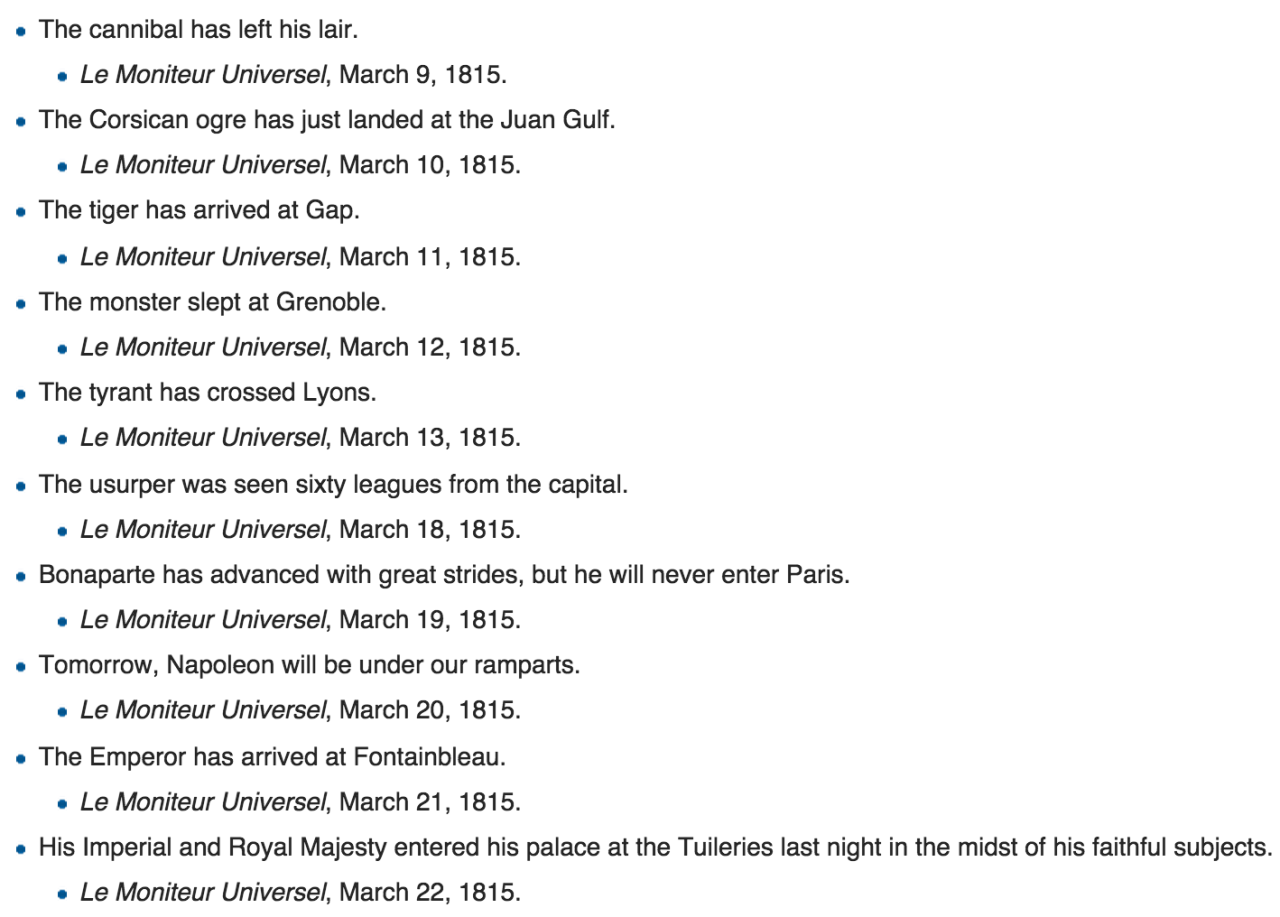
Tagged: napoleon bonaparte heard you were talkin shit it's media

In this scenario, what publications will have done individually is adapt to survive; what they will have helped do together is...

In this scenario, what publications will have done individually is adapt to survive; what they will have helped do together is take the grand weird promises of writing and reporting and film and art on the internet and consolidated them into a set of business interests that most closely resemble the TV industry. Which sounds extremely lucrative! TV makes a lot of money, and there’s a lot of excellent TV. But TV is also a byzantine nightmare of conflict and compromise and trash and waste and legacy. The prospect of Facebook, for example, as a primary host for news organizations, not just an outsized source of traffic, is depressing even if you like Facebook. A new generation of artists and creative people ceding the still-fresh dream of direct compensation and independence to mediated advertising arrangements with accidentally enormous middlemen apps that have no special interest in publishing beyond value extraction through advertising is the early internet utopian’s worst-case scenario.
John Herrman, The Awl (via sadydoyle)

Tagged: the awl it's media

publications I remember being reprinted as special addenda in newspapers

The Starr Report

Industrial Society and Its Future (“The Unabomber Manifesto”)

(can someone who was reading on paper tell me if the 9/11 Commission Report made it?)

Tagged: amhist it's media

Some 2015 Predictions

Some 2015 Predictions

Like I’ve said, The Awl is kind of the mid-late 2000s Gawker aged in place. Before it was a whole media conglomerate, or the predecessor of BuzzFeed, or whatever it is now, Gawker was a New York-focused gossip tabloid for people capable of comprehending nested clauses that split its focus between actual celebrities and the local media industry. Star magazine meets the New York Observer, I guess.

But since it was the 2000s internet it was really about itself all along, and thus was always gossiping and analyzing about itself (and so on, recursively - see the Julia Allison “microcelebrity” thing, an experiment in closed-media-cycle ecology whereby you create a viable subject of gossip and media analysis by virtue of producing enough gossip and media analysis about the gossip and media analysis you’re producing about the fact that you’re creating her as a viable subject).

Well anyway what my point is taking that and letting it run for a decade or so while the parent organism continues to mutate under its own pressures (thus creating new source material to feed the maw), they’re pretty worth listening to on the subject of internet media.

Tagged: the awl gawker it's media

The thing with Polygon and Kotaku renouncing review embargos, and going in on Ubisoft over AC:Unity, and retroactively...

The thing with Polygon and Kotaku renouncing review embargos, and going in on Ubisoft over AC:Unity, and retroactively downgrading Destiny… that’s brilliant, and I bet most people don’t even make the connection to hashtag Gamergate.

They finally did what they should’ve, took a step back from the fray to calm down and plot how to turn the whole thing to their advantage. And if they pull it off they could actually come out stronger from the whole thing. They’ve already earned the indie devs’ loyalty from acting as their champion, and their media compatriots for championing their prerogatives against the unwashed masses (I expected Salon to jump onside because obviously, but seeing the fucking London Review of Books do it first and harder was an eyeopener). Now by actually jiujitsuing “ethics in game journalism” to reposition themselves as champions of their alienated audience, and using it as a club to extract concessions from the AAA studios - well, if they pull it off that’s pretty much running the table right there.

They’ll cool down on the SJW “muh intersectionality in vidya” beat, you mark my words. Maybe poke the hornets’ nest for attention every now and then, but the free ride is over and now they know that costs them more than it pays off. They’ll just quietly commission less and less of that stuff. They’ll never make a public show of contrition, that was never in the cards, that’s not how Gawker and its bastard children roll, that’s never been how they roll.

Nick Denton’s brilliant stroke, going all the way back to Gawker’s origins as Gawker Stalker, was to not even make pretense to the American tradition of Sulzbergerian evenhanded postwar monopoly journalism, but to go the British competitive no holds barred venomous one, all taking shots at each other, stirring up witch hunts to boost circulation. It’s been like that for a long time, where multiple outlets are in competition for the same national readership - that’s where 1984’s “prolefeed” and “Two Minutes Hate” come from. That’s why Milo Yiannopoulos, from the British system himself, was the one landing all the hardest blows on the other side of this fight.

I mean, it’s interesting. It’s interesting, and I like living in interesting times, but there’s a reason that phrase comes from a backhanded blessing - as a way to run a culture it’s fucking dangerous, it leads to pillarisation. The Dutch model - Protestant/Catholic/secular social democrat - is safe enough with the European confessional wars well behind us, but the 19th and early 20th century models, where the pillars could be “monarchist” or “communist” or “fascist”, (or even the pre-20th century American party-affiliated yellow press), that was fucking dangerous. Journalists talked their countries into war, into revolution, to boost their numbers and make their names. There’s a reason British libel law is so strict, and that’s to create some leverage to tamp things down when they start stepping on toes that matter.

I mean hell, we’re on course for a full-blown constitutional crisis in a decade or two in no small part because Murdoch imported the British model.

Tagged: it's media gamergate vidya gawker kotaku

I think you should see this: Nissan pulls ads from Gawker http://theralphretort.com/nissan-cuts-ties-gawker/ And Gawker making...

e8u:

thegreatgadfly:

thespectacularspider-girl:

I think you should see this:

Nissan pulls ads from Gawker http://theralphretort.com/nissan-cuts-ties-gawker/

And Gawker making an article in response to it http://gawker.com/how-we-got-rolled-by-the-dishonest-fascists-of-gamergat-1649496579 (archive.today link https://archive.today/UXA4r)

It is like they want to deliberately sink their business into the ground by showing themselves as being about the worst place to advertise in, seeing how they treat advertisers.

P.S: bonus points for saying that Renée J. James, president of Intel, is a “craven idiot”.

——————————————-

Gawker, confirmed for mad.  Like.  Mad mad.

image

AND THEY CAN’T DO A THING TO STOP IT.

Looks like they’re opting for the “run ourselves into the ground” option. And here I thought they’d be smarter than that. Lol. I was wrong.

image

Max Read-era Gawker is a glass cannon.

The Choire/Balk/Doree Gawker could handle this shit, but then it would never have gotten itself in this position in the first place. That’s not speculation, just go over to The Awl, which is basically the Choire/Balk/Doree Gawker aged in place, and check out their Gamergate stuff. It’s still anti-, and given to celebrate their triumphs before they hatch, but that “we’ll get them in the end” stuff is the line of someone rationalizing a strategic retreat and regrouping.

Hell, even Pareene could’ve handled this. He’d be an insufferable little shit about it (I have no idea how he missed both of the Daily Caller’s “most punchable faces in media” lists), but he at least knew that the Gawker brand voice was contempt, not hatred. I mean, look at this. Correct.

Eh. I could tell Gawker was headed nowhere good in 200…7? 9? Back when commenting was open by audition only and there was an article about some kid falling out a window and one of the commenters invoked Anal Cunt’s classic Conor Clapton ballad, “Your Kid Committed Suicide Because You Suck”, and then someone huffed that we should show more sensitivity, because a child has died and all that, and then the huffer was not included in that Friday’s round of commenter executions.

It’s funny looking at the comments, people reading ‘gaters as a new cultural development that’s ruining your arcadian internet. Nah man, that’s the traditional culture of the old internet you built yours on top of. Used to wander the plains freely, and as recently as a decade ago you intermingled, but by now you’ve pushed it back into reservations on the ‘chans, and you’re still pushing. Cet animal est très méchant; Quand on l'attaque, il se défend.

I guess my investment in all this is that I was born and raised into citizenship in the older internet, and I’ve got a bit of patriotism about it.

Tagged: gawker gamergate gawkergate the awl it's media

i cannot imagine caring about corruption in game reviews

hallowmeme-url:

kadathinthecoldwaste:

spacetwinks:

i cannot imagine caring about corruption in game reviews

The global video game industry was valued at around $65 billion in 2011, and has likely grown since then. I don’t have figures on exactly how much reviews change sales figures, but it seems prima facie that they would make a non-trivial difference. If that assumption is true, a pattern of consistent corruption in reviews could easily change sales figures by hundreds of millions of dollars over the course of a well-known reviewer’s career. Entirely aside from feelings about the video games themselves, that seems significant from a purely economic standpoint? I can easily imagine myself caring about, say, publishing fraud, misappropriation of government funds, or cheating in sports, and I can’t really see what the difference is besides the fact that sports and video games are “low culture” and there’s a certain social cachet involved in trumpeting one’s lack of interest in such.

(None of this is meant to defend the accusations of review-related corruption various segments of the internet have made against Zoe Quinn, which as far as I can tell are wholly trumped up, and would not merit the firestorm of abuse she’s received even if they were true.)

The more obvious comparison is to movie and music reviews, where both the “corruption” that gamer gaters complain about (reviewers making political judgements) and the actual corruption (publishers forming closer relationships with journalists, buttering them up and withdrawing access if they don’t like their attitude) have been present since the start, without this being a scandal per se.

Have you never heard someone decide a film must be crap because the “work of genius five stars” quotes on the poster are from minor (and thus more easily pressured) publications, or because the producers have limited previews to soft critics (Harry Knowles was particularly infamous for this). Have you never heard a critic referred to as “rentaquote”. Wouldn’t you think the world had gone a little crazy if a scandal started over this well existence of these phenomenon? 

The two major ethics-in-entertainment hoohas of the late 1950s, over radio payola and rigged TV quiz shows, were subjects of widely covered Congressional investigations, with honest-to-god laws passed in response.

A better parallel to the whole #GamerGate thing might be film criticism. The 1960s saw a crop of high-profile critics working in a distinctly literary style - Sontag, Kael, Sarris, and their imitators.

On the one hand they elevated the field, introducing auteur theory and promoting the creatively visionary “New Hollywood”, and the best critical pieces of the era were and still are worth reading in their own right.

On the other hand a lot of that New Hollywood stuff they were boosters for was indulgent crap, and under their influence film reviews started following book reviews in treating the work at hand as a jumping-off point for whatever tangential, often political, subject the critic felt like writing an essay about.

The subsequent rise of Siskel and Ebert and their consumer-oriented reviewing (reducible to a simple thumb-based watch/don’t watch binary) can be read as a backlash against these trends. Roll in their format change (from print to TV) and the ability this granted them to augment their reviews with excerpts from the work, and there’s a clear precedent here for a shift to Let’s Plays and YouTube reviews.

Tagged: gamergate it's media

Here’s a fun read on the history between Marvel and DC

70sscifiart:

Here’s a fun read on the history between Marvel and DC

This and its predecessor are well worth a read.

I do have some objections - I don’t know how you can write a history that goes “In recent decades, in competing with Marvel DC found strength in mining their legacy, eliminated their multiverse and then immediately brought the same ideas back, introduced themes of cosmic myth, and became obsessed with recapturing ‘80s Miller/Moore-era magic and aiming at ‘mature’ audiences” and not ONCE mention Sandman and the Vertigo stuff - but it’s pretty solid.

It’s true, Watchmen and Dark Knight Returns marked the end of the Bronze Age and the beginning of whatever the ‘90 to today are. On the one hand grim antiheroes with Liefield pouches everywhere, but more thematically (and respectably) comics about comics with a sense of “okay, what if this shit were real”.

I’ve said before, the basic conceit of Watchmen was “okay, say there were superheroes, and they followed trends where there was a Golden Age of pulpy musclemen, and a Silver Age of scientific wonders, and a Bronze Age of social tension and self-questioning how and why would that have happened?” And then they explore how actual people might feasibly have behaved under those conditions.

The omnipitent, omnipresent figure associated with America would have been used as a Cold War superweapon, and also would have had a distant relationship to petty mortals. ‘70s disillusion with power would have redounded against superheroes as tools of the man, excoriated them as unchecked authorities, prompted calls for government control, and celebrated them as free men and vigilantes, even though these things are all in complete conflict. The woman who wore a skintight bodysuit and worked with a bunch of macho types would have been harassed and treated as a sexual object, the kind of woman who would decide to wear a skin-tight bodysuit and chase fame going on well-publicized adventures with a bunch of macho types would probably have a complex relationship to this fact, the daughter she raised in loose post-60s fashion into the shoulderpadded ‘80s would have a complex relationship to THAT fact, etc., etc.

And that was revolutionary! And around the same time, Dark Knight Returns made the point, “if Batman was real, he’d basically be a psychologically damaged para-fascist”. Which is almost conventional wisdom now, but that was revolutionary!

Of course before all that was Crisis on Infinite Earths which even established the idea “what if all this mythology was part of one coherent world”, and it was more mainstream and had an accordingly pulpy definition of “coherent”, but it was still a stab in this new direction, and set up the idea of a “generational” progression of heroes.

Sandman was, for all the goth brooding, not all that psychologically introspective or realist, but it was all in on attempting to tie stories in together. Dream was basically the embodiment of Story, and the Sandman universe was basically a meta-story for telling stories about storytellers and the stories they tell, which managed to weave into one coherent universe not only a bunch of early pulp-era comic books but basically the entire sum of Western and Near-Eastern history and mythology.

Moore’s League of Extraordinary Gentlemen did the same stuff with the Victorian literature from which the pulp tradition originated, then Grant Morrison and The Invisibles, and then if that wasn’t enough The Filth, which was kind of a riff on the very act of maintaining a comics continuity, only written with the subtle grace of a fucking sledgehammer - it literally features the characters gazing upon the giant hand of the (dead) Author/God holding a pen towards the end - with all sorts of juvenile-“mature” vulgarity along the way, basically a 13-issue adventure in crawling up his own asshole. I hear his recent run on Batman did an admirable job of integrating the character’s mythology, even the silly ‘60s stuff, into a respectable whole though.

One thing you rarely hear of these days is Marvel’s 1994 Marvels series, even though the “superpowers at street level” stuff presaged the feel of Powers, Astro City, and Top 10.

Tagged: comics comic books it's media

Two addenda to that media post: First, it’s worth noticing that a lot of the best journalistic applecart-tippers come from expat...

Two addenda to that media post:

First, it’s worth noticing that a lot of the best journalistic applecart-tippers come from expat backgrounds. The Exiled guys - Mark Ames, Sasha Levine, John Dolan(/“Gary Brecher”) - came from the eXile, a Moscow expat paper, and if I remember correctly, some of the neoreaction all-stars are expat journalists from the former British Empire outposts of Asia. Hell, I think even a bunch of the Reason guys back in the ‘90s had been expat journalists in Prague (with Suck.com in between).

Second, for my impending doom fetishist followers (coughcoughbloodandhedonismcough… ahem, excuse me. Like bloodandhedonism, I mean to say) it bears pointing out that the Cold War Sulzbergerian/network news model of journalistic outlets with no explicit partisan alignment - just a general consensusist one - and a sentorian from-above tone (“fair and balanced”, you might say)… Well, there were structural factors behind that, yes. A limited number of broadcast networks producing one product for national consumption, before local political cultures had completely come(/been brought) into line with a uniform bipartisan divide; competition from these broadcasters winnowing the vibrant newspaper ecosystem down to one daily paper per city; the Fairness Doctrine. But also*, there was conscious intent at play. Ideological, party-linked newspapers, operating under the pressures of niche journalism for competitive advantage in a for-profit system, had in prewar Europe played a major part in the pillarisation of the populace into different camps - socialist, liberal, christian democrat, fascist, etc. - which would develop their own economies, welfare systems, even paramilitaries, which would occasionally try to swallow the state apparatus (and sometimes succeed). Competitive journalism of the “yellow” type had pushed America into wars before, luckily against an ailing Spanish Empire and her runty spawn that it could defeat handily, but this was seen as a risk to be guarded against. But pf, history.

None of this will something something.


*“but also”. Between the New Deal and WWII the state and nominally extrastate New Class had significantly intertwined - to great success! - in the Atomic Age “best and the brightest” system that Vietnam later undermined. It’s a little specious to make a firm distinction between the two in this period, and the Fairness Doctrine (est. 1949) was just this elite consensus codified into law. Of course, journalism is held sacrosanct from government imbrication, as we’ve all learned from the schools and media, and the consolidation of news outlets in the hands of enthusiastic supporters of this coalition was merely the result of the causeless hand of the free market.

Tagged: it's media history journalism

I was reading Salon back since the ‘90s, when they were actually paying for name writers (tho honestly I can only remember...

I was reading Salon back since the ‘90s, when they were actually paying for name writers (tho honestly I can only remember Paglia off the top of my head). Got a letter to the editor run once, which I regret - less a matter of having anything useful or interesting to contribute than knowing the right clever words to get published. Even got a subscription when they went paywall, and occasionally looked in even during the silly times of the Bush years. Haven’t really checked in ages, though.

I see Slate’s following the same road now - ads mixed in (or taking over) above the fold, adding subscriber-exclusive content, more liberal sass and outrage clickbait (Mark Joseph Stern, alas, is probably a pretty good pickup for this strategy, writing his stories to polarize the readership into being either outraged at “them” or outraged at him). Kind of a shame, as ridiculous as the #slatepitchy Kaus/Shafer/Kinsley years could get there was regularly good, worthwhile stuff in there.

I guess decent webmag journalistishism as a way to make money is over on the internet (I mean, it never really got going in the first place, but there was a dream, and startup funding), and it’s only going to survive as a way to spend money. The New Republic’s occasionally worthwhile since Hughes picked it up from Peretz, even if you have to keep opening private browsing windows to get around the monthly free article limit (and no, I don’t feel remotely guilty for this, any more than I did doing my childhood magazine reading at the library). PandoDaily’s still running off VC, and thank god someone’s still commissioning The War Nerd and the other Exiled guys, hopefully when it never pays off Andreessen will just fund them out of pocket.

Tagged: salon slate pandodaily the new republic mark joseph stern

Like, everyone gets that the conceit of Inglourious Basterds is that the (enlisted) Basterds are all monoethnic, weakly...

Like, everyone gets that the conceit of Inglourious Basterds is that the (enlisted) Basterds are all monoethnic, weakly distinguished horrific monsters driven by ethnic hatred while the Nazis are noble, individual down-home types with distinct regional accents who share tales of the homes and loved ones they’re fighting to protect?

That the Nazis are multilingual humanists with a sense of chivalric honor, a taste for art, an appreciation of the nuances of foreign cultures, and a desire to end the war with a minimum of death while the Basterds are provincial, monolingual, sadistic thugs who have a superficial understanding of German culture, kill for joy, torture their own allies, and mutilate captives they’ve promised safe passage?

That the marketing campaign for the movie involved the principals doing interviews about how awesome it was to have a movie about Us wreaking mayhem against Them, while the principal of the Nazi propaganda film-within-a-film leaves the premiere because he hates how it valorizes the act of killing?

That after the whole movie we’re expected to cheer the Basterds as they go on a nihilistic homicidal rampage, setting fire to fragile artworks to destroy a temple of high culture, because after all what matters is that they’re Us, and anyway our popular media has long constructed Them as an insect collectivity to be incinerated en masse without compunction?

Right? But, I never saw anyone mention that, even though Tarantino made it COMPLETELY FUCKING OBVIOUS.

Tagged: inglourious basterds quentin tarantino review it's media

Foster The People - Pumped Up Kicks (Chrome Canyon remix) From the Australian Defamer. There’s an Australian Defamer? There’s...

Foster The People - Pumped Up Kicks (Chrome Canyon remix)

From the Australian Defamer. There’s an Australian Defamer? There’s an Australian Defamer still? Apparently.

Molly McAleer once told me I was the first person in LA to recognize her, outside Safari Sam’s where she had done a video bit for Defamer at a lesbian party a few days earlier.

Later she kicked me out of her apartment and life for telling her that she was one half eastside, one half westside, and one half lace curtain Irish, and none of the halves made sense together.

Also then I said that E on Entourage was terrible and Ari was the only respectable one, which I knew from the internet was pushing her buttons but was true.

Also this means now I just have to get Molly Young to tell me off to earn the trifecta.

Tagged: foster the people chrome canyon pumped up kicks defamer molly mcaleer