in retrospect probably a TERF
in retrospect probably a TERF
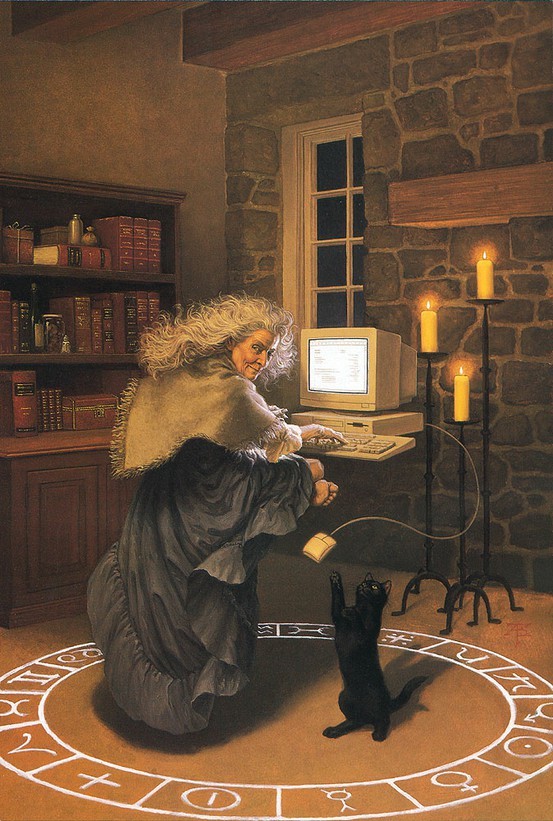
from the ‘96 Battletech TCG
Notice that cost on the left margin means it costs 7 more unless you have the Politics resource (land), which unlike the other 4 resources (colours) had no game effects other than making celebrity pilots and “orbital bombing” direct damage cheaper
Somehow at the time this was not obvious as a metaphor for the post-Cold War “New World Order”, because the comparison set was like On The Edge and Illuminati and Netrunner and Illuminati and the X-Files CCGThe ‘90s were paranoid conspiratorial as hell, just like the ‘50s shit doesn’t make sense without that

it was a joke that was made and seemed unfair at the time, but I guess it was a joke made by people who’d lived through the ‘80s
when I look back at late ‘90s leftism, the nagging homonculus in my brain is like “Kyoto Now, Rachel Corrie, antimondialism and the Battle of Seattle, tree-spiking”
and my heart is just [Tom Morello riff]
Cookie Kwan “#1 on the west side” -> Amy Wong -> Asian reporter Tricia Takanawa
Should give more thought to Felicity in terms of ‘90s white middle class return-to-the-city narratives
me: With time to reflect, maybe the rise of active, "transformative" fandoms and "remix culture" we so celebrated in the '90s really did have a downside.
me: At the mildest, with the splintering of audiences, TV viewer-creator interaction has gone so far past alt.tv.simpsons and alt.tv.x-files to the point some shows and creators seem to see their role as *servicing* a social media following in a way that seems like eating seed corn
me: And then getting to the "toxic" fandoms that claim ownership of a media property and viciously defend it even from its creators... I almost wonder if those authors like Anne Rice who cracked down on fanfiction were on to something, to say "no, this is not a LEGO kit of themes, characters, and plot elements to assemble and reassemble according to the instructions or not as you will, it is a coherent and mutually supportive work of art"
me, five hours later: Alternately, "Lestat c'est moi"
Reminded how for the 1996 election, the ABC network version of hip libertarian rebel cynic Bill Maher’s political humor variety show “Politically Incorrect” did a recurring skit called “Strange Bedfellows”, where Al Franken (for the Democrats) and Arianna Huffington (for the Republicans) would playfully trade barbs while sharing an oversize prop bed. Which was kind of riffing on the way that two of the parties’ highest-profile strategists, the Dems’ James Carville and the GOP’s Mary Matalin, were married to each other
This is all you need to understand late ‘90s America. This is all we had at the time, at least
“How do I stop being afraid? ‘Know that there is no safety anywhere. There never was and there never will be. Stop looking for it. Live with a fierce intent to waste nothing of yourself or life.’ There was one final message: ‘Turn fear around. Its other face is excitement.‘”— Ann Shulgin ‘PiHKAL’ (via cafetoile)
Today, deterrence through classical music is de rigueur for American transit systems. Transportation hubs from coast to coast play classical music for protective purposes. Brahms bounces through bus stops and baggage claims. Travelers buy Amtrak tickets to Baroque Muzak at Penn Station; Schubert scherzos grace the Greyhound waiting area in New York’s Port Authority Bus Terminal; Handel’s Water Music willows over the platforms of Atlanta’s MARTA subway system. Beyond big cities, the tactic extends to small towns and suburbs across the continent. In Duncan, British Columbia, Pavarotti’s tenor tones patrol the public park dispersing late-night hooligans, while the Lynchburg Library in Virginia clears its parking lot with a playlist highlighted by such scintillating soundtracks as Mozart for Monday Mornings and A Baroque Diet. In the most dramatic account of concerto crime-fighting, the Columbus, Ohio, YMCA reportedly dissolved a sidewalk brawl between two drug dealers simply by flipping on Vivaldi’s Four Seasons.
Baroque music seems to make the most potent repellant. “[D]espite a few assertive, late-Romantic exceptions like Mussorgsky and Rachmaninoff,” notes critic Scott Timberg, “the music used to scatter hoodlums is pre-Romantic, by Baroque or Classical-era composers such as Vivaldi or Mozart.” Public administrators seldom speculate on the underlying reasons why the music is so effective but often tout the results with a certain pugnacious pride. As a Cleveland official explained, “There’s something about Baroque music that macho wannabe-gangster types hate.” The police chief of Tacoma, Washington, echoed the same logic (and the same phrasing): “By playing classical music, we hope to create an unpleasant environment for criminals and gangster-wannabes.” One London subway observer voiced the punitive mindset behind the strategy in bluntest terms: “These juvenile delinquents are saying ‘Well, we can either stand here and listen to what we regard as this absolute rubbish, or our alternative — we can, you know, take our delinquency elsewhere.’”
so if transit systems play classical music to flush out the poor, do shopping malls play pop music to flush out the middle class?
because i hate it
I definitely remember “mall music“ as a distinct kind of elevator music/Musak
Oh man there’s another thing I get to explain to the kids - midcentury American public spaces used to subscribe to services that provided unobtrusive, inoffensive-to-the-point-of-being-offensive background music
I remember it being a collection of original compositions and downtempo instrumental arrangements of recognizable tunes. This maybe had something to do with how playing mainstream/’freelance” not for-hire musicians in public requires paid licensing from ASCAP (American Society of Composers, Authors and Publishers) or BMI or SESAC or something
anyway that kind of ended around the same time that TV shows (and to an extent, movies) stopped using original scores and started using popular music, in the mid-’90s
(actually the TV story is pretty interesting, from 21 Jump Street and Miami Vice pioneering it in the ‘80s to the WB teen soaps running post-episode “as heard on” segments in the ‘90s to be a more appealing venue to “break” bands
Well the ‘90s were a time of TV pushing to be an alternate venue to radio to break through, MTV was the progenitor obvs but Little Fluffy Clouds broke through a Volkswagen commercial or something, didn’t it? And a Hooverphonic song.
Actually actually, there’s a lot of interesting stuff there - the ‘90s were when video games (say, Wipeout XL and Gran Turismo) were on CDs with the capacity and started licensing pop music. You know those deals go through your publisher and not your record label and thus present an alternate funding stream?
And around the same time film soundtracks were establishing themselves as an independent profit source - Prince’s “Batdance” didn’t thematically match the 1989 Batman movie at all, but it made the soundtrack a must-buy. Probably the apex there was Baz Luhrmann’s ‘96 Romeo + Juliet, structured around the soundtrack and shot-by-shot lush like a music video)
admittedly, I’ve never seen Zack de la Rocha and Adam Sandler in the same place at the same time
Reading that NYT article on the intellectual dark web everyone is talking about.
Does it make sense to say that, abstracting out the opinions of these people, they’re also unique in their business model? IE mostly unaffiliated with normal institutions/media companies, doing podcast-like things, getting money on Patreon-type-stuff, and also being really successful / having big personality cults around them?
Does anyone know of anyone like this either on the left or the more conventional non-taboo National-Review-reading right? Am I right to think it’s at least pretty rare? I can’t think of anything, but I don’t know whether that’s just my limited perspective or a real fact about society.
@kontextmaschine, maybe?
My 2:30 am response is to point out that National Review reviewed Ayn Rand’s Atlas Shrugged as raw untutored bullshit unhelpful to the mid-20th century conservative cause, and even with Michael B Dougherty on board and getting past the NeverTrump stuff I wouldn’t look to them to divine where popular energy is going until after the fact
I remember reading them (sometimes on paper!) in the late ‘90s, and noticing that everyone was trying to pull this fake Buckley voice of writing like an upper-class British ponce, with the exception of John Derbyshire, who confident in the knowledge he was an upper-class British ponce allowed himself a personality
Then The Corner really was an innovation in group blogging (after the Budapest suck.com ex-expats at Reason) and Jonah Goldberg and them used it to backslap over shit Simpsons jokes
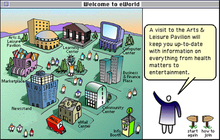
eWorld! The Apple-specific mid-90s Prodigy-alike (before AOL was even hegemonic)! We tried this for like a month free with our Performa 6115 back in the Gil Amelio years when Mac modems were called “Global Village” and how ‘90s was that
at this point the C.L.I.T. from Jay and Silent Bob Strike Back is maybe the biggest impression ‘90s animal activist “terrorism” left on American culture
It’s onto something but those were only ever composed as the initial sting