shrine to the prophet of americana

#web 1.0 (40 posts)

Your Granddad On The Internet

Your Granddad On The Internet

I’ve been thinking, as I always am, about the 90s and how we got here from there

And one thing I thought about was the figure we used to have of Your Granddad On The Internet - who would include you and all your brothers and sisters and parents on long e-mail FWD: chains about things that were transparently false on their face, frequently conservative-themed, frequently in ALL CAPS

Because apparently such a critical mass of people on the internet had that exact experience with their exact grandfather that it was a trope. Which brings up two points:

1) “People circulating viral conservative misinformation to their family and friends on the internet” is not a phenomenon of social media, it was there well before

2) Though these people were on the internet, ubiquitous on the internet even, they weren’t of the internet. Little or none of it was made for them and there was a hegemonic Internet Culture that recognized them as outside it.

So what was really going on? Well, let’s try to define the issue by subtraction.

It wasn’t just that he was a granddad - there were STEM professor wizards who’d been on USENET since the early ‘80s, or grey ponytail hippies from The WELL or whatever, and not only were they part of The True Internet, they were its founders.

It wasn’t just that he was out of it, on a tech or social level. Maybe your dad was wasting your inheritance chasing his brilliant day trading hunches, maybe your mom was going on Focus on the Family forums to complain about TV shows treating homosexuality as just another way to live. Probably they were both Eternal September AOLers who would ask you troubleshooting questions revealing an astounding ignorance of how computers work and somehow expect a useful answer that respected that absurd model.

But if they weren’t part of The True Internet they weren’t really rogues against it, at some level they got how you were supposed to interact with the internet - you found the site or community that corresponded to your interest and pursued it there. If anything their posts and e-mails too formally followed letter-writing structure, and they may have made dumb or tautological arguments in support of their points but they had the sense they were supposed to make arguments.

It wasn’t just that he was obnoxious - the notion of the “troll” dates to USENET at least, as someone who says things to get a rise out of people, or to bait them into wasting time rebutting something. To “own” them, basically. And annoying or not, this was accepted as part of what the Internet is, one of the signal features of its culture, really. But even when you weren’t sure if Your Granddad On The Internet actually believed something he sent you or just passed it on to signal what side he was on and how fiercely, he wasn’t trying to “own” you, he REALLY WAS on that side, he wanted you to associate him with that position, and ideally join him.

It was probably at least in part being retired and having spare time and no other social outlet, back in the day going online meant going to a specific piece of furniture in a specific room of your home when no one else was using the computer and spending maybe 3 minutes just getting online, it was something you blocked off time to do. The young generation could just come home from school to the cul-de-sac and get online for lack of anything else to do, the parents’ generation was too busy to have enough uninterrupted time to become Extremely Online?

The thing I’m really wondering about is class. What was the cost of being Online back then? Say a new computer and modem every 4 years at around $2400 (Grandpa sure wasn’t building his own, but then he didn’t have to keep upgrading video cards either), $40 for an ISP, ideally $10 for another phone line? That’s $100/month, or alternately $50/mo and the ability to make $2.5k purchases on demand. And the kind of senior citizen who, in 1998, lived separately from his children, could swing this, would think to swing this, has multiple agemate peers and children’s households who did swing this, was a particular group. “Middle-middle” class AT LEAST and probably higher, probably went to college back when only 10% of people did.

BUT that doesn’t make sense. My theory is that this used to be a more marginal behavior on the internet, but if it’s gotten more common since the late ‘90s I don’t think it’s because the Internet has grown more full of wealthy old patriarchs since.

So instead how about this theory: the internet in general was pretty wealth-marked in 1998 (far more than we realized, with our American mythology of universal white suburban middle-classness and “global village” Internet mythology) BUT, of people who were more wealthy in 1998, the most likely to NOT have internalized upper-class practices were the grandfathers from the “Silent” or “Greatest” generations before the postwar “mass middle class”. Our parents were beavery professionals who settled into the suburban cocoon, we knew we were destined for glory (or at least selective colleges) from birth, but THEY were socialized into some pool hall, street gang, farmhand, enlisted man kinda culture where boldness of assertion counted more than patient derivation from shared principles.

And if the Anglophone internet is ::gestures:: like this now maybe it’s cause it’s less of a professional-class preserve? The dividing line maybe being smartphones where “people on the internet” went from “people who specifically spend $X/mo on it as luxury” to “people with telephone service”? That’s a real possibility, that for all the “Global Village” stuff the wondrous effect of the ‘90s internet was to create a cultural space that was MORE gatekept by wealth and education.

That’s… kind of depressing, though. “Haha you thought the world was getting better because you were eliminating elitist barriers but actually it’s cause you were making them higher, which is good because the poor and non-elite are disproportionately idiots with worthless ideas and to the extent they’re on top of things the thing they’re on top of is undermining the basis of a good society, and anyway those times were a phenomenon of a narrow early adopter base and you’ll never ever get them back unless you make the non-elite economically and politically irrelevant.”

Depressing but very well precedented, that’s exactly the arc newsprint, radio, and TV followed before.

Tagged: web 1.0 web 1.5 kontextmaschine classic

Something I remember from Web 1.0 was background images that just looked like wallpaper Like, pastel or beige or other mild...

Something I remember from Web 1.0 was background images that just looked like wallpaper

Like, pastel or beige or other mild colors with unobtrusive repeating elements

Which seems weird now why insert ANY such obnoxiousness vs. white backgrounds but back then a well-tiled 4-8Kb gif* could make your whole page colorful while style sheets hadn’t been invented yet and colorful spot illustrations could take upwards of a minute to load

*back then gifs weren’t synonymous with animation, known more for reduced color palettes (and thus file sizes) vs. jpegs

Tagged: web 1.0 90s90s90s

Tagged: web 1.0 web 1.5 web 2.0

The Old Internet I Loved

The Old Internet I Loved

What I Thought It Was:

A World Where Established Orders Were Rendered Superfluous, and In the Absence Of Coordinating Forces, A Congenial Culture Arose From The Free Interplay Of All the World’s Diverse Peoples

What It Was, Apparently:

A World So Hegemonically Dominated by People In a Similar Class and Cultural Position That Our Interests Were Simply Uncritically Adopted as Local Cultural Norms, Which Could Then Be Misread as the Sensibility of the World Entire

So uh I guess it was that second one I was fond of the whole time and saw as our salvation from a broken world?

Tagged: web 1.0 web 1.5

It’s so weird that in the 2010s there’s a definite way young white men self-radicalize towards ultra-right racial violence on...

It’s so weird that in the 2010s there’s a definite way young white men self-radicalize towards ultra-right racial violence on the Internet and that’s not at all how Dylann Roof did it.

Homeboy Googled his way to the Council of Conservative Citizens webpage. Webpage! That’s like going full 1488 Kill-The-Jews ‘cause you read a book on the anti-Dreyfusards at the library, man.

Tagged: web 1.0 dylann roof

Here’s my experience growing up in the global village. My friend and I had a shitty noise band and somehow we did a split with a...

fengshuiofficecubicle:

Here’s my experience growing up in the global village. My friend and I had a shitty noise band and somehow we did a split with a band in Ecuador who we talked to on some forum (the singer’s wife would translate our conversations) and then ten years later I find some canadian noise zine did a review of our album and said it was terrible. Well, it was terrible.

Tagged: web 1.0 web 1.5

through the years realized that through whatever blind groping the ‘90s-ass “edgelords” were desperately trying to save us from...

through the years realized that through whatever blind groping the ‘90s-ass “edgelords” were desperately trying to save us from this, through proper gatekeeping and filtering

and at first I’d thought it was gratuitous and supported it being relaxed, maybe not shaming everyone who publicly mourned a suicide, mea culpa, mea culpa, I have debts to pay

Tagged: web 1.0 web 1.5 blazing saddles was a farce

The Dream and Promise of Multimedia, Regained… – Midboss (Em) – Medium

The Dream and Promise of Multimedia, Regained… – Midboss (Em) – Medium

light-rook:

obscuritory:

Essential post by Emilie Reed about multimedia CD-ROMs and how they’re related to modern messy indie game aesthetics.

The multimedia CD-ROM is a kind of exuberant over-response to the capability of digital devices to convey things that were previously experienced through different forms, images, text, video, sound, all-in-one. Often, these CD-ROMs were more about the fact that such a thing could now be done than whether the thing itself was actually useful.

I’m 100% here for messy terrines as a metaphor for “multimedia” early internet culture.

Tagged: web 1.0 web 1.5

Tagged: web 1.0

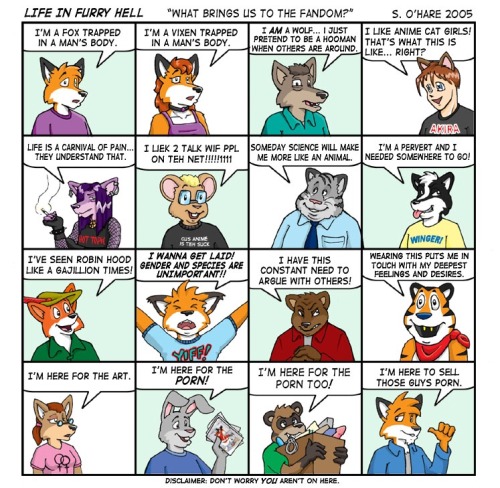
Twice today tried to google something I’d googled before and couldn’t find it First, this classic comic on 90s net furry culture...

Twice today tried to google something I’d googled before and couldn’t find it

First, this classic comic on 90s net furry culture which in row 3 column 2 invokes the old concept of “furry gay” (as distinct from gender dysphoria, r1c2)

The 90s had a richer concept of pansexuality as, ah, undiscrimination

ANYWAY, the second was that Richard Seymour attempt to schism the SWP with Laurie Penny (and China Mieville, thus their faction were the “Sino-Seymourists”)

look out for those memory holes!

Tagged: 90s90s90s richard seymour web 1.0 web 1.5

Tagged: 90s90s90s web 1.0 web 1.5

Scare Factor

kontextmaschine:

So here’s a site for you: the Closing Logos Wiki, a collection of production company logos from the end of shows. (This month is 2-D and 3-D Logos Month). Pretty comprehensive, still pretty compulsive in a kind of pre-2007 internet way.

Mostly seems to be the work of one guy. Fair enough, you read around, you read the descriptions of enough, and you notice each one has a “Scare Factor”, which - it’s not really clear what it’s for. Sometimes he seems to be using this for an esthetic critique - he’s not very fond of black/neon color combinations, which makes him not very fond of the late ‘80s-early ‘90s graphics. But sometimes he’s being strangely earnest about it, that the logo is scary or “terrifying”. And then you read enough of these entries, each with their own “Scare Factor” section, and you realize there’s not actually a line there, for him.

And you realize that not only is this site the product of a guy who felt compelled to compile every production company logo he could find, but one of the things he made a point of addressing for every single one is “whether this production company logo could possibly scare you”. And the answer is sometimes yes! (Another thing he addressed are “what are three or four nicknames I could coin for this logo?”)

Check out all the “Scare Factor: High” reviews. Check out the MGM one especially, where a lot of them are fine but one is terrifying because it involves a particularly scary lion, and also banner.

And now look at this “rules’ page. I mean as petty as any forum mod, though the enthusiasm for putting “BANNED” in red caps is something, but also of interest is the only rule with a listed exception:

17.) To the Writers and Up: Do not add personal comments to the articles. That includes personal scare factors, your own side notes, making the articles your own forum and telling people not to upload images or videos on the articles (that even includes locking pages where no one can edit or put up images or videos). The pages here are for logo descriptions, pictures and videos ONLY. If you want to share personal opinions, go to the Favorite Logos and Dreaded and Hated Logos pages, or use the discussion feature. If you disregard this rule, you will receive a warning. If you do it again, you will get another warning and a demotion, and if it continues, you will be BANNED!

  • 17b.) If you must make a thread about a logo that scares you, do it on the page the logo is described on, and nowhere else. Any thread running afoul of this is at risk of deletion.

There’s a story here.

Tagged: rerun web 1.0 web 1.5

what's your distinction between Web 1.0 and 1.5?

Anonymous asked: what's your distinction between Web 1.0 and 1.5?

onboard third-party scripting like message boards and stuff past hand-coded static HTML

this represented the end of the self-sufficient yeoman web homestead dream but allowed the focused communities that supported things like webcomics

until all was centralized when the social platforms realized the old “portal”, “push content” dreams with 2.0

Tagged: web 1.0 web 1.5 90s90s90s amhist

Your regular reminder that reblogging visceral images of dead or dying human beings, as a form of activism, is the quickest way...

happinessisnotalwaysfun:

Your regular reminder that reblogging visceral images of dead or dying human beings, as a form of activism, is the quickest way to make me drop a blog. I see the point you’re trying to make, and replace it with “I already knew murder was bad and have a strong personal preference for not seeing unwarned-for images of torture in my personal space, thank you very much.”

Guys, don’t do this.

(Bonus politics: have you ever seen a photo of a dead white person? No, me neither. Photos of dead non-white people are frequently taken and published, always under the laudible aim of conveying important news. But over time, it does make one wonder why, say, images of wars in far away places and unjust murders and natural disasters are best illustrated by a photo of a dead, non-white child - but something like the Manchester bombings is not.

On a case by case basis, there is always a good reason to take and show these photos - but when you take a step back and look at the culture as a whole, turns out some bodies are seen as more worthy of respect and dignity and privacy even in death, and others ok for public display)

that’s what we were trying to do with the Internet in the ‘90s with rotten.com and Stile Project and that, bypass the unworthy fainting old ladies and stabilize the world as a Mexican newspaper, where we ALL confront our nature as disposable meat or are else properly driven from the public square

Tagged: web 1.5 web 1.0 90s90s90s

Humanity is just fundamentally unworthy of technological civilization.

femmenietzsche:

Humanity is just fundamentally unworthy of technological civilization.

Remember when we were young and the people fundamentally worthy of technological civilization were gonna be humanity?

Tagged: web 1.0 web 1.5 90s90s90s

now THERE’S the internet I was born into

now THERE’S the internet I was born into

Tagged: web 1.0 web 1.5

introducing yourself on webforums fifteen years ago like:

bogleech:

You: uhhhhh hi I’m new i guess, just wanna chat about my favorite show too or whatever

iNvAd3rJ1M posted: *pounces* HELLOoOOOO NEW PERSON!!! *throws confetti*

911_NVR-FRGT posted: Hi there! You’ll find a Relaxed Atmosphere Here in Our Community! *points* Beer is In The Fridge, Curfew Is At 9! Haha I’m old

SSJgoku1994 posted: I am a pineapple! Monkeys!!!!!

Drag0n~Swords posted: Forsooth, a stranger doth enter the realm!

dumbledoreftw posted: Welcome! Hope you stick around! We don’t bite….. much!!

Greg posted: HITLER WAS A MISUNDERSTOOD GENIUS AND ILL GIVE YOUR WHOLE FAMILY AIDS IN HELL YOU PIECE OF SHIT

Lady*Unicorns*76 posted: “lol” (Laughing Out Loud!) don’t worry about greg sweetie! He’s just our little pet troll and you get used to him!! ;-) <3<3<3

Tagged: more like 20 years but ok not wrong web 1.0 web 1.5

Cantina_Band_Techno_Version.mid John Williams - Cantina Band (Techno Version) MIDI

bestofmidi:

Cantina_Band_Techno_Version.mid

John Williams - Cantina Band (Techno Version)

MIDI

Tagged: same web 1.0

15 Unintentionally Overpowered Final Fantasy Attacks

15 Unintentionally Overpowered Final Fantasy Attacks

This is some anorak-ass obsessive Web 1.5 content shoved into a clickbait listicle Web 2.5 format

Tagged: vidya final fantasy it's media web 1.5 web 1.0

Railroads Around New York State

Railroads Around New York State

Hey, take a look at this website. It’s… I don’t know what it is, really.

My first instinct is to say with the cluttered, hand-coded look, in-line off-brand ads, ancient clip art, and the assembly of hobbyist knowledge in a non-interactive, idiosyncratically paginated and directoried, personally hosted site, it’s a perfect example of the Internet 1.0 of the late 1990s.

But that’s not true, is it. If you follow links - and there are a lot of them - the “site” sprawls over multiple domains, with the same appearance, but unique (and honestly interesting) content. All kinds of railroad stuff, but also things like French golf courses.

The more I look at it the more it seems to be mid to late-2000s SEO-optimization, which would explain the network of links to related pages which might or might not themselves be optimization platforms. It definitely postdates (or at least has been updated since) the development of Facebook and Twitter integration. But by the standards of SEO optimization it seems awfully artisan - the material’s higher quality than I expect from content farms, and seems personally curated and to maintain some semblance of a coherent voice, plus it doesn’t follow the one page per topic, cranked-out and autoformatted for digestibility format I’m used to. Plus, optimizing for what? The ads are a total dog’s breakfast - the only recurring product that seems to be “in-house” are logistics services, so that might be it.

The more I follow links - half because I’m fascinated about the material discussed, half because of the page itself - the more I’m amazed at how much train content there is out there - it seriously outpaces the pop culture products I’m used to as icons of fandom content saturation. Then again, “trainspotting” was one of the original pre-internet models for anorak/otakudom. I guess it’s well-positioned for that - trains tie into pretty much every aspect of Industrial Era life, and are full of little whorled and niched aspects packed with arbitrarily large yet still finite - and well-documented - volumes of information. The kind of field anyone could enter, would take years to master, and yet could never be feasibly completely conquered. Always one more fact to track down; one more source to unearth; one more person to contact, learn from, credit, integrate into the society…

Man.

Tagged: history web 1.0 web 2.0 seo