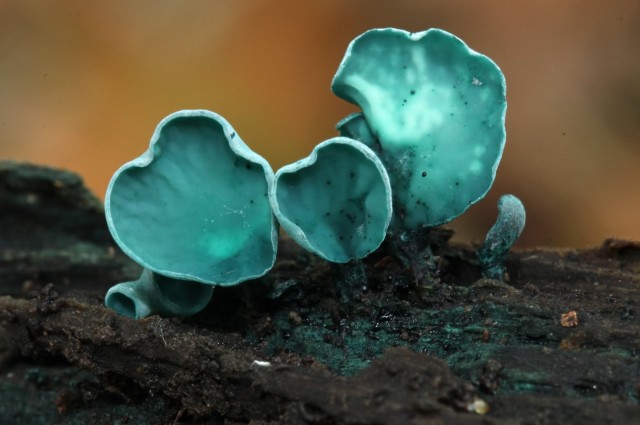
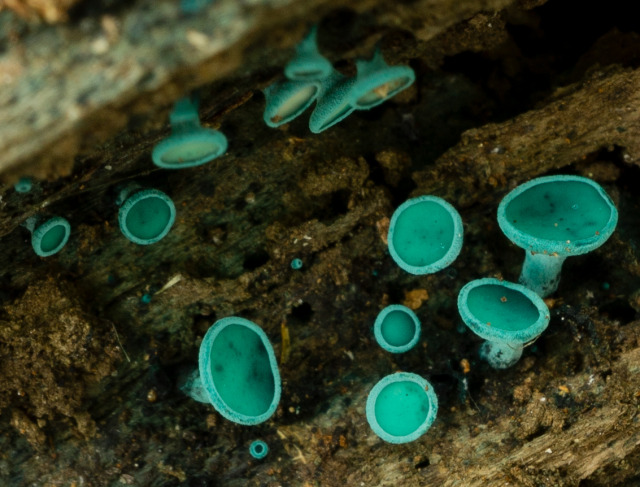
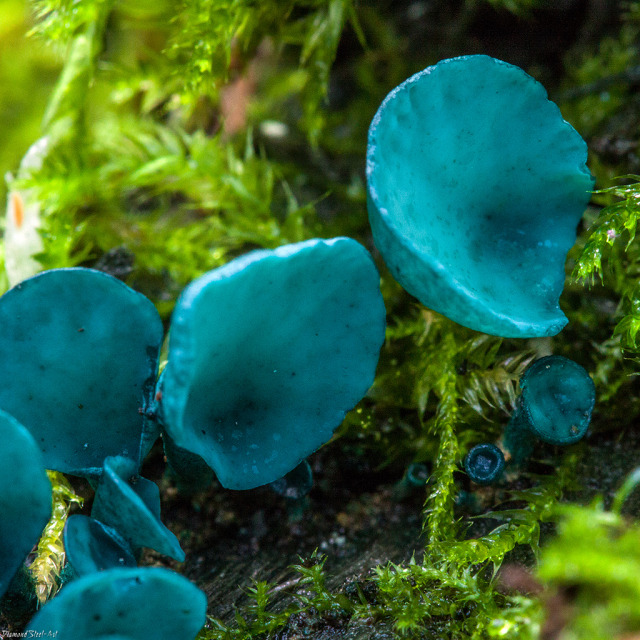
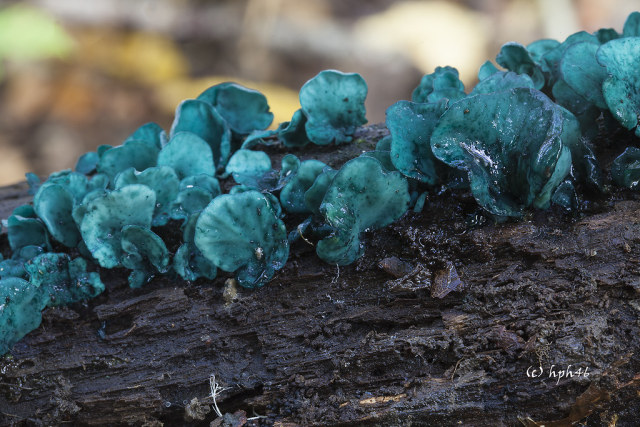
Chlorociboria aeruginascens (and the macroscopically identical species Chlorociboria aeruginosa) is a fungus commonly known as the “green elfcup”, or “green wood cup”, due to its characteristic small, blue-green saucer shaped fruit bodies. They are often found on bark-free dead wood, particularly oak, beech, ash and hazel all year round.
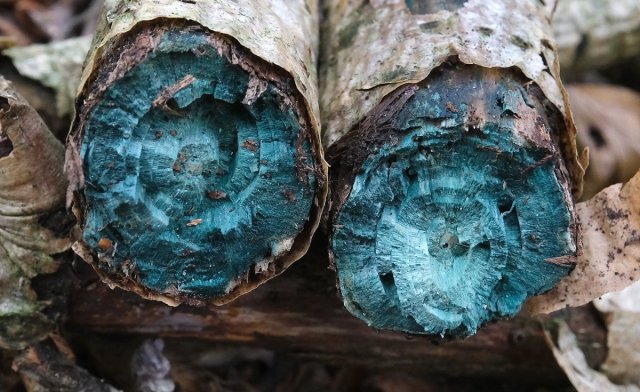
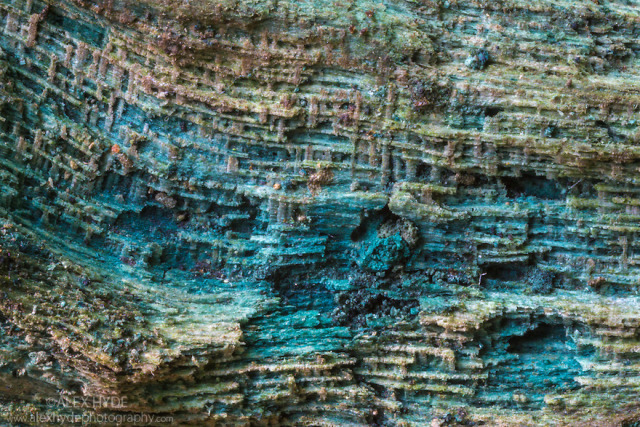
Their fruit bodies, however, are seen much more infrequently than the turquoise staining of wood caused by said fungus, also called “spalting”.
Spalted wood also comes in many other varieties. It is prized by fine woodworkers and has been used since the 14th century in wood inlays. A great example of this is Tunbridge warewooden box covers, decorated with colorful designs made from pieces of different colored woods, many of which were spalted.
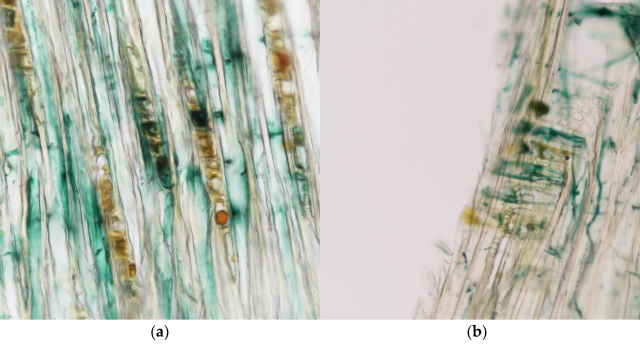
Pigmentation of the infected wood occurs when fungi produce extracellular pigments, in this case Xylindein, inside of its fibers. However, in some spalting fungi, pigments are generally bound within the hyphae cell walls. A visible color change can be seen if enough hyphae are concentrated in an area.