shrine to the prophet of americana

#same as it ever was (568 posts)

We have no way of ascertaining the size of Xerxes’ invasion army of Greece in 480–479 bc, which numbered in the millions...

femmenietzsche:

alexanderrm:

femmenietzsche:

alexanderrm:

femmenietzsche:

We have no way of ascertaining the size of Xerxes’ invasion army of Greece in 480–479 bc, which numbered in the millions according to Herodotus (7.60–99), or the size of the armies assembled by Darius III against Alexander at Issus (333 bc) and Gaugamela (331 bc), again estimated at 300,000–600,000 and 200,000–1,000,000, respectively, by the Greek sources. Buckets of scholarly ink have been spilt in the effort to make sense of these untenable numbers.  Demographic and logistic considerations and comparative deductions would suggest, in my view, that Xerxes’ army may have numbered anything between 100,000 and 200,000 men. For reasons already explained, this imperial army was not overwhelmingly superior in numbers to the combined forces of the Greek militiamen fighting on their native soil, if only the Greek poleis had not been fraught with division among themselves in an all too familiar fashion, many of them allying with the invaders. Darius III’s armies were probably of more or less the same size as Xerxes’, including a few tens of thousand cavalry. All in all, it is not commonly recognized that there were probably more Greeks in the world than ethnic Persians. Indeed, in the huge multi-ethnic levied imperial armies, the relatively small Persian and Mede standing forces, together with the levied Iranian contingents, both horse and foot, were relied upon to shoulder most of the fighting. To these more trustworthy elements were added allied Greeks in Xerxes’ army and Greek mercenaries in later Persian armies, including those of Darius III, troops who increasingly constituted the heavy infantry of the imperial armies.

That’s from the excellent War in Human Civilization by Azar Gat. I haven’t been quoting it here, because most of the interest comes from the way he slowly lays out major cross-cultural similarities in warfare, but it’s a fascinating book and I quite recommend it. It’s perhaps the most Darwinianly fatalistic book about human society I’ve ever read. If you’re interested in, for instance, the way city-states across space and time form, rise, and inevitably fall, this is the book for you.

It feels like this is neglects the fact that the majority of the population in the Achamenid Empire was neither Persian/other Iranian nor Greek, including huge numbers of Semitic people in Egypt and the Fertile crescent, Indo-Aryans in the Indus Valley, and whatever ethnic group(s) were still living in inland Anatolia beyond the Greek colonies (I’m honestly not sure who was there or when they disappeared, but there was definitely someone, maybe descendants of the Hittites) and other relatively minor ethnic groups. This doesn’t seem so bad by itself, but the focus on Greeks seems to me that it might be symptomatic of broader worldview problems like taking a Greco-centric view of the period.

I haven’t read the book so have no idea if this is true or how bad it is, just felt like bringing it up so you can consider that when reading.

This isn’t entirely clear from the quote I posted, but one of the points the author was making is that multiethnic empires weren’t always able to bring as much force to bear as you might expect, since conscripts from conquered peoples made unreliable and ineffective soldiers, and empires often had to rely on fighters from the ruling ethnic group(s) or on foreign mercenaries. That’s why he emphasized how few ethnic Persians there were at the time.

Ah, nice! Glad I asked this. I’m actually not surprised that huge empires weren’t able to bring as much force to bear as most people might expect, but I was assuming it was more to do with the logistics of transporting huge armies relatively large distances and the fact that you simultaneously have to guard against revolts and guard all your other borders while doing so, and the fact that viceroys or nobles in outlying provinces are harder to keep tabs on (to make sure they’re contributing enough soldiers and money); I wouldn’t have thought cultural disloyalty was such a big factor.

Does he have good statistics on what portion of their armies were Persian? Or comparable statistics on something like the Roman armies or the armies of the Diadochi where we have more writing from their perspective?

It wasn’t just disloyalty, he makes it sound like a lack of spirit as much as anything. But he does also list some of those other reasons why empires were less effective at war per capita, including logistics, as well as the fact that citizens of an empire become less adept at fighting as they get used to peace over the generations. For example, by midway through the imperial period, Rome didn’t have a problem with cultural disloyalty, since most of the subject populations had been sufficiently Latinized, but they did have progressive problems getting Romans to fight. First, Italians stopped joining the legions almost entirely. Then the provincials became less warlike over time and barbarian mercenaries had to be brought in. So it wasn’t just the one cause.

He does give numbers here and there, but it’s not primarily focused on that. This is the most he has to say about the makeup of the Persian army:

Most empires possessed a three tier army. [But not Rome, which was fully professionalized.] The first tier consisted of a relatively small nucleus of fully professional troops, mainly comprising a central army/imperial guard. As already mentioned, in the Achaemenid Persian Empire this central standing force appears to have numbered some 20,000 troops, half of them horse and half foot. According to Herodotus, they were called the ‘Immortals’, but his source probably confused the Persian word with a similar one meaning (the king’s) ‘Companions’, which would make much more sense. In Han China, a central standing professional army of roughly the same size as the Persian one was stationed around the capital, augmenting the masses of conscripts.

The second tier consisted of garrison troops in the provinces and on the frontier, to which empires widely applied the principle of military colonists. Although most of the land allotment in return for semi-professional military service was carried out in the frontier provinces, it was also variably practised in the Empire’s heartlands, because the beneficiaries of this system proved somewhat more committed to actually fighting than ordinary imperial levied troops. The system is earliest attested to in Akkad and then in Hammurabi’s Babylonia in the eighteenth century bc, as well as in the Hittite Empire. It persisted in Mesopotamia in Assyrian and Chaldaean times, was taken up by the Persian Empire, and later served the Hellenistic kingdoms for sustaining their mostly Greek and Macedonian colonist–soldiers. The same principle was widely used in China, becoming more prominent during the later Han in inverse relation to the decline of the conscript–militia forces. After a return to militia armies during the Sui and T’ang Dynasties (ad 581–907), the institution of military colonists and military families was revived by the later T’ang, together creating a mixed force pool of about 600,000. A more or less similar force structure was maintained by all subsequent Chinese dynasties, for the same reasons that had handicapped the militia in earlier times. In Indian states, too, military fief holders, maybe those referred to in Kautilya’s Arthasastra (9.2) as ‘hereditary troops’, augmented the royal retinue as a more trustworthy element than the assortment of hired and levied troops.

Third, for large-scale campaigns and during emergencies, levied forces would be assembled and constituted the mass of the army. Native national conscripts from the Empire’s core ethnicity tended to be of at least some military value, depending on the social and geo-strategic circumstances, but they nevertheless played a secondary role to the Empire’s professional and semi-professional forces. Levied short-term conscripts from subject peoples in multi-ethnic empires normally proved to be of very little value. Pressed into battle, they could not be relied upon to do any serious fighting. Although examples abound from across time and space in Eurasia, the multi-national mass armies of the Achaemenid Persian Empire, ‘driven into battle with lashes’, went down in historical memory as typifying such hosts. Their image has survived because the armies were recorded by Greek historians and because both the Persian Empire and its armies were indeed large, although the size of the armies was wildly exaggerated in the Greek sources. Authors invariably exaggerated the enemy’s numbers in pre-modern times, because they both lacked precise information and were patriotically biased.
Tagged: same as it ever was

the last of these things is different from the others

etirabys:

the last of these things is different from the others

like you know the Roman “Tribune of the Plebs” who could issue a veto on any state action in the city was institutionalized from a workers’ revolt where this whole mob chose leaders issuing unrefusable demands and if anyone laid a hand against them they’d insect-swarm him to death

Tagged: same as it ever was

Tagged: same as it ever was

Trump pardons Oregon ranchers whose case sparked Bundy takeover of refuge | OregonLive.com

Trump pardons Oregon ranchers whose case sparked Bundy takeover of refuge | OregonLive.com

Oklahomans warmly call themselves “Sooners” after the founders who settled before the territory was open for claims; Indian Removal was cooption of settler militias in the process of establishing their own southeastern frontier marches; the Proclamation of 1763 banning settlement west of the Appalachians was reviled and ignored; Texas, California, and Oregon started as unpermitted settlements

Claiming unsettled land with your own guns against explicit government prohibition, daring them to do something about it, and seeing them give in is 100% the American way.

Tagged: amhist same as it ever was

GamerGate was proof of concept for a social conservativism updated to defend secular ‘90s culture

GamerGate was proof of concept for a social conservativism updated to defend secular ‘90s culture

Tagged: gamergate amhist same as it ever was

The San Bernardino County Sun, California, June 13, 1937

yesterdaysprint:

The San Bernardino County Sun, California, June 13, 1937

Tagged: kale chard same as it ever was

me: How do I best describe this dynamic where all the History that had been on pause my whole life happens at once and I...

me: How do I best describe this dynamic where all the History that had been on pause my whole life happens at once and I alternate on a daily basis between certainty that all that is worthy will shortly come to ruin and certainty that all that is foul will shortly be swept away in glory?

Charles Dickens: It was the best of times, it was the worst of times, it was the age of wisdom, it was the age of foolishness, it was the epoch of belief, it was the epoch of incredulity, it was the season of Light, it was the season of Darkness, it was the spring of hope, it was the winter of despair, we had everything before us, we had nothing before us, we were all going direct to Heaven, we were all going direct the other way

me: Nice

Tagged: same as it ever was 2018

Golden age Americana gets like one notch trashier when you realize the omnipresent Coca-Cola was an energy drink and Hershey’s...

Golden age Americana gets like one notch trashier when you realize the omnipresent Coca-Cola was an energy drink and Hershey’s milk chocolate was an energy bar

Tagged: same as it ever was amhist

Very Morally Serious foreign policy types scoffing at the Russian-backed breakaway republics at the same time they wring their...

Very Morally Serious foreign policy types scoffing at the Russian-backed breakaway republics at the same time they wring their hands at countries not recognizing the “Republic of China” and, friends

Tagged: same as it ever was

Jury nullification as discussed on the Internet: Keeping some who wasn’t hurting anyone from going to jail for violating some...

kontextmaschine:

utilitymonstermash:

Jury nullification as discussed on the Internet: Keeping some who wasn’t hurting anyone from going to jail for violating some bullshit law

Jury nullification IRL: Keeping someone who was violent against someone subverting the social order out of jail

Absolutely correct. For an example, check out this series on “The Unwritten Law” - the turn-of-the-century practice of acquitting (as “temporary insanity”) men who had determinedly stalked and killed the rakes who had sex with their women.

Two interesting points here: one, that this “Law” metastasized to the point of undermining ALL murder laws, as defendants would offer this difficult-to-disprove backstory.

Two, that the government (under threat of losing the ability to credibly punish killings) responded not with crackdowns but by accommodating the desire to punish adulterers - criminal laws against adultery were passed or rediscovered, likewise “heartbalm” civil actions - “criminal conversation” and “alienation of affection”.

Defendants could even claim a formalized, if limited equivalent to “temporary insanity” defenses - a man who caught his wife in the actual act of sex with another, “in flagrante delicto” was entitled to kill either or both of them, and men who knew or suspected adultery would arrange such “surprise” discoveries for the purpose of claiming a righteous kill.

That’s not the only place in American history to show that pattern - citizens use lethal violence as means of social control, government responds by cracking down not on them but their targets in hopes of rewinning assent to a government monopoly on violence by proving itself willing to use it as they would prefer. Many southern states tightened “Jim Crow” racial codes between the World Wars as part of an attempt to stop lynchings, many victims of which were in jail awaiting trial when they were seized by mobs unwilling to trust the courts with their punishment.

And labor leftists bitch that American strike action is too constrained under the Taft-Hartley Act, but that governments that stand for the suppression of mob violence, extortion, and trespassing would at all allow a mob to forcefully lay sieges on private property with the intent of extracting concessions from its owner – let alone defend them and enforce the resultant contracts – is nonobvious. What it is is the same thing - over the course of the late 19th and early 20th centuries the people had made clear there would be labor militancy, and the government shrugged and decided it preferred it to be backed by the threat of violence by existing government institutions, rather than open violence by private actors who might eventually seek to supplant those institutions.

Friendly reminder that angry men have killed enough people that the government starts enforcing monogamy before

Tagged: reblogging again to draft off the incel discourse government-enforced monogamy incel incels same as it ever was

"i am a monument to all your sins" is such a raw fucking line for a villain it's amazing that it came from halo, a modernish...

spookyscaryskeletitties:

tarradash:

sparkylurkdragon:

cerastes:

biggest-gaudiest-patronuses:

tropiyas:

“i am a monument to all your sins” is such a fucking raw line for a villain it’s amazing that it came from halo, a modernish video game, and not some classical text or mythos

classic texts have nothing on the crazy people come up with in modern times tbh

“I survived because the fire inside me burned brighter than the fire around me.”

– Joshua Graham, Who Is A Fallout New Vegas NPC, Something Most People Throwing This Quote Around Don’t Realize

“If the world chooses to become my enemy, I will fight like I always have.”

– Shadow the Hedgehog in what is widely considered one of if not the single worst game in the Sonic the Hedgehog franchise

this is the source for this text and it haunts me on a regular basis

Tagged: same as it ever was

The comparison I‘d like to see in these incel explainers/“male online radicalization” pieces is to the “consciousness-raising...

The comparison I‘d like to see in these incel explainers/“male online radicalization” pieces is to the “consciousness-raising groups” of ‘60s-‘70s feminism

You know, where a bunch of people got together to share their complaints with the opposite sex? Only to realize they all had the same complaints, which meant they didn’t each face personal problems, as a collective they faced collective problems, a structural problem, a political problem

Tagged: same as it ever was incel incels consciousness raising feminism

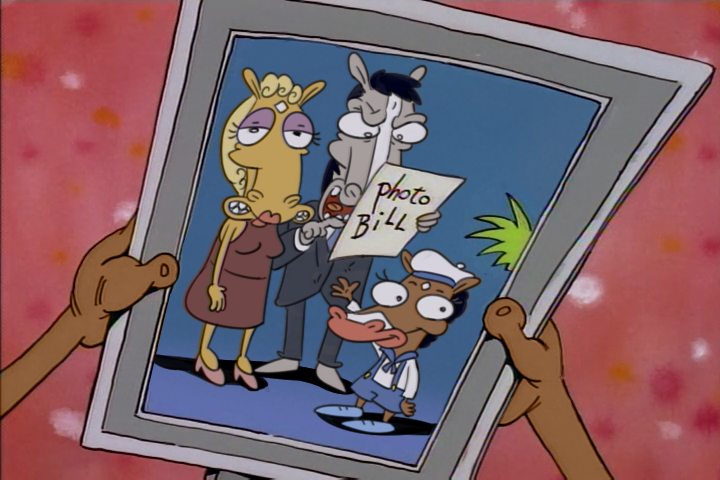
Bojack Horseman in Rocko’s Modern Life!

rockosedits:

Bojack Horseman in Rocko’s Modern Life!

Tagged: nice same as it ever was

Report: 1998 Was Ten Fucking Years Ago

Report: 1998 Was Ten Fucking Years Ago

prudencepaccard:

This article was ten fucking years ago

Tagged: same as it ever was

“ching chong chinaman” is almost a calque of “barbarian”

“ching chong chinaman” is almost a calque of “barbarian”

Tagged: same as it ever was

social media was a good development because back in ancient greece it didn’t exist and people would just be yelling their...

tainbocuailnge:

tainbocuailnge:

social media was a good development because back in ancient greece it didn’t exist and people would just be yelling their opinions in the city square instead and the only way to block them was murder or exile

the court of athens, sentencing socrates to death for “rotting the youth and disrespecting the gods”: blocked, unfollowed, reported

Tagged: not wrong same as it ever was

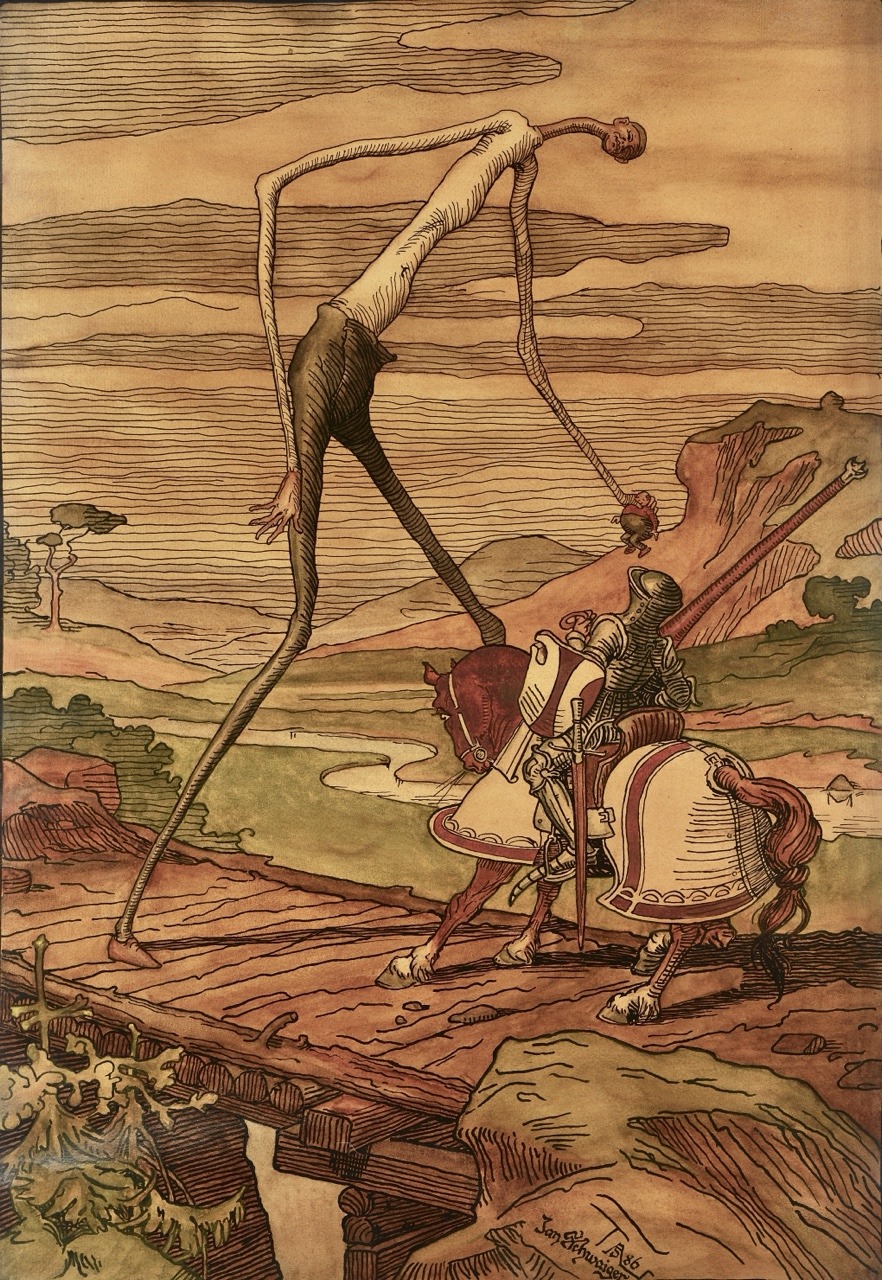
Long, Wide and Sharpeyes. Slenderman’s great-grandfather. By Czech artist, Hanuš Schwaiger (1853-1912).

talesfromweirdland:

Long, Wide and Sharpeyes.

Slenderman’s great-grandfather. By Czech artist, Hanuš Schwaiger (1853-1912).

Tagged: same as it ever was

“Sex Slaves” (c.1930)

spicyhorror:

“Sex Slaves” (c.1930)

Tagged: same as it ever was

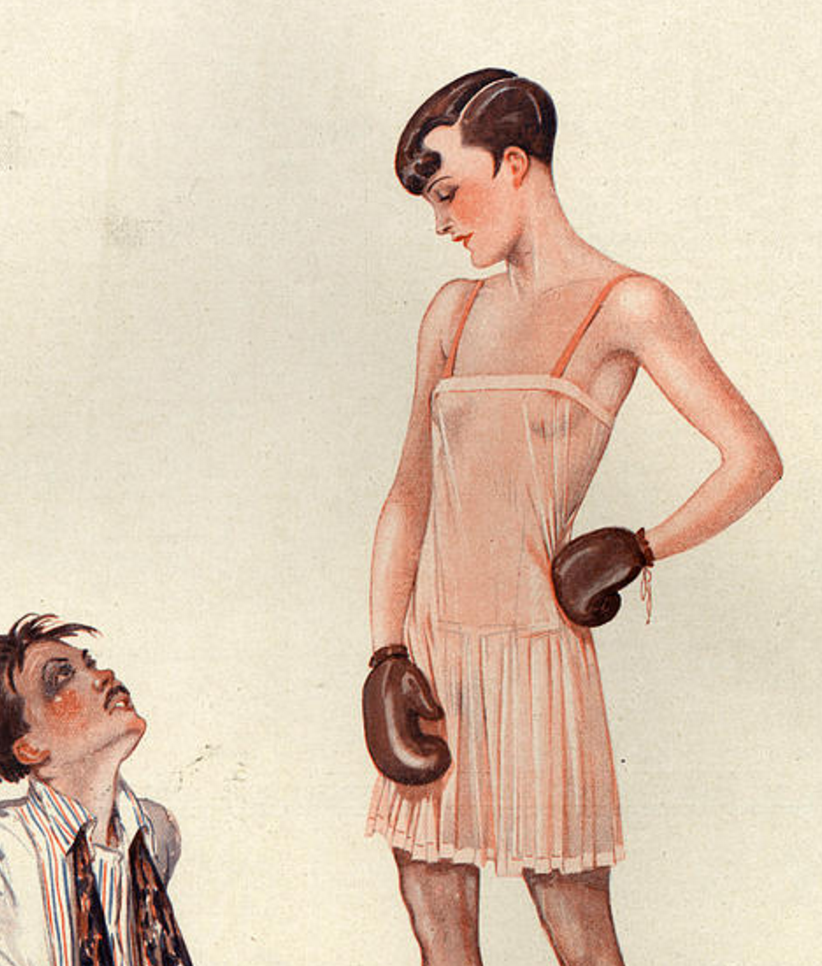
La Vie Parisienne 1926

bobbedboudoirbaby:

La Vie Parisienne 1926

Tagged: same as it ever was

Tagged: this is an ad on tumblr dot com same as it ever was