In which I mumble about wanting to smush more people I like closer together.
yes! let’s make a little rationalist community where families can live and everyone’s not all crammed into the same single house! let’s buy out an apartment building and move everyone in!
Things I Think Would Be Nice To Have:
basic units of 3ish bedrooms clustered around smallish living areas w/ basic kitchen + bathroom
larger communal area for hosting Events
larger fancy communal kitchen for cooking large group meals
communal outdoor area w/ firepit and garden (particularly an edible garden with herbs, veggies, fruit trees, etc)
dedicated co-working area (with a library!)
guest rooms or units where visitors can stay
bike/carshares
It would be cool to do it as a co-op situation and maybe rent out the guest units/event space (on AirBnb?) for extra income, to help bolster those who can’t afford as much rent?
This is basically my ideal living situation that you’re describing. I would like to add exercise equipment to the list of things it would be nice to have. (Only slightly related: if we got some kind of big building I doubt anyone would stop you from riding a bike in the halls)
Also, my mom suggests coming to Utah and buying an old mormon church. Of course that plan would require moving to Utah, so…
hey yo please read up on the history of communal living before you do this, there are best practices and known failure modes and subtle differences in founding design can matter a lot
American communalism comes in waves, the 1960s was the last, there was a big one in the 1840s. Tend to be thinky types into human perfectibility and complex sexual geometry, you guys fit in
Any recommended materials or examples of success?
This isn’t my specialty and I’ve forgotten a bunch of what I ever knew but like, look up the Oneida Community, and the Shakers, maybe ask a research librarian about “American communes” or such
Consider that you are building a micromicrostate for your subsubculture and act accordingly
Formalize your economic/sexual/other repressive structures or they will be a free field of social play
If this is communally funded, the difference in people’s economic situations is a real killer. Not just like coder/app-academy student but guy who gets raises every year/guy in a dead end, girl who just got laid off, think a decade out
People who make more money are not only going to resent paying to subsidize others, they’re going to expect better conditions and more status. They have the option of exit. Which means they have the *threat* of exit.
In cultures that make a point of material egalitarianism but also sexual openness, status and economic struggles can get shunted to sexual access
Honestly work offsite/contribute a high share (or all) of income is best suited to heirarchical or authoritarian communalism, if you want a stable quasi-egalitarianism you’re best if the residential collective participates in a high-skill, high-value added collective industry - look to the Shakers and their chairs, or the longer-surviving kibbutzes in Israel, maybe?
So I get the impression there’s a sudden rationalist(-adjacent) demand for caution w/r/t purposeful group living structures that acknowledged there are failure modes but the concept isn’t inherently a valueless, unsalvageable failure?
One of the things I love about Toto’s Africa (1982, 4 years before Paul Simon’s Graceland) is that the very first verse is about the singer trying to bum some “world music” juju off a local and getting totally blown off
So if I told you someone was using century-old hand-crafted artisanal methods to adapt traditional folk tales into a quaintly obsolete art form from the American Golden Age that would sound like the most twee, precious, non-normie thing ever and I just described Disney animation.
Disney’s pretty weird like that. Like, take the parks. They’re combinations of Coney Island and World’s Fairs with this undisguisable midcentury earnestness. These are places that get seriously psyched about the potential of noveltransitmodalities.
And the theming - “Let’s look forward to the wonderful future of space exploration, celebrate our roots in farm towns and the frontier west, AND enjoy the exotic charm of the South Pacific and Old Dixie!”
THERE IS A PAGEANT WHERE ROBOTS PAY TRIBUTE TO EXECUTIVE-DRIVEN WHIG HISTORY.
Oh. Oh. And. “The rides aren’t very thrilling, but your kids will love the chance to explore the worlds of all their favorite authors - A.A. Milne, J.M. Barrie, Kenneth Grahame, Mark Twain, AND Lewis Carroll - while you’ll marvel at the exquisite background design.”
(Sun-dappled Edwardian neoteny and obsessive set decoration. Wes Anderson makes movies like Walt Disney made parks.)
And we’d recognize this all as a weird thing to exist in 2015 if we weren’t just used to it as the background noise of America. Like, I don’t really watch TV so I don’t see commercials much these days.
Oh man, they’re a trip in their own right if you’ve stopped taking them for granted. Like, “oh hey, for the next 30 seconds some of our best artists are going to use all their techniques and leverage all your emotions and desires and every social value in a masterful, unapologetic, and unforgettable bid for you to give us money, and then everyone will move on and no one will acknowledge this even happened.”
But the Disney World commercials in particular - you notice they don’t really make a case for going to Disney World, or even really explain what Disney World is. Because they’re not pitching Disney World, they’re reminding you of Disney World. It’s not “hey, Disney World is a thing you could go to”, it’s “hey, maybe it’s time for this generation’s pilgrimage”.
Disney’s weird. It’s kind of a company, but also custodian of some of the cultic functions of American culture, something like the priestly colleges of ancient Rome.
Like, they maintain sites of pilgrimage. I’m not saying that as a joke. Back of the envelope calculation, Americans go to Disney parks at a rate 7 times higher than Muslims go to Mecca. (The line between “tourist trap” and “religious site” has always been thin.)
And they’re custodians of the national narrative. Like I’ve said, they pitch “continuity with midcentury small town and earlier frontier culture” as a fundamental, almost taken-for-granted aspect of Americanness with a confidence and charm you don’t often see these days. And I mean, hell, the Disney animated canon itself basically is to America what Grimm’s was to Germany.
And as custodians, they curate that narrative - like, we joke about “you know your identity group’s made it in America when you get your own Disney princess”, and laugh at the people reediting Disney character designs to look like their specific subgroup, but that only works because it’s fucking true, your identity group’s made it in America when you get your own Disney princess. I’ve worked with Disney Channel casting, and they mix ethnicities with the same care, precision, and scale that Pfizer mixes drugs.
And that robot pageant, the Hall of Presidents? Look at this history. It started out in the ‘70s as a celebration of consensus history and popular triumph, with character actors playing great men and Civil War tensions understood as a challenge to national unity. In 1993 it was reworked by Eric Foner to be narrated by Maya Angelou, use “regular people” unknowns to portray more vulnerable takes on historic figures and re-frame the Civil War in terms of slavery as a moral challenge. In 2009 they redid it again, mostly keeping the changes but bringing back some of the old Hollywood charm and putting Morgan Freeman as the voice of civic authority.
And like, as a representation of how America understands itself and its history, correct. That is absolutely, in every way, 100% correct.
(In the other direction, Walt Disney originally wanted to call it “One Nation Under God”, which yikes)
They say American copyright terms keep getting extended under pressure from Disney who wants to keep hold of all their founding properties, I almost wonder if it wouldn’t be less of a corruption of the civic system to just carve out special protections for Disney in recognition of their distinct role in America.
I used to be a lot more libertarian than I am now, and one of their tribal boogiemen, the idea of a “Ministry of Culture” - a government that sees the national culture as its domain, to shape as it will, “as it will” meaning as it always does with governments “through the instrument of bureaucracy” - that still rankles.
But what’s the alternative, though? You think about it and you realize it’s this - the national mythos rests in the hands of a publicly traded corporation.
(And then you maybe start to appreciate WHY having your king as the head of your church once made sense as a symbol of liberty and self-determination.)
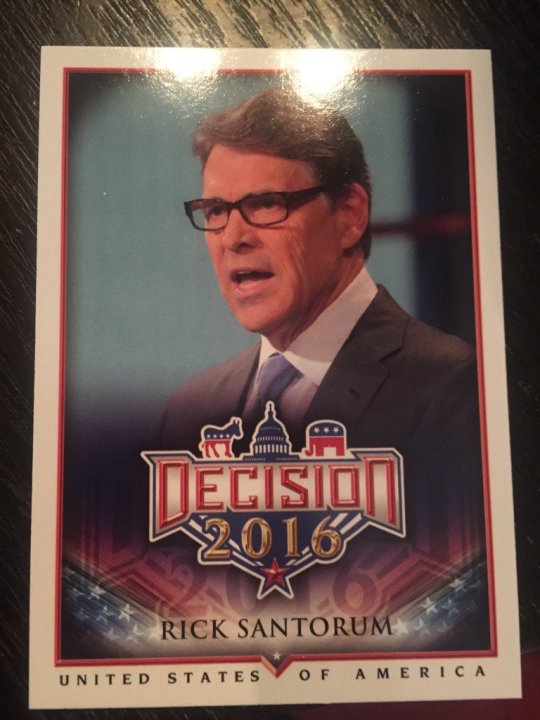
rare chase cards include foil cards with laser-embossed signatures of recent presidents, God Bless America Flag Patch cards with inlaid fabric swatches and Money Cards made with real shredded American currency.
No. Immortality has been “just a few improvements on the current state of the art” away for approximately ever.
Don’t tell the most recent immortality cult about this. It would break their clichéd little hearts.
Yeah the funny thing is how the “state of the art” consistently refers to whatever field’s particularly prominent and cutting-edge at the time.
It’s been alchemy in medieval Europe and ancient China, electricity in Revolutionary France, extremely low-temperature liquid circulation in the rocket age, data storage in the computer age, now it’s biotech because of course it is.
In 16th Century Spain with the whole Fountain of Life thing it was fucking western hemisphere cartography.
Me: Roombas are nice but what I need is a fleet of tiny drones just constantly getting into little corners and getting all the debris. Maybe they could have stations built into the walls where they make new ones out of what they collect.
Also me: Ants. They are called ants, they show up for free, and for some reason you hate them.
Me: Huh.
tl;dr - a competent summer blockbuster wrapped around a core of intriguingly nihilistic self-awareness
Saw Jurassic World. In IMAX 3D, tho honestly I don’t think that added much.
(It did give me my first noticed 3D goof, when an unremarkable clump of vegetation flickered through visual planes. So it came closer on the Z axis without either taking up any more of my field of view or at all changing its X/Y relationships to adjacent scenery. “Geometry suddenly works wrong” is textbook Lovecraft uncanny.)
It was basically some good action sequences pasted together by mechanical and emotional arcs, in summer blockbuster tradition. The dinosaurs looked nice but no longer novel, Chris Pratt finishes his upgrade from “poor man’s Chris Hemsworth” to Cera/Eisenberg-style doppling, everyone else is fine.
(though on “Poor Man’s X” note, they seemed to be styling and directing Lauren Lapkus as Kristen Schaal, BD Wong as John Cho playing a younger George Takei, and Bryce Dallas Howard as… I’ll get to that)
And the nice thing about seeing Steven Spielberg’s name on one of these things, you know the pasting-together will be competent, which you can’t always assume.
So keep in mind, whatever I bring up in the rest of this aren’t flaws. They didn’t detract from my enjoyment or take me out of the experience. They aren’t plot holes, they aren’t the result of bad acting, writing, or directing, or the awkward remnants of plot lines that got scrapped in editing. A lot of this stuff you could only stick in there just so with a natural, you might say Spielbergian, mastery of the form. They aren’t flaws.
Which is almost a shame, because then they might be comprehensible.
* * *
So the thing about Jurassic World is it’s densely referential.
Some of it is straight-up nice. Like, did you wonder how a series that sold itself on dino verisimilitude will deal with the way their dinos were lizard-model and since then the world’s gone bird-?
Well, the plot opens with a visual joke about this, and it’s acknowledged in background dialogue, but it’s never directly addressed. There IS an in-character answer to another question that serves to explain it, with the delightfully meta reasoning that they’d always played a little fast and loose with appearances and that was what 1992 thought badass dinosaurs looked like.
Then there’s references to the franchise. Some scenes - the aviary and the waterfall - seem to be referencing the books, which is nice. But more the movies - one plot thread takes a 4-scene detour to show off some props and sets from the first film, Mr. DNA makes a cameo, the iconic theme plays and the gate from the original Jurassic Park shows up.
Now here’s the thing - the gate shows up in the context of a tour guide inviting his audience, and by extension us, to look at the gate and experience a sense of wonder, and did you know this is the gate from the original Jurassic Park?
There’s a bit where one character recruits another to sneak embryos off the island that so echoes the Nedry plotline of JP that I started to wonder whether this counted as a sequel or a reboot. Except the result is that he promptly, safely, with no difficulty does in maybe 10 seconds, and you’re like wait, is that what that scene was for? Is that what that plot was for? Is that what that character was for?
The final showdown starts off as a reference to the final showdown of JP, but then there’s a twist - which is not only also a reference to the final showdown from JP but kind of the same reference - then there’s another twist, which is again THE SAME REFERENCE.
And the damnedest thing is, it works.
And broader than just that, there are a lot of references to other blockbusters of… the “long ‘80s”? “High Spielbergian Era”? Back when movies were being explicitly designed as tentpole blockbusters but not yet as “pilots” for multi-film franchises, possibly as “reboots” from series where a one-off success inspired ad-hoc sequels.
(I do kind of question that popular chronology, I think that the ensemble disaster films of the early ‘70s were a prototype for blockbusters, and the slasher boom of the ‘80s-‘90s precedent for franchisecrafting.)
Like, the Big Bad is explicitly set up as an analogy for blockbustercrafting-by-Hollywood-plagiarism: they needed to make something bigger, scarier, more intense to please an increasingly jaded public, and did it by scavenging bits from previous successes and pasting it all together.
Past that there’s a lot of explicit references to other action movies that became franchises - I counted several scenes, shots, or bits of set design that were clearly invoking Aliens or Predator - or to other Spielberg movies - Goonies, not to mention Indiana Jones and Jaws, which were both, the latter having invented the concept of the summer blockbuster.
Even more though, it just plays with tropes and themes common in the era. But “plays” is the sense. It doesn’t subvert them, or use them to wield the audience’s genre savviness against it Whedon-style, so much as set them up and then stubbornly refuse to follow through. The ruined orgasm of filmgoing.
Like, there are two responsible business authority figures who are set up in the '80s villain role and ultimately get killed, but they aren't… really… bad.
The CEO type ultimately responsible for creating the Big Bad for reasons of profit is actually quite ethical and sets out to put himself in harm’s way to save people, at the expense of damaging his brand.
The military type who wants to weaponize the monsters - characters accuse him of engineering the crisis for his own ends, but he didn’t! He tries to seize power, but once he has it he makes the right decisions - use lethal force, including raptors - and brings the heroes along by not-entirely-cynically appealing to their selflessness.
Really the accusation against him - “you want to use these perfect killing machines as perfect killing machines” is silly, doubly so coming from another military guy whose moral authority ultimately comes from just being better at using them.
That’s really the thing with their deaths - they’re structured according to the standard comeuppance theme but they’re not. They don’t die as a result of their greed or hubris or ultimate cowardice, but in the course of doing the right thing, just not skillfully enough.
And the sexual politics themes—
I’ve mentioned before, a lot of '80s movies (and mass culture generally) were actually quite reactionary, especially by comparison to what had come shortly before. The later Rambo movies are so known for their macho steroidal revanchist-nationalist aesthetic that a lot of people don’t realize the series started as a longhaired PTSD drifter standing up for freedom by going VC and shooting cops. ('Nam vet fights the man" was actually a pretty respectable subgenre.)
On the domestic front, you went from Kramer vs. Kramer’s “Divorce. Man, sometimes you wonder whether it’s really worth it. ::sigh::” to The War of The Roses’ “no of course it isn’t, also you look ridiculous”, passing through both Die Hard and Fatal Attraction’s takes on “lethal violence is proper, necessary, and sufficient to reassert the integrity of the patriarchal nuclear family”.
Now those are kind of blatant examples, other movies were more subtle, Spielberg could be downright elegiac about family dissolution as a wrongness and threat.
But if you’ve seen many '80s movies you realize that as Jurassic World starts they’re laying the foundations for a few classic themes.
There’s “the careerist bitch who needs to get taken down a peg and get in touch with her true destiny as nurturing mother”. There’s “the divorcing parents who need the specter of external threat to the family to force them back together, where they recommit to family”.
The older brother, ignoring his sibling to check out girls as soon as he’s away from his devoted girlfriend promises kind of a JV “taming of the rake” arc, which was also a thing.
(Pretty Woman was not just about how a masculine man’s assertiveness (and, let’s be honest, earning potential - she has to go shopping now) can tame a sexually mercenary woman into wife material, but how a feminine woman’s nurturing (and let’s be honest, sex) can tame an economically mercenary man into an upholder of stable order. They were such similar creatures.)
But the weird thing is these tropes are invoked, the plots set up and then not followed through, not even subverted, but just ignored.
In reverse order, the younger brother ends the skirt-chasing plot *by pointing out the stakes don’t really matter*, and while the two are closer towards the end than the beginning that’s clearly situational and not fundamental. The elder doesn’t grow or change because he doesn’t have to, the scene of emotional bonding that “should” be the turning point is him putting their experience in the context of an established, supportive relationship.
The divorcing parents turn out to be basically a frame story, and don’t reunite. When I talk about how this stuff is the product not of incompetence but its opposite, I mean things like the direction in the reunion scene, the perfectly done body language - the way they never quite hug all together, the way each parent pays attention to each child, and each child to the parents together, but neither parent seems to instinctively consider the other part of their family - that establishes that yes, they’ve both been shaken, yes, they appreciate family anew in the aftermath, no, they’re not hostile, but for all that they’re no closer to each other.
One weird thing - and honestly I think it’s supposed to stand out - is when the younger brother says, just before the plot is dropped, “all my friends’ parents are divorced”. The thing being that I could see that as late as the original JP, but coming from a professional-class elementary schooler in 2015, it’s just intuitively wrong.
Finally the career shrike thing seems to get diverted into the related but distinct Romancing the Stone/Crocodile Dundee “sassy city girl comes to appreciate the virtues, possessors of virile outdoorsy manliness” plot. That’s the closest to an honest take on these things, because I guess they needed some character through-line.
Even then they seem to be fucking around with it. Like the last line of the movie, it’s textbook way to cap these things off. Looking into each other’s eyes, making a callback to a line from their earlier adventures that, recontextualized, is about the promise of their romantic future. Except for the fact that the actual line, in its actual context, MAKES NO FUCKING SENSE.
Or consider how Claire’s appearance is used as metaphor for her character development. For one, talking poor men, her initial look - all white outfit, severe red bob - looks so familiar I know it must be from somewhere, but towards the end TRY to tell me she’s not being styled as Resident Evil-era Milla Jovovich.
For two, one of the tropes of this plot is the girl’s pristine fashionable, nonfunctional attire representing her lack of earthiness. And so when it comes time for dude to do the angry “you are in no way prepared to function in my world” bit and cite her outfit, she immediately alters her clothes to look more sporty, and then explicitly states that the point is to signal she is now ready for adventure.
BUT, that’s not what he complained about. He cited her shoes, 3 inch spike heels completely unsuitable for any physical activity, let alone jungle trekking. And she never takes them off. There is a shot of her running in the final chaos that only exists to point out she’s still wearing them. Never took them off, never lost or even dirtied them, never trip her up, never set up to be some badass for doing this all in heels.
THE ENTIRE PAYOFF OF THE SHOES BIT IS TO POINT OUT THAT THE SHOES BIT NEVER PAID OFF.
Also there’s a one-off scene with minor characters that’s a cute little bit about how “finding courage and stepping up as a hero” and “getting the girl” are so firmly linked in movies and culture that if you separate them, everyone awkwardly realizes they have no cultural script to work off.
* * *
So. You can see why this is catnip to pattern recognition types like me - lots of stuff that clearly isn’t random noise, it’s deliberate, structured, chosen with an eye on how it relates to the other parts and to other texts, but damned if I can make it add up to anything.
Well no, looking back on all this there is ONE way I could understand this, as a rebuttal from Spielberg to an imagined cynical critic of modern blockbusters.
The cynic says “Oh, another Jurassic Park. So is this a fourquel or a reboot? Time to refresh the brand, start a new franchise? You unoriginal goddamned hacks.”
And Spielberg says “Listen here I invented blockbusters. And they’ve never been original. Film serials, pulp fiction, the fears and dreams of a nation fed back to them. And that’s never kept them from being good.
May not be a Tarantino-style showoff about it, maybe you didn’t recognize the sources. So here. You’ll recognize all the parts of this pastiche. I won’t even try to fit them together right, I’ll intentionally sabotage the thematic coherence, I’ll call all my shots then bunt them. And it’ll still be great, and you’ll still love it. Because you’re not hungry for originality, you’re just hungry for quality.”
* * *
Two minor notes, both about vehicles. First, this is the only depiction I can remember of someone flying a helicopter competently but not smoothly, which is oddly endearing. Second, okay maybe it’s a scrambler, but I don’t care how knobby the tires on that Triumph are, you’ll get further through the jungle in spike heels.
Dashiell Hammett was one of the only pulp detective authors to have actually worked as a detective, with the Pinkerton National Detective Agency, back when it was basically a countrywide mercenary police organization. The Pinkertons were actually closer to modern police than their official contemporaries in the machine politics era, who tended to fall somewhere between patronage-hire watchmen and the mayor (or sheriff)’s sanctioned gang. The establishment of the FBI was in many ways a nationalization of the Pinkertons, with key figures brought on as advisors, replicating the network of local bureaus with focuses on both investigation and the infiltration and undermining of labor radicalism. Big city police forces then remodeled themselves after the FBI - famously the LAPD under William Parker (the NYPD had professionalized already under Teddy Roosevelt, and Chicago managed to preserve its machine structure).
This process continued into the early 1970s, as the RFK/FBI-led attempt to shatter the Mafia shook out. This was part of the mid-20th century American centralization of power. If you’re ever tempted to look with contempt upon modern African states, or pre-Mao China, or pre-unification Germany, keep in mind that America was largely structured as a loose coalition of local bandit-warlords until the 1960s. At the national level, civil rights laws and the attempt to merge the two (black/white) American nations were as much a cynical front for advancing this centralization as they were an honest idealism. And not without cost - organized crime, and the permeable borders between that and urban politics, were one of the major mechanisms by which immigrant groups were integrated to and advanced within the American system, a way to translate sheer numbers and cultural affinity into structural power. American blacks largely fit the immigrant pattern, if you date “arrival” to the Great Migration, but then stall out in the ‘70s-‘80s, and a lot of that has to do with RICO laws, post-60s reformist idealism, and the nationally-sponsored “war on crime” blocking this path. In an earlier world, black local politicians and street gangs would form alliances, eventually using patronage to co-opt and take over police forces, and extract rents that would be partially redistributed down the machine ladder. As is, you still have corruption, but it accrues to politicians, pastors and other organizers, and white property developers, without trickling down to street level.
You can quote me on that - the sorry state of American blacks is because criminal gangs are too weak and police aren’t corrupt and brutally extralegal enough.
What was I saying? Dashiell Hammett. Lived in San Francisco and set his fiction there. Was an actual private investigator, and accordingly has a strong focus on tradecraft, especially with the nameless “Continental Op”, employee of a fictionalized Pinkerton, protagonist of some of his books and most of his stories. Though the climaxes could get colorful, the Op’s assignments - quietly track down a runaway heiress, locate a fled embezzler - and methods - use 3-man teams to tail people on the street, question and dig up background on the target’s acquaintances, sit around and eavesdrop on conversations - were true to actual practice. (Hammett said the major difference is that what his characters accomplished in a week would in reality take several months, while they worked multiple cases in between).
While the Op was proudly professional (a recurring theme being his contempt for hotel staff “detectives”) but otherwise opaque, Hammett pioneered detective characterization with other characters. Where the Op was based on actual detectives he worked with, Sam Spade (protagonist of The Maltese Falcon) was based on those detectives’ romantic self-image, and his stoic facade, cynical chivalry, and romantic entanglements were a *huge* influence on later writers. Nick and Nora Charles, based on Hammet and his beloved, playwright Lillian Hellman, mixed investigation with screwball banter in a more lighthearted tone, and can be considered the predecessor of Maddie and David (of Moonlighting), Mulder & Scully, and even non-(explicitly-)romantic buddy partnerships like Crockett & Tubbs.
Hammett’s real-life experience exposed him to less picturesque aspects of the private investigator’s role in society as well. He complained that employers doing background checks were interested in issues of moral character that, gambling debts aside, had no correlation to trustworthiness, and he especially disliked working to suppress labor agitation. Starting as a Pinkerton agent, Hammett ended up being blacklisted and imprisoned as an enthusiastic communist activist.
Next is Raymond Chandler, the most literary of the detective greats. Where Hammett had been an actual PI, and reflected it in his writing, Chandler was a cuttingly observant man who retreated into drink because he was way too intelligent and cynical for Los Angeles, and reflected it in his. His Phillip Marlowe inhabited a thinly-to-the-point-of-pointlessly veiled LA, and passes through it with gimlet eye and poison tongue, all backhanded compliments and sideways insults. Hard-boiled fiction’s love of brilliant turns of phrase, of meandering digressions that end with a surprise punch to the gut, largely comes from him.
While at first glance Marlowe might seem to perform the duties of a detective same as the Op, on close examination you realize that none of what transpires has anything to do with his intentions, and that the plot is moved along by coincidences he encounters while out on assignment, with the ultimate plot of a tale usually about as unrelated to the inciting incident as in golden age Simpsons. This is equally true of The Big Lebowski, which is a loving Chandler tribute, and Chandler himself parodies this (and his/Marlowe’s booziness) in one of his later stories in which the plot is advanced by the things his protagonist literally runs into while drunk driving around LA.
Chandler’s novels are usually composed of the plots of 3 or 4 of his short stories banged together, but that’s fine, because the plot was never the thing, the meat being the wonderful language, setting, and characterizations, which were crafted anew. You can still to this day drive around LA and discover most of the places he described, looking exactly as stated. And while I can’t speak to his period accuracy, I was myself once a too intelligent, cynical Angelino writer for a while, to the point I avoided leaving home sober, and I can confirm that the kind of person who inhabits LA, their nature and motivations, are exactly as he laid out back then.
Chandler’s output eventually trailed off. One story, appearing years after any others, reads like absolutely terrible Chandler pastiche. Scholars disagree whether this was the product of an alcoholic wreck of a man who had known better than to try to publish anything for years but needed the money, or his wife pretending to be him because he was an alcoholic wreck of a man incapable of even writing anymore but needed the money.
If you’re only going to read one of these three, read Chandler.
Finally, a bit of a contrast in Mickey Spillane. Spillane’s famous recurring detective character was Mike Hammer. Given the name, you might not be surprised to learn he spent less time in cautiously piecing together mysteries than punching communists in the jaw, in much the same way Captain America spent a lot of time punching Nazis in the jaw. Actually, Spillane had been a writer for Captain America in the ‘40s. Actually, the character was originally written as a comic book protagonist named “Mike Danger”. Beyond communism, Hammer often found himself arrayed against such other corrupt and corrupting trappings of the decadent elite as drugs, psychotherapy, and trial by jury.
Spillane’s writing was, I’ll say, not up to the level of Hammett or Chandler, though he has been favorably cited by prominent writers like Ayn Rand and Frank Miller. If you look at pulp of the time though, he’s appreciably above average. Pulp… basically the closest parallel we have to pulp today is fanfiction, in terms of its average quality, low cost of production and consumption, sheer volume, and the rate at which it produces critical and commercial successes. And dear god, the smuttiness. Mike Hammer banged a lot of the broads he ran into. Before barefacedly honest pornography became as ubiquitous as it is, pulp filled the role of mainstream erotic product, with much detective pulp serving the same “drugstore-available erotica” role for men that romance pulp did for women. (Appreciating this makes the “Seduction of the Innocent” comic book scare about drugstore-available pulp for kids a bit more comprehensible).
This crossed over into other formats like cinema - Deep Throat, Beyond the Green Door, and The Devil in Miss Jones were all received as at least in the same ballpark as mainstream releases, and up into the ’80s, pornographic movies had plots and runtimes that roughly approximated Hollywood product, and even in the ‘90s, softcore product at least had narrative framing devices. Between gonzo and DVD nonlinearity and the internet and the collapse of obscenity prosecution against which to offer artistic content as defense that’s faded, though as the Valley studio system’s share of the industry shrinks you’re seeing them play to their strengths in production values and plot (particularly with parody content, Tijuana Bible/H-Doujinshi-style).
On the other hand you had whole parapornographic mainstream subgenres as the erotic thriller, the rape-revenge drama, the teen sex comedy - American Pie was released in 1999, which was really pushing the limit at which it was worth it to watch 90 minutes of material for the chance to briefly see a bare-chested girl masturbating. (It’s still worth it to hear Alyson Hannigan talking dirty, though.)
The one thing that pulp still has a hold on is violence. (In addition to the jaw, there are many loving passages of Hammer battering guys in the crotch.) While splatter-horror may be a flourishing niche genre, with regular DVD releases, it’s still that, a niche genre, and not the mega-industry of pornography. Video games yes, but detective pulp and “true crime” genres have mostly just migrated to another medium and become hourlong police procedurals like CSI or Law & Order, offering the same thrills of vicarious brutality masked by the fig leaf of nominal identification with the forces of law and order. (Though cable antihero dramas and serial killer procedurals like Dexter and Hannibal seem to be moving a half- to full step beyond that.)
Mickey Spillane. Ah, fuck it, I don’t have anything else to say about Mickey Spillane.
Oh shit, is it “tell stories about the fights you’ve been in” day? I’ve got a great one. It’s kind of long, because it’s got a bajillion digressions, but they’re all worth it.
So this is back in LA. It’s the only bar fight I’ve ever been directly involved in (I broke up a few others), it started with getting suckerpunched and ended in total victory, I absolutely fucking had it coming, and I’m proud as hell of it.
So two things first to establish some context. First, at this point I had been training in an MMA-style dojo for two years. The sensei had been raised into fighting the same way that the Williams sisters had been raised into tennis, by his USMC boxing instructor dad. Then he did BJJ under Royce Gracie down around Long Beach when MMA was first becoming a thing, but realized that all the other guys were a few years younger and didn’t have bad knees from high school football, so he decided to go into training instead, though first he studied American Kempo under this guy from Pasadena (a kind of glory hog who might have been the inspiration for the Cobra Kai sensei, though a serious master who had, in turn, studied under Ed Parker, the founder of the school and popularizer of karate in America). So he’d not only picked up from these three masters a lot about fighting, but a lot about training, and he was the best sensei you could ask for. I’d been realizing I needed to take up some physical activity to get fit when he moved into a storefront dojo just down the street in Echo Park. Went to one session and he worked me so hard I had to go outside and vomit in the gutter, and then I kept coming back three or four times a week until I left LA (with the exception of a few weeks after a particularly devastating punch broke, or at least cracked, one of my ribs).
The second thing is I’ve had wicked insomnia that comes and goes and it had finally gotten so bad I went to a doctor and got put on Lexapro, which is an antidepressant SSRI. Well, it worked I suppose - I was sleeping 14 hours a day, and when I was awake I was completely disinhibited. Always been kind of reclusive and socially anxious, but I became outgoing as all fuck, starting conversations with complete strangers and quickly turning them into friends (or enemies - during this period I pulled more tail than I ever have, but I also got slapped in the face several times). It’s weird, antidepressants really do change your personality. My sexual tastes changed, even. I could never talk dirty before but now I could do it like R. Lee Ermey’s audition tape, nonstop for minutes at a time without repeating myself. Which was nice, because that was now the only way I could get off. Also on top of this the drug and alcohol amplified each others’ effects several times over - I had used to be a kind of quiet, maudlin drunk - which was particularly interesting since this new personality had a taste for straight brown liquor.
OK.
So my friend was moving to Hawaii, so we all piled in a car and went up to this house up on Red Hill for a party, I brought a bottle of Jack and drank at least half of it there. Then we got in a cab to go down to Mountain Bar in Chinatown for a pre-party for FYF Fest. This was I think the first year they changed the name from “Fuck Yeah Fest”, to make it easier to get media I guess? Which is weird because an alt-weekly that won’t print the word “fuck” really defeats the point and why would you want to cater to people that get their information from people who suck, but then I suppose people who value pride and integrity over fame and money don’t long last in LA; for example me.
So Mountain Bar. I think there was maybe a bar on the first floor but the dance floor and another bar were on the second floor up a narrow flight of stairs, and oh before this I should talk about my hat. I was wearing a leather hat - I don’t know what style it is, people just call it my “Indiana Jones hat” which is pretty correct. Got it from a Russian leathercrafter on Melrose. Went into his shop one day and he’s working in the back on these big old ‘60s machines, KA-CHUNK KA-CHUNK KA-CHUNK, and he stops and comes out.
“What you want?”
“I’m just looking.”
“Okay.”
KA-CHUNK KA-CHUNK KA-CHUNK and I try on some hats he has on a rack, look in the mirror, settle on this one.
“What you doing, you say you just looking.”
“Well, I like this one.”
“Ooooh. You like that hat, maybe you like this hat.” I try it on.
“I hate this hat. I want THAT hat.”
He quotes me 60 dollars, I get the sense he’s Old Country enough to haggle, I walk out with it for 40.
Anyway so I’m wearing this hat, I’m drunk, I’m on Lexapro, the dance floor is crowded, the temporary bar is at the far end, and I just swim through the crowd with a breast stroke - hands forward through the crowd, shove people aside to force an opening, if one of the people I was pushing was a cute girl, grab her ass on the return.
Which was a thing I’d been doing. You wondered how I was getting slapped in the face? You wonder how I was pulling so much tail? That’s one of the things that really shocked me about the whole disinhibited experience - I grabbed a lot of random asses in bars those two or three months, and the ratio of positive to neutral to negative responses was like 2:3:1.
(Eventually I decided to go off Lexapro because in my more introspective moments I realized this shit was fucking ridiculous and not really in keeping with my sense of self. That’s one of the reasons I’ve self-diagnosed as type II bipolar - apparently if you give us antidepressants it doesn’t level things out but makes us flat ridiculous. Never bothered to get an official diagnosis ‘cause what’s the point? Not like I want to treat it. Like so many creative geniuses, I find the hypomania very useful [how do you think I’ve been churning out quality posts these past few days?] and I can structure my life to deal with the downswings.)
Okay, so do that a bit, get a few more drinks, and then someone taps me on the shoulder, and I think it’s one of my friends so I turn around and woo, punches coming at my face. Right hook and left hook and right hook, and the guy’s only really punching with his arms and maybe his shoulders so he’s clearly not a trained fighter, I instinctively start blocking and I stop a bunch of them but then he gets one around and lands a good one, hitting my nose, upper teeth, and cheekbone all at once.
The first time, back in the dojo, I took a hook to the face I literally spun around like a tornado and fell down flat on the floor. The second time I just fell down. After that I learned to keep my head. It was a good hit and staggered me, knocked the hat off my head and one of my contacts out of my eyes, but I caught myself, bent over at the waist. I looked up and saw the guy clear for the first time. Very post-frat boy, he literally had an open striped shirt over a pink polo with a popped collar, gym muscles, already confident in his victory, turning away from me to brag to his girl.
Man, I love fighting guys who lift. They all think they can fight. They’d come into the dojo every so often and sensei would invite them to go through the program - maybe 40 minutes of exercise, 20 of technique, an hour of sparring - and they’d never come back. There were still a bunch of locals around from when the neighborhood had been rougher who’d had a bunch of streetfighting experience and they’d put up a better show but even then training won out. If they really needed to be humbled sensei could have them spar against Emma, who was a small 12 year old girl, but was also a genius child of JPL rocket scientists who’d been training basically since she could walk and could beat the shit out of any of us - she actually got her second degree black belt this past weekend. But I digress.
Anyway, my nose felt runny so I wiped it with the back of my hand and looked down, there was blood on it. I looked up at the guy. I’m a very wordy person, I think in words. I remember this is when I thought the only word I thought during the whole fight.
“Alright.”
I launched myself at the guy. I only remember going straight into an uppercut, but I tried reenacting the memory once and the blocking is all wrong for that, maybe I did a 1-2 jab first. I caught him off guard but he started to put his hands up to block. Time slowed down, this is the only time I’ve actually experienced that and it works just like they depict it. I could tell I didn’t have a clean shot anymore, so I brought my right fist back to my left collarbone, turned the uppercut instead into a right elbow cross, uncoiled on the guy and connected with his jaw.
He spun around and fell down flat on the floor. I guess he didn’t have much practice fighting.
I looked around for my hat, picked it up off the floor, shook it off, and put it back on, keeping an eye on the guy ‘cause it would be really embarrassing if he caught me out the same way I just had him. He was writhing a little but not getting up, and at this point I see two guys coming through the crowd of hipsters - big, 350 pound dudes, black pants, black turtlenecks, black knit caps, black skin, clearly the bouncers, heading this way and I’m like
“Welll, fuck, they saw that and they’re gonna be pissed, aren’t they.”
And they walk up, and one dude lays a meaty hand on my upper arm, and I’m like
“Welll, fuck.”
And he looks at me, and in retrospect he probably saw my bloody nose, and he says, in this real deep voice,
“Was that dude fuckin’ with you?”
And I’m shocked for a quarter second but you know what, okay, yeah.
“That dude was fuckin’ with me.”
“Aight, we got this. Go get yourself a drink.”
And they walk over to him, still on the ground with his girl hovering over, and each grab one of his arms, pick him up, and frog-walk him to the exit.
And I’m standing there, adrenaline wearing off, thinking “man, I don’t know how all those guys are going to fit down that stairway”, and they just get to the top, line him up, and each kind of toss him down and I put my hand to my mouth, like ohhh, shit. All that just happened.
And so I get a drink and we stay another hour or two, and I end up leaving with the friend who’s going to Hawaii, and we decide not to wait for a cab and walk, which was kind of a mistake because you don’t realize how far distances in LA are until you try to walk them, but by the end of the night I’m almost wondering whether that actually happened or it was some sort of drug hallucination. When I wake up in the morning, though, it’s confirmed by the pain in my mouth and the bruises.
I’ve touched on this before but let’s expand on it here. George R. R. Martin’s A Song of Ice and Fire series is an epic tragedy in the classic sense, in which a succession of characters bid for the world before being brought low by their inherent personal shortcomings. What’s particularly interesting in this is that the Starks of Winterfell embody tragic flaws that are typically presented in fantasy fiction as virtues, the very traits that both signal that the protagonists deserve to win and enable that very triumph. As such, they serve as a critique of the fantasy genre and, implicitly, the audience drawn to it who see in such protagonists an idealized vision of themselves.
Ned Stark opens the series with a tableau engineered to position him as the Good Ruler, executing a man by his own hand, illustrating a firm will, capable hand, merciful heart, eyes open to the realities of power, and shoulders to bear the burden in service of others. He is Duty, Honor, Loyalty - to Robert, to the Old Gods, to (with his incessant focus on Winter) the realm as a whole rather than any factional interest. He could plausibly have contended for the Iron Throne after the overthrow of Mad King Aerys, but left the duty - and the corruptions of court life - to Robert and returned north to the “real things” of life.
He’s the noble, capable, masculine (but not macho) hero of so much fantasy, which of course is why he fails. He doesn’t play the petty sycophantic influence-peddling games of court - so when Robert dies he has no true allies in court, no knowledge of the power dynamics at play, no ability to see the manipulation of false allies. Concerned with the formal lineage of succession - as if truth and propriety matters more than appearance and power - but insistent on working through proper channels and unwilling to act without formal legitimation, he gives his enemies all the delay, forewarning, and opportunity they need to outmaneuver him and he ends up executed by the henchman of the most Unworthy ruler.
Sansa Stark is the feminine hero of romantic fantasy - like Ned, she’s enchanted with nobility’s self-mythology and given to mistake that for actual practice. She wants to marry a prince when she grows up, and orients the entirety of her selfhood to this end - acting proper and saying the right thing, above all striving to cause no offense. Like the heroine of so many romantic fantasy novels, she finds her prince. Like the plot of so many romantic fantasy novels he’s a ruffian in need of reform who takes what he wants. Like the readers of so many romantic fantasy novels her dreamy passivity does nothing to reform him. Like the plot of so many of their lives she finds herself paired off with a succession of alternatingly abusive, ugly, and lecherous men.
Arya Stark is I’d say two things - first, she’s the classic fantasy figure of the heir to the unjustly deposed Good Ruler, who has to go off on a quest, take on a mentor, make allies, et cetera et cetera, James Frazer. Except you realize she keeps doing this but given that the world doesn’t stay still while she’s off questing, she never accomplishes anything. She doesn’t make it to Winterfell, she doesn’t make it make it back to her mother, she keeps getting sidetracked and diverted. She finds mentors in Syrio and the Kindly Man, finds allies and travelling companions in Gendry and Hot Pie and Jacquen and the Hound, but none of it amounts to anything. She revenges some of her suffering but after years has 0 influence on the actual contest for the Iron Throne and has mostly just become an increasingly cold-blooded killer.
Second, Arya is the Strong Female Character, that archetype popular in the girl-power ’90s (and before) as superior to Sansa’s “weak” femininity. She’s not into sewing and delicacy, she ‘s into sword fighting and dirt. But for all that, she ends up dragged around and at the mercy of men as much as Sansa - yes, in an idiom that allows her to consider herself as more of an agent, and with an ability to hurt people who hurt her. But it doesn’t really keep her from getting hurt. (For a series with so much rape, especially in the early books of girls noted with an increasingly eyebrow-raising regularity as being exactly thirteen years old, the Stark girls sure do spend a lot of time at the mercy of abusive men without it quite going there, don’t they.) And by the “present day” she’s spending a lot of time hanging out with the demimonde in seedy bars down by the docks. Not that she’s a prostitute, oh no. She’s a rogue. Though she does take some pride in the fact that she blends in. Look, I did renn faires in middle school. Hell, I live in Portland. There’s a certain kind of girl… look, I’m not saying, I’m just… wait, no, I am saying.
Catelyn Stark is the good mother, who wishes the boys would put down their swords and realize what’s important is family, and the real force in this world lies with the generative potential of women. She’s ’70s-’80s feminist fantasy in the Marion Zimmer Bradley mold. She cares for her children, the girls as much as the boys - which is why she releases Jaimie in hopes of returning her daughters, thus forfeiting the Stark leverage against Lannister treachery. At the same time she respects her children’s autonomy, unlike Cersei not just as means to the ends of power, failing to compel Robb to marry for dynastic advantage. Which is her undoing, dying with her beloved child at the hands of a man who treats his wives as disposable incubators. The female power of generative blood proving ultimately vulnerable to the male power of destructive steel.
Robb Stark is the charming young hero, a less seasoned Ned. Capable but burdened with a sense of honor, duty, and obligation, he could have saved a whole lot of trouble by maintaining a distinction between the loving woman you use for sex and the woman of social position you marry to start a family with.
Bran Stark I think if anything is a standin for GRRM himself - he’s incapable of doing anything directly, but as a skinchanger he can inhabit anyone, see through their eyes, act through their bodies, in a manner paralleling the series’ regular cycling through POV characters. I’m not really sure what Bran’s arc “says” about that dynamic.
Rickon Stark is like three, dude. And Jon Snow? Is not a Stark.
Now that we’re here might as well touch on some other characters.
Daenerys is another critique of audience naïveté, thinking that oppressive hierarchy is a matter of bad morality rather than economic function. She frees slaves only to realize that oppressing the lower classes generates power and supports a fellowship of upper-class allies, while freeing and raising them up costs power and makes enemies. Also, even if she crosses the sea and conquers the Seven Kingdoms what of it? As an infertile woman, she can’t found or restore a dynasty.
Jaime is kind of a reverse of the Stark dynamic. They had virtues as flaws. Jaimie is defined by the vice of narcissism - his love for himself, which defines everything he does. Even his incestuous relationship with Cersei is an instance of self-love, beginning in childhood where, she says, if they switched clothes they were indistinguishable. But it’s that very narcissism that leads him, on joining the Kingsguard, to reform himself from within, to go from Kingslayer to Goldenhand. And thus a character first defined by defenestrating a child while incestuously cuckolding the King might well prove the realm’s noble salvation.
Tyrion obviously, is the character most suited to rule the realm, his tragic flaw being the repeatedly wounded pride that keeps him from accepting that he can only rule on condition of receiving no respect for it. Had he waited out his father’s plans he obviously would have found in Tommen a malleable figurehead.
Cersei’s flaw is her inability to distinguish between her person and her role. She thinks herself a master strategist because of her track record of success as a seductress; she thinks of herself as beloved because flattered by sycophants as regent. A Feast For Crows was hacked out. I’m a writer, I know the signs. GRRM split one book into two when he really had 1.5 of material and to maintain the “850 pages of setup, then main characters die and shit gets real” structure he had to force the middle half, which took years. She overestimates herself but even she’s too competent for the cabinet of toadies, the “I’m a good queen for not punishing my servants too bad for my getting fat” bit. Cartoonish. What should’ve happened was she intercepts a letter from one of the young nobles she thinks she’s seducing as part of a power scheme and learns that he’s been seeing the thing the other way around.
It was the priest as an idler and destroyer of the household, who gained ascendancy over women through the confessional, that the soldiers and leaders attacked more than the priest as magician or upholder of the old order. The revolutionaire was no theologian. even if he talked of superstition, and the real reason for his prejudice against the confessional was the power he felt it gave the priest over his womenfolk. Such prejudices at times came near to misogyny and there are many examples of this in the expressions of the san-culottes, the commissairs and the representants en mission. This anti-feminism was fortified by the frequently furious opposition from the village women which they encountered on their iconoclastic missions-more than one revolutionaire had to take to their legs to escape their fury. But most of all the soldiers held a grudge against women because of the way they let themselves be seduced by the lying and lazy priests. At Bec du Tarn, Huegny, a Toulouse commissaire civil ‘thundered against fanaticism, and in particular against women, who were more easily seduced by it; he said that the Revolution had been made by men, and women should not be allowed to make it backtrack…” Dartigoeyte, representant en mission in the Gers, gave vent to similar feelings in his tirade against the devotes of Mirande: “And you, you bloody bitches, you are their whores [the priests’], particularly those who attend their bloody masses and listen to their mumbo jumbo,’ but he also had a word for the “jean-foutres of husbands who are naive enough to accompany them [and who] simply show what cuckolds they are by doing so.’
The Partisan Leader; A Tale of The Future is a political novel by the antebellumVirginia author and jurist Nathaniel Beverley Tucker. A two-volume work published in 1836 in New York City and in 1837 in Washington, D.C. under the pen-name “Edward William Sydney,”[1] the novel is set thirteen years into the future, in 1849, and imagines a world where the American states south of Virginia have seceded from the Union. The story traces the formation of a band of Virginia insurgents who seek to free their state from federal control and adjoin it to the independent Southern Confederacy.
Lot of attention lately to the Dark Enlightenment that is mostly about Moldbug. The brown menace, she rides again.
As I’ve said before, his one innovation, “neocameralism”, is just a rewording of the Divine Right of Kings in corporate shareholder idiom, a legitimating myth for an order that hasn’t established itself yet. It is significant that that’s exactly the idiom native to the SF tech/VC complex - if shit kicks off in America, dollars to donuts it starts in the Bay Area, which I’ll maybe go into in another post, but suffice it to say I expect the particular details of his program to be pretty much irrelevant to anything.
I will say what intrigues me more, and what could really be a prime mover in that sector, is the construction of a modern, international, English-speaking Australian-American-Polish-British-Scandanavian-Serbian-etc. white volk around a core of internet-native right-masculo-populism on the chans’ “waifus, warhammer, and white nationalism” model
things like Polandball’s (and SatW’s) western-centric resurrection of the concept of national personification, heavy metal culture and the associated Vikingism, feelsguy’s translinguistic sense of selfhood, /pol/’s kebab removal… well, just /pol/’s /pol/ness, really
Now this sounds ridiculous. I know this sounds ridiculous. This is me pointing to cultural trends particularly prominent in the dork niche circles I notice and ascribing to them world-shifting importance. I know it is.
Sure, heavy metal is not the actual historic musical tradition of any people. Sure, Norse neopaganism is not the actual historic religious tradition of any people. Sure, Tolkien-by-way-of-D&D aesthetics are not the actual historic mythology of any people.
Unless, of course, you count “2008” as being a part of history, or those then alive as counting as a people. Or, say, 1978. Or, you know, the 19th century, and the conscious, successful Wagnerian construction of Germanic identity from which these are all lineally descended.
To Golda Meir is attributed the line that there is no such thing as a Palestinian, by which was meant that the identity didn’t predate the establishment of the state of Israel. True, true. Neither was there such a thing as an Israeli. But then the state of Israel was established.
Plus okay, the celebration of western, particularly north european feudal great man realpolitik that is Paradox games is a niche thing, not quite mainstream popular culture
but how about the celebration of western, particularly north european feudal great man realpolitik that is the Canadian/Irish/American “Vikings” series?
how about the celebration of western, particularly north european feudal great man realpolitik that is Game of Thrones?