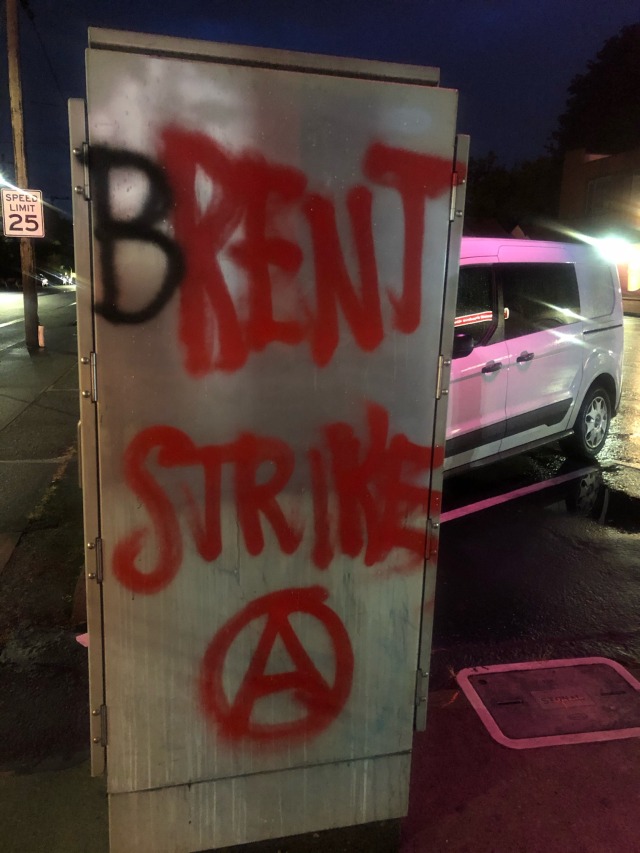
sometimes you have to take the initiative sometimes your whole family dies of cholera sometimes you have to make your own story sometimes you have to shoot the storyteller in the neck sometimes you have to take back the country sometimes you have to kill everyone everyone everyone everyone everyone everyone
Dolores O’Riordan’s got me thinking about this song again
it’s an atrocious ‘90s pastiche, but that’s the general theme of the musical and it’s one of the only female leads; this version’s actually pretty great how Maria Elena Ramirez wanders so fluidly through so many Lilith Fair (/pre/post) styles
the really Cranberries part is 1:07 on to the breakdown
When she floated above the audience in
her high, high heels on that lighted dock, facing a stadium of
sixty-eight thousand people, how could she feel anything except either a
messiah complex or profound loneliness?
Later
that night, I said to my husband, “I thought of her as a
singer-songwriter.” And my husband, who has never voluntarily listened
to a single word escaping Taylor Swift’s mouth, laughed.
“Singer-songwriters don’t perform in stadiums,” he said.
I wonder exactly which day it was that the amount of time Comedy Central had spent broadcasting The Daily Show finally caught up to the amount of time they had spent broadcasting PCU
This was supposed to be a culture war joke, in fairness on further reflection I was like “yeah but maybe put all the hours of South Park, Tosh.0, and The Man Show on the PCU side too.” Maybe the Kilborn years, even.
Okay, for the benefit of all the followers I’m getting with absurd ages in their profiles, let me explain this one.
When Comedy Central started in the ‘90s, they didn’t have much original programming, and what they did was mostly one-off (but frequently rerun) specials - filmed standup sets, basically.
So what they ran was mostly secondhand content they’d picked up rights to, and what was most common were these two movies, I swear to god I’d seen them run back to back and then over again, I’m pretty sure I’ve seen the same one run twice in a row. One was Throw Momma From The Train, a Danny DeVito comedic riff on Strangers On A Train.
The other was PCU, a campus comedy in the Animal House vein starring a visibly balding Jeremy Piven. It was a lovable frat fighting the dean and his Young Republican lackeys, but (because “boat shoe and dinner jacket-wearing WASPs” were overdone and increasingly anachronistic as villains by then) there was a third faction that took the brunt of the mockery: earnest, censorious social issue activists. Thus the title. The climax involved the activists protesting the big frat party (tagline: “Everyone Gets Laid”), but then realizing “holy shit, we’re against drinking, sex, parties, freedom, and fun, we’re the bad guys” and giving up and chilling out and hooking up with the frat members.
Because obviously you were supposed to see that as the only acceptable position for anyone with any pretensions to being cool and with it. Like I said, ‘60s-derived social liberalism used to offer something for everyone.
If you don’t know who Howard Stern is, he was the foremost crude “Morning Zoo” radio DJ in the country.
Like, in the '90s, white, blue collar (or “dudebro”) tits-n-beer vulgarity was plausibly coded left/liberal/Democratic. And that’s a little disorienting to remember.
I mean hell, Benny Hill was aired in part by an official arm of the most socialist Anglosphere government ever. Benny Hill.
If you’ve never seen Benny Hill, it’s from the British “light entertainment” tradition, a little variety but kind of sketch comedy, only a lot of the “comedy” was basically dirty old man leering. Sketch leering. Episodes famously ended with sped up comedic chase scenes where Benny would try to catch and grope some pretty young girls, then turn and run away as they tried to catch and punish him.
Now by the '90s that was already a bit off, but still, it ran in reruns on Comedy Central. It ran on fucking PBS.
If you ever wonder why intelligent educated sensitive me is wary of if not actively hostile to so much of what passes for modern cultural liberalism, it’s because it pattern-matches so closely not only to the apocalypse visions conservatives were warning of when I was growing up, but to the liberals’ versions as well.
also me: You know how you talk about how the Torah contains speeches, laws, proverbs, genaeologies, censuses, economic records, and romantic poetry, so everyone who learns from it will have a sense how to do that?
me: yeah?
also me: have you thought through that the Gospels are records of charismatic rabblerousing against the powers that be?
This is Ron Unz reposting a thorough 1999 article of his about the development of racial politics in 1990s California, framed around 3 high-profile, racially relevant ballot initiative campaigns.
It’s fascinating because it very clearly foreshadows and leads into where we are now, right down to its terminal predictions (the attempt to put racial issues in politics to rest and realign around a cross-racial citizenship faces difficulties and cannot be assumed, there is a real risk the system will continue on current logic with whites developing a conscious political identity in response), and yet as Unz depicts them - and he was in the weeds here - the actual motivations of the players involved are near-completely incomprehensible from a modern standpoint, a measure of how fast things change.
That is one critique I have, on how fast things change, Unz puts the 1992 “Rodney King” riots as the moment that put Californian whites on notice that their comfortable paradise was threatened by racial unrest.
Now, I really do want to emphasize the scale of this shift - as I’ve mentioned before, California during most of the 20th century was a white middle class bastion of conservative Republicanism. For all its Summer of Love, hippie, surfer girl, Black Panther mystique, it was a reliable Republican presidential vote from the end of the FDR-Truman New Deal Dynasty all the way up through Bush the Elder in ‘88 (excepting the Goldwater/Johnson landslide).
Like, if you’ve got a modern sense of what “California” and “Los Angeles” mean, that’s a bit jarring, and the shift was jarring as hell to live through. This explains Steve Sailer. If you’ve ever wondered what explains Steve Sailer, this explains Steve Sailer.
But, for all that I find Unz’s depiction of the ’92 riots as an end to innocence a bit wishful. For one, the Watts Riots of 1965, Hunter’s Point ’66. But closer at hand than that, I can off the top of my head think of several prominent artistic depictions of a racially tense California that were produced just prior to this, indicating that the tensions were on thinking people’s minds.
There’s White Men Can’t Jump, which basically shared Unz’s “no illusions, but this might just work out” tack, released almost exactly a month before the riots. Falling Down, an elegy for white middle class LA, was released almost a year afterwards on an accelerated production schedule but still written prior.
Closest to my heart, Neal Stephenson’s Snow Crash is a fantastic projection of period SoCal, gated communities and franchised everything, and its looming specter of the “The Raft” threatening to arrive and swamp the locals is drawn partly from the Mexican immigrant wave that usually gets dated contemporary to the ’84 Summer Olympics, and partly from the Asian “boat people” refugee wave all the way back in the 1970s.
So, maybe up to that point it registered as “nothing LAPD nightsticks can’t solve”, but the idea that racial tensions weren’t noticed as a threat strikes me as a bit of a stretch.
Remembering the time my Brooklyn urban planning college girlfriend visited me after graduation in LA and I was looking up (in a Thomas Guide, this was before smartphones) where we were going and it was like 12 blocks away and I told her to get in the car and she did dramatic frown at me and I was like “fine” and that day she got to learn how long LA blocks are to walk
The real effect of Twitter on journalism is – well, the “spare-time bullshit, take as peer group, social-climb, brown-nose for career advancement” relationship journalists used to have with their sources? Now instead they have it with each other.
this is 100% the unsuccessful screenwriter angry about what he could do to fix it so
like part of why Laura/Logan has no weight, they structure the arc as mentor-transmitting the message of “the burden of killing”, being marked, and they just throw signifiers of solemnity at this - the Shane quotes, all that - but it just makes no sense.
Like, that worked for the Old Man Logan comics, but with the backstory changed it just doesn’t fit as *the* thing accounting for Logan’s giving up on life; Laura maybe needs to learn not to use violence as go-to problem solving but as she points out, her body count is torture orphanage soldiers come to kill her
So if you want an emotional theme that ties them together don’t pull it from their shared killing, pull it instead from their shared healing
Like, from Logan’s perspective his healing means he repeatedly survives seeing loved ones die, enduring great emotional suffering. But the flip side of that is he can channel the rage into the ability to protect his friends by enduring great physical suffering.
THAT’S an interesting emotional dynamic, rooted in plot worldbuilding, that easily sets up redemption and overcoming narratives, that it would make sense for Logan to experience some insight in the course of passing on, that Laura in particular would be uniquely capable of drawing out of him.
And that would set up a more satisfying ending. For one, from an action and effects standpoint - for all the “ooh, rated R”, it wasn’t that gory and the action wasn’t that memorable. There’s two severed head bits delivered like an ‘80s slasher or ‘70s Italo exploitation flick only with better prosthetics and no sense of playfulness. A bunch of the capture team’s forearms get severed and there’s some nice lampshading in that a lot have prosthetics already and are presumably prepared for this. (A fact that parallels the protags’ regeneration and augmented structure, deployed to little effect) Also, Logan does say “fuck” a bunch.
But reworking this angle the action climax would be a 9 year old girl charging a gun nest, getting shredded down to a screaming, meaty skeleton that proceeds to eviscerate the men inside. Now that woulda been memorable.
And from a character climax standpoint, the character that spent all this time running away and being protected would be flipping the script, advancing to protect, and this would be Logan’s legacy, paying off his arc too, making her ready for what she’ll need to endure.
I don’t think you could just drop this in as is, you’d have to do the pushy Laura/reluctant Logan stuff a bit different at least
(And while you’re at it maybe polish some other things - if you’re using that green medicine as a final-act plot device at least try to make something more of the reversal from Logan’s initial role caretaking Charles and how that puts him in a place to go chasing the final setpiece)
Realizing that the thing about the 2000s, certainly at least in my LA experience – neo-disco “blog house” DJed parties with photographers and not like, scene scene kids, but like the Mis-Shapes, Cory Kennedy, the kind of scene that “scene” was gesturing at, rooftop parties at art collectives, VICE magazine, hipsters – is that those are all recapitulations of things that originally came about in the load-bearing context of heavy hard drug use – heroin, cocaine, benzos and other pills – and were a little silly in our generation.
VICE started out (as government-funded CanCon) in Toronto when it was a beat, heroiny (but not white-flighted. Canada!) city. Back before they sold out (and were richly paid) a sort of raw-dadly “don’t be fucking junkies, kids” was part of Gavin McInnes’ schtick.
And then I went to a free VICE party in Hollywood sponsored by Colt 45, which was funding it and giving free tallboys because before the ‘08 crash alcohol companies just gave it away to establish brands with us urban (pre-social media use) “influencers” and I guess the “indie sleaze” 70s vibe (I used to live two blocks from the original American Apparel store!) matched up with the “hey, remember Billy Dee Williams?” branding. But it just… no. We were a wild, free, and fun-loving crowd in that we were in our twenties, but…
I mean, part of it was we were the back-to-the-city generation, and that was the kind of authentic grittiness we had romanticized about the last time white life was lived in cities, the 1970s. Of course we were middle-class white, like 70s cities or the places where the headline meth and Oxy waves weren’t.
Ecstasy kinda came back but they called it “Molly” and held “raves” in stadiums
Xanax was kind of a thing but as an anxiolytic it’s kind of a combination of benzos that don’t fuck you up and cocaine that doesn’t get you speeding (cocaine is not only a stimulant but an anti-anxiety agent; when cokeheads tell you all about their brilliant idea for a screenplay/world domination scheme it’s cause they’re not only amped up but disinhibited)
Coke was kind of a thing, Gawker all “can you imagine! there’s a coke bar in Brooklyn (that surely sells trampled-on shit) called Kokies!”
But that was kinda the suburbanites thrilled at their urban worldliness that they could even find anything harder than weed now, one $60 bag at a time, it wasn’t really sybaritic excess. Even at post-warehouse sunrise afterparties where we got naked in the hot tub there were never piles of cocaine or anything, and we mostly made jokes and left by 9
Sparks, that was our thing. Coming before Four Loko, it was the wild speedball combination of malt liquor and caffeine, that’s how adventurous we were.
Another of my periodic “you don’t realize how good you have it” posts. I became aware in the 1980s.
Groceries were more primal and limited in selection. Much less was directly edible, more were ingredients requiring some preparation and cooking process. “Prepackaged” foods were often a powder combining several ingredients which would still require the addition of further fresh ones and cooking. Microwaves didn’t exist; instant “TV dinners” were heated in the oven, popcorn was made directly over stove heat in a way that burned many kernels. Sandwiches, toast, eggs, bacon, and canned soup enjoyed more prominence as low-preparation foods.
Fresh produce now available year-round was only available seasonally; seasonal foods had narrower windows of availability. More fruit and vegetables were purchased frozen, canned, or otherwise preserved.
Meat and fish available at a supermarket was more often fattier and less fresh; independent butchers, fishmongers, and bakeries were more of a thing. Supermarkets did not house banks or even ATMs, but could give you cash for a check. Credit cards, UPC scanners, and automatic conveyor belts were still novel.
Power windows and cupholders became standard in cars over the 80s, airbags and antilock brakes in the 90s. Cruise control had still been somewhat novel when I first paid attention. Car fenders used to be metal that would absorb impact by deformation. In the reverse direction, cars were first designed with front “crumple zones” to absorb impact through deformation, rather than transmitting it to a passenger compartment it would try to shove the engine block through.
Clothes were more expensive, they would tear, fade, stain, and wear quicker. Their fabrics stretched less (and thus fit worse off the rack or required custom fitting) shed moisture worse, and were more uncomfortable against the skin. Warm clothes breathed worse and overheated, light clothes were less insulated and chilly, there was more necessary layering. For that matter warm clothes weren’t even as warm. A narrower range of dye colors were pragmatic; dyes would fade or bleed into other clothes in the wash. Home washing required more specific procedures and products to be satisfactory, more clothes required dry cleaning.
Basically, the clothes available for sale to you were whatever your local store had picked up. If you were in a city you might have some selection; people took yearly day trips or even vacations to cities to buy clothes for that year. If you were in the suburbs you would have satellites of your local city’s department stores, maybe even a related discount outlet (ours was Strawbridge & Clothier’s “Clover”) and the small stores that filled in the malls they anchored. Those stores were transitioning from replacement-for-downtown independent shops to chains, The Gap was big. If you were further out you would have whatever Main Street storefront, maybe a Salvation Army and KMart. Since the original Sears catalog, much clothes shopping was done by mail.
A major advance in my age were clothes (and draperies, and furniture) that were less flammable, my generation found it odd that we were instructed so intently (stop, drop, and roll!) on how to deal with our environments or persons catching fire.
Men still wore leather shoes that required custom fitting and the regular artisanal replacement of worn-out soles. Athletic shoes/“sneakers” were less stylish, less supportive, bulkier, offered poorer traction, and often audibly squeaked while walking.
The old personality mostly cried at inspiring things, which included spaceship takeoffs, combat set to music, valorous stands, and heroic sacrifice
(accordingly Interstella 5555, the Leiji Matsumoto full-album music video anime movie of Daft Punk’s Discovery, got me bawling)
It wasn’t a sad cry but not particularly a happy one, more a relieving one. Anyway, glad to report that Landsailor establishes it’s a happy one now
Okay, I’ve been saying for a while that the next turn of the culture will involve a revalorization of 70s-esque intergenerational sex with teenagers. And you’ve been like “konty, but how? we’ve so strongly stigmatized that!” and I just shrugged
Well, as time passes it becomes clear that is the mechanism, that we’ve encoded it with such stigma that people who came by after those 70s find it irresistible to appropriate for their own ends, try to pull too much weight with it, and have it all fall through.
Like, at this point in almost-2023, what is your first impression if I tell you someone is going off about pedophiles and groomers? Is it of “antis” saying something dumb and philistine, or is it of rightists saying something incredibly dumb intended to license violence in service of making society worse? Or just straight QAnon?
As that keeps up the reaction by anyone sensible will be to tune that out and take it as a mark of foul idiocy, which will come to include concern with things even 1998 might accept as constituting pedophilia or grooming.
When I get anons like this I just roll my eyes these days,
“Nice go-to smear. Would be a shame if someone were to… encode it with low-status valences”
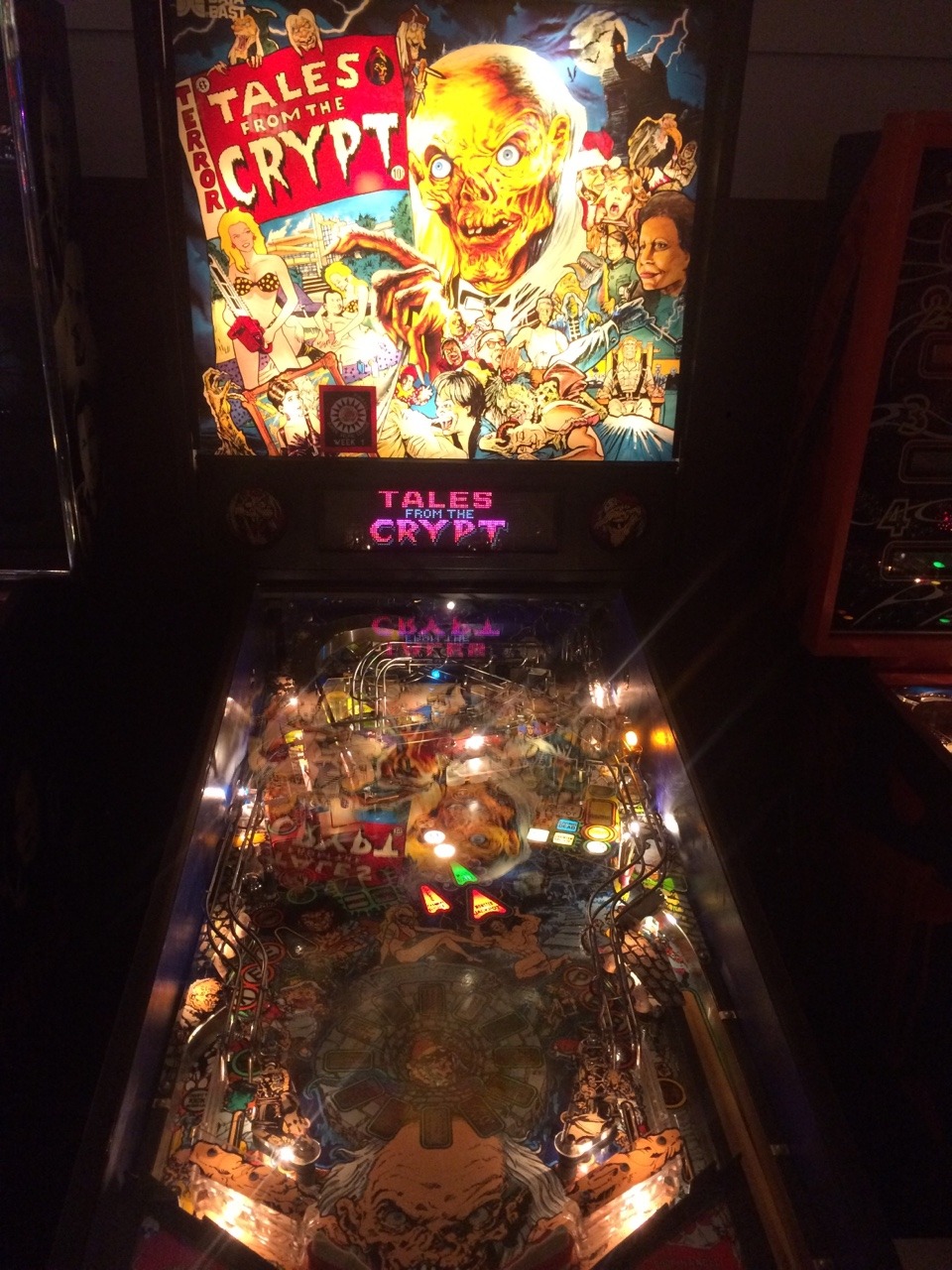
So “Tales from the Crypt” was the respected early ‘50s horror comic from EC that got squashed in the “Seduction of the Innocent” scare
In 1989 HBO used the brand for a horror anthology series, at the same time Sandman was recasting that comics era as deep myth
It was kinda Twilight Zone in its irony but more visceral, with gore and tits. HBO’s premium cable original programming brand was always “with gore and tits”, before SatC they had an aging boomer sitcom called “Dream On” where the conceit was his retro-themed sexual fantasies were shot as part of the plot