shrine to the prophet of americana

#rerun (641 posts)

Red Lobster, Olive Garden, Outback Steakhouse, and Hooters represent the four thematic seasons of suburban life: winter (New...

kontextmaschine:

Red Lobster, Olive Garden, Outback Steakhouse, and Hooters represent the four thematic seasons of suburban life: winter (New England), spring (Italy), summer (Australia), and fall (heterosexuality).

Tagged: rerun

Happy Labor Day

Happy Labor Day

kontextmaschine:

People loved their work once, and it didn’t matter if they worked in the public sector or in the private one. The men who worked in the CCC would take their grandchildren to see the forests they planted, while the men from the auto plants would point out the cars they’d built as they passed them on the new interstate highway system. The women who fastened the engines on the wings would watch the B-17’s fly off to make a liar out of Goering, and the women who taught in the public schools would point with pride when one of their old students got elected mayor. Work was about making money, certainly. It was about feeding the family and keeping the roof where it was, and maybe having a little left over at the end of the day, or at the end of the week, for some amusement. Maybe a trip to Lincoln Park or White City or a hundred other places, where you could take a moment and enjoy the cool of the evening, music riding the nightwind from a dance pavilion down along the lake.

But it was also about Doing A Job, and doing it well, which was different than simply Having A Job. It was about making good cars and strong steel and sturdy furniture. It was about learning a craft, even if what you were doing wasn’t recognized as one. There was a craft in tightening rivets, or feeding the open-hearth furnace, or planing the wood just so. You had your craft, and the person next to you had theirs, and, when all the work was done, and all the craft was practiced, and practiced well, there was something you could look at with pride and say, that is something I have given to the world. Job well done, as they used to say. You could teach seventh grade civics and then, one day, you’re on a podium outside of City Hall. That kid right there, you could say. That kid is something I have helped give to the world. Job well done, as they used to say.

Unions were greatly responsible for the pride that people took in the work they did, especially in the middle of the last century, when unions helped build the most formidable middle class in human history.

-— -— -—


There was an autoworker, Ben Hamper, who wrote a column in the Flint (later Michigan) Voice, which was the alt-weekly Michael Moore first made his name by running. A lot of his columns got collected and repackaged in an excellent book, Rivethead that I read in college.

I read it in a class by Stuart Blumin, who was my favorite professor and de facto advisor. He was an American historian, focused on labor and class and the development of capitalism, you could tell he was heavily influenced by EP Thompson and the Communist Party Historians Group over in the UK.

He was quite open that he had expected Communism to ultimately triumph, and that he had been wrong about that, and in subtext that he had wanted it to ultimately triumph, and didn’t think he had been wrong about that.

Anyway, Rivethead. The story is that Hamper was born in 1956, a fairly clever kid growing up in Flint, Michigan, the chronological and geographic apex of American industrial unionism, where everyone’s dad worked for GM.

And he could have gone to college but he gets some girl pregnant and so he goes to work on the assembly line not even really out of obligation or Catholic guilt or whatever but because that seems as good a life course as any, it’s what every man he’s known does, under the mighty UAW the pay’s on par with the kind of “educated” jobs you could get anyway, why not.

And so he goes to work on the line and eventually he ends up writing a column about it, and he talks about the color of the factory culture, playing soccer with rivets for balls and cardboard boxes for goals, drinking mickeys of malt liquor in your car on lunch break, the absurd fursuited mascot “Howie Makem, The Quality Cat” that GM would feature at rallies and shop-floor tours, being laid off in economic downturns and put into the “job bank” where you get paid waiting to be rehired in the next upswing, developing a perfect rhythm with your partner, training into a rhythm so perfect you can each trade off doing the two-person job yourself for 4 hours while the other one goes out to a bar on the clock, the dignity and solidarity of the American worker.

And time goes on and eventually his marriage fails but he takes it in stride, and his column gets recognized and he takes pride in that and then eventually he has an epiphany, and a complete breakdown, which are basically the same thing. And the inciting incident is when an older line worker, some guy he’d looked up to as a model of quiet, philosophical stolidity, just shits himself and is barely coherent enough to even notice this and he realizes the guy hadn’t been a Zen master, he’d just been checked-out mindless drunk on the line every day.

And he realizes that the rivethead life is destroying him, that the only thing holding it together was a budding alcoholism, and that it’s doing the same to all his co-workers, and looks back and realizes it had done the same to every grown-up man he knew, his father and uncles that growing up he had looked up to as models of masculine strength and fortitude really had just had their spark snuffed out and the life beaten out of them long before, and whatever pride they took in the cars out on the road was a defensive attempt to locate in an external form the sense of self-value that had been exterminated within them.

When Marx talked about “alienation”, well.

And he went crazy, and couldn’t bear to work on the line anymore, and there’s no redemption, that’s where the book ends.

And that was a theme that cropped up again in Professor Blumin’s class, that there were two great working class traditions that echoed through the ages, and they were

1) avoiding work
and
2) drinking

Back in the premechanized age of small-group workshop manufacturing, workers would celebrate “Saint Monday”, which was to say just not showing up for work, hung over after the weekend.

(This was riffing off of Catholic feast days, or holy days, from which we take the word “holiday”, and as time went on counted an increasing share of the days of the year. There was a reason that poor workers were aligned with the Church, and nobility, in “Altar and Throne” coalitions resisting the development of industrial capitalist liberal democracy.)

In the ‘80s, the crap time of American auto manufacturing, one trick that was passed around (pre-internet, so by word of mouth largely) was to look at the codes stamped on car bodies, which would tell you what day of the week they were manufactured, and to avoid Mondays and Fridays. Because those days had the highest defect rates, because the workers tended to be drunk, or hungover, or absent.

And back in the workshop days, you’d drink at work. Apprentices would be sent out for growlers or buckets of beer, there were elaborate rules of who in the hierarchy of workers was expected to buy rounds for who and when. And there was hellacious resistance to attempts to get them to knock this off, as the industrial era kicked into swing.

Those great satanic mills, where women and children worked in shifts at great water- or steam-driven sewing and spinning machines, stories of little kids getting their hands mangled by the machinery? One of the major reasons women and children were preferred was because they would actually show up on time every day, and stay sober around all those hand-manglers.

And I mean, this maybe sounds like an argument for socialism. Though not of any actually-existing- variety, as capitalist propaganda will be glad to tell you, Soviet work culture, at least when the morale thrills of the Revolution and Great Patriotic War faded from personal to institutional memory, was all about shirking and vodka.

So those complaints about how America celebrates Labor Day instead of May Day, ignoring the true meaning of labor - solidarity - in favor of mindless distraction? Psssh. Labor Day is a celebration of the truest, most ancient, most fundamental traditions of labor: not working (especially on Mondays), and getting drunk.

Happy Labor Day!

Tagged: rerun work: the curse of the drinking class history holidays

PinkiePieSwear - Sunshine and Celery Stalks this is the guy who did Flutterwonder. respect.

kontextmaschine:

kontextmaschine:

PinkiePieSwear - Sunshine and Celery Stalks

this is the guy who did Flutterwonder. respect.

“Country girl and sports lesbian are equally valid tomboy types” was such a specifically 2010 lesson from kids’ animation, perched between the NASCAR ‘00s and the woke ‘10s

Tagged: rerun

kontextmaschine:

kontextmaschine:

alienpapacy:

oh hey reminder that AT (“Absolute Terror”) fields are themed from the same source as “terror management theory”

reminder that that concept is about the defenses we erect to protect us from awareness of our own inevitable mortality

so the Unit-02/Mass Production Unit fight in End of Evangelion where Asuka goes balls out and channels all her perfectionist neurosis into beating them all before her power supply ends, but then they just rise up again and break through her AT field and impale her mother/avatar/self through the face to be cannibalized

the very moment where their spears, forcing their way through the field, turn into a Lance of Longinus - the very tool by which his inferiors killed God - and she exclaims in astonishment, that second when she realizes that no matter how perfect she is she’ll die anyway

that’s also a metaphor for realizing that no matter how perfect you are you’ll die anyway

Tagged: rerun

from the ‘96 Battletech TCG Notice that cost on the left margin means it costs 7 more unless you have the Politics resource...

kontextmaschine:

from the ‘96 Battletech TCG

Notice that cost on the left margin means it costs 7 more unless you have the Politics resource (land), which unlike the other 4 resources (colours) had no game effects other than making celebrity pilots and “orbital bombing” direct damage cheaper

Somehow at the time this was not obvious as a metaphor for the post-Cold War “New World Order”, because the comparison set was like On The Edge and Illuminati and Netrunner and Illuminati and the X-Files CCG

The ‘90s were paranoid conspiratorial as hell, just like the ‘50s shit doesn’t make sense without that

Tagged: rerun

In retrospect Catholicism was this institution that herded me (and wanted to herd EVERYONE) to homeroom once a week to hear...

kontextmaschine:

In retrospect Catholicism was this institution that herded me (and wanted to herd EVERYONE) to homeroom once a week to hear stories about this punk kid who told off his elders and ordered everyone around and told them to their faces that they were wrong to care for their families or whether they lived or died tortuously and didn’t stop even when the community turned against him because he knew he was right and if they executed him fine, fuck it he was right and in conclusion he was the perfect person and everyone should discard everything they are to remake themselves after him

and I appreciate that

Tagged: rerun

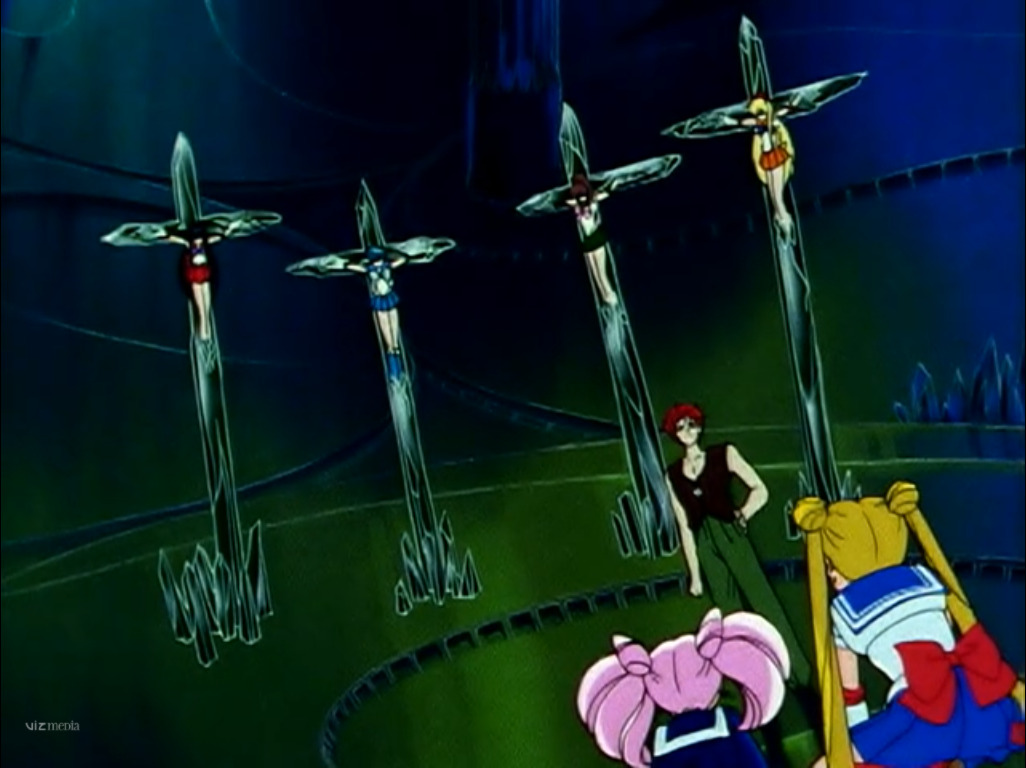
New aesthetic: anime kids getting crucified.

sorairo-deizu:

New aesthetic: anime kids getting crucified.

Tagged: rerun

well son, a blog is formed when your loneliness and your narcissism fall in love with each other

doglets:

well son, a blog is formed when your loneliness and your narcissism fall in love with each other

Tagged: rerun

Tagged: rerun

I just realized what Salon headlines were reminding me of

kontextmaschine:

I just realized what Salon headlines were reminding me of

remember the mid-2010s “clickbait” era?

Tagged: rerun

You know what my favorite piece of reactionary media is? Ghostbusters. Hear me out, I’ve mentioned this before, but forever ago....

kontextmaschine:

You know what my favorite piece of reactionary media is?

Ghostbusters.

Hear me out, I’ve mentioned this before, but forever ago. It’s a movie about a bunch of guys who, in the go-go ’80s, give up on academia to found a startup based on cutting edge technology. They settle in gritty New York City, specifically rehabilitating decaying public safety infrastructure, and their job description is literally “drive around town with the siren on, rehabilitating once-glorious locations by imprisoning vandalous spooks”.

They clean the city up, create jobs for the black and white ethnic working class, but face resistance from pointy-headed bureaucrats. (The dickless EPA guy manages to represent both “overregulation” and “safety-threatening prisoner releases” with admirable efficiency.) Ultimately though, the meddlers have to relent in the face of their success at making the city safe for innocents, as represented by yuppie singles in their 30s.

(Ghostbusters II is about the guys making the city a safe place for those yuppies to raise kids by cleansing cultural institutions of evil influence using the power of American patriotism, while the judiciary and mayor come to accept that whatever the law or political elites might say, busting is both necessary and popular.)

Meanwhile, it’s fucking Ghostbusters.

Tagged: reactionary readings of beloved 80s movies rerun

Monthly Compilation Features In Enthusiast Magazines I Have Subscribed To

kontextmaschine:

Monthly Compilation Features In Enthusiast Magazines I Have Subscribed To

Aftermath (Flying Magazine)

Culled from NTSB reports of plane crashes. The pilots are usually at fault. If only they had been better. Learn from their mistakes. Occasionally the victims survive.

The Armed Citizen (American Rifleman)

Culled from news media reports of good Americans using guns against bad people. This is why you own a gun. Be inspired by their triumphs. Occasionally the perpetrators die.

Tagged: rerun

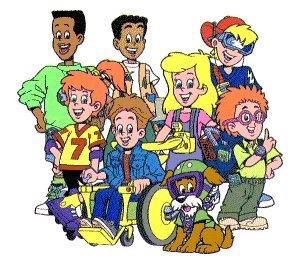
The Burger King Kids Club, representing all the ‘90s identities: Black Hispanic Nerd Tomboy Disabled Stacy Geek Dog

discoursedrome:

kontextmaschine:

The Burger King Kids Club, representing all the ‘90s identities:

Black
Hispanic
Nerd
Tomboy
Disabled
Stacy
Geek
Dog

Technically I think the short butchy-looking guy is the nerd and the guy with the backwards cap is a “coolkid”, which is a distinct genus. This may seem like splitting hairs, but it’s important that we recognize the cultural distinctiveness of coolkids in order to honour their sacrifices during the Cola Wars.

The coolkid was a kind of cyber-Fonz, a “women want him, men want to be him” archetype as targeted toward twelve-year-old dorks with chunky white sneakers. It was a laboratory-designed hybrid of nerd and greaser engineered to target the market sector of the former using the charisma and popularity of the latter. Toward the late 90s there was some further crossbreeding with rappers in order to counteract the diminishing relevance of greasers, but in the early 90s that was still too threatening for mainstream white suburbanites with money.

Anyhow, I went looking for some more vintage examples but it’s surprisingly hard to find ones that aren’t later parodies so I’ll just link this fucker.

Tagged: rerun zack the lego maniac

Give us another forbidden amhist take!

Anonymous asked: Give us another forbidden amhist take!

kontextmaschine:

America has already birthed its signature religion in Mormonism, the LDS Movement coming out of our most intense cultural moment, the Second Great Awakening Burnt-Over District

In response we chased them across the continent and raised mobs against them and lynched their founder-prophet and the government of Missouri declared an honest-to-god extermination campaign against them and they fled to the barren desert and we still sent armies against them in what was a comically transparent update of the Christian and specifically Protestant and specifically Protestant dissenter persecution narratives that American culture was founded on

And by the Constantinian timeline we still have a century-plus left until the country converts en masse as a palingenetic gambit

Tagged: rerun

https://twitter.com/TheFaction1776/status/1085293090288558081

kontextmaschine:

slartibartfastibast:

https://twitter.com/TheFaction1776/status/1085293090288558081

At this distance all the street art I hear about in Shepard Fairey’s old Hollywood stomping grounds these days is right-wing, either The Faction or SABO.

(Hollywood the neighborhood hasn’t equaled “Hollywood” the industry since the 1940s)

There is a tradition of Gen X West Coast counter/subcultural right-cynicism though, expressed through humor and cartooning – Jim Goad and Nick “A. Wyatt Mann” Bougas at Answer Me!, Suck.com (large portions of which was absorbed by Reason magazine), Peter Bagge and Hate, John Swartzwelter writing for Army Man and The Simpsons

Really it was part of the same cultural ecosystem as Fairey and Adbusters, honestly as Spy and Vice and Bloom County and Life In Hell and Calvin & Hobbes tbh, even Beavis & Butthead/Daria, a Gen X disillusionment with/loathing of the normie world

But then that became the culture and got its edges softened and everyone forgot how to operate as a counterculture

(I was lately like “wow, Hard Times and Reductress AND Babylon Bee are all really good rn, why is all the good satire subculture-specific?” Then I realized The Onion’s “overeducated college town slacker with Thoughts about pop culture” was subculture at debut)

But now we’re cycling back out and it’s been rediscovered

Tagged: rerun

Jurassic World (2015)

kontextmaschine:

tl;dr - a competent summer blockbuster wrapped around a core of intriguingly nihilistic self-awareness

Saw Jurassic World. In IMAX 3D, tho honestly I don’t think that added much.

(It did give me my first noticed 3D goof, when an unremarkable clump of vegetation flickered through visual planes. So it came closer on the Z axis without either taking up any more of my field of view or at all changing its X/Y relationships to adjacent scenery. “Geometry suddenly works wrong” is textbook Lovecraft uncanny.)

It was basically some good action sequences pasted together by mechanical and emotional arcs, in summer blockbuster tradition. The dinosaurs looked nice but no longer novel, Chris Pratt finishes his upgrade from “poor man’s Chris Hemsworth” to Cera/Eisenberg-style doppling, everyone else is fine.

(though on “Poor Man’s X” note, they seemed to be styling and directing Lauren Lapkus as Kristen Schaal, BD Wong as John Cho playing a younger George Takei, and Bryce Dallas Howard as… I’ll get to that)

And the nice thing about seeing Steven Spielberg’s name on one of these things, you know the pasting-together will be competent, which you can’t always assume.

So keep in mind, whatever I bring up in the rest of this aren’t flaws. They didn’t detract from my enjoyment or take me out of the experience. They aren’t plot holes, they aren’t the result of bad acting, writing, or directing, or the awkward remnants of plot lines that got scrapped in editing. A lot of this stuff you could only stick in there just so with a natural, you might say Spielbergian, mastery of the form. They aren’t flaws.

Which is almost a shame, because then they might be comprehensible.

* * *

So the thing about Jurassic World is it’s densely referential.

Some of it is straight-up nice. Like, did you wonder how a series that sold itself on dino verisimilitude will deal with the way their dinos were lizard-model and since then the world’s gone bird-?

Well, the plot opens with a visual joke about this, and it’s acknowledged in background dialogue, but it’s never directly addressed. There IS an in-character answer to another question that serves to explain it, with the delightfully meta reasoning that they’d always played a little fast and loose with appearances and that was what 1992 thought badass dinosaurs looked like.

Then there’s references to the franchise. Some scenes - the aviary and the waterfall - seem to be referencing the books, which is nice. But more the movies - one plot thread takes a 4-scene detour to show off some props and sets from the first film, Mr. DNA makes a cameo, the iconic theme plays and the gate from the original Jurassic Park shows up.

Now here’s the thing - the gate shows up in the context of a tour guide inviting his audience, and by extension us, to look at the gate and experience a sense of wonder, and did you know this is the gate from the original Jurassic Park?

There’s a bit where one character recruits another to sneak embryos off the island that so echoes the Nedry plotline of JP that I started to wonder whether this counted as a sequel or a reboot. Except the result is that he promptly, safely, with no difficulty does in maybe 10 seconds, and you’re like wait, is that what that scene was for? Is that what that plot was for? Is that what that character was for?

The final showdown starts off as a reference to the final showdown of JP, but then there’s a twist - which is not only also a reference to the final showdown from JP but kind of the same reference - then there’s another twist, which is again THE SAME REFERENCE.

And the damnedest thing is, it works.

And broader than just that, there are a lot of references to other blockbusters of… the “long ‘80s”? “High Spielbergian Era”? Back when movies were being explicitly designed as tentpole blockbusters but not yet as “pilots” for multi-film franchises, possibly as “reboots” from series where a one-off success inspired ad-hoc sequels.

(I do kind of question that popular chronology, I think that the ensemble disaster films of the early ‘70s were a prototype for blockbusters, and the slasher boom of the ‘80s-‘90s precedent for franchisecrafting.)

Like, the Big Bad is explicitly set up as an analogy for blockbustercrafting-by-Hollywood-plagiarism: they needed to make something bigger, scarier, more intense to please an increasingly jaded public, and did it by scavenging bits from previous successes and pasting it all together.

Past that there’s a lot of explicit references to other action movies that became franchises - I counted several scenes, shots, or bits of set design that were clearly invoking Aliens or Predator - or to other Spielberg movies - Goonies, not to mention Indiana Jones and Jaws, which were both, the latter having invented the concept of the summer blockbuster.

Even more though, it just plays with tropes and themes common in the era. But “plays” is the sense. It doesn’t subvert them, or use them to wield the audience’s genre savviness against it Whedon-style, so much as set them up and then stubbornly refuse to follow through. The ruined orgasm of filmgoing.

Like, there are two responsible business authority figures who are set up in the '80s villain role and ultimately get killed, but they aren't… really… bad.

The CEO type ultimately responsible for creating the Big Bad for reasons of profit is actually quite ethical and sets out to put himself in harm’s way to save people, at the expense of damaging his brand.

The military type who wants to weaponize the monsters - characters accuse him of engineering the crisis for his own ends, but he didn’t! He tries to seize power, but once he has it he makes the right decisions - use lethal force, including raptors - and brings the heroes along by not-entirely-cynically appealing to their selflessness.

Really the accusation against him - “you want to use these perfect killing machines as perfect killing machines” is silly, doubly so coming from another military guy whose moral authority ultimately comes from just being better at using them.

That’s really the thing with their deaths - they’re structured according to the standard comeuppance theme but they’re not. They don’t die as a result of their greed or hubris or ultimate cowardice, but in the course of doing the right thing, just not skillfully enough.

And the sexual politics themes—

I’ve mentioned before, a lot of '80s movies (and mass culture generally) were actually quite reactionary, especially by comparison to what had come shortly before. The later Rambo movies are so known for their macho steroidal revanchist-nationalist aesthetic that a lot of people don’t realize the series started as a longhaired PTSD drifter standing up for freedom by going VC and shooting cops. ('Nam vet fights the man" was actually a pretty respectable subgenre.)

On the domestic front, you went from Kramer vs. Kramer’s “Divorce. Man, sometimes you wonder whether it’s really worth it. ::sigh::” to The War of The Roses’ “no of course it isn’t, also you look ridiculous”, passing through both Die Hard and Fatal Attraction’s takes on “lethal violence is proper, necessary, and sufficient to reassert the integrity of the patriarchal nuclear family”.

Now those are kind of blatant examples, other movies were more subtle, Spielberg could be downright elegiac about family dissolution as a wrongness and threat.

But if you’ve seen many '80s movies you realize that as Jurassic World starts they’re laying the foundations for a few classic themes.

There’s “the careerist bitch who needs to get taken down a peg and get in touch with her true destiny as nurturing mother”. There’s “the divorcing parents who need the specter of external threat to the family to force them back together, where they recommit to family”.

The older brother, ignoring his sibling to check out girls as soon as he’s away from his devoted girlfriend promises kind of a JV “taming of the rake” arc, which was also a thing.

(Pretty Woman was not just about how a masculine man’s assertiveness (and, let’s be honest, earning potential - she has to go shopping now) can tame a sexually mercenary woman into wife material, but how a feminine woman’s nurturing (and let’s be honest, sex) can tame an economically mercenary man into an upholder of stable order. They were such similar creatures.)

But the weird thing is these tropes are invoked, the plots set up and then not followed through, not even subverted, but just ignored.

In reverse order, the younger brother ends the skirt-chasing plot *by pointing out the stakes don’t really matter*, and while the two are closer towards the end than the beginning that’s clearly situational and not fundamental. The elder doesn’t grow or change because he doesn’t have to, the scene of emotional bonding that “should” be the turning point is him putting their experience in the context of an established, supportive relationship.

The divorcing parents turn out to be basically a frame story, and don’t reunite. When I talk about how this stuff is the product not of incompetence but its opposite, I mean things like the direction in the reunion scene, the perfectly done body language - the way they never quite hug all together, the way each parent pays attention to each child, and each child to the parents together, but neither parent seems to instinctively consider the other part of their family - that establishes that yes, they’ve both been shaken, yes, they appreciate family anew in the aftermath, no, they’re not hostile, but for all that they’re no closer to each other.

One weird thing - and honestly I think it’s supposed to stand out - is when the younger brother says, just before the plot is dropped, “all my friends’ parents are divorced”. The thing being that I could see that as late as the original JP, but coming from a professional-class elementary schooler in 2015, it’s just intuitively wrong.

Finally the career shrike thing seems to get diverted into the related but distinct Romancing the Stone/Crocodile Dundee “sassy city girl comes to appreciate the virtues, possessors of virile outdoorsy manliness” plot. That’s the closest to an honest take on these things, because I guess they needed some character through-line.

Even then they seem to be fucking around with it. Like the last line of the movie, it’s textbook way to cap these things off. Looking into each other’s eyes, making a callback to a line from their earlier adventures that, recontextualized, is about the promise of their romantic future. Except for the fact that the actual line, in its actual context, MAKES NO FUCKING SENSE.

Or consider how Claire’s appearance is used as metaphor for her character development. For one, talking poor men, her initial look - all white outfit, severe red bob - looks so familiar I know it must be from somewhere, but towards the end TRY to tell me she’s not being styled as Resident Evil-era Milla Jovovich.

For two, one of the tropes of this plot is the girl’s pristine fashionable, nonfunctional attire representing her lack of earthiness. And so when it comes time for dude to do the angry “you are in no way prepared to function in my world” bit and cite her outfit, she immediately alters her clothes to look more sporty, and then explicitly states that the point is to signal she is now ready for adventure.

BUT, that’s not what he complained about. He cited her shoes, 3 inch spike heels completely unsuitable for any physical activity, let alone jungle trekking. And she never takes them off. There is a shot of her running in the final chaos that only exists to point out she’s still wearing them. Never took them off, never lost or even dirtied them, never trip her up, never set up to be some badass for doing this all in heels.

THE ENTIRE PAYOFF OF THE SHOES BIT IS TO POINT OUT THAT THE SHOES BIT NEVER PAID OFF.

Also there’s a one-off scene with minor characters that’s a cute little bit about how “finding courage and stepping up as a hero” and “getting the girl” are so firmly linked in movies and culture that if you separate them, everyone awkwardly realizes they have no cultural script to work off.

* * *

So. You can see why this is catnip to pattern recognition types like me - lots of stuff that clearly isn’t random noise, it’s deliberate, structured, chosen with an eye on how it relates to the other parts and to other texts, but damned if I can make it add up to anything.

Well no, looking back on all this there is ONE way I could understand this, as a rebuttal from Spielberg to an imagined cynical critic of modern blockbusters.

The cynic says “Oh, another Jurassic Park. So is this a fourquel or a reboot? Time to refresh the brand, start a new franchise? You unoriginal goddamned hacks.”

And Spielberg says “Listen here I invented blockbusters. And they’ve never been original. Film serials, pulp fiction, the fears and dreams of a nation fed back to them. And that’s never kept them from being good.

May not be a Tarantino-style showoff about it, maybe you didn’t recognize the sources. So here. You’ll recognize all the parts of this pastiche. I won’t even try to fit them together right, I’ll intentionally sabotage the thematic coherence, I’ll call all my shots then bunt them. And it’ll still be great, and you’ll still love it. Because you’re not hungry for originality, you’re just hungry for quality.”

* * *

Two minor notes, both about vehicles. First, this is the only depiction I can remember of someone flying a helicopter competently but not smoothly, which is oddly endearing. Second, okay maybe it’s a scrambler, but I don’t care how knobby the tires on that Triumph are, you’ll get further through the jungle in spike heels.


Tagged: rerun just saw this again and delivered most of this post as a monologue

America happened because the king made tea and paper expensive and the Important Young Men who spent all day taking stimulants...

kontextmaschine:

America happened because the king made tea and paper expensive and the Important Young Men who spent all day taking stimulants and writing down their Important Thoughts were PISSED

England happened ‘cause some Vikings stole it on a raid

Tagged: rerun

So, I think that part of the problem with the whole “Internet Utopianism” thing in 80s and 90s science fiction is that these...

kontextmaschine:

argumate:

quasi-normalcy:

argumate:

quasi-normalcy:

So, I think that part of the problem with the whole “Internet Utopianism” thing in 80s and 90s science fiction is that these sorts of books were generally written by idealists who were inclined to thinking idealistic thoughts and surrounded by other like-minded individuals, and so didn’t understand just how many people believe terrible things that can’t be disestablished through facts or arguments

and that technology doesn’t trump politics, even if it does shift it.

Technology tells politics how to move; politics tells technology how to bend.

Then unexpected consequences tells both to get knotted.

but if you sing the song well enough people walk around humming it

and then years later their kids improvising their way out of a funk think

hey! we should sing that song!

Tagged: rerun

also me: the reason The Giver was so well-awarded in the trade press and esteemed by your teachers even though it seemed kinda...

kontextmaschine:

kontextmaschine:

also me: the reason The Giver was so well-awarded in the trade press and esteemed by your teachers even though it seemed kinda poncy to you EVEN AS a chosen one

me: yeah?

also me: the real payload was the emotional resonance of someone who knew he couldn’t save his generation but maybe could save the next

me: oh. thanks

also me: yeah?

me: yeah

now the extra credit

And a big part of the problem with the Star Wars prequels is that decades later, George Lucas thought that “raising a child you’re not prepared for and feeling like a failure when they turn out wrong” still carried as much emotional weight as a universal theme as “growing up and overthrowing your parents”

Tagged: rerun

Eleven Bravo

kontextmaschine:

In which the first time I meet Iraq vets in a bar they buy me drinks:

So this, like all of my good stories lately it seems, takes place at the Gold Room, about a year and change ago. Back when i was more seriously thinking about joining the Army (and then I asked everyone I knew who had been recently and they all said no very strongly).

So one day, at the bar, dude next to me with a bit of heft, a Hawaiian shirt, longish black ringlets, and a loose demeanor that altogether made him seem a bit like Benicio del Toro-as-Johnny Depp-as-Hunter S. Thompson’s-lawyer. He started up a conversation a little slurrily, said he’d been in Iraq, he’d been an 11B, and he bet I didn’t even know what that meant.

I actually did: “Eleven Bravo. Rifleman.”

So then he talked about how even yeah but no one in this bar supported our gun rights and I was like dude I literally am a card-carrying member of the NRA* and showed him my card.

And then he went on and said he had become a mercenary, which was believable, because signing on with PMCs after doing a tour is something people in Southern California actually do. I was fascinated and pressed for details but instead he brought me back to a table to meet a bunch of other guys from his unit that were out together.

One skinny kid from East LA who looked barely 17, with dayglo facepaint and feathers woven into his hair, seemed to be the natural (or, heck, maybe formal) leader of the group and introduced everyone to me and we got to talking. I told about how I’d been thinking of going Army OCS and they were generally supportive. Eventually someone pointed out that after all that I’d still just be a butter bar and they all broke into snickers.

I (truthfully) told them that my father, who was an airborne lieutenant in the early ‘60s, had given me advice on that exact situation: “act like you know what you’re doing, and let your sergeant make all the decisions”. They cheered and wouldn’t let me pay for my drinks for the rest of the night.

Eventually I got Dr. Gonzo to clarify the mercenary bit, apparently what he meant was “I have bought a gun”. When he went to the bathroom I brought it up with the neon chief, said that kind of concerned me. He said “yeah, that guy’s kind of a problem sometimes, we try to keep an eye on him.”

* I’m a member of the ACLU too, but not card-carrying, because they use this cheap glossy bendy cardstock and also do not offer select discounts with participating merchants across the country.

Tagged: rerun i am no longer a member of the ACLU but would sign up with a new Nadine Strossen group in a second