shrine to the prophet of americana

#rerun (641 posts)

Ah jesus, it’s so fucking true, it’s the math joke and the Pokemon together at last. Gaming ftw, and pokemon ftw, pokemon and...

g0m:

Ah jesus, it’s so fucking true, it’s the math joke and the Pokemon together at last. Gaming ftw, and pokemon ftw, pokemon and gaming, and epic maths, calculus my bitch, IT’s super effective [2x damage against epic fail jpgs that arent even baerly viral] Pokemon. God damn I remember my child hood in the 90s - right in the feels, but also I’m fairly fucking into a lot of m aths shit that I know from colledge so it’s pretty fucking relatable. Fuuuuck,… what if it was a teacher who did that.. Best. Fucking. WinTeacher in the whole motherbitching K a n t o  Re g i o n. Pikachu, Bulbasaur, Lavender Town, Pokemon first movie. MewTwo. Imagine if Ash Ketchum had a freaking facebook page and if all the pokemon were evangelion characters

Tagged: rerun

Like, in the 20th century the mainline Protestant churches tried to deal with the romantic drift of “spouse as soulmate” from...

kontextmaschine:

Like, in the 20th century the mainline Protestant churches tried to deal with the romantic drift of “spouse as soulmate” from “spouse as partner in household as institution” by introducing mandatory classes in their colleges to teach the students how to fuck each other better.

Oh and you know what I just remembered? Marriage manuals.

Which I think even still existed in the 1980s as a degenerate genre of erotica, but early in the 20th century, that was a serious earnest concern of mainstream bourgeois WASP culture in say the 1920s-30s, that young people get on birth control and be good at sex.

There was a concern that marriage was under threat from Romantic ideals, and people were neglecting spouses in favor of lovers, and that this had to do with Christians being sexually repressed and unpracticed and being totally incompetent at getting each other off

(especially with America’s rural homestead culture leaving people so isolated without partners to practice on. Except relatives and barnyard animals, which is absolutely a thing in isolated rural cultures!)

Like in the immediate postwar when the whole “going steady” teenage culture came up, journals of upper-middlebrow tradition were seriously fretting that teenagers were getting too sexually exclusive too soon, and that this boded poorly for the formation of their mature character. And when you think of the divorce wave of the 60s-70s, well…?

(really, a lot of postwar teenage culture was about how the car changed rural life by giving kids the range and mobility to find each other to fuck)

Mind you this was going on while the churches were still in their great missionary boom. In fact, it was kind of related. Margaret Mead, Coming of Age in Samoa, 1928. A lot of period linguistics, anthropology, archaeology was handmaiden to Protestant missionary evangelism, and the churches invested heavily in them. (The rest was a handmaiden to European nationalisms.)

And half a century before Club Med, before the hippie ‘60s, the mainline Protestant churches sent the cream of their young elite off to spend a few years living with tropical islanders and other brown people and one of the bigger things they brought back was “Oh yeah, they’re a lot less uptight about sex, premarital, extramarital, teenage casual, it’s all good. We should try that.”

American culture works by weird paths

Tagged: rerun

Of the Top of My Head Review: The Turner Diaries

kontextmaschine:

I read this in like middle school as a .txt file downloaded off a Hotline server. After the Oklahoma City bombing, Newsweek and some other magazines (the then-news authorities) had mentioned it as important and I took their word for it.

It was terrible.

And I’m not talking like morally, I’m not a ponce like that. And not even the wooden writing and characterization, though they were far below the standard for even bottom-of-the-barrel published pulp or even Star Trek slash that it was contemporary with.

I’m talking like I cannot remember a single character (the protagonist was male, and there’s a girl) or more than 3 moments from this novel

At some point early on people are hiding their guns inside the walls of their houses because the federal government is sending around gangs of black gangbangers to confiscate them, that’s one

The second moment really gets to the problem with the book though. Because the second moment is the Day of the Rope and it makes clear the author had no clue what he was doing with this work

The Day of the Rope, when the good white Americans realize their power, rise up, and hang the internal traitors from lampposts, is clearly the emotional heart, the payoff of the whole work.

And it’s like 3 pages long, at most, set in California without any established characters while the main cast are in another state entirely.

And then it’s like he realizes that whoops, my plot arc never intersected with the climax, and the falling action is like “and yeah sure then he flies a nuclear bomb into the Pentagon”

(I did remember that the one example hung during DotR was a white woman who dated black guys. That sense of “white women betrayed us white men in favor of stylish minorities” was definitely a bigger thing than people care to remember last time around. The professional class version was the prosecutor and his wife in Bonfire of the Vanities, him seething at her fashionably concerned for the animals he has to repress in order to enable civilization.

That and the Al Bundy/Clark Griswold “I suffer and do my best to serve as patriarch but you don’t hold up your end and the culture takes your side you ingrates”)

Tagged: rerun

no way

kontextmaschine:

isaacsapphire:

kontextmaschine:

argumate:

gyppa:

no way

I feel the absolute units have crossed some kind of threshold

I remember this early-1990s SF novel that was like the leftists tried to solve global warming and sent us into the glacial age it had been saving us from

and there was a space station in orbit but the greenie bureaucrats resented it, but it could recharge its stores by sending this atmosphere-skipper craft down to scoop nitrogen

but then something broke and in order to maintain future-orientation they had to connect with some groundbound SF fans who rehabbed a museum rocket to rendezvou them in orbit for replacement

and in the last scene as the rocket took off the harpy head bureaucrat demanded a gun from her aide to shoot it down

but he (who still had the spark of future somewhere in him) made sure to tediously clear the weapon and eject the mag first, ‘elf & safety

(this whole sequence I suspect was influenced by Wings of Honneamise)

Anyway, the SF fans, clearly audience stand-ins to be flattered, at one point the orbiteers suggested they were maximizing their volume:area ratio for icefield heat retention by being so spherically fat

That was the same era as the story that became Children of Men, “oh no what if antinatalism”, and this one story I remember where the careerist scientress visits to condescend to the mommy track sister she stole her breakthrough ideas from only to learn that the real cure to the AIDS-alike she has was “having a kid before 30”

The early 90s: more reactionary than you remember!

(plus all the Kim Stanley Robinson “okay science and pacifism and postcapitalism but still, we fuck 9th graders in public baths)

Why not say Fallen Angels? It’s apparently in the Baen Free Library too, so available to any readers who might wish to read.

ah that’s what I was thinking of

Tagged: rerun

So when I first moved to LA I lived in Los Feliz and I don't know why but there was def. a 24 connection. Looking it up I don't...

kontextmaschine:

So when I first moved to LA I lived in Los Feliz and I don’t know why but there was def. a 24 connection. Looking it up I don’t think it had sets at Prospect Studios, but maybe the LA location shots were based out of there?

Anyway, “drunk Kiefer Sutherland” was the neighborhood mascot, I was there once when he bought the bar a round at the Drawing Room. Across the street, when an episode aired Ye Rustic Inn would do a thing called “Jack Bauer Power Hour”, you put your money down and get a shot of beer each minute, a shot of whiskey every time he kills or tortures someone and some other things, some of the crew came out to witness the finished production that way

Also Mary Lynn Rajskub, the indie comic who played girl-in-the-van Chloe, had one-woman shows at the atheist church down the street, the “Center for Inquiry”. I remember the one about giving birth and becoming a mother was called “Mary Lynn Spreads Her Legs”

Tagged: rerun

Cable television was perfect and we ruined it

kontextmaschine:

This frames itself as “there’s so much good stuff I should waaatch! I miss vegging out on crap because it was what’s on!”

And that’s not wrong per se, but I’m thinking beyond that to the effect on the whole-culture that we shared this pre-internet experience in common, of taking in media that was not very optimized for us because it was around, and consequently having a lot of cultural background we were very lightly invested in, in common with the rest of the country, and that enabled us to build increasing elaborations on the culture while maintaining coherence

Like, there might have been a lot of webcomics, but honestly, there were a lot of newspaper comics. Like, on any given day I might read 18 of them cause they were just there. And we’d have that in common, like, not just the good stuff like Calvin and Hobbes and The Far Side, we’d all recognize the Family Circle dotted-line meandering travel paths. And so someone could reference that and we’d all be like “ahh”. Or Dennis the Menace’s slingshot. That Liz Lemon “chocolate, chocolate, chocolate! ACK” cutaway works because everyone, including people who didn’t or still don’t care about the experience of unmarried single women approaching middle age, would have read enough Cathy to instantly place the reference and further, to process the twist, that yeah, it was awfully mannered and ritualized for a “relatable” comic. Garfield without Garfield works because we’ve all seen it with Garfield.

Part of your contemporary social/identity/representation/ownership fights is just rehashing the 80s “Canon Wars”. What is authentic American culture, these works long held up for praise but dismissible as product of an old order and old demographics? These new works by and about the non-dominant that don’t even try and engage with the first tradition?

And that never resolved so much in either direction as all High Culture was deprecated in favor of a new American Canon of Pop Culture. One that could skip normative questions of merit entirely by being a descriptive canon of what the masscult Broadcast Era left us.

Like, The Brady Bunch wasn’t in the canon because it was smart, or well-acted, or well-shot, or had something interesting to say about society in the period where blended families and domestic servants were each at the edges of “normal”. (If it was that, lesser Norman Lear like Maude would be). No, the Brady Bunch was in the canon because it was ubiquitous. Everyone had seen it at some point, if you were Generation X there was a good chance you had seen any given episode at some point.

And this still represented a diversification. This new canon had a lot more “white ethnic” and particularly Jewish pillars, and blacks certainly had more pride of place in 20th century “pop” than “high” culture.

(This leaves Jazz and Blues in the interesting position of having been significantly intellectualized to “fit” the old High Culture paradigm before the new one came in, leaving them somewhat overlooked)

And with this stuff established as the New Authentic America you could appeal to it. With Rock as the National Genre, not just kids’ stuff, you could say that thru Blues and Motown the culture owed black artists more respect. (Where no one really thinks of contemporary American pop as Swedish-indebted).

Feminist and queer scholars pored over Hollywood camp, subtext, old “Pre-Code” work aiming to prove that gender variance and homosexual desire had always been an authentic part of American culture.

(I def. remember on multiple occasions apropos of I forget what the tale of “Fatty” Arbuckle trotted out as a moral condemnation and warning of the unscrupulous young women and tabloid press that for money and attention would peddle baseless rape accusations to a public of vulgar moralists, which today hm)

And past those knock-on effects on social health, the cultural output itself was great. I think that’s the defining factor of Long 90s culture, not only that it built off a shared canon but its creators and audiences recognized it as working from a shared background with traits and forms that could be played with, the meta-awareness of it all.

Xena: Warrior Princess, a syndicated swords-and-sandals actioneer spin-off attracting an ecology of academic conferences and journals by mashing up all of ancient mythology, Mediterranean history, and knowing Hollywood encoded/subtextual queerness.

Kevin Williamson deconstructing and rebuiding the slasher genre with the Scream series. And then, honestly, doing the same with the teen relationship drama with Dawson’s Creek, where the principals were always talking through what their character developments meant, seeing them through a cinematic lens in heavily referential dialogue

Joss Whedon and Rob Thomas (of Veronica Mars) wielding their audience’s genre-savviness against them, setting up scenarios that would “have” to end some predictable way that resolved everything by the conventions of five-act episodic TV with recurring stars and plotlines, and then just not.

In comics hitting earlier in the 80s, Crisis on Infinite Earths as a recognition at the core of the capes-and-powers mainstream that these disposable entertainments had congealed into mythology, proceeding by in-metaverse acknowledgement of extranarrative structure.

In more far-out stuff Morrison, Moore, Gaiman, and Miller going meta as hell, all “what if comics were myths, what if comics were real, what if reality was comics, what if reality was myth.” DKR as “if Batman was real, he’d be pretty fucked up”. Watchmen as “if Golden/Silver/Bronze ages were real, superheroes would be just as fucked up and unmoored by the 80s as we all are”. Sandman was “what if every human story and mythology was part of the same meta shared universe”

Even Star Trek:TNG was an attempt to realize the coherent universe that the fandom had mostly projected onto an original series that were really a stock cast and setting adaptable to filming any SF short story of the week. (Lurking in the background is the 70s-80s realization from Star Wars that coherent universes increase audience stickiness, and are a well you can go back to)

Then Ron Moore took his project of trying to give Star Trek coherence and weight to an even less respectable space opera reboot, and made the fact of an IP-driven rehash (“all of this has happened before, and all of this will happen again”) a load-bearing religious theme of eternal recurrence.

Family Guy, the conceit of half the jokes was they invoked 70s-80s pop culture just the right amount of obscure so you constantly surprised yourself that you even knew enough to get them.

SeaLab 2021 repurposing a piece of establishment futurism to underscore how absurd the concept seemed by then was despite how nostalgic the aesthetic was, Venture Brothers pastiching postwar boys’ adventure fantasies to highlight their complete disconnect from any actual process of becoming a man.

I miss that, you know. That overlapped/kept going with the Early Internet, so I thought it would continue through and we’d just keep building on it.

I guess that’s what really sticks in the craw re: “cancel culture”, millennial insouciance, wevs. The blithe dismissal of a rich, elaborated, mutually supportive canon with nothing to replace it.

Also realizing you’re now the kind of person to levy that critique at The Youngs, I guess that sticks too.

I dunno, maybe that was because the Early Internet was full of people who got acculturated pre-Internet and carried that with.

Maybe it’s cause I’m not getting particularly acculturated anymore - I accept Pokémon and Spongebob memes and reaction images in their own right, maybe if I saw the underlying properties - or whatever comes after - I’d appreciate them more.

Maybe that shared culture was an artifact of suburban retrenchment and then the Early Internet narrowing the cultural/economic/political American subject to a narrow white UMC and adjacent band and allowing a generation of us to mistake ourselves for America entire

Maybe it was product of a bottlenecking that was still negative on net. Like, basic cable had more channels than the plain 3 network broadcast era, but in 1950 they were competing with like, the bowling league, the pool hall, the Elks club, the Masons, the ladies’ charity, the socialist meeting, the dinner show club, the Mafia nightclub, the gay Mafia nightclub, any of the 4 bars between your work and home, the “whatever’s playing this week” double-feature movie theater…

(And even then, more diversity between examples. If you started going to shows in like “the Washington punk scene” in 1989, that was probably a lot of hardcore if you meant “comma, D.C.” and twee and proto-grunge if you meant “Olympia, comma”)

I dunno. Still, I miss it.

Tagged: rerun

…the famous Milgram experiment, conducted amid widespread fears of vulnerability to communism, which established that given a...

kontextmaschine:

…the famous Milgram experiment, conducted amid widespread fears of vulnerability to communism, which established that given a confident assertion of purpose ordinary people could be trusted to maintain loyalty in the face of intense, targeted subversive appeals…

Tagged: rerun

Scripts I Have Covered

kontextmaschine:

Scripts I Have Covered

Back when I was back in LA trying to be a screenwriter I did, as a lot of people in that situation do, a bunch of script coverage. Script coverage is basically reading a script (as a rule of thumb, scripts run one page per minute of runtime, with a lot less text per page than prose) and generating a 2-4 page summary and evaluation.

There are a few reasons you might have coverage commissioned: to evaluate a script for purchase and development; to judge its writer’s skills for employment on other projects; to judge its suitability for a particular actor or director; or just so you can pretend to have cared enough about it in Hollywood’s back-scratching favor economy.

The one constant is that it’s done by assistants or freelancers on behalf of executives, agents, or other “suit” variants who can then pretend they’ve actually read and judged the script themselves. Suits who make decisions relating to scripts are, as a rule, actively proud of the fact they don’t read scripts (or anything else).

On the one hand this makes sense; to them the script is a means to the end of making a deal and by treating it as a vestigal irrelevance they can attribute all glory of a successful deal to themselves. On the other hand, the hand that cares about human culture, this is worse than genocide, and would still be so even if I were particularly bothered by genocide.

Movies basically only have intelligible plots because movie stars have enough self-respect and pull to insist on only working on projects that do, which is why so often when you see a movie starring some interchangeable young models fresh off a fandombait CW series they don’t.

So that said, let me tell you about three scripts I remember doing coverage on (this was mostly 2005-07ish): the one that “got around”, in that I ran into the most people that also remembered having read it; the one I considered the best (but never got made as a movie); and the only one that actually got produced.

The one that got around: The Short Season

This was a script about a small-market but locally beloved baseball team and its general manager who, resigned to the fact that he didn’t have the resources to field a winning team, resorted to clever publicity stunts to keep up attendance and entertain the fans. At one point he fields an all-little people lineup only to discover that thanks to their tiny strike zones they’re quite competitive. Meanwhile the owner (and/or league, I forget) are plotting to abandon the team’s home city in favor of a more lucrative market.

This script was actually pretty decent and I could see it as a viable movie, but “mid-list sports dramedy” isn’t really something studios make very much anymore. Part of it is that the then-current* business model for movies was to finance films on foreign presales which were largely based on the brand recognition of star actors, and there weren’t really any A-list star roles here - I could see the manager/lead going to a Pierce Brosnan or Val Kilmer type, the love interest to a Cameron Diaz/Kirsten Dunst, but honestly I doubt there was a single player role strong enough to draw Peter Dinklage’s interest.

The best: Chasing the Whale

This was about a young man rising to prominence as the hospitality manager of a Las Vegas casino, and the mega-rich “Whale” super-gamblers he courted. I later read, and recognized as the source text, Whale Hunt in the Desert, the best pimp memoir since Iceberg Slim. The plot was an excuse to show off all sorts of colorful fun shit but for all that wasn’t bad, and I could see this as a great comeback vehicle for a Tobey Maguire or Daniel Radcliffe. I have no idea why this wasn’t made, particularly after The Hangover made bank and everyone in town must’ve been looking for a Vegas movie. Dumb industry politics is my guess, maybe whoever owned the rights was asking for too much money, who knows.

The one that got made: August Rush

I read this one with an eye towards a possible role for Aaron Carter (the managers I was working for seemed to specialize in child stars, former boy band members, and ex-SNL token brown girls. When the Family Guy movie came out and Stewie asked future-Stewie whether they ever found a role for Ellen Cleghorne I bust a gut because finding that role was literally my job at the time. Well, future-SNL token brown girls too, we also had Nasim Pedrad). My summary was “well a lot of this seems to be resting on the strength of the music, I hope it’s good because the rest is fucking terrible”, and though I didn’t see it that seems to be the critical consensus.


* well, for a while there before the ’08 crash they were also funded on German and Eastern European tax credits. That explains the career of Uwe Boll - his movies were absolutely terrible but he could keep to a schedule and a budget, and with all the tax credits they didn’t actually need any sales to be profitable - whatever they got was just gravy, and acquiring recognizable video game licenses was a cost-efficient way of starting off with a built-in opening weekend audience. Also some stuff with Gulf sovereign wealth funds and Asian box office, which is why even stuff like 2008’s Dark Knight will have semi-extraneous segments with Chinese locations and stars.

Tagged: rerun

Scripts I Have Covered

kontextmaschine:

Back when I was back in LA trying to be a screenwriter I did, as a lot of people in that situation do, a bunch of script coverage. Script coverage is basically reading a script (as a rule of thumb, scripts run one page per minute of runtime, with a lot less text per page than prose) and generating a 2-4 page summary and evaluation.

There are a few reasons you might have coverage commissioned: to evaluate a script for purchase and development; to judge its writer’s skills for employment on other projects; to judge its suitability for a particular actor or director; or just so you can pretend to have cared enough about it in Hollywood’s back-scratching favor economy.

The one constant is that it’s done by assistants or freelancers on behalf of executives, agents, or other “suit” variants who can then pretend they’ve actually read and judged the script themselves. Suits who make decisions relating to scripts are, as a rule, actively proud of the fact they don’t read scripts (or anything else).

On the one hand this makes sense; to them the script is a means to the end of making a deal and by treating it as a vestigal irrelevance they can attribute all glory of a successful deal to themselves. On the other hand, the hand that cares about human culture, this is worse than genocide, and would still be so even if I were particularly bothered by genocide.

Movies basically only have intelligible plots because movie stars have enough self-respect and pull to insist on only working on projects that do, which is why so often when you see a movie starring some interchangeable young models fresh off a fandombait CW series they don’t.

So that said, let me tell you about three scripts I remember doing coverage on (this was mostly 2005-07ish): the one that “got around”, in that I ran into the most people that also remembered having read it; the one I considered the best (but never got made as a movie); and the only one that actually got produced.

The one that got around: The Short Season

This was a script about a small-market but locally beloved baseball team and its general manager who, resigned to the fact that he didn’t have the resources to field a winning team, resorted to clever publicity stunts to keep up attendance and entertain the fans. At one point he fields an all-little people lineup only to discover that thanks to their tiny strike zones they’re quite competitive. Meanwhile the owner (and/or league, I forget) are plotting to abandon the team’s home city in favor of a more lucrative market.

This script was actually pretty decent and I could see it as a viable movie, but “mid-list sports dramedy” isn’t really something studios make very much anymore. Part of it is that the then-current* business model for movies was to finance films on foreign presales which were largely based on the brand recognition of star actors, and there weren’t really any A-list star roles here - I could see the manager/lead going to a Pierce Brosnan or Val Kilmer type, the love interest to a Cameron Diaz/Kirsten Dunst, but honestly I doubt there was a single player role strong enough to draw Peter Dinklage’s interest.

The best: Chasing the Whale

This was about a young man rising to prominence as the hospitality manager of a Las Vegas casino, and the mega-rich “Whale” super-gamblers he courted. I later read, and recognized as the source text, Whale Hunt in the Desert, the best pimp memoir since Iceberg Slim. The plot was an excuse to show off all sorts of colorful fun shit but for all that wasn’t bad, and I could see this as a great comeback vehicle for a Tobey Maguire or Daniel Radcliffe. I have no idea why this wasn’t made, particularly after The Hangover made bank and everyone in town must’ve been looking for a Vegas movie. Dumb industry politics is my guess, maybe whoever owned the rights was asking for too much money, who knows.

The one that got made: August Rush

I read this one with an eye towards a possible role for Aaron Carter (the managers I was working for seemed to specialize in child stars, former boy band members, and ex-SNL token brown girls. When the Family Guy movie came out and Stewie asked future-Stewie whether they ever found a role for Ellen Cleghorne I bust a gut because finding that role was literally my job at the time. Well, future-SNL token brown girls too, we also had Nasim Pedrad). My summary was “well a lot of this seems to be resting on the strength of the music, I hope it’s good because the rest is fucking terrible”, and though I didn’t see it that seems to be the critical consensus.


* well, for a while there before the ’08 crash they were also funded on German and Eastern European tax credits. That explains the career of Uwe Boll - his movies were absolutely terrible but he could keep to a schedule and a budget, and with all the tax credits they didn’t actually need any sales to be profitable - whatever they got was just gravy, and acquiring recognizable video game licenses was a cost-efficient way of starting off with a built-in opening weekend audience. Also some stuff with Gulf sovereign wealth funds and Asian box office, which is why even stuff like 2008’s Dark Knight will have semi-extraneous segments with Chinese locations and stars.

Tagged: rerun

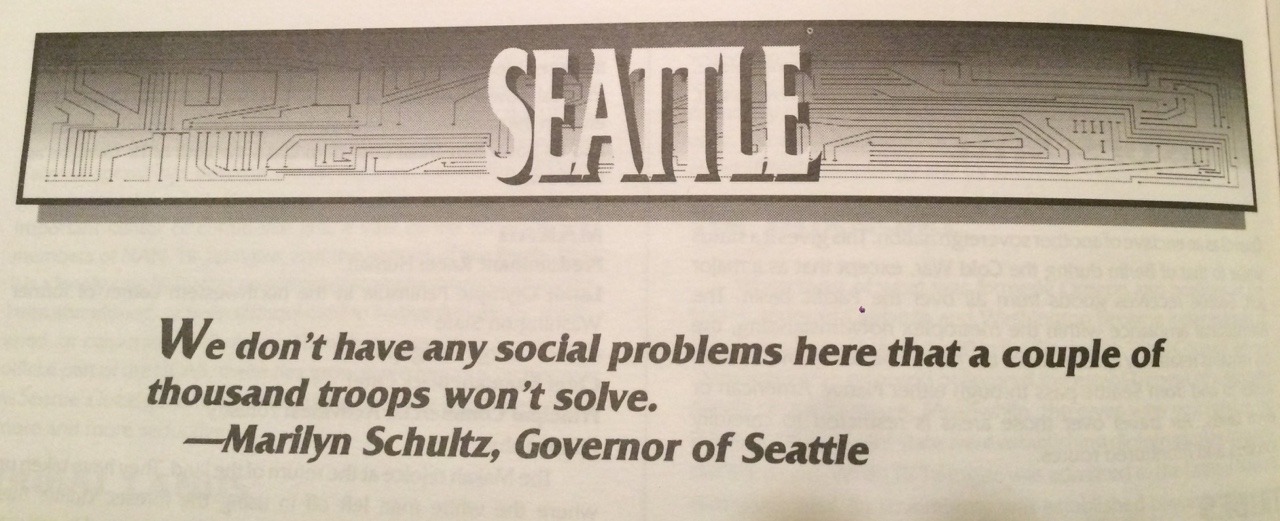
How did I not rerun this for CHAZ/CHOP?

How did I not rerun this for CHAZ/CHOP?

Tagged: rerun chaz chop capital hill autonomous zone seattle

In the American civic religion Benjamin Franklin is patron saint of electricity, Philadelphia, and dirty old men

Tagged: rerun

The Wayne Republican Tradition

kontextmaschine:

When you talk about “Rockefeller Republicans”, I don’t know how many people today even have an idea of who the Rockefeller family were, I’m not sure how much information that name carries.

So, uh, think of the Wayne family. Bruce and his late parents. “Wayne Republicans”. Basically the same thing - urban-based dreams of social uplift through monumental programs overseen by men born into more money than God. Vague social liberalism that disdains bourgeois morality from an aristocratic direction, anti-corruption, pro-Establishment to the extent the Police Commissioner always takes their calls.

That was a big part of the Republicans during the post-War period - the conservatives were just one faction, and often a losing one. Wasn’t just titanic heirs but small businessmen (maybe equivalent city fathers to their small towns, though) and professionals - the Republicans were the party of the postgraduate educated.

The Republicans were opposed to national health care all along, Ronald Reagan dropped a spoken word album about it in 1961. Part of that was green eyeshade deficit hawkery (that was a big part of their brand, the later pivot away from this to tax cutting was understood through the framework of “Two Santa Claus Theory”, which is an actual and very important thing in postwar American politics, “Two Santa Claus Theory”). And part of it was “grr, socialism boo”. But really, a lot of it wasn’t in resistance to what this would mean for taxpayers, or patients, or even the country, so much as doctors, who were a big Republican constituency.

Because doctors were professionals – by guild understandings that predated the United States, they owned their own practices, regulated and judged each other, were granted a degree of authority over those who came to them needing something important they were not qualified to provide themselves. They resisted the thought of themselves as merchants, and loathed the thought of themselves as employees or civil servants.

A lot of the “disappointingly moderate” Republican-appointed Supreme Court justices over the years actually fit fine with the Wayne Republican tradition. Sandra Day O’Connor, first woman on the court, put there as a payoff from Reagan to the moderate faction - the Republicans arguably the feminist party, albeit a “Lean In” type. After all, if you saw a woman in an executive role before the ‘70s, it was probably in the Daughters of the American Revolution or some society gala-type charity NGO. And those “first woman to go to X school”, well, the families that would think to send a daughter off to law or medical school were a subset of the families that would think to send a child at all.

Hell, for a while, the Republicans were even the more abortion-friendly party. The Democrats were the Catholic party after all. The Republicans were the Protestant-as-humanistic-heritage-charity ones, the ones who eugenically spaced their three children two years apart unlike those grubby Papists, the ones with mistresses, the ones with bourgeois life courses to even be diverted from. Not to mention the doctors who cleaned up after amateur abortions or offered black-market ones themselves.

(But not like legalization was priority one, c’mon, Bruce Wayne’s dad was a surgeon, you think he doesn’t know a guy?)

Anyway this was what Goldwater (with his base of ideologues and country & western extractive industry - for most of the 20th century the white military middle-class paradise of California was an anchor of conservative Republicanism) was fighting against, what Reagan (California Über Alles) eventually defeated. The Wayne Republican tradition still stumbled along until let’s say Dole/Kemp ’96, that was the last hurrah and the ticket’s total failure to generate any enthusiasm whatsoever (two years after Newt Gingrich’s Congressional “Republican Revolution” breakthrough with conservative southern and suburban whites) heralded its end.

Well, you could maybe see the administrations of the two Bushes as an intermediate form, an attempt to graft the old money social uplift tradition to the religious base the Republicans cultivated in the 1980s in search of a sort of Christian Democracy. “Thousand Points of Light”, “Compassionate Conservatism”, New World Order and nation-building abroad, the ADA, NCLB, environmental laws and Medicare Part D at home.

But the bipartisan abandonment of Bush the Younger and the coalitional realignments through Obama and Trump seem to have rendered even this a dead end. As things stand in 2017, “progressive social programs paid for by taxation, sensitive to the economic interests of professionals and capital-holders” is thoroughly Democratic territory.

Tagged: rerun

The mid-1980s were a weird time in rock politics when buff, angry, punchy sons of the DC imperial-industrial complex represented...

kontextmaschine:

The mid-1980s were a weird time in rock politics when buff, angry, punchy sons of the DC imperial-industrial complex represented the leftist rearguard against a reactionary wave of California weirdos singing love ballads in heavy makeup, teased hair, and prom dresses.

Tagged: rerun same as it ever was

Watching Aliens, the part where they all wake up from cryo together and all the ritualized griping is absolutely masking this...

kontextmaschine:

mailadreapta:

argumate:

kontextmaschine:

Watching Aliens, the part where they all wake up from cryo together and all the ritualized griping is absolutely masking this ‘Nam vet “we’re only good for war” cameraderie, the whole Soldier of Fortune vibe, I only just get that

Of the franchises that reacted to Reagan, Rambo: First Blood II was “what if we refought ‘Nam but seriously and won”, Aliens was “what if we refought ‘Nam with all our new toys and still lost”

what if we treated Vietnamese people as alien horrors with whom we could never communicate and whose motivations make them utterly incompatible with civilized human existence because god knows that would help us make prudent decisions that would lead to favourable outcomes.

This is a thing I sometimes see said seriously (and I don’t think argumate is being very serious), which seems to follow from an unspoken assumption that analogies are transitive and complete.

So if the grunts in Aliens are analogous soldiers from ‘Nam, then their enemies must be analogous to the Vietnamese (because analogies are complete), and every aspect of the Xenomorph is also a property of the Vietnamese (because analogies are complete).

I’ve never seen it done with this particular show before, so points to kontext for novelty, but I have seen it done  in all seriousness with LotR and Orcs : POC, and in Firefly with Reavers : Indians.

I mean, “zombies” and analogs (Mad Max/Fallout/Borderlands raiders, etc) are 100% homomorphic to Indians, they’re how we tell stories of a small civilized band setting off to tame the savages and establish civilization – the same way we used to tell constantly, in realtime – now that we don’t have a contemporary setting

Tagged: rerun

If the POTUS is on an autogyro, does it go as Air Force One or Marine One?

kontextmaschine:

If the POTUS is on an autogyro, does it go as Air Force One or Marine One?

Tagged: rerun

My Worst Thought

davidmann95:

I’ve developed a…’controversial opinion’ doesn’t feel as if it comes close to adequately covering it. ‘Heresy’ falls far short. ‘Blasphemy’ might be in the neighborhood.

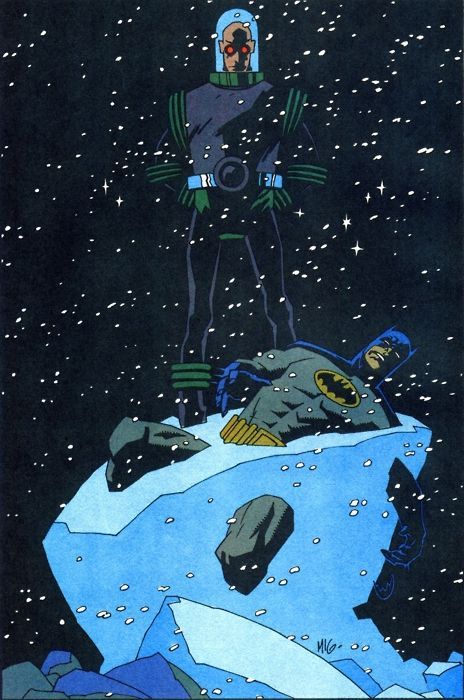
I think - as an ongoing character template meant to sustain numerous stories - I prefer the potential of this Mr. Freeze…

image

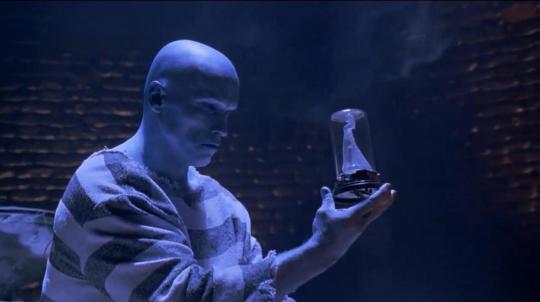
…over this Mr. Freeze:

image

To be very super clear upfront, I’m not saying Batman & Robin is a better Freeze story than Heart of Ice. I actually ended up loving that movie, but “I’m afraid by condition has left me cold to your pleas of mercy” isn’t quite on the same tier as “Think of it, Batman. To never again walk on a summer’s day with the hot wind in your face and a warm hand to hold. Oh yes; I’d kill for that.” Though if we’re throwing stones, it’s worth noting that episode also includes the line “Rest well, my love. The monster who took you from me will soon learn that revenge is a dish… best served cold.

The thing about classic Freeze is that he’s absolutely perfect…for maybe 3 stories. You know how people discuss “the Two-Face problem”, where the only stories of substance people can seem to think to tell with him are about how he became Two-Face, and him getting cured and it not taking (even All-Star Batman, with its very solid new twist on him, is still also banking on whether or not he can be rehabilitated)? Same problem with Victor: you can do 1. He tries to kill people to cure/avenge Nora (Heart of Ice, Deep Freeze), 2. He does something sentimental because of Nora (White Christmas), or 3. Nora is cured but his life still sucks because he’s Mr. Freeze (Sub-Zero, Cold Comfort, Meltdown). Unlike Harvey, there isn’t even the possibility of moving him outside that paradigm, because his entire deal as a character is that all he cares about is bringing her back, no frills or side gimmicks. While most of the time the changes are ill-advised, I don’t find it shocking in the least that the likes of Judd Winnick and Scott Snyder have tried to switch up his deal to put him in a place where you can do new stuff with him, because while that makes for a spectacular one-shot or two it leads to some crushing diminishing returns for a recurring villain.

The guy in the movie on the other hand? I genuinely can’t believe I’m saying this, but there’s a little more on the bone to him. Yes, he makes silly ice puns and I’m not saying he should do that all the time in the comics,* but we also get this:

image

You can still do classic Sad Freeze stuff with him, and that he’s a character who can encompass both of those takes interests me. He seems less like a cartoon at points so much as prone to severe mood swings, moving on a dime from having his henchman sing along to The Snow Miser while puffing on a cigar and luxuriating in his criminality to sneaking off to watch his wedding video and mourn his wife in private. And it’s made equally clear this isn’t just a switch that was flipped: Nobel-prize-winning scientist and two-time Olympic decathlete Dr. Victor Fries is shown to be a goofy, awkward, giggling dope in his wedding video, and he mentions making his solid steel survival suit intentionally a size too small because he wants to look skinny. This is a guy who’s fundamentally insecure except when he’s belting out freeze puns, and that gives a deeper in than “he and Batman are both sad about their dead families”.

Obviously he’d have to be at least somewhat subdued, but picture it: Victor Fries is in the reverse position of Bruce Wayne, living a life without confidence or love and having finally gained it, seeing the death of his loved one coming and having every possible physical and mental advantage in order to save her, and he fails. So miserably in fact that he catastrophically injures himself in the process, and what’s worse she’s still hanging on by an impossible thread that won’t let him give up hope and move on. Batman has to tell himself that Thomas and Martha would have approved of what he’s done, but Fries actually has the fading chance of getting to receive that validation. And so like Batman before him he decides to embrace what’s happened to him and Show Them, Show Them All! that he’s a force to be reckoned with in control of his world. 

Everything’s of course still in service of Nora at the end, but suddenly you can do other stuff with him. He can have weird themed crimes to decipher. He can pursue his own goals. He can have more than one emotional state. He can, yeah, have a room full of crooks sing The Snow Miser to him while he puffs on a cigar, because with the one source of meaningful positive reinforcement stripped away he craves validation until he can get it back, even if it means bending Gotham and the underworld to his whim, because that’s the life he’s been consigned to. And the odd attempt by Batman to rehabilitate him takes on a new light: clearly he’s of two minds about his situation, burying his feelings beneath his gimmicks and at least somewhat capable of being reached, but while Batman questions his own motivations on occasion, this Freeze literally surrounds himself with a chorus singing his praises and addresses even his most ridiculously petty concerns of self-image. This unselfaware, superhuman nerd belting puns and loving his new life of crime and throwing himself into everything about it that can distract him and fill the great gaping hole in his heart left by the tantalizing loss of the one person who ever cared, and his failure to save her, feels like a more interesting comparison to Batman than what we’ve traditionally had. Them both seeking validation through justice/crime to make up for the loss of a loved one, with Freeze trying to achieve the actual validation of Nora coming back and accepting and forgiving him for his non-sin of not saving her before, strikes me as richer than ‘they’re both sad because someone died but Victor took it worse’. And it’s a more open-ended story driver to boot.

* This is absolutely a lie, he does need to make ice puns all the time.

Tagged: rerun

Is Another Crisis Looming? | Jacobin

Is Another Crisis Looming? | Jacobin

kontextmaschine:

antoine-roquentin:

Profits are a particularly critical indicator of the state of a capitalist economy because they are generally understood to drive investment. Investment in turn has a determining effect on jobs, wages (to the extent that an increase in jobs increases workers’ bargaining power), and a growing tax base that can support social programs.

Why hoard money? Because the ‘80s. They’re building walls against takeover. In a flat market you not only need to scrape the barrel looking for profit opportunities you have to take care to not be cannibalized as an opportunity yourself.

That was the lesson of the ‘80s, that a privately held company might do better playing long ball than one chasing risky peaks, but publicly traded, it’d just get bought out by the whippersnappers with bubble money from a peak. Junk bonds, takeover sharks, “murders and executions”, etc.

Now traditionally the way to stop that was regulation, antitrust, etc, keep any entity from being too big itself. But the problem there was Japan. Japan was not only recovered from WWII and emerging as an export power, it was buying up big properties and assets in the U.S. and Europe. That’s the subtext behind Die Hard being set in “Nakatomi Plaza”. That’s the subtext behind a LOT of ‘80s-'90s pop culture: Japan Is Coming To Eat Us.

And part of that was they were in a ridiculous bubble themselves, and their economy was built around keiretsu, which… imagine a world with serious antitrust enforcement, then imagine the opposite. Like, active government trust enforcement.

And the regulated old money Postwar Consensus slow-n-steady US was vulnerable to that.

Now the countermove woulda been protectionism. People project all modern conservatism back onto Reagan but he was in big protectionist trade wars with Japan.

But the thing was that we were competing for the loyalty of the “developing world”. With the Soviets, with China, with South American “third way” socialism.

(Which potential depended on seizing and redistributing US capital’s assets, which is why we kept up the Cuba embargo so long, to make the point that even if cooling-off, acceptance and trade might be the best outcome of a non-iterated game, We Will Not Allow This To Be A Viable Option)

And our offer was “hey, do the democratic-capitalist industrialization thing and you can join us in Coca-Cola and Disney Present: Bluejeans World, it’ll be *great*.” But keiretsu-dominated Japan in the '80s was really the first non-Western country to pull it off, with chaebol-dominated Korea and similar Asian tigers waiting in the wings, and to slap them down too hard for uppity presumption would’ve been… awkward.

There’s a lot of stuff that made sense because Cold War and stuck around on inertia. And there were attempts to challenge that in the '90s!

Iraq War I was Saddam being all “Cold War’s over, now we can stop holding off WWIII with this outdated Yalta Conference balance of power and make borders make sense the old-fashioned way, with the strong eating the weak!”

(and Bush the Elder retorting “NATO Is Its Own Purpose”)

Ross Perot was “the Cold War is over, we can stop pretending to believe in free trade”. Pat Buchanan’s “culture war” intervention into the 1992 election was “the Cold War is over, we can stop pretending to believe in free trade AND multiculturalism”.

Now some of that’s finally crumbling. Cuba finally got regular, with TPP free trade’s lost its sheen, Bush the Younger - history is going to reevaluate that guy WAY upwards, and part will be the Bush Doctrine, finally biting the bullet and giving up on organizing the Islamic world around a plan for keeping British allies in ex-Ottoman lands.

Multiculturalism, eh.

Sooooo. Protectionism was out. So the defenses that evolved were, on the national level, allowing the consolidation of industry and finance into “national champions”, and trying to keep a low-level bubble going at all times. Greenspanism.

(Also keeping substantial portions of the economy shielded as “national defense”. If you look askance at China or Turkey’s military for being so involved in their national economies, consider

1. How much of the U.S. economy, particularly manufacturing and design, is arms exports or internal military spending

2. The margins on some of these contracts

3. The security clearances on some of these contracts

4. The wait time on non-military applications for clearance screening, especially in relation to the bidding, staffing, and subcontracting cycles on these contracts.

BONUS 5. The way American tribute from vassal states is funneled through these industries as exports and particularly continuing services and parts contracts.

[which are also a planned obsolescence killswitch when allies go rogue - why the Taliban still had their RPGs but not our Stingers]

THAT’S why Australia is spending so many billions on our jets now, why it was important that the UK buy Trident from us, because that’s how vassal/lord relations work - they kick in coin and a share of fighting men, we pledge protection.)

Where was I? On the firm level. On the firm level the big defense against takeover was to take on debt. Ideally, take on debt for stock buybacks that raise your valuation out of shark range, but importantly debt just dangerous enough that a steady workaday company could manage but these mayflies would face too much downside risk in a downswing.

So that kinda worked, I guess. The big thing now is that the financial regulations after the '07 crash actually worked, but their big moving part is “having promoted national champions, we will now make the holding of large amounts of risky debt by sizeable corporations as bothersome and expensive - in money and several colors of influence - as possible”.

Meanwhile junk bond raiders have grown up into private equity and hedge funds, and every one’s competing with sovereign wealth funds. Which at that point you are not only trying to outbid a guy who buys thousands of slaves to construct a palace for his harem, you are trying to outbid *all* those guys, while they are your government’s closest allies in their single biggest region of interest.

Tagged: rerun

PinkiePieSwear - Sunshine and Celery Stalks this is the guy who did Flutterwonder. respect.

kontextmaschine:

kontextmaschine:

PinkiePieSwear - Sunshine and Celery Stalks

this is the guy who did Flutterwonder. respect.

“Country girl and sports lesbian are equally valid tomboy types” was such a specifically 2010 lesson from kids’ animation, perched between the NASCAR ‘00s and the woke ‘10s

Tagged: rerun

Poor Richard's Almanack Was Daily Textposts From Benjamin Franklin's Queue

Tagged: rerun

Cable television was perfect and we ruined it

kontextmaschine:

This frames itself as “there’s so much good stuff I should waaatch! I miss vegging out on crap because it was what’s on!”

And that’s not wrong per se, but I’m thinking beyond that to the effect on the whole-culture that we shared this pre-internet experience in common, of taking in media that was not very optimized for us because it was around, and consequently having a lot of cultural background we were very lightly invested in, in common with the rest of the country, and that enabled us to build increasing elaborations on the culture while maintaining coherence

Like, there might have been a lot of webcomics, but honestly, there were a lot of newspaper comics. Like, on any given day I might read 18 of them cause they were just there. And we’d have that in common, like, not just the good stuff like Calvin and Hobbes and The Far Side, we’d all recognize the Family Circus dotted-line meandering travel paths. And so someone could reference that and we’d all be like “ahh”. Or Dennis the Menace’s slingshot. That Liz Lemon “chocolate, chocolate, chocolate! ACK” cutaway works because everyone, including people who didn’t or still don’t care about the experience of unmarried single women approaching middle age, would have read enough Cathy to instantly place the reference and further, to process the twist, that yeah, it was awfully mannered and ritualized for a “relatable” comic. Garfield without Garfield works because we’ve all seen it with Garfield.

Part of your contemporary social/identity/representation/ownership fights is just rehashing the 80s “Canon Wars”. What is authentic American culture, these works long held up for praise but dismissible as product of an old order and old demographics? These new works by and about the non-dominant that don’t even try and engage with the first tradition?

And that never resolved so much in either direction as all High Culture was deprecated in favor of a new American Canon of Pop Culture. One that could skip normative questions of merit entirely by being a descriptive canon of what the masscult Broadcast Era left us.

Like, The Brady Bunch wasn’t in the canon because it was smart, or well-acted, or well-shot, or had something interesting to say about society in the period where blended families and domestic servants were each at the edges of “normal”. (If it was that, lesser Norman Lear like Maude would be). No, the Brady Bunch was in the canon because it was ubiquitous. Everyone had seen it at some point, if you were Generation X there was a good chance you had seen any given episode at some point.

And this still represented a diversification. This new canon had a lot more “white ethnic” and particularly Jewish pillars, and blacks certainly had more pride of place in 20th century “pop” than “high” culture.

(This leaves Jazz and Blues in the interesting position of having been significantly intellectualized to “fit” the old High Culture paradigm before the new one came in, leaving them somewhat overlooked)

And with this stuff established as the New Authentic America you could appeal to it. With Rock as the National Genre, not just kids’ stuff, you could say that thru Blues and Motown the culture owed black artists more respect. (Where no one really thinks of contemporary American pop as Swedish-indebted).

Feminist and queer scholars pored over Hollywood camp, subtext, old “Pre-Code” work aiming to prove that gender variance and homosexual desire had always been an authentic part of American culture.

(I def. remember on multiple occasions apropos of I forget what the tale of “Fatty” Arbuckle trotted out as a moral condemnation and warning of the unscrupulous young women and tabloid press that for money and attention would peddle baseless rape accusations to a public of vulgar moralists, which today hm)

And past those knock-on effects on social health, the cultural output itself was great. I think that’s the defining factor of Long 90s culture, not only that it built off a shared canon but its creators and audiences recognized it as working from a shared background with traits and forms that could be played with, the meta-awareness of it all.

Xena: Warrior Princess, a syndicated swords-and-sandals actioneer spin-off attracting an ecology of academic conferences and journals by mashing up all of ancient mythology, Mediterranean history, and knowing Hollywood encoded/subtextual queerness.

Kevin Williamson deconstructing and rebuiding the slasher genre with the Scream series. And then, honestly, doing the same with the teen relationship drama with Dawson’s Creek, where the principals were always talking through what their character developments meant, seeing them through a cinematic lens in heavily referential dialogue

Joss Whedon and Rob Thomas (of Veronica Mars) wielding their audience’s genre-savviness against them, setting up scenarios that would “have” to end some predictable way that resolved everything by the conventions of five-act episodic TV with recurring stars and plotlines, and then just not.

In comics hitting earlier in the 80s, Crisis on Infinite Earths as a recognition at the core of the capes-and-powers mainstream that these disposable entertainments had congealed into mythology, proceeding by in-metaverse acknowledgement of extranarrative structure.

In more far-out stuff Morrison, Moore, Gaiman, and Miller going meta as hell, all “what if comics were myths, what if comics were real, what if reality was comics, what if reality was myth.” DKR as “if Batman was real, he’d be pretty fucked up”. Watchmen as “if Golden/Silver/Bronze ages were real, superheroes would be just as fucked up and unmoored by the 80s as we all are”. Sandman was “what if every human story and mythology was part of the same meta shared universe”

Even Star Trek:TNG was an attempt to realize the coherent universe that the fandom had mostly projected onto an original series that were really a stock cast and setting adaptable to filming any SF short story of the week. (Lurking in the background is the 70s-80s realization from Star Wars that coherent universes increase audience stickiness, and are a well you can go back to)

Then Ron Moore took his project of trying to give Star Trek coherence and weight to an even less respectable space opera reboot, and made the fact of an IP-driven rehash (“all of this has happened before, and all of this will happen again”) a load-bearing religious theme of eternal recurrence.

Family Guy, the conceit of half the jokes was they invoked 70s-80s pop culture just the right amount of obscure so you constantly surprised yourself that you even knew enough to get them.

SeaLab 2021 repurposing a piece of establishment futurism to underscore how absurd the concept seemed by then despite how nostalgic the aesthetic was, Venture Brothers pastiching postwar boys’ adventure fantasies to highlight their complete disconnect from any actual process of becoming a man.

I miss that, you know. That overlapped/kept going with the Early Internet, so I thought it would continue through and we’d just keep building on it.

I guess that’s what really sticks in the craw re: “cancel culture”, millennial insouciance, wevs. The blithe dismissal of a rich, elaborated, mutually supportive canon with nothing to replace it.

Also realizing you’re now the kind of person to levy that critique at The Youngs, I guess that sticks too.

I dunno, maybe that was because the Early Internet was full of people who got acculturated pre-Internet and carried that with.

Maybe it’s cause I’m not getting particularly acculturated anymore - I accept Pokémon and Spongebob memes and reaction images in their own right, maybe if I saw the underlying properties - or whatever comes after - I’d appreciate them more.

Maybe that shared culture was an artifact of suburban retrenchment and then the Early Internet narrowing the cultural/economic/political American subject to a narrow white UMC and adjacent band and allowing a generation of us to mistake ourselves for America entire

Maybe it was product of a bottlenecking that was still negative on net. Like, basic cable had more channels than the plain 3 network broadcast era, but in 1950 they were competing with like, the bowling league, the pool hall, the Elks club, the Masons, the ladies’ charity, the socialist meeting, the dinner show club, the Mafia nightclub, the gay Mafia nightclub, any of the 4 bars between your work and home, the “whatever’s playing this week” double-feature movie theater…

(And even then, more diversity between examples. If you started going to shows in like “the Washington punk scene” in 1989, that was probably a lot of hardcore if you meant “comma, D.C.” and twee and proto-grunge if you meant “Olympia, comma”)

I dunno. Still, I miss it.

Tagged: rerun