shrine to the prophet of americana

#rerun (641 posts)

god works hard but occult twitter works harder

argumate:

radmona:

tokimaeki-moved:

god works hard but occult twitter works harder

hey this “occult” language people are using is an African language called Amharic which people have used as a generic “curse” language for a while, it’s really disrespectful and portrays African cultures and languages as demonic.

wait till you hear about how people use Latin!

Tagged: rerun

kontextmaschine:

Tagged: rerun

twitch streamers acknowledging what you type in chat is the modern day equivalent of knights giving flowers to young women who...

lizardsister:

twitch streamers acknowledging what you type in chat is the modern day equivalent of knights giving flowers to young women who have come to watch them joust

Tagged: rerun

You know it’s serious science fiction if there’s a dude who’s literally just a fish.

prokopetz:

gothamcitybeatle:

prokopetz:

You know it’s serious science fiction if there’s a dude who’s literally just a fish.

The Little Mermaid is serious science fiction, apparently.

You know The Little Mermaid is serious science fiction because it’s about a daring young xenoanthropologist whose radical theories about alien cultures put her at odds with the reactionary isolationism of her society’s ruling class. Having a dude who’s literally just a fish is a bonus.

Tagged: rerun

Oh man that reminds me of the most meta- thing I’ve ever seen. 0) World War II happened. 1) In postwar Japanese pop culture,...

kontextmaschine:

Oh man that reminds me of the most meta- thing I’ve ever seen.

0) World War II happened.

1) In postwar Japanese pop culture, “thinly or completely unveiled reference to nuclear explosion” is rivaled in thematic popularity only by “thinly or completely unveiled alternate-WWII in which Japan wins and is totally the good guys”.

Actually I’m almost afraid they finally got over this in the late-90s with the passing of a generation. I liked that, something somber and elegaic in the culture that wasn’t pure fanservice or third-generation commercial ripoffs. Anno and Miyazaki and remember when Final Fantasy had Cyan and the ghost train instead of a bunch of fucking EZ-Bake popstars?

2) Okay so there was this recent trend, they call “moe anthropomorphism” to represent things and concepts as cute girls, because obviously, Japan. It was particularly popular in terms of military hardware, because obviously, Japan.

3) Manga, etc., etc., so comics are a big thing in Japan, and part of the farm team for that is working on basically fanfic of established properties, they call it doujin, and like all fanfic, like most pulp, a lot of time it’s only good for the sex. Which is often violent and involves 13 year old girls, because obviously, humanity.

OKAY

4) So 1) and 2) combine to create Strike Witches - it was this series about a school/force of teenage girls representing various planes from all the nations of WWII, like they strap on these leg-things to fly around, and because they’re all allied together against an alien force literally representing militarism and war descending on the world even though no one particularly wants this militarism and war oh no, they’re just all brave and innocent warriors, and they might have to put on these leg things and fight the aliens at any time, they never wear pants so you can see their panties all the time, because obviously, Japan.

5) so 4) and 3)  combine to make a hentai (“pervy”) doujin of Strike Witches. Which I read, to masturbate to. The first twenty pages of this doujin is mostly lesbian dominance, all of the girls breaking down and raping one of the more innocent characters, who was the Japanese one and I think a Mitsubishi Zero?

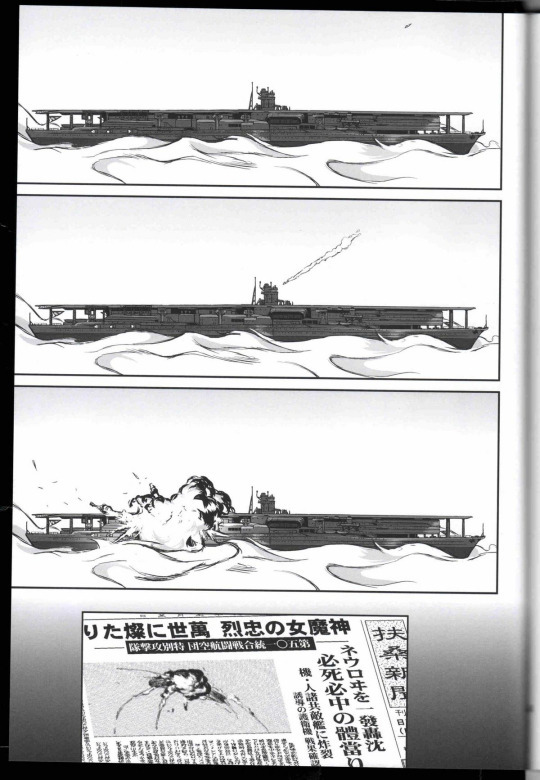
6) and then 5) combines with 1) again, which was already baked in, and the last 8 or so pages are the apocalyptic showdown with the aliens as seen from the Zero’s eyes. The American and British girls are out of the picture, dismissed in one panel. The French and Italian girls have surrendered and slunk away because they’re pussies.

The French and Italian girls have surrendered and slunk away because they’re pussies, but the two German girls went boldly into battle and lie bloodied and dying on the ground, this is the thing.

And so finally, the Japanese girl is fighting alone. She’s scared, she’s meek - she was the natural submissive for the first 20 pages, getting hazed by all the older nations^H^H^H^H^H^H^H girls but now it’s just her, now it’s her turn to prove her honor, and she jets out shrieking her vengeance, dodging alien missiles, coming straight out of the page…

And the next page is imitation newsprint, with a period photo-offset litho as the header. It’s an alien aircraft carrier, obviously American in design, with an exhaust trail streaking into one side of the island and a giant explosion blossoming out of the other.

And THAT is the most meta- thing I’ve ever seen.

(UPDATE for incoming 9/15/16: Takotsuboya’s “Witch-tachi no No-Pantsu”

image

)

Tagged: rerun

Tagged: rerun

The Scotsman asked what was up with “African-American” as distinct from incidentally African “American” and I was like, “Ah, you...

kontextmaschine:

The Scotsman asked what was up with “African-American” as distinct from incidentally African “American” and I was like, “Ah, you want to understand race in America? First, you must learn everything.”

There are three classic topics in American history and they go

1. Race, huh?

2. Why no socialism?

3. The frontier, huh?

and basically the answer to any of those is the other two

Tagged: rerun

eWorld! The Apple-specific mid-90s Prodigy-alike (before AOL was even hegemonic)! We tried this for like a month free with our...

kontextmaschine:

eWorld! The Apple-specific mid-90s Prodigy-alike (before AOL was even hegemonic)! We tried this for like a month free with our Performa 6115 back in the Gil Amelio years when Mac modems were called “Global Village” and how ‘90s was that

Tagged: rerun 90s90s90s

what makes this interesting is, you see that seam? that’s why her ass looks so great, the outer panel is squeezing it in for...

kontextmaschine:

what makes this interesting is, you see that seam? that’s why her ass looks so great, the outer panel is squeezing it in for display

denim used to be an alternative to canvas “duck” for tarps and tents, blue jeans used to be sold incredibly stiff as work pants to be broken in

but they were adapted as symbols of countercultural youthfulness in the 1950s and 60s

in the 70s there was a trope of young girls obtaining jeans too small to fit into, putting them on in the hot bath (where the fibers would slightly relax) and having them dry skintight

by the 1980s you had the then-resonant trend of “designer jeans” (so resonant that genetic engineering was riffed off it as “designer genes”), denim designed as fashionwear

you had Calvin Klein, and the Brooke Shields commercials that riffed off her as a barely-pubescent sex symbol, “You know what gets between me and my Calvins? Nothing”

Cause she’s 15 and she wants you to know she’s not wearing underpants! 1980!

Anyway, also part of that was the development of acid-washing (loosening denim fiber by chemical action) and stone-washing (loosening denim fiber by mechanical trauma)

got to the point where by the turn of the 90s, light-blue jeans with obvious damage, esp. shredded knees, the antithesis of the solid dark-blue workman’s pants, were in style

Tagged: rerun

Fair, it was more about the visual look and the particular type of streamlined/cleanliness than the self-awareness, but thanks

Anonymous asked: Fair, it was more about the visual look and the particular type of streamlined/cleanliness than the self-awareness, but thanks

kontextmaschine:

I mean it wasn’t a lark, it was a professionally shot and printed promotional item as part of a really high-profile campaign supporting 9 Lives cat food

Actually that’s an American cultural history point - this was in the context of the “ad wars” of the ‘80s. For a bunch of reasons, local and regional brands in consumer staple products had been consolidated into a few rival multiproduct comglomerates with no place to grow further but at each others’ expense; meanwhile the mass audience was still largely corralled into the big 3 TV networks.

So there were a lot of really intense ad campaigns for really trivial everyday products, often going negative on rival lines. The most famous example is Coke v. Pepsi, but there’s things still stuck in my head like the chunkiness of Prego spaghetti sauce vs. Ragu Old World Style, and the vidya “console wars” really came out of this background

Tagged: rerun amhist

tl;dr: Germany and their ally America won WWII in 1991

kontextmaschine:

Pretty much every country that fought in WWII used it as a crucible in which to reforge their respective nations, and so it’s understandable that what we know now of the war is basically mythological. Not in terms of like, dates and names and locations, the who/what/when/where is mostly accurate, but in terms of meaning - the why.

In the last decade it’s becoming more and more of a mainstream understanding that America didn’t beat Germany in WWII, the fighting on the Western Front wasn’t nearly as important as the Soviet effort on the Eastern Front. Yes, yes, correct. More than that though, America barely even fought on the Western Front. Our contribution wasn’t in frontline combat but in logistics. Logistics is the least sexy (but most important) part of any war, and America was to the British Empire what the Urals were to the Soviet Union - an industrial base located beyond German bombing range.

Without American food, and the ability to build cargo ships with which to deliver food (including from the rest of the Empire - the British homeland hadn’t fed itself since the 18th century) faster than U-Boats could sink them, the British population would have starved, revolted, and deposed any government that refused to sue for peace. The idea that American wartime food rationing was necessary to feed “our boys fighting overseas” was a polite fiction, better for morale than the truth that it was to free up food for export to essentially bribe allied civilians to stay on-side.

Remember that one of the sore points of interwar Germany was that the German surrender came with the field armies in decent and even advancing strategic position, under pressure from hunger-stoked socialist rebellion on the homefront - the “stab-in-the-back” or Dolchstoß. Of course today you see that often dismissed as a myth, the “Dolchstoßlegende”. Dismissed, of course, by the mainstream historiographers aligned with the regimes which legitimized themselves against the regime that legitimized itself on it. (Let’s call it the “Dolchstoßlegendelegende”, and then call it a day.)

To the extent the Ukrainian famine of the 1930s was deliberately induced and targeted by Stalin, I think it would have to have been a prophylactic against a Soviet equivalent - preemptively liquidating potential fifth columnists, cutting the numbers of mouths to be fed, and denying any German occupation a source of recruits or agricultural workers.

(Of course, the notion that Ukrainians might turn against Russia and in favor of Western Europe, under the influence of fascist sentiment stoked by local elites for personal gain is properly considered just another of those legenden, no less ridiculous than the notion that Japanese-Americans might hold loyalty to the former portion of their hyphenation over the latter.)

I’m wandering a bit afield but I also want to say, when you hear said that Stalin’s purges of the military were so stupid, didn’t he know he was purging some of the best soldiers Soviet Russia had? Well, soldiers Russia had maybe, the question is in that counterfactual where they stuck around would, would Russia stay Soviet? The Russian Revolution was deliberately incited by Germany to knock Russia out of a World War.

Career army types - a lot of times, their loyalty is to the army. Maybe to the nation, but the government? Eh. A lot of the higher-ups purged had started off in the Imperial Army and had made one transition already. And lower ranks, well, their loyalty is to their superiors, as it should be, right? (The Russian Navy, by contrast, spent the early 1900s occasionally rebelling against everyone because their institutional continuity had been shattered by the near-total wipeout of the Russo-Japanese war.) Governments change, but any state needs an Army, after all. Vladimir Putin started off serving the Soviets.

Okay enough digression. Without American food, and Britain thus pressured to make peace, Germany not only could have shifted the resources, ground and air forces defending the Atlantic coast to the Eastern front but would have freedom of the seas, and thus access to supplies from the overseas colonies of Axis powers (including France and the Netherlands), and from the neutral countries of South America (which had considerable economic ties with Germany). It also would have been able to open fronts and supply troops from the Black and Levantine Seas, Persian Gulf, and Pacific coast of Russia.

Without American industrial production, the other Allies wouldn’t have enjoyed nearly as much functional range from their resource bases. This would suck in general, most particularly it would limit the British ability to sustain their Northern African forces, and of the Soviets to operate in Azerbaijan, Iran, and the ’stans. With these forces weakened, it was concievable that Axis forces could gain control of the Suez Canal (greatly degrading Britain’s connections with its colonies in India, Africa, and Oceania) and middle eastern oil fields (a huge coup, hydrocarbon shortages were the major limitation on German capabilities, resolving them would have allowed for significant gains in production and much improved ability to advance and supply forces eastward into Russia.)

So yes, to say that America’s role in the European theater of WWII was really about making and shipping, not fighting isn’t to short its contribution - it truly did provide the margin of victory. The Normandy landings and opening of a Western front of ground combat were dramatic, made for great stories, but they didn’t change the outcome of the war. At least not in the sense of “will Germany win” - that had already been decided in the negative. It just changed the details of who they lost to. And what difference did that make? Well…


People say WWII should be considered as a continuation of WWI. There’s something to that, there’s something to that.

Here’s another idea, though - WWII was continuous with the Cold War, and before even V-E Day, America had switched sides to fight with the Germans, and specifically the German right, against the Russians, and to a lesser extent France and the UK. It was a brilliant betrayal, the maneuver by which America came to rule the world.

I mean, we didn’t side with the Nazis, per se, except to the extent that under Gleichschaltung everything in Germany not specifically anti-Nazi was officially Nazi. Rather, their coalition partners - the Christian democrats, the Junkers, the Heer, the industrial capitalists who had allied with the volkisch streetfighters to fight socialism and were perfectly willing to switch allegiance to the American strong horse for the same purpose.

That explains why long after it was obvious the war was a loss the German forces kept fighting on the eastern front - to hold off the Russians long enough for the Americans to reinforce Germany, or to fight westward to link up with (“surrender to”) American armies.

That explains why America never really pulled the trigger on “denazification”, the attempt to purge German government and society of fascists and fellow travelers, and instead turned around and purged its own government and society of communists and fellow travelers in the Second Red Scare.

That explains the Marshall Plan - America rebuilt western Europe, because America had conquered it.

That explains Bretton Woods, pegging European currencies to the dollar, and thus subordinating their economies to the American economy. (and the “Eurozone” as successor, subordinating European economies to Germany). How do you know Germany lost WWI? Because the Treaty of Versailles imposed punishing reparations on Germany, redirecting its economic output to Britain and France. The result of WWII was the redirection of Britain and France’s economic output to America and Germany.

That explains American support for decolonization in Africa and Asia, most glaringly in the Suez Canal Crisis, where America used the whip hand on Britain and France to support Nasser’s move to pry the canal - and Egypt generally - from their hands. By choking off their colonial empires, America blocked their ability to return to parity through primitive accumulation.

This explains de Gaulle - pulling out from NATO, fighting to hold on to Algeria and Vietnam, pursuing French nuclearization for energy independence and military sovereignty - he was pushing back, and since the Soviet collapse France has been subtly reassembling its African empire - in any potential American/Chinese/Islamic struggle for Africa, they’re the wild card.

That explains the postwar American development of a conceptual vocabulary - “totalitarianism”, “authoritarianism”, “statism”, “central planning”, horseshoe theory, “human rights” - by which communism and fascism were positioned as varieties of a broader unitary category and America assured itself that it had always been at war with Eurasia.

(The “Cultural Marxist” meme, that the Frankfurt School and their ideas represented a communist attempt to subvert America, is particularly ironic. The Frankfurt School and their ideas were embraced and actively promoted by the core of mainstream America - the government, businesses, universities, the Protestant churches - because at core their ideology was - liberal, yes - anti-communism.)

This doesn’t, as far as I know, explain the (at the time, surprise) death of Franklin Roosevelt, and replacement by Harry Truman, a man whom power brokers had installed for the express purpose of lining up an anti-leftist succession. But wouldn’t it be wild if it did?

This doesn’t explain much about the Pacific theater - that was America and Japan competing over who would inherit the European imperial holdings in Asia. Japan did fight to the last, America did conquer it outright, and did purge it in the aftermath.

It does explain the later takeback of that purge in the name of anti-communism, and Truman’s decision to use nuclear weapons. Not only as a demonstration and warning to Russia, but to hasten its surrender. You hear it said it was to pre-empt the need for a costly and painful invasion, that’s not really true. America had total naval and air superiority and could have just starved Japan into submission - its infrastructure shattered, even with peace it was essentially in a state of famine until the late 1950s. America wanted Japan to surrender while they were still the only ones around to surrender to, rather than face a division with the Soviets like Korea and Vietnam.


So. All those teenagers from around the world who follow me for god only knows what, next time in History class you’re asked how WWII ended, now you know. Falling back in the face of Soviet advances, Germany peeled off America from the Allies, decisively sewing up the Western Front. After negotiating a tense decades-long armistice, they eventually starved (and subverted) Russia into submission in the early 1990s. This completed, they realized their long-held dream of eastward expansion and hegemony over continental Europe.


Tagged: rerun this is the masterpiece I first made my name with

Picked this up from Powell’s. It’s a 1986 book drawing from jailhouse interviews with “Sam”, a burglar-turned-fence active in...

kontextmaschine:

kontextmaschine:

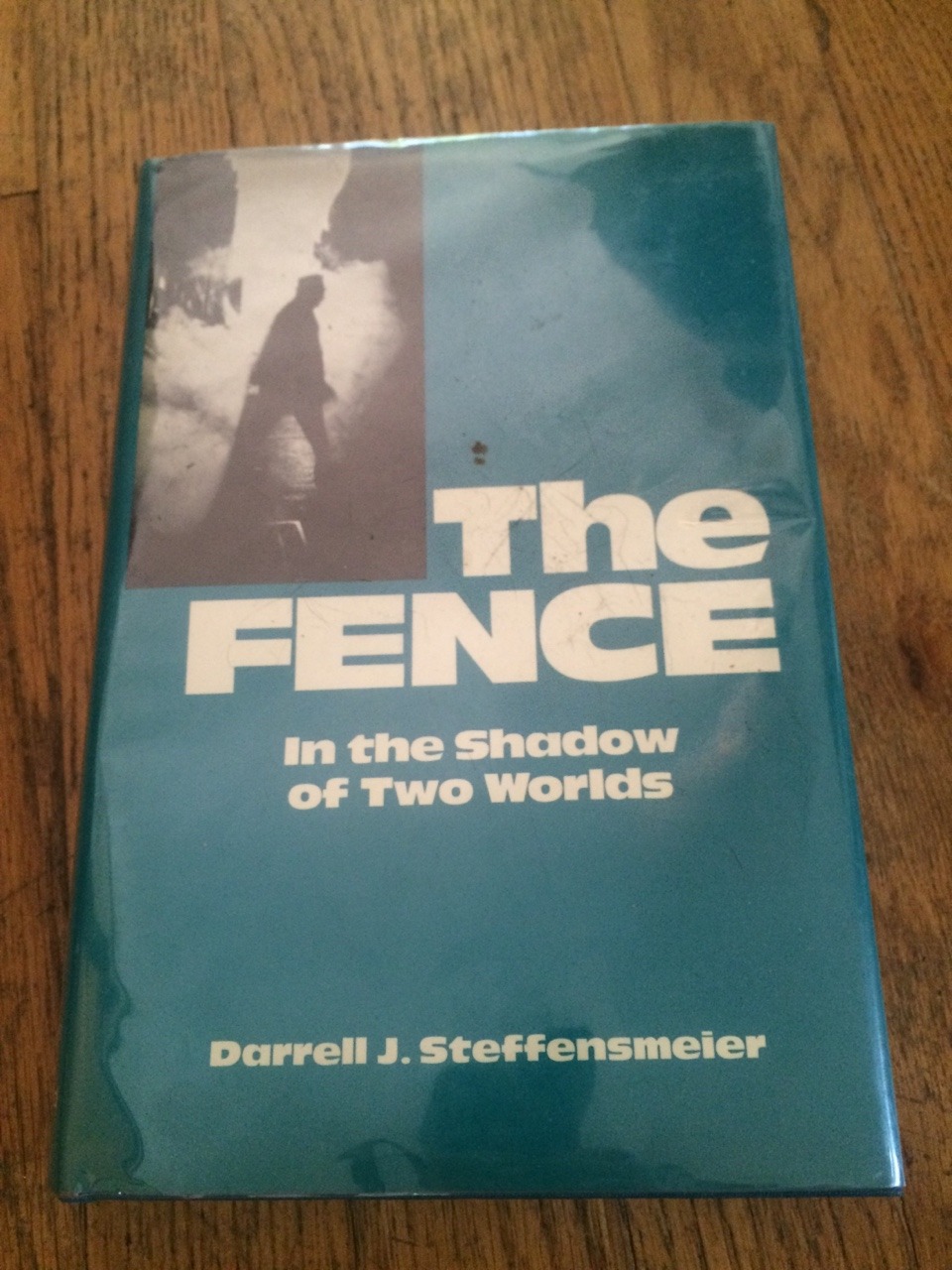
Picked this up from Powell’s. It’s a 1986 book drawing from jailhouse interviews with “Sam”, a burglar-turned-fence active in “American City” (from context, Philadelphia).

Sam had a secondhand/antique store, he’d buy things he knew were stolen, and then he’d sell them on the shop floor, at auction, to other shopowners, or to private buyers. dead_dove.jpg, I don’t know what I expected.

That said, there’s plenty of interesting stuff in there. Like, Sam talks about the Mafia (and lesser-known Greek and Jewish organized crime) as a force in the underworld but not a ruling one, that’s interesting. They reserved monopolies on some categories of stolen goods - cigarettes and, interestingly, sugar, and taxed the crews doing truck “hijackings” (almost all inside jobs with drivers paid off), but didn’t otherwise bigfoot around. Really, Sam was happy and proud to have the opportunity to bring them in on deals – they’d take their cut but effectively guarantee things, allowing Sam to confidently make bigger, riskier deals than he could otherwise.

Two things jump out as necessary conditions for Sam’s operations that no longer hold and explain why “the fence” isn’t a familiar figure today.

For one, the corruption. It wasn’t just that high-profile lawyers and judges would defend and acquit guys despite knowing they were “really” criminals. It wasn’t just that they would make and accept four-figure bribes for acquittals. These pillars of the legal system would tell underworld figures when a rich client was leaving town so they could hit his vacant house, in exchange for help building their private collections.

Sam paid off beat cops by offering them goods below cost (writing off the difference as haggling or encouraging custom), but any given cop, if he hadn’t been paid off by Sam, had been paid off by someone, and had no interest in bringing the system down. It seems the only thing that could make a dent (what got Sam, after all) were State Police investigations combined with too much press attention to quietly bribe out at trial or on appeal.

Second, in a pre-electronic, pre-database, pre-chain retail world how much easier things fall through the cracks.

Sales were in cash and receipts were handwritten - or not, one source of margin was selling without sales tax - and if Sam got a load of stolen Hi-Fi equipment, he could buy a clutch of junk at auction and if the law comes asking who’s to say those “radios x 5” on the receipt didn’t establish his legal ownership? Hell, who’s to say the receipt wasn’t written up and signed by his buddy in the back room?

When a law required secondhand buyers to record purchases for the police, Sam dutifully carted boxes of index cards to the precinct house, who told him to chuck ‘em ‘cause what, they seriously expect someone to go around to every station and riffle through a few filing cabinets whenever some old biddy gets her TV swiped? C'mon. And for stuff “warm” enough to draw actual police effort, Sam could just truck it to auction over state lines; with the crime in one jurisdiction and the evidence in another, there was no entity with the scope to put 2 and 2 together.

The overwhelming share of product didn’t come from guys crawling through windows but shrinkage - factory, warehouse and loading dock guys, stevedores at the pre-containerized docks, delivery drivers on rounds who stopped off to let a few items fall off their truck and then shrug to their boss it must’ve been misloaded. Sam says the hardest work there was getting the guys to stay under the radar and not to take too much too fast too regularly.

Part of it’s that there were mom-and-pop stores to unload to, that used the no-questions-asked prices as an edge against department stores and chains. Even if you got a load of great hot TVs today what would you do with them, drive to Best Buy and try to flip them to the floor manager?

(The real answer today is “eBay”, or maybe combine with fake/scavenged receipts for return fraud. Also sometimes professional shoplifters – “boosters” who put Tumblr “lifters” to shame – unload through the newer ethnic crime syndicates. I remember in LA seeing one tobacco shop in Little Armenia that had nowhere near enough product for its floor space, a sign offering heavy discounts for paying in cash, and three tracksuit-and-cigar types talking in the back office and like, hmm. Also at the meth level there’s a thriving market in stolen Tide detergent.)

ohhhh, because sugar was the key input of moonshining

Tagged: rerun

History: the Kontextmaschine summary: Pts. I-II

kontextmaschine:

I. it was grubby and everyone was trying to win but then someone did

II. FOR NOW

Tagged: rerun

Just came out of a showing of Death to Smoochy. Audience participation for the howl scene, good stuff. Weird that never became...

kontextmaschine:

Just came out of a showing of Death to Smoochy. Audience participation for the howl scene, good stuff.

Weird that never became more of a cult movie. I think might be because it represented an apex of several movie trends that didn’t continue on past.

1. the transitional ‘90s urban plot, where American cities were still depicted as playgrounds for white ethnic crime but the plot was kinda about how they were becoming playgrounds for professionals. Get Shorty, Analyze This, The Sopranos

2. Robin Williams’ self-deconstructive period (One Hour Photo, etc.) After he suicided it turns out everyone had always treasured him, but post-Aladdin into the 2000s there was a growing consensus he had always been just a cocaine-sweaty narcissist hack.

3. The Nora Ephron adult romantic comedy revival. Towards the start there’s hints toward the ‘80s/‘90s backlash “jaded businessbitch thaws out and realizes what’s important (nurturing children)” plot but it turns into a neo-screwball tension-between-equals. Even more than The 40 Year Old Virgin - 3 years later as Apatow supplanted Ephron - Catherine Keener’s is a specifically 40something fuckability, and the movie’s refreshingly upfront that the reward for being a good man is eventually a guarded but mature relationship with someone people in your circle used as a toy when she was younger and tighter.

Also, it’s a pretty good example of a 5 (as vs. the standard 3) act plot structure.

Tagged: rerun

kontextmaschine:

Tagged: rerun

Tagged: rerun

so this billboard is up near my apartment

hatefollows:

rassoey:

shinybulbysaur:

so this billboard is up near my apartment

so i got curious and went on this website

and

ummm


UMMMM?

WHO DREW THESE

Love.

Tagged: rerun

Everyone knows about “y'all”, but did y'all know that Pennsylvania’s 2 major cities each have their own second person plural...

kontextmaschine:

Everyone knows about “y'all”, but did y'all know that Pennsylvania’s 2 major cities each have their own second person plural pronouns - “youse” and “yinz”?

Tagged: rerun

So the “government-issued gfs” thing going around got me thinking about Billy Joel’s Allentown again. Like, the whole conceit of...

kontextmaschine:

So the “government-issued gfs” thing going around got me thinking about Billy Joel’s Allentown again.

Like, the whole conceit of the song is “Our fathers went off to WWII and in return the country moved heaven and earth to make them patriarch-princes, we went off to Vietnam and now we’re treated as disposable.”

(He’s forgetting Korea in between, but that’s OK, everyone does.)

And given the title the focus is on the fall of the unionized Rust Belt heavy industry, but look at this line

met our mothers in the USO
asked them to dance
danced with them slow

this is literally, 100%, a lament for when we had government-provided gfs

The morale-boosting USO, now best known for in-theatre concerts and airport lounges, ran homefront clubs and canteens near soldiers’ postings, and a major role was providing the troops with female attention, recruiting girls from the area to free dances with regularly paid soldiers, hiring staff hostesses whose job was to flirt.

(This in a period where “courtesan” jobs like taxi dancer or cocktail waitress, with a career path culminating in marriage, were more of a thing)

And it wasn’t just the USO. Part of the point of the WAC was to match the supply of single women to the demand of support roles, freeing men for front-line service, part of it was just to have some young women on base. (Here I vaguely gesture at Miss Buxley, General Halftrack’s buxom secretary in Beetle Bailey)

Then there were nurses. Male military nurses in the war had a reputation as twinkle-toes homosexuals, drawn by the constant flow of strong yet vulnerable young men in uniform far from home to comfort. The male ones, of course. (Florence Nightingale’s innovation wasn’t young women going abroad to tend to soldiers – field armies ALWAYS drew trains of camp followers to attend to the men’s needs – but rather an idiom to do it compatible with Victorian sensibilities)

Like, guys, the government very much did try to provide gfs. And it didn’t stop with the war.

There’s this Rosie the Riveter impression that women streamed into factories in WWII but faded at its end, in fact post-war female factory employment was lower than before the buildup. (If women in factories started with WWII, how would you explain the Triangle Shirtwaist fire of 1911?)

And this came amidst government pressure (from an extensive wartime central planning system) to clear out women and make way for returning men. There was a fear the Depression would return (this is why the war economy was never unwound) to a country of battle-hardened men and provoke Communist revolution; it was a high priority to keep men occupied, loyal, and rewarded as patriarchs.

Daniel Moynihan took shit over his famous report for suggesting the solution to the black community’s ills was government-backed patriarchy, Earl Butz took more shit for putting it thus:

“I’ll tell you what the coloreds want. It’s three things: first, a tight pussy; second, loose shoes; and third, a warm place to shit.“

For how colorful the language might be, though, that formula – “rising standards of living through improved access to consumer goods and women” was the exact same deal the United States made with its whites, as the basis of the postwar golden age.

I could talk about the postwar expansion of high schools and the creation of the “teenager” and all the courtship stuff there, hosting proms and football games and teaching how to dance in gym and how to wife in Home Ec and showing film strips and Coronet 16mms on how to get a date, but that’s a bit of a stretch. The point remains, though, under the New Deal social compact, from the Depression into the 1970s, the government was ABSOLUTELY in the gf-providing business.

Tagged: rerun

Barstool Sports - Grading the Newest Sex Scandal Teacher

Barstool Sports - Grading the Newest Sex Scandal Teacher

kontextmaschine:

Just discovered Barstool’s “Grading the Newest Sex Scandal Teacher” where every few days since like 2009 they put up the hottest photos they can find and a few hundred-word lascivious “review” of female teachers caught fucking their students (they’re pro-)

Barstool actually reminds me of the turn-of-the-20th-century “sporting press”. Focused around sports, with an eye on reports of use to sports bettors, these publications were really a men’s press, circulated through masculine outlets like saloons and barbershops, offering up tittilation and sex industry advertising on the side, playing to a rough tits-n-beer (-n-fisticuffs) single men’s culture. Y’know, punters. The guys on the barstools.

Some vestiges remained in America - racing forms, Sports Illustrated’s swimsuit issue, the way “alt-weekly” urban tabloid newspapers took a gritty tone and sustained themselves on prostitution ads. But Europe’s stronger sports betting and prostitution culture (arguably both downstream from a stronger urban working class culture absent the US’s midcentury “mass middle class” suburbanization) and national publication markets means the tradition carried on more intact.

And now we’ve got the internet, and a return to the cities, and moves to open up sports betting, and a new sex work culture and a growing men’s culture that doesn’t even aim at bourgeois respectability (both downstream from the end of the mass middle class) so no surprise Barstool’s a thing RN

Tagged: rerun