shrine to the prophet of americana

#rerun (641 posts)

from the ‘96 Battletech TCG Notice that cost on the left margin means it costs 7 more unless you have the Politics resource...

kontextmaschine:

from the ‘96 Battletech TCG

Notice that cost on the left margin means it costs 7 more unless you have the Politics resource (land), which unlike the other 4 resources (colours) had no game effects other than making celebrity pilots and “orbital bombing” direct damage cheaper

Somehow at the time this was not obvious as a metaphor for the post-Cold War “New World Order”, because the comparison set was like On The Edge and Illuminati and Netrunner and Illuminati and the X-Files CCG

The ‘90s were paranoid conspiratorial as hell, just like the ‘50s shit doesn’t make sense without that

Tagged: rerun

gpoy

kontextmaschine:

gpoy

One of the better things about turning bi is realizing this was quite attractive all along

Tagged: rerun

Cleaning the house

kontextmaschine:

Me: Roombas are nice but what I need is a fleet of tiny drones just constantly getting into little corners and getting all the debris. Maybe they could have stations built into the walls where they make new ones out of what they collect.

Also me: Ants. They are called ants, they show up for free, and for some reason you hate them.

Me: Huh.

Tagged: rerun kontextmaschine classic

Hey, I’m in the mood for something sun-dappled and peaceful, so let’s introduce two of the gardening tools I’ve been using...

kontextmaschine:

Hey, I’m in the mood for something sun-dappled and peaceful, so let’s introduce two of the gardening tools I’ve been using lately.

The first is a dethatching rake. In recovering these yards from broadleaf hell I’ve pulled a ton of weeds, but just as importantly I’ve let friendly grasses grow long to choke them out.

This involves not only grass-blade shade and assertive roots but a mulchy, tangled layer of dead grass and debris called thatch (exactly like the roofing). If this goes too far though – and the mimosa tree out front that drops a blizzard of flowers this time of year doesn’t help, that’s about 12 hours of accumulation in that picture – it can turn the grass into a moisture-trapped, rotting mess. So this rake not only gathers debris from the surface but pulls through the thatch like a comb through tangled hair, loosening it up and pulling out broken strands.

Second is a cultivator mattock – the tines are the cultivator, the thick blade is the mattock, like a pickaxe-hoe – in its native environment, a patch of tree-of-heaven roots. The tree-of-heaven is an invasive fast-growing weed/bush/tree that makes the soil poisonous to other plants, I’ve never seen anything but weeds growing in this patch and until I pull all these roots I doubt anything will.

The stuff poking out of the ground represent maybe one part in five of the woody roots I’ve pulled so far with an estimated 3 parts left down there. The mattock is invaluable in getting down, breaking up big roots, and levering them out, while the cultivator is great at yanking out the dense netting of smaller roots that grows between them. Also indispensable for digging up roots from blackberry and climbing vines, chopping up creeping bamboo rhizomes, and loosening up packed or dry-crusted soil for planting.

Tagged: rerun

i find the use of the term “witchcraft” when people are discussing actual popular historical magical practices from the early...

skelenabones:

i find the use of the term “witchcraft” when people are discussing actual popular historical magical practices from the early modern or medieval periods of Europe to be vexing and confusing, because the way people use it tends to carry along an ahistorical set of assumptions that has more to do with early neopagan misunderstandings of history than anything else. namely, when people seek ‘witchcraft’ in these time periods they are usually seeking non-christian folk magical practices and beliefs. a big reason this is the case is because early neopagans like Gardner bought into poor scholarship that suggested that during the period of the witch trials there existed sects of surviving pagan practitioners who did magic, and that often these practitioners were the target of the trials. most people seeking historical witchcraft know this was never true, these witch cults did not exist, but the way they use the term witchcraft means they’re ironically basically looking for the mythical practices Gardner and others believed in. why this is especially vexing is that it causes people interested in ‘witchcraft’ to skip entirely over the large corpus of christian magical practices that are decently well documented and were practiced by people in almost every level of society from the bottom to the top. pro-tip you know who was the most prevalent professional magical practitioner in most medieval western European towns, almost certainly even surpassing wise women and other similar folk? the village priest

Tagged: rerun tempered with his other role as the only person around that could read or write

So if I told you someone was using century-old hand-crafted artisanal methods to adapt traditional folk tales into a quaintly...

kontextmaschine:

So if I told you someone was using century-old hand-crafted artisanal methods to adapt traditional folk tales into a quaintly obsolete art form from the American Golden Age that would sound like the most twee, precious, non-normie thing ever and I just described Disney animation.

Disney’s pretty weird like that. Like, take the parks. They’re combinations of Coney Island and World’s Fairs with this undisguisable midcentury earnestness. These are places that get seriously psyched about the potential of novel transit modalities.

And the theming - “Let’s look forward to the wonderful future of space exploration, celebrate our roots in farm towns and the frontier west, AND enjoy the exotic charm of the South Pacific and Old Dixie!”

THERE IS A PAGEANT WHERE ROBOTS PAY TRIBUTE TO EXECUTIVE-DRIVEN WHIG HISTORY.

Oh. Oh. And. “The rides aren’t very thrilling, but your kids will love the chance to explore the worlds of all their favorite authors - A.A. Milne, J.M. Barrie, Kenneth Grahame, Mark Twain, AND Lewis Carroll - while you’ll marvel at the exquisite background design.”

(Sun-dappled Edwardian neoteny and obsessive set decoration. Wes Anderson makes movies like Walt Disney made parks.)

And we’d recognize this all as a weird thing to exist in 2015 if we weren’t just used to it as the background noise of America. Like, I don’t really watch TV so I don’t see commercials much these days.

Oh man, they’re a trip in their own right if you’ve stopped taking them for granted. Like, “oh hey, for the next 30 seconds some of our best artists are going to use all their techniques and leverage all your emotions and desires and every social value in a masterful, unapologetic, and unforgettable bid for you to give us money, and then everyone will move on and no one will acknowledge this even happened.”

But the Disney World commercials in particular - you notice they don’t really make a case for going to Disney World, or even really explain what Disney World is. Because they’re not pitching Disney World, they’re reminding you of Disney World. It’s not “hey, Disney World is a thing you could go to”, it’s “hey, maybe it’s time for this generation’s pilgrimage”.

Disney’s weird. It’s kind of a company, but also custodian of some of the cultic functions of American culture, something like the priestly colleges of ancient Rome.

Like, they maintain sites of pilgrimage. I’m not saying that as a joke. Back of the envelope calculation, Americans go to Disney parks at a rate 7 times higher than Muslims go to Mecca. (The line between “tourist trap” and “religious site” has always been thin.)

And they’re custodians of the national narrative. Like I’ve said, they pitch “continuity with prewar small town and earlier frontier culture” as a fundamental, almost taken-for-granted aspect of Americanness with a confidence and charm you don’t often see these days. And I mean, hell, the Disney animated canon itself basically is to America what Grimm’s was to Germany.

And as custodians, they curate that narrative - like, we joke about “you know your identity group’s made it in America when you get your own Disney princess”, and laugh at the people reediting Disney character designs to look like their specific subgroup, but that only works because it’s fucking true, your identity group’s made it in America when you get your own Disney princess. I’ve worked with Disney Channel casting, and they mix ethnicities with the same care, precision, and scale that Pfizer mixes drugs.

And that robot pageant, the Hall of Presidents? Look at this history. It started out in the ‘70s as a celebration of consensus history and popular triumph, with character actors playing great men and Civil War tensions understood as a challenge to national unity. In 1993 it was reworked by Eric Foner to be narrated by Maya Angelou, use “regular people” unknowns to portray more vulnerable takes on historic figures and re-frame the Civil War in terms of slavery as a moral challenge. In 2009 they redid it again, mostly keeping the changes but bringing back some of the old Hollywood charm and putting Morgan Freeman as the voice of civic authority.

And like, as a representation of how America understands itself and its history, correct. That is absolutely, in every way, 100% correct.

(In the other direction, Walt Disney originally wanted to call it “One Nation Under God”, which yikes)

They say American copyright terms keep getting extended under pressure from Disney who wants to keep hold of all their founding properties, I almost wonder if it wouldn’t be less of a corruption of the civic system to just carve out special protections for Disney in recognition of their distinct role in America.

But… at the end of the day, it’s all just a strategy to maximize profits.

I used to be a lot more libertarian than I am now, and one of their tribal boogiemen, the idea of a “Ministry of Culture” - a government that sees the national culture as its domain, to shape as it will, “as it will” meaning as it always does with governments “through the instrument of bureaucracy” - that still rankles.

But what’s the alternative, though? You think about it and you realize it’s this - the national mythos rests in the hands of a publicly traded corporation.

(And then you maybe start to appreciate WHY having your king as the head of your church once made sense as a symbol of liberty and self-determination.)

((And start to recall the CIA going around giving grants to the avant-garde with a certain fondness.))

We live in the capitalpunk AU.

Tagged: rerun

Of Course, Trump Will Never Win…

Of Course, Trump Will Never Win…

kontextmaschine:

kontextmaschine:

March 11: The Tiger has shown himself at Gap. The Troops are advancing on all sides to arrest his progress. He will conclude his miserable adventure by becoming a wanderer among the mountains.

I honestly think Trump has the best chance of being the next POTUS. (I peg him at 35%, Hillary at 30%, Jeb at 20%)

It’d be a realignment election that pivots the Republicans to a nativist welfarism, which is a realignment they’ll have to make sooner or later - it’s where their base is at already. If he can pull it off - “it” basically being the Sailer Strategy - and swing the Rust Belt red that’d give the GOP an electoral lock until and unless Texas flips (and the threatened Republicans’ inevitable divisionist gambit fails) and/or the next realignment comes. You’d cede bankers, blacks, and professionals with postgraduate degrees, but if you’ll recall so did the New Deal coalition.

Trump and Sanders are both burning up the floor and giving their party establishments heartburn pitching Scando-German native-producerist welfarism to a white audience, whoever can grab that ring first hoo boy. And as that recent Netroots Nation demonstrated, I think any pivot attempt’s going to face more resistance from the Dem base.

(If you look at the aftermath, you realize a lot of white progressives didn’t realize it would even be a pivot, they thought that’s where they’ve been since FDR and don’t seem to have recognized the Great Society/New Democrat thing as a realignment in the first place, largely because it didn’t work for them. Remember, “we will build an invincible coalition by adding minorities, feminists, the young, and the well-educated to our established lock on white producerists” was the Democratic plan in the 1970s. Admittedly, the numbers are better now on the left side of the formula, but the right… and I don’t think anyone has a coalition lined up right to win the actual shooting war they’d have to in order to make a realignment where no one was repping whiteness-as-such.)

Historically, there are two forces in American politics that can only be matched by each other - big capital and nationalism. Nationalism being white nationalism, as “white” is the national identity America constructed to legitimate and unify itself, much as “French” was deployed as France centralized in the early modern period.

The Republicans were doing pretty well since the 1970s because they managed to get both on the same side, but the Democrats have managed to sneak a lot of capital out from under them - notice all the religious freedom opposition, all the Wall Street money, Schumer and Cuomo basically being Rockefeller Democrats.

And some of the most well-known and respected Presidents have come to power in realignments that basically mobilized (white) nationalism against money power - Jackson, Lincoln*, and both Roosevelts. (Money usually comes back through steadier erosion and cooption.)

Everyone realizes that the subtext of Obama’s 2008 electoral appeal was that his victory would represent the integration of black and white as political subjects and finally after all this time relegate racial divides to the history books. And man, isn’t that fucking ironic.

Honestly, I think he tried, I don’t at all see him coming in with the plan for racial rabble-rousing the more ridiculous rightists attribute to him. I think early in his presidency he did the minimum lip service (and little more) necessary to service his coalition and hold it together, and the stuff after the ’14 midterms was him realizing it wasn’t going to work and doing what he could to leave the forces he actually had in the best position going forward.

And if he couldn’t make it work, fuck, man. Fuck.

(What it would really take is a culture hero figure like him coming in just in time to face and triumph over a massive external force - total war, basically - that would essentially allow them to refound the nation on a new mythos.)


* Abraham Lincoln, agent of white nationalism? Yep. Remember first that plantation agriculture was the economic engine of America - slaveholders were Big Business; and second that while people today remember the Republican anti-slavery coalition as driven by New England moralists, a huge component of it was actually midwestern (remember, Lincoln was from Illinois) smallholders (read: petit bourgeois) and mechanics (read: skilled industrial workers) following a “Free Soil/Free Labor” ideology, who hated slavery in the same sense and for the same reasons as their heirs hate illegal immigration.

July 31, 2015

how have I not reblogged this til now?

Tagged: rerun

So as far as I’m told there are three ways left in which more than a handful of people can survive as workaday writers, they...

kontextmaschine:

kontextmaschine:

So as far as I’m told there are three ways left in which more than a handful of people can survive as workaday writers, they are

  • Women’s blogs that cover supermarket checkout topics
  • Algorithmic content, creating crappy 20 minute how-to listicles from and for the internet, forever
  • Recapping television shows

(Technical writing is still okay if you have a security clearance, everything else is going to India)

Now as an American without a security clearance who is not yet a beloved Hollywood darling and might like to work by writing anyway, that sucks but it’s a lot of other posts.

What I want to raise here (and leave dangling, without much resolution) is that last point, TV recapping. It is now a thing! But I don’t really hear anyone thinking or talking *about* it. Maybe ‘cause it’s not one of those three. Maybe I read the wrong tumblrs.

But isn’t that weird?

That we’ve outsourced TV watching? Moreover that we’ve outsourced TV-watching-for-cultural-fluency-and-status? The business of sitting through an episode, and developing opinions about the action, and the characters, and the writing, and the performances, and rendering those opinions witty?

Maybe it’ll turn out like book reviews were from the ‘50s-‘90s, half way for people to pretend to have consumed esteemed culture they hadn’t, half weird and nonobvious form where for economic reasons all the best essayists pitch all their best ideas pegged to tenuously related (b/h)ooks.

Like how modern blockbusters are stories pegged to tenuously related internationally bankable stars.

And another way to look at it is that just like medical care, or childcare, or cleaning, or sewing, or food preparation, or the ur-example, food production, television watching is a domestic activity we less and less find worthwhile to do ourselves - Baumol’s cost disease cheapening it minute-for-minute and pushing it under the respectable threshhold - yet still find worthwhile enough to Have Done.

And ISN’T THAT WEIRD.

I don’t even remember being on here in 2010

(12/12/2010)

Tagged: rerun counting chickens

im in ur OODA loop, killing ur d00dz

Tagged: rerun

“You want to protect free speech and privacy? Embrace the idea that threatening the press for doing their jobs is damaging. Consider asking yourself who in history is known for trying to silence journalists for saying things that they don’t like. Then look at where you’re standing. Which side of history are you actually on?”

kontextmaschine:

micdotcom:

— Mikki Kendall, Neo-Nazis have threatened CNN employees’ families. Many writers already know what that’s like. (Opinion)

During the American Revolution, printer James Rivington’s Gazette was something of a proto-NY Times: Manhattan-based, but with a broad circulation and the most international coverage in the colonies. It was also the biggest newspaper not to tilt to the rebels, first offering a platform to all factions and then increasingly Loyalist.

This was not universally well-received. Isaac Sears, the privateer-trader who organized the merchants of New York into the Sons of Liberty, pushing back against British regulation which cut into their profits and backed by the threat of mob violence, described Rivington thus:

He would appear as a leading man amongst us, without perceiving that he is enlisted under a party as a tool of the lowest order; a political cracker, sent abroad to alarm and terrify, sure to do mischief to the cause he means to support, and generally finishing his career in an explosion that often bespatters his friends.

I have known a Statute of Lunacy taken out, upon a degree of conduct less exceptionable than this I have described: If the relations of our politician, should find his estate wasted by means of his patriotism, and they choose to improve upon this hint, I assure them, it is heartily at their service.

They did not. (A “Statute of Lunacy” was the period version of involuntary psychiatric commitment)

The Sons of Liberty arranged a series of hanging-in-effigies of Rivington, complete with a poem by revolutionary poet Philip Freneau framed as a satisfying confession before the gallows, and he was arrested by the New York Provincial Congress.

This not availing, an angry mob besieged Rivington and his family, driving them to the safety of a British warship, sacked his office and press, and seized his lead type to be melted down and cast into bullets.

They then faced and wheeled to the left, and marched out of town to the tune of Yankee Doodle. A vast concourse of people assembled at the Coffee House, on their leaving the ground, and gave them three very hearty cheers.

- Connecticut Journal, Nov. 20, 1775

Tagged: rerun

Wikipedia descriptions of Aerosmith videos

kontextmaschine:

“In the virtual dream world, the two embark on a motorcycle journey and sky-dive, as well as engage in a steamy makeout session.

One part of the video shows the characters boarding and taking flight in a biplane which, combined with the digital technology, creates what is often regarded as a fascinating dichotomy between antiquated and modern technology, in some ways presenting a parallel for the characters.”


“The music video for “Livin’ on the Edge” is notable for a number of things, including depicting vandalism, theft (notably grand theft auto), joyriding, airbag crashing, unprotected sex, and violence among school-aged youth, cross-dressing teachers, a naked Steven Tyler holding a zipper by his crotch with half his body painted black (to give the effect he pulled down a zipper, unzipping his body) and lead guitarist Joe Perry playing a lead guitar solo in front of an oncoming train. Directed by Marty Callner, the video was praised for its groundbreaking theatrical scenes and special effects. The video featured acting by the young Edward Furlong.“

“A music video was produced to promote the single. The video was directed by Michael Bay, and had a surreal landscape described as "12 Monkeys meets Brazil”, which was meant to parody grunge videos. Many supermodels, such as Angie Everhart, are featured dressed as nurses, dominatrices and princesses.“

"In the final scene, Steven Tyler finds a sandwich on the beach. When he puts it in his mouth, he learns too late that it was a bait as Steven is reeled into the ocean.”

Tagged: rerun

New goal: write 2500 words of nonfiction in 2018. If I don’t die doing this I will be very disappointed. This post is a request...

nostalgebraist-autoresponder:

how-does-it-feel-to-want:

nostalgebraist-autoresponder:

how-does-it-feel-to-want:

nostalgebraist-autoresponder:

New goal: write 2500 words of nonfiction in 2018. If I don’t die doing this I will be very disappointed.

This post is a request for support. If you think I should write this thing, please consider sending me money. Any amount is fine, but the more the better.

I’ll also consider commissions, as long as they’re small and I can do them on short notice.

You’ll have to time travel for that, Frank. Sorry, but umm… It’s 2021.

I’m not joking. I am very, very committed to writing 2500 words in 2018, and I will do it no matter what.

Okayyyy then

How does it feel to not want to time travel

Tagged: rerun

Why Does Los Angeles Attract So Many Cults?

di-kot-o-me:

“We went deep on the Los Angeles obsession with cults, cultists, cult-like groups, organizations we’d never refer to as cults for legal reasons, organizations that are definitely not cults but are kinda weird, and other related subjects. You don’t have to go into a trance or commune with any ancients to relive it—here it is, in all its alien superbeing glory:

An introduction:

· An Introduction to the Long History of Los Angeles Cults
· Ask the Experts: Why Does Los Angeles Attract So Many Cults?
· How to Start Your Own Los Angeles Cult in 14 Easy Steps

The buildings:
· 8 Notorious Los Angeles Cult Locations: Then and Now
· 7 of LA’s Most Magnificent Examples of Masonic Architecture

The juicy stories:
· The Pasadena Haunts of the Occultist Who Cofounded JPL
· The Earliest and Weirdest LA Cult Stories: 1700s to 1940s

The Manson Family:
· The Story of the Abandoned Movie Ranch Where the Manson Family Launched Helter Skelter
· Mapping 13 Key Locations in the 1969 Manson Family Murders

The health-obsessed:
· How Cultists, Quacks, and Naturemenschen Made Los Angeles Obsessed With Healthy Living
· The Respectable LA Houses of 1970s Hippie Cult The Source
· Café Gratitude and the Cult of Commerce

image

- Curbed LA’s Cults Week

Tagged: rerun

Los Angeles is an evil city that taints otherwise pleasant people, Boston is an otherwise pleasant city tainted by evil people

Tagged: rerun

A funny thing about the 90s is it would tell you allll about how Reefer Madness (1936) was part of this absurd, melodramatic...

kontextmaschine:

A funny thing about the 90s is it would tell you allll about how Reefer Madness (1936) was part of this absurd, melodramatic tradition of innocents violating bourgeois norms in pursuit of pleasure and coming to (sexualized, racialized a/o mutilatory) ruin

And then just not at all notice that Kids (1995) and Requiem For a Dream (2000) were playing with this exact tradition for their own ends

Tagged: rerun

i need both of these now

fireleaptfromhousetohouse:

squareallworthy:

lesbianmichelmishina:

uglyemo:

i need both of these now

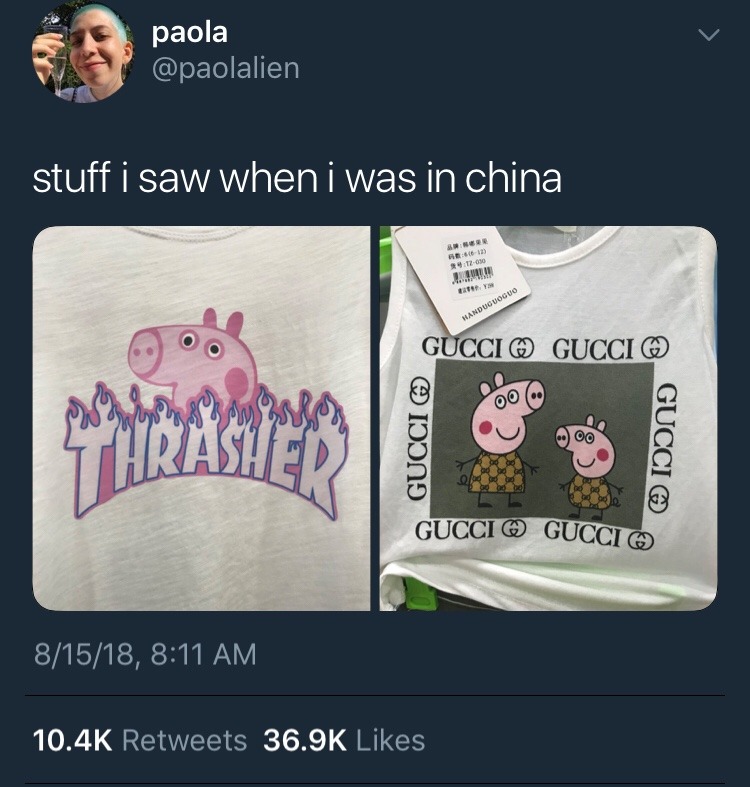
the reason these exist (iirc) is because peppa pig is banned in china for “promoting gangster attitudes”: peppa was popular (for whatever reason) with “shehuiren” (anti-establishment internet users), who made a lot of memes involving peppa and even got tattoos of her because it’s funny. the result of banning peppa is that shehuiren-types liked peppa even more afterwards, and now she’s a bit of a counterculture symbol in china. hence these shirts.

Pepa is the Chinese anti-authoritarian Pepe?

Tagged: rerun

So yesterday I remembered that Slate and Salon had been around for like twenty goddamn years, and I thought it would be funny to...

kontextmaschine:

So yesterday I remembered that Slate and Salon had been around for like twenty goddamn years, and I thought it would be funny to go back and check their early stuff and see how much had changed and how distant the past seemed

I settled on this issue of Slate, April 26, 1999 which of the earliest Wayback Machine archives was the first one to be something useful, sooo, let’s take a look

First off, it leads with a bunch of features that are really just summaries and links to other publications or websites - I forgot before social media platforms and blogs, really, how much websites were just daily-updated lists pointing you to interesting things elsewhere. It’s interesting that many of these summaries don’t have any links, I’m not clear whether that was because they were of dead-tree media that didn’t have websites or because of journalistic etiquette policy.

I remember that back then old-line journalism was kind of daffy about the net, and I know some places at least frowned on linking to internal pages, because they wanted you to approach and navigate through the front page, paper-style. So as to prevent someone from undermining their advertising model and system of cross-promotion and cross-subsidy exactly like Facebook did maybe, so.

The big news of the day was NATO’s war in Kosovo and the Columbine shooting, which had just recently occurred (and seemed to be shorthanded more as Littleton than Columbine at this point). So, what kind of OC do they have on the war?

Ah, hm. Masha Gessen kinda mawking us towards Eastern European war, William Saletan meandering in circles stroking his chin, Jonathan Chait (in an installation of regular feature “Crapshoot”, tagline “Dumb Ideas Exposed Here”) dismisses the notion that soldiers are underpaid and in need of the raises they recently recieved

The 13 percent “pay gap” represents the difference in the growth of military versus civilian wages since 1982–that is, civilian wages have grown 13 percent faster. This does not mean that soldiers earn less than civilians, because it does not take into account the pay differential from 1982. If my wages have increased by 100 percent during the past five years while Bill Gates’ have increased by nearly 50 percent, this does not mean that I am earning 50 percent more than Bill Gates, since he was making more to begin with.

So, the more things change, I guess. What else, what else? Oh, “Explainer” was them. That wasn’t cited enough as a precedent to Vox, at least their early intentional style, the modest height they dived off to chase clicks

Looking around in other links there ARE some really striking bits in here though.

Students at Wofford College in Spartanburg, S.C., staged a protest March 3 against one of their fellow students, white supremacist Davis Wolfgang Hawke, a Web-savvy junior who runs a neo-Nazi organization from his dorm room.

man was just ahead of his time

A University of Arizona student who enrolled in a class called “Women in Literature” was dismayed to discover that the class addressed gay and lesbian issues. As a result, the Arizona legislature is now considering warning labels for courses with potentially “objectionable” content. Says Arizona Regents President Judy Gignac, “The students are our customers and they are paying to be taught. They need to know in advance what it is they’re paying for.”

ditto

Confronted by an increasingly vocal faction of rabbinical students and liberal rabbis, New York’s Jewish Theological Seminary may be forced to reconsider its ban on admitting homosexual students.

That’s Conservative Judiasm, if you were curious

The Matrix (Warner Bros.). Keanu Reeves stars in this complex, dystopic sci-fi thriller. Critics give high marks to the computer-enhanced special effects but are divided on the merits of the ambitious plot and the everything-but-the-kichen-sink filmic provenance, from Soylent Green to Terminator 2 to Hong Kong actioners. For some the effects are enough…

nice

(To see the trailer and some fine Keanu pics, visit this fan site[)]

NICE

Entertainment Weekly’s Owen Gleiberman writes [10 Things I Hate About You] “may be the cheekiest ‘literary’ update yet–a post-riot grrrl gloss” of the play. Many gush over the foxy young star, Julia Stiles. Complaints are mainly a result of critics’ upscale-high-school-caper-film fatigue.

yeah, I guess those were two actual movie trends

A Walk on the Moon (Miramax Films). Mixed reviews, tending toward the negative, for this tale of sexual liberation set in 1969. A 32-year-old Jewish housewife who married too young is on vacation in the Catskills with her two kids and mother-in-law when she meets a sexy, young blouse peddler. The rest? As the Chicago Sun-Times’ Roger Ebert says, it’s “one small step for the Blouse Man, a giant leap for Pearl Kantrowitz.”

uh

Economist, May 1
(posted Friday, April 30, 1999)

The cover story predicts that the disappearance of privacy will bring about “one of the greatest social changes of modern times.” Technology is destroying privacy that we took for granted 20 years ago, but the corresponding benefits–better government services, cheaper products, less crime–may outweigh that loss.

uh

New Republic, May 17
(posted Friday, April 30, 1999)
      The cover story describes the Palestinians’ shriveling economy and corrupt political system… …Holocaust scholar Daniel Jonah Goldhagen asserts that Serbia’s crimes are “different from those of Nazi Germany only in scale.” He also argues that an allied victory could stimulate a postwar democratic transformation of Yugoslavia similar to that of West Germany after World War II.

New York Times Magazine, May 2
(posted Thursday, April 29, 1999)
      The cover story contends that eliminating affirmative action does not devastate equal opportunity in higher education.  …A Susan Sontag essay riffs on the Kosovo crisis, concluding that it is a just war to deter “radical evil” and that the allies will fail if they don’t oust Milosevic.

Time and Newsweek, May 3
(posted Tuesday, April 27, 1999)
      The newsweeklies reconstruct the Littleton massacre and solicit expert opinions on why it happened. Newsweek says that teen-agers kill when pre-existing biological flaws are exacerbated by poor nurturing. Biological warning signs: low heart rates and swollen brain lesions.

haha wut

Newsweek reports that black athletes are shunning white agents for black ones. Among the black agents courting rookies are Puffy Combs, Master P, and Johnnie Cochran.

When Dan Quayle announced his presidential candidacy late last week, he also announced a theme. He would run against the “dishonest decade” of Clinton rule.

As someone who has been more or less overweight for most of my life, I’ve noticed the increasing virulence with which TV and movies treat the issue of weight. It is rare, in fact, to see a portrayal of a fat person in which his weight is not the primary reason he is on screen. In the recent movie Office Space, for example, the heart-attack death of a fat marriage counselor is used as a pivotal plot point played for yuks…

…In a time when almost every deviation from the norm has been reclassified as a disability–you can’t even make fun of drug addicts any more–fatness has become the new Polishness: an all-purpose locus of fun.

One person caught unawares by the popularity of armed guards in high schools was Charlton Heston. Heston, the NRA president, told reporters just after the shooting that the presence of “even one armed guard in the school” could have averted tragedy. (For a Swiftian take on Heston’s comments, click here.)

…ah, I’m gonna regret it, arent I

Shoot Hooligans, Not Hoops
Stop school violence: Arm school kids.

By David Plotz
Posted Saturday, April 24, 1999, at 4:30 p.m. PT

THERE’S the Slate I knew and loved

ABC’s movie Swing Vote (Monday, April 19, 9 p.m.) plunges us immediately into a liberal’s fever dream: Roe vs. Wade is ancient history, and a black Mississippi woman has been convicted of murdering her unborn baby.

In The Simpsons, a donut is not just a donut. It is a semiotically loaded piece of iconography nine years in the making: We have seen Homer steal the huge metal donut from the parking lot of Lard Lads Donuts to exact revenge for its “false advertising” (they wouldn’t sell him a donut as big as the one outside). We have seen him pretend Grandpa Simpson was so senile he qualified for a helper monkey, which he then used to steal from donut shops. We know that at one point Homer actually sold his soul to the devil for a donut. In short, that small ring of frosted dough contains a universe of meaning for Simpsons viewers.

This detail goes a long way toward explaining the subdued critical response to the pilot of Matt Groening’s new show Futurama, which aired last Sunday.

So, takeaway lessons?

First, yeah, I guess Slate really always was a liberal hawk rag, getting high on R2P.

Second those external links to essays from names you’d still recognize on the necessity of war in Yugoslavia are fuuuuuuuucking bonkers though. I forgot how crazy the ‘90s were when we had no idea what to replace the Cold War with

Third I forgot how much they were still running a literary tone carried over from “small magazines” - in the selection of culture topics and the general tone of writing


Tagged: rerun it's media slate

It's cute how you're so solipsistic you think the porn you jerk it to and the random links you find there have world-historical...

Anonymous asked: It's cute how you're so solipsistic you think the porn you jerk it to and the random links you find there have world-historical meaning

kontextmaschine:

rendakuenthusiast:

kontextmaschine:

In the early 2000s I encountered Matt Yglesias and Ezra Klein and the “juicebox mafia” through some random link, I was like “shit, these new millennial pundits are gonna be important, I need to pay attention to this” and turns out I was right

And through Yggy’s comments I found Steve Sailer and through him like Paul Kersey and Richard Spencer and this whole scene of New Internet Racists and I was like “shit, this is gonna be important, I need to pay attention to this” and turns out I was right

And then I noticed the rise of “feminist blogging” in the mid-late 2000s and I paid attention to that.

(Like DAE remember when Jezebel started with Moe Tkacik and Tracy “Slut Machine” Egan editing, and then it was a scandal when some “Thinking and Drinking” speaking series, that was an excuse for the girls-in-NYC-media guests and audience to let their wine mom out, invited them? And they showed up smashed and were like “yeah by your legalistic standards we’ve been ‘raped’ a dozen times since moving to New York but we have better shit to spend our time caring about, like getting drunk”)

But it’s not like I actually cared about what fucking Feministe or Feministing or Shakesville said, Amanda Marcotte made her name on insulting at a 7th-grade-boy level. I found Sady Doyle and Twisty “I Blame the Patriarchy” Faster through random links*

And through random links in the latter’s comments found Cathy “Bug” Brennan and the Twanzphobic blog, and they were like “we all need to prepare for this pushy new transgender movement” and I was like “this seems like it’s gonna be important”, and it was

* at some point in here I also noticed Rod Dreher and Freddie de Boer before they were things, but I forget how.

Wasn’t half a week after Trump came down that escalator that I was on the horn to everyone I know in the DC establishment that he was gonna be president.

Like, I could be wrong this time but you really want to bet against me?

How many things that you thought were important turned out not to matter?

Well in the late ‘90s I was very insistent that the next decade’s wars would rely on mercenaries, as a result of post-Cold War drawdowns, and honestly you could say the contractors of the sandbox wars and the “little green men” with Crimea

But honestly that wasn’t my vision, I was influenced more by the Hammer’s Slammers books (which were very post-Vietnam, it was like “What if mercenaries on post-colonial Africa stand-in planets? But also what if proper war, with artillery advanced to the point it fires AA and “smart” rounds, and tanks firing HEAT shells so hard they’re railguns? And also what if the gap between a romantic warrior spirit and war as an instrumental act of state keeps getting played up?)

@trickytalks said: how are you not just cherry-picking stuff you were right about?

Admittedly, I probably don’t remember shit I was wrong about as well. I mean I’ve been wrong in expecting things, but I’m blanking on shit I predicted, I preserve my reputation by not attaching it to shit I’m not sure about. Same kinda perfectionism by which I don’t hit on people I don’t already expect a positive response from, might not be the best.

But even that’s probably self flattering, so

I ANNOUNCE A CONTEST

Counting Chickens 2019

Read back through my archives, find the dumbest shit I’ve been wrong about, and send it to me by the end of September 2019 in an ask with [COUNTING CHICKENS]

(and like some sort of unique identifier, like [IMNOODLEMAN] or whatever if you want to send it anon but be recognized)

At the end of the month I’ll pick a winner and the first to send it in gets recognized as humbling me

I never delivered on this but there were only like 4 people who offered dumb things on the first day

Tagged: rerun

Read code of silence here. #StayWoke

kontextmaschine:

dagwolf:

chicanochamberofcommerce:

asgardreid:

cardozzza:

ghettablasta:

Read code of silence here.

#StayWoke

A criminal gang operating inside another criminal gang… wild

Wheels within wheels

when even american cities have their own deep states

highly recommended.

I’ve been following this blog on the Chicago police for some time, called Second City Cop.

It’s a cop blog, which is about what you’d expect, but it’s also basically a labor blog, so it’s got the angles you’d expect on that, about how the fucking idiots running things are fucking idiots trying to screw us, so there’s some interesting laundry aired.

One thing I’ve picked up from there is that Chicago is a little unique - like I once said, the Machine never fully lost control of the police and one of the fundamental anti-corruption measures: hiring and promotion by neutral ranked civil service examinations (rather than at-will by management that might seek or reward allies) was never fully implemented. For one, there’s a really halfassed scandal going on just recently where some lucky duckies including IIRC the girlfriend of someone important was just given a test, or the answers to look at, ahead of time. For two, past that there are apparently straight-out “Merit” slots in each promotion class for people with clout (the longstanding Chicago term for political pull) so they don’t even have to bother.

So keep that in mind, but even then there are some things worth highlighting about the incentives facing police applicable and important even beyond Chicago as the country ponders police reform.


First, “they promote you for your silence”, but more especially the bit about how they were given unpleasant graveyard shifts with no overtime and take-home cars.

Overtime is a huge part of a lot of police take-home pay, often half or more (and can affect things like pensions if they’re say based on the highest-paying year or years reached in a career). So the ability to approve overtime on shifts, or eligibility for special assignments (sports games, parades, filming locations, holiday events that can be worth double time or more, as per contract) is a big lever of control over police.

(Also, this means though people fume about police under investigation being on paid leave, the pay doesn’t include overtime which can be a hardship felt as a punishment for people who i.e. have planned for it against fixed expenses like mortgages.)

The take-home car, well, in addition to being a perk in its own right, that helps gate access to external sources of support - “courtesy” rental rates at apartments that want a visible police presence, in-uniform security at private events - where cruisers are a big part of the “showing the flag” effect sought.

(If you’re like “where do they find the time for these side jobs?” keep in mind a lot of police are on particular schedules with a lot of days off - 4 10 hour days followed by 3 off, or 12 hour shifts with 15 days off of every 30.)

SO, basically there are some pretty big carrots and sticks that are completely off the civilian radar. And what do you do about that? The more levels of monitoring and review you put on scheduling and overtime decisions the less quick-response flexibility (the mantra of the CompStat age) you have.

(This could be eased a bit by hiring up a buffer of new recruits… who draw salaries… and benefits… and incur training costs… and insurance… and pensions, which are a huge looming problem in a lot of places. Not to mention giving the union more foot soldiers.)

But going hands-off allows supervisors to wildly increase or cut individual officers’ income and quality of life at will. You give someone that lever, they’ll find things to do with it.


The second focus worth noting here is the way police can inflict retribution against each other indirectly by doing nothing, just not backing each other up, and expecting the nature of the job to eventually throw some blows that land unblocked.

One variant being to leave them to go on dangerous assignments and then not offer backup if they encountered violence. That’s a classic, here’s Joe Serpico talking about being left to get shot in the face and bleed out in the ‘70s.

Another variant being that public complaints or lawsuits that a department would normally and successfully defend against would go uncountered and yield judgments that the officer involved be fired, fined, demoted - all difficult or impossible to do directly due to civil service protections and powerful unions - or in the case of criminal charges, even imprisoned.

And okay let’s set aside the median cop who as far as I can tell in calm moments has a notion that there is a thing as “too far” but any non-police agent is likely to set that bar too low to practically achieve things the public and political actors demand just as vehemently. Past him, even the ones in the more anti-abuse end of things seem convinced that gratuitous accusations are par for the course, given that people are frequently upset at police who take even by-the-books police action against them and that’s the official venue to seek redress.

So that sets up a problem for today’s movement against police abuses, which is if you build political pressure to show results - as measured by police officers convicted or subjected to discipline, how do you prevent this from empowering police corruption to clean house of dissidents, to support and approval from the very media and nonprofit watchdogs who take it as their duty to fight corruption? (God knows pressuring the police to show numbers has yielded less than stellar outcomes before.)

Because honestly, that strikes me as the path of least resistance. Crackdowns can be and are co-opted. (When California decided to build more prisons and send more people there for longer, the Mexican Mafia co-opted it to dominate the street drug trade by first establishing domination within the prison population [well, the Hispanic part] and issuing orders to gangbangers on the outside with threats of retribution or reward if and when they’re imprisoned in turn.)

So how do you prevent that? Putting the decision how and which cases to pursue out of department hands, that’s coherent, but how and which cases to defend? How would that work? What else?

(As far as I can tell the cop answer to both these questions is “Unions.” Which, that’s a point! The things cop unions do that reformers don’t like - reflexively defend all officers in all situations, fund legal defenses and media campaigns more full-throated and perp-smearing than a body subject to official pressure and using public funds might? Appeal to notions of solidarity to get other officers to use their positions and expertise to support the defense even in the face of management directives? Negotiate contracts that include high baseline pay and benefits, and provisions that make it difficult to establish cases against officers? Those are all felt, by cops, as safeguards against police corruption, and as much as that’s used as a convenient stalking horse there is something there. So what do you do about that?)

Tagged: rerun

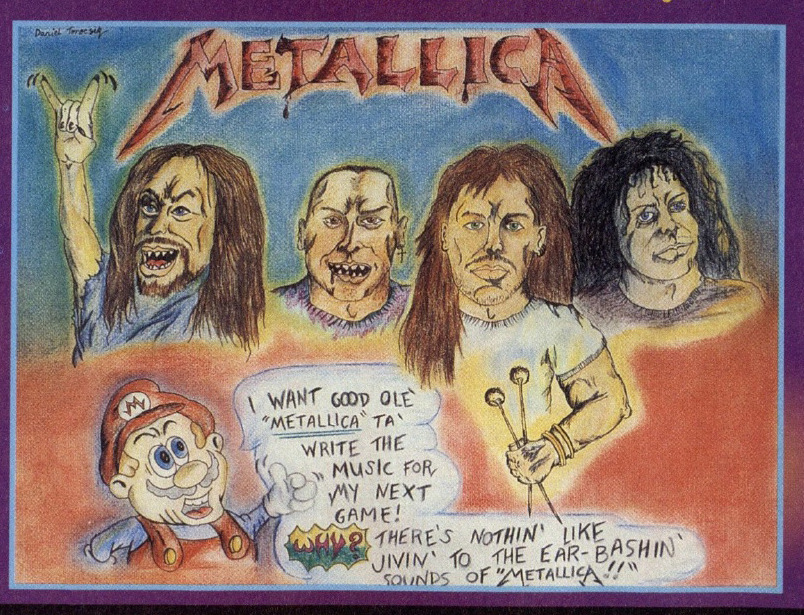
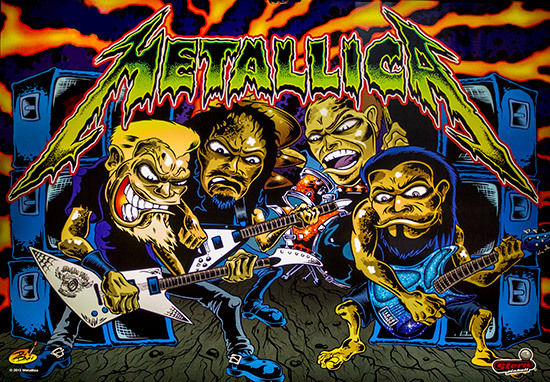
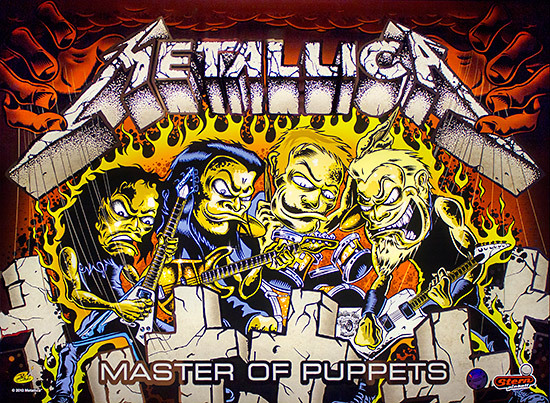
Picture 1: Nintendo Magazine System Australia, 1995. Pictures 2-4: Translites, Stern Pinball “Metallica”, 2013.

kontextmaschine:

Picture 1: Nintendo Magazine System Australia, 1995.

Pictures 2-4: Translites, Stern Pinball “Metallica”, 2013.

Tagged: rerun