shrine to the prophet of americana

#meanwhile in japan (141 posts)

I will say it's kind of funny seeing secondhand the place of cults in Japanese society by seeing fictional portrayals Like, Hare...

I will say it’s kind of funny seeing secondhand the place of cults in Japanese society by seeing fictional portrayals

Like, Hare Krishna levels of ridiculous garb and ritual, sometimes a little institutionalized but small enough that followers have probably personally met the founder

It’s weird cause it generally but not perfectly matches American cult narratives – it doesn’t really line up with what we tell about Scientology OR rural compounds, (hippie or scary backwoods Prophet of God versions). Or what ex-Mormons complain about, or kids coming out of isolated tight-knit churches. Coming from the land of Aum Shinriyku you don’t pick up much People’s Temple-type menace, either.

Somewhere between ‘60s-groovy guru and Moonies, the issue presented as less that they were a danger to society or their followers, more that they were a silly scam that would divert and drain them.

Like, the concern isn’t “they will draw you into a world offering a social scene and metanarrative you needed to situate yourself but instead of enabling you these are fundamentally structured to limit you” or anything so complicated, it’s “they will make you wear silly robes and sing about their dumb UFO story while they have you give them all your money and probably have sex with you, and their central promise of powers or healing or whatever doesn’t pay off”

Japan is of course known for its “new religions”, post-WWII study there was instrumental to the development of our modern understanding of the lifecycle of religions starting as cults around a charismatic founder. And I mean, I’m only seeing caricatures across a language and cultural gap but still, that’s what I’m seeing.

Tagged: meanwhile in japan

started the series because of your Utena-posting, and wondering what the dark-skinned, kind of S. Asian look means in Japan?...

Anonymous asked:

started the series because of your Utena-posting, and wondering what the dark-skinned, kind of S. Asian look means in Japan? Gundam treated it as like, inscrutable and wise, but also kind of child-like

Yeah honestly I don’t know what that was about. Like, Anthy’s plausibly desi, and I guess “Secret of Blue Water” Nadia’s ambiguous, but what was going on with Kaolla Su and Mihoshi? Was that just a ‘90s thing? Is there some connection to the hyper-tanned gyaru/gal here? I dunno.

Tagged: meanwhile in japan

The "Yamato Mark II" from Yakuza 6 had a conning tower with this "squid-eye" widening at the top that really reminded me of the...

The “Yamato Mark II” from Yakuza 6 had a conning tower with this “squid-eye” widening at the top that really reminded me of the Final Fantasy Judges’ helms, and I’m still curious what exactly that shape meant in 2010s Japanese culture

Tagged: meanwhile in japan

tiktoksthataregood-ish:

Tagged: meanwhile in japan

Friendly reminder that even though say, Thailand is fairly nearby, the Japanese conception of "curry" is a native take on a...

Friendly reminder that even though say, Thailand is fairly nearby, the Japanese conception of “curry” is a native take on a German take on a British take on Indian food, and is something like a thick, spiced beef stew served over rice

Tagged: meanwhile in japan

Wait til you realize they're part of the same keiretsu as Canon, Hitachi, Nissan, and Sapporo beer

Wait til you realize they’re part of the same keiretsu as Canon, Hitachi, Nissan, and Sapporo beer

Tagged: meanwhile in japan

> abortion has been a tool of the ruling class to manage their potential population I am absolutely a class-first materialist...

funereal-disease:

> abortion has been a tool of the ruling class to manage their potential population

I am absolutely a class-first materialist type, and everything I say should be taken as coming from inside the house, so to speak, but – man, what is it with large swaths of the materialist left and their need to simp for tradcath gender norms?

I mean, part of the development of Japan as an industrial power was this land reform that encouraged peasants to clear waste ground and put it under cultivation (my loose memory was they paid the first 2-5 harvests to the central government but then it was just theirs with normal taxes from then out?)

But simultaneously imposed strict nonpartible primogeniture, and one of the effects was excess kids going to the cities for industry (like enclosure in the UK!) but part was breaking out of the Malthusian trap with a shit-ton of abortion

Like China’s “one-child” thing as a mechanism of Asian agricultural–>industrial development? Precedented!

Tagged: history meanwhile in japan

it’s funny how “French maid” has been replaced by “Japanese pastiche of French maid” in the popular consciousness. I assume the...

argumate:

it’s funny how “French maid” has been replaced by “Japanese pastiche of French maid” in the popular consciousness.

I assume the French maid thing got started when English aristocrats hired them as fashion consultants, and it seems fair now that fashion and food have also migrated from Paris to Tokyo.

Honestly Japan did the same thing with “girl in a bunny suit”, “attractive young nurse”, “uniformed schoolgirl” and “nun”, it’s like they’re trying to catch up

Tagged: meanwhile in japan

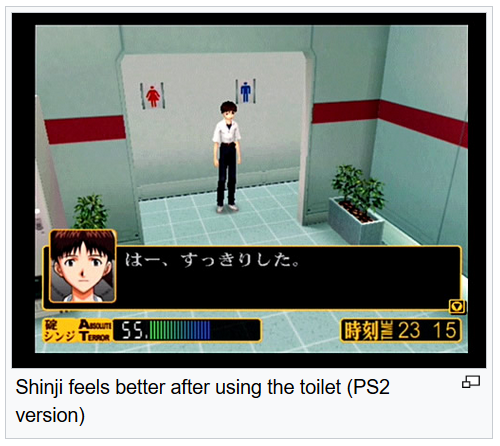
toilet (PS2 version)

argumate:

femmenietzsche:

toilet (PS2 version)

must be one of those console accessories they don’t bother selling outside of Japan.

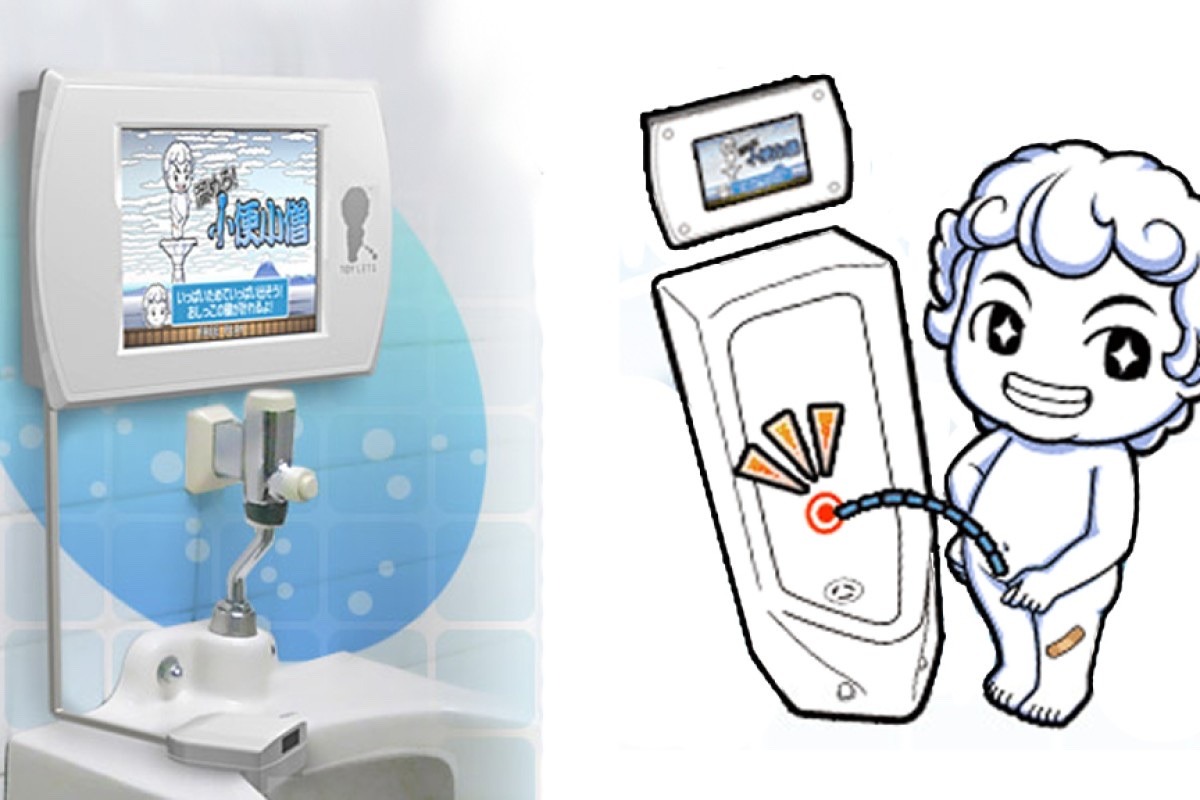
Toylet (トイレッツ) is an interactive urinal system developed by Sega AM1. Urinals featuring the Toylet are equipped with a LCD screen and pressure sensors. Advertisements are shown between games. Players’ scores are recorded and can be saved onto a USB memory stick. The system has been installed in the men’s toilets in four stations of the Tokyo Metro, including Akihabara, Soga and Ikebukuro. It is being trialed until the end of January 2011. Units are available at Tokyo Joypolis.

Gameplay

Four mini-games can be selected:

  1. Mannekin Pis, named after the eponymous statue of a urinating boy in Brussels, awards the player a score based on how hard and how much he can urinate.
  2. Graffiti Eraser requires the player to spray urine around to clean graffiti off a virtual wall.
  3. The Northern Wind The Sun and Me, puts the player in the role of the wind trying to lift a girl’s skirt by blowing air at her – the strength of the wind depends on the force of the flow of urine.
  4. Battle! Milk From Nose allows the player to compete against the person who last used the urinal by comparing the strength of their urine streams. The streams are represented on-screen as jets of milk squirting out of the noses of two characters standing in a sumo ring. If the player’s urine stream is stronger, his opponent is blasted out of the ring.

Tagged: meanwhile in japan

Does anyone connect the iconic Battleship Yamato lying at the bottom of the sea with the Tale of Heike bit about the imperial...

Does anyone connect the iconic Battleship Yamato lying at the bottom of the sea with the Tale of Heike bit about the imperial regalia thrown into the sea?

Tagged: meanwhile in japan

like the… shape of the Yamato Mk. II bridge superstructure in Yakuza 6 is the same as the FFTA "Judge" helms, does that shape...

like the… shape of the Yamato Mk. II bridge superstructure in Yakuza 6 is the same as the FFTA “Judge” helms, does that shape just mean something in Japan?

Tagged: meanwhile in japan

Based on the fact that the Yakuza series is basically about "being Japanese", and having previously been exposed to Japan, I...

kontextmaschine:

Based on the fact that the Yakuza series is basically about “being Japanese”, and having previously been exposed to Japan, I guessed from the start the “secret of Onomichi” was going to involve the fucking battleship Yamato rising from under the sea

SURE ENOUGH

this puts Martian Successor Nadesico’s rise-from-underwater (Yamato + Nadesico, or rather なでしこ= “yamato nadeshiko”, the idealized Japanese woman, the joke was the series was a Space Battleship Yamato/Gundam/Macross riff as a ‘90s harem comedy) at almost the midpoint between Space Battleship Yamato ‘s and Yakuza 6’s

Tagged: meanwhile in japan

also it's funny how many plot twists in the Yakuza series come down to no one having noticed that another character wasn't...

also it’s funny how many plot twists in the Yakuza series come down to no one having noticed that another character wasn’t actually Japanese, just Asian

I guess it does underline how much of “looking Japanese” isn’t actually genetic but fashion, hairstyle, behavior – all the subtle things that allow you to go to Seattle and distinguish between Japanese and Japanese-Americans on the street

“Japan’s relationship with neighboring countries” has been a recurring theme (bringing in exotic organized crime rivals), often doubling with fellow recurring theme “neglected out-groups of Japan”.

The introduction of Little Asia, the African touts in Kabukicho standin “Kamurocho” by 6, Zero showing foreigners have always been there (and calling back to the legacy of Japan’s colonial involvement on the mainland)

This one there’s a bit about the unimportance of blood as a climactic moment, which makes it sort of a climactic theme to the series. But for all that, even the friendly crypto-Japanese reveals have this weird undercurrent of They’re Always Infiltrating, More and More

Tagged: meanwhile in japan yakuza 6 vidya

oh if we're talking about vidya as repository of Japanese self-narratives, everyone realizes that FF6 was (in part) that classic...

oh if we’re talking about vidya as repository of Japanese self-narratives, everyone realizes that FF6 was (in part) that classic Japanese form of “WWII metaphor, slightly kinked”?*

That royal/roughneck brothers Edgar/Sabin are England/America, captive general Celes is France

Emperor Gestahl is the old imperial Germany, and his usurping mad clown chancellor Kefka is obviously Hitler

Which means samurai Cyan of Doma is a self-pitying Japan. We only got into this cause honest feudal politics but crazy ol’ Kefka went to WMD and now everyone’s dead

The Ghost Train was about postwar Japan dealing with everyone having someone they love be dead

The World of Darkness is obviously about being nuked and ruined

* others: Strike Witches and Gate Keepers. Tag your faves!

Tagged: meanwhile in japan vidya ff6

Playing Yakuza 6 and suddenly taken aback to realize the State of Japan – or rather, nation of Japan – has probably recruited at...

Playing Yakuza 6 and suddenly taken aback to realize the State of Japan – or rather, nation of Japan – has probably recruited at least $50k of lifetime value – maybe more! – out of me from the fact that Sony’s PS4 offered SEGA’s Yakuza Kiwami as their free game one month

Like, first off paying for 0, Kiwami 2, and 6. But also since “walking around, eating a variety of Japanese food and drinking Japanese liquor” is like a central mechanic in the series, I’ve had that on my mind. To start with, I got sushi more often.

And I got to thinking “boy, I like ikura” and then “huh we don’t have much in the local cuisine, given the salmon focus from Oregon to Alaska” and now whatever idle share of my brain is dedicated to how I can match up local resources to Japanese expertise

Gave me a better sense of ramen varieties that I bothered to order from the ramenya again after my first try was disappointingly pork-fatty. Tried the slightly-more-sophisticated-than-college packaged ramen from the convenience store. Was nice, but I thought “man I wish they sold surimi and dehydrated add-ins, though!”

They made Japanese whiskey look intriguing, tried it, and I like the light golden taste. Suntori Toki and Hatozaki are now regulars in my cabinet.

I’m not coming in as a novice. For a decade I’ve had a certificate from the Japanese state department I got by paying them to take the hardest test of my life saying I’m somewhat competent in Japanese, which I learned in a program that America uses to train spies and diplomats. I have years ago looked into how the local consulate could help with my dream of retiring to a mountainside hot spring and establishing an onsen ryokan.

So I was primed. But part of that was, I already had a latent base-level familiarity and I’ve been astounded how well this series activated it.

Like, all the faces and the types I had got just enough glancing exposure to from a childhood of Lupin III and Capcom games and Time articles about the salaryman as modern samurai, not only realized in better depth but situated in a matrix where you see how they all fit with and relate to everything else I’ve seen of Japanese culture.

And the way I could pick up things from it and apply it back to what I knew before, like oh, shit, those anime mooks were Korean-coded, huh?

The way the series covers like 30 years’ development of Tokyo (and what went before, with their Golden Gai-alike) and Osaka, and early modern rust belt Hiroshima and semitropical possession Okinawa, helping put together the pieces of Japanese geography and history and culture

(Like, the side missions in 6’s backwater Hiroshima underline how slice-of-life tropes AND pop-mystical youth tropes – “time leaps”, ghosts, “we hit our heads now we switched bodies” – are flip sides of the issue that nothing really happens there compared to the big cities)

The language – just hearing the rhythm of it. I’ve developed an instinctive sense of the uses of makaseru. The way the subtitles help me pick up things where I already know 70% of the words they’re just so fast, the bits where I actually understand every word but I’ve got to parse how the laconic yakuza speech means what the subtitles indicate.

It’s rekindled a flame! From since I was young and my parents’ old neighbor Mr. Tamura, since recalled to home office, visited on business trips. It’s given me a glimpse at the more textured understanding I didn’t even realize I wanted.

A funny thing is amidst all the walking simulators and woke checklists (Depression Quest was MAYBE the third best Twine of its era about chronic depression) of 2010s vidya criticism is AAA games have taken the place of movies as widely shared narrative experiences and have been doing interesting things!

Part of it they learned how to leverage them to promote other properties. The Arkham series got you caring about the whole Bat-collective! “Oh, Nightwing, the butt model with the sticks?” Well, yes, but also the guy who can rival Bruce but isn’t gloomy and can give him hilarious shit about it!

And that works for whole nations, too. Like on the one hand okay Poland is “illiberal” and “a challenge to the human rights foundation on which post-60s first world international relations have been based” but on the other

Tagged: vidya yakuza 6 nationalism meanwhile in japan

TIL that the spiral in Japanese culture is often associated with Narutomaki, the cured processed fishmeat added to ramen broth...

TIL that the spiral in Japanese culture is often associated with Narutomaki, the cured processed fishmeat added to ramen broth for protein, which was in turn themed after the famous Charybdis-like whirlpools still viewable in the Naruto Strait

Tagged: meanwhile in japan

Herman Khan, The Emerging Japanese Superstate (1970): [The] Japanese are something between the West, with its general...

youzicha:

xhxhxhx:

Herman Khan, The Emerging Japanese Superstate (1970):

[The] Japanese are something between the West, with its general Faustian attitudes and concept of “dominion over land and animal,” and China, India, and many primitive cultures, which usually try to fit man into the environment in a natural, noncoercive, and nondisturbing manner. The Japanese are somewhat willing to make changes in the environment and to assert their will and fulfill their objectives, but they tend to do so less grossly, less starkly, and with greater moderation, care, and even love for the environment than is characteristic of the root-and- branch restructuring common in Western tradition.

Alex Kerr, Dogs and Demons (2001):

Writers on Japan today mostly concern themselves with its banks and export manufacturing. But in the greater scheme of things, for a wealthy nation does it really matter so much if its GNP drops a few percentage points or the banks falter for a few years? The Tang dynasty poet Du Fu wrote, “Though the nation perishes, the mountains and rivers remain.” Long before Japan had banks, there existed a green archipelago of a thousand islands, where clear mountain springs tumbled over mossy stones and waves crashed along coves and peninsulas lined with fantastic rocks. Such were the themes treasured in haiku, bonsai and flower arrangements, screen paintings, tea ceremony, and Zen – that is, everything that defined Japan’s traditional culture. Reverence for the land lies at the very core of Shintoism, the native religion, which holds that Japan’s mountains, rivers, and trees are sacred, the dwelling place of gods. So in taking stock of where Japan is today, it is good to set economics aside for a moment and take a look at the land itself.

When we do, we see this: Japan has become arguably the world’s ugliest country. To readers who know Japan from tourist brochures that feature Kyoto’s temples and Mount Fuji, that may seem a surprising, even preposterous assertion. But those who live or travel here see the reality: the native forest cover has been clear-cut and replaced by industrial cedar, rivers are dammed and the seashore lined with cement, hills have been leveled to provide gravel fill for bays and harbors, mountains are honeycombed with destructive and useless roads, and rural villages have been submerged in a sea of industrial waste.

Similar observations can be made about many other modern nations, of course. But what is happening in Japan far surpasses anything attempted in the rest of the world. We are seeing something genuinely different here. The nation prospers, but the mountains and rivers are in mortal danger, and in their fate lies a story-one that heretofore has been almost entirely passed over by the foreign media.

H. P. Lovecraft, describing a creepy New England hamlet doomed to be the setting for one of his horror stories, would say, “On viewing such a scene, who can resist an unutterable thrill of ghastliness?” For a modern traveler seeking something of that Lovecraftian thrill, nothing would do better than a trip to Japan’s countryside.

During the past fifty-five years of its great economic growth, Japan has drastically altered its natural environment in ways that are almost unimaginable to someone who has not traveled here. In the spring of 1996, the Japan Society invited Robert MacNeil, the retired co-anchor of The MacNeil/Lehrer News-Hour, for a month’s stay in Japan. Later, in a speech presented at the Japan Society in New York, MacNeil said that he was “confused” about what he saw, “dismayed by the unrelieved banality of the [800-kilometer] stretch from Hiroshima to Tokyo, the formless, brutal, utilitarian jumble, unplanned, with tunnels easier on the eyes.”

Across the nation, men and women are at work reshaping the landscape. Work crews transform tiny streams just a meter across into deep chutes slicing through slabs of concrete ten meters wide and more. Builders of small mountain roads dynamite entire hillsides. Civil engineers channel rivers into U-shaped concrete casings that do away not only with the rivers’ banks but with their beds. The River Bureau has dammed or diverted all but three of Japan’s 113 major rivers. The contrast with other advanced industrial nations is stark. Aware of the high environmental cost, the United States has decided in principle not to build any more dams, and has even started removing many that the Army Corps of Engineers constructed years ago. Since 1990 more than 70 major dams have fallen across America, and dozens more are scheduled to be dismantled. Meanwhile, Japan’s Construction Ministry plans to add 500 new dams to the more than 2,800 that have already been built.

To see at close hand how the construction frenzy affects one small mountain village, let us take a short journey to Iya Valley, a picturesque fastness of canyons and peaks in the center of the southern island of Shikoku. When I bought an old thatch-roofed farmhouse in Iya in 1971, people considered this region so remote that they called it the Tibet of Japan. Villagers subsisted on crops such as buckwheat and tobacco, as well as forestry.

Over the next twenty-five years, young people fled Iya for the prosperous cities, and local agriculture collapsed. With its dramatic landscape and a romantic history going back to the civil wars of the twelfth century, Iya had a golden opportunity to revive its local economy with tourism and resorts in the 1980s. Yet in a pattern that repeats itself in countless regions across Japan, Iya failed to develop this potential. The reason was that the village suddenly found itself awash with cash: money that flowed from building dams and roads, paid for by a national policy to prop up rural economies by subsidizing civil-engineering works. Beginning in the 1960s, a tidal wave of construction money crashed over Iya, sweeping away every other industry. By 1997, my neighbors had all become construction workers.

Most foreigners and even many Japanese harbor a pleasing fantasy of life in the Japanese village. While driving past quaint farmhouses or perusing lovely photographs of rice paddies, it’s tempting to imagine what bucolic country life must be: oneness with the seasons, the yearly round of planting and harvesting, and so forth. However, when you actually live in the countryside you soon learn that the uniform of the Japanese farmer is no longer a straw raincoat and a hoe but a hard hat and a cement shovel. In 1972, for example, my neighbor Mrs. Оto farmed tea, potatoes, corn, cucumbers, and mulberry for silkworms. In 2000, her fields lie fallow as she dons her hard hat every day to commute by van to construction sites, where her job is to scrape aluminum molds for concrete used to build retaining walls. In Iya Valley, it makes no sense to ask someone, “What line of work are you in?” Everyone lives off doboku, “construction.”

More than 90 percent of all the money flowing into Iya now comes from road- and dam-building projects funded by the Construction, Transport, and Agriculture ministries. This means that no environmental initiative can possibly make headway, for Iya has become addicted to dams and roads. Stop building them, and Mrs. Оtо and most of the other villagers are out of work. Without the daily pouring of concrete, the village dies.

The most remarkable paradox is that Iya doesn’t need these roads and dams; it builds them only because it must spend the construction subsidies or lose the money. After decades of building to no particular purpose, the legacy is visible everywhere, with hardly a single hillside standing free of giant slabs of cement built to prevent “landslide damage,” even though many of these are located miles from any human habitation. Forestry roads honeycomb the mountains, though the forestry industry collapsed thirty years ago. Concrete embankments line Iya River and most of its tributaries, whose beds run dry a large part of the year because of the numerous dams siphoning water to electric power plants. The future? Although traffic is so sparse in Iya that in some places spiderwebs grow across the roads, the prefectural government devoted the 1990s to blasting a highway right through the cliffs lining the upper half of the valley, concreting over the few scenic corners that are left.

If this is what happened to the “Tibet of Japan,” one can well imagine the fate that has befallen more accessible rural areas. To support the construction industry, the government annually pours hundreds of billions of dollars into civil-engineering projects-dams, seashore- and river-erosion control, flood control, road building, and the like. Dozens of government agencies owe their existence solely to thinking up new ways of sculpting the earth. Planned spending on public works for the decade 1995-2005 will come to an astronomical ¥630 trillion (about $6.2 trillion), three to four times more than what the United States, with twenty times the land area and more than double the population, will spend on public construction in the same period. In this respect, Japan has become a huge social-welfare state, channeling hundreds of billions of dollars through public works to low-skilled workers every year.

It is not only the rivers and valleys that have suffered. The seaside reveals the greatest tragedy: by 1993, 55 percent of the entire coast of Japan had been lined with cement slabs and giant concrete tetrapods. An article in a December 1994 issue of the popular weekly Shukan Post illustrated a ravaged coastline in Okinawa, commenting, “The seashore has hardened into concrete, and the scenery of unending gray tetrapods piled on top of one another is what you can see everywhere in Japan. It has changed into something irritating and ordinary. When you look at this seashore, you can’t tell whether it is the coast of Shonan, the coast of Chiba, or the coast of Okinawa.”

Tetrapods may be an unfamiliar word to readers who have not visited Japan and seen them lined up by the hundreds along bays and beaches. They look like oversize jacks with four concrete legs, some weighing as much as fifty tons. Tetrapods, which are supposed to retard beach erosion, are big business. So profitable are they to bureaucrats that three different ministries – of Transport, of Agriculture, Forestry, and Fisheries, and of Construction – annually spend ¥500 billion each, sprinkling tetrapods along the coast, like three giants throwing jacks, with the shore as their playing board. These projects are mostly unnecessary or worse than unnecessary. It turns out that wave action on tetrapods wears the sand away faster and causes greater erosion than would be the case if the beaches had been left alone.

It took some decades for this lesson to sink in, but in the 1980s American states, beginning with Maine, began one by one to prohibit the hard stabilization of the shoreline; in 1988, South Carolina mandated not only a halt to new construction but removal of all existing armoring within forty years. In Japan, however, armoring of the seacoasts is increasing. It’s a dynamic we shall observe in many different fields: destructive policies put in motion in the 1950s and 1960s are like unstoppable tanks, moving forward regardless of expense, damage, or need. By the end of the century, the 55 percent of shoreline that had been encased in concrete had risen to 60 percent or more. That means hundreds of miles more of shoreline destroyed. Nobody in their right mind can honestly believe that Japan’s seacoasts began eroding so fast and so suddenly that the government needed to cement over 60 percent of them. Obviously, something has gone wrong.

Also via Alex Kerr, apparently in 1957 the Japanese Ministry of Construction commissioned some big-name composer and singers to make a ministry anthem, the Utopia Song:

風がそよぐよ ドライブウェイ
軽いリズムで どこまでも
歌は流れる リボンはゆれる
山も谷間も アスファルト
ランラン ランラン
ランラランラン ランラン
素敵な ユートピア 

something like

The wind is blowing on the highway
With a light rythm, going on forever
The music flows, the ribbon waves
Both mountains and valleys are covered in asphalt
La la, la la, la la la la la la,
Wonderful utopia

The sound of progress! Sadly there doesn’t seem to be any recordings on the internet.

Yeah, Japan’s postwar politics were

The Liberal and Democratic Parties merged into the Liberal Democratic Party (LDP), under American pressure and supported by American money, which dominated national power from 1955 to 1993

In cities, with significant leftist presence (Japan had a powerful Communist movement similar to Italy) the left vote was limited by multi-member districts so, i.e. if the Communists had a 45% plurality in a city with 8 legislators they’d get 3 or 4 seats, not 8

Rural districts were not reapportioned for decades as the country urbanized, creating a “rotten boroughs” issue where their legislator:voter ratio was multiples of the cities’. The LDP in the Diet spent heavily on concrete projects here to prop up economies and create patronage ties, that’s the stuff described above.

Power within the LDP took the form of policy- and ideologically-empty cliques with a practice of rotation such that each clique would take power in turn and leading members would be cycled through cabinet positions of influence.

Like Italy, it was a system jerry-rigged with American support because under any presumably “neutral” system at some point the Communists would hold power, at which point they were expected to dismantle the democratic system and realign with the Soviet power bloc

Tagged: history meanwhile in japan

More Yakuza Kiwami 2 thoughts: “Drinks beer out of aluminum cans” is such efficient shorthand for a specific type of 25-35 year...

More Yakuza Kiwami 2 thoughts:

“Drinks beer out of aluminum cans” is such efficient shorthand for a specific type of 25-35 year old noir tomboy tsunderes

There’s definitely a stereotypical Japanese beat cop face

This and Yakuza Zero’s takes on “Dontonburi” are making me appreciate the nuances of Kansai identity, and how its common translation as Dixie southernness isn’t quite right

The Cabaret Club Fever music sounds almost happy hardcore, which makes sense for 2006 Japan

Cops having moral dilemmas about shooting people attacking them, or legal dilemmas about a group including two cops and one retired cop shooting a guy who had already shot two of them during a terrorism investigation, is WILD

Tagged: vidya meanwhile in japan yakuza kiwami 2

Playing Yakuza Zero still How did it come to be that Japan was ever like "you know what's the apex of style? Edwardian Chicago."

Playing Yakuza Zero still

How did it come to be that Japan was ever like “you know what’s the apex of style? Edwardian Chicago.”

Tagged: meanwhile in japan cheers

More Yakuza 0 thoughts

More Yakuza 0 thoughts

  • It’s not just Japanese faces and types, especially in the Osaka-based area it’s an interesting presentation of Chinese and Korean people from a Japanese perspective
  • (a disproportionate share of Yakuza are ethnic Koreans or else burakumin, the outcast caste ethnically indistinguishable from other Yamato, the dominant “Japanese” ethnicity)
  • Used to Majima from Kiwami as a figure of wacky fun; weird to take him seriously as a tragic figure bonding with a sex slave over being tortuously disfigured; interesting to find that “slugger” and “breaker” were real fighting styles
  • Interesting how Yakuza fashion in ‘88 Tokyo is shiny fabrics and fancy tailoring and in more hayseed Osaka it’s like, checked fabric suits that “meant” the same kinda rube tryhard thing in America

Tagged: yakuza 0 vidya meanwhile in japan