An introduction to the rationalist, Christian, free-loving rural utopian communism of 19th century America, as seen through the frame of Smallville and the Superman mythos.
Chapter 1. Honest Graft and Dishonest Graft
Chapter 2. How To Become a Statesman
Chapter 3. The Curse of Civil Service Reform
Chapter 4. Reformers Only Mornin’ Glories
Chapter 5. New York City Is Pie for the Hayseeds
Chapter 6. To Hold Your District: Study Human Nature and Act Accordin’
Chapter 7. On The Shame of the Cities
Chapter 8. Ingratitude in Politics
Chapter 9. Reciprocity in Patronage
Chapter 10. Brooklynites Natural-Born Hayseeds
Chapter 11. Tammany Leaders Not Bookworms
Chapter 12. Dangers of the Dress Suit in Politics
Chapter 13. On Municipal Ownership
Chapter 14. Tammany the Only Lastin’ Democracy
Chapter 15. Concerning Gas in Politics
Chapter 16. Plunkitt’s Fondest Dream
Chapter 17. Tammany’s Patriotism
Chapter 18. On the Use of Money in Politics
Chapter 19. The Successful Politician Does Not Drink
Chapter 20. Bosses Preserve the Nation
Chapter 21. Concerning Excise
Chapter 22. A Parting Word on the Future Party in America
Chapter 23. Strenuous Life of the Tammany District Leader
Before the adoption of the secret (”Australian”) ballot, ballots would be printed by party members and handed out to voters at the polling places:
By the middle of the nineteenth century the ballot was used in almost
all of the United States. The term “ballot,” however, meant one or
several pieces of paper which contained the names of the candidates and
the designation of the offices, and which were used by the electors in
voting. The ballots could be either written on printed; but were, as a
matter of fact, almost always printed.
In appearance and form the ballots varied in different states and in
different elections. The ticket of each party was separate, and, as a
general rule, could be distinguished, even when folded, from all other
tickets as far as it could be seen. Frequently the party tickets were of
a different color. In a municipal election in Massachusetts the
Republicans used a red ticket and the opposition a black one; and in the
same state state
in 1878 the Republican ticket had a flaming pink border which threw out
branches toward the center of the back, and had a Republican
indorsement in letters half an inch high.[52]
In another election in Massachusetts the Republicans used a colored
ballot, while the Democratic ticket was white with an eagle so heavily
printed as to show through the ballot.[53]
In one election in Orangeburg County, South Carolina, the Republican
ticket was of medium-weight paper, with the back resembling a
playing-card, and, according to statements made, could be recognized
across the street. The Democrats had a tissue-paper ticket of a
pale-blue color. There were two sizes of this tissue-paper ticket, so
that the smaller could be folded in the larger one, and an outsider
could not tell that there was more than one ticket being voted.[54] The Democratic ticket used at the polls in Charleston, South Carolina, had a red checked back and was printed with red ink.[55] Tissue-paper ballots were used quite extensively throughout the South.
One object in making the ballots so easily distinguishable was to
enable the ignorant elector to obtain the ticket he wished to vote; but
it was usually easy to counterfeit the opposition ticket. A facsimile of
the opposing party ticket would be printed, containing, however, all or
sometimes only a few of another party’s nominees. This was so skilfully
done at times as to deceive even the most careful voter. Another reason
for making the tickets distinguishable was to discover how the elector
voted. This was the greater of the two evils, and greatly facilitated
corruption and intimidation.
During the Civil War and Reconstruction period this condition became
intolerable, and led to the enactment in fifteen states of laws
prescribing the color of the paper and the kind of ink to be used in the
printing of the ballot. Maine[56]
was the pioneer state in this movement, the law in this state having
been passed as early as 1831. Maine was followed, in 1867, by
Connecticut,[57] Indiana,[58] and Virginia;[59] by Ohio[60] and West Virginia[61] in 1868; by Kentucky[62] and Illinois[63] in 1872; by Missouri[64] and Florida[65] in 1877; by Massachusetts[66] and Texas[67] in 1879; by New York[68] in 1880; and by Delaware[69] and Alabama[70]
in 1881. The provisions of the New York law are typical. It provided
that “each and all ballots used at any such election shall be upon plain
white printing paper, and without any impression, device, mark, or
other peculiarity whatsoever upon or about them to distinguish one
ballot from another in appearance, except the names of the several
candidates, and they shall be printed with plain black ink.”[71]
This law also failed to accomplish its purpose, because the several
parties used different shades of white. In Ohio, for example, the
Republicans used a very white paper, while the Democrats adopted a cream
color. So it was still possible to tell what ticket an elector voted.
California[72] and Oregon[73]
tried to secure a uniform weight and color of paper by requiring the
ballots to be printed on paper furnished by the secretary of state.
There was great variety in the number of tickets used in the
different states. Twelve states required the names of all candidates
voted for at an election to be written or printed on a single ticket.[74] Massachusetts allowed the elector to vote for the several candidates on a single ballot or on separate tickets.[75]
The elector in New York in 1882, or Florida in 1889, had to vote for
the candidates of his choice on eight tickets, while a voter in Nebraska
in 1887 was compelled to use nine.
The states which required separate ballots for different offices had
as many combinations as the particular legislature thought desirable,
and it is almost impossible to discover any common principle guiding
their actions. Six states required officers voted for by all the
electors of the commonwealth
to be elected on a separate ticket. Five states required separate
ballots for presidential electors. Seven states placed candidates for
Congress on a distinct ticket. Other offices placed on a separate ballot
were: judicial, in four states; justice of the peace, in three states;
county officers, in four states; and city or town officers, in three
states.[76]Constitutional amendments were sometimes printed separately.
The size of the ballot was regulated in only five states: Massachusetts,[77] Delaware,[78] Indiana,[79] Alabama,[80] and California.[81]
Since the law made no provision for the printing or distribution of
the ballots, the party organizations, prior to the day of election, saw
that the tickets were printed. Usually a select committee on printing
took charge of the entire matter of getting up the ballot, seeing that
it conformed to the law, and that the tickets were properly folded,
bunched, and distributed throughout the organization. In New York City[82]
the tickets for Tammany Hall and the county democracy were distributed
under the supervision of a committee of the organization. The assembly
district bag was delivered to the assembly district leaders, and by them
to the election district leaders. In the Republican party, the tickets
were delivered to the district leaders. Thus the district leaders had
control of a vital part of the election machinery. They could destroy or
fail to distribute the tickets, and then there would have virtually
been no election.
The tickets were given to the voter in advance of the election, or
they could be obtained near the polling-place on the day of election.
Each party customarily had a ticket booth for each polling-place and
attached to it a number of ticket peddlers.
As the elector approached the polling-place, he was met by these
ticket peddlers, who were only too anxious to supply him with their
party tickets, and a close watch was kept to see what party ticket he selected.
The tickets were usually folded, and, from the voter’s habit of
carrying them in the vest pocket, become known as “vest-pocket tickets.”
The provisions of the California law of 1850 are typical of the
procedure inside the polling-place: “Whenever any person offers to vote,
the inspector shall pronounce his name in an audible voice, and if
there be no objection to the qualification of such person as an elector,
he shall receive this ballot, and in the presence of the other judges
put the same, without being opened or examined, into the ballot box.”[83]
Seven states required the ballot to be numbered, and the same number
recorded on the list of voters opposite the voter’s name. This worked
against the secrecy of the ballot[84] by making it possible to identify the ballot cast by any elector.
Even more open to abuse was the provision in three states permitting
the voter to write his name on the back of the ballot. The Pennsylvania
constitution of 1873 provided that “any elector may write his name upon
his ticket, or cause the same to be written thereon and attested by a
citizen of the district.”[85] What an opportunity for fraud this presented! The signature of the elector was required by the Rhode Island[86] laws of 1822 and 1844. The signature of the elector was permissible in Indiana[87] from 1867 to 1881.
As long as universal suffrage exists there will probably be more or
less bribery of voters. It is hard, however, to imagine a system more
open to corruption than the one just described. The ballots were not
only distinguishable, but the briber was permitted to have full view of
the voter’s ticket from the time it was given to him until it was
dropped in the ballot box. Money, or “soap,” as it was called, with
increasing frequency was used to carry elections after the Civil War.
Moreover, the buying of votes was not confined by any means to the city,
but was freely used in the country as well. One writer described the
conditions as follows:
This sounds like exaggeration, but it is truth; and these are facts
so notorious that no one acquainted with the conduct of recent elections
now attempts a denial–that the raising of colossal sums for the
purpose of bribery has been rewarded by promotion to the highest offices
in the government; that systematic organization for the purchase of
votes, individually and in blocks, at the polls has become a recognized
factor in the machinery of parties; that the number of voters who demand
money compensation for their ballots has grown greater with each
recurring election; … . men of standing in the community have openly
sold their votes at prices ranging from fifteen to thirty dollars; and
that for securing the more disreputable elements–the “floaters,” as
they are termed–new two dollar bills have been scattered abroad with a
prodigality that would seem incredible but for the magnitude of the
object to be obtained.[89]
It was charged that the bribery of voters in Indiana in 1880 and 1888
was sufficient to determine the result of the election. In 1888 it was
commonly reported that one item in the Republican expense account was
one hundred thousand dollars paid to W. W. Dudley toward the expense of
carrying Indiana by “blocks of five.”[90]
The use of money has indeed become a serious menace to American
institutions, and was filling thoughtful citizens with disgust and
anxiety. Many electors, aware that the corrupt element was large enough
to be able to turn the election, held aloof altogether.
Intimidation was just as rife as bribery, and was largely traceable to the same cause–the non-secret ballot. According to a report of a committee of the Forty-sixth Congress,[94]
men were frequently marched or carried to the polls in their employers’
carriages. They were then supplied with ballots, and frequently
compelled to hold their hands up with their ballots in them so they
could easily be watched until the ballots were dropped into the box.
Many labor men were afraid to vote and remained away from the polls.
Others who voted against their employers’ wishes frequently lost their
jobs. If the employee lived in a factory town, he probably lived in a
tenement owned by the company, and possibly his wife and children worked
in the mill. If he voted against the wishes of the mill-owners, he and
his family were thrown out of the mill, out of the tenement, and out
of the means of earning a livelihood. Frequently the owner and the
manager of the mill stood at the entrance of the polling-place and
closely observed the employees while they voted.[95]
In this condition, it cannot be said that the workingmen exercised any
real choice. The need of a secret ballot to protect debtors and the
laboring class was especially urgent.
A third consequence of the non-secret ballot was the opportunity it
gave for fraud, particularly the stuffing of the ballot box. By this the
writer does not mean to imply that it was responsible for such frauds
as the false-bottom ballot box, but the failure to provide an official
ballot gave a great opportunity for an elector to deposit more than one
ballot. This was particularly true of the thin or tissue-paper ticket,
where one or two smaller ballots could be folded inside a larger one
without an outsider being able to tell that there was more than one
ticket being deposited.[96]
Yet the inside ballot could be so folded that it would fall out if the
outer ballot was shaken a little when it was being voted, or if a
friendly judge would materially assist by shaking the box, before it was
opened to count the votes.
This evil was recognized, and it was commonly provided that ballots
found folded or rolled together should not be counted. Since skilful
manipulation could separate these double votes, it was generally
required by statute that, “If after having opened or canvassed the
ballots, it shall be found that the whole number of them exceeds the
whole number of them
entered on the poll lists, the inspector shall return all the ballots
into the box, and shall thoroughly mingle the same; and one of the
inspectors, to be designated by the board, shall publicly draw out of
such box, without seeing the ballots contained therein, so many of such
ballots as shall be equal to the excess, which shall be forthwith
destroyed.”[97]
In drawing out the excess number, there was opportunity for corruption
and narrow partisanship, and many charges were made of gross
discrimination against certain parties.
Throughout the 1870s and 1880s, in response to the Long Depression, working people began to organize in order to protect their interests from the rich. In rural areas, this primarily took the form of the Farmer’s Alliance, while in urban areas, industrial unions united under the banner of the Knights of Labor.
Just as the Greenback Party folded, a new wave of agrarian unrest swept through the West and the South fueled by a new economic downturn in the late 1880s, falling prices, low rainfall, and a more conservative Supreme Court that made it nearly impossible for states to regulate interstate rail rates. In the South, the effects of the crop lien system resulted in even more hard times as farmers lost their homesteads to foreclosures, threatening a whole generation with the reduced status of landless peasants.
Southerners got an added dose of personal humiliation. When the Civil War ended Dixie’s capital base was destroyed. Banks were so rare that small farmers turned to local merchants to carry them over until the cotton crop was harvested. These merchants came to be known as the ‘‘furnishing man’’ or ‘‘the man’’ to the local African American community. In the ‘‘crop lien’’ system the furnishing man advanced the local farmer food and equipment during the growing season in exchange for a lien against his crop. Every week or two the farmer would arrive at the general store with a list of needs. The furnishing man pulled from his shelves all or some of what the farmer wanted, based on an assessment of what he already was owed and what he thought the crop would eventually bring for the year. He entered each item in the account book. For a can of beans that might cost 10 cents for a cash customer, the farmer was charged 14 cents plus interest, so by the end of the season the cost of the beans amounted to 19 or 20 cents or double that to a cash customer. The farmer could not grow his own food or trade with another merchant. He was locked in to his crop lien with the one merchant who governed his economic life in a state of near bondage. The arrangement was repeated in millions of similar transactions throughout the South. It is safe to say that more than three-quarters of all farmers, white and black, were locked-in to the crop lien system. When the cotton was picked, the farmer and merchant would meet at the local gin and settle the account for the year. With the decline in commodity prices, the crop did not always ‘‘pay out,’’ so the farmer’s debt might be carried over to the next season. Eventually the farmer might have to turn over the deed to the farm to make a final settlement. He could become a sharecropper or tenant or pack up and move west to Texas for a new start.
Each year more than 100,000 southern farmers moved across the Mississippi to the Lone Star State. When the southern farmer moved west, he faced a set of problems similar to those of the wheat and corn farmers of the Great Plains. He needed a social outlet, knowledge of scientific farming, and a way to confront the capitalists who controlled the railroads and supply houses. Reduced prices for his crops and lower rainfall compounded his problems. In 1883, A. O. Davis, a former Mississippian raised under the crop lien system organized a farmers’ alliance in Texas. Davis, a great speaker whom the farmers could relate to because of his background, attracted large crowds with his denunciations of the railroads, credit merchants, and the ‘‘money power.’’ Other speakers joined Davis with a message of self-help and self- respect, instilling in the farmers the idea of uniting and transforming the dynamics of their relationships with the powers that kept them in a state of near peonage. The Alliance organized cooperatives for buying supplies and equipment and selling cotton in bulk without middlemen.
Eventually, the Southern Farmers’ Alliance had three million members. When opposition arose from merchants and bankers, the Alliance concluded that political activity was the only way out. A similar movement known as the Northern Alliance was founded in Kansas with a membership of more than two million. Delegates from the Northern and Southern Alliances met in 1889 to agree on a common program. Foremost was the solution proposed by the Greenbackers, an expansion of the money supply. Only now they demanded free coinage of silver as the solution, along with a graduated income tax and government ownership of railroads. Local parties put Alliance candidates on the ballot in 1890. Speakers included ‘‘Pitchfork’’ Ben Tillman of South Carolina, ‘‘Sockless’’ Jerry Simpson of Kansas, James Weaver of Iowa, and the inimitable ‘‘Queen Mary’’ Elizabeth Lease of Kansas, whose famous line, ‘‘you farmers have got to stop raising corn and start raising hell,’’14became a rallying cry. With so much enthusiasm 53 congressmen were sent to Washington.
Encouraged by their success, the Alliances met in Cincinnati in May 1891, to form an independent political party called the People’s Party, commonly known as the Populists. A nominating convention was called for Omaha on July 4, 1892. The 1,400 delegates nominated former Greenbacker James B. Weaver for president and James G. Field an ex-Confederate from Virginia for vice president. The plat- form protested the corruption of the political system, control of the media, and impoverishment of labor by the capitalist class. Specific planks called for unlimited coinage of gold and silver at the ratio of 16 to 1 and expansion of the money supply to $50 per capita, a graduated income tax, a government-run postal savings bank, and government ownership of the railroads and telephone and telegraph systems. The Populists wanted the government to reclaim all corporate land and natural resources in excess of their actual need.
Third Party Matters, by Don J. Green
One of the key planks in the Omaha Platform was the secret ballot. Indeed, it was number 1. It cost tens of thousands of dollars for a party to print and distribute their ballots at election time. If the Populist Party was to have any success, it would have to make sure those costs were borne by the government instead. The call was also taken up by the elitist Mugwumps, who were annoyed at the display of populism brought on by elections and wanted to calm things down, in particular by excluding illiterate voters comprehensively. Party elites quickly caught on that the key to ballots would be who was printing them and deciding who went on them, and thus passed laws that stated Democrats and Republicans would automatically be entitled to places, with third parties having to go through absurd hoops like getting the signatures of double digit percentages of the population. The issue crystallized around a series of fraudulent elections. Between 1876 and 1888, every presidential election was decided by a margin of less than a percent, or in the case of 1876, the winner, Hayes, actually received 200,000 less votes than the loser but cut a deal to cull enough fraudulent ballots that bore his party’s electoral symbol, Abraham Lincoln, but his competitor’s name, Samuel Tilden, to keep himself ahead. Consequently, states began to rewrite election laws or whole constitutions so that by 1892 38 states had the secret ballot. Part of this was to keep white supremacy going in the South. Poor black and white people would often join for Populist or Populist-Republican tickets, threatening the power of Democratic elites who saw traditional vote-buying schemes work less and less, reducing the power of the open ballot. When Mississippi rewrote its constitution in 1890, for instance, it allowed for a secret ballot, a poll tax, and a literacy test. Subsequently, 100,000 black people and 50,000 white people lost access to voting. In this way, American elites dealt with the demands of the working class by co-opting but modifying them for their own usage, a consistent them in American history.
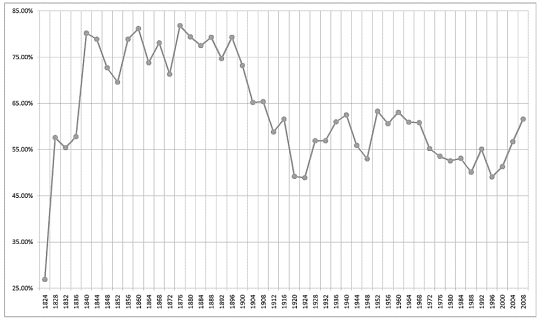
While all 50 states had secret balloting by the 1896 election, there was still the matter of the Populist Party to deal with. Once again, co-optation was the name of the game. In a normal election season, the Democrats and Republicans might nominate two candidates who varied only in a few views limited to divisions among the upper class. In this case though, Democrats decided to nominate William Jennings Bryan as candidate. Bryan supported numerous Populist platforms in rhetoric and was a skilled orator. His Cross of Gold speech was so powerful that delegates enthusiastically lifted him up and carried him out on their backs. His anti-gold standard plank won him the backing of the Populist Party, which felt that it couldn’t nominate another candidate and split the vote. Much of America’s rich rallied around Bryan’s opponent, William McKinley, feeling that Bryan had gone too far in his quest for working class votes and offended them greatly. They poured in money, giving McKinley’s campaign the dubious distinction of being the most expensive in American history, and giving his campaign manager, Mark Hanna, the chance to pull out all sorts of new dirty tricks (famous Hanna quote: “There are two things that are important in politics. The first is money and I can’t remember what the second one is.”) Hanna’s propaganda implied that Bryan was a revolutionary who would destroy the economy. But Bryan himself was still supported by numerous American businessmen, including Randolph Hearst, Thomas Kearns, and Oliver Belmont. When Bryan lost, the Populist Party was demoralized, and its supporters largely exited the political scene, convinced there was nothing that voting offered them. The Populist Party went into a tailspin and contested its last election in 1908. Anti-Third Party restrictions were slowly ramped up, with the worst coming between the 1930s and 1960s as a response to the renewed activism of the Great Depression. American electoral turnout reached a high point in 1896, at 79.3%, with a labour-based third party offering most American voters the feeling of a real political contest with candidates that represented their interests:
How successful was the early 20th century attempt to purge America of Germanism?
Well, successful enough that to this day historians can get away with saying that American federalism must have been inspired by the Iroquois Confederacy, confident that their audience won’t stop to note that the international statesmen and men of letters who defeated the Elector of Hanover to establish a compact of sovereign states loosely led by a supreme executive selected by electors were probably at least aware of the Holy Roman Empire.
It’s interesting to see an upstart political movement take power after a long period of struggle, because there’s often a pressure to use the victory as a chance to vindicate the superiority of doctrines that worked out for an insurgency, or to address the complaints that originally inspired the movement in a bygone era.
Like, the founders of Israel were big on kibbutzes because one of the oldest ambitions of the tendencies that congealed as Zionism (many shared with Soviet communism) had been “stick it in the eye of the Tsar and Polish magnates by proving it’s totally possible to do premechanized folwark manorial agriculture without the institution of serfdom”.
And then as time went on they were abandoned because the people actually living in Israel in the mid-20th century looked around and said “wait, what?”
I’m at a low point on my emotional/energetic cycle, and on top of that my laptop caught some battery issues and keeps restarting during startup, leaving me with this iffy reblog-as-link mobile app.
Soooo, not much posting lately. I’ve got ideas kicking around for two American history effortposts though, drop a note if there’s one you’d like me to prioritize.
They are:
1) “Holy Shit You Guys The Post Office Was Important”
(When people say the federal government used to be just the post office and the military that’s close enough to true, but it’s one of those “all you have is a hammer” situations - the Post Office was why we have vertically integrated political parties [on several accounts], it was key to creating a coherent American literature and culture, it was the first domestic spy agency, it was long a battlefield of cultural subversion and countersubversion, it was how the government first started to establish control over railroads, with Rural Free Delivery and parcel post, Sears & Roebuck became the Amazon of its day. Actually, a better title might be “The Post Office: the Internet of its Day.”)
2) “Okay Seriously Who *Did* Build Roads When The State Didn’t?”
(Local roads developed organically [under government-enforced common law] but were inevitably placed under government control when maintenance ran into free-rider issues. Medium distance point-to-point roads could be built privately [though often with use of eminent domain or other state support] but the owners often actively resisted connecting them to any useful network, and in any case they tended to degrade for lack of maintenance and fall into state hands. [Even with tolls such roads usually lost money on operations, their profitability coming by way of increasing the value their builders’ newly accessible landholdings.] Long-distance roads have always been state projects, but that’s kinda minor since roads as a method of long-distance travel and transport are actually a pretty recent innovation in America.)
This past year, fourteen cyclists died on the streets of London.
With the dangerous city roads in mind, British architect Norman Foster has unveiled Skycycle: a network of car-free bicycle paths elevated above London’s railways.
If this concept is approved, it could actually appear in 20 years.
great idea i bet they’re definitely going to run elevated bicycle paths into working class neighborhoods where ppl actually ride bikes b/c they can’t afford cars and not just run elevated bicycle paths into wealthy districts where ppl only ride bikes for fun because it’s not like urban cycling promotion campaigns have already been largely directed at making biking safer and easier for the wealthy while leaving it just as dangerous and inconvenient for the ppl who are most reliant on urban cycling LOLLLLLLLLLLLLLLLLLLLLLLLLLLLLLLLLLLLLLLLLLLLLL
Los Angeles had one of these more than a century ago.
You know, paved roads took off in America in the late 19th century in response to the desires of well-off urban bicyclists who liked to take pleasure trips into the countryside. It was called the “good roads movement”.
The “safety” (chain-driven) bicycle had just gotten invented and bicycling boomed big. Armies were considering swapping bicycles for horses in their mounted infantry units. The urban middle classes took to them as a means of personal transportation that didn’t require feed and stabling. The problem with both was that unpaved dirt roads were difficult and damaging at the best, outright impassable at the worst.
And so there was a big drive to pave country roads. A lot of the activists were gentry youths who were into the pastoral-twee Romantic esthetic (but not enough to, you know, actually abandon economic power centers and go back to the land) and appreciated pleasure riding through the countryside.
It was pitched in pamphlets and traveling presentations to local farmers (America was overwhelmingly agricultural at the time) as for their benefit - no more rutted roads that turned to quagmires in rainy season, breaking cart wheels and impeding access to markets.
Which, fair enough. Ill-maintained dirt roads were a bitch, but on the other hand those farmers were the ones who elected the road commissions, and didn’t care for the taxes or corvee labor necessary to maintain them.
The corvee labor thing was effectively experienced by landowners as a cash tax, as they would hire others to discharge their obligation. This took advantage of the vast pool of unlanded seasonal labor an agrarian economy requires at planting and harvest time. In summers these vagabonds would tend to wander the countryside spending their wages and raising hell. Summer road work was a two-birds-one-stone solution, arguably preferable to the other traditional solution of hiring them as soldiers and starting minor summer border wars.
(Compare the ability to hire replacements in the Civil War draft, compare also the way that my father worked on a 1950s road crew that was effectively a summer job program for high school and college boys.)
And so if they didn’t want to pay for literally dirt-tier technology, fuck if they wanted to pay for this. So the appeals often included offers of annexation into the nearby cities, who would bear the burden of paving (and other utilities) on their broader tax-bases. In return for city politicians attaching their names to the project and expecting reliable votes in return.
And another force paying for all those pamphlets and whatnot was land speculators and developers. What suburbs existed had been connected to the urban core by trains, trams or omnibuses. The high capital cost of which limited routes and stops, which limited how much land could be profitably developed to that within walking distance of a line or stop, promoting dense village-style development. Paved roads and bicycles opened the way for lower-density diffusional development.
An ironic thing is that just as the momentum built for this, the split-log drag was invented, which was an incredibly simple device that made regrading and maintaining dirt roads much much easier.
So the roads were paved, the bikes went out, the suburbs got built, eventually the bikes became motorcycles, eventually the motorcycles became automobiles. And suburban sprawl, the abandonment of collective transportation, and the paving of paradise began about a century and a half ago, under a coalition of machine politicians, profit-chasing land barons, and twee young fixie-riding bourgeois bicycle activists.
At a breakfast event Wednesday, Jan. 14 in New Hampshire, the Kentucky Republican and potential presidential candidate spoke out against a public safety net that catches too many people who don’t need help.
…
…
…
I’m not sure why I was tagged in this, but coincidentally I have a response.
Rand Paul is a doctor. Ron Paul is a doctor. The entire Paul family is loaded with doctors and very familiar with medical practice. They’re coming from a place of experience, but it’s experience very heavily filtered by their specialty and their preconceptions.
…
So my impression of the disability system is that it simultaneously lets through lots of people who don’t deserve it while rejecting the people who really need it. It seems to be a clear case of the joint over- and under-diagnosis I’ve written about.
I don’t know enough to know whether the system is reformable, but I’m pretty sure burning it to the ground would hurt way more than it helps. This is part of why I support a basic income guarantee. Give it to everyone, no fuss, no need to spin a web of lies, no need for a two-year vetting process. That would be a principled libertarian solution Rand Paul should be able to get behind.
Disability insurance and workers’ comp fraud is, even more than unfaithful spouses, the bread and butter of private eyes. Because hiring a guy at $50 an hour to sit outside people’s house for days hoping to take a picture of someone claiming they’re in too much pain to perform remunerative work puttering around doing home improvement pays off.
You know what federal initiatives came before and served as a precedent for Social Security*? Railroad retirement and disability. America used to run on rails, and even in the Lochner era they could be put across as a matter of interstate commerce.
And how’s that going? Well, in the absence of any effort to root out fraud, a few years ago it turned out the Long Island Rail Road was running a 97% reported disability rate.
(* the other obvious precedent would be wartime soldiers’ pensions, which used to be a major line item in the federal budget. Like, over and above the major current VA and &tc. share of the federal budget.
You know, on severaldifferentoccasions American war veterans have laid siege to the national capital demanding money.
The postwar ejection of women from industrial work, the G.I. Bill, and to an extent the development of the Cold War military-industrial complex came to forestall another go-round. It was not immediately clear that the economy wouldn’t return to Depression, only with the whole population primed for war and trained to think of the USSR as a friend.
Remember, disgruntled veterans were the core of all the European interwar revolutions, socialist AND fascist. So, best to keep them occupied. And it worked! It was a whole two and a half decadesbefore a mob with veterans at its core laid siege to the capital demanding surrender in a foreign war.)
Also, I am flinching in anticipation of when the New York Post discovers this blue website, connects the dots between tumblr-sympathetic but otherwise unpopular themes, and runs a headline reading “Communist Trannies Are Encouraging Your Kids to Run Away, Cut Off Their Dicks with Obamacare, Become Whores, and Claim Disability Because Working Makes Them Sad”.
“It’s as if “sex-positivity” has come to mean “you must instantly and without criticism accept others’ sexual preferences and choices.” When exactly did sex become the one topic that’s above reproach among feminists?”
There’s a canonical answer - 1992, the election of Bill Clinton. The realization that while the radfem-cultural conservative alliance that followed from the political logic of the anti-sex side of the Sex Wars had produced some soundandfury but no lasting impact, the further realization in the wake of the Anita Hill hearings that the alliance had always been purely instrumental, and if a campaign that was sorta branded around “culture war” couldn’t win there wasn’t even any point to that.
Meanwhile the pro-sex side and its alliance with cultural liberalism, the residue of midcentury civil libertarianism, liberal capitalist media, and gay men (AIDS patients for the sympathy, rich suits for the power - Clinton was the HRC’s first endorsement) could claim a victory - keep in mind that after 12 years of a Republican executive, electing a Democrat - any Democrat - as president was considered a major upset.
I mean, “claim a victory” in the same sense that Boston barstoolers claim a victory when the Pats win, and “for feminism” in the sense of… feministicish promises, most explicitly of (intentionally) appointing justices who would uphold Roe v. Wade.
I mean it’s not like the anti-sex radfems went away after this, but that at this point they were no longer any threat to matter and could be safely ignored, tossed down the memory hole just in time for third-wave funfeminism to be incorporated into the civic catechism.
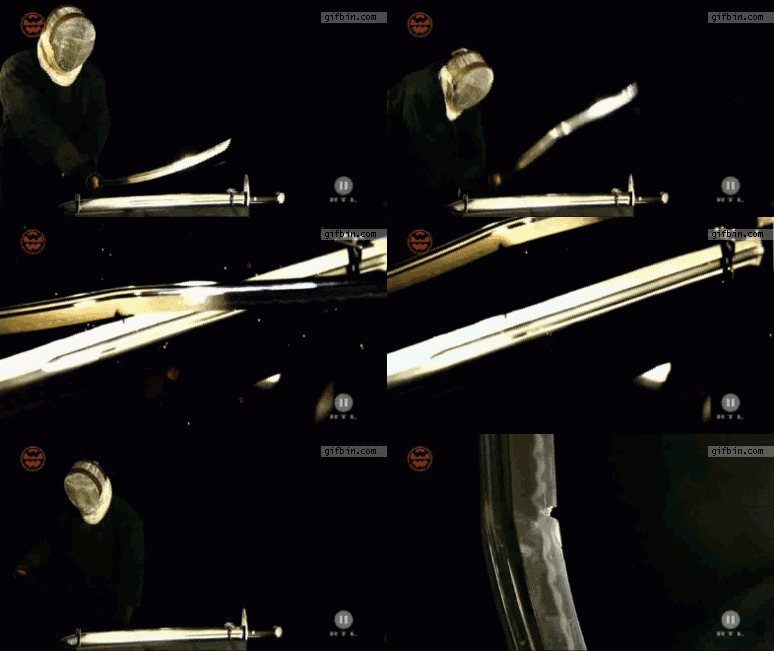
Wait, why is this being tested edge on edge? Edge on side is more common.
It’s actually not. When i was learning sword, the first thing you learn is to catch the enemy’s blade with the edge of your own. When you catch with the flat, the angle costs your wrist a lot of strength. It’s all physics. Edge-on-edge actually is the appropriate way to parry. It nicks up your blade, yes, but better the blade than your body.
True. The intensive smithing process that produces katanas is mostly about compensating for the shitty iron sources, in battle samurai were cavalry archers or maybe heavy cavalry that charged with polearms, the image of samurai as swordfighters and duelists (and poets, and brave facers-of-death) mostly comes from the Edo period, a time of peace when the warrior types tried to justify their social position through increasingly ridiculous romantic gestures.
Like, this is a pretty common pattern when an age of war ends, the warriors turning their energy to petty bullshit, seeing who can put together the most absurdly expensive/expensively absurd outfit, who can tell the best epic tale about how awesome they are and think up the cleverest way to throw poetic shade at each other, all starting feuds and killing each other over dumb teenage-boy honor shit.
Like, think about the French nobility at Versailles. Or wealthy Italian families after Condottieri stopped mattering in battle - that’s the setting of Romeo & Juliet, where the Montagues and Capulets are all throwing costume balls and walking around with swords and figuring out cute ways to double-entendre insult each other and killing and dying in the street and the real power lies with the Prince who is like “Oh my GOD you guys, stop it, you’re bothering the merchants.” That’s a lot closer to what samurai swordsmen were like.
Hell, think about the way the actual gang wars of the crack era to capture corners (that is, productive territory) gave way to gangsta rap, diss tracks, and silly bling.
It was the priest as an idler and destroyer of the household, who gained ascendancy over women through the confessional, that the soldiers and leaders attacked more than the priest as magician or upholder of the old order. The revolutionaire was no theologian. even if he talked of superstition, and the real reason for his prejudice against the confessional was the power he felt it gave the priest over his womenfolk. Such prejudices at times came near to misogyny and there are many examples of this in the expressions of the san-culottes, the commissairs and the representants en mission. This anti-feminism was fortified by the frequently furious opposition from the village women which they encountered on their iconoclastic missions-more than one revolutionaire had to take to their legs to escape their fury. But most of all the soldiers held a grudge against women because of the way they let themselves be seduced by the lying and lazy priests. At Bec du Tarn, Huegny, a Toulouse commissaire civil ‘thundered against fanaticism, and in particular against women, who were more easily seduced by it; he said that the Revolution had been made by men, and women should not be allowed to make it backtrack…” Dartigoeyte, representant en mission in the Gers, gave vent to similar feelings in his tirade against the devotes of Mirande: “And you, you bloody bitches, you are their whores [the priests’], particularly those who attend their bloody masses and listen to their mumbo jumbo,’ but he also had a word for the “jean-foutres of husbands who are naive enough to accompany them [and who] simply show what cuckolds they are by doing so.’
The standard critique of steampunk fashion is that it takes 19th century style and just slaps gratuitous gears on it.
But the interesting thing is that 19th century styles were spangled with gratuitous cutting-edge industrial products! European mechanization first took off with the (important!) textile industry, and fashion of the age took clothes and just slapped newly accessible lace, ribbons, and ruffles everywhere.
Ironically given all the shit they catch for pushing a purely bourgeois vision of the Industrial Age, the rivets-and-goggles set verge on Soviet in fetishizing industrialization in terms of “hard” heavy industry to the exclusion of “soft” consumer goods.
Did you know many African countries continue to pay colonial tax to France since their independence till today!
…France accepted only an “independence on paper” for his colonies, but signed binding “Cooperation Accords”, detailing the nature of their relations with France, in particular ties to France colonial currency (the Franc), France educational system, military and commercial preferences.
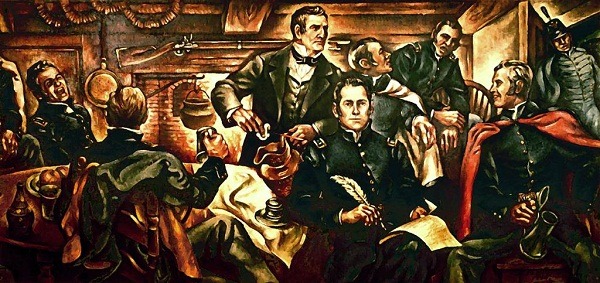
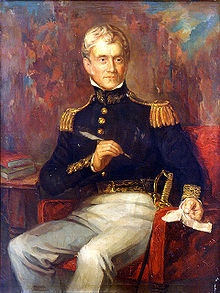
In West Point’s early years the academy could hardly be called a prestigious college. It was practically a remote army outpost which doubled as an educational institution for only ten cadets. There was no real curriculum, few rules, and it was run with an “anything goes” attitude. This all changed after the War of 1812, when it was realized that the United States needed more highly trained and educated officers. in the 1820’s Congress massively expanded the academy, and placed it under the command of Col. Sylvanus Thayer. Now known as “The Father of West Point”, Thayer would instill professionalism and military discipline among the cadets. Among the many rules he set on the cadets was a prohibition on alcohol, thus making West Point a dry campus.
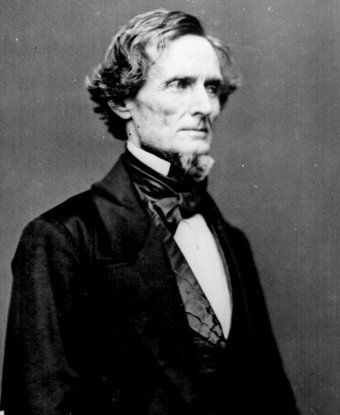
Today many colleges and universities have similar rules, and the cadets of West Point disobeyed those rules just like students do today. On Christmas Eve of 1826 the cadets decided that they wanted a bit of whiskey in their eggnog to celebrate the holidays. They turned to Cadet Jefferson Davis, future President of the Confederate States. Davis had contacts with the local saloons. He didn’t smuggle in a little bit of whiskey, he smuggled in four gallons of whiskey. Within a few hours, the North Barracks were awash in drunken parties and revelry.
The two officers on duty, Captain Ethan Allen Hitchcock and Lt. William A. Thornton tried to break up the wild parties, in the course of which they were threatened with swords, bayonets, and knives. Thornton was hit over the head with a wooden club while a drunken cadet pulled a pistol on Hitchcock and shot at him. Soon the situation broke down into a pitched riot a drunken cadets smashed glass windows, threw bedding and other materials out of the windows, broke furniture, ripped the banisters off steps, and generally all around trashed the place. There was a call to summon West Points garrison of regular Army troops to quell the riots, but in the end it was decided that it would be best to let the cadets sober up.
In the aftermath of the riots, 19 cadets were expelled from West Point. Many others were severely punished, among them Jefferson Davis and future Confederate General Robert E. Lee.
Sovereign Polities Wholly Incorporated into the Territory of the United States of America* State of New Hampshire (1781) Commonwealth of Massachusetts (1781) Colony of Rhode Island and Providence Plantations (1781) Colony of Connecticut (1781) State of New York (1781) Commonwealth of Pennsylvania (1781) State of New Jersey (1781) The Delaware State (1781) State of Maryland (1781) Commonwealth of Virginia (1781) State of North Carolina (1781) State of South Carolina (1781) State of Georgia (1781) State of Vermont (1791) Republic of West Florida (1810) Republic of Indian Stream (1842) Republic of Texas (1845) California Republic (1846) Oregon Territory (1849) Confederate States of America (1865) Republic of Hawaii (1898) Empire of Japan (1947)
Sovereign Polities Formed from the Territory of the United States of America Confederate States of America (1861) Republic of Cuba (1902) Republic of the Philippines (1946) Republic of Korea (1948) Federal Republic of Germany (1949) State of Japan (1952) Federated States of Micronesia (1979) Republic of the Marshall Islands (1986) Republic of Palau (1994)
* in keeping with American tradition, we will politely gesture towards and subsequently ignore the notion of Amerindian tribes and Samoan chieftaincies as sovereign polities.