shrine to the prophet of americana

#history (385 posts)

The Wayne Republican Tradition

The Wayne Republican Tradition

When you talk about “Rockefeller Republicans”, I don’t know how many people today even have an idea of who the Rockefeller family were, I’m not sure how much information that name carries.

So, uh, think of the Wayne family. Bruce and his late parents. “Wayne Republicans”. Basically the same thing - urban-based dreams of social uplift through monumental programs overseen by men born into more money than God. Vague social liberalism that disdains bourgeois morality from an aristocratic direction, anti-corruption, pro-Establishment to the extent the Police Commissioner always takes their calls.

That was a big part of the Republicans during the post-War period - the conservatives were just one faction, and often a losing one. Wasn’t just titanic heirs but small businessmen (maybe equivalent city fathers to their small towns, though) and professionals - the Republicans were the party of the postgraduate educated.

The Republicans were opposed to national health care all along, Ronald Reagan dropped a spoken word album about it in 1961. Part of that was green eyeshade deficit hawkery (that was a big part of their brand, the later pivot away from this to tax cutting was understood through the framework of “Two Santa Claus Theory”, which is an actual and very important thing in postwar American politics, “Two Santa Claus Theory”). And part of it was “grr, socialism boo”. But really, a lot of it wasn’t in resistance to what this would mean for taxpayers, or patients, or even the country, so much as doctors, who were a big Republican constituency.

Because doctors were professionals – by guild understandings that predated the United States, they owned their own practices, regulated and judged each other, were granted a degree of authority over those who came to them needing something important they were not qualified to provide themselves. They resisted the thought of themselves as merchants, and loathed the thought of themselves as employees or civil servants.

A lot of the “disappointingly moderate” Republican-appointed Supreme Court justices over the years actually fit fine with the Wayne Republican tradition. Sandra Day O’Connor, first woman on the court, put there as a payoff from Reagan to the moderate faction - the Republicans arguably the feminist party, albeit a “Lean In” type. After all, if you saw a woman in an executive role before the ‘70s, it was probably in the Daughters of the American Revolution or some society gala-type charity NGO. And those “first woman to go to X school”, well, the families that would think to send a daughter off to law or medical school were a subset of the families that would think to send a child at all.

Hell, for a while, the Republicans were even the more abortion-friendly party. The Democrats were the Catholic party after all. The Republicans were the Protestant-as-humanistic-heritage-charity ones, the ones who eugenically spaced their three children two years apart unlike those grubby Papists, the ones with mistresses, the ones with bourgeois life courses to even be diverted from. Not to mention the doctors who cleaned up after amateur abortions or offered black-market ones themselves.

(But not like legalization was priority one, c’mon, Bruce Wayne’s dad was a surgeon, you think he doesn’t know a guy?)

Anyway this was what Goldwater (with his base of ideologues and country & western extractive industry - for most of the 20th century the white military middle-class paradise of California was an anchor of conservative Republicanism) was fighting against, what Reagan (California Über Alles) eventually defeated. The Wayne Republican tradition still stumbled along until let’s say Dole/Kemp ’96, that was the last hurrah and the ticket’s total failure to generate any enthusiasm whatsoever (two years after Newt Gingrich’s Congressional “Republican Revolution” breakthrough with conservative southern and suburban whites) heralded its end.

Well, you could maybe see the administrations of the two Bushes as an intermediate form, an attempt to graft the old money social uplift tradition to the religious base the Republicans cultivated in the 1980s in search of a sort of Christian Democracy. “Thousand Points of Light”, “Compassionate Conservatism”, New World Order and nation-building abroad, the ADA, NCLB, environmental laws and Medicare Part D at home.

But the bipartisan abandonment of Bush the Younger and the coalitional realignments through Obama and Trump seem to have rendered even this a dead end. As things stand in 2017, “progressive social programs paid for by taxation, sensitive to the economic interests of professionals and capital-holders” is thoroughly Democratic territory.

Tagged: amhist history rockefeller republicans batman kontextmaschine classic

“The Borgias” vs. “Borgia: Faith and Fear” (accuracy in historical fiction) – Ex Urbe

“The Borgias” vs. “Borgia: Faith and Fear” (accuracy in historical fiction) – Ex Urbe

bambamramfan:

Excellent blast from the past about the dilemmas in “historically accurate” fiction.

Envision a scene in which two Renaissance men are hanging out in a bar in Bologna with a prostitute. Watching this scene, I, with my professional knowledge of the place and period, notice that there are implausibly too many candles burning, way more than this pub could afford, plus what they paid for that meal is about what the landlord probably earns in a month, and the prostitute isn’t wearing the mandatory blue veil required for prostitutes by Bologna’s sumptuary laws. But if I showed it to twenty other historians they would notice other things: that style of candlestick wasn’t possible with Italian metalwork of the day, that fabric pattern was Flemish, that window wouldn’t have had curtains, that dish they’re eating is a period dish but from Genoa, not Bologna, and no Genoese cook would be in Bologna because feud bla bla bla. So much we know. But a person from the period would notice a thousand other things: that nobody made candles in that exact diameter, or they butchered animals differently so that cut of steak is the wrong shape, or no bar of the era would have been without the indispensable who-knows-what: a hat-cleaning lady, a box of kittens, a special shape of bread. All historical scenes are wrong, as wrong as a scene set now would be which had a classy couple go to a formal steakhouse with paper menus and an all-you-can-eat steak buffet. All the details are right, but the mix is wrong.
That’s a good way to put it, and moreover I agree with her on the failure modes of getting too attached to historical accuracy.

Scorcese’s a big American history fan and loves using it as material (like I say I think the natural successor is Rockstar’s open world vidya) and Gangs of New York was basically a series of “hey didja know?” Easter eggs.

Didja know that NYC was an anti-Lincoln town? Didja know that playwrights’ texts didn’t used to be so sacred and directors would insert topical material and run fix fic endings? Didja know that moral reformers would try to co-opt the demimonde of saloon prostitution towards good Christian living and the demimonde would co-opt them right back?

I did know, and I got it, and loved it. I got the ending, “aah, the point is these quirks were never so much resolved as obviated by the modernizing nationalism brought on by the Civil War!” But even I thought there wasn’t enough connective tissue to hold it all together and other people I talked to were like “what the HELL was going on”

Tagged: history gangs of new york

Unpopular opinion: Pawn Stars is actually a really good popular history show; the bits explaining and contextualizing the...

Unpopular opinion: Pawn Stars is actually a really good popular history show; the bits explaining and contextualizing the artifacts “customers” “bring in” do a good job of exploring history through material culture in a non-academic register; the other stuff is a human interest/conflict hook but it works; if you (correctly) compare it to PBS kids shows it’s got as much or more history per minute as 3-2-1 Contact had science, Where in the World is Carmen Sandiego had geography, or Sesame Street had shapes/colors/numbers/letters

Tagged: pawn stars history amhist

so I don’t really like how the Final Fantasy series got really J-poppy from X (okay 8) on, because whatever J pop culture was...

so I don’t really like how the Final Fantasy series got really J-poppy from X (okay 8) on, because whatever J pop culture was right then didn’t interest me as much as the postwar themes I’d gotten used to seeing

(this weird sunny day/elegaic loss thing that in retrospect was some transparent working-through-the-postwar shit - the Ghost Train in FFVI, Porco Rosso-era anime when it made sense for Patlabor to make a whole series about police mecha and have episodes be about the maintenance crew dealing with the summer heat and subtle longing between colleagues on the drive to an offsite conference)

and I think they’ve found a good balance with FFXV, that’s what got me going on Japanese hairstyles the other day, you notice it but it registers as a variant of something you grok.

which gets you the relief to notice the things that are like-you-could-have-been but aren’t, like the way the music titles and styles invoke this concept of Frenchness as high-status romantic

and I could point out how between Perry’s Opening of Japan and WWII the islands’ most important external contacts were German and how Europe in the Japanese imaginary is still kinda tinted by this third-hand take by way of Victorian Prussia

but I could also point out that the English word “deluxe” comes from the French de luxe and a lot of that was Industrial Age London merchants on a superlative treadmill grasping for a fancy way to say “fancy”

Which also casts light on something else - Atomic Age marketing conventions, where spaceships and atoms and associated adjectives came into style for a while? What Fallout riffs on? That was a real expression of (Made in) American pride. America had until the First World War lived in Australia-style cultural shadow of other continents, to the point where “French” or “English” or “Continental”, basically “not American” was a common idiom for “quality”.

In a very real sense, “We fucking nuked Hiroshima” surpassed “We’ve got some nice paintings in Paris” as the symbol of earthly power that brands wanted to associate themselves with because people who matter wanted to associate their personalities with, that was the 1950s.

Eventually France matched Trinity with Reggane and Bikini with the bikini

Tagged: history amhist

So Quakers consider themselves prohibited from doing evil (like going to war) but not compelled to prevent others from doing...

So Quakers consider themselves prohibited from doing evil (like going to war) but not compelled to prevent others from doing evil (as pacifists, how would they?) and the legislative result, in colonial Pennsylvania, was a long tradition of pragmatically backing nonbelievers’ violent initiatives ON THE CONDITION that they were worded so they could have been nonviolent if they wanted and their failure to so be was no knock on the Quakers.

Like during the Revolution, Benjamin Franklin got them to make appropriations for “fire engines”, and “corn” (which at the time just meant “fine discrete grains”, cf. “peppercorn”) and used it to buy cannons and gunpowder, which everyone understood would be the result

Tagged: pennsylvania amhist history

Air Kern County, California, November 1938

back-then:

Air
Kern County, California, November 1938

Tagged: history amhist

Something I think is funny in Hearts of Irom games is how “oil rich” areas of the map are different from what they would be...

memecucker:

quoms:

memecucker:

Something I think is funny in Hearts of Irom games is how “oil rich” areas of the map are different from what they would be nowadays like Saudi Arabia is unexpectedly modest while Romania and Indonesia are some of the most oil rich regions for that time

the indonesia thing i think is because they conflate oil and rubber - virtually all the natural rubber in the world came from indonesia at the time, but i don’t think there was petroleum extraction

Indonesian oil is how Royal Dutch Shell got its start. I looked it up and pre-war Dutch East Indies amounted to 4% of international oil production which was enough to match Japanese wartime demands in addition to Dutch infrastructure in the area being fairly well established http://histclo.com/essay/war/ww2/stra/w2j-oil.html

Ironically Imperial Japan had no idea it was sitting right on top of the massive Daqing oil field in Manchuria, which contained 16 billion barrels worth of oil when it was discovered in 1959

Can you imagine the North Sea fields running through the wars, tho? Shit woulda been bananas, submarine tankers and everything.

Tagged: history

LRB · Benedict Anderson · Frameworks of Comparison

LRB · Benedict Anderson · Frameworks of Comparison

Posthumous essay from Benedict “Imagined Communities” Anderson, celebrated scholar of nationalism. Basically an intellectual autobiography, ends up with an endorsement of comparison as pedagogy - across cultures, across times, wielding the foreign to see the hidden particularities of the familiar.

I mean, endorsed, and when he puts it like that it really sounds like an old-school take on the promise of liberal arts. And when he puts it in proximity to his biography, makes you wonder if that doesn’t depend on men with the kind of Indiana Jones man-of-the-world life he had.

Tagged: benedict anderson history

Amsterdam provides a prime example of a deliberately tolerant civic elite, facing a notoriously hardline Calvinist parish clergy...

davidsevera:

Amsterdam provides a prime example of a deliberately tolerant civic elite, facing a notoriously hardline Calvinist parish clergy and determined to keep them in their place. When the Amsterdam Regents rebuilt their city hall in the 1640s and 50s, the most prominent artistic theme in the Chamber of Magistrates was the story of Moses descending from Mount Sinai with the Ten Commandments, ready to rebuke the Israelites for the idolatrous worship of the golden calf set up in his absence by Aaron. To the highly biblically literate Dutch, the message would be clear: Moses the secular magistrate knew better than Aaron the priest, who had been foolish enough to indulge the religious passions of the Children of Israel, with disastrous consequences.

The result was Europe’s first established Church where in normal times it was possible to opt in or opt out without any great penalty, even though the Reformed had a monopoly on the parish church buildings and on public worship. The States of Holland, with predictable grudging efficiency, set a lead for other provinces by paying for their pastors from consolidated public funds, mostly confiscated from the pre-Reformation Church. This gave the pastors of the province a certain independence from their parishioners, but it also made them beholden to their secular masters in a way which would not have pleased Calvin. Parish ministers right across the northern Netherlands discovered to their dismay the problem which would later become the common lot of established Churches in the modern western world: they had to provide convenient spiritual amenities like baptisms, weddings and funerals for a religiously amorphous public, while simultaneously looking after the minority of pious souls. In remote rural areas they might achieve something like a monopoly of ministry, but they were consistently hampered from doing so in the numerous towns and cities in the United Provinces.

The Church’s problem was especially revealed in its relation to that key Reformed preoccupation, discipline (chapter 14, pp. 591-600). In the Netherlands, consistory discipline became much more a matter of persuasion than in Calvinist societies like Scotland where the whole weight of community opinion could be brought to bear on an offender. Some Dutch people who initially admired the Reformed faith for its strict discipline found this lack of comprehensive authority intolerably worldly, and left their parish churches for radical sects where a more stringent community discipline could be exercised, in particular among the Mennonites. The Mennonites were at their strongest in the far north, especially in the Province of West Friesland: here their roots in the preaching of the local boy Menno Simons and their readiness to communicate like him in Frisian rather than Dutch meant that they penetrated a largely rural society more quickly than the urban-based ministry of the Calvinist ministers. It is significant that in those parts of Europe – Poland, Transylvania and the Netherlands – where it was possible to make free choices in religion, a substantial minority of the population chose radical groups: perhaps 12-14 per cent in West Friesland. And such people also cherished their intellectual independence: the Mennonites were among the most disciplined of radical groups – they took pride in that – but that did not stop many of them finding spiritual profit in the writings of David Joris, that ecstatic wayward genius who had abhorred any form of communal discipline.

Bolding mine. In the footnotes MacCulloch says “There have been estimates as high as 20-30 per cent for the northern Netherlands”.

Yeah the Low Countries were the first polities to be totally dominated by modernity, it’s kind of a shame they don’t have a place in our political imagination. I know back before the election when NRx was still relevant I thought the Compromise of Nobles and the Dutch Revolt were worth more attention as a rare example of “elite rule” and “national identity” pulling in the same direction

Tagged: history

For an economic crisis (crisis? it’s at least cris-ish) that propagated by way of household debt and first manifested in...

fnord888:

slatestarscratchpad:

kontextmaschine:

For an economic crisis (crisis? it’s at least cris-ish) that propagated by way of household debt and first manifested in evictions and foreclosures, it’s really striking - if you’ve got a background in American history - how little pushback there’s been at the county level.

Nationwide debt crises used to happen regularly, and there were inevitably a few sheriffs or judges who would refuse to go along with the liquidation, creating a point of media focus and kicking the issue up to the state level, where governors and legislatures would usually compromise to some degree (especially if the lower officials had conveniently timed their resistance to match election cycles).

Which, if you’ve ever deplored the effects of “politicizing justice” and wonder why anyone ever thought it was a good idea to subject judges and law enforcement officials to electoral pressure, there you go.

Of course there was also the option of getting a few people with rifles, besieging courthouses and blockading auctions, but that died out even earlier - mind the Grapes of Wrath “Then who do we shoot?” bit - as railroads both enabled rural delivery and thus finance beyond local store credit and the one-branch bank, and also made it practical to send nonlocal militia troops into the boonies (first in coal and iron territory, back before the Rust Belt rusted, and then further west).

Everyone knows that after WWII the federal government grew at the expense of state power, fewer appreciate just how much county power - which used to be pretty much the face of Government - receded. Today movements that aim at its restoration, like Posse Comitatus and Sovereign Citizens, are marginal among the marginal.

I blame the telegraph, for enabling realtime communication across distance and thus obviating the necessity of feudal hierarchies. A court, after all, comes from the term for a retinue of power with identifiable human faces. There was always power, but it used to be close enough and personal enough you could make a CHA check against it. (Or Intimidate, which is STR, iirc). Plus there’s always the tendency to go native.

(The most functional method of countering this tendency was requiring courtiers to spend about half their time accumulating power at their own courts in the field and half spending it down at their liege’s court - this was arrived at independently [as far as I know] by the Japanese bakufu, the French royalty, and the American DoD, where high ranking officers rotate back and forth from field command to the Pentagon. Probably parallels in pre-computerized large firms doing rotations between home and branch offices, but I think that was derived from DoD. Well, DoW, back then.)

Histories of the New Deal often acknowledge the federalization of power but then account for the TVA, rural electrification, Rural Telephone Service, etc. either as the political cost paid for that power, or as something that centralized power made possible, when they were in fact constitutive of that power.

Is it okay link to some of this stuff?

Is there anything to this other than wild speculation? I’ll note, off the top of my head, that use of non-local troops in rural areas goes back to literally George Washington.

Okay when I first saw this late last night I thought this was on top of @slatestarscratchpad asking me for links. I’m not an academic for reasons that include not having to footnote everything I say with proof that someone else said it first, but skepticism is reasonable, I get asks from time to time requesting more background on local vs. centralized power in American history, so it couldn’t hurt to dig some up, especially if it’s going to get linked around.

A lot of this stuff I think I first picked up in lectures by Stuart Blumin. He was a respected academic historian and I trust him. Though like I said you could pick up the influence of EP Thompson, whose thing was finding a “useful history” of popular resistance in scattered acts that might otherwise be read as meaningless anomaly, so judgement call there. Also means I didn’t have ready citations in hand, but even without academic database subscriptions a day of googling turned up some decent traces.

Before everything else to snap back at fnord -

Yeah, George Washington marched a militia into the sticks to suppress the Whiskey Rebellion, and it was a goddamn nightmare.

Militia will defend their own land but aren’t enthusiastic about long-term marching against abstract threats, so raising the army almost set off more revolts. In the end the men they got were a mixture of human detritus and comfortable toffs on vanity trips, and they set off in ragged order, squabbling and looting (nicknamed “The Watermelon Army”) and deserting in scores all the way.

In fairness that’s normal for pre-Napoleonic armies, but still, marching a militia 200 miles with no combat required the personal attention and charisma of the sitting President/war hero/national founder just to operate at “normal fiasco” levels.

Okay. Then, on sheriff’s resistance, first apparently that’s still a thing, getting stuff on Tom Dart of Cook County (Chicago), IL back in 2008, so. Honestly, if my sheriff or local judge did something like this I’m not really sure what channel it’d reach me by, so huh.

Let’s see, going back, Richard Hongisto, the radical San Francisco sheriff who wore a badge with a peace sign and was jailed in 1977 for refusing to evict …in political alliance with Jim “Kool-Aid” Jones? Ha! I did not know that.

Going further back gets even harder to Google but these Tennessee statutes dating from 1858 (after the Panic of 1857) laying out punishments for sheriffs who refuse to conduct evictions are suggestive enough I’m gonna consider the tradition established.

On judicial resistance it’s tough because “judge makes ruling, is overruled” doesn’t leave bright traces as a break from the norm. A lot of things seem to point back to a 1943 article, Skilton, “Developments in Mortgage Law and Practice” that might (or might not, I dunno, paywalled) contain threads to be pulled, but for now I’d say look at these Massachusetts Supreme Judicial Court decisions.

Notice two details about that session linked - first, this was from 1821, in the aftermath of the Panic of 1819, America’s first major economic disruption that led to its first major debt crisis. Second, that this September session is sitting in Lenox, at the western edge of Massachusetts, and hearing cases appealed from the region.

(This was a way that local county independence was circumscribed in a preindustrial era, a traveling court of prominent judges would make regular circuits into the backcountry to review the local judgements. Lenox to Boston is 131 miles on modern roads.)

Inland farming areas like Western Massachusetts were exactly where the debt crisis was most severe, the inability to turn over debts and thus demand for repayment in hard currency passing down from coastal importers to local merchants to fall on farmers with no capital but their land.

And here you see exactly what I described - local lawyers and judges working up lines of logic by which debtors are granted some relief from their obligation, thus “kicking up” the matter to the state level. Even if these are all overturned in favor of creditors, filling up the docket impresses the issue upon state elites and requires some expenditure of resources and political capital to address - many states responded to the Panic of 1819 with “mortgage redemption” laws giving debtors the opportunity to reclaim their land even after foreclosure.

Another thing, I’m not a lawyer but an interested layman and one thing I notice about these decisions is that in contrast with modern statutory interpretations, they turn on *awfully* distant abstractions of common law.

Which, yeah, in the 19th century people were still struggling to make up after-the-fact justifications by which common law - the accumulated mass of judicial tradition and judgement - represented a coherent and integrated whole and law was a more wide-open field.

Here’s a report from a commission convened by the Governor of Massachusetts about a decade later that diplomatically concludes “maybe we should codify the central bits of this common law, to make courts more smooth and regular”. This was a trend that continued on - the rationalizing Restatements of the Law in the 1920s, that were part of the same professionalizing trend that favored (often state-) law schooling over “reading for the bar”, the Uniform Codes that aimed to homogenize law nationwide.

Robert H. Jackson, the last Supreme Court Justice to not attend law school, eulogized the old ways as a source of charismatic “first principles” rural county power here.

(This means that when Freeman types pitch “the common law” as an American foundation that’s been lost, they’re not wrong. And when they depict “the common law” as “tortuous fever-dream legal logic that affirms the protection of rural nobodies from central power and moneyed interests”, well, they’re not wrong.)

On mob resistance against debt collection - well, that goes at least back to Shays’ Rebellion, the big outbreak since would be the farmland rebellions of the 1930s. Most striking example perhaps in Iowa, where farmers blockaded roads, backed “penny auctions” where the threat of mob violence allowed foreclosed properties to be bought at minimum bid and returned to debtors, and ultimately threatening a judge not to conduct foreclosures (as in, he was dragged from his courtroom and out of town with a noose around his neck).

Now, martial law was declared in response, but note the details in that story - National Guard troops were dispatched from Sheldon and Sioux City. Those are about 30 miles from Le Mars - far enough to not have local connections - but 200 miles from the capitol of Des Moines, which remember is 2/3 the (admittedly, mountain-cleaved) distance George Washington himself struggled to project enough power to suppress insurrection.

But the governor received word of the events by telephone, ordered troops mobilized and dispatched presumably the same way, and sent a commanding officer by airplane. That’s *exactly* what I’m talking about how industrial technologies enabled government control across greater distance.

Finally, as desert I want to point you to this account of the Jackson County Rebellion, which is kind of a mix of all three - mob, sheriff, and judges’ resistance (see page 42 on the earlier populist victory of direct judicial elections, which enabled later “rebellion”) combined with the long Oregon tradition of batshit political violence you’ve never heard of, like the Portland mob, or Vigilantes, or that time in 1984 when a cult that took over a town tried to take over the county by infecting 750 people with a bioterror attack.

Tagged: amhist history

humanities me: the rise of the modern state is imbricated with the violent imposition of a kind of instrumental rationality...

humanities me: the rise of the modern state is imbricated with the violent imposition of a kind of instrumental rationality favorable to capitalist development, which seeks to transform local knowledge into bureaucratically-legible and controllable forms; which blithely and zoologically enumerates juridical units together by their numbers of Jews with and without civil rights, cattle, unmarried women, etc, and this is bad because quantitative social science me: holy shit check out this bomb ass dataset of Prussian counties (1812) by Jews with and without civil rights, cattle, unmarried women,

Tagged: history

Kickstarter to let me run around in a WWI uniform and kinkshame people

argumate:

davidsevera:

argumate:

thathopeyetlives:

lord-kitschener:

Kickstarter to let me run around in a WWI uniform and kinkshame people

Wasn’t there that guy who dressed up as a hussar, charged in on a horse, and cut the ribbon with his saber for some opening ceremony of some kind, totally upstaging the planned events?

opening of the Sydney Harbour Bridge, dude on a horse charged in and cut the ribbon, after which he was arrested and it was replaced and cut again

Haha, he was a member of a right wing paramilitary group, but he had to borrow his horse from a little girl.

it’s the little details that bring the magic

Tagged: straya history

@wirehead-wannabe said What’s the deal with L.A. then? LA has no natural harbor, it started out as an inland nowheresville,...

@wirehead-wannabe said What’s the deal with L.A. then?

LA has no natural harbor, it started out as an inland nowheresville, founded as a feudal agricultural settlement by the seasonal Los Angeles River feeding the San Fernando Mission at the northern mouth of the valley. San Diego was the major city of the region.

Eventually it came time to build a southern transcontinental (“Southern Pacific”) railroad route, with San Diego as the obvious western terminus but San Francisco had issues.

San Francisco, swollen by the Gold Rush, terminus of the first transcontinental route, was the dominant power in California and didn’t want a rival, pulled enough strings to redirect to LA.

LA built an artificial breakwater and a port down by San Pedro several miles south of the city, before that they used absurdly long-ass piers off the western coast around Malibu and Santa Monica.

Then narratively unrelated to any of this there was oil discovered in the hills, which generated capital and drew Eastern money, Pasadena became the west coast WASP capital, or at least Palm Beach-equivalent. LA became self-sustaining.

Then the movie industry moved there for the weather and distance from Thomas Edison’s IP-enforcing goons

Then during WWI the aircraft industry got big because there was infrastructure and a population of workers in coastal shipping range of the NorCal/Oregon lumber industry, but WITHOUT SF/Seattle-style labor radical tendencies

Then during WWII that got even bigger and the US realized it needed to build up its Pacific (Japan- and Russia-facing) coast, which was honestly still frontier at that point

And the rest is history

Tagged: amhist geography los angeles history

One thing looking through history it’s striking how many of the main characters were at some point sentenced to death - and...

kontextmaschine:

One thing looking through history it’s striking how many of the main characters were at some point sentenced to death - and we’re not talking bullshit folk crimes but like, “making a pretty serious attempt to overthrow the government” or “assassinating someone important”, and then had the sentence lifted/commuted/pardoned/overturned/reprieved/amnestied.

Maybe that just means “leaders of powerful movements will get traded as bargaining chips”.

Before film and the Cold War they coulda just hung Mandela.

(I remember the ‘90s, how the great Palestinian and Irish propaganda gently glide-pathed to shit after the USSR fell, Gerry Adams got the message but Arafat had a good run)

Tagged: history

One thing looking through history it’s striking how many of the main characters were at some point sentenced to death - and...

One thing looking through history it’s striking how many of the main characters were at some point sentenced to death - and we’re not talking bullshit folk crimes but like, “making a pretty serious attempt to overthrow the government” or “assassinating someone important”, and then had the sentence lifted/commuted/pardoned/overturned/reprieved/amnestied.

Tagged: history

The End of Christendom by Eamon Duffy | Articles | First Things

The End of Christendom by Eamon Duffy | Articles | First Things
Reformations: The Early Modern World, 1450–1650
by carlos m. n. eire

A worthwhile overview of a new survey of the Reformation

Tagged: history kontextmaschine does the bible

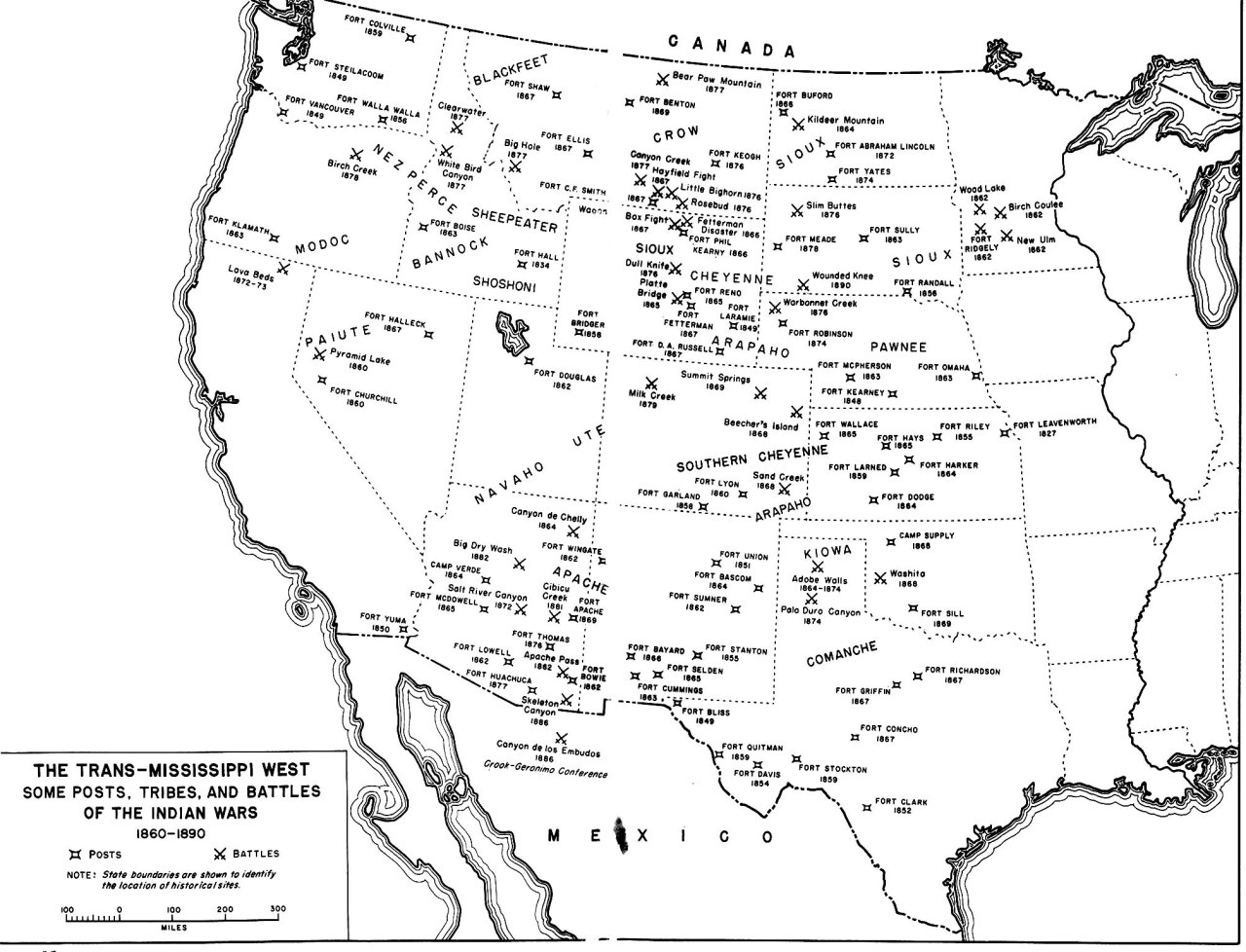
US Army historical map of the so-called Indian Wars West of the Mississippi from 1860 to 1890.

mapsontheweb:

US Army historical map of the so-called Indian Wars West of the Mississippi from 1860 to 1890.

Tagged: amhist history

Why did Denmark win a war alone against Prussia, Schlesweg-Holstein, and many other Germans with only a few norwegian/swedish...

Anonymous asked: Why did Denmark win a war alone against Prussia, Schlesweg-Holstein, and many other Germans with only a few norwegian/swedish volunteers to assist them in the first Schlesweg war?

This *really* isn’t something I know enough for confident proclamations, but I can toss out some factors:

- Prussia was doing a lot of the heavy lifting of suppressing the revolutions of 1848, and could see what would eventually be the Austro-Prussian war looming on the horizon

- The German Confederation wasn’t very good at marshaling forces under unitary command, not least because there was competition for leadership between Prussia and Austria

- Denmark in contrast coopted its liberal revolution pretty smoothly and entered the fight unified and undistracted

- the Prussian leadership didn’t particularly want the war - German nationalists gave it to them as a fait accompli. With the ultimate goal of building a Prussian-led Germany, they needed to do something to retain public confidence as a vehicle for German national aspirations, but upsetting the balance of power risked drawing major powers into an alliance against them. It’s not obvious that they wanted to win, or that they’d be better off if they had.

Tagged: history

Greatest memes in US election history, and trolls? Besides 2016 and pepe, of course.

Anonymous asked: Greatest memes in US election history, and trolls? Besides 2016 and pepe, of course.

utilitymonstermash:

kontextmaschine:

Ah jeez, that would take an effortpost and this ask just ranks a shitpost.

1840′s “Log Cabin and Hard Cider”, maybe. Or just Teddy Roosevelt, man was a meme in his own right,

image
image

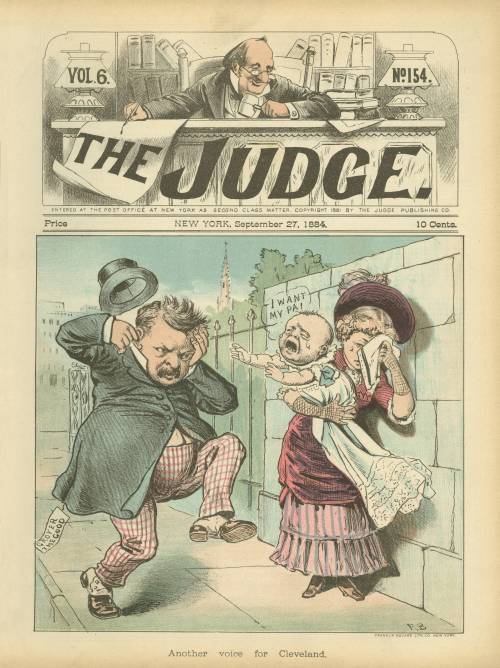
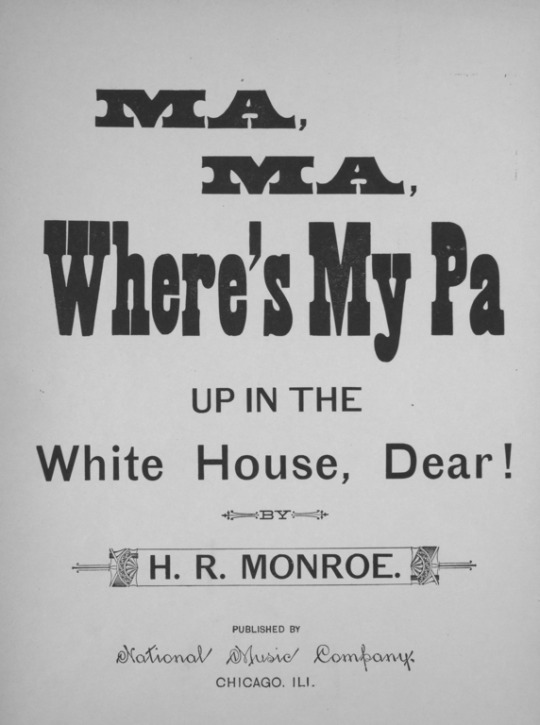
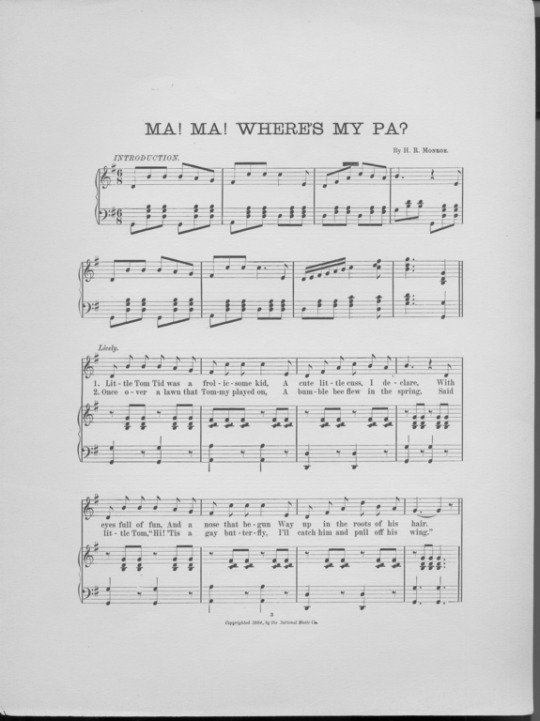
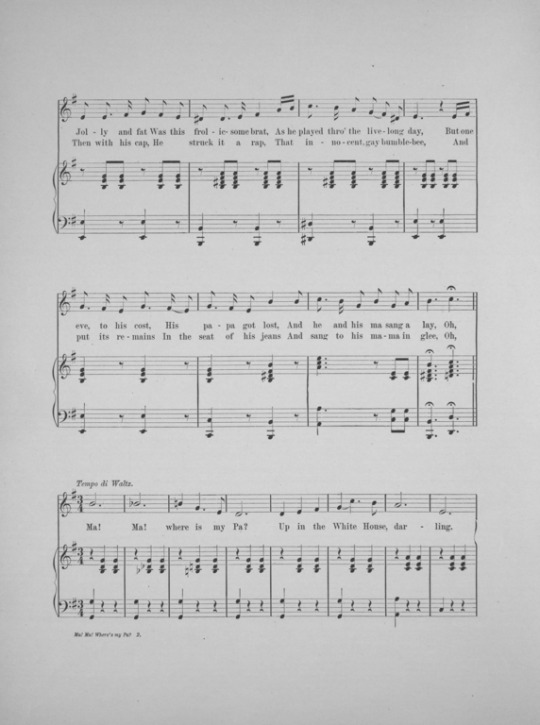
yeah that too (James Blaine against Grover Cleveland, 1884)

That was the “rum, romanism, and rebellion” election too - which like Romney’s “47 percent” came out in a privateish setting (tho from a surrogate) and was picked up by an opposition tracker who used it to hype his base

I don’t think it’s appreciated enough that the “acid, amnesty, and abortion” line against George McGovern in ‘72 was an echo of this, only with the Catholic valence reversed

and… HOLY SHIT, apparently that line came anonymously from Thomas fucking Eagleton, McGovern’s later fucking ticketmate, the one who dropped out after it came out he’d been electroshocked for being crazy, holy shit.

Tagged: amhist history

Oh my god

we-are-legion-for-we-are-taco:

Oh my god

Cats and humans have gotten along for millennia, spaying and neutering them only started to become common in the first world in the 1970s.  (Which means when Bob Barker started ending Price is Right episodes by imploring people to spay and neuter their pets, it was still novel.)

Part of it’s back when the world was a lot more agricultural, cats tended to be considered more “allied local wildlife” than family members - you’d never even think of neutering the squirrels in your trees, would you? And farmers are not squeamish about killing animals for practical reasons.

Killing surplus kittens was considered a matter of proper, pro-social animal husbandry and “tied-off sack in a pond” was a well-recognized trope for this.

Tagged: amhist history