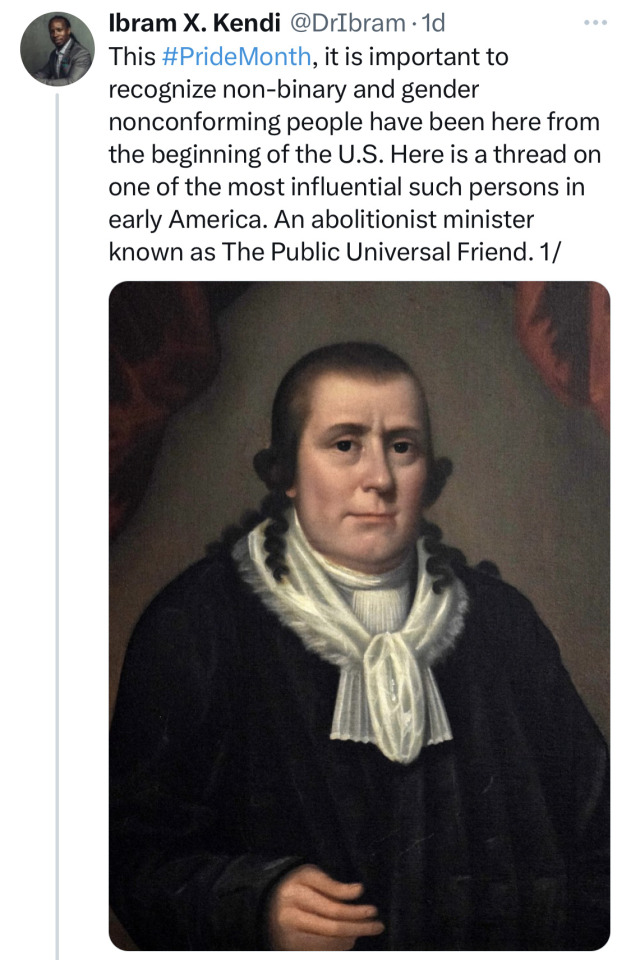
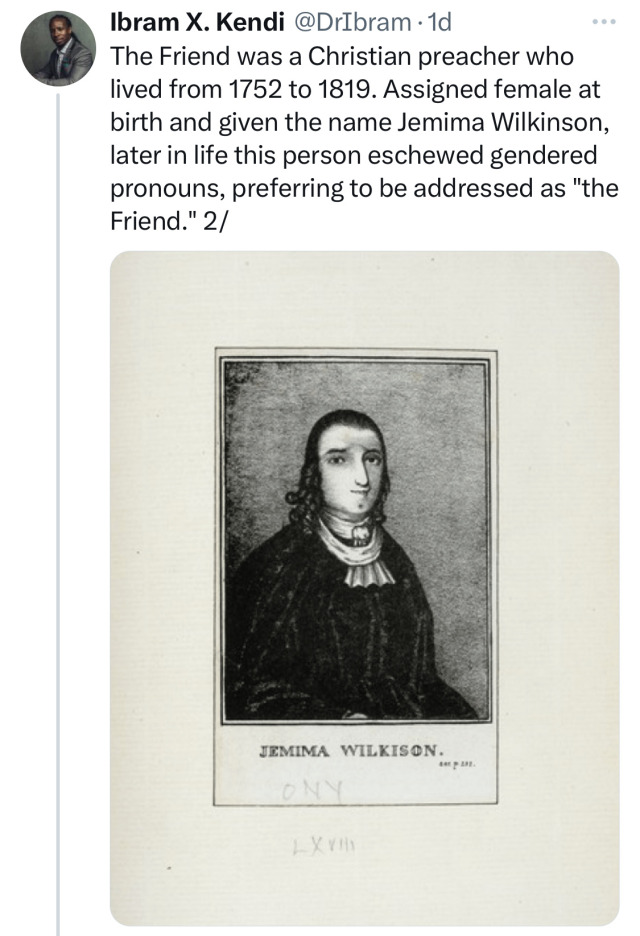
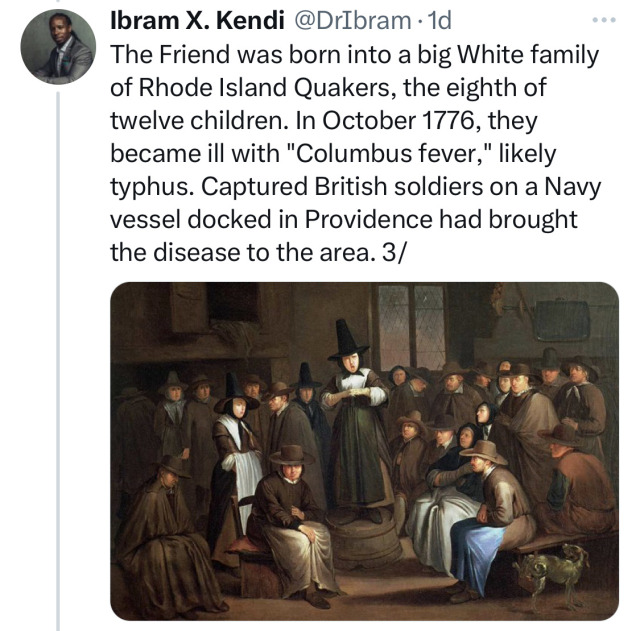
shrine to the prophet of americana

#history (385 posts)

I wonder if it's Metal Gear Solid V or Charlie Wilson's War (2007) that constitutes the plurality American impression of the...

I wonder if it’s Metal Gear Solid V or Charlie Wilson’s War (2007) that constitutes the plurality American impression of the Soviet occupation of Afghanistan.

Tagged: history

By D-Day the Atlantic Wall defenses had been reinforced several times, even taking seriously the need to muster and build up...

By D-Day the Atlantic Wall defenses had been reinforced several times, even taking seriously the need to muster and build up stockpiles in Britain an attack could have broken through the coastal defenses earlier.

…but those defenses were still enough to force a concentration of forces into a single spearpoint, which inland reserves could have mobilized to encircle and neutralize.“… until they were redeployed to the Eastern Front. It really was Russians fighting in the east that decided the European theater of WWII.

Of course, Stalin exerted whatever pressure he could to bring the West into the fight ASAP, but letting the Red Army bear the burden and pay the costs of attritting the Reich away and then only afterwards sweeping through a hollowed-out Western Front as the preferable option to surrender to was a critical part of Anglo-American grand strategy.

Even with that, they still then had to grind out a Cold War evenly matched enough to last half a century.

Tagged: history atlantic wall

The Whiskey Rebellion was this great example of early American state incapacity, like sub-Colonial, medieval – there's like no...

The Whiskey Rebellion was this great example of early American state incapacity, like sub-Colonial, medieval – there’s like no viable currency in circulation so frontier grain farmers are basically coining their own by distilling whiskey and refusing to cut the feds in so George Washington himself raises an army – which basically amounts to insisting an army be raised and threatening to impress stray farmers with a handful of regular troops until he eventually gathers a mass of nearby absolute rabble plus every local elite from the area who all insist on being in command in their own way. This mass then sets off under the sitting President’s personal leadership eating, looting, and likely raping its way across its own country, and is considered a testament to Washington’s leadership that it survives intact all the way to Western Pennsylvania, at which point the rebels have already dispersed (and further sub-military expedition attempts to apply federal authority prove largely fruitless).

It was a complete nightmare the Lewis and Clark Expedition was at-the-time understood as a recovery from, a proof of the ability of the United States to sustain disciplined operations across the continent.

(And then the Civil War, and then like every Western country in the world the executive branch restructured and modernized itself modeled off Prussia.)

Tagged: amhist history whiskey rebellion

Hot take: insofar as it represented domestic capital and labor overcoming divisions to cooperate in a project of national uplift...

kontextmaschine:

Hot take: insofar as it represented domestic capital and labor overcoming divisions to cooperate in a project of national uplift amidst liberal use of canned slogans and mass gatherings and the suppression of leftist mass action, Japan’s postwar recovery was more fascist than its interwar period

@plum-soup said: I mean post war Japanese government has been very much been defined by the recruiting of former Japanese fascists, war criminals, etc to form the LDP and make sure an American friendly government maintained a stranglehold on Japanese politics. So yeah, fascism

Maybe there’s something in the way the South Korean government was pretty lineally descended from the Japanese occupation compradors too, and under the postwar settlement these two states took parallel paths, but both of self-directed development within a First World order.

And that was the capitalists’ Cold War pitch: operate within a multilateral capitalist order and you’ll be able to become a rich developed country.

And that was also the communists’: “the capitalists’ plan is really just to put the fascists back in charge!”

Well?

Tagged: history same as it ever was rekishi

The French Revolutionary/Napoleonic Wars honestly make a lot more sense when you remember that the British literally operated on...

st-just:

The French Revolutionary/Napoleonic Wars honestly make a lot more sense when you remember that the British literally operated on the principle of ‘officer’s commissions are pieces of property we auction out to rich failsons with literally zero competency checking besides making sure the check clears’.

In an island country where the Navy is the outward-facing force, the Army largely exists to preempt the possibility of any other army taking over, in which capacity “alignment with existing dynamics of social power” is an advantage against potential subversion.

Like, the Napoleonic army very explicitly represented untethered officers as a power base capable of displacing the established social order, which the British system had very explicitly been arranged to prevent since the New Model Army in the English Civil War.

Tagged: knifecrime island and friends history

The sack of Rome, August 24th 410 CE, colourised. Art by Psicochurroz

ivan-fyodorovich-k:

elyendrya:

maliciouscigarette:

Art of a gaggle of goth girls tying ropes around a statue of a Roman emperor, in preparation for pulling it down.ALT

The sack of Rome, August 24th 410 CE, colourised.

Art by Psicochurroz

I have no idea what’s going on, but I dig it

The Goths are invading

Tagged: history

nsomniacsdream:

shadow-banned-the-hedgehog:

This is how capitalism is designed, so its not surprising. It’s just incredibly stupid and morally indefensible. Capitalism is a failure of a system that never should have become the dominant system. Hundreds of years of slavery, death, and disgusting violations of human existence is all we have to show for it. None of it was worth the cost.

I assure you that “the system optimizes for the interests of large landholders” is not specific to capitalism and was a well-recognized, load-bearing feature of the systems that preceded it.

Tagged: history same as it ever was

Listening to the new Criminal Records and very enamored with the apparent iron-clad Law of History that goes There is a giant...

apricops:

st-just:

Listening to the new Criminal Records and very enamored with the apparent iron-clad Law of History that goes

  1. There is a giant war
  2. The war ends - hurrah!
  3. The number of soldiers is now incredibly surplus to peacetime requirements
  4. A bunch of armed men without much in the way of prospects are just kinda hanging around
  5. Violent and organized crime spikes massively for somewhere between a few years and a generation

if you’ve ever wondered “how come in historical fiction and fantasy alike the countryside is always plagued by bandits,” this is why.

Tagged: history same as it ever was

You know, if we're classifying birds that way now, we should note that housecats are the major predator of dinosaurs in America.

somni-omni:

argumate:

kontextmaschine:

You know, if we’re classifying birds that way now, we should note that housecats are the major predator of dinosaurs in America.

the fact that humanity eats over 70 billion dinosaurs a year seems like a more relevant factoid.

Australia lost a war to dinosaurs!

Yeah honestly, the Emu war was an honest-to-God “who would win, a herd of wild dinosaurs or soldiers with Gatling guns?” scenario

Tagged: emu war straya history

Always shocking to go back and realize how far aviation had developed and been integrated into the everyday working of the human...

Always shocking to go back and realize how far aviation had developed and been integrated into the everyday working of the human world before basic principles of piloting and aircraft design were discovered.

Tagged: aviation history

The High Price of Dollar Dominance

argumate:

Those who claim that the dollar is in decline often argue that for the last 600 years, reserve currencies have risen and fallen in tandem with their home economies. As the United States’ share of the global economy diminishes, they claim, the dollar’s role will also diminish. But the truth is that there were no dominant global reserve currencies before the U.S. dollar. It is the only currency ever to have played such a pivotal role in international commerce.

Even in a precious metals-backed era China and (proto-)Germany used silver rather than gold

(This is why the Nevada Silver Rush and the Opium Wars were contemporary – the China trade was draining European silver, so a new source was a major prize AND the British cultivated [Company-sourced] opium as a counterbalancing export to China AND they turned to force to turn terms of trade in their favor )

Tagged: history

nerdygaymormon:

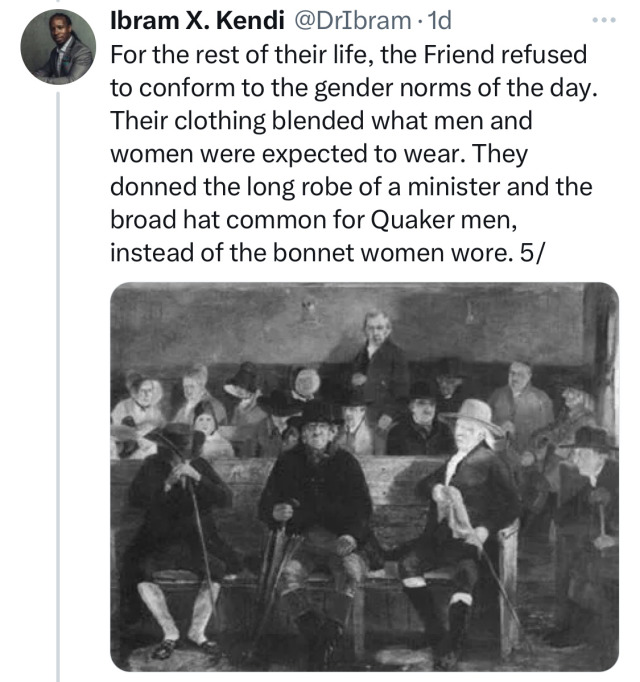
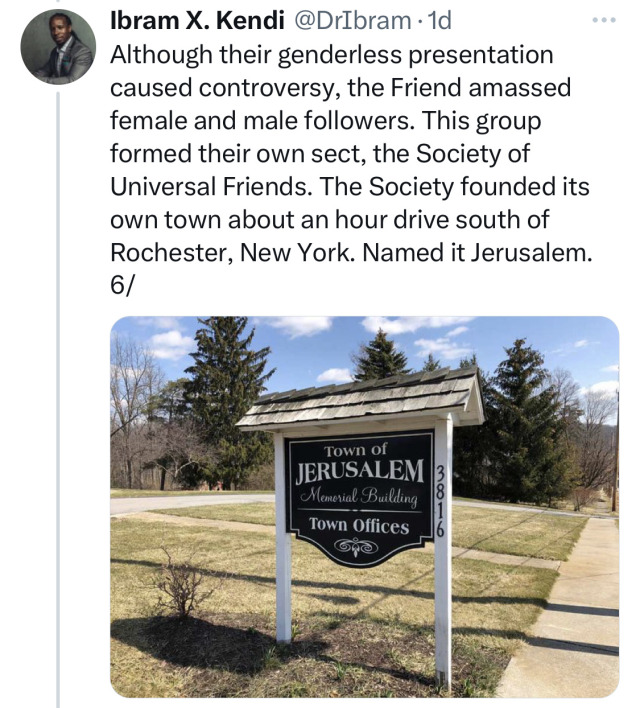
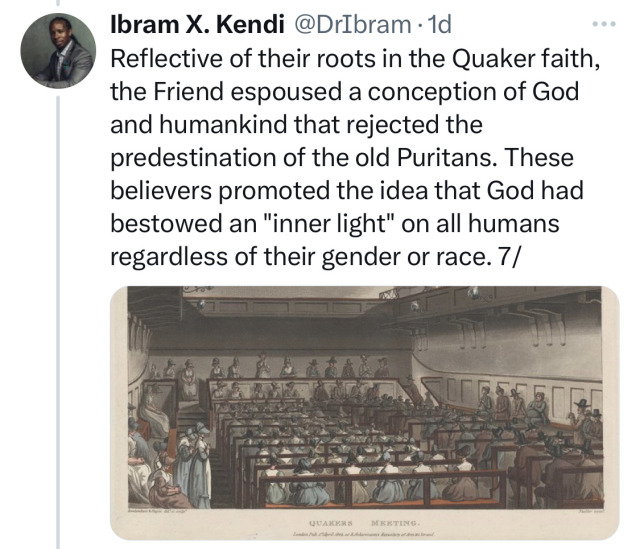
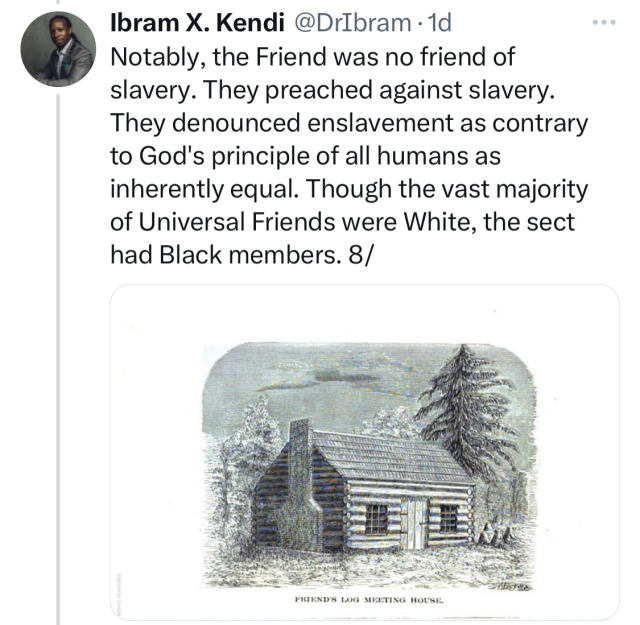
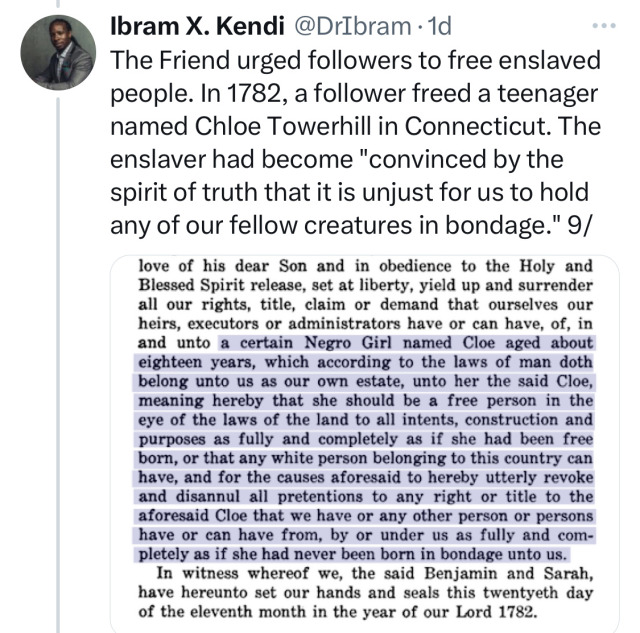
Tagged: amhist history the public universal friend

the-big-mood:

sword-grandma:

hottdoggblogg:

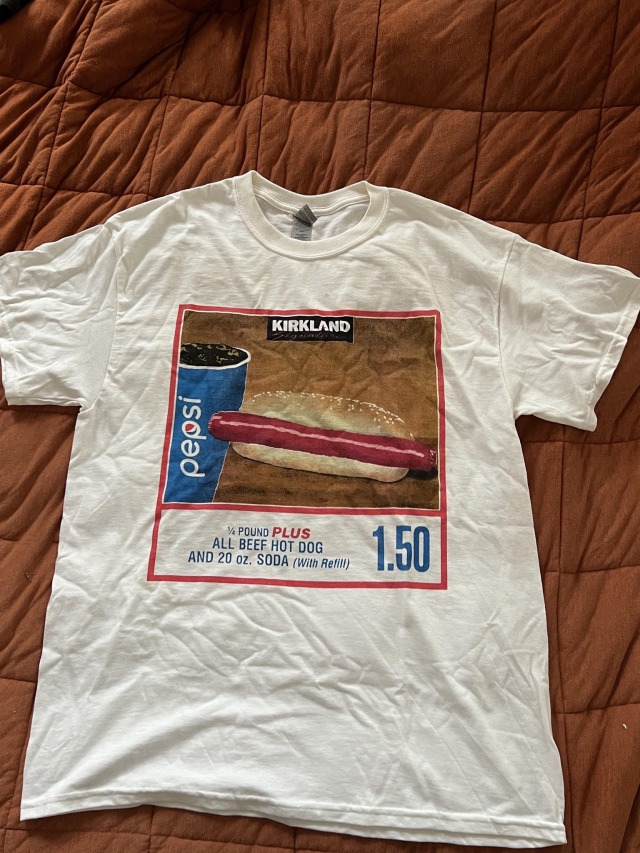
Show your unwavering support for Costco’s iconic $1.50 hot dog combo. This shirt lets you wear your love for the unbeatable value proudly. Get it HERE!

I cannot emphasize enough that this was the historical way markets operated and it was a failure, that governments required that staples like flour be sold at “customary prices”, stable over time and matched to the economic capacity of customers.

But to the extent the product had any relation to a larger market (which in fairness, bulky or quickly perishable goods might largely not) affected by actual supply and demand (from say annually variable harvests and military campaigns) and yielding actual market prices, the market price rising above this regulated price would not lead to customers receiving goods below cost (opportunity cost is cost too), instead they would find shortages, shortchanging, and adulterated goods.

Tagged: history

Like, I'll totally agree that California NIMBYs are ridiculous and have committed the state to a poorly chosen path, but I don't...

Like, I’ll totally agree that California NIMBYs are ridiculous and have committed the state to a poorly chosen path, but I don’t think you guys appreciate how very explicitly central “a civilization where everyone lives in a small-town environment with direct exposure to undeveloped nature” has been to the California Dream

Like before even the postwar Golden Age buildout under Gov. Brown the Elder that really instantiated this suburban paradise, the prewar boom of LA was very commonly framed – embraced by boosters to draw more residents – in terms of a job-rich city that uniquely didn’t have “slum” housing.

(You don’t even hear about “slum clearance” – the postwar practice of demolishing blocks at a time and giving the former residents intentions of something better that much anymore, but large areas of downtown-adjacent land in American cities was hyper-dense and low quality tenements or often formerly comfortable-class housing that had been subdivided all to hell)

California had an idiom for “life at high residential density” – the crowded, warrenlike Chinatowns of LA and especially SF since the Gold Rush, chaotically full of improvised enterprise, drug addiction, and murderous gang violence!

In the early 1980s, Long Beach – the industrialized working class shore to the south of LA, kind of its Queens, was like “ha-HA, we have filled this wonderful location at low bungalow density, time to upzone so as to keep this a functional area for working-class life!”

Of course the thing is the 1980s in Southern California went on to feature a massive illegal immigration wave (Cheech Marin’s 1987 Born in East L.A. is called that because it’s about an American-born bilingual Mexican Angelino experiencing this) which often landed in Long Beach AND the crack- and gang- heavy nadir of South LA-area Black communities.

Which is to say, in actual historical precedent that informs cultural sentiment, dense housing in California (let’s talk *Oakland*) consistently means “the white average-Joe neighborhood becomes overrun with inscrutable, addiction-riven, gang-murderous Others”

And the whole environmental stuff – there’s a clear line from John Muir and the Sierra Club through Paul Erlich and The Population Bomb to the Bay Area types who want to cap tech jobs or the people who worry about water (or road!) use coming from new development that the way to keep properly stewarding the land without exhausting finite resources was to limit population.

You can work racial or wevs angles too, a lot of the West Coast issues with natives and Chinese workers came from the way that the coast’s founding culture really came from a “Free Soil” philosophy, common among smallholders and “mechanics” in the (then-“West”), one of the two strains that went into the Republican anti-slavery stance along Boston moralism (New York, as the major port city of an international economy powered by cotton, was fairly pro-Confederate), that this was supposed to be a country to enable white men’s ability to establish self-sufficient petty dynasties of their own, and that indulging all this nonwhite work – creating a national economy oriented around slave-produced agricultural exports rather than white artisan industrial development, Pacific landowners recruiting natives or Chinese in a labor shortage rather than letting white wages rise so the workers could establish their pioneer fortunes – were, fundamentally, taking their jerbs.

And the pastoralism! This was the pleasant climate where the ranch house really blew up, integrating the outdoors and living area. Backyards – and home gardens – were key.

(In a LOT of ways Portland as I came to it at the dawn of the 2010s suddenly reminded me of things I had read about midcentury LA far closer than the one I saw in the 2000s)

Pete Seeger in 1963, “little boxes made of ticky tacky”, Joni Mitchell in 1970, “paved paradise and put up a parking lot”, these were laments for greenfield development coming before the activist-driven 1970s downzonings that saw that greenfield development was the ONLY way for California to add housing.


Tagged: the california ideology same as it ever was amhist history

The idea that the Spanish Reconquista was "driving away the Muslim Invaders" is kind of funny when you consider the timescales...

necarion:

The idea that the Spanish Reconquista was “driving away the Muslim Invaders” is kind of funny when you consider the timescales involved.

Most of Iberia fell to the Umayyads between 710 and 780 AD. Iberia had been Christianized in the early 4th century, so that is about 400-450 years as Christian territories (a lot of that with the Visigoths’ Aryan Christianity). The majority of the Reconquista happened between about 1100 and 1300, so that is about 400-600 years as Muslim territories.

Granada was finally captured in 1492, approximately 780 years after it had first been captured by the Umayyads. Not only is that almost twice as long as it had been nominally Christian, it is approximately 80 years longer than Granada had been Roman (c 220 BC to c480 AD)!

Tagged: history

Fascism understander

ublock-origin:

gabajoofs:

Fascism understander

famous non-expansionist fascist: The Nazis.

I mean, people today forget that Franco ever ruled Spain…

Tagged: history

In the 1950s, the Japanese export sector just then standing back up was known for pottery and cheap folded-tin toys. In the...

In the 1950s, the Japanese export sector just then standing back up was known for pottery and cheap folded-tin toys.

In the 1960s after investing in machinery more modern than western legacy forges they started towards a leading position in steel.

In the 1970s, they came for big-ticket consumer products like appliances and automobiles.

By the 1980s they were exporting electronics, industrial management expertise, and capital.

(They had been known for optics since before WWII.)

Since the 1990s they have been exporting their culture.

Korea has very intentionally been following the same path with maybe a 25 years’ lag.

Tagged: rekishi meanwhile in japan logistics history value addition

kontextmaschine:

kontextmaschine:

notthateither:

funnytwittertweets:

Americans making up the weird-ass fake name “Waldo” instead of using the real normal name “Wally” that the rest of the world uses is so strange

It’s German. The early population of America was heavily German – with no overseas colonies of their own, the German diaspora (starting before German unification, of course) spread through the Americas – the thing about Nazis expatriating to Argentina postwar was that was the most advanced Germanophone community outside the WWII combatants – but a serious ethnosuppressionist campaign around entry to WWI has obscured this ever since.

The US and South America had big expatriate populations from all the Axis countries – remember Japanese internment? Remember when Peru was led by a guy named “Fujimori”? – for the same reason they were all doing imperial expansion, which was that they had pulled themselves together as modern countries too late to claim colonies of their own and so they were experiencing huge population outflows as citizens sought opportunity elsewhere

Well, also the Nazi thing because the only European governments with the capacity to even notice what was going on in South America – Spain and Portugal – were fascist-friendly at the time, Israel spinning up the capacity to go after them from scratch was a real testament to the strength of their intelligence community, which drew on tradition and experience dating back to the spymasters of imperial Central and Eastern Europe.

Tagged: meanwhile in judaea history

kontextmaschine:

notthateither:

funnytwittertweets:

Americans making up the weird-ass fake name “Waldo” instead of using the real normal name “Wally” that the rest of the world uses is so strange

It’s German. The early population of America was heavily German – with no overseas colonies of their own, the German diaspora (starting before German unification, of course) spread through the Americas – the thing about Nazis expatriating to Argentina postwar was that was the most advanced Germanophone community outside the WWII combatants – but a serious ethnosuppressionist campaign around entry to WWI has obscured this ever since.

The US and South America had big expatriate populations from all the Axis countries – remember Japanese internment? Remember when Peru was led by a guy named “Fujimori”? – for the same reason they were all doing imperial expansion, which was that they had pulled themselves together as modern countries too late to claim colonies of their own and so they were experiencing huge population outflows as citizens sought opportunity elsewhere

Tagged: history

please god above can someone explain to me why we're still working on self driving cars when trains exist

jiskblr:

teaboot:

teaboot:

please god above can someone explain to me why we’re still working on self driving cars when trains exist

“we’re training them to interpret road signs!” Train goes same place every day. No road signs.

“when forced to choose between old lady and child, which is more ethical for the car to hit?” Fence around train track. Nobody on the road.

“people with disabilities preventing them from driving themselves can be independent” Yes but also. Train.

“reduces the dangers of fatigue with long distance trucking” Train.

“the technology is not yet price effective for the average driver” Train.

Seriously come on choo choo bitches let’s goooooooooo

The minute you can have a train deliver things to a dozen buildings in a single neighborhood, then you might start to have something resembling a point.

The last mile is the hard part. Trains will never, ever solve it. Short of wild plans to use abundant energy from nuclear to dig massive underground tunnel networks, at which point ‘automatic underground small train’ and ‘automatic underground self-driving cars’ become the same thing - that would probably work if we could get there from here, but we can’t because people are stupid about both tunneling and nuclear power.

From historical experience of the decline of the LA streetcar system in the automotive age, “I can switch to the next lane when someone’s blocking this one”, “I can take an 82-block route along arterial streets but then at the end a 7-block final leg somewhat uphill” and “if this street is too crowded and slow I can use the next parallel major street over” were all critically important things cars but not rail transit can do

Cargo service further requires either space-consuming dedicated sidings or a willingness to have a train just sit in the street unloading for a while (streetcar-era cities sometimes resupplied outlying stores from central-city or dockside warehouses with overnight trams)

Tagged: logistics history