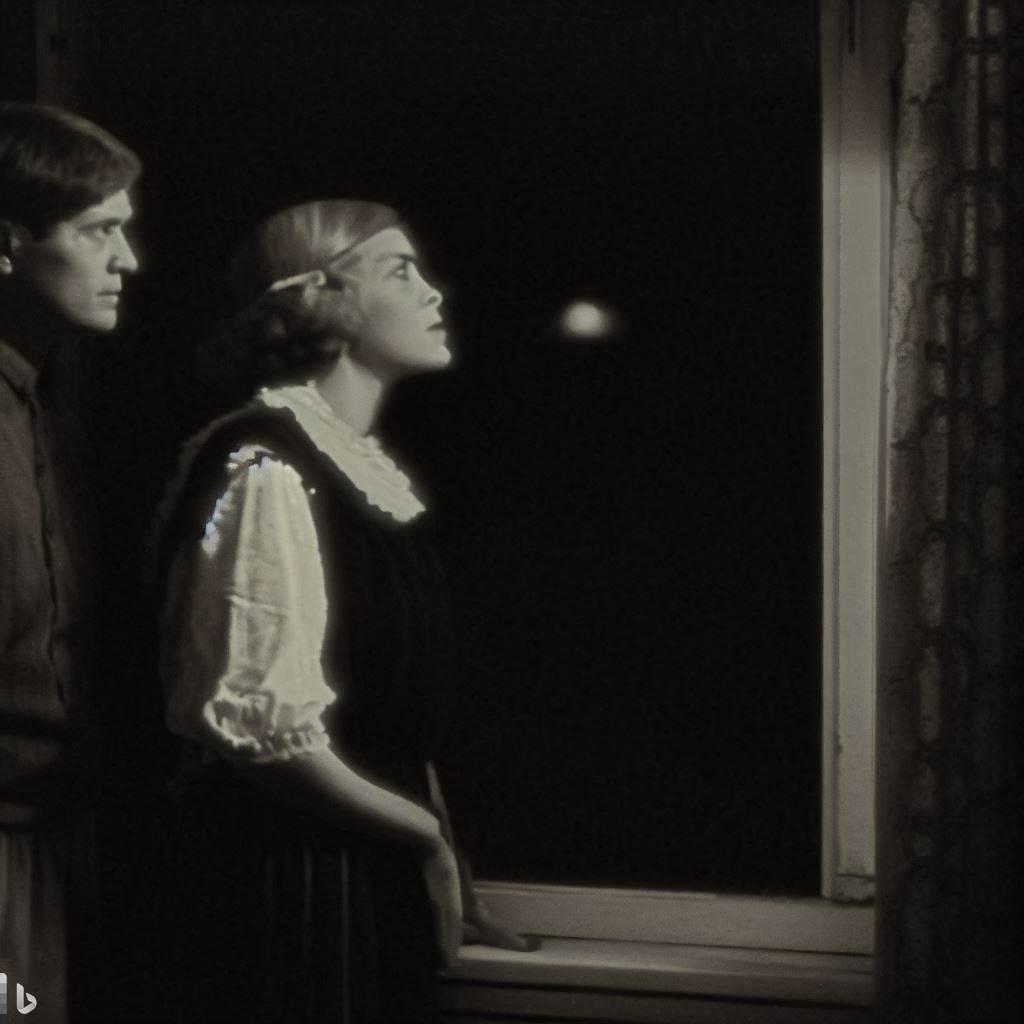
“A 1920’s German New Objectivity art movement film about a small family looking out their window into complete darkness, knowing that the sun is never rising again”
You know if we’re lazily smearing things as anti-Semitic based on long-forgotten historical resonances can we do people who complain about the commercialization of Christmas?
This really started at the 19th Century dawn of the German Empire, contemporary with the growth of a thick commercial retail culture – “Christmas” as we know it is essentially an epiphenomenon of the department store – and much early criticism focused not on how it detracted from a religious cast the holiday had once had, but on how it was becoming a yearly ritual of riches flowing from Christian pockets into the tillers of Jewish retailers, manufacturers, and traders.
As time progressed and the Second Reich fell, this was the theme of infamous interwar antisemitic newspaper Der Stürmer’s editorial cartoons at Christmastime every year.
(This was also, coincidentally, when and where the traditionally minor Jewish holiday of Hannukah was glowed up into a rival gift-giving celebration, so as to undercut Christmas as a draw for [then much more common, often with secular motives of cultural belonging] conversion.)
So some context on German bishops breaking with the Vatican to create validating rituals for same-sex unions:
In recent history Germany is mixed Catholic-Protestant, both identities more a matter of regional heritage than theology
The Protestantism is of the North Sea type that remained a matter of historic identity largely by shifting with the population over the 20th Century
German Catholics therefore have direct experience of Christianity being made compatible with post-heteronormative norms
The Catholic Church’s failure to keep pace is therefore understood as an unforced error embarrassing German Catholics before their Protestant compatriots
Tension with the Vatican is not understood as undermining the bishops’ authority; Catholic Germans never considered themselves Catholic by virtue of being aligned with the Pope, but by virtue of being Bavarian, etc.
Also reminder that between Lutheranism, the Old Catholic Church (formed in response to Vatican I!), and investiture controversies, the German Catholic hierarchy has ample precedent for “cultivate local support and break from Rome” as a viable tactic
So some context on German bishops breaking with the Vatican to create validating rituals for same-sex unions:
In recent history Germany is mixed Catholic-Protestant, both identities more a matter of regional heritage than theology
The Protestantism is of the North/Baltic Sea type that remained a matter of historic identity largely by shifting with the population over the 20th Century
German Catholics therefore have direct experience of Christianity being made compatible with post-heteronormative norms
The Catholic Church’s failure to keep pace is therefore understood as an unforced error embarrassing German Catholics before their Protestant compatriots
Tension with the Vatican is not understood as undermining the bishops’ authority; Catholic Germans never considered themselves Catholic by virtue of being aligned with the Pope, but by virtue of being Bavarian, etc.
"so like when Marx was writing and we had two World Wars about German industrial output that was it?" It was the biggest part of it by far yeah. Though before the Big two world wars there was a second part almost as Important in the Silesia region, but Poland has all of it now. Some, or atleast a few, middle aged and oldhead East Germans are still mad about how Poland inherited the vast majority of East Germany's old Industrial Heartland.
Re: the Germans plotting to restore the Kaiser: that, the unified (minus Austria!) German Empire was the “Second Reich” (the First Reich was the Holy Roman Empire)