shrine to the prophet of americana

#amhist (618 posts)

Between the increasingly dated midcentury songs and TV specials, the legacy prewar department store stuff like the Macy's...

Between the increasingly dated midcentury songs and TV specials, the legacy prewar department store stuff like the Macy’s parade, and Hallmark movies about rejecting yuppie urbanity for idealized small-town life, Christmas in the US is increasingly an American Golden Age nostalgia festival

Tagged: holidays christmas amhist civic mythology

In the case of the Valley, you know, you can maybe start that with Hewlett and Packard and the famous HP Way — what they...

collapsedsquid:

In the case of the Valley, you know, you can maybe start that with Hewlett and Packard and the famous HP Way — what they called management by walking around. No corner offices, shirt sleeves. They still had ties, but we took off the jacket. And this was in the 1950s. You know, Hewlett Packard was founded in a garage, an iconic garage startup in 1939. By the fifties, it’s a publicly traded company. It’s extremely successful.

And Hewlett and Packard, are very kind of self-consciously working against the Organization Man paradigm. That was corporate capitalism in the 1950s. So creating a culture where management and the rank and file engineers are all kind of on the same side is taking the culture of the engineering lab and transferring that into a corporation.

And it also was I think philosophically too, this was the high water mark of private sector unionization. People like Dave Packard were very much against unions. Just saw them as a sign that something’s wrong with a company if you can’t find a way to get along. And that instead that employees of all rank should be rewarded with stock options, they should have a stake in the ownership of the company. So it was a different model. And that kind of percolates through. There are a lot of HP veterans that go on to start venture firms, start other companies, and they bring that laid back California more sort of ostensibly egalitarian corporate culture with them.

Tagged: the california ideology amhist

Oh something I'm saying when I say it's feeling pretty '80s, that's a reactionary period. We've had 3 major ones in the 20th...

Oh something I’m saying when I say it’s feeling pretty ‘80s, that’s a reactionary period. We’ve had 3 major ones in the 20th century – the Reagan '80s, the 50s, and the post-WWI “return to normalcy”, and they were all marked by processes that wrecked the things that came out of progressive tendencies since the last one, wiped the board, and reset the clock. So maybe take brace position for that.

1980s: Blacks and cities get chewed up by crime, drugs, and general “urban decay”, gays have AIDS to deal with. The “Farm Crisis” also pretty much ends America’s long and historically quite central tradition of family farming. A rising Christian conservatism lays claims on the culture

1950s: the Second Red Scare digs out leftism which had established itself throughout national institutions through the Depression and Popular Front '40s. The Third KKK; attempts to suppress Black agitation fail largely for lack of cross-sectional unity, however, and the Civil Rights Era kicks off. Significant cultural backlash: the stifling conformity dramatized in say Pleasantville (1998) was only The Way Things Had Always Been to Boomers going through childhood; adults who had been paying attention lamented its sexual, intellectual, and cultural impoverishment compared to what came before

(1919-early) 1920s: the post-WWI Return to Normalcy. Major themes of semireligious utopianism and pacifism that had been common and somewhat challenging to wartime stance faded. The First Red Scare. The Palmer Raids rounding up leftists and deporting them to the new Soviet Union. The second KKK, Red Summer, and 2 years later the Tulsa Race Riot that Watchmen depicted, postwar Black ambition checked.

Now: well, Musk taking Twitter and deleftizing it definitely counts. Ellsworth Toohey, from Ayn Rand’s 1943 The Fountainhead was a maybe overdone portrait of a real tendency seen in period journalism of dismissively, sentimentally moralized leftism, that was part of what the '50s wiped away. The Asian split to the right in California, other minorities in general, whatever Black/Jewish shit is going on.

Some rightists think that pressing on queer stuff will work, I personally think that’s mistimed and they’ll lose that one like race in the 50s, in the process stigmatizing complaints about “pedophilia”. Covid and the fact that there’ll be appeals on behalf of the lonely and vulnerable to spend resources and control on protecting them that no government will be able to survive indulging and so will have to culturally pivot to normalize ignoring, ending the era since Clinton’s “feel your pain”.

Tagged: amhist same as it ever was reaction cyclical history

It's funny how by renaming Aunt Jemima brands "Pearl Milling Company" they're still invoking prewar tradition, just now as...

It’s funny how by renaming Aunt Jemima brands “Pearl Milling Company” they’re still invoking prewar tradition, just now as “products of distinct business operations” rather than “family servants”.

(It’s part of PepsiCo. Most American packaged food is either PepsiCo or RJR Nabisco, just like most consumer chemicals like floor cleaner or shampoo are either Unilever or Procter & Gamble)

Tagged: amhist aunt jemima

Blowback moment: Italian police busted a neo-Nazi terrorist cell planning attacks, and discovered that the members had been...

yuri-alexseygaybitch:

redshifting:

dirt-creature:

apas-95:

Blowback moment: Italian police busted a neo-Nazi terrorist cell planning attacks, and discovered that the members had been trained by, and gotten fighting experience from, the Azov Battalion.

Sorry, is this pro-invasion propaganda? I’m all for bashing fascists, but I need to be sure I understand the implication here. Can you explain?

Apologies if I’m misunderstanding.

The “implication” here is “those people are Nazis”. Because that’s what they are.

You guys are honestly so fucked if you’re unwilling to acknowledge the simply and widely documented (including by Western MSM pre-2022) reality that there’s far right nationalist/neo-Nazi groups in Ukraine with links to other far right groups throughout Europe and beyond who go there for training and war tourism for fear of appearing “pro-Russian.” Literally the most uncontroversial and simple opinion you should have on Ukraine is Nazis are bad and your government should stop giving them guns and money.

Oh yeah on here the old “zentropista” account of the Italian Casa Pound fascists would pump up Azov around the Crimea crisis; the “Ciao Dmitri” thing when someone died falling off an overpass during a banner drop and they kicked off a big campaign they’d clearly had as a contingency plan for building up a martyr – Dmitri had been a Ukrainian performing allyship at home

That said, it is not remotely uncontroversial and simple to refuse anti-Russian Nazis. That’s post-term antifascism. Remember “premature antifascists”, people rallying against the Nazis in the decades before they were built up as enemies of America in the runup to WWII? When they were just against Communist Russia, or at least Russia, or communists? And if you couldn’t bear that then uhhhhh… not to be trusted, there.

And flip side after the war Eastern European (and even marginally onsides First World like Italy) fascists were aligned with us, against the Russians. Remember like, the The Nazis Nazis? Those guys were against the Russians! And then we were. And are! And Azov’s not about to try to dismantle Western European capitalist empires sooooo…

Tagged: same as it ever was history amhist premature antifascism

You don't really hear about people "stuffing their money under the mattress" anymore, but I suppose we are the first generation...

You don’t really hear about people “stuffing their money under the mattress” anymore, but I suppose we are the first generation to have lived with an older generation whose own raising generation came after the normalization of FDIC deposit insurance

Tagged: amhist

imagine going back to 2005 and telling someone that Donald Trump and Rudy Giuliani are the heroes of Red State America, they’d...

argumate:

argumate:

invertedporcupine:

argumate:

imagine going back to 2005 and telling someone that Donald Trump and Rudy Giuliani are the heroes of Red State America, they’d ask you if they can try some of those awesome cyber drugs you must be on

In 2005, Giuliani was already in his “9/11 Tourette’s” phase, but not yet running for national office, so he was already popular in red states (though not as a presidential candidate).

perhaps have to go back to 10 September 2001 then, it’s just striking how both men are emblematic of a certain type of New York Liberal but it seems that doesn’t matter as they’re also enormous blowhards who never waste time affecting an air of concern about any other person.

Red State America loves a Big City Conman

Nelson Rockefeller’s Revenge

Tagged: amhist

has there been any progress in democracy in the past 100 years? apparently Maine is switching to ranked choice voting, something...

duran-duran-less-official:

kontextmaschine:

duran-duran-less-official:

kontextmaschine:

argumate:

kontextmaschine:

argumate:

eightyonekilograms:

argumate:

invertedporcupine:

eightyonekilograms:

argumate:

has there been any progress in democracy in the past 100 years?

apparently Maine is switching to ranked choice voting, something that has been used in Australia since 1919 to allow minor parties to be competitive without risks of splitting the vote.

is that it?

In the United States, party machines and family dynasties have gotten significantly less powerful in the last century. The former seems to have had some unintended consequences but is probably good on net.

In the UK, the House of Lords has gotten significantly less powerful over the last century.

More countries use parliamentary than presidential systems than was the case 100 years ago, which is good.

I think there are improvements one can point to.

Seventeenth amendment in 1913 is only a bit more than 100 years ago, and that’s a pretty big one.

(Women’s suffrage in various countries at various times is also a fairly big one, as is the Voting Rights Act in the US.)

I mean these sound like saying that “democracy as practiced in Australia a hundred years ago is becoming more common worldwide”?

(or more fairly, given the civil rights movement, perhaps there has been little improvement in the past 50 years).

it’s not quite as quick as Moore’s law, is it.

This is harder to quantify and hasn’t “paid off” yet, but informally I feel like the median voter today is much more likely to be aware of the drawbacks of FPTP and two-party systems than the median voter in 1920. Hell, I regularly see people online citing Arrow’s impossibility theorem (even if I think that finding is very often misused). There’s more awareness of potential for improvement than there used to be.

It may be a while before this translates into action, just because unilateral defection from 2P+FPTP is so costly, but we’re in the “consciousness raising” stage and I want to think something will come out of it eventually.

this really is the perfect demonstration of why politics is so difficult: imagine if one country was using 2020 era computers, aeroplanes, and televisions and another country was using 1920 era logarithm tables, zeppelins, and radios, but people were coming around to the idea of modern technology and give it another hundred years and they might think about switching.

Americans do refer to our voting style as the “Australian ballot”, but by that we mean that votes are cast secretly with no way for outside parties to determine how a voter has selected, as compared to the original American style where voters brought their own ballots (or more likely, accepted color-coded “party slate” printed ballots from party representatives outside the polling place) and then deposited them in a box in public view.

jesus fucking christ do you guys still shit outdoors too

wait, how do you do candidate selection? primaries? selected by the constituency party subunit (by who?)

The party selects the candidate to be leader (and overthrows them if they’re not generating the popular appeal they’d hoped). The candidate leads the party, running both for their seat (all of Australia is divided into electorates for which Members of Parliament stand) and for the Prime Ministership in general. Individual MPs might be able to influence the outcome a little bit, but in terms of major parties, most people are clued into the fact that they’re voting for the Prime Minister by voting for a particular party.

We don’t have primaries, that would be ridiculous. Every candidate for like 9 different parties has to be voted in by the people before the election, not including entirely independent candidates?? It would be a logistical nightmare.

“The party” being who, currently elected MPs, the few who’ve paid dues to the local branch UK-style, do you guys even have voters register to vote aligned with a party like we do?

Oh ok, this is just my rough understanding, but

there’s like, a process to register as a political party, and then a process for establishing membership for that party. Then once you have the membership, those members can stand for election.

For example, Anthony is a member of the Australian Labor Party. The party has mechanisms to decide of what use Anthony will be as a member of the party. Anthony was born in an inner city suburb in Sydney, Australia, so the party decides (somehow?) that he will stand for election for them in the Sydney electorate of Grayndler, an electorate in the inner west of Sydney which doesn’t quite cover the actual suburb where he was born, but it’s close enough that he can plausibly claim to be a local.

Short summary: all currently elected MPs are members of a political party, but not all members of a political party are currently elected somewhere.

Anthony does well enough in Grayndler to become the Federal representative for that electorate in the Lower House/House of Representatives (don’t ask me about the Upper House/Senate, it’s 1am and I don’t have the brainpower). There are uhhhh…. 151 federal electorates in the whole of Australia, meaning that Anthony gets to cast 1 vote, almost always along party lines, out of 151, on each piece of policy that goes through the house. He would generally like at least 75 other MPs to agree with him. However, the leader of the Labor Party is an uncharismatic piece of wet cardboard, and as a result of his unconvincing political campaigning on behalf of the party, Anthony doesn’t have quite enough allies who agree with him in the Lower House. Poor opinion polls have convinced the membership (note: not necessarily just the ones who are elected as MPs?) that the leader doesn’t have enough political sway to hold the party together and/or win an election. So they simply hold a vote. Anthony, and perhaps several others, decide to challenge the Wet Cardboard for leadership of the party - I believe they to be an actual Member of Parliament to stand for leadership, but the entire party membership votes - and in our scenario, Anthony wins! He is now the party leader, and because his party isn’t in government right now, he also becomes Leader Of The Opposition. The process I’ve just described is called a Leadership Spill, and it happens so, so much in Australia. That’s pretty much all I know about how being a political party member works.

To answer the other part of your question, no, we do not have voter party alignment, and the very thought of it terrifies me. People in Aus just… vote how they want to. Sometimes they deliberately vote illegitimately, the electoral equivalent of a middle finger. And it’s preferential voting, ranked choice, so my favoured strategy is to vote for anywhere between 2 and 5 of the smaller parties, depending on who’s on the ballot, before I vote for Labor. The vote is probably still going to count towards Labor in the end, because I still preferred them higher than the other large parties, but giving the smaller parties a little boost doesn’t hurt. (You get like, a campaigning stipend from the federal budget if your party got past some threshold of the vote percentage)

Oh, one more thing I forgot to mention. The smaller parties don’t necessarily have enough of a membership that they can put members up for all 151 federal seats across Australia, and that’s okay, they don’t have to. It’s about individual seats more than it is about national vote count. Like, there’s tons of smaller parties out there, most of whom try their luck in the Senate, but you still get the occasional Federal candidate for the Australian Sex Party (they’re called something different now but I’ve forgotten what) or the Christian Democrats or whoever. It depends what electorate you’re in. Sadly, if you live in a place where there is no Sex Party candidate standing for election, you don’t get to vote a Sex Party Candidate into the Lower House. And there’s no write in ballots either.

So how exactly does voter registration work in the US? My impression is that people are strictly not allowed to vote in some states if they aren’t registered to a party?? Are they allowed to change their vote if they’re registered? How can minor parties be expected to exist ever when party registration exists?

In America when you register with your state as a voter you’re asked to identify with a party, each state will have as options the big 2, some third parties with national reach (Green, Libertarian, Reform) and some more oddball ones, or you can register as independent.

The significance is you’ll then be eligible to vote in that party’s primary elections, which are the mechanism of candidate selection.

Prior to each general election, primaries are held, where any voter registered with a party (poss. meeting certain criteria to establish a floor of seriousness, like nominating signatures from a certain number of party members) can run to become the party’s official nominee for a particular office in the general election.

At lower levels this is sort of cliquish, at higher levels primary candidates will often map to various factions, support bases, and tendencies. Primaries have significantly lower turnout than generals (voting is not mandatory in America) and well-organized groups can use this to exert significant influence. Teachers’ and other public employees’ unions will typically be major players in Democratic primaries, for example, which means that candidates winning their favor will be more likely to win primaries (which candidates know and thus court them), with the result that Democratic officials in office will tend to be solicitous of their interests. (These unions will also devote much effort to getting out the [non-mandatory!] vote for Democrats in general elections.)

Much of the Republican Party’s harder rightward turn since the 1980s comes from conservative interest groups and media organizing around primary campaigns to nominate fiercely conservative candidates to the general election. The risk is of nominating candidates too conservative to be viable in their electorate, it is believed this was behind much of Republicans’ underwhelming performance in this recent 2022 election.

Official party structures do exist, formed in ways that are usually some mild legitimizing process layered atop cliqueishness, but for the most part they don’t directly choose candidates. They historically have, but that was largely superseded in attempts to break self-sustaining dynamics like urban machines and the southern Democratic Party as the mechanism of white rule. As recently as 1968 presidential candidates were still selected by nominating convention delegates (themselves selected at state party conventions by delegates selected by county parties), but when after Robert F. Kennedy was assassinated and amidst activist uprising the Democratic Party chose the establishmentarian compromise candidacy of former Vice President Hubert Humphrey, who had not been actively seeking nomination before, the legitimacy of this system was called into question and it was teplaced.

Official party structures can and do deploy resources towards favored candidates in ways that greatly raise their chance of primary success, however, and in some cases may be involved in the selection of replacements in offices which become vacant through death or resignation

There are additional historical quirks: because of the poor reputation of urban party machines, many (particularly western) cities in the Progressive Era established nonpartisan local elections; candidates are not nominated by parties but rather all candidates meeting requirements are entered into a primary and the top two vote-getters face off in the general. Democratic-dominated California recently established “jungle primaries” statewide on a similar basis, before the state was so overwhelmingly Democratic that the Dem primary – lower-turnout and excluding non-Democrats – was effectively the decisive contest.

It is theoretically possible but quite difficult to enter a general election as an independent candidate without winning party nomination; elections are conducted according to laws established by members of the two major parties and are optimized for them, and for parties more broadly, the Reform Party was essentially established as a support structure for Ross Perot’s second presidential run.
Tagged: amhist 'merica comparative government

Hawaiian bar/grill playing a playlist of 50s/60s "he's the rebel outlaw I love" songs that weren't otherwise passed down in...

Hawaiian bar/grill playing a playlist of 50s/60s “he’s the rebel outlaw I love” songs that weren’t otherwise passed down in memory as “oldies” and a lot of them are pretty fucked up actually

Tagged: amhist

Like I've mentioned precedents, the '68 NYC teacher's strike and ethnic succession in the outer boroughs, but at least that had...

Like I’ve mentioned precedents, the ‘68 NYC teacher’s strike and ethnic succession in the outer boroughs, but at least that had imaginable stakes, I’m not really clear why a Black/Jewish front of the culture war is opening up right now

Tagged: 2022 culture war same as it ever was afamhist amhist

Dan Sickles Acquired the land for central park Married a teenager at 32 Was censured for bringing a prostitute into the state...

utilitymonstermash:

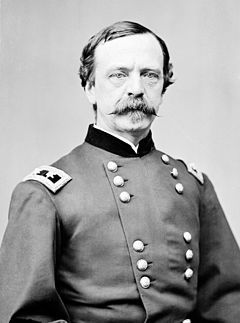
Dan Sickles

  • Acquired the land for central park
  • Married a teenager at 32
  • Was censured for bringing a prostitute into the state assembly
  • Took a prostitute to meet Queen Victoria
  • Became a congressman
  • Got cucked by the district attorney for DC, Philip Barton Key, Francis Scott Key’s son
  • Murdered Key
  • Pioneered the temporary insanity defense
  • Reconciled with his wife
  • Remained in congress
  • Left congress and became a civil war general
  • Engaging in somewhat unsound tactics lost his leg at Gettysburg, gained a medal of honor
  • Attempted to return to combat, but was denied by Grant
  • Got dent to Colombia to secure the isthmus
  • Supervised military reconstruction in south Carolina
  • Became ambassador to Spain
  • Was rumored to have had an affair with the recently deposed queen
  • Attempted to start a war with Spain
  • Became a spokesman for preservation of Gettysburg
  • Returned to congress
  • Died at 94 in the 20th century

America just doesn’t make them like this anymore

Tagged: amhist

kontextmaschine:

max1461:

triskeleaficionado:

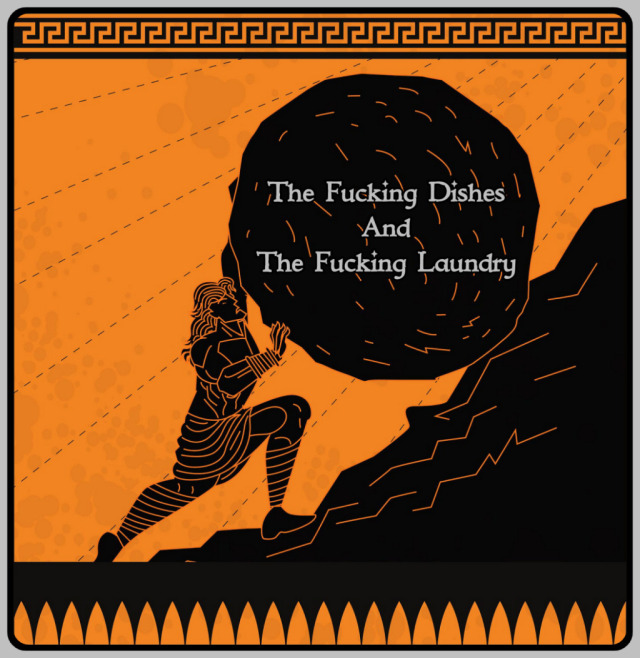
Oh the solution is easy. Just uhm. Uh. Just uhm. Uhm

Servants. This is quite literally the problem servants were the historical solution to. “Hewers of wood and drawers of water”?

And wives, I guess, with bachelors turning to commercial – taverns, street carts – and fraternal – Elks lodges, country clubs – collective providers.

The thing about gold rush-era San Francisco being full of Chinese laundries and eateries is they were serving an overwhelmingly male white migrant population without wives

Tagged: amhist history

The word/phrase “lovelight”, meaning how someone’s eyes look when they’re in love, comes up really frequently in pop songs...

redantsunderneath:

argumate:

profound-yet-trivial:

The word/phrase “lovelight”, meaning how someone’s eyes look when they’re in love, comes up really frequently in pop songs written before 1980. Then it basically evaporated from culture in an instant. It’s not just that it’s an uncool word or concept, it’s that people stopped using it overnight.

Examples in old lyrics of significant songs:

  • Paul Simon, “Something So Right”
  • Steve Miller Band, “Jet Airliner”
  • The Supremes, “When the Lovelight Starts Shining Through His Eyes” (their first Top 40 single!)
  • Bobby Bland (then covered by Grateful Dead), “Turn On Your Love Light”
  • ABBA, “Lovelight” (of course)

And now, when was the last time you heard it outside the context of an old song?

Now, I don’t like the phrase. It feels cloying and kind of… objectifying? Like the thing you’re admiring about the other person is how demonstrably they’re in love with you?

But the thing I’m fascinated by, here, is the cultural equivalent of an animal going extinct and being quickly covered up by a layer of sediment, so that the only people who will notice it are future archaeologists.

funky, I’ve never noticed that word at all

This is really stupid, but i feel the need to get this off my chest. I have thought about this, even if there is a Robbie Williams hit from the mid 2000s and ngram data that puts a lie to the premise. In the 70s, the most significant song usage of the compound word was Turn on your Lovelight - it was a cover of the song that got Them broken so Van Morrison kept playing it and it started to get legacy coverage by the Dead, Jerry Lee Lewis, Tom Jones, Edgar Winter Group and Bob Seger (I can’t be the only one here who has a Columbia Record and Tape Club issued Smokin’ OP’s) among others, but as the decade aged, curdling of the cultural touchy-feely that got reduced into 80s new ageism built up to a pushback against anything that smacked of moonbeam infused language, which fully crashed around the end of disco and the receding of adult contemporary radio dominance (1982). The phrase turn on your lovelight would have been a phrase floating in the ether.

My theory is that (again, I know this is incredibly dumb) Neil Diamond, Mr. woo woo schmaltz wizard, who was coming of of 4 top 10 hits in 2 years, put out “Turn on your Heartlight” (inspired by the film E.T., no less), a song that I repeatedly heard misidentified at the time as Turn on your Lovelight, that consolidated all the social forces surrounding the end of the era when anyone who liked piña coladas, repped Godspell, or mentioned von Däniken could walk around unashamed, ending his chart career (no more even top 40 hits) and the usage of the word lovelight in a case of mistaken identity. I actually think the song even hurt E.T.’s long term cultural impact since the last thing I can remember of the movie at the time it was out was Entertainment Tonight playing the song over a montage off the alien’s glowing chest saying El-i-ot and shit. The song was released Sept 1982. The first single from Thriller was Oct, with the album following in Nov. This was a hard close bracket for a big cultural Age, the jump the shark moment for the no-cringe era. I told you it was asinine, but now I can stop thinking about it.

Tagged: amhist

We settled this in the '90s: "awareness-raising": actions to increase your favorability with the general public, to recruit with...

We settled this in the ‘90s: “awareness-raising”: actions to increase your favorability with the general public, to recruit with the goal of your sizable following moving parties to co-opt your issue for electoral gain

Unmentioned is that this was effectively a way for the Democratic Party in particular to rebuild their brand and recruit a new base for the post-80 era of two-party competition in an environment of low voter loyalty, and there is no mechanism specified for groups and issues so captured to press their priority in the party

Tagged: 90s90s90s amhist awareness raising

How San Francisco (?!) Helped Give Birth to Modern American Fascism

Huh, with this I’m starting to appreciate the significance of Harvey Milk being shot in 1978. There had already been three Dirty Harry movies! Which is not to say they inspired Dan White, but they’re testament that “San Francisco is falling apart at the hands of freaks and crazies, and what it needs is a reactionary SFPD cop to tighten things back up by shooting people on his own initiative” was not really an inch out of alignment with what’s by now become the mainstream narrative of the period

Tagged: amhist

The 1998 Fear and Loathing in Las Vegas film is going to be closer to its 1971 source than the present day before too long That...

The 1998 Fear and Loathing in Las Vegas film is going to be closer to its 1971 source than the present day before too long

That was an important part of the ‘90s rediscovery of the psychedelic era

Tagged: 90s90s90s amhist

You know the MPAA introduced the "NC-17" rating because "X" (or "XXX") we're not trademarked and people just threw it around as...

kontextmaschine:

You know the MPAA introduced the “NC-17” rating because “X” (or “XXX”) we’re not trademarked and people just threw it around as a selling point?

Tripled-meaning-ultimate rating was derived from the ‘70s-booming hobby of skiing, triple black diamond slopes outranking single.

Tagged: amhist skiing

whitepeopletwitter:

– Rural Free Delivery, 1896

Tagged: amhist post office

Like, everyone realizes that if there's a roar coming up lately from university-educated would-be administrators seeking to...

Like, everyone realizes that if there’s a roar coming up lately from university-educated would-be administrators seeking to segment and serve particular identity categories that’s not the sound of a new order being born, it’s the Great Society death-rattling, right?

Tagged: amhist 2022

"Evangelical" and "fundamentalist" really have different meanings both in their general senses and as distinct strains of...

“Evangelical” and “fundamentalist” really have different meanings both in their general senses and as distinct strains of American Protestantism, but by the 1980s they were used fairly interchangeably to mean “non-mainline Protestantism, and not one of the denominations coming out of the Second or Third Great Awakenings (like Christian Science, Seventh-Day Adventists, Pentecostalism, or Jehovah’s Witnesses)”

Tagged: amhist