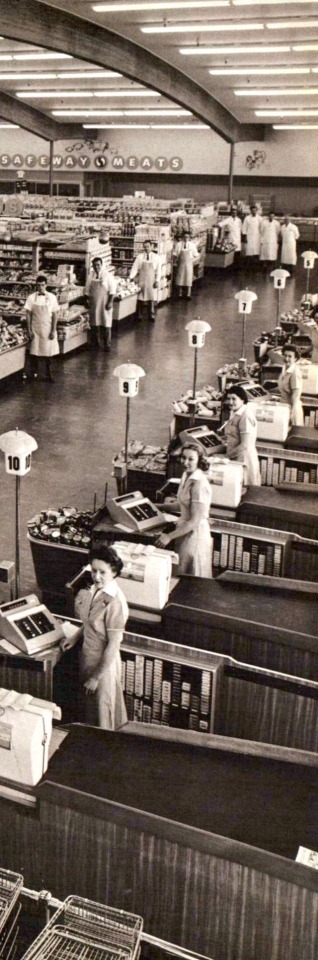
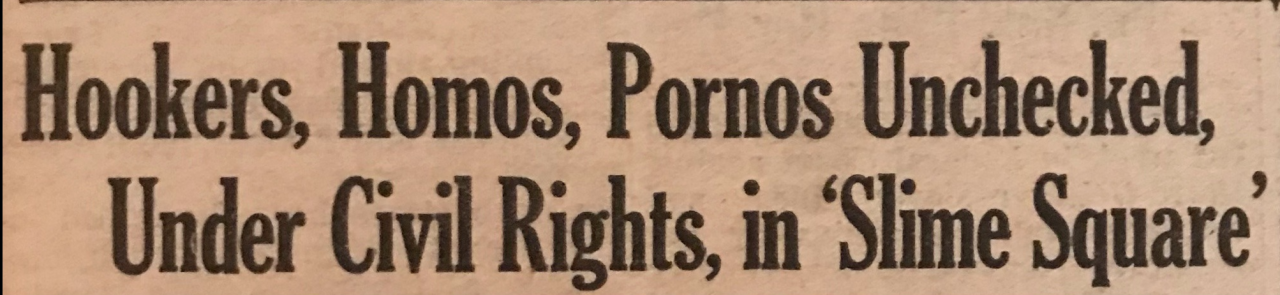
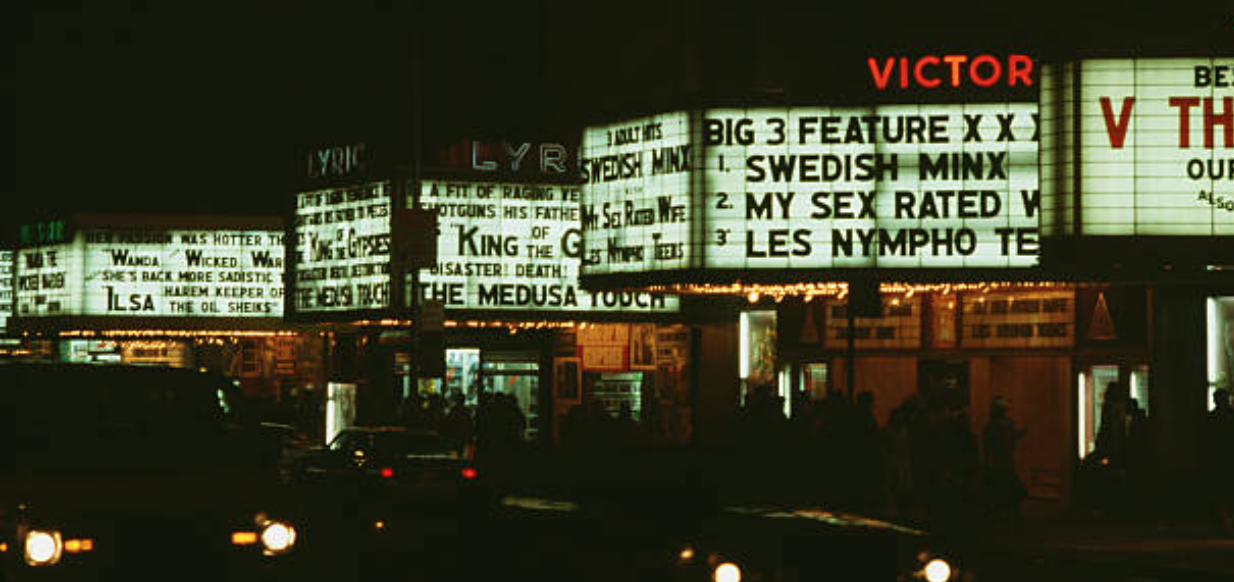
One thing about golf booming in America with the automobile, as courses enjoyed the sudden benefit of enough players in access range to support themselves is you have courses appearing on the fringe of cities in the 1920s to immediate postwar, in the direction that automotive expansion favors, so by the modern day you have these open grounds which often organized themselves as “country clubs” in what are now some fairly central urban locations
the one fun thing about if the PRC naval blockades Taiwan would be half of America comparing it to the Berlin Crisis and the other half comparing it to the Cuban embargo.
jfk famously changed the course of fashion by making many appearances at state functions without a hat, which was previously considered mandatory for well-dressed men. at his inaugural address, he even bragged about “[his] big juicy melon, naked as a jay bird for all the world to see”. unfortunately we can all see how that turned out for him in the tragic events of the zapruder footage
the real tragedy about JFK is that with his horrible secret health condition managed mostly by uppers and steroids by incompetent 1960s doctors, he was apparently healthy, yet his system was essentially defenseless against the deadliest medical problem known to man: being shot directly in the brain
you know who could have used a warning about something being spoiled? JFK, about his lovely visit to Dallas, Texas
I don’t remember why I spent last night JFKposting. I don’t know exactly was going through my head here. On the other hand, what went through JFK’s head was pretty thoroughly established by the Warren Commission
Lots of interesting commentary in there! Right now, I want to talk about this part:
“In the months after Pearl Harbor the driving aim of Japanese strategy was to capture a string of islands running the length of the western Pacific and fortify them against an American counterattack. This defensive perimeter would set the boundaries of their new empire – or, as they called it, the "Greater Asia Coprosperity Sphere.” Midway Island, the westernmost of the Hawaiian Islands, was one of the last links they needed to complete the chain. They sent an enormous fleet, the heart of the Japanese navy, to do the job: four enormous aircraft carriers, together with a whole galaxy of escort ships. On June 4 the attack force arrived at Midway, where they found a smaller American fleet waiting for them.
Or so the history-book version normally runs. But the sailors on board the Japanese fleet saw things differently. They didn’t meet any American ships on June 4. That day, as on all the other days of their voyage, they saw nothing from horizon to horizon but the immensity of the Pacific. Somewhere beyond the horizon line, shortly after dawn, Japanese pilots from the carriers had discovered the presence of the American fleet, but for the Japanese sailors, the only indications of anything unusual that morning were two brief flyovers by American fighter squadrons. Both had made ineffectual attacks and flown off again. Coming on toward 10:30 AM, with no further sign of enemy activity anywhere near, the commanders ordered the crews on the aircraft carriers to prepare for the final assault on the island, which wasn’t yet visible on the horizon.
That was when a squadron of American dive-bombers came out of the clouds overhead. They’d got lost earlier that morning and were trying to make their way back to base. In the empty ocean below they spotted a fading wake – one of the Japanese escort ships had been diverted from the convoy to drop a depth charge on a suspected American submarine. The squadron followed it just to see where it might lead. A few minutes later they cleared a cloud deck and discovered themselves directly above the single largest “target of opportunity,” as the military saying goes, that any American bomber had ever been offered.
When we try to imagine what happened next we’re likely to get an image out of Star Wars – daring attack planes, as graceful as swallows, darting among the ponderously churning cannons of some behemoth of a Death Star. But the sci-fi trappings of Star Wars disguise an archaic and sluggish idea of battle. What happened instead was this: the American squadron commander gave the order to attack, the planes came hurtling down from around 12,000 feet and released their bombs, and then they pulled out of their dives and were gone. That was all. Most of the Japanese sailors didn’t even see them.
The aircraft carriers were in a frenzy just then. Dozens of planes were being refueled and rearmed on the hangar decks, and elevators were raising them to the flight decks, where other planes were already revving up for takeoff. The noise was deafening, and the warning sirens were inaudible. Only the sudden, shattering bass thunder of the big guns going off underneath the bedlam alerted the sailors that anything was wrong. That was when they looked up. By then the planes were already soaring out of sight, and the black blobs of the bombs were already descending from the brilliant sky in a languorous glide.
One bomb fell on the flight deck of the Akagi, the flagship of the fleet, and exploded amidships near the elevator. The concussion wave of the blast roared through the open shaft to the hangar deck below, where it detonated a stack of torpedoes. The explosion that followed was so powerful it ruptured the flight deck; a fireball flashed like a volcano through the blast crater and swallowed up the midsection of the ship. Sailors were killed instantly by the fierce heat, by hydrostatic shock from the concussion wave, by flying shards of steel; they were hurled overboard unconscious and drowned. The sailors in the engine room were killed by flames drawn through the ventilating system. Two hundred died in all. Then came more explosions rumbling up from below decks as the fuel reserves ignited. That was when the captain, still frozen in shock and disbelief, collected his wits sufficiently to recognize that the ship had to be abandoned.
Meanwhile another carrier, the Kaga, was hit by a bomb that exploded directly on the hangar deck. The deck was strewn with live artillery shells, and open fuel lines snaked everywhere. Within seconds, explosions were going off in cascading chain reactions, and uncontrollable fuel fires were breaking out all along the length of the ship. Eight hundred sailors died. On the flight deck a fuel truck exploded and began shooting wide fans of ignited fuel in all directions; the captain and the rest of the senior officers, watching in horror from the bridge, were caught in the spray, and they all burned to death.
Less than five minutes had passed since the American planes had first appeared overhead. The Akagi and the Kaga were breaking up. Billowing columns of smoke towered above the horizon line. These attracted another American bomber squadron, which immediately launched an attack on a third aircraft carrier, the Soryu. These bombs were less effective – they set off fuel fires all over the ship, but the desperate crew managed to get them under control. Still, the Soryu was so badly damaged it was helpless. Shortly afterward it was targeted by an American submarine (the same one the escort ship had earlier tried to drop a depth charge on). American subs in those days were a byword for military ineffectiveness; they were notorious for their faulty and unpredictable torpedoes. But the crew of this particular sub had a large stationary target to fire at point-blank. The Soryu was blasted apart by repeated direct hits. Seven hundred sailors died.
The last of the carriers, the Hiryu, managed to escape untouched, but later that afternoon it was located and attacked by another flight of American bombers. One bomb set off an explosion so strong it blew the elevator assembly into the bridge. More than 400 died, and the crippled ship had to be scuttled a few hours later to keep it from being captured.
Now there was nothing left of the Japanese attack force except a scattering of escort ships and the planes still in the air. The pilots were the final casualties of the battle; with the aircraft carriers gone, and with Midway still in American hands, they had nowhere to land. They were doomed to circle helplessly above the sinking debris, the floating bodies, and the burning oil slicks until their fuel ran out.
This was the Battle of Midway. As John Keegan writes, it was “the most stunning and decisive blow in the history of naval warfare.” Its consequences were instant, permanent and devastating. It gutted Japan’s navy and broke its strategy for the Pacific war. The Japanese would never complete their perimeter around their new empire; instead they were thrown back on the defensive, against an increasingly large and better-organized American force, which grew surgingly confident after its spectacular victory. After Midway, as the Japanese scrambled to rebuild their shattered fleet, the Americans went on the attack. In August 1942 they began landing a marine force on the small island of Guadalcanal (it’s in the Solomons, near New Guinea) and inexorably forced a breach in the perimeter in the southern Pacific. From there American forces began fanning out into the outer reaches of the empire, cutting supply lines and isolating the strongest garrisons. From Midway till the end of the war the Japanese didn’t win a single substantial engagement against the Americans. They had “lost the initiative,” as the bland military saying goes, and they never got it back.
But it seems somehow paltry and wrong to call what happened at Midway a “battle.” It had nothing to do with battles the way they were pictured in the popular imagination. There were no last-gasp gestures of transcendent heroism, no brilliant counterstrategies that saved the day. It was more like an industrial accident. It was a clash not between armies, but between TNT and ignited petroleum and drop-forged steel. The thousands who died there weren’t warriors but bystanders – the workers at the factory who happened to draw the shift when the boiler exploded.“
———–
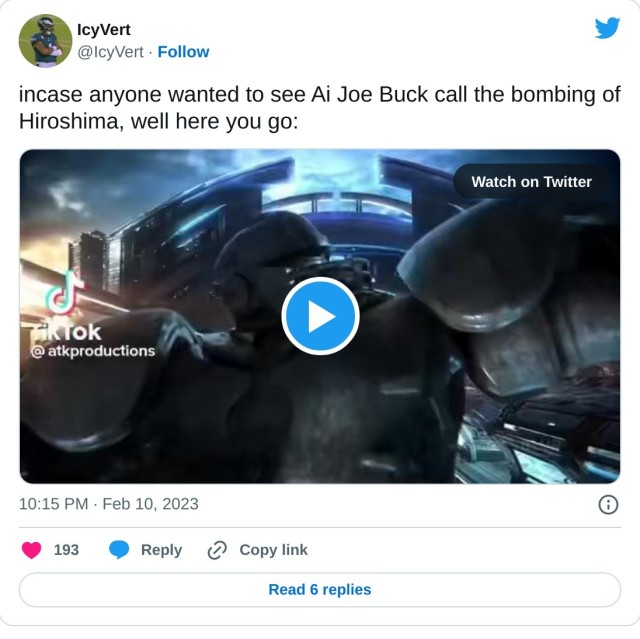
”“Shigata na gai,” Mrs. Nakamura says about what happened to her city that day; Hersey glosses: “A Japanese expression as common as, and corresponding to, the Russian word nichevo: It can’t be helped. Oh well. Too bad.”
Hersey doesn’t say so directly, but he appears on the surface to agree. He presents the bombing neutrally, without commentary, as though it’s a new species of natural disaster, motiveless and agentless. As far as any reader of Hiroshima can tell, the bomb came out of nowhere, was dropped by nobody, and had no purpose.
…
Hersey was describing for the first time the war’s true legacy: a permanent condition of helpless anger and universal dread.“
"It’s also the culmination of a modern trend of increasingly destructive weapons reducing the individual soldier’s scope for personal agency (one might say, for heroism). The explosion of an atomic bomb doesn’t look like anything an ancient warrior would have recognized as a battle, it looks like a natural disaster, like a storm or an earthquake; its typical victim experiences it as something that cannot be fought or hurt or meaningfully defied, only endured.
For most of the time war has existed, war consisted mostly of personal combat (broadly defined). I suspect there’s a relatively common sort of person (often male) who finds personal combat kind of fun, in the way some some people find playing football and rugby fun. I suspect the historically common cultural romanticization of war partially reflects this; for much of history a non-trivial number of the combatants really did kind of enjoy it.
Being in a WWI trench charge or being on the receiving end of a nuclear strike isn’t anybody’s idea of fun… Broadly speaking, it has the horrible parts of combat, but not the parts that I suspect some people find kind of fun; the opportunity to exercise personal agency in a heroic way, the opportunity to feel strong and powerful, the opportunity to feel like you’re playing a heroic role in some grand and important narrative, etc.. The experience of having an artillery barrage or a nuke dropped on you is closer to the experience of the Midianite women in Numbers 31; you feel impotent and afraid and you suffer and if you die it’ll probably be in a squalid and humiliating and painful way and you probably won’t even get to hurt the people who are doing this to you.
…
WWI trench warfare and fire-bombing with napalm and nuclear MAD are hard to romanticize. And I suspect that’s part of the reason we romanticize war a lot less than we used to.”
Tempted to call this the feminization of war (see the point where I reference the Numbers 31 for why).
I think there’s something to what you say, but worth remembering that there wasn’t ever an era when most combatants died in personal combat. My understanding is the biggest killer pretty much went straight from disease to artillery. Cholera probably qualifies as squalid, humiliating, and painful.
I think romanticizing war has always required distance from the worst parts of it, though sometimes just being on the winning side provides enough distance (certainly, the US doesn’t seem to have a problem with romanticizing World War II).
OK, I’m seeing some bad posts from some of the usual suspects, which, whatever, but in these bad posts I also see a couple intelligent and well-meaning people getting tripped up, and so I’m here to help.
Whenever the issue of Taiwan comes up, you are guaranteed to see pro-PRC people saying that “well the ROC also claims sovereignty over China, so they’re just as bad”. This is an vile and disingenuous claim, for two reasons:
First, nobody in Taiwan– not the KMT, not the Greens, nobody– expects or even wants to reconquer China, now or any time in the future. It’s not just that they know they obviously can’t, it’s that they no longer even want to. Anyone who tells you otherwise is bullshitting you. Formal independence and statehood is the most radical thing anyone in Taiwan wants, and most people don’t even want that; their preferred option is indefinite extension of the status quo. Claiming sovereignty over the mainland is a dead letter symbolic gesture with no intent behind it, and everybody everywhere knows this.
Second, and more importantly, the PRC forces Taiwan to keep claiming that it will reconquer the mainland someday. No I’m not being stupid: I’m serious, and it’s true. The government of Taiwan is required to keep saying that it is the legitimate ruler of China, no matter how ridiculous that is, because formally renouncing this claim is equivalent to a declaration of independence, and that is the PRC’s immediate red-line to go to war.
So now you see what an evil catch-22 it is to say “look, Taiwan says it is the rightful ruler of China and they’re going to invade someday!”. If the ROC does make these claims, they’re accused of imperialism. If they don’t, they immediately get invaded.
Don’t fall for this trick. When you see this claim, you now know how to shut it down completely.
It’s hard to believe if PRC had a better navy in 1949, they wouldn’t have chased KMT across the strait. Taiwan could have renounced their claim to the mainland and declared full independence in 1949 without consequence… or 1950 or 1951 or 1952 or… It’s only after PRC fully eclipsed them on the world stage by getting the US to be willing to adopt their one China policy did Taiwan opting out of the perpetual frozen civil war fall of the table.
America had a One China policy! Taiwan was the one!
Remember when there were articles about Western urbanites doing the Falun Gong Tai Chi stuff because “Free Tibet” was played out but They hadn’t realized to pivot back to Russia again?
Anyway, I’m not hating on superpowers tryna rouse the public in the name of their geopolitical interests, that’s how it is. I’ve been realizing how much of Clintonite foreign policy was really about tying off Cold War loose threads, and it was really clear with Cuba, Northern Ireland (remember Bono as a Clinton sidekick?) and especially Israel/Palestine that the other side’s propaganda apparatus fell apart without the Russians to prop it up
Thinking of early American urban firefighters (well, as late as the Civil War ones in Gangs of New York) depicted as rough-and-tumble young men who’d take the opportunity to lift goods from the households aflame
And thinking about how the underlying roughneck culture of period port cities would’ve been sailor culture, which had understandings around salvage that a crew who preserved goods from certain destruction was by right entitled to a portion of the wealth saved
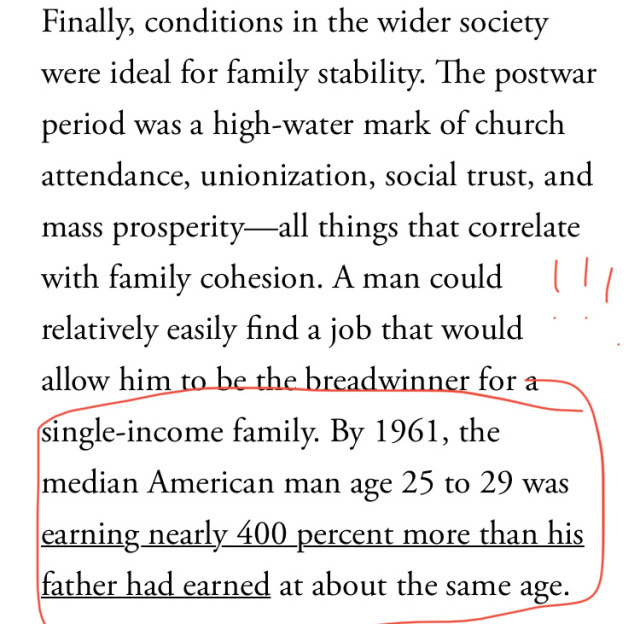
That’s insane. Really kinda explains everything. Everything else is window dressing. An unbelievably and unprecedentedly prosperous bubble for about 25 years between 1940 and 1965 couldn’t possibly last.
According to Yossef Rapoport, in the 15th century, the rate of divorce was higher than it is today in the modern Middle East, which has generally low rates of divorce.[42] In 15th century Egypt, Al-Sakhawi recorded the marital history of 500 women, the largest sample on marriage in the Middle Ages, and found that at least a third of all women in the Mamluk Sultanate of Egypt and Syria married more than once, with many marrying three or more times. According to Al-Sakhawi, as many as three out of ten marriages in 15th century Cairo ended in divorce.[43]
In the early 20th century, some villages in western Java and the Malay peninsula had divorce rates as high as 70%.[42]
This is pretty interesting if you’re used to a Western perspective where higher divorce rates and lower stigmatization of divorce is seen as a progressively “modern” thing. I wanna check out the cited sources bc I hope they get into some details about these divorces and if there’s information about social class, stated reasons and which spouse tended to initiate the divorce etc
I suspect that in many societies, “marriage” is/was basically the equivalent of what we would today call “serious dating” or what have you; it was certainly less bureaucratized at basically every point in history than it is today. In light of this, “divorce” might have been more akin to just… breaking up. Divorce as we know it today, the convoluted legal process, may be the exception rather than the rule.
This inspires me to again note that what we know as “dating” was basically what the mid-20th century would know as “going steady”, and what they would have known as “dating” is probably closest to our “hooking up”
I just realized for the first time that people who didn’t grow up around Philadelphia have no idea of Mummer’s Day
Okay so every New Year’s Day we’d have a parade that was like ¼ New York’s Macy’s Thanksgiving Day Parade and ¾ New Orleans Mardi Gras, with all these krewe-style groups that had been passed on for decades upon decades fielding sections with drumlines and men in the most extravagant feathered costumes
this was all downstream of a big historic Lord of Misrule costumed marching tradition that all of the 1st through 3rd Ku Klux Klans were drawing on, in different ways
A reminder that popular music getting really about teenage sexuality in the 1960s was not confined to rock & roll. Neil Diamond’s 1967 “Girl, You’ll Be a Woman Soon” is maybe the best remembered but not remotely the only period ballad on a “let me draw attention to how you’re not yet a grown adult while I seduce you” theme. And thats remembered from radio play as a single, lounge singers’ natural habitat was lounges.
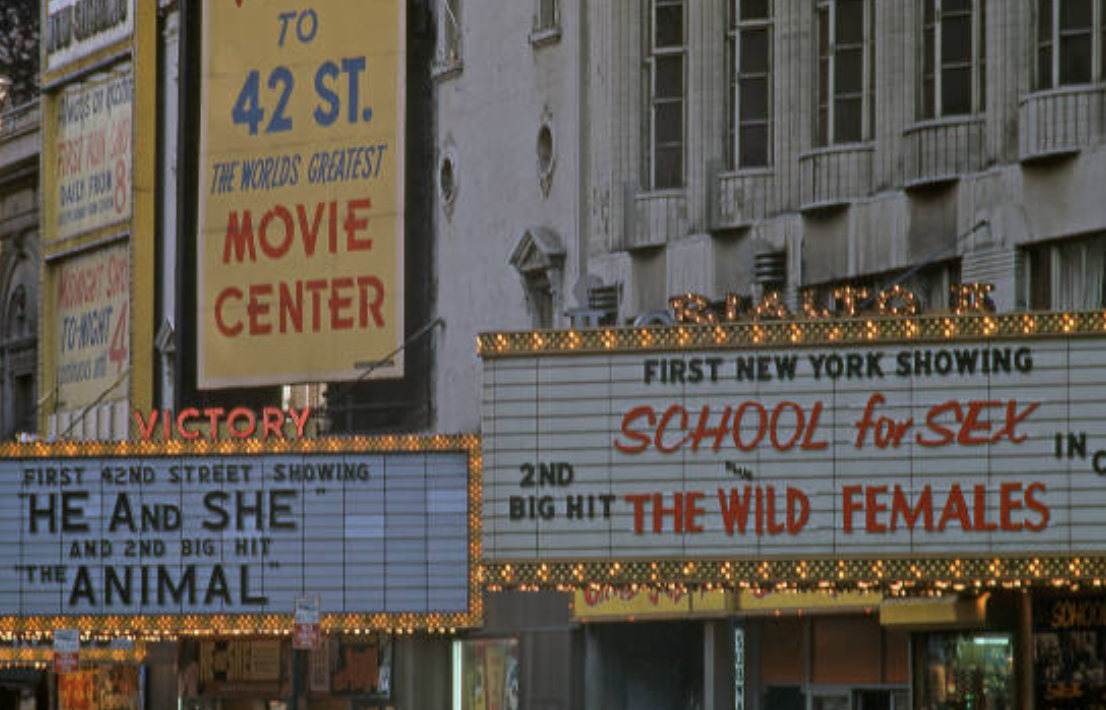
“A dance floor with a DJ” was not a norm for nightclubs until the “discotheque” of the 1970s, and much as many big rap, goth, and electronic “club hits” never saw on-air promotion, “what people were listening to in the 1960s” was not just a matter of radio airplay
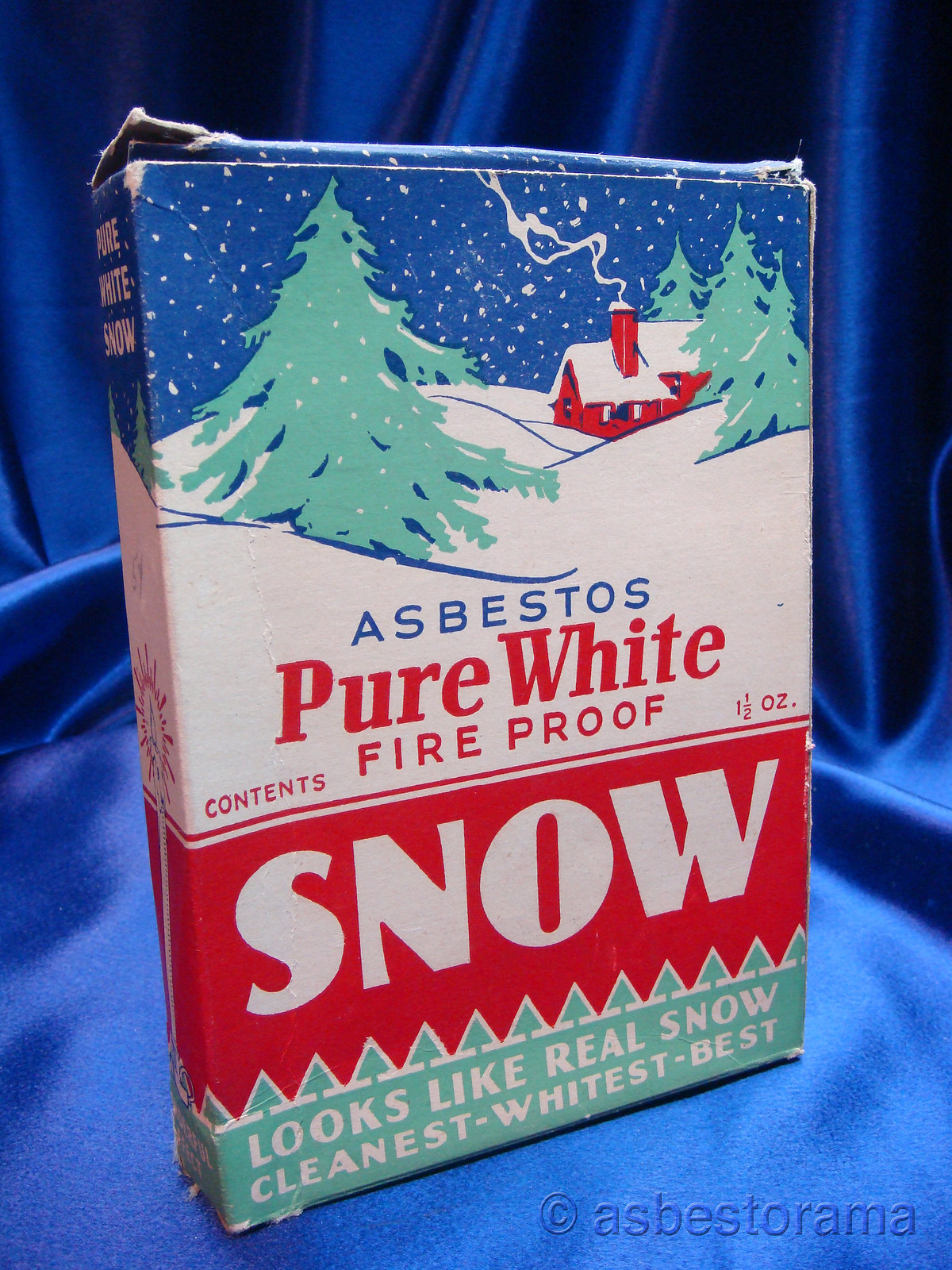
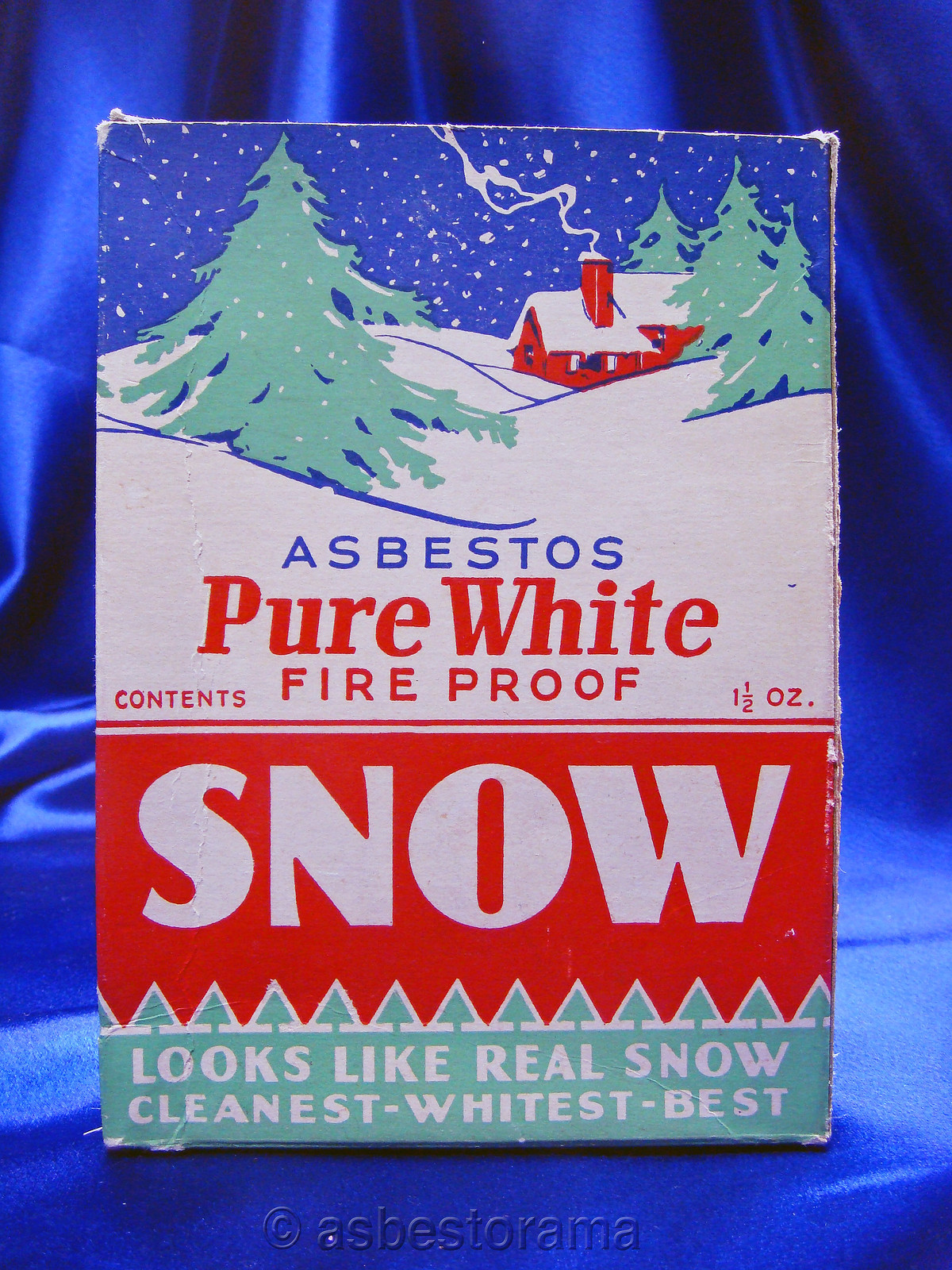
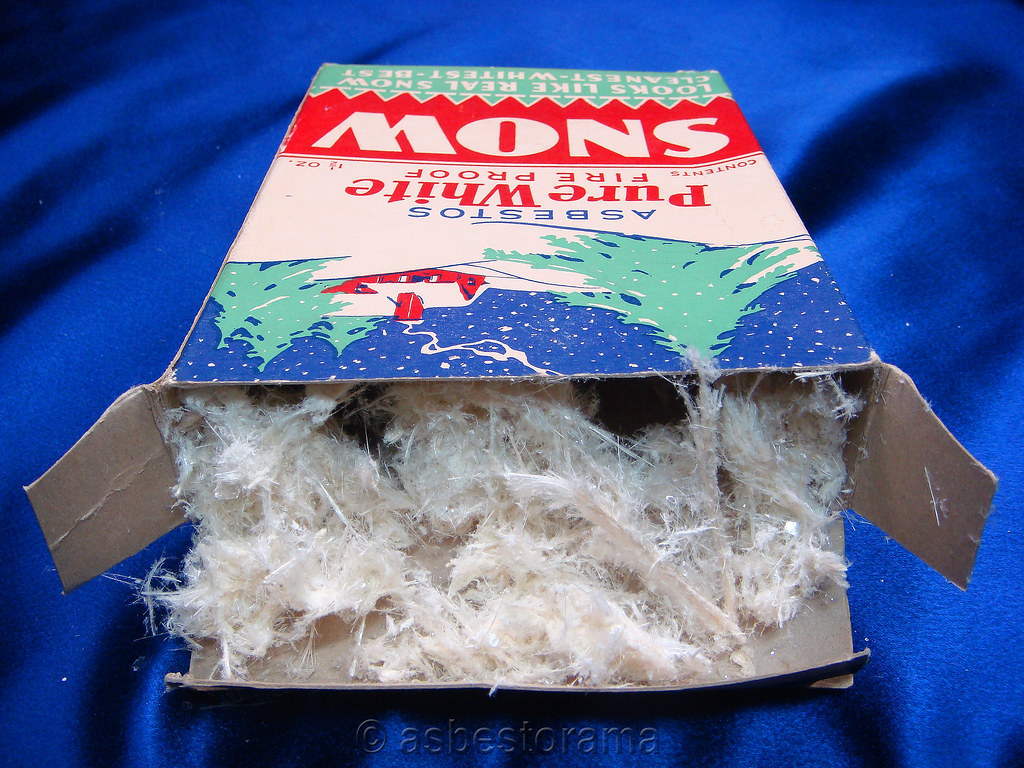
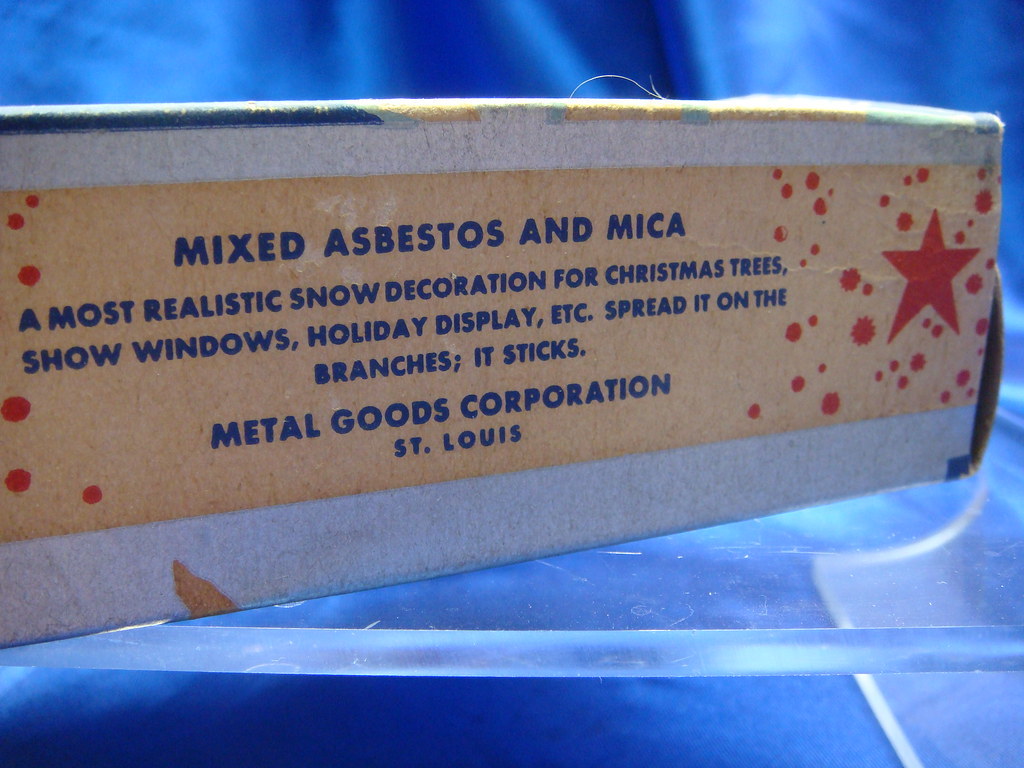
Although labeled as “Pure White” Snow, the highly fibrous material inside this vintage carton is actually beige; reflecting the fact that it is primarily amosite, amphibole asbestos (also known as “brown asbestos”).
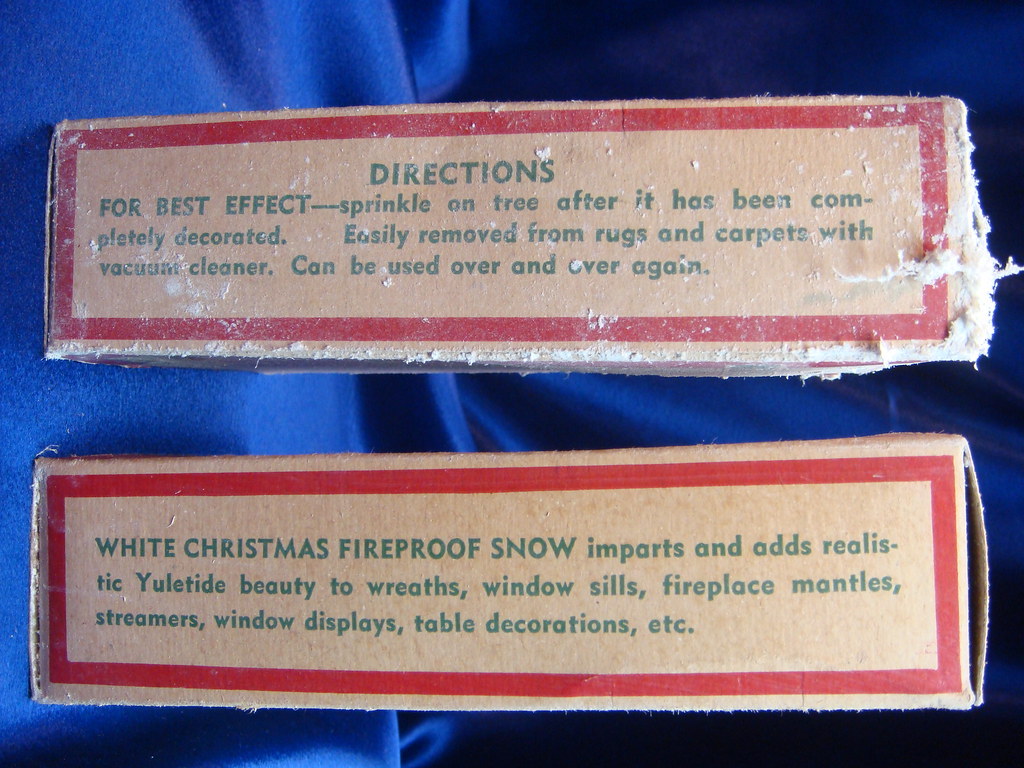
Many films shot in the early 20th century, including the likes of The Wizard of Oz, featured their actors being sprinkled with fake snow. Little do viewers realize, this effect was created by showering performers with chrysotile asbestos fibers, small snow like particles that were once used on movie sets, in department store displays, and even in private homes. Everybody wanted to get in on the fake asbestos snow action. And why not? From the mid-1930s to the 1950s, asbestos was seen as a versatile and harmless substance.
To date, it’s difficult to know the hazard that was presented by asbestos-based fake snow products. Most asbestos products involved some quantity of the fiber being used as part of a chemical compound that bound the fibers together, making them difficult to inhale until the material was damaged. But fake snow, often used in displays or in family homes, was simply pure white asbestos fibre piled up in drifts. Anyone who had any contact was inhaling deadly fibers in quantities normally associated with those working in asbestos mines.
Thankfully, you can safely shop for fake snow this Christmas knowing you won’t be exposed to asbestos…but spare a thought for the innocent workers and householders of the past, many of whom are still living with the consequences of the 20th century’s addiction to asbestos.
Between the increasingly dated midcentury songs and TV specials, the legacy prewar department store stuff like the Macy’s parade, and Hallmark movies about rejecting yuppie urbanity for idealized small-town life, Christmas in the US is increasingly an American Golden Age nostalgia festival
Northern East Coast American Golden Age nostalgia fest. There is always snow at Christmas, but not too much and it isn’t that cold out, really.
Also this “Golden Age” is exactly like 7 years of the late 50s. For white people. Who had money.
And were America.
(It was the “Camelot” early 60s, too. And the now-“Rust Belt” through Chicago to Minneapolis.)