shrine to the prophet of americana

#amhist (618 posts)

I’m at a low point on my emotional/energetic cycle, and on top of that my laptop caught some battery issues and keeps restarting...

I’m at a low point on my emotional/energetic cycle, and on top of that my laptop caught some battery issues and keeps restarting during startup, leaving me with this iffy reblog-as-link mobile app.

Soooo, not much posting lately. I’ve got ideas kicking around for two American history effortposts though, drop a note if there’s one you’d like me to prioritize.

They are:

1) “Holy Shit You Guys The Post Office Was Important”

(When people say the federal government used to be just the post office and the military that’s close enough to true, but it’s one of those “all you have is a hammer” situations - the Post Office was why we have vertically integrated political parties [on several accounts], it was key to creating a coherent American literature and culture, it was the first domestic spy agency, it was long a battlefield of cultural subversion and countersubversion, it was how the government first started to establish control over railroads, with Rural Free Delivery and parcel post, Sears & Roebuck became the Amazon of its day. Actually, a better title might be “The Post Office: the Internet of its Day.”)

2) “Okay Seriously Who *Did* Build Roads When The State Didn’t?”

(Local roads developed organically [under government-enforced common law] but were inevitably placed under government control when maintenance ran into free-rider issues. Medium distance point-to-point roads could be built privately [though often with use of eminent domain or other state support] but the owners often actively resisted connecting them to any useful network, and in any case they tended to degrade for lack of maintenance and fall into state hands. [Even with tolls such roads usually lost money on operations, their profitability coming by way of increasing the value their builders’ newly accessible landholdings.] Long-distance roads have always been state projects, but that’s kinda minor since roads as a method of long-distance travel and transport are actually a pretty recent innovation in America.)

Eh? Eh?

Tagged: history amhist

This past year, fourteen cyclists died on the streets of London. With the dangerous city roads in mind, British architect Norman...

rikerist:

bison-dele:

99percentinvisible:

This past year, fourteen cyclists died on the streets of London.

With the dangerous city roads in mind, British architect Norman Foster has unveiled Skycycle: a network of car-free bicycle paths elevated above London’s railways. 

If this concept is approved, it could actually appear in 20 years. 

(Thanks to robertsharp for tweeting us this tip!)

I’m a cyclist and this looks stupid as hell.

great idea i bet they’re definitely going to run elevated bicycle paths into working class neighborhoods where ppl actually ride bikes b/c they can’t afford cars and not just run elevated bicycle paths into wealthy districts where ppl only ride bikes for fun because it’s not like urban cycling promotion campaigns have already been largely directed at making biking safer and easier for the wealthy while leaving it just as dangerous and inconvenient for the ppl who are most reliant on urban cycling LOLLLLLLLLLLLLLLLLLLLLLLLLLLLLLLLLLLLLLLLLLLLLL

Los Angeles had one of these more than a century ago.

You know, paved roads took off in America in the late 19th century in response to the desires of well-off urban bicyclists who liked to take pleasure trips into the countryside. It was called the “good roads movement”.

The “safety” (chain-driven) bicycle had just gotten invented and bicycling boomed big. Armies were considering swapping bicycles for horses in their mounted infantry units. The urban middle classes took to them as a means of personal transportation that didn’t require feed and stabling. The problem with both was that unpaved dirt roads were difficult and damaging at the best, outright impassable at the worst.

And so there was a big drive to pave country roads. A lot of the activists were gentry youths who were into the pastoral-twee Romantic esthetic (but not enough to, you know, actually abandon economic power centers and go back to the land) and appreciated pleasure riding through the countryside.

It was pitched in pamphlets and traveling presentations to local farmers (America was overwhelmingly agricultural at the time) as for their benefit - no more rutted roads that turned to quagmires in rainy season, breaking cart wheels and impeding access to markets.

Which, fair enough. Ill-maintained dirt roads were a bitch, but on the other hand those farmers were the ones who elected the road commissions, and didn’t care for the taxes or corvee labor necessary to maintain them.

The corvee labor thing was effectively experienced by landowners as a cash tax, as they would hire others to discharge their obligation. This took advantage of the vast pool of unlanded seasonal labor an agrarian economy requires at planting and harvest time. In summers these vagabonds would tend to wander the countryside spending their wages and raising hell. Summer road work was a two-birds-one-stone solution, arguably preferable to the other traditional solution of hiring them as soldiers and starting minor summer border wars.

(Compare the ability to hire replacements in the Civil War draft, compare also the way that my father worked on a 1950s road crew that was effectively a summer job program for high school and college boys.)

And so if they didn’t want to pay for literally dirt-tier technology, fuck if they wanted to pay for this. So the appeals often included offers of annexation into the nearby cities, who would bear the burden of paving (and other utilities) on their broader tax-bases. In return for city politicians attaching their names to the project and expecting reliable votes in return.

And another force paying for all those pamphlets and whatnot was land speculators and developers. What suburbs existed had been connected to the urban core by trains, trams or omnibuses. The high capital cost of which limited routes and stops, which limited how much land could be profitably developed to that within walking distance of a line or stop, promoting dense village-style development. Paved roads and bicycles opened the way for lower-density diffusional development.

An ironic thing is that just as the momentum built for this, the split-log drag was invented, which was an incredibly simple device that made regrading and maintaining dirt roads much much easier.

So the roads were paved, the bikes went out, the suburbs got built, eventually the bikes became motorcycles, eventually the motorcycles became automobiles. And suburban sprawl, the abandonment of collective transportation, and the paving of paradise began about a century and a half ago, under a coalition of machine politicians, profit-chasing land barons, and twee young fixie-riding bourgeois bicycle activists.

Tagged: history amhist good roads movement bicycling transit

Rand Paul on disability and welfare

Rand Paul on disability and welfare

slatestarscratchpad:

shlevy:

multiheaded1793:

multiheaded1793:

slatestarscratchpad

Let me quote a bit of this:

At a breakfast event Wednesday, Jan. 14 in New Hampshire, the Kentucky Republican and potential presidential candidate spoke out against a public safety net that catches too many people who don’t need help.


I’m not sure why I was tagged in this, but coincidentally I have a response.

Rand Paul is a doctor. Ron Paul is a doctor. The entire Paul family is loaded with doctors and very familiar with medical practice. They’re coming from a place of experience, but it’s experience very heavily filtered by their specialty and their preconceptions.

So my impression of the disability system is that it simultaneously lets through lots of people who don’t deserve it while rejecting the people who really need it. It seems to be a clear case of the joint over- and under-diagnosis I’ve written about.

I don’t know enough to know whether the system is reformable, but I’m pretty sure burning it to the ground would hurt way more than it helps. This is part of why I support a basic income guarantee. Give it to everyone, no fuss, no need to spin a web of lies, no need for a two-year vetting process. That would be a principled libertarian solution Rand Paul should be able to get behind.

Disability insurance and workers’ comp fraud is, even more than unfaithful spouses, the bread and butter of private eyes. Because hiring a guy at $50 an hour to sit outside people’s house for days hoping to take a picture of someone claiming they’re in too much pain to perform remunerative work puttering around doing home improvement pays off.

You know what federal initiatives came before and served as a precedent for Social Security*? Railroad retirement and disability. America used to run on rails, and even in the Lochner era they could be put across as a matter of interstate commerce.

And how’s that going? Well, in the absence of any effort to root out fraud, a few years ago it turned out the Long Island Rail Road was running a 97% reported disability rate.

(* the other obvious precedent would be wartime soldiers’ pensions, which used to be a major line item in the federal budget. Like, over and above the major current VA and &tc. share of the federal budget.

You know, on several different occasions American war veterans have laid siege to the national capital demanding money.

The postwar ejection of women from industrial work, the G.I. Bill, and to an extent the development of the Cold War military-industrial complex came to forestall another go-round. It was not immediately clear that the economy wouldn’t return to Depression, only with the whole population primed for war and trained to think of the USSR as a friend.

Remember, disgruntled veterans were the core of all the European interwar revolutions, socialist AND fascist. So, best to keep them occupied. And it worked! It was a whole two and a half decades before a mob with veterans at its core laid siege to the capital demanding surrender in a foreign war.)

Also, I am flinching in anticipation of when the New York Post discovers this blue website, connects the dots between tumblr-sympathetic but otherwise unpopular themes, and runs a headline reading “Communist Trannies Are Encouraging Your Kids to Run Away, Cut Off Their Dicks with Obamacare, Become Whores, and Claim Disability Because Working Makes Them Sad”.

Tagged: amhist history disability insurance

publications I remember being reprinted as special addenda in newspapers

The Starr Report

Industrial Society and Its Future (“The Unabomber Manifesto”)

(can someone who was reading on paper tell me if the 9/11 Commission Report made it?)

Tagged: amhist it's media

It's weird how firmly state nullification is equated with Confederate, pro-slavery sentiment, if you consider the history of the...

It’s weird how firmly state nullification is equated with Confederate, pro-slavery sentiment, if you consider the history of the Fugitive Slave Act.

Tagged: history amhist fugitive slave act nullification state nullification

A critique of sex positivity.

None

swampgallows:

arcresources:

A critique of sex positivity.

“It’s as if “sex-positivity” has come to mean “you must instantly and without criticism accept others’ sexual preferences and choices.” When exactly did sex become the one topic that’s above reproach among feminists?”

There’s a canonical answer - 1992, the election of Bill Clinton. The realization that while the radfem-cultural conservative alliance that followed from the political logic of the anti-sex side of the Sex Wars had produced some sound and fury but no lasting impact, the further realization in the wake of the Anita Hill hearings that the alliance had always been purely instrumental, and if a campaign that was sorta branded around “culture war” couldn’t win there wasn’t even any point to that.

Meanwhile the pro-sex side and its alliance with cultural liberalism, the residue of midcentury civil libertarianism, liberal capitalist media, and gay men (AIDS patients for the sympathy, rich suits for the power - Clinton was the HRC’s first endorsement) could claim a victory - keep in mind that after 12 years of a Republican executive, electing a Democrat - any Democrat - as president was considered a major upset.

I mean, “claim a victory” in the same sense that Boston barstoolers claim a victory when the Pats win, and “for feminism” in the sense of… feministicish promises, most explicitly of (intentionally) appointing justices who would uphold Roe v. Wade.

I mean it’s not like the anti-sex radfems went away after this, but that at this point they were no longer any threat to matter and could be safely ignored, tossed down the memory hole just in time for third-wave funfeminism to be incorporated into the civic catechism.

Tagged: amhist history

The West Point Egg Nog Riot of 1826, In West Point’s early years the academy could hardly be called a prestigious college.  It...

peashooter85:

The West Point Egg Nog Riot of 1826,

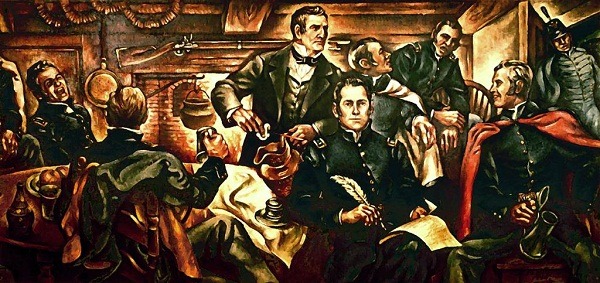
In West Point’s early years the academy could hardly be called a prestigious college.  It was practically a remote army outpost which doubled as an educational institution for only ten cadets.  There was no real curriculum, few rules, and it was run with an “anything goes” attitude.  This all changed after the War of 1812, when it was realized that the United States needed more highly trained and educated officers.  in the 1820’s Congress massively expanded the academy, and placed it under the command of Col. Sylvanus Thayer.  Now known as “The Father of West Point”, Thayer would instill professionalism and military discipline among the cadets.  Among the many rules he set on the cadets was a prohibition on alcohol, thus making West Point a dry campus.

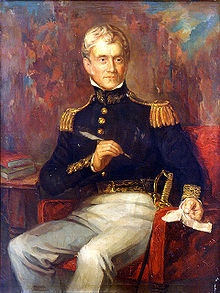
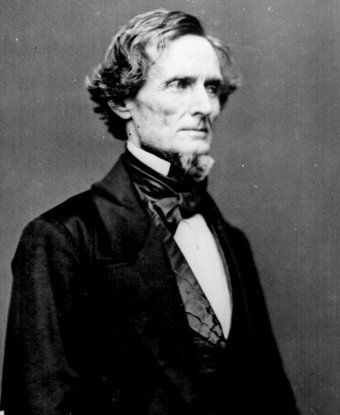
Today many colleges and universities have similar rules, and the cadets of West Point disobeyed those rules just like students do today.  On Christmas Eve of 1826 the cadets decided that they wanted a bit of whiskey in their eggnog to celebrate the holidays.  They turned to Cadet Jefferson Davis, future President of the Confederate States.  Davis had contacts with the local saloons. He didn’t smuggle in a little bit of whiskey, he smuggled in four gallons of whiskey.  Within a few hours, the North Barracks were awash in drunken parties and revelry.  

The two officers on duty, Captain Ethan Allen Hitchcock and Lt. William A. Thornton tried to break up the wild parties, in the course of which they were threatened with swords, bayonets, and knives.  Thornton was hit over the head with a wooden club while a drunken cadet pulled a pistol on Hitchcock and shot at him.  Soon the situation broke down into a pitched riot a drunken cadets smashed glass windows, threw bedding and other materials out of the windows, broke furniture, ripped the banisters off steps, and generally all around trashed the place.  There was a call to summon West Points garrison of regular Army troops to quell the riots, but in the end it was decided that it would be best to let the cadets sober up.

In the aftermath of the riots, 19 cadets were expelled from West Point.  Many others were severely punished, among them Jefferson Davis and future Confederate General Robert E. Lee.

Tagged: amhist history

Sovereign Polities Wholly Incorporated into the Territory of the United States of America* State of New Hampshire (1781)...

Sovereign Polities Wholly Incorporated into the Territory of the United States of America*
State of New Hampshire (1781)
Commonwealth of Massachusetts (1781)
Colony of Rhode Island and Providence Plantations (1781)
Colony of Connecticut (1781)
State of New York (1781)
Commonwealth of Pennsylvania (1781)
State of New Jersey (1781)
The Delaware State (1781)
State of Maryland (1781)
Commonwealth of Virginia (1781)
State of North Carolina (1781)
State of South Carolina (1781)
State of Georgia (1781)
State of Vermont (1791)
Republic of West Florida (1810)
Republic of Indian Stream (1842)
Republic of Texas (1845)
California Republic (1846)
Oregon Territory (1849)
Confederate States of America (1865)
Republic of Hawaii (1898)
Empire of Japan (1947)

Sovereign Polities Formed from the Territory of the United States of America
Confederate States of America (1861)
Republic of Cuba (1902)
Republic of the Philippines (1946)
Republic of Korea (1948)
Federal Republic of Germany (1949)
State of Japan (1952)
Federated States of Micronesia (1979)
Republic of the Marshall Islands (1986)
Republic of Palau (1994)

* in keeping with American tradition, we will politely gesture towards and subsequently ignore the notion of Amerindian tribes and Samoan chieftaincies as sovereign polities.

Tagged: history amhist united states of america united states sovereignty

Origins of the police

Origins of the police

Trueish enough. I’ve mentioned how 20th century American urban policing was heavily modeled after the FBI. Which was heavily modeled after the Pinkertons. Who were a nationwide mercenary police force with a specialty in combating (quite literally) labor unrest.

My one complaint is that it totally overlooks the British/American heritage of sheriffs, and posse comitatus, as an intermediate force between feudal men-at-arms and towns’ “hue and cry”. But then, this is a Marxist analysis and Marxist frameworks have never quite known what to do with rural yeomanry (see Lenin’s vacillating between the New Economic Policy and then “dekulakization”, or the inability of the urban and rural radicalisms of late 19th century America to form productive alliances even in areas of mutual strength like western New York, Minnesota, and Wisconsin).

Tagged: amhist history police

Is there a collective term for small polities just outside the border of a larger polity that make their name off of, I guess,...

Is there a collective term for small polities just outside the border of a larger polity that make their name off of, I guess, legal arbitrage? Providing things that are outlawed in the larger polity?

I mean what Monaco and its casinos are to France, or Macau and Singapore to China and southeast Asia, or Amsterdam and its drugging and whoring are to northern Europe. (Or maybe Bahrain to Saudi Arabia, but I’m not that clear on the specifics.)

I’m thinking mostly in terms of vice, but I suppose there’s major overlap with offshore banking, and there’s often a bit of smuggling based in the area.

America used to have Tijuana on the West Coast, and Cuba on the east. In the early 20th century Havana was a major American mafia town; the Cuban revolution and the need to create a replacement is a big part of how Las Vegas developed. Lonely desert Nevada was plenty willing to make a buck off legal arbitrage with looser gambling, prostitution, and marriage laws - offering no-fault divorce when other states didn’t, but also offering quick and easy marriage when other states required minimum ages, or parental permission, or waiting times and announcement, all intended to prop up family/patriarchal control of courtship in the face of the stability-undermining effect of frontier mobility. (Nevada here represents the solvent effect of frontier mobility. ‘Merica!) All the goofy Elvis instant-marriage chapels now are a relic of this, back when “elopement” was more of a real, actual thing. Just like Gretna Green.

You know, in an alternate timeline it could have been Hot Springs, Arkansas instead. For a while it was. Look at that page. “In 1944, the Army began redeploying returning overseas soldiers; officials inspected hotels in 20 cities before selecting Hot Springs as a redistribution center for returning soldiers… The soldiers had time to enjoy the baths at a reduced rate and other recreational activities.” Hmm.

Look at this official National Parks Service history: “Bathhouses [treating venereal diseases] employed special attendants, mercury rubbers, to administer the mercury ointment. The patient gave the prescribed mercury to the rubber who administered the ointment with either bare hands, a bath mitt, or a brush; later the rubbers wore gloves.” “[Attendants] took monthly physical examinations to make sure that patrons were not exposed to contagious diseases.” Hmmm.

Getting back to Havana, in other aspects, Miami picked up the slack. And Tijuana, I guess you can still go for prescription drugs, and San Diego teenagers down to drink, but Las Vegas stole a lot of its thunder too.

Of course now that we’ve got air transport some of that stuff’s moved even further offshore to, say, Thailand. But then, I’d be surprised if that region ever didn’t have that stuff. It’s right at the nexus of the Chinese and Indian Ocean coastal and the Asian archipelago trade routes, which means sailors; you’ve got mouths of the the Mekong and Chao Phraya systems, which means you’ve got the guys moving trade goods along inland routes (You know what we call guys moving trade goods along inland routes today? Truckers.); plus it’s been on the borderlands of various land empires, which means expats, functionaries and soldiers posted away from home.

(You know where in American history inland and coastal shipping met at the borderland of multiple empires? New Orleans.)

Look at all the temples, you’ll see how far the tourist trade goes back. Religious complexes are and always have been tourist sites. A lot of smaller ones, boasting the foot of St. Whoever or the largest statue of Buddha of this particular material in this particular pose, are like Wall Drug or the world’s largest ball of whatever - tourist traps located just off an otherwise featureless segment of major trade and transit routes, surviving by drawing in travelers eager for distraction. While the bigger ones become destinations of pilgrimage in their own right - the statistics I can find seem pretty speculative, but I hear around 10% of Muslims make Hajj in their lifetimes, while 70% of Americans visit one of the Disney parks.

(You know what’s a famous story about the coexistence of prostitutes and religious tourist destinations? The Hunchback of Notre Dame.)


Tagged: history amhist tourism sex tourism

Pretext, Past, Posterity

I don’t think the question of what really actually truly happened in Ferguson - at any stage - is really even all that important, the whole thing was just a pretext anyway.

- = - = -

Benghazi. I swear this loops back in in three paragraphs in a productive way, stick with me. The official Republican complaint about Benghazi - what even was it? Something about not sending backup, or a coverup? Whatever.

But fundamentally it’s a pretext. I mean some people sincerely, unkshakeably care about the pretext. But the actual issue is about the Arab Spring, the actual issue is “Who Lost The Maghreb?”. With the implied answer “the Democrats, by doing that dumb Carter thing where you only support foreign allies who are nice and polite and democratic and don’t repress and torture and massacre their citizens, and then when the ones you abandon fall and the people who replace them - the people who had been being repressed and tortured and massacred - come to power and start doing shit that you hate, that is completely incompatible with the things you most emphatically and sincerely want, go ‘Oh shit, right, that’s why we were supporting that guy in the first place’”.

But the awkward thing, the reason they run with this pretext instead of saying it explicitly (like they did with the original “Who Lost China”), is that going Carter in the Ummah didn’t start with Obama, this started with Bush the Younger and the neoconservatives, and a lot of it that happened under Obama’s watch was under the influence of holdovers from the Bush era - Robert Gates and all that. And in any case unlike Carter, Obama had a second term in which to reverse course himself, and now the military is back running Egypt and Mubarak was just released scot-free.

- = - = -

Ferguson, Mike Brown, all that’s a pretext. And a lot of people sincerely, unkshakeably care about the pretext, but the actual issue is that even as the civil rights movement of the 1950s-70s has been institutionalized as a sacred part of our national history, the actual gains made - “let’s flip the national switch away from repressing black people, and towards helping them” - have been allowed to gradually erode. Because white people found that completely incompatible with the things they most emphatically and sincerely wanted, and remembered why they had the switch on repress in the first place.

And the awkward thing, that makes this difficult to address head-on, is that it was “First Black President” Bill Clinton that blessed the erosion. The Democrats had, since LBJ, been the party of “let’s keep the switch in the helping position”. And between LBJ and Clinton, 1968 to 1992, 8 whole terms, the Democrats only won one term as President. Carter. With the whole Vietnam, Watergate, Nixon tailwind at his back.

And Clinton got elected, and more significantly got re-elected! By taking the Democrats’ hand off the switch. Federal funding for 100,000 more cops. Welfare reform. (Subtextually, federal funding for how many fewer black babies?) School uniforms, which was rinkydink but was the idea was “yes, we are willing to walk back ‘60s-style freedoms in order to further discipline urban black kids - you know, the gangbangers, the crack babies, the superpredators.”

Sister Souljah - I used to wonder what that was even about, I’m no rap genius but I at least recognize big names and I’ve never even heard of her in any other context. Does anyone cite Sister Souljah as a musical influence? But I’ve come to realize that was the point - deliberately picking a fight with someone who didn’t actually matter (and thus bore no cost) - just to make a point, a branding point.

“The Democratic Party: Once Again Willing To Tell Uppity Blacks To Stuff It”

“First Black President” Bill Clinton took the Democrats’ hand off the switch and at least let other hands pull it back to “repress”. And under actual first black President Barack Obama, of the Democratic Party, who owes two elections to being black, and at least one to black votes entirely, putting it back hasn’t even been on the agenda.

And I can see how you’d get upset.

-=-=-

“What we really need is for everyone - black, white, whatever - to respect each other.”

Okay, that’s correct, and that’s impossible, because here’s the thing. When people say they want “respect”, what they mean is they want other people to acknowledge their own conception of the world, where they’re the protagonist, and their story is the main plotline, and everyone else is, I guess, NPCs? Or at least, at least for those other people to not explicitly challenge that conception, to allow them to maintain that fiction to themselves.

Which doesn’t necessarily set you at odds, a good share of NPCs are allies, or questgivers, or shopkeepers, or background characters, and most people prefer the paragon path, and in the normal course of things you get along fine.

But only as long as there’s nothing important at stake that can only be resolved by conflict. If that NPC is the only source for a good drop, and you’re sure they’re not going to be critical to any of your future quests…

“He was murdered for jaywalking!” Even accepting that framing, here’s the thing. Physically being in the street is important. The inciting incident of the Hamburg Massacre, back during Reconstruction, was white guys angry about black guys standing in the road blocking traffic.

Because two objects can’t occupy the same space at the same time. The fundamental example of something that can only be resolved by conflict.

You know, if you look in the right parts of the web, where white people complain about black people in complete, properly spelled, passive-aggressive sentences, one of the most commonly recurring stories is black guys walking, or having a conversation, in the middle of the road, and they can see I’m waiting, and they don’t get out of the way, don’t even make an effort to let me through.

(There’s a tumblr post with half a million notes on it. Right here.

i know i give white people a lot of shit but u guys are really nice. like when the light turns green and there’s a white pedestrian that’s almost across the street u guys always do that jog thing. i know it’s kind of insignificant but i appreciate it white people. u and ur half jog thing.

)

The flip side of that story of course is “what the fuck this is a public road and I’m as much the public as you are so why the hell would you think it’s my duty to stop using it how I want so you can use it how you want, Mr. King Shit of the World?”

(“Mr. King Shit of the World” is the hostile way of saying “protagonist”.)

And you know how much you fucking hate it, how much of a personal affront you take it when NPC pathfinding is so fucked up that they block a door and you can’t get through? (Alternately, when collision detection is set up so that random NPCs can force you out of the way, maybe knock you out of a dialogue tree or screw up a quest?)

Gives you the unshakeable sense that this world was not properly designed for you, for the purpose of furthering your plotline.

And if these issues came up in the last update, you’d want a patch to revert them. You’d go on the devs’ forums and bitch forever, it’s like the devs don’t even care about the players, and you’d threaten to never support anything they did again, take your money and give it to some other devs, and devs, WHERE’S THE FUCKING PATCH.

And the patch, of course, is white supremacy. (It also buffs your class so you’re not grinding for fucking ever just to spend your loot on repairs and potions, and reduces your random encounter rate in safe zones.)

“But this isn’t a game, this is REAL LIFE!”

If you ever end a sentence with “REAL LIFE” in all caps you are being an idiot, I guarantee it. Yeah, the fact that the stakes of this game are real, that’s gonna make you more willing to let things slide? That’s not how people work. Not enough of them to hold a coalition together.

- = - = -

The activists are worked up! There’s a new civil rights movement coming! We! Will! Fight!

The veneration of the civil rights movement of the 1950s-60s, that makes people think that’s the only and inevitable way this can play out. Let’s set aside the way those gains eroded with time (same as the movement of the 1860s-70s, as Reconstruction gave way to Redemption). You know what I’m reminded of? The civil rights movement of the 1910s-20s.

You didn’t hear about that one? The founding of the NAACP, Garveyism, W.E.B. DuBois, black troops returning from European service in WWI, sharecroppers moving north to work the factories, pumped up to reclaim the promise of Reconstruction. Meanwhile, a countrywide surge in leftist radicalism, and new wave of immigrants asserting their claim on America. You don’t hear about it, because it didn’t win. The Palmer Raids, the First Red Scare, the Red Summer of 1919, the Tulsa Riot, the founding of the Second KKK.

Well, let them try, it won’t matter because trends suggest the, aah, “Coalition of the Ascendant” will gain overwhelming dominance in the intermediate future, right? Yeah, white Americans noticed that back then, too. That’s why they cut off immigration and started pushing eugenics.

Not convinced things’ll turn out like that this time around, but they could. Learn your history, kids, it keeps you from looking the fool.

- = - = -

I grew up in the Huxtable ‘80s and the End of History ‘90s, I kind of expected the two classic nations of America to merge, black into white, just as the white ethnics had the generations before.

Who knows what we’d call the amalgam, maybe still “white” just to play up the ridiculousness of it all, maybe some hyphenated neologism to bridge the gap, like we played up “Anglo-Saxon” to meld the English and German populations that originally formed the white American nation, or coined “Judeo-Christian” later on.

But I’m less and less certain of that. You look at the people saying interesting things about race these days, they’re pushing other possibilities, each with their three-letter acronyms. The left-racebloggers pushing “PoC”, “Persons of Color”, the idea that there’ll be white on one side and on the other this black-hispanic-asian-amerindian coalitional nation. The right-racebloggers “NAM”, “Non-Asian Minorities”, suggesting a white/asian against black/brown split.

And then there’s always the possibility that things’ll go the classic American route, where there’s black on one side and everybody else eventually joins “white”, earns a spot specifically defining themselves against “black”. Given a choice between the two, it’s an awfully appealing option.

- = - = -

Race is the fundamental tragedy of American history. A tragedy being where everyone’s understandably, sympathetically human, even (especially) in their failings and shortcomings and trespasses, and the inevitable consequence is suffering.

Tagged: history amhist afamhist race

the reason “looney tunes” is called what it is the same reason “merrie melodies” is called what it is. cartoons were the first...

sinbadism:

the reason “looney tunes” is called what it is the same reason “merrie melodies” is called what it is. cartoons were the first music videos! i’m not kidding!

Tagged: amhist not wrong

Why Does Los Angeles Attract So Many Cults?

di-kot-o-me:

“We went deep on the Los Angeles obsession with cults, cultists, cult-like groups, organizations we’d never refer to as cults for legal reasons, organizations that are definitely not cults but are kinda weird, and other related subjects. You don’t have to go into a trance or commune with any ancients to relive it—here it is, in all its alien superbeing glory:

An introduction:

· An Introduction to the Long History of Los Angeles Cults
· Ask the Experts: Why Does Los Angeles Attract So Many Cults?
· How to Start Your Own Los Angeles Cult in 14 Easy Steps

The buildings:
· 8 Notorious Los Angeles Cult Locations: Then and Now
· 7 of LA’s Most Magnificent Examples of Masonic Architecture

The juicy stories:
· The Pasadena Haunts of the Occultist Who Cofounded JPL
· The Earliest and Weirdest LA Cult Stories: 1700s to 1940s

The Manson Family:
· The Story of the Abandoned Movie Ranch Where the Manson Family Launched Helter Skelter
· Mapping 13 Key Locations in the 1969 Manson Family Murders

The health-obsessed:
· How Cultists, Quacks, and Naturemenschen Made Los Angeles Obsessed With Healthy Living
· The Respectable LA Houses of 1970s Hippie Cult The Source
· Café Gratitude and the Cult of Commerce

image

- Curbed LA’s Cults Week

Tagged: amhist los angeles

kontextmaschine once implied that the ‘cultural marxism’ stuff was pushed by capitalism against actual marxism. was that a...

countersignal:

kontextmaschine once implied that the ‘cultural marxism’ stuff was pushed by capitalism against actual marxism. was that a thing?


Yeah, well, The Establishment, and the CIA, being fairly exempt from electoral pressure, had the latitude to be competent. After WWII there was a lot of actual, real support for communism in Europe, on either side of the Iron Curtain. Partially for the same reason as the fascist renaissance in ex-Warsaw bloc countries - they reaped the goodwill of being the ones to really stand up against The Hated Occupiers - partially because there really were a lot of poor ex-peasants coming from a century-long tradition of struggling to cast off the remnants of feudalism.

And the Marshall Plan and all that, we tried to guide who we could to Yay Capitalism, and rig electoral systems to keep the commies out - huge cash dumps to friendly parties, election rules weighted to get NATO-friendly results, skullduggery where necessary - above all we kept the interior ministries (who pay the police and count the votes) friendly - coups where necessary.

But there were some people we were never going to get with that, so we at least tried to guide them to less-bad fallback positions. If you want ownership of productive forces in common, in accordance with the general will of the people, how about a welfarist social democracy with nationalized industry! Like England, which spent most of the Cold War under a Labor party proclaiming Clause IV. And if they were absolutely dedicated to communism, they were guided towards a form that was at least not a cadet branch of the Lenin dynasty ruling in Moscow.

And that happened domestically, too. The Soviets did promote communism in America for their own purposes yes, but it’s not like communism hadn’t had a following in America before that, particularly among the downtrodden and the thoughtful types. Communism didn’t firmly equal Marxism equals Russia until the Russian Revolution, but Edward Bellamy didn’t even live to see the 20th century. And so they were ripe for co-opting too.

If blacks organize and press identitarian claims as blacks, or pan-Africanists, well at least they weren’t organizing and pressing their claims as communists, which was a real, live possibility. If the students are pressing their claims as hedonists… (there was major campus unrest in the 1950s over “in loco parentis” parietal rules, because what’s the point of having women around but to fuck them?)

And of course, to the extent the Soviets were actively trying to undermine and fracture our society with art and ideas, we were doing the same thing. Am I saying we were morally equivalent? Yes, of course. Everything is morally equivalent to everything at a value of null. More importantly, strategically equivalent.

Encounter magazine, dissident authors, abstract expressionism. We didn’t stir up tensions along racial lines so much as religious - Muslims in the ‘Stans, yes, also Catholics in Poland (JPII wouldn’t be the first time a papal election turned out awfully convenient for a dominant power, and we were into some darkside shit in Italy that touched the Vatican at the margins…) and Jews in Russia.

You know, in national mythology, “the Nazis were bad because” didn’t really end in “the Holocaust” until the 1970s? “The Jews” were awfully communist-associated, after all. But then the white ethnics were integrated into white, and the various Israeli wars shook things up to the point they ended up on our side (and transformed their public image from kibbutzim to Rambos), and we managed to cast “Jewish repression” as the bad thing they did, and so it goes, so it goes.

Tagged: history cold war amhist

New York’s Pneumatic Tube Mail Network The pneumatic tube mail was a postal system operating in New York City from 1897 to...

mapsontheweb:

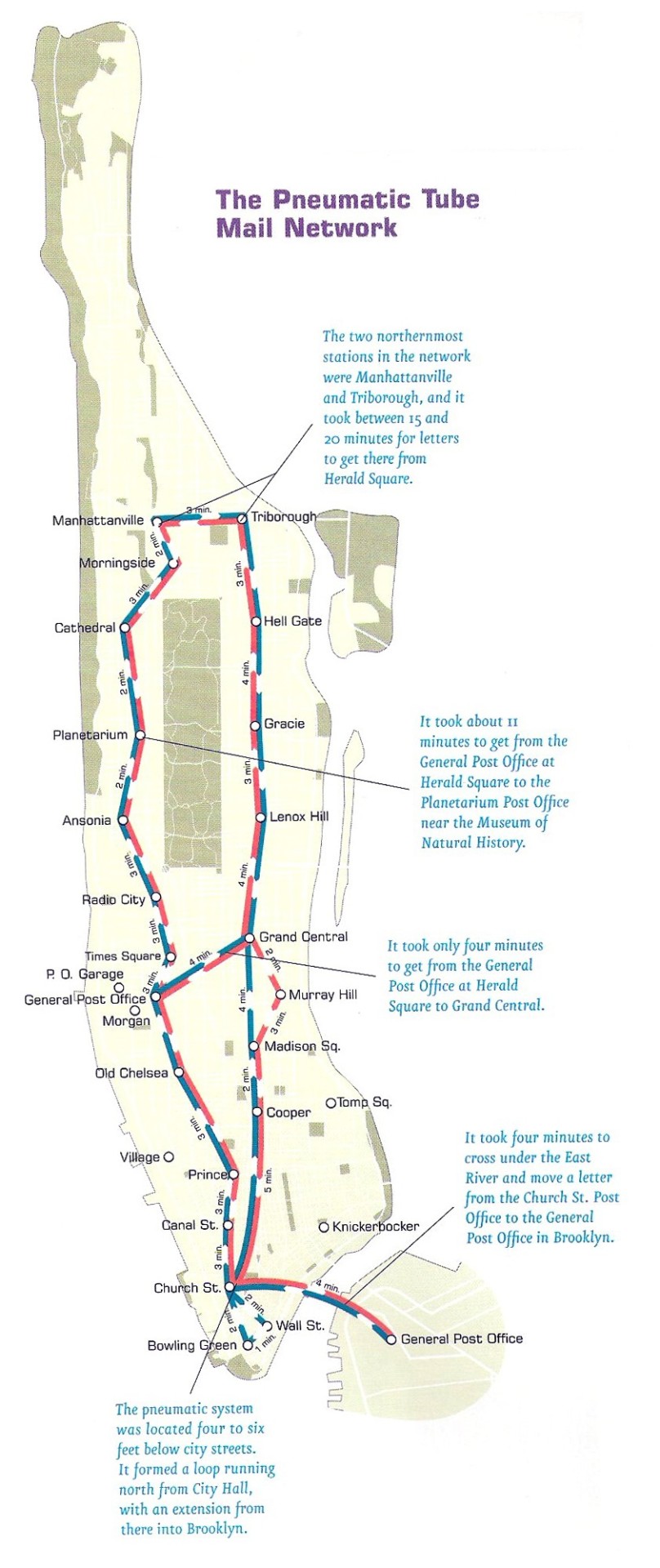
New York’s Pneumatic Tube Mail Network

The pneumatic tube mail was a postal system operating in New York City from 1897 to 1953 using pneumatic tubes. Following the creation of the first pneumatic mail system in Philadelphia in 1893, New York City’s system was begun, initially only between the old General Post Office on Park Row and the Produce Exchange on Bowling Green, a distance of 3,750 feet. Eventually the network stretched up both sides of Manhattan Island all the way to Manhattanvilleon the West side and “Triborough” in East Harlem, forming a loop running a few feet below street level. Travel time from the General Post Office to Harlem was 20 minutes. A crosstown line connected the two parallel lines between the new General Post office on the West Side and Grand Central Terminal on the east, and took four minutes for mail to traverse. Utilizing the Brooklyn Bridge a spur line also ran from Church Street in lower Manhattan to the general post office in Brooklyn (now Cadman Plaza) taking four minutes. Operators of the system were referred to as “Rocketeers”. Wikipedia

More reading on the Network

From The Works: Anotamy of a City by Kate Ascher

Tagged: history amhist

Rockstar Games, the Scottish-founded makers of the Grand Theft Auto series, always liked tweaking America but as time goes on...

Rockstar Games, the Scottish-founded makers of the Grand Theft Auto series, always liked tweaking America but as time goes on they’re really turning into our generation’s Martin Scorsese, specializing in crime stories set against the backdrop of interesting and half-forgotten moments in American history.

The sixth-generation console games were still, rather than invoking American culture directly, riffing off previous riffs on it - GTA3 on Mafia movies; Vice City on Miami Vice, Scarface and neo(n) noir; San Andreas on hood films and gangsta rap imagery. Bully, even if officially set in New England, was more about British “public school” culture than anything.

But with GTA4 you started seeing them branching out and taking on things that hadn’t really been treated before, in this case “the new, Slavic wave of immigration to New York City” and “ethnic conflict in the Balkans after the collapse of the Cold War system”. I think they ran into the same problem as DS9, that that latter one’s not actually A Thing in American culture, and it would’ve been more true and interesting of them to hang a lampshade on the fact that no one actually cared what Niko saw or did in the old country. This might be the Scottishness coming into play - growing up close to Norn Iron during The Troubles, “ethnic conflict orthogonal to imperial geopolitics” was probably more resonant to the developers.

L.A. Noire was the late ‘40s, specifically as a bridge between WWII and the ‘50s - dramatizing how and why a nation traumatized by Depression and war might actively *want* to escape to a scripted conformist consumerism, and how this scripting was developed and implemented by a culture industry and military/corporate elite that had actually been fairly insulated from the trauma.

Red Dead Redemption (the best of this generation imho) was about the closing of the frontier, the end of cowboy culture and agrarian yeomanry in general, the growth of federal authority, the historically porous Texas-Mexican border, and the way the Mexican Revolution bled across it.

GTAV was, eh. You can tell they were first overambitious and later rushed, trying to push it out the door before the next generation of consoles showed up and obsoleted their efforts. There’s too many redundant characters - each of the three mains have supporting casts that reuse roles and traits before being completely abandoned by the plot. And as the demand for clever writing expanded beyond missions and radio bits to also include websites, facebook posts, tweets, overheard street chatter, TV shows, and phone conversations between each character pairing after each mission, you just got too many cases of the same themes being reused, executed far too on-the-nose. Michael’s “ex-criminal turned family man dragged back into the game by the authorities” plot hit too many of John Marston’s beats, and I can’t help thinking that the Mirror Park, “UCLA”, and northwestern coast environments were supposed to be settings for missions.

For all that there were some high points. “Did Somebody Say Yoga” used a throwaway minigame and 0-challenge driving to set you up for some impressive sucker-punch plot twists and tone shifts, which is something I’ve only seen AAA games do before in, of all things, the Call of Duty series. The conversation where Michael tells Trevor that he’s a hipster was brilliant. Trevor in general, and his Canadian shame/pride in specific, were both hilarious and well-done. The one place where they really deliver the “insights into American culture” is with Franklin - the fact that south LA has changed since the ‘90s, the community’s becoming both more gentrified from outside and more lower- to middle-middle class from within, young black hooligans are now more skate punk than gangbanger, crackheads and OGs are aging and increasingly pitiful and marginal figures, the face of “ethnic crime” is now Near Easterners pulling white-collar scams, and the real crazy violence is out in the high desert, but that no one from outside seems to have internalized this, still going off second- and third-hand gangsta rap-era impressions. That’s pretty fucking dead on, actually.

Tagged: rockstar games martin scorcese grand theft auto amhist vidya

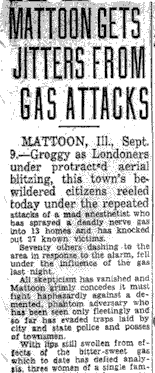
MATTOON, Ill., Sept 9. - Groggy as Londoners under protracted aerial blitzing, this town’s bewildered citizens reeled today...

pureamericanism:

MATTOON, Ill., Sept 9. - Groggy as Londoners under protracted aerial blitzing, this town’s bewildered citizens reeled today under the repeated attacks of a mad anesthetist who has sprayed a deadly nerve gas into 13 homes and has knocked out 27 known victims.

Seventy others dashing to the area in response to the alarm, fell under the influence of the gas last night.

All skepticism has vanished and Mattoon grimly concedes it must fight haphazardly against a demented phantom adversary who has been seen only fleetingly and who so far has evaded traps laid by city and state police and posts of townsmen.

Tagged: history amhist

The Partisan Leader - Wikipedia, the free encyclopedia

The Partisan Leader - Wikipedia, the free encyclopedia

The Partisan Leader; A Tale of The Future is a political novel by the antebellum Virginia author and jurist Nathaniel Beverley Tucker. A two-volume work published in 1836 in New York City and in 1837 in Washington, D.C. under the pen-name “Edward William Sydney,”[1] the novel is set thirteen years into the future, in 1849, and imagines a world where the American states south of Virginia have seceded from the Union. The story traces the formation of a band of Virginia insurgents who seek to free their state from federal control and adjoin it to the independent Southern Confederacy.

Tagged: same as it ever was amhist history secession secessionism

For that matter, contemporary sexual assault/harassment panic and counterpanic is a damn near perfect rhyme with the early ‘90s....

For that matter, contemporary sexual assault/harassment panic and counterpanic is a damn near perfect rhyme with the early ‘90s. You young’uns might want to consider Michael Crichton’s 1994 novel (and near-immediate movie adaptation) Disclosure, or Antioch College’s attempt to impose an affirmative consent policy on students. But ultimately that all fell off the radar.

And I can’t help but wonder how much of that had to do with the Clinton impeachment and the kind of left-leaning people whose support of that stuff was in part about its potential for attacking conservative male power with things like the Anita Hill/Clarence Thomas hearings discovering, to their horror, that it could be weaponized against them too.

Tagged: amhist I guess it's weird to think of stuff I was around for as history

Black History Month (Orthodox): Introduction

Went back to the Black Pride framing shop the other day to get this old double-hemisphere map print done up.

The place, like my house, is in essentially the black neighborhood of the state, so it makes sense there’s a market for appealing to pride in your black heritage. God knows Portland’s got plenty of opportunities to flatter your white heritage - Scandanavian, Scottish, Irish, German (click that one, ‘dwracu). Hell, the retro-rustic chickens/mason jars/filament bulbs aesthetic we breathe like oxygen these days is basically the midwest-American variant. (And that’s not even to mention the black/white heritage fusion places.) Even the Portland city flag (which you see more often than the American) is a Scandanavian cross, only kinked a bit and with an outdoorsy color scheme, which is pretty much Correct.

Looking around the shop there was all sorts of Egyptian-themed jewelery and busts of Nubian princesses and Zulu motifs and whatnot, which like the Swahili lingustics of Kwanzaa are a little eyebrowable as icons for proud black Americans given that Afro-America mostly traces its lineage to slaves from Western Africa. But how different is that from proud white Australians around here posting pictures of Viking warriors and Roman ruins and Viennese architecture? As long as they don’t crawl too far up their own fantasias or try to fabricate irredentist causus belli out of it, both have my blessing.

(Of course, this Pan-Africanism does have roots in a multinational and intermittently violent campaign towards regime change which… hrm.)

Aaaaaaanyway, this all reminded me that I’ve had a few essays stewing for a while on black history in America that I had in my head to post for Black History Month, only for two years now I’ve missed it. Probably because I don’t have any schoolteachers reminding me by running lessons about peanut butter. So screw it, I’m declaring Black History Month (Orthodox), lasting from now until whenever I finish up. I’ll be tagging the stuff (plus some archives) as afamhist, riffing off the “amhist” tag I shamelessly stole from monetizeyourcat, PBUH. (Who will hopefully recover from her show trial and purge by the sad anime transmarxists before too long and eventually deliver that “Oregon as Peak Free Soil/Free Laborism” piece I’ve been looking forward to for damn near two years now.)

Anyway. First up: The Crack Era, or why gangsta rap is closer to haiku than funk.

Tagged: history afamhist amhist black history month