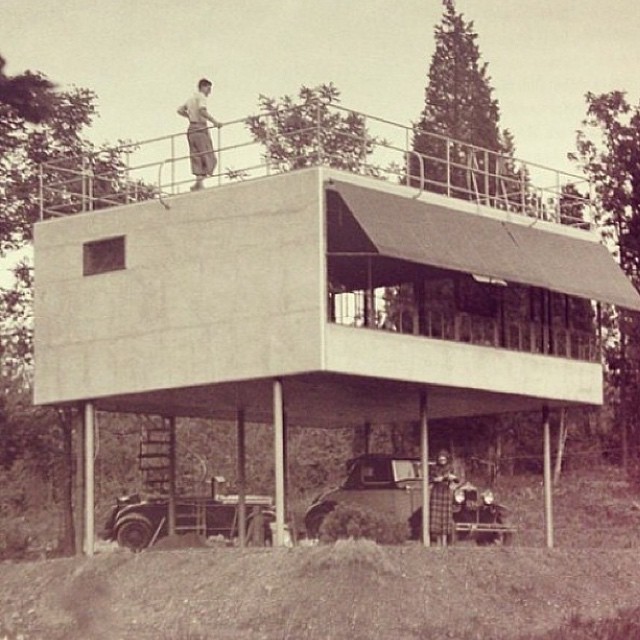
shrine to the prophet of americana

#amhist (618 posts)

Mr. Jefferson, though too revolutionary in his notions, is yet a lover of liberty and will be desirous of something like orderly...

Mr. Jefferson, though too revolutionary in his notions, is yet a lover of liberty and will be desirous of something like orderly Government – Mr. Burr loves nothing but himself – thinks of nothing but his own aggrandizement – and will be content with nothing short of permanent power [struck: and] in his own hands – No compact, that he should make with any [struck: other] passion in his [struck: own] breast except [struck: his] Ambition, could be relied upon by himself – How then should we be able to rely upon any agreement with him? Mr. Jefferson, I suspect will not dare much Mr. Burr will [inserted in margin: dare every thing in the sanguine hope of effecting every thing –]

Alexander Hamilton - When the election of 1800 resulted in a tie between Thomas Jefferson and Aaron Burr, Alexander Hamilton conducted a letter-writing campaign to urge fellow Federalists to vote for Jefferson. his particular letter was sent to Harrison Gray Otis, and is on view now at the NY-Historical Society.

Courtesy of  The Gilder Lehrman Institute for American History

(via michaelblume)

————————————————————————

You can’t bring this up without mentioning how Hamilton’s opinion was 100% vindicated a few years later.

Aaron Burr was charged with treason in 1807 for a bizarre conspiracy to take over the Midwest. The plan was for a small militia he had gathered in Ohio to join forces with Mexican discontents and maybe the British, launch a sneak attack on New Orleans, then use it as the nucleus for a new nation centered around the Mississippi River and parts of Texas and Mexico, then maybe conquer the United States. Keep in mind that he was still the vice president when he started working on this.

Anyway, he got a US army general on board, but the general got cold feet and told Jefferson. Burr was arrested, but the prosecution dropped the ball at his trial and he was acquitted. He fled to England, where he moved in with Jeremy Bentham (!) and they became best friends (!!), then visited Napoleon asking him for military support for some cryptic project (likely invasion of the US); when Napoleon said no Burr returned to the US under a fake identity and went back to practicing law as if nothing had happened.

So “dare every thing in the sanguine hope of effecting every thing“ was pretty much exactly on the mark.

(via slatestarscratchpad)

Tagged: history amhist

Galmanche, France – June, 1945 - July, 2006.

mapsontheweb:

Galmanche, France – June, 1945 - July, 2006.

Tagged: amhist

So if I told you someone was using century-old hand-crafted artisanal methods to adapt traditional folk tales into a quaintly...

So if I told you someone was using century-old hand-crafted artisanal methods to adapt traditional folk tales into a quaintly obsolete art form from the American Golden Age that would sound like the most twee, precious, non-normie thing ever and I just described Disney animation.

Disney’s pretty weird like that. Like, take the parks. They’re combinations of Coney Island and World’s Fairs with this undisguisable midcentury earnestness. These are places that get seriously psyched about the potential of novel transit modalities.

And the theming - “Let’s look forward to the wonderful future of space exploration, celebrate our roots in farm towns and the frontier west, AND enjoy the exotic charm of the South Pacific and Old Dixie!”

THERE IS A PAGEANT WHERE ROBOTS PAY TRIBUTE TO EXECUTIVE-DRIVEN WHIG HISTORY.

Oh. Oh. And. “The rides aren’t very thrilling, but your kids will love the chance to explore the worlds of all their favorite authors - A.A. Milne, J.M. Barrie, Kenneth Grahame, Mark Twain, AND Lewis Carroll - while you’ll marvel at the exquisite background design.”

(Sun-dappled Edwardian neoteny and obsessive set decoration. Wes Anderson makes movies like Walt Disney made parks.)

And we’d recognize this all as a weird thing to exist in 2015 if we weren’t just used to it as the background noise of America. Like, I don’t really watch TV so I don’t see commercials much these days.

Oh man, they’re a trip in their own right if you’ve stopped taking them for granted. Like, “oh hey, for the next 30 seconds some of our best artists are going to use all their techniques and leverage all your emotions and desires and every social value in a masterful, unapologetic, and unforgettable bid for you to give us money, and then everyone will move on and no one will acknowledge this even happened.”

But the Disney World commercials in particular - you notice they don’t really make a case for going to Disney World, or even really explain what Disney World is. Because they’re not pitching Disney World, they’re reminding you of Disney World. It’s not “hey, Disney World is a thing you could go to”, it’s “hey, maybe it’s time for this generation’s pilgrimage”.

Disney’s weird. It’s kind of a company, but also custodian of some of the cultic functions of American culture, something like the priestly colleges of ancient Rome.

Like, they maintain sites of pilgrimage. I’m not saying that as a joke. Back of the envelope calculation, Americans go to Disney parks at a rate 7 times higher than Muslims go to Mecca. (The line between “tourist trap” and “religious site” has always been thin.)

And they’re custodians of the national narrative. Like I’ve said, they pitch “continuity with prewar small town and earlier frontier culture” as a fundamental, almost taken-for-granted aspect of Americanness with a confidence and charm you don’t often see these days. And I mean, hell, the Disney animated canon itself basically is to America what Grimm’s was to Germany.

And as custodians, they curate that narrative - like, we joke about “you know your identity group’s made it in America when you get your own Disney princess”, and laugh at the people reediting Disney character designs to look like their specific subgroup, but that only works because it’s fucking true, your identity group’s made it in America when you get your own Disney princess. I’ve worked with Disney Channel casting, and they mix ethnicities with the same care, precision, and scale that Pfizer mixes drugs.

And that robot pageant, the Hall of Presidents? Look at this history. It started out in the ‘70s as a celebration of consensus history and popular triumph, with character actors playing great men and Civil War tensions understood as a challenge to national unity. In 1993 it was reworked by Eric Foner to be narrated by Maya Angelou, use “regular people” unknowns to portray more vulnerable takes on historic figures and re-frame the Civil War in terms of slavery as a moral challenge. In 2009 they redid it again, mostly keeping the changes but bringing back some of the old Hollywood charm and putting Morgan Freeman as the voice of civic authority.

And like, as a representation of how America understands itself and its history, correct. That is absolutely, in every way, 100% correct.

(In the other direction, Walt Disney originally wanted to call it “One Nation Under God”, which yikes)

They say American copyright terms keep getting extended under pressure from Disney who wants to keep hold of all their founding properties, I almost wonder if it wouldn’t be less of a corruption of the civic system to just carve out special protections for Disney in recognition of their distinct role in America.

But… at the end of the day, it’s all just a strategy to maximize profits.

I used to be a lot more libertarian than I am now, and one of their tribal boogiemen, the idea of a “Ministry of Culture” - a government that sees the national culture as its domain, to shape as it will, “as it will” meaning as it always does with governments “through the instrument of bureaucracy” - that still rankles.

But what’s the alternative, though? You think about it and you realize it’s this - the national mythos rests in the hands of a publicly traded corporation.

(And then you maybe start to appreciate WHY having your king as the head of your church once made sense as a symbol of liberty and self-determination.)

((And start to recall the CIA going around giving grants to the avant-garde with a certain fondness.))

We live in the capitalpunk AU.

Tagged: disney amhist capitalpunk kontextmaschine classic disneyland

My first year at Cornell I wasn’t in Risley but rather in Mews, which had just been constructed the previous summer. I woke up,...

My first year at Cornell I wasn’t in Risley but rather in Mews, which had just been constructed the previous summer. I woke up, rolled out of my bed, and woke up my computer. It was a Tuesday or a Thursday, because I had Chemistry.

Waiting for me was an IM from my first girlfriend, who I hadn’t spoken to in years, telling me to turn on the TV. I told her my TV (for vidya) didn’t get reception, she said to find one that does.

There was a TV in the kitchen/lounge, which was where I was going anyway to make breakfast ramen. It was on news, of course. Both towers were burning but still standing. Three or so other students were in the room, I wouldn’t say “enthralled”, but definitely interested.

I had a sturdy metal bowl that I would heat directly on the burner. While the noodles were cooking, the TV replayed shots of the plane strikes.

“Huh. That’s clever,” I thought. “That’s really, really clever.”

I took the bowl off the stove, stirred the flavor packet in, picked it up (using a sock as a heat mitten), and padded back to my room.

“UGH, though. I bet people won’t shut up about this for months.”

It was my mom’s birthday, which at least now I remember every year, and when I tried to call her later it was the only time I’ve ever got an “all circuits are busy” message.

Tagged: patriot day amhist

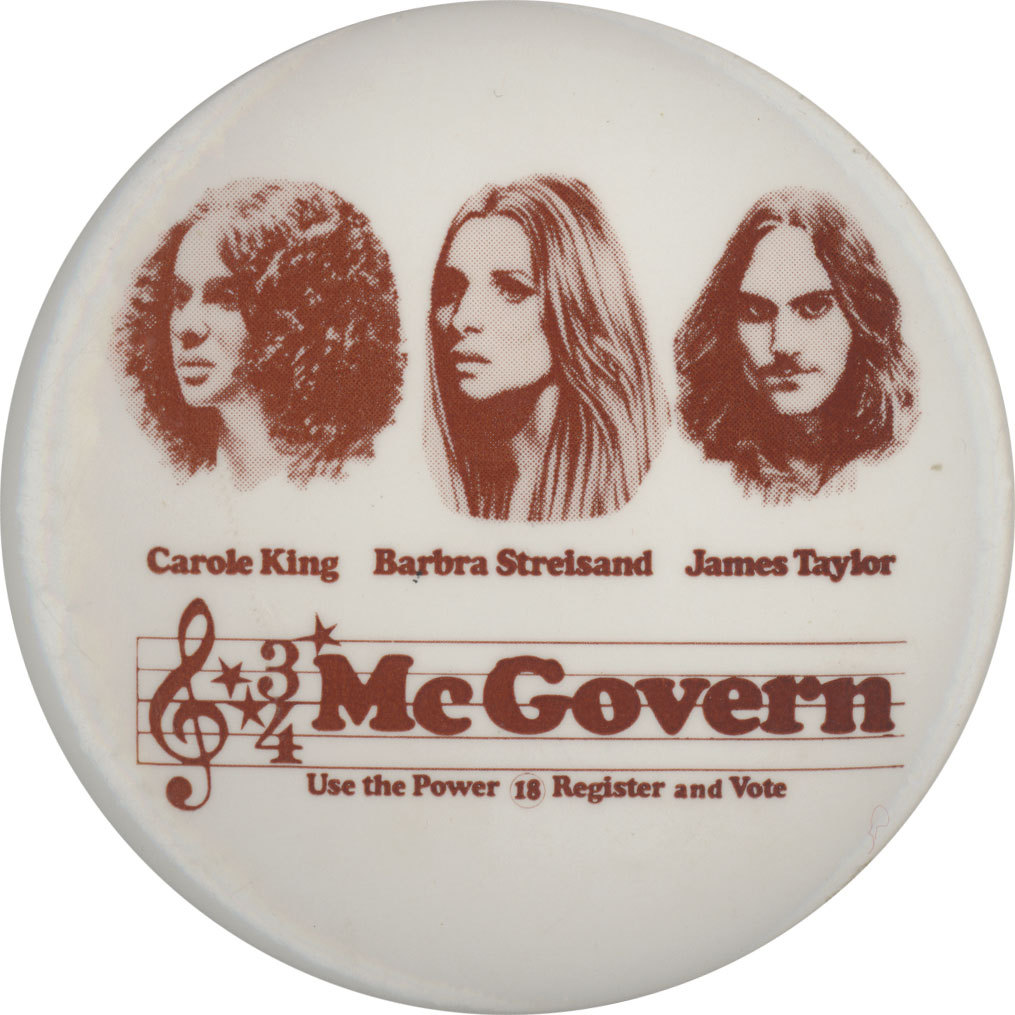
Carole King, Barbra Streisand, and James Taylor for George McGovern, 1972.

28sherman:

seanhowe:

Carole King, Barbra Streisand, and James Taylor for George McGovern, 1972.

“Use The Power 18 Register and vote”

Tagged: amhist 26th amendment 1972

I just learned that you can buy your message’s way into a full okcupid mailbox for $1 and the friendly-seedy tone - the offer...

kontextmaschine:

I just learned that you can buy your message’s way into a full okcupid mailbox for $1

and the friendly-seedy tone - the offer is a popup saying “with a little bribery we’ll let it slide”

OKCupid is SO GOOD at correctly humanizing life-by-profitseeking-algorithm

has anyone else here read John Varley?

You know I would TOTALLY trust Valve to craft people’s social experience and Facebook to sell them microtransaction games and it’s a shame how that worked out.

There was something on maybe Reddit? the other day asking what the biggest most overhyped disappointment ever was and I was like the Segway? but maybe that’s just because (being the kind of person who reads Reddit today) I was the kind of person who read Slashdot back in the day.

“The Apocalypse”? That’s an evergreen. (You know the Seventh-Day Adventists started out as an 1844 apocalypse cult? American religions are bonkers.)

Then I thought “space exploration”, because I’ve been looking at some ‘70s pop culture lately and it’s just heartbreaking how much they expected everything to be about that by now.

And that’s kind of the last thing that the postwar optimism was invested in, where we went bankrupt, nothing like that since.

I know, I know, I carry a connection to the universal akasha in my pocket now and I should be more in awe of that but it just doesn’t feel grandiose. Maybe it’s cause it came on gradually, maybe because it’s so entwined with the preexisting world. Like, the universal akasha runs on 5V power and credit cards, that’s kind of bullshit.

And then I stopped and thought that if these developments had been scripted as a story, I would have appreciated that detail as gritty realism.

And then I realized OH MY GOD we live in the capitalpunk AU.

Tagged: capitalpunk amhist

Literary Magazines for Socialists Funded by the CIA, Ranked

Literary Magazines for Socialists Funded by the CIA, Ranked

(relevant)

Tagged: amhist it's media

why does this actual, real life photo look like a nightmarish norman rockwell painting

agrifuture:

why does this actual, real life photo look like a nightmarish norman rockwell painting

Tagged: donald trump 'merica amhist

Civic Mythology #3

Canonically, the United States of America once built a silver ship and sailed it to the moon and back.

Tagged: civic mythology amhist 'merica

Civic Mythology #2

Canonically, the United States of America once tore the earth asunder and united the Atlantic and Pacific Oceans.

Tagged: civic mythology amhist 'merica

Civic Mythology #1

Civic Mythology #1

Canonically, the United States of America once possessed a unique artifact known as the Demon Core, but it was consumed in the process of summoning a miniature star.

Tagged: civic mythology amhist 'merica demon core

So Trump's Barry Goldwater, only this time he wins?

Anonymous asked: So Trump's Barry Goldwater, only this time he wins?

…I can see it kinda, but a lot of Goldwater’s success, both in winning the nomination and reorienting the Republican Party was that his supporters captured local party institutions, in world where primary elections were somewhat advisory and nonbinding and party officials had more control over candidate selection (this changed between 1968 and 1972).

Trump’s running in a world where those changes have shaken out and power is held less in the hands of formal party officials and more in the hands of movement activists and the media, and it’s hard to predict what kind of legacy the Trump campaign (be it successful or not at any given stage) will leave - Obama for America was kind of a substitute for a party-based infrastructure and after Obama’s success was absorbed into the official Democratic apparatus, on the other hand on the Republican party independent power bases (most notably the Kochs’ Americans for Prosperity) have been making moves to supplant the party structure entirely.

One thing to keep an eye on is how a Trump victory (as GOP) would change the balance of power between executive and legislative wings of the Republican party.

For most of the 20th century political scientists bemoaned the lack of “responsible party government” - ideologically coherent parties such that voting for the “conservative” party would necessarily produce more “conservative” results. For example under the New Deal system that essentially survived in Congress until the 1994 “Republican Revolution”, an urban northerner voting for a liberal Democrat could actually increase the chances of conservative policies, as a congressional majority would put conservative southern Democrats with seniority in charge of the powerful committee chairmanships. Ditto for conservative western Republicans strengthening the hand of northeastern liberal/moderates.

Like I said, 1994 changed a lot of that, completing an alignment along ideological lines for the legislature at least (and giving parties more control over chairmanship assignments in the ensuing reforms). Since then Republicans have relied more on their legislative power - routinizing supermajority requirements in the Senate, conducting the second impeachment in American history and grumbling in favor of a third, with budgetary shutdowns and showdowns essentially trying to bootstrap a Vote of No Confidence into existence.

A Trump win though, or even a nomination that establishes the ability of an independent actor, in alliance with (something that passes for, if possibly in style more than substance) movement conservatism to control the Republicans’ executive apparatus, against the will of formal party figures… honestly I have no goddamn clue how that’d play out, but like I say it’s worth keeping an eye on.

Tagged: donald trump amhist

Pearls Before Swine - Rocket Man This song, written the day of the first moon landing, is such a product of its time. I mean...

Pearls Before Swine - Rocket Man

This song, written the day of the first moon landing, is such a product of its time. I mean the musical style obv., but particularly the assumptions encoded in it.

First off that space travel will become a commonplace analogous to trucking, but moreover that husband/fathers’ lives will be more defined by work for pay and purpose than by any emotional connection to their wives or children, and the elegaic acceptance that this masculine work will carry the risk of injury or death.

Tagged: history amhist

Public mental health

slatestarscratchpad:

athrelon:

It’s a commonplace that the massive gains in life expectancy in the 1900s are in large part due to public health improvements - vaccinations, sanitary childbirth, smoking cessation, and the like.  To be sure medicine improved too, but most of the value was in the low hanging fruit - “suddenly having antibiotics” and basic chemotherapy, for instance.  By comparison, high-tech treatment of severe diseases such as genomic targeting of cancer have so far had relatively little quantitative effect on QALYs.  Rather than health care, a lot of value seems to come from public health - preventative measures and lifestyle improvements to make people less likely to get major illnesses in the first place.

Mental health, however, seems entirely focused on the health care side of things and lacks a public health component.  We have drugs and therapies to treat major depression, bipolar, psychosis, and so on, but relatively little attention to how lifestyle factors affect our subjective experience and might predispose us to eventually developing the major maladies.  And so we end up with situations where half of grad students and a third of medical students demonstrate symptoms of depression, but nobody panics at the stressors and social isolation that might be causal here, the way they’d panic if they saw med students taking smoke breaks between patients.

Clearly the low-hanging fruit is simply to be personally attentive to your “mental health hygiene” and lean against the popular paths when they conflict with it.  It’s not totally obvious what policy/institutional responses are realistic, particularly with the recent hullabaloo over how colleges handle acute cases of mental health problems.

Actually, quite a few things seem like “public mental health” to me:

1. The self-esteem movement, growth mindset movement, etc.

2. Everything in the category of people on Tumblr posting “Remember, you’re beautiful and wonderful and perfect the way you are!”

3. Various government efforts to remove toxins that damage brain health, for example pesticides implicated in ADHD

4. Trigger warnings.

5. Everything in the category of transgender rights could be seen as a public mental health intervention.

6. You bring up residents as an example of an untreated high-risk population, but before I started my residency I had go to to some incredibly annoying patronizing lecture where they told us how to schedule our time and gave us tips for dealing with stress and so on.

You might prefer evidence-based public mental health, but it’s really hard to get good evidence on these sorts of things - the early studies said self-esteem was great, then later more rigorous ones found that it wasn’t.

There was a big mental hygiene movement in late 19th cen. and early 20th cen. America, though it was pretty well entwined with notions of social, physical, and moral hygiene, educational reform, and the Progressive movement generally.

In terms of acting on environmental factors, slum clearance, the building of parks, and the Playground Movement could be seen as part of or allied to the mental hygiene movement.

(When I talk about entwinement consider the YMCA - it offered young transient workers an alternative site of residence and socialization to bars and taverns [social], gymnasiums and athletic facilities to encourage exercise [physical], in service of a vision of Muscular Christianity [moral] which blamed many of the faults of urbanizing society on the feminization of cultural institutions.)

Early intervention was also big component - it was held that many mental disorders such as anarchism, homosexuality, and gender deviance were the fault of mothers, particularly poor mothers from immigrant and rural-transplant communities, who were incompetent at properly acculturating their children, and urged their sidelining in childraising in favor of (usu. upper-class) professionals and (same, also female) social workers. This was also the origin of the notion of “juvenile delinquency”.

Other mental hygiene initiatives of the period included the construction of asylums, forcible institutionalization, and the sterilization of the congenitally mentally unfit, by analogy to existing public health interventions of professionalized sterile hospitals, quarantine, and vector control.

Tagged: amhist history

Of Course, Trump Will Never Win…

Of Course, Trump Will Never Win…

March 11: The Tiger has shown himself at Gap. The Troops are advancing on all sides to arrest his progress. He will conclude his miserable adventure by becoming a wanderer among the mountains.

I honestly think Trump has the best chance of being the next POTUS. (I peg him at 35%, Hillary at 30%, Jeb at 20%)

It’d be a realignment election that pivots the Republicans to a nativist welfarism, which is a realignment they’ll have to make sooner or later - it’s where their base is at already. If he can pull it off - “it” basically being the Sailer Strategy - and swing the Rust Belt red that’d give the GOP an electoral lock until and unless Texas flips (and the threatened Republicans’ inevitable divisionist gambit fails) and/or the next realignment comes. You’d cede bankers, blacks, and professionals with postgraduate degrees, but if you’ll recall so did the New Deal coalition.

Trump and Sanders are both burning up the floor and giving their party establishments heartburn pitching Scando-German native-producerist welfarism to a white audience, whoever can grab that ring first hoo boy. And as that recent Netroots Nation demonstrated, I think any pivot attempt’s going to face more resistance from the Dem base.

(If you look at the aftermath, you realize a lot of white progressives didn’t realize it would even be a pivot, they thought that’s where they’ve been since FDR and don’t seem to have recognized the Great Society/New Democrat thing as a realignment in the first place, largely because it didn’t work for them. Remember, “we will build an invincible coalition by adding minorities, feminists, the young, and the well-educated to our established lock on white producerists” was the Democratic plan in the 1970s. Admittedly, the numbers are better now on the left side of the formula, but the right… and I don’t think anyone has a coalition lined up right to win the actual shooting war they’d have to in order to make a realignment where no one was repping whiteness-as-such.)

Historically, there are two forces in American politics that can only be matched by each other - big capital and nationalism. Nationalism being white nationalism, as “white” is the national identity America constructed to legitimate and unify itself, much as “French” was deployed as France centralized in the early modern period.

The Republicans were doing pretty well since the 1970s because they managed to get both on the same side, but the Democrats have managed to sneak a lot of capital out from under them - notice all the religious freedom opposition, all the Wall Street money, Schumer and Cuomo basically being Rockefeller Democrats.

And some of the most well-known and respected Presidents have come to power in realignments that basically mobilized (white) nationalism against money power - Jackson, Lincoln*, and both Roosevelts. (Money usually comes back through steadier erosion and cooption.)

Everyone realizes that the subtext of Obama’s 2008 electoral appeal was that his victory would represent the integration of black and white as political subjects and finally after all this time relegate racial divides to the history books. And man, isn’t that fucking ironic.

Honestly, I think he tried, I don’t at all see him coming in with the plan for racial rabble-rousing the more ridiculous rightists attribute to him. I think early in his presidency he did the minimum lip service (and little more) necessary to service his coalition and hold it together, and the stuff after the ’14 midterms was him realizing it wasn’t going to work and doing what he could to leave the forces he actually had in the best position going forward.

And if he couldn’t make it work, fuck, man. Fuck.

(What it would really take is a culture hero figure like him coming in just in time to face and triumph over a massive external force - total war, basically - that would essentially allow them to refound the nation on a new mythos.)


* Abraham Lincoln, agent of white nationalism? Yep. Remember first that plantation agriculture was the economic engine of America - slaveholders were Big Business; and second that while people today remember the Republican anti-slavery coalition as driven by New England moralists, a huge component of it was actually midwestern (remember, Lincoln was from Illinois) smallholders (read: petit bourgeois) and mechanics (read: skilled industrial workers) following a “Free Soil/Free Labor” ideology, who hated slavery in the same sense and for the same reasons as their heirs hate illegal immigration.

Tagged: amhist donald trump

@SoudaBrooklyn / mfoerlev: Albert Frey, Kochner Canvas Weekend House, Long Island, 1934 Posted by SoudaSouda Follow Souda on...

soudasouda:

@SoudaBrooklyn / mfoerlev: Albert Frey, Kochner Canvas Weekend House, Long Island, 1934

Posted by SoudaSouda
Follow Souda on instagram, pinterest, facebook, or tumblr.

Tagged: amhist

but why do we have to get married and have children why can’t we just get a group of friends and live happily ever after in an...

severnayazemlya:

thathopeyetlives:

cyborgbutterflies:

chroniclesofrettek:

honey-andrevolution:

sexpot-titzgerald:

sprinklesobourbon:

thegestianpoet:

seansoo:

but why do we have to get married and have children

why can’t we just get a group of friends and live happily ever after in an apartment and share the profits

i’d be much happier that way

this is the most millennial thing ive ever read 

Nothing wrong with this, you can have roof parties and grill food.
Better yet just save up together and buy a small house split the bills and mortgage.

- the nuclear family as an economic unit has really only existed for a few hundred years, across part but not all of the world

- the nuclear family unit is the easiest to exploit under capitalism, because parents have to work externally to provide for their children. They work to pay for child care for their children while they work. They work to earn money to feed their kids and to give them nice things to make up for all the time they spend away, at work.

- a huge amount of labour is necessary every day to keep a family fed, their house clean, etc. some families are wealthy enough to outsource this by hiring staff, most are not.

- capitalism is a pointless middleman in this. we should just live cooperatively.

- share houses and intentional communities are awesome

- people of different life stages function well together because they have complimentary needs and abilities

- kids are less of a stress and burden in a home with lots of different adults to provide support and love, as well as sharing household tasks.

- destroy capitalism through cooperativism.

^^^

“- capitalism is a pointless middleman in this. we should just live cooperatively.”

Just make sure you have a friend who likes to clean, one who likes to cook, someone who likes to do laundry, someone who likes to take care of children, and make sure you’re all ok spending 50%+ of your time together without getting on each other’s nerves for a couple decades. A simple task for any neurodivergent, socially awkward person.

Sharing a house with many friends/romantic partners great and I can’t wait to do it.

But sharing a house with random strangers? People who might be abusive, mean, bigoted, or just plain impossible to deal with?

That sounds about as bad as family to me. I’m all for cooperation between people but at the same time I am scared because there are many out there who would hurt me and I’d rather have some input in deciding who to live with.

I don’t want to share a house with anyone but my wife and children. Every roommate I have ever had I ended up getting annoyed at.

But it could be very nice to live in a village, esp. a Weltraumburg fractal urban village.

what’s the history of the nuclear family? when/where did it originate?

emmanuel todd says it predates modernity: he thinks family structure influenced the development and speed-of-uptake of modernity, and for anyone whose name isn’t an australian seaworld park, causal relations can only travel in one direction in time.

this says it’s been around in at least part of europe for as far back as anyone can tell.

Historically, it’s completely typical for unmarried adults to live in semicommunal group housing. Not only with (extended) family but if away from home with people who are at least initially strangers - boarding houses, YMCAs, dormitories, fraternities, military barracks, work camps, residential hotels, social clubs and taverns with attached rooms.

The expectation that single adults will necessarily live individually in single-occupancy residences is of about as recent origin as the expectation that married adults will live in nuclear families in detached suburban houses.

Tagged: history amhist

A funny thing about free-range chickens is that they get taken as part of this retro-rustic thing - chickens wandering around...

A funny thing about free-range chickens is that they get taken as part of this retro-rustic thing - chickens wandering around outside in a bucolic setting, that’s the traditional way to raise your meat.

And that is ridiculous. The traditional way to raise meat chickens is on large-scale factory farms, because raising meat chickens wasn’t a tradition at all until the mid-20th century, with roots in the 1930s.

Now chickens had been raised for food, and been eaten, before then, but that’s to say that they were raised for eggs, and chicken meat was essentially a waste product of the egg industry.

There were historically two types of chicken that were eaten. One was “stew hens” - egg-layers who had aged out of productivity, so named because the aged meat (layers being bred for durability, not tenderness) was tough and thus favored tenderization through slow-cooking.

The other were “spring chickens” - surplus male chickens that were killed at a young age, after their sex (and thus uselessness as layers) became obvious.

(Chick sexing can separate males from females at hatching, but to do it reliably requires enough training and experience that chicken sexer is a skilled job in its own right, something modern large-scale farms find useful to hire but not worth the expense to barnyard farmers.)

Spring chickens, obviously, were preferred for their tenderness, but this raised their price, and the young age decreased the amount of meat on their bones. And both types coming from lines bred for laying, neither had all that much to begin with. So chicken was something of a luxury meat. (As historically were most skeletal muscle meats - the poor ate organ meats, trimmings, tendons, bone marrow, fat, and blood, to the extent they ate meat at all.)

Which makes sense - if you assume that all stew hens lay about 200 eggs a year in 2 years of production, AND that there’s no chick sexing so that there’s one spring chicken per hen, AND treat the two types as equivalent AND completely ignore unsaleable losses to disease or predators that still means only one chicken breast is produced per 17 dozens of eggs.

So knowing that you realize Herbert Hoover’s 1928 campaign slogan of “a chicken in every pot” wasn’t just offering the promise of no one going hungry, but further of widespread access to petty luxury.

Tagged: history amhist food

Wolf extermination is land improvement

Wolf extermination is land improvement

So after a long and overwhelmingly successful campaign to exterminate wolves in America we’re starting to actively try to reverse course and reestablish wolves in the wild. And part of that involves retrospectively casting the earlier extermination efforts as the product of some sort of misguided fear or ignorance but bitch please, we knew exactly what we were doing, it was cold, pragmatic land improvement.

Now, our stock image of “land improvement” is agricultural - grading land flat, draining wetlands, adding irrigation, so as to enable it to produce more crops. You’ll remember that a lot of the formal ideology of American settler-colonial land appropriation was that the native inhabitants didn’t have ownership of the land because they hadn’t made it theirs by performing such land improvements, and were instead something like long-term vagrants.

(As a side-note, in early America land clearance was effectively free or even profitable if you were tied into the transatlantic economy - a landowner could hire a gang of men to chop down the trees on his plot and then immediately pay for the effort by reselling the wood, depending on the local markets and geography either raw as fuel or construction material, or instead processed into lumber, furniture components or [in the deep woods where transport was toughest] by burning to ash for use in lye manufacture. Keep in mind that in this period wood was quite dear back in Europe, while in the New World it basically grew on trees.)

Now, as you’ll know if you followed my recommendation to read Changes in the Land, American natives actually did perform extensive operations on land to improve its productivity, but were often overlooked in this because what they were optimizing weren’t the familiar forms of either manorial or smallholder agrarianism. The classic example is setting regular forest fires, which cleared out underbrush and allowed for fresh green growth, thus increasing the carrying capacity for game like deer, thus increasing the productivity for hunting and gathering.

(Another side-note: you see similar if less intentional dynamics today. When people talk about deer-human conflict - car crashes, nibbled gardens, etc. - as a result of humans pressuring deer through invading their habitat that’s exactly wrong. That stuff gets worse as exurban development continues because humans are creating new deer habitat. The deep woods are too tangled and impassible for deer and don’t have enough sunlight to support nibbling-height plant growth. Plains are better food-wise but too vulnerable - deer escape predators by bounding over undergrowth that predators can’t follow through. So their ideal habitat are edgelands - lightly wooded areas, ideally with access to marginally more and less overgrown regions. And exurban development functionally creates edgeland.)

So once a few years ago I took Blue Bitch from Portland to Missoula and back, for a cousin’s wedding. Got a few good stories out of that. Did you see that New York Times package? I should tell you my Sandpoint story sometime.

And back in Portland OR-7 had been in the news, this wolf with a tracker that was the first wolf known in Western Oregon for more than half a century, and he wandered down around to California (first known for nearly a whole) and against all odds found a mate and birthed a litter, real heartwarming story. But after I crossed over the Cascades range, and intensifying as I continued east into Idaho and Montana, I started to run into merchandise, on gas station shelves, pickup truck bumpers, locals’ torsos, that all ran around themes like Fuck Wolves; or Kill Wolves; Wolves Can Go To Hell; Kill All Fucking Wolves, Who Can Go To Fucking Hell, And Then The Fucking Wolf-Loving Hippies Too. I was actually a little impressed at how many variations on the theme they managed to pull off.

Because wolf extermination was land improvement. Like, we knew wolves were apex predators and important to the functioning of the natural ecosystem when we killed them, THAT’S WHY WE KILLED THEM. By killing the apex predators we became the apex predators, and wolf-cleared lands became much more productive for hunting. The state government of Alaska sends helicopters out to kill wolfpacks every year for this exact reason, to enrich the hunting prospects. (A substantial share of the Alaska population derives a nontrivial portion of their yearly diet from wild game.) By replacing the apex predator with ourselves we allowed for animal husbandry - livestock raising - which is essentially hunting plus low time preference.

It wasn’t because we were afraid of them although their reputation as mankillers (mostly lone forest travelers in prey-scarce seasons) sure didn’t fucking help their cause, it was an economic decision. We killed them as an act of land improvement, to raise the yield of hunting and animal husbandry.

Now of course animal husbandry and hunting don’t provide as much calories per acre as intensive agrarianism, but they’re still perfectly viable for regions with lower population densities or ill-suited to agriculture - soil too rocky or acidic, insufficient water, no easy transportation to markets for low-value, high-volume bulk products.

And this - the mountainous terrain of eastern Oregon into the Rockies - was hunting and animal husbandry land, this was the land, the culture, the economy made viable by wolf extermination, and so I’m not surprised they said Fuck You to wolves and wolf reintroduction, because wolf reintroduction was basically saying Fuck You to them.

After I found a hotel for a night I ended up in a bar, struck up a conversation with a local, wanted to know what it was like from that side. It was basically like you’d expect - that the government that acted in their name had abandoned the duty of protecting their livelihood from predators was improper, that it would actively try to stop them from protecting themselves was repugnant. She attributed it to city folk in Portland who couldn’t imagine what it was like to be a farmer. (Nearby Idaho, for example, started annual wolf hunts as soon as federal protection as “endangered species” was lifted.)

I said that wasn’t true, Portland’s the earthiest city I know, people are very in touch with the land and the truth of fundamental production, there are lots of people who can imagine what it’s like to be a farmer.

And let that sit a beat and then delivered the punchline: …there’s just more people who can imagine what it’s like to be a wolf.

Which is it, really, that for all the foofaraw what we’re doing is actively and intentionally degrading a functional segment of our polity in the name and interests of those not only not our countrymen but not even our species, and when they ask why we would do this, and what we’re offering in return we basically tell them - they who actually fucking know from wolves - “well, it’s really cool to think of yourself as a wolf”.

She also said Portlanders wouldn’t be so positive if they were the ones who had to deal with the consequences. Which is completely correct. In LA and Portland, I’ve seen some of the greenest, circle-of-life ecology types get quite tetchy about coyotes sneaking into their yards and eviscerating their housepets. Their precious social media star reduced to a mess of fur and blood, the skull’s hard to chew so they often leave the head intact, dangling off a stripped spinal cord.

And yeah when a farmer comes across a calf like that okay maybe it’s not ~a member of his family~, instead it’s just his job and his retirement and college savings accounts. So hey.

Tagged: amhist history

I’m pretty sure Peanuts is the apex product of the midcentury American canon, and more specifically the Charlie Brown holiday TV...

I’m pretty sure Peanuts is the apex product of the midcentury American canon, and more specifically the Charlie Brown holiday TV specials.

Like, A Charlie Brown Christmas, 1965, the first one.

Coca-Cola commissioned a 30-minute animated film with a jazz soundtrack based off the breakthrough comic strip repackaging depressive cynicism for kids. The plot is that the protagonist is depressed and so his psychiatrist tells him to conduct religious rituals to gain a sense of purpose but no one’s even taking the rituals seriously so they don’t work and the climax is literally straight-up King James Bible verses about our savior Jesus Christ reminding them to take the Christmas rituals seriously, at which point everyone is happy.

And America was like “yes, correct, this is so correct that we want to incorporate it itself into our national-popular Christmas rituals every year”, like the Swedes and their Donald Duck thing.

In fact, how about more like that, let’s reenchant every holiday in the civic canon with this vision of Protestant reserve in the face of failure. Let’s do Halloween, let’s do Thanksgiving, let’s do Election Day, Valentine’s Day, let’s… GAINAX made a Charlie Brown holiday special in 2002? What the fuck.

Let’s do Easter, come the ‘70s let’s do Arbor Day (that one didn’t catch on)…

Tagged: holidays christmas peanuts kontextmaschine does the bible amhist