shrine to the prophet of americana
#amhist (618 posts)
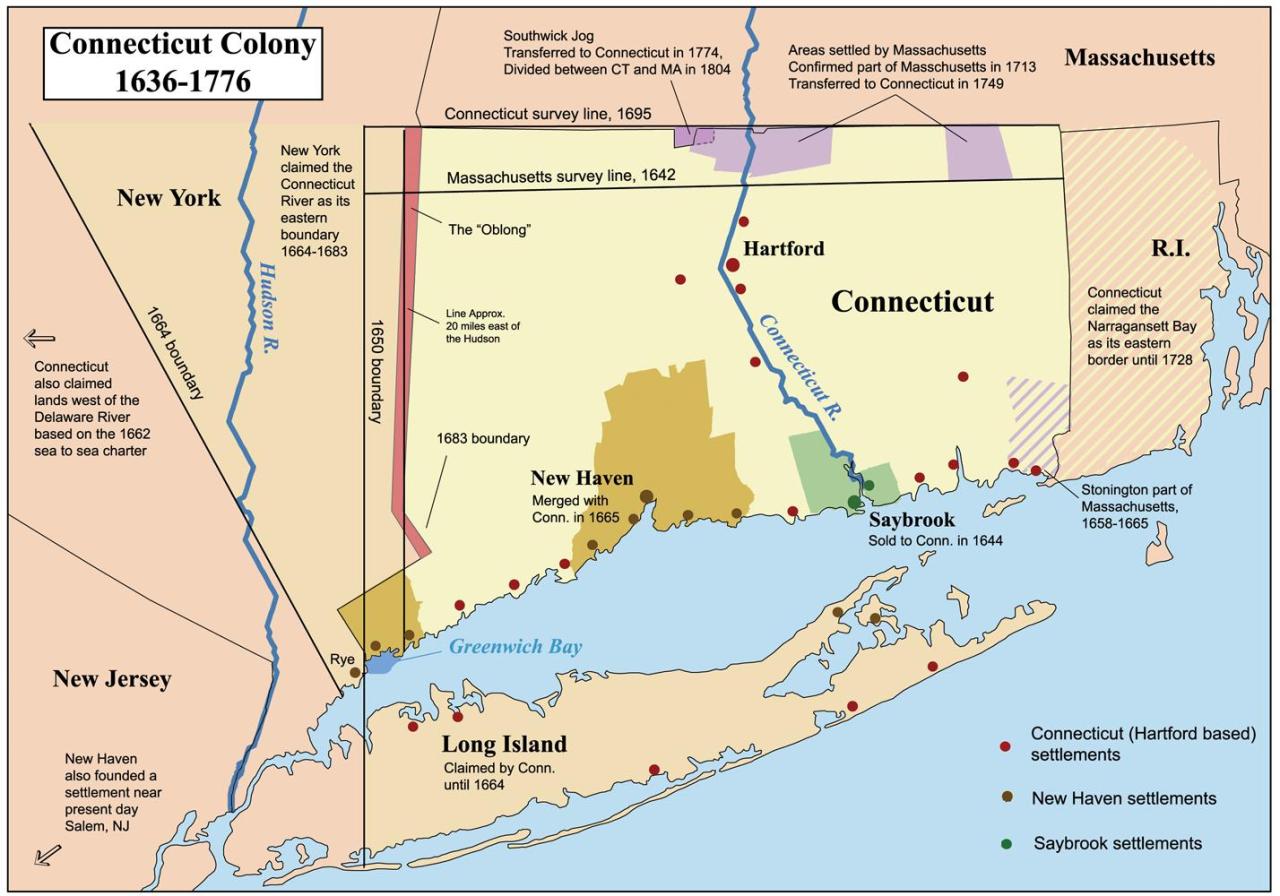
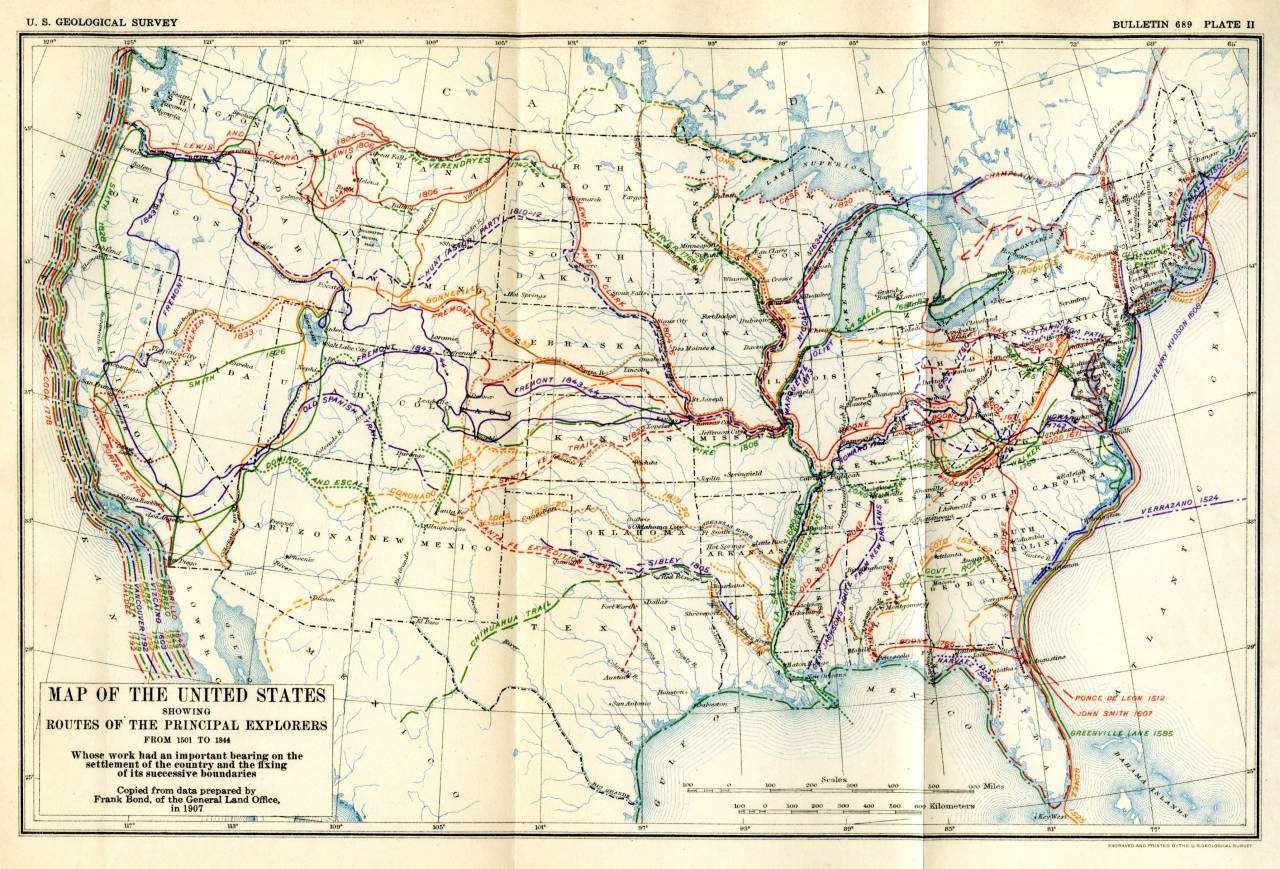
Map of the United States showing Routes of Principal Explorers from 1501 to 1844. Engraved and printed by the U.S. Geological...
Map of the United States showing Routes of Principal Explorers from 1501 to 1844. Engraved and printed by the U.S. Geological Survey, 1907.
here are some actual 19th-century american names: Ezekiel Bacon Fielder Suit Barnabas Bidwell Ambrose Kingsland ...
here are some actual 19th-century american names:
- Ezekiel Bacon
- Fielder Suit
- Barnabas Bidwell
- Ambrose Kingsland
- Gustavus Swift
- Yelverton King
- Learned Hand
- Cadwallader Colden
- Churchill Caldom Cambreleng
- Moses Yale Beach
- Ebenezer Rockwood Hoar
- Orsamas Hylas Irish
- Wheeler Hazard Peckham
- Nathaniel Bowditch Blunt
- Preserved Fish
What are your thoughts on the American empire--general impressions, expected trajectory(/ies), unexpected attributes or...
automatic-ally asked: What are your thoughts on the American empire--general impressions, expected trajectory(/ies), unexpected attributes or subtleties you wouldn't expect people to pick up on? I don't have a good baseline way to think about it, and it seems like something you'd have a good grasp of.
We never shoulda taken the Philippines. The Caribbean territories we inherited out of the Spanish-American War were worthwhile if only to keep out of the hands of other Euro powers and turn the sea into an American lake.But the Philippines, fuck. Didn’t work as a production center, too late to work as a trade gateway or forward base into Asia, full of ungrateful natives who were somehow fucking papists so you couldn’t even evangelize them, we had to assemble the rest of our Pacific empire just to make them remotely defensible and even then the one time we get in a war with the only possible country who would care about them they get taken over like, immediately.
What did LaVoy Finicum die for? - LA Times
What did LaVoy Finicum die for? - LA Times
This is a startlingly historical and philosophical backgrounder to the Malheur occupation and I approve.
That’s surprisingly good for the LATimes – I’m surprised anyone in their offices has ever heard of the Homestead Act.
It’s kinda interesting to see where they make small mistakes despite that, though. The modern descendents of the Sagebrush jackasses, Finicum’s branch included, along with even the 1980s variants, are at least self-aware enough to realize that they’ll lose out from privatization, and thus primarily advocate for state possession where they’ll have more ‘pull’ (and established philosophy). There’s no such thing as “Oregon Public Radio”, and the original quote from “Oregon Public Broadcasting” said only that fostering was his ‘primary’ source of income and explicitly said he’d make ends meet without, rather than the only way to keep the ranch afloat. Ending the timeline in the 1970s with the FLPMA rather than the Endangered Species Act is… at best misleading.
Which is kinda disappointing. It’s not exactly hard to tear down these folk at the legal, philosophical, or historical levels. But apparently it’s too tempting to make them Cartoonishly Evil, rather than just wrong.
Good points, also he could have stood to mention how often lands were opened under pressure from protests or unauthorized settlement, against the wishes of wise planners in Washington - the Preemption Act, the Boomers of Oklahoma, the settler militias that started Indian Removal on their own. (Or in London, with the American Revolution inland of the coasts experienced as a reaction to the Proclamation of 1763.)
Also Bady’s not on staff, he’s a hotshot socialist editor of The New Inquiry. That such a traditionally provincial and rightist paper would run someone like him is pretty striking in its own right.
What did LaVoy Finicum die for? - LA Times
What did LaVoy Finicum die for? - LA Times
This is a startlingly historical and philosophical backgrounder to the Malheur occupation and I approve.
Jury nullification as discussed on the Internet: Keeping some who wasn’t hurting anyone from going to jail for violating some...
Jury nullification as discussed on the Internet: Keeping some who wasn’t hurting anyone from going to jail for violating some bullshit law
Jury nullification IRL: Keeping someone who was violent against someone subverting the social order out of jail
Absolutely correct. For an example, check out this series on “The Unwritten Law” - the turn-of-the-century practice of acquitting (as “temporary insanity”) men who had determinedly stalked and killed the rakes who had sex with their women.
Two interesting points here: one, that this “Law” metastasized to the point of undermining ALL murder laws, as defendants would offer this difficult-to-disprove backstory.
Two, that the government (under threat of losing the ability to credibly punish killings) responded not with crackdowns but by accommodating the desire to punish adulterers - criminal laws against adultery were passed or rediscovered, likewise “heartbalm” civil actions - “criminal conversation” and “alienation of affection”.
Defendants could even claim a formalized, if limited equivalent to “temporary insanity” defenses - a man who caught his wife in the actual act of sex with another, “in flagrante delicto” was entitled to kill either or both of them, and men who knew or suspected adultery would arrange such “surprise” discoveries for the purpose of claiming a righteous kill.
That’s not the only place in American history to show that pattern - citizens use lethal violence as means of social control, government responds by cracking down not on them but their targets in hopes of rewinning assent to a government monopoly on violence by proving itself willing to use it as they would prefer. Many southern states tightened “Jim Crow” racial codes between the World Wars as part of an attempt to stop lynchings, many victims of which were in jail awaiting trial when they were seized by mobs unwilling to trust the courts with their punishment.
And labor leftists bitch that American strike action is too constrained under the Taft-Hartley Act, but that governments that stand for the suppression of mob violence, extortion, and trespassing would at all allow a mob to forcefully lay sieges on private property with the intent of extracting concessions from its owner – let alone defend them and enforce the resultant contracts – is nonobvious. What it is is the same thing - over the course of the late 19th and early 20th centuries the people had made clear there would be labor militancy, and the government shrugged and decided it preferred it to be backed by the threat of violence by existing government institutions, rather than open violence by private actors who might eventually seek to supplant those institutions.
right now i’m thinking about like environmentalism in 90s cartoons cuz i just watched the jetsons movie and the entire...
right now i’m thinking about like environmentalism in 90s cartoons cuz i just watched the jetsons movie and the entire agonizingly slow plot hinges on spacely sprockets building this plant on some other species’ home and george jetson eventually having to force him to stop and it just makes me think about fucking captain planet. now that was the real shit. the fucking half assed “you should sort your recycling and maybe compost, also cut plastic rings” was saved for the PSAs at the end but the episodes of themselves were just “this dickhead greedy fuck is destroying the ozone layer, let’s go beat the shit out of them with our magic rings and our superpowered man we summon from them”
Median property taxes as a percentage of median home value by county in the United States, 2005-2009.
Median property taxes as a percentage of median home value by county in the United States, 2005-2009.

Lean Cuisine has split into four design-differentiated lines: Comfort - based on mid-century American staples Favorites -...
Lean Cuisine has split into four design-differentiated lines:
Comfort - based on mid-century American staples
Favorites - based on… white ethnic dishes? The original ‘70s wave of health-branded foods, fat-light grain-heavy incl. California Cuisine and similar southwestern resort food?
Craveables - using gooey cheese as the major selling point?
Marketplace - based on contemporary fusion styles and later Moosewood-style health flavor palettes?
I find this FASCINATING.
Are there any Amhist topics you've been meaning to write effortposts on, which just haven't come together for some reason or...
3dspacejesus asked: Are there any Amhist topics you've been meaning to write effortposts on, which just haven't come together for some reason or another?
I’ve mentioned I’ve wanted to write about historical travel/communication routes:
Roads - the organic growth of local roads, the tendency to form road districts, corvee labor as a support mechanism, the iffy history of medium-distance private roads (profitable mostly in support of land development w/ poor long-term income streams); above all the historical novelty of roads as city-to-city transit modes, previously a thing of railroads or
Coastal and Inland Shipping - historically the fastest, most efficient method of transit; the significance of the Appalachians and the East Coast’s lack of lengthy rivers; the way command of New Orleans (and thus the Mississippi system) and the St. Lawrence (and thus the Great Lakes) played into trade empire strategies and how that interacted with US settler colonialism (, how this experience played into the Chinese Exclusion Act as a defense of the American Pacific presence focused on the trade city of San Francisco); the way Philadelphia came to early prominence due to the Delaware Water Gap offering a rare route to the interior and how New York stole her thunder with the Erie Canal offering an alternate route to the Great Lakes, with a potential portage to the Mississippi system at a site we now call “Chicago”
The Post Office - overlapping a lot with the above two on modalities; how post-carrying contracts promoted, structured, and regulated American shipping and railroads before the dawn of the modern regulatory state; how the era where the federal government was “just the Army & Post Office” actually meant a lot of recognizably contemporary programs got shoehorned in (compare the Army Corps of Engineers, Lewis & Clark Expedition, various imperial overseas administrations). The Post Office as a domestic spy and countersubversive agency - against abolitionists, Confederates, anarchists, antinatalist feminist race-suiciders. The Post Office as the major source of federal patronage, and the reason the same parties operate at federal and local levels where issues and pressures are otherwise perpendicular
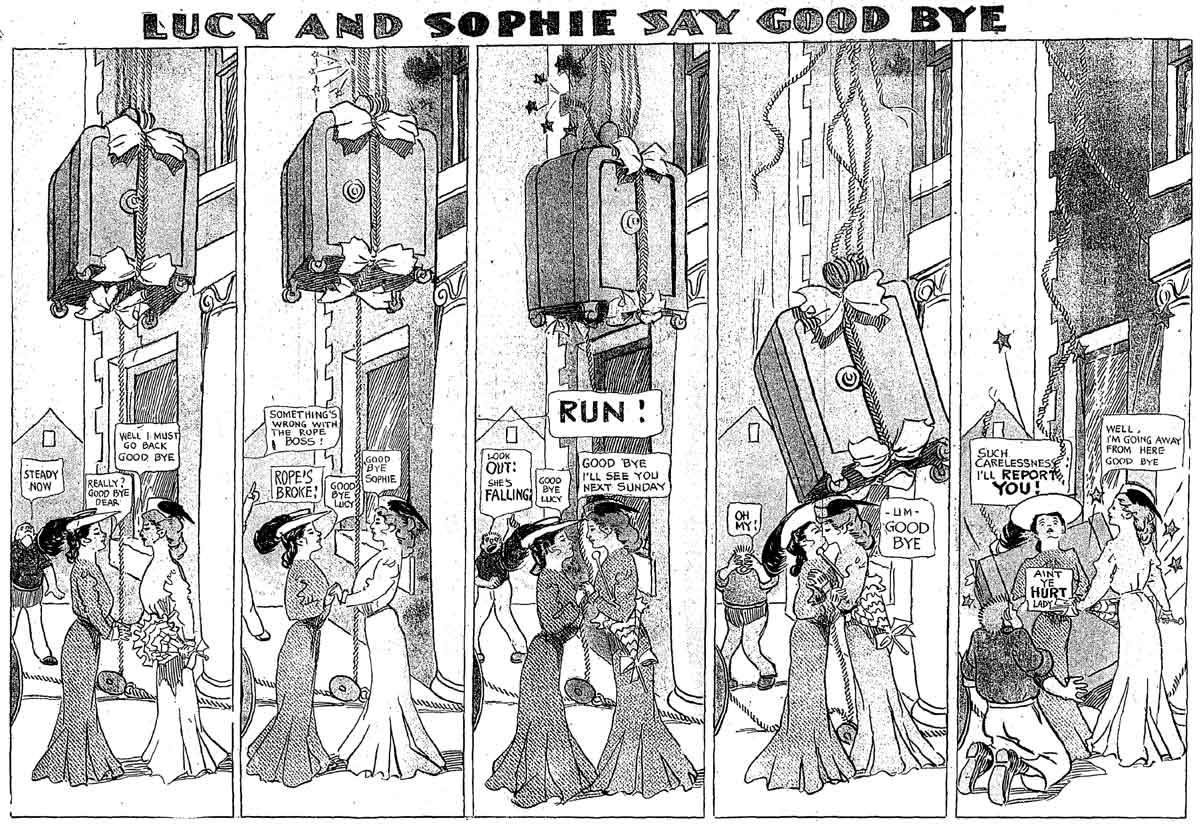
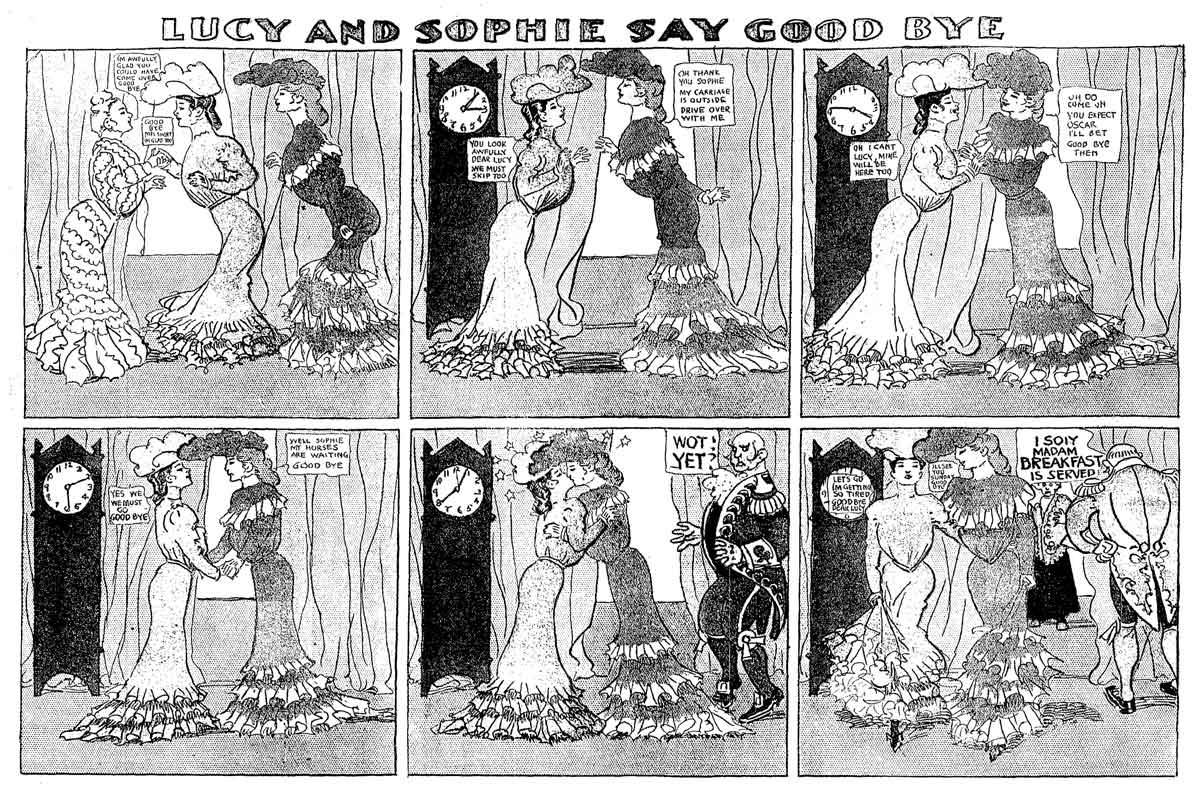
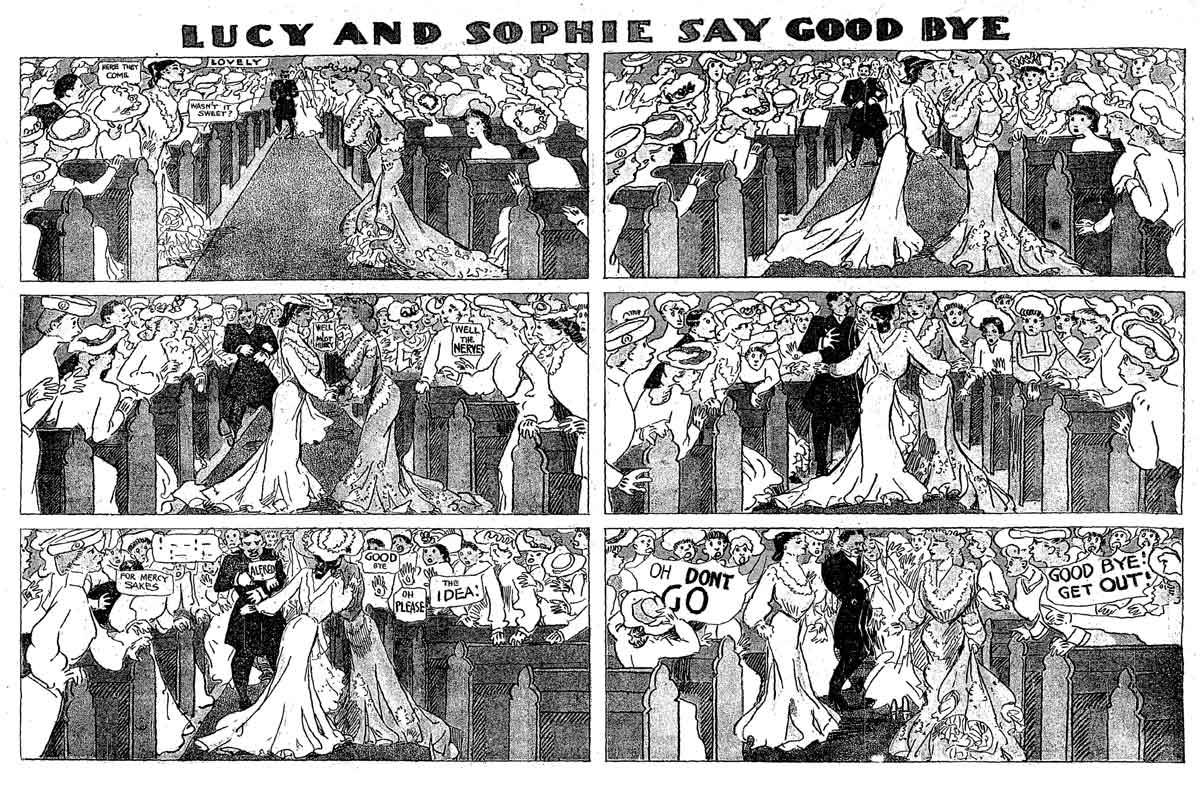
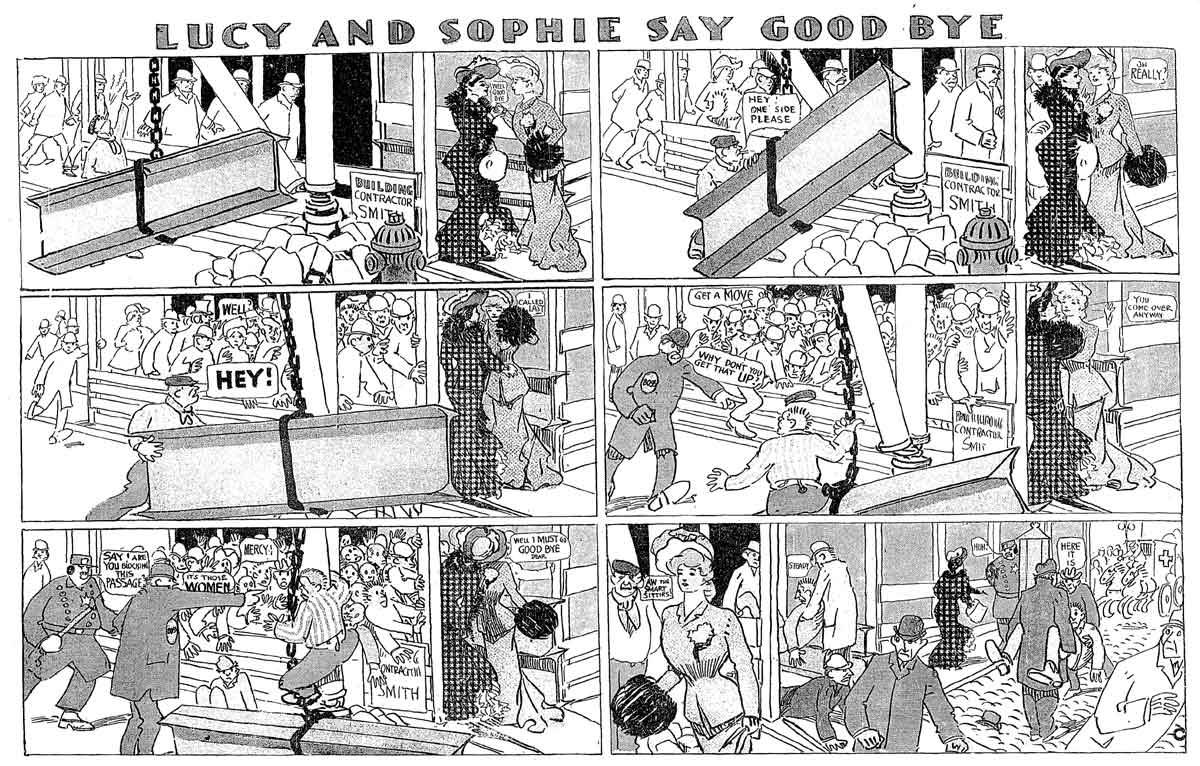
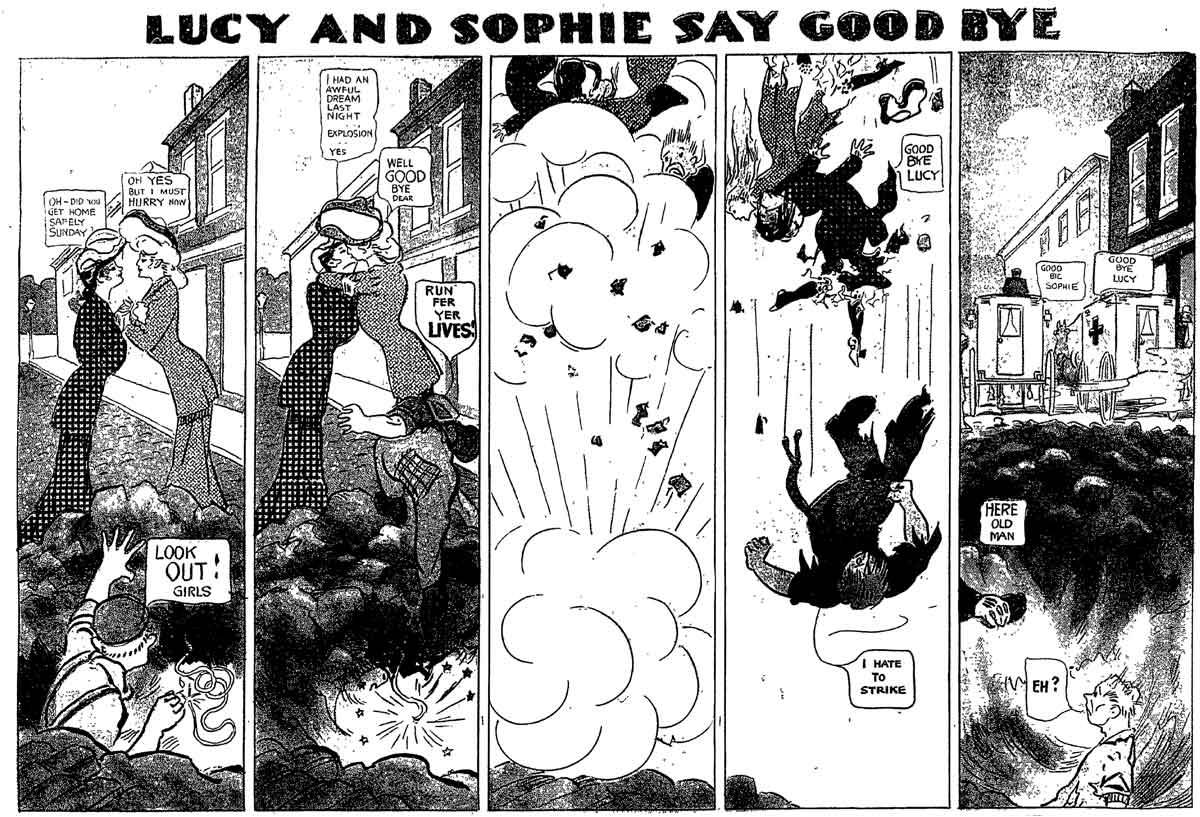
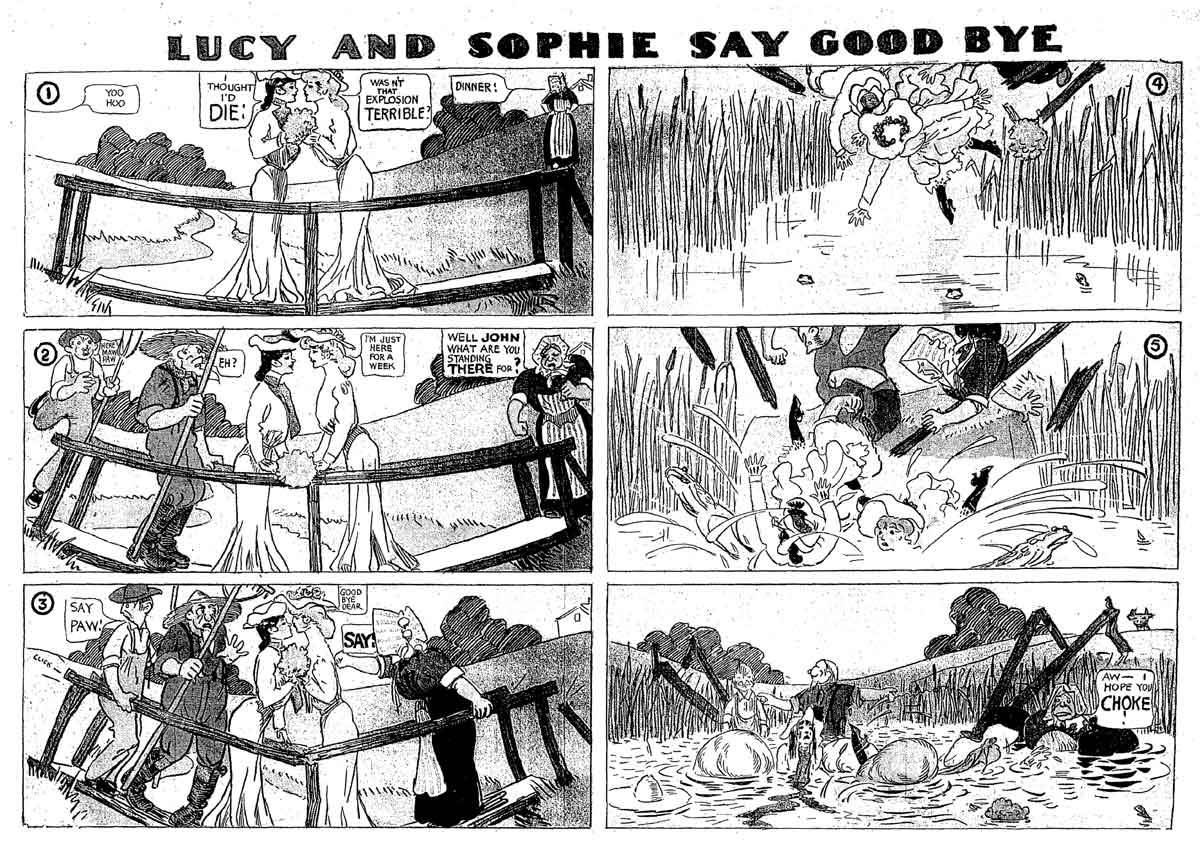
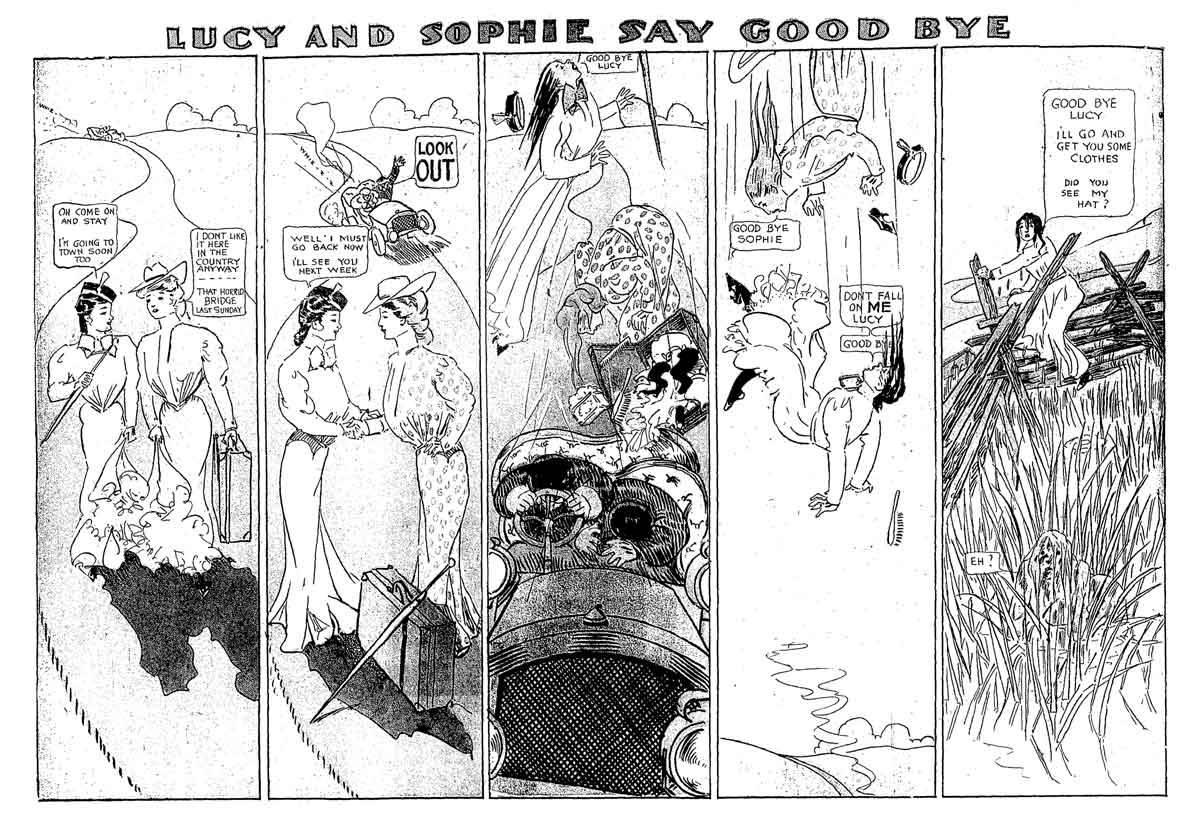
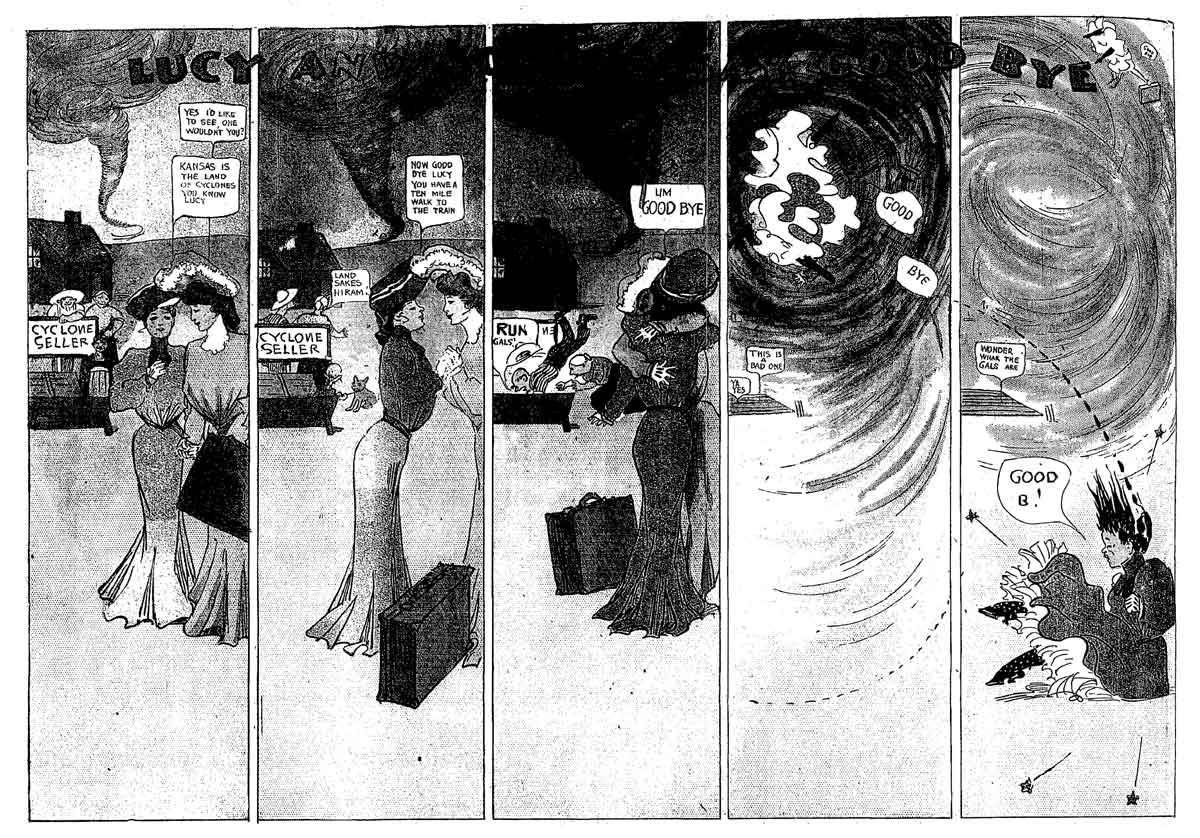
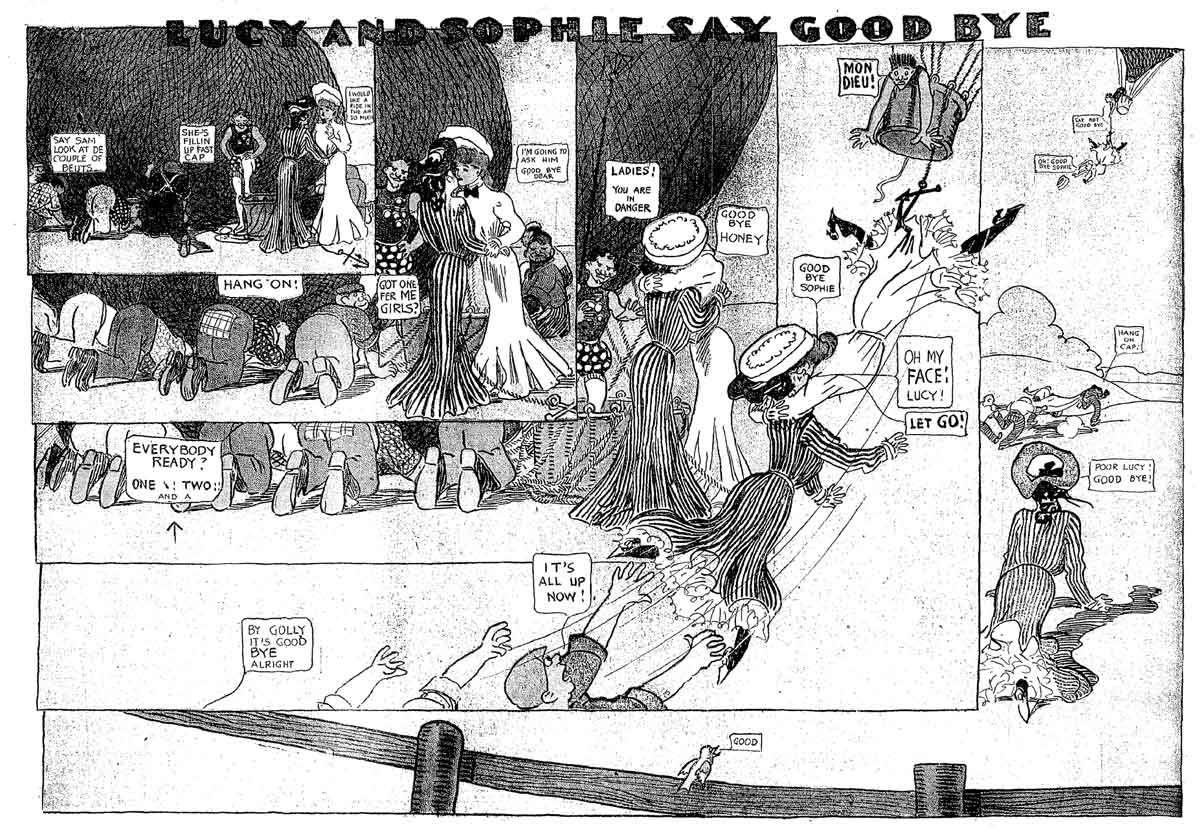
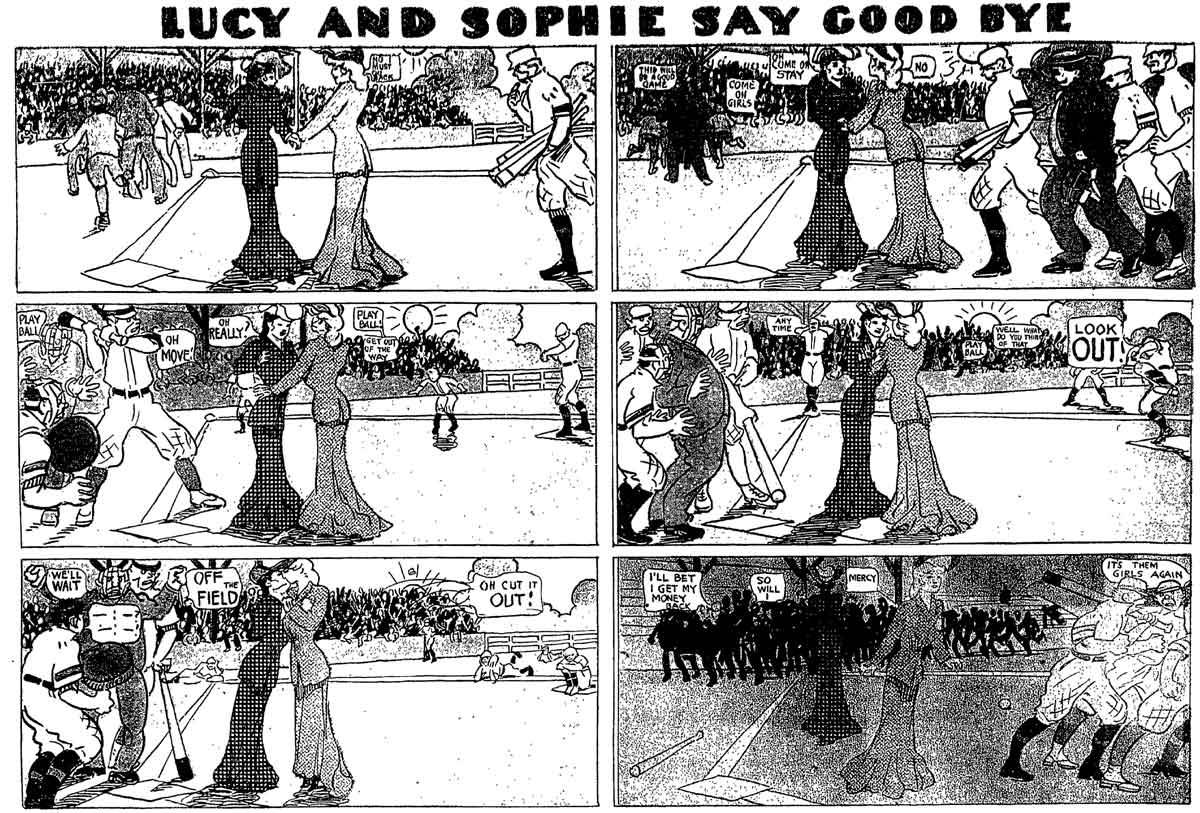
Lucy and Sophie Say Good Bye: a newspaper comic from the very early 1900s, wherein two women (clearly in at least a Boston...
Lucy and Sophie Say Good Bye: a newspaper comic from the very early 1900s, wherein two women (clearly in at least a Boston marriage) repeatedly take a very long time to part company, regardless of their surroundings.
Because why not?
The strange, preachy, profitable saga of Billy Jack
The strange, preachy, profitable saga of Billy Jack
It’s most logical to conceive of Billy Jack as a dream-movie accidentally created by a spiritually confused, LSD-addled 19-year-old who fell asleep in the early 1970s while watching a weird, humorless movie about a half-Native American/half-Caucasian warrior who does not want to fight, because he’s too good…
…The 19-year-old decides to go outside and attempt to purge the confusing jumble of images and messages from his head, but first, he catches intriguing, perplexing flashes of two more television programs—one a PBS documentary on alternative forms of schooling, and the other on Native American spirituality. It’s understandable why he’s confused: It’s not as if vigilante crime movies naturally segue into demonstrations of improvisational comedy technique and then into rage-filled acoustic musical interludes. Yet Billy Jack contains all of the above.
A film this violently contradictory makes no sense. Yet Billy Jack not only exists, it was the fifth top-grossing film of 1971[.]
The Divorce Colony — The Atavist Magazine
The Divorce Colony — The Atavist Magazine
A further exploration of historic divorce laws and the socially destabilizing American frontier.
First pass at wrestling with the “ages” of comics
Platinum Age – wastebasket term for everything before the invention of the true comic book form in 1933. Lots of false starts, examples that might actually be picture books, newspaper reprints in wide variety of formats, and earlier examples of things that could be said to be “comics” and even “super heroes.” The key is historical continuity, which these examples lack.
Pre-golden Age – 1933 Funnies on Parade invents comic book format. The next few years show accrual of additional features including introducing and escalating new material, 10 cent cover price, multi page stories, evolving page format to be less like newspaper strips. Very similar content to newspaper strips, though more slanted towards action/adventure.
Golden Age – 1938 the superhero emerges as a historically contiguous thing with Action #1’s Superman. This starts a revolution as comics have a “killer app” of their own. A lot happens, but it is helpful to look at this in phases. 1938-41 is the explosive/experimental phase where most of the lasting golden age superheroes were introduced, with an often pro-am feel and variation in approach, gradually becoming more professional and style synchronized. 1941-45 is the patriotic phase, as there is an overriding common enemy to focus on, and the scope gets bigger. 1945-1949 is the commercial peak-and-bust of the superhero, where post-war superhero worship is extremely high, but gives way gradually to boredom with the sunny optimism and attention focusing on more diverse genres. Westerns, war comics, crime comics, sci-fi, “horror,” etc. existed throughout comics history, but the superheroes lose their dominance. Different endpoints can be drawn but since DC continues unabated, I tend to draw the line at the 1949 rebranding of Captain America Comics as Weird Tales as the end of the era or the start of EC’s new line the same year.
Atomic Age – it is controversial as to whether we need an age between Gold and Silver, and not having this would make some lines easier to draw. But since comics history seems to like 10 year chunks, I tend to want a 50’s age. Starting in 1949 we have a series of trends. The straggling non-DC superhero concerns fold, leading to genre proliferation which is a bit pulpier than it was in the 1930s. Optimistic adventure tales become less common than morality tales, paranoia, superheated melodrama, and a kind of fatalistic life or death struggle. EC comics, beginning its new line in 1949 is the paradigm example, but all publishers (other than squeaky clean outfits like Dell and Archie) did this. The development of the romance comic by Jack Kirby in 1947 as essentially a crime comic about lust instead of money is a sentinel event that prefigures the tone of this era. The important sub-eras are pre and post “code.” In 1955 the comics code authority was formed as a reaction to senate hearings on comics as a cause for juvenile delinquency, creating strict and often capricious restrictions that “defanged” the output. This led to a shift from noir and gore to a more B-movie morality tale, with a lot of monsters and flying saucers and Twilight Zone style gotcha-plotting.
Silver Age – here lies my big heresy. The silver age is broadly agreed to begin in 1956 with the first appearance of the Silver Age Flash. This works especially well if you like to go straight from the golden age to the silver age as the Comic code cuts in, then you get a kinder output and a new DC universe to herald the next age. I have two issues with this: the previously mentioned “10 year” bias and the fact that I’m Marvel-o-centric. DC was clearly developing a distinct Silver age identity which evolved through the 50’s and their silver age aesthetic surely includes the Legion of Superheroes first appearance in 1958. But there are issues with this. The appearance of Flash is arbitrary as a cutoff as, though so clearly visible, no one can agree as to when Superman, Batman, and Wonder Woman become their Earth 1 (Silver age) versions. Google this, it’s insane. But Superboy, who had his own comic from 1949, everyone seems to believe is an Earth 1 thing and the contingenti work to convolute history around this fact. Additionally, DC’s timeline does not really fit what is happening at any other publishers. My heretical solution is this – DC’s superhero atomic age was a stepwise development of the Silver age starting with Superboy #1 and finishing with the first appearance of the Justice League of America in 1960. This act prompted Martin Goodman to tell Stan Lee to create a superhero team book, the Fantastic Four, which started Marvel’s Silver age. This seems to me an elegant solution. Ages are arbitrary, but this fits best to me – DC is unique in publishing superheroes throughout the 1950s and so postulating a 10 year gradual fade from golden to silver age when no one else was doing anything related seems appropriate.
The Silver age - dominated by Marvel, which had an explosive decade of Lee/Kirby/Ditko fueled creativity, full of melodramatics and dynamic art. DC had its own distinct aesthetic of superheroes acting like their audience (young children), being gullible, playing pranks, all rendered statically, which it had honed in the 50’s and which it sustained nicely. The sub-eras are Marvel based since DC was pretty consistent. 1960-63 was the developmental period with Marvel figuring out how things worked and introducing all of its really big characters. This ends with the simultaneous publication of Avengers and X-Men number one, and Lee/Kirby finally finding their footing with the Marvel method with the introduction of Tales of Asgard. 1963-1966 was about improving quality, establishing a brand, giving some already existing characters their own books, but not that many big new characters (Daredevil is the big exception). This was a period of adjustment, and when Marvel was born as a concept. In 1966 several things happened. Marvel hired Roy Thomas, who would help birth the Bronze Age, as a writer, Steve Ditko leaves Marvel, and Lee and Kirby finally hit their stride and do peak work, yielding a new age of concept and character creativity. 1966-70 is characterized by the best silver age work with everyone peaking, Thomas beginning to guide books Lee never quite got, and prime periods of Johns Romita and Buscema. This is the great era that everyone remembers.
Bronze Age – there was a whole lot of change between 1969 and 1972, with 1970 being the peak year, leaving a very different output. Kirby’s moving from Marvel to DC basically at the decade devide is probably the best mark to give as the moment of the shift as he is so crucial in defining the Silver Age at Marvel, but this is only one of many shifts. After Kirby leaves, Roy Thomas begins the process of taking over running Marvel ending with his formally taking over as editor in chief in 1972. Starting in 1968, Thomas scaled up trying new things in his own domain starting with the first Bronze age progenitor book Captain Marvel, the introduction of the Vision the same year, the completely unique (look and “feel”) at the time run with Neal Adams on X-Man in 1969, and hiring Barry Windsor-Smith with whom he would introduce Conan in 1970. With Kirby gone, Lee began to eye moving out to the bigger entertainment leagues, allowing Thomas to increasingly set the tone for the company. Thomas’ tone was looking both forward, with more realistic and daring art and more sophisticated and relevant storytelling, backwards, by tying in Marvel’s golden age history and bringing in pulp and fandom classics (such as Conan), and sideways, by proliferating genres and Marvelizing non-superhero concepts. This was the tone for the bronze age as a whole – relevant, diverse, muddier, less cartoony, and conceptually omnivorous. Other shifts of the time include hiring new writers that were of the younger generation (Englehart, Gerber, etc.), Neal Adams moving to DC and working with the young Denny O’Neil to create more grittier/relevant stories, and a new age of anthology titles with B-list stars acting as a platform for creative try-outs.
Divisions are arbitrary, but the decade divides somewhat in half as the intro of Wolverine, the Punisher, and Moon Knight in 1974 set the stage for 1975’s X-Men revival and Thomas, the guiding force of Marvel for the first half of the decade, stepping down as editor-and-chief the same year, leaving the Marvel offices to years of chaos. The second half decade yields to sees a proliferation of new talent on the art side gaining momentum and Jim Shooter eventually stepping in and starting to create order, resulting in 1980’s culmination of the Dark Phoenix saga, Elektra saga, introduction of the New Teen Titans, and the Legion revamp, all star-art driven affairs.
The 80’s (a.k.a. “modern age”) – Star artist fandom has taken hold as Jim Shooter institutes a greater degree of consistency and DC becomes more Marvel-like. The first half decade shows a shift as editorial battles the star artists, who want more freedom. Many things happen around 1985 – Miller, Perez, and Byrne leave for high profile DC projects. Jim Shooter seizes Marvel in his image with the continuing Secret Wars and firm oversight. DC hires their first brit, Alan Moore, to write, and eventually hire a bunch more, while they open the floodgates of prestige product. For the down half of the decade: DC’s better offerings become truly top notch, making Marvel look silly, leading Shooter to eventually be fired. Teenage Mutant Ninja Turtles causes a stir, creating the B&W indy boom. The “kewl” trend, born both of a misunderstanding of what made Miller and Moore’s stuff work and the B&W boom fallout, leads in the later decade to a new crop of hot artists who are lite on fundamental’s but heavy on noodling at Marvel and hot to tell their own not-very-sophisticated “darker” tales. This is the trend of the late 80’s.
People got tired of naming ages about here.
The 90’s (“boom and bust”) – Easiest line to draw: this era begins with the handing over of new Marvel titles to the hot artists, resulting in record breaking sales. This began with McFarline’s Spider-Man #1 in 1990, with Lee’s X-Men and Liefield’s X-Force following. Rapidly came the rise of Wizard Magazine (a cool/speculator oriented comics mag that had incredible influence), the big 7 hot artists leaving to form Image comics, Jim Shooter (who had been booted from Marvel in 1987) starting Valiant comics, and both sales and prices going through the roof. By 1995, speculator/collectibility fervor had cooled, the hot artists couldn’t get any work out, Marvel creative had bogged down, DC seemed stuck, several highly ordered flops had killed 2/3 of the comics shops, and the comic industry’s prospects looked dire. This period was spent flailing for everybody with the first signs of hope coming from the Marvel Knights line, begun in 1998.
The 00′s (rise of the synergy) - 1999 began with more earnest efforts, expanding MK, and Wildstorm (still a part of Image) doing some very interesting work with Ellis and Moore. All of this came to a head in 2000 with the advent of nu Marvel under Jemas and Quesada and the sale of Wildstorm to DC. With increased experimentation and sub-branding (Ultimate Spider-Man number one essentially begins this era), the early 00’s tell a story of trying everything then locking in what works. This ended when DC had a smash success with Identity Crisis (late 2004), causing Marvel to begin a continuity-wide stream of such events, beginning with 2005’s House of M. Both DC and Marvel entered an extended period of crossover – they’d done so before, but now Marvel’s continuity flowed directly from event to event, with the whole universe’s status quo determined by the ending of the last one, while DC nakedly chased another Crisis. They maintained this the whole late decade until 2010’s Siege and Brightest Day sort of just stopped trying.
The now – Flashpoint (2011) and the New 52 sent DC in a new direction: corporate mandated yet less interdependent. Marvel kept crossover-in’, but their hearts didn’t seem to be in it and the focus on a new female-skewing web and movie/TV based audience kicked in. This parallels the rise of Image and a more diverse line-up of subject matter. This year’s Secret Wars seems to hold the possibility of a breakpoint, somehow, and several top writers have fled for Image. This half decade was a dark time for DC.
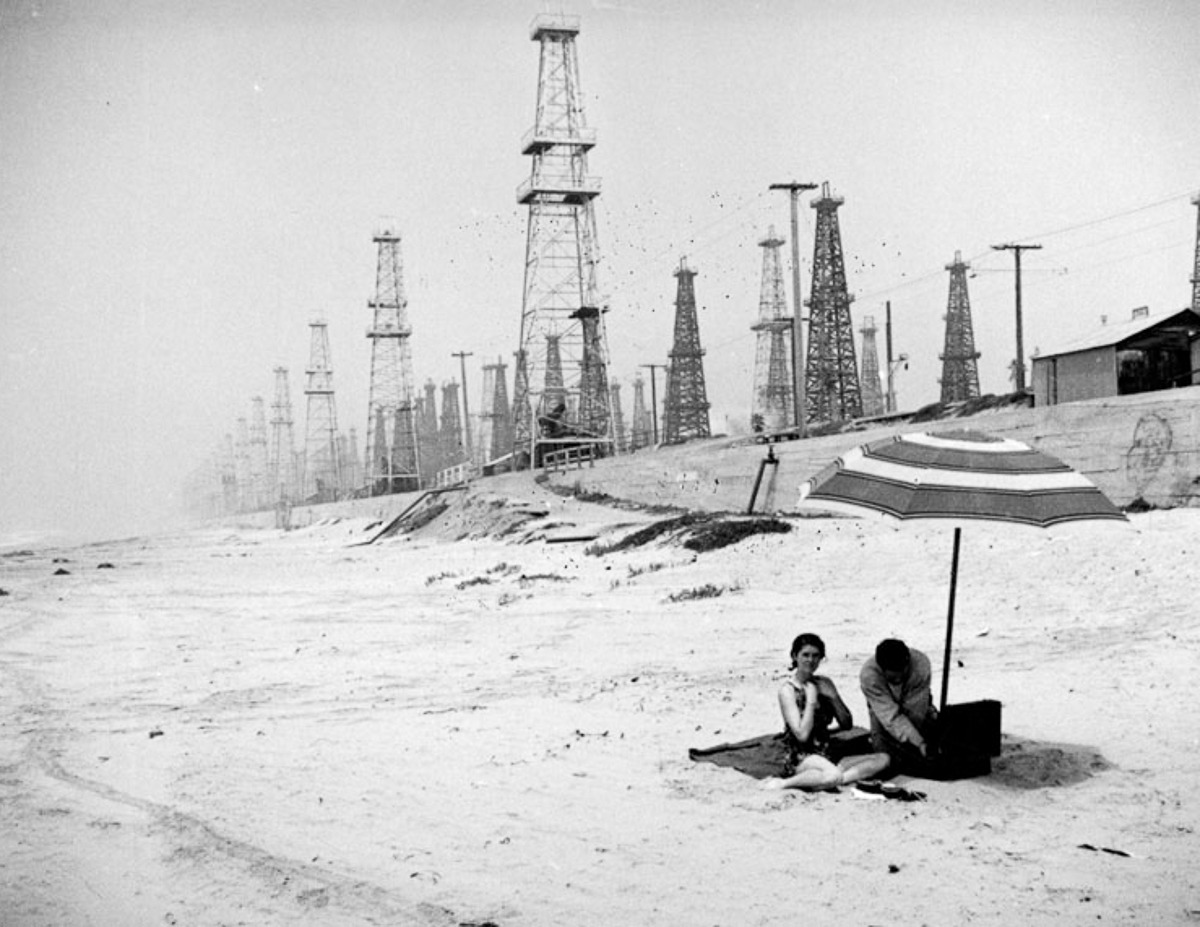
Drilling for oil on Venice Beach | Via Native Americans first discovered oil in California, as it seeped to the surface of the...
Drilling for oil on Venice Beach | Via
Native Americans first discovered oil in California, as it seeped to the surface of the earth. They used it as a lubricant and sealant for canoes. It was later used for similar purposes by Spanish colonizers.
As the state’s population boomed in the decades following the gold rush of 1849, there was a rapidly growing demand for petroleum.
Drilled in 1876, the first commercially successful oil well in California was Well No. 4 in the Pico Canyon Oilfield in the Santa Susana Mountains.
More discoveries followed, from the Los Angeles City Oil Field in 1892 to Huntington Beach in 1920 and Long Beach in 1921.
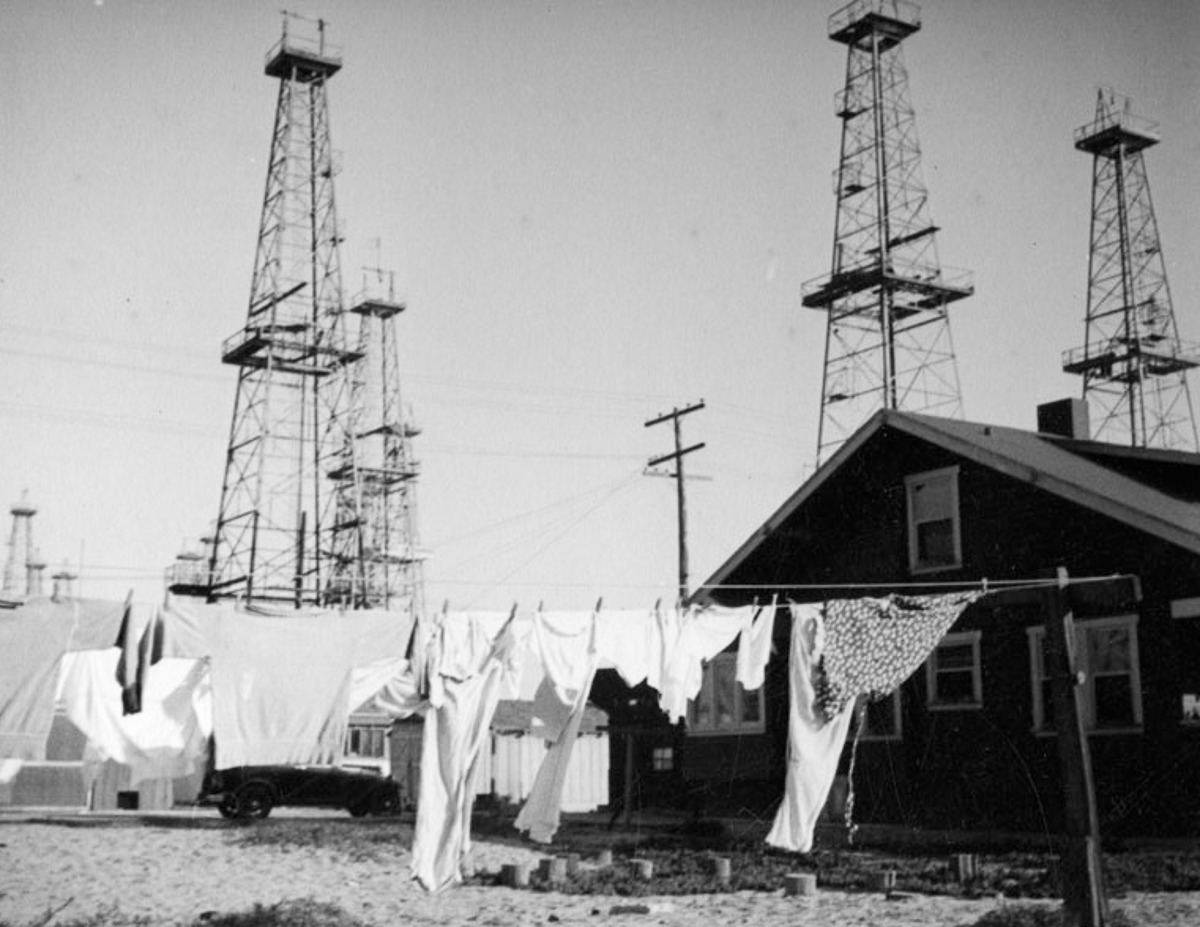
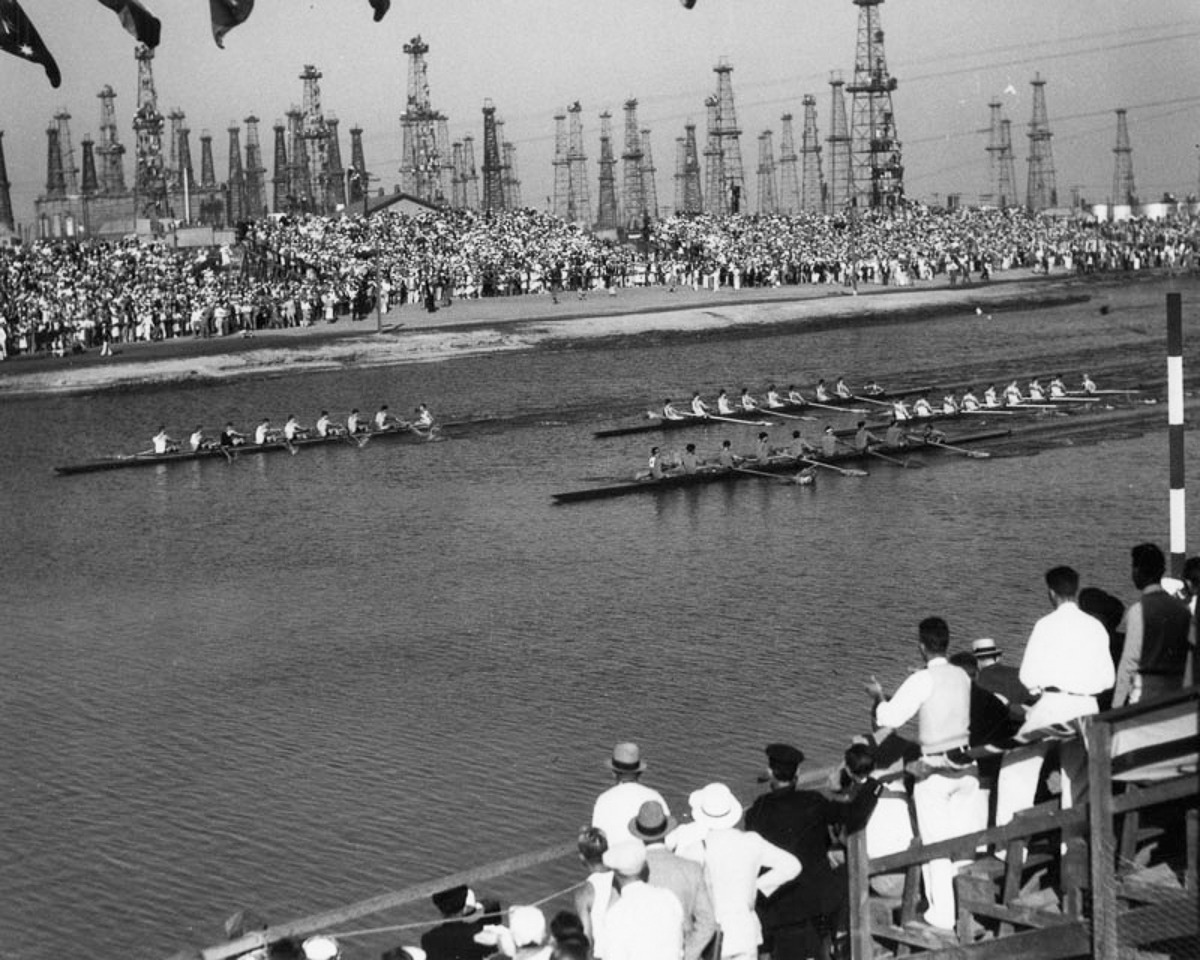
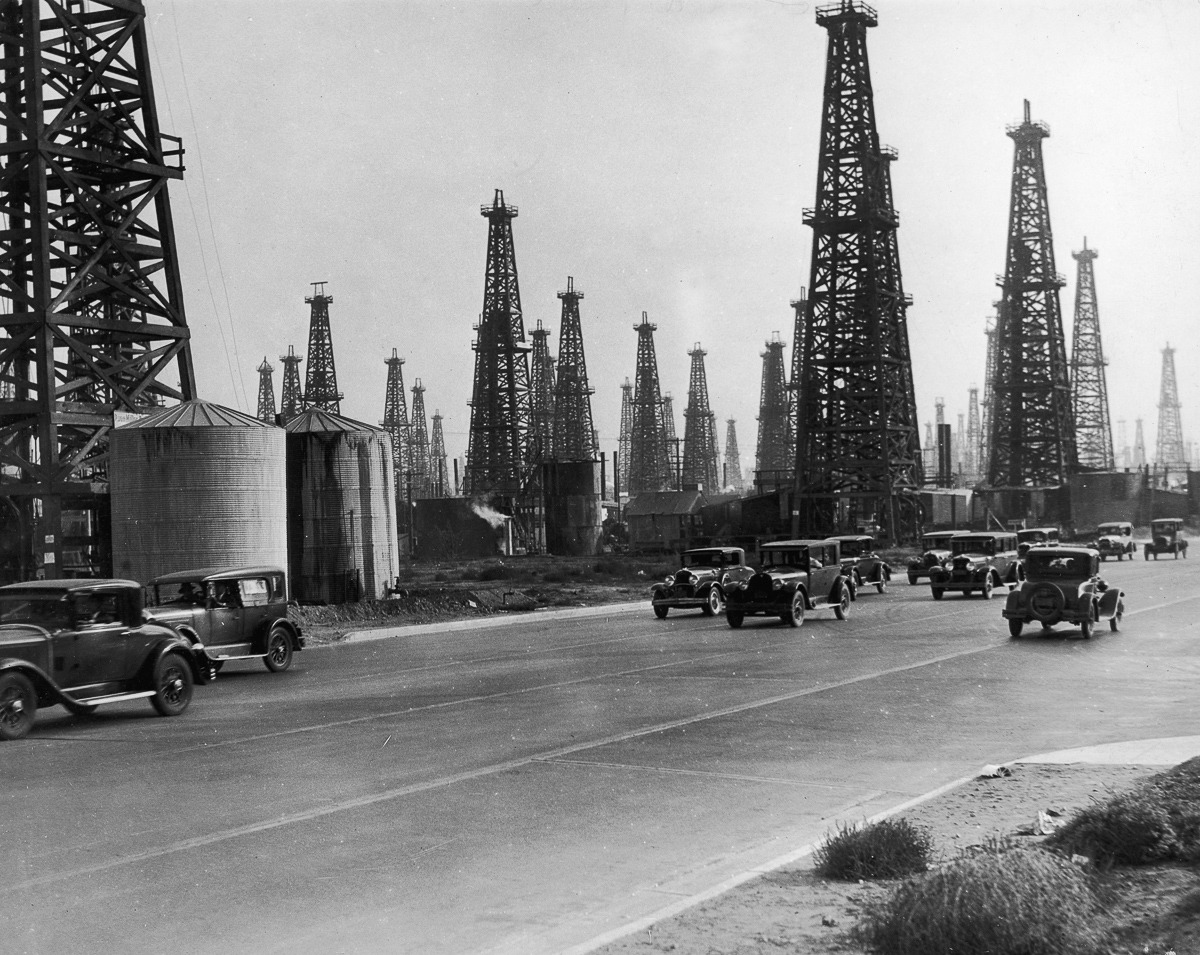
By 1920, California was producing 77 million barrels of oil a year, and vast stretches of the state were occupied by derricks, drilling rigs and refineries.
In places such as Venice, California (now known as Marina del Rey), oil derricks ran right up to the shore, mingling with residential neighborhoods and pristine beaches.






My roommate, who’s a kitchen manager, inherited a bunch of cookbooks from the owner moving and was looking through them for...
My roommate, who’s a kitchen manager, inherited a bunch of cookbooks from the owner moving and was looking through them for inspiration.
One of them was like “cookbook for a cocktail party”, circa late ‘60s or early ‘70s, and it’s shocking how many of the recipes involve near-zero technique and rely on some “exotic” ingredient - avocado, fresh (not canned) fruit, remotely tolerable wine - that’s absolutely trivial today.
When I was growing up, flying the Australian flag was a weird thing to do. There was one house in my 1980s neighbourhood that...
When I was growing up, flying the Australian flag was a weird thing to do.
There was one house in my 1980s neighbourhood that had one out the front, but everyone regarded its occupants as freaks. It seemed like the sort of insane teary-eyed British patriotism that we’d seen satirised on The Goodies, and we half suspected they would be wearing Tim Brooke-Taylor-style Union Jack belly button protectors. Weird.
Jump forward 30 years and the picture is very different. Increasingly, the thing seems to be hoisted over, pasted upon, sewn into or painted on any surface you could imagine – from processed snack foods to garbage bags, and from toilet brushes to F-35 fighter planes.
Ever since Pauline Hanson first appeared in photos with the rotten thing draped around her (the first time in my life I’d ever seen a person behave in such a way), we’ve seen an explosion in the numbers of racist thugs in Australian flag capes.
From the Cronulla anti-Lebanese riot to the rise of today’s fascist United Patriots Front, the sight of a young white male wearing a flag now carries the threat of impending racist violence.
The Labor Party too is caught up in the flag frenzy. They might not wrap themselves in it, but they certainly like to fly it. What a difference from the situation when Paul Keating was prime minister and refused to fly those ridiculous little flags on the bonnet of the prime ministerial car. When journalists asked him to explain, he brushed it aside as “no big deal”. And it wasn’t.
What has changed in Australian capitalism to make the flag so important? It’s partly rooted in the continuing neoliberal push, with its attacks on the old traditions of social welfare and the ongoing erosion of the welfare state. In that context, a resurgent nationalism is central in forging a fake sense of community and papering over the real divides in society.
But it’s also bound up with the renaissance of Australian imperialism from the 1990s, when the Australian state sought to rehabilitate the image of its armed forces. This has involved a torrent of propaganda linking the flag with the glorified and fictionalised war heroes of old.
READ MORE: How flag-waving foolishness became a national pastime
In Queensland there were a few houses on some of the backstreets that flew the flag on a literal goddamn flagpole, that was always a little unnerving.
I… is that an odd thing there? For a while in America it was been atypical but unremarkable for (ranch/alt. lower-middle-class) houses to be built with a flagpole out front for flying Old Glory
Really that was a new-build style for the suburban expansion of the American Golden Age tilted towards veterans of the WWII-Korean War era, Vietnam kind of broke the “Great Patriotic War” thing by which the American war flag was a uniting force.
(Americans use their civil flag as their war flag, how weird is that?)
For a while those houses flew POW/MIA flags, which was a Vietnam dolschtoss myth that briefly got adopted by the official government, augmented by the fact that a disproportionate share of Vietnam MIAs were pilots this officers thus college graduates who matter.

Buying a house. Closing on a real fixer - the foundation and structure are solid, but it needs a new roof, electrical system and...
Buying a house. Closing on a real fixer - the foundation and structure are solid, but it needs a new roof, electrical system and wiring, plumbing, sewer line, furnace, water heater, and to be honest walls. Nothing that professionals don’t do every day though, and for total cost of ownership I’ll get better value than I would buying fresh, with chances to get everything set to my specific taste.
Anyway that’s got me reminded how curious it is that while most American consumer transactions are conducted on a fixed-price basis, the largest ones - homes and personal vehicles - still involve haggling. There’s bids exchanged and even after you agree on a price there’s chances to change it through extras and inspections and repair negotiations.
But we haggle like that nowhere else in life, in fact it’s considered a little strange and even barbaric to do.
I started being like “even black market drug deals, it’s considered kinda uncouth to haggle”, then I noticed another difference: in that field, bulk pricing - the per-unit price decreases as number purchased grows - is expected as standard. To sell someone half an ounce of marijuana at the price of four eighths would be borderline obnoxious.
But over in white-market equivalents - buying 4 hammers from a family-owned hardware shop, or a 4 popsicles from an ice cream truck, you’d expect the total to come back as 4 times list price, and it would be a bit forward to even ask for a discount.
(Maybe has to do with how the drug economy end-user sales and purchase for resale blend together at the margins)
Then there’s what you see out in the sticks, where a lot of significant purchases are conducted by barter, with trucks and motorsports “toys” as large bills, guns and power tools as small bills, and ammunition as change.
(Remember that while the tax that provoked the Whiskey Rebellion was seen in urban areas as a sin tax, in cash-short rural areas where liquor was a medium of exchange, it was a severe disruption to the economy. Keep that in mind when you hear about proposals to regulate gun transfers between private owners.)
What else.. oh, eBay. Is that still that much of a thing? I remember when it was the biggest thing on the Internet. But it’s got its own norms and procedures.
In conclusion, we’ve got a lot of distinct cultures of commercial transaction in this country, but we code-switch between them pretty smoothly without noticing.
Page 27 of 31