shrine to the prophet of americana

#amhist (618 posts)

I never expected this headphone jack issue would be the hill to die on, but Apple has so many easier targets that it boggles the...

argumate:

I never expected this headphone jack issue would be the hill to die on, but Apple has so many easier targets that it boggles the mind that this is what gets people so irate.

No problem with saying you like the old headphone jack and would prefer to keep it, but sheesh it’s not a conspiracy folks, sometimes the straightforward answer is the correct answer.

You don’t even need to switch to Android, there are other iPhone models on the market for the foreseeable future, and if no one buys an iPhone 7 then perhaps the beloved jack will return for the iPhone 8.

(They even added better speakers if you’re so desperate to listen to music while charging your damn phone!)

“Telephone company in market-dominant position suppresses cheap a/o third-party accessories in service of business model” isn’t an absurd subject for consumer resistance, that’s the exact story behind mid-century America’s most celebrated pro-consumer bit of regulation, the FCC’s 1968 Carterphone decision.

Tagged: amhist

bae: come over me: can’t, i’m cementing the aesthetic legacy of manifest destiny in american culture through my widely...

quoms:

bae: come over

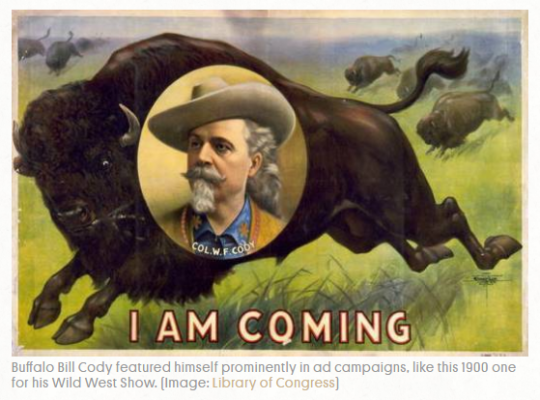
me: can’t, i’m cementing the aesthetic legacy of manifest destiny in american culture through my widely beloved ‘wild west’ stage show

bae: my parents aren’t home

me:

image

Tagged: amhist

Explain why Pennsylvania was horsewhipped and was falling part? How high Iof a chance a new state would be created out of it?

Anonymous asked: Explain why Pennsylvania was horsewhipped and was falling part? How high Iof a chance a new state would be created out of it?

(re:)

Well a lot of it was Pennsylvania is the keystone (Pennsylvania humor!) of the Rust Belt - where iron meets coal to make steel, which was the purpose of Pittsburgh and the whole SW corner of the state, plus Allentown and the Lehigh Valley in the east. Anthracite mines to feed the steel plants, the Great Lakes manufacturing complex the plants fed in turn.

There’s that, and then there’s farmland - not the best soil or access, and too hilly to improve much but hey it’s a sure thing the great eastern metropolises HAVE to grow nearby for freshness, right, right, right? (The Amish and Mennonites have actually been expanding their holdings recently tho, the land works just fine for their needs.)

Then finally there’s Philadelphia, which was there because it commanded the Delaware and thus the Delaware Water Gap past the Appalachians, which hasn’t mattered since the Erie Canal and railroads, and at this point is mostly there because Philadelphia was there. White flight, black crime, the underlying fundamentals that “five-story brick buildings in proximity to rail spurs, non-containerized docks, and dense labor-identifying neighborhoods” was no longer an appealing industrial model. At least it still had some finance and culture and tourist and professional stuff to hold onto, Camden and Trenton across the river in Jersey became - and as far as I can tell still are - absolute hellpits.

Course a big swath of the center of the state is the northern edge of Appalachia, which has always meant marginal farmland, rough coalfields, and poverty in the best of times.

And so, piece by piece, all of that fell apart in the ‘70s and early ‘80s, and it just never came back again. (The state’s federal representatives were pretty agile at propping it up with pork - rural parts of the state are famous for their constant road work and John Murtha in charge of defense appropriations did a lot, but then the end of the Cold War, the parties changed and committees were leashed in the Republican Revolution of 1994, and BRAC deliberately took the draw-down out of legislators’ hands).

Now you hear happy talk about building a new economy on services, medicine, education, research. What this means is the eastern flank of the state is becoming a bedroom community for New York down to DC (mostly providing the services of comparatively low taxes and reliably white classmates) while the rest of the population is left to age and die in place while their kids go to nursing school to change their bedpans.

If you’ve got your shit together you can become a teacher, or a cop, or an addiction counselor. If you’ve got it especially together you can become their supervisor or trainer! (If you don’t, you can become their client.)

If you live by the Marcellus Shale you can get into fracking, if you don’t mind your tapwater catching fire (ha, like you’ve got a choice).

If you live in Philly and have some connections and you’re into that thing you can get in on the great white Urban Renaissance, all the long hard work of repressing the negroes finally paying off (long before Giuliani Time there was Frank Rizzo and Ed Rendell).

If you’re the ambitious type, probably you leave.

But there’s always Penn State football.
Tagged: pennsylvania geography amhist

The US ended slavery after the Russians That’s embarrassing 

cold-warrior:

The US ended slavery after the Russians

That’s embarrassing 

The Amerindian tribes of the Pacific Northwest ended slavery after the US.

Tagged: amhist cascadia

Oh my god

we-are-legion-for-we-are-taco:

Oh my god

Cats and humans have gotten along for millennia, spaying and neutering them only started to become common in the first world in the 1970s.  (Which means when Bob Barker started ending Price is Right episodes by imploring people to spay and neuter their pets, it was still novel.)

Part of it’s back when the world was a lot more agricultural, cats tended to be considered more “allied local wildlife” than family members - you’d never even think of neutering the squirrels in your trees, would you? And farmers are not squeamish about killing animals for practical reasons.

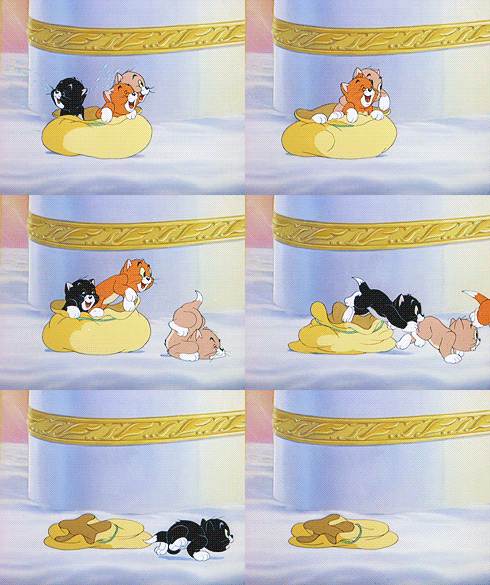
Killing surplus kittens was considered a matter of proper, pro-social animal husbandry and “tied-off sack in a pond” was a well-recognized trope for this.

Tagged: amhist history

Queering Benedict Arnold

Queering Benedict Arnold

kontextmaschine:

“Queering Benedict Arnold" is historical gay fiction. The story alternates between twenty-first century scenes in which Jake Preston and Ben Arnold (a descendent) investigate Benedict’s life, and eighteenth-century scenes imagined by Jake and Ben. Some characters and allusions hark back to “Wayward Island” (in nifty’s file on Beginnings). Jake Preston is the narrator in both works.

Most episodes are faithful to history, except for sexual encounters, which are fictional. You should not read this story if you are a minor, or if you are offended by explicit gay sex.

Benedict Arnold was an American military genius who was treated unfairly by jealous rivals while he lived. After his death, he was denounced as the archetypal traitor in history and folklore, but he was a target of inexplicable hatred long before his treasonable conspiracy with John André to surrender the fort at West Point to the British. Taken as a whole, “Queering Benedict Arnold” is an attempt to discover the origins of that hatred.

I… wait a second… 14 Feb 2013 minus… OH MY GOD I think this gay Revolutionary fanfic ripped off its framing device from Assassin’s Creed’s.

That’s like the second most meta alternate war history popular franchise queer fanfiction porn I’ve ever seen.

Tagged: amhist same as it ever was vidya

Queering Benedict Arnold

Queering Benedict Arnold

“Queering Benedict Arnold" is historical gay fiction. The story alternates between twenty-first century scenes in which Jake Preston and Ben Arnold (a descendent) investigate Benedict’s life, and eighteenth-century scenes imagined by Jake and Ben. Some characters and allusions hark back to “Wayward Island” (in nifty’s file on Beginnings). Jake Preston is the narrator in both works.

Most episodes are faithful to history, except for sexual encounters, which are fictional. You should not read this story if you are a minor, or if you are offended by explicit gay sex.

Benedict Arnold was an American military genius who was treated unfairly by jealous rivals while he lived. After his death, he was denounced as the archetypal traitor in history and folklore, but he was a target of inexplicable hatred long before his treasonable conspiracy with John André to surrender the fort at West Point to the British. Taken as a whole, “Queering Benedict Arnold” is an attempt to discover the origins of that hatred.

Tagged: amhist

Jacobin - The Cowboy Class Wars

Jacobin - The Cowboy Class Wars

Can’t vouch for the most Jacobiny parts of this, but sounds plausible and the background stuff I recognize is accurate

Tagged: amhist

Re: Yalta, do you think black separatism could ever have worked? (i.e. yielded an internally stable state with...

Anonymous asked: Re: Yalta, do you think black separatism could ever have worked? (i.e. yielded an internally stable state with not-unusually-contested borders?)

Well, depends on your unspoken terms, really.

Haiti was a country that did and does exist, if you want to talk about the U.S. in particular Liberia is a country that did and does exist. If you want to keep things to the American mainland, the Seminole - who came from fugitive slaves as much as North American autochthons - had effective sovereignty over the Florida peninsula for a while, there were other maroon colonies besides.

If you’re talking about the ‘60s wave, Amerikkka was never going to let a definitionally oppositional state establish from its sovereign territory in the middle of the Cold War, come the fuck on. (That same Cold War pressure also brought things like elite accomodation to black demands and the replacement of the draft with an all-volunteer military so as to keep eyes on the prize and not internal race war.)

I think a lot of contemporaries realized that and so the more practical enthusiasm got channelled into pan-Africanism as decolonization proceeded apace. There were GOING to be Westphalian states run by blacks for blacks, with borders and institutions, and hopes were high.

T’Challa, Marvel Comics’ “Black Panther” that’s getting some heat right now, is a daydream of those diaspora hopes for post-colonial leadership - a strong, noble philosopher-warrior-leader who drives his particular country on to technological self-sufficiency, then dominance (South Africa managed to build a modern economy, jet-set cities, and a nuclear military on a base of black labor, after all) while standing up for all of Africa as a continent and a people.

(You will remember that Rastafari, originating in the early 20th century in the black diaspora, holds early pan-Africanist Marcus Garvey as a prophet and Emperor of Ethiopia Haile Selassie - at establishment head of the only indigenous government in Africa - as a messiah.)

In practice, the warrior leaders weren’t that noble, the philosophers weren’t that strong. Rather than standing for Africa entire, the newly independent countries engaged in border warring (that was largely Cold War shit - after the Sino-Soviet split a lot of countries got to host 3-way proxy wars, which no doubt was fun). Rather than even standing for their own countries entire, politics tended to shake out along lines of tribal identities that were meaningless in the diaspora, with at best an ideological gloss that was efficiently shed with the collapse of the Soviet Union.

All that said, I think an alternate history (or future) where this panned out, and maybe drew return migration from the diaspora is still more likely than the establishment of a black-identity state on North American mainland.

I think rather than an encompassing concept of “blackness” organically emerging from the wisdom of the native African people, this would likely involve a founder state establishing an “African” identity that’s heavily salted with their own particularity, expanding across the continent, brutally suppressing other local identities over the course of several generations in favor of this “Africanism” in a way that uncomfortably reminds of European colonialism, and that any inspirational “pull” factor on the diaspora would be matched by a “push” factor as other states increasingly consider inhabitants sympathetic with the identity of this rising power to be suspect aliens, but hey.

Tagged: amhist afamhist history

A STUBBORN COMPANY TOWN WINS DELAY IN ITS DEATH SENTENCE

A STUBBORN COMPANY TOWN WINS DELAY IN ITS DEATH SENTENCE

35 years past

Tagged: amhist 1981

The 1980s AIDS plague started closer to WWII than today

The 1980s AIDS plague started closer to WWII than today

Tagged: amhist AIDS HIV GRIDS history

I wonder how many of the people who say “political violence is never acceptable” remember when they’re speaking that the United...

zennistrad:

I wonder how many of the people who say “political violence is never acceptable” remember when they’re speaking that the United States was literally only made possible by a revolution.

And revolutionary violence wasn’t limited to Minutemen and redcoats, either. An important part of colonists coming together to resist the crown was the purging of Loyalists and dissenters.

Patriots abused people, beat them, mocked them, pelted them with rocks, coated their bare skin with hot tar and feathers and ran them out of town on a rail, formed into mobs and laid siege to their houses, drove them from their jobs, homes, cities on threat of death.

America was made possible by a campaign of violent mob harassment.

Tagged: history amhist

A Playboy for President

A Playboy for President

Much of what seems strange and reactionary about Trump is tied to what was normal to a certain kind of Sinatra and Mad Men-era man — the casual sexism, the odd mix of sleaziness and formality, even the insult-comic style.

But while that male culture was “conservative” in its exploitative attitudes toward women, it was itself in rebellion against bourgeois norms and Middle-American Christianity. And if Hillary is a (partial, given her complicated marriage) avatar of Gloria Steinem-era feminism, her opponent is an heir of the male revolutionary in whose club Steinem once went undercover: Hugh Hefner…. Hefner passed from a phenomenon to a sideshow, while a more feminist vision of liberation became the official ideology of the liberal upper class.

But only gradually and partially. The men’s sexual revolution, in which freedom meant freedom to take your pleasure while women took the pill, is still a potent force, and not only in the halls of Fox News. From Hollywood and college campuses to rock concert backstages and Bill Clinton’s political operation, it has persisted as a pervasive but unspoken philosophy in precincts officially committed to cultural liberalism and sexual equality.

This fundamentally rings true, close to what I was getting at in that Something for Everyone post.

Separating The Sixties into two is an interesting and possibly productive angle though. You have the Playboy Sixties (which started in the Fifties of course, the same time as campus unrest first flared up, this time against “in loco parentis” parietal rules that tried to keep the male students and the co-eds from fucking. My dad mentions being in near-riots at Cornell over this, in a narrative by which “panty raids” where men would en masse storm women’s dorms and steal their underwear were a blow for freedom.) The Swinging Sixties, what Austin Powers (who woken up assumed communism had won and condoms were for sailors) was riffing on. The Sinatra Sixties. The sixties where the popular New Face Of America was a charming young president with a picture-perfect wife and family and a steady stream of models and actresses piped in the back door.

And THEN, distinct from that, you have the minority-liberationist 60s, the feminist 60s. Which was not obviously or inevitably incompatible with the white man’s ‘60s. That the Civil Rights Movement of the ‘50s demanding membership in white society would eventually be eclipsed by a black nationalism asserting pride in distinct blackness was not obvious or inevitable. Betty Friedan’s original goal had been, taking heterosexual pairing as a given as the correct state of mature women, to make it work for both parties. And her warning of the “Lavender Menace” of lesbians coming to prominence in late-60s feminism came from a suspicion that given the chance, these women who were not drawn to men and were increasingly articulating theories of feminism based on complete life without men were unlikely to spend the feminist reputational capital she’d cultivated on Making Marriage Great Again.

And points to him for pointing out that the Playboy stuff and so much of that period’s masculinity wasn’t the last hurrah of a long stable maleness but a new-at-the-time innovation that was understood as counter to existing stability.

Like, do you remember that 1965 Playboy interview where Sean Connery, deputized as James Bond, agent of masculinity, extrapolated from his character to expound on the necessity of violence in maintaining correct male-female relations?

PLAYBOY: How do you feel about roughing up a woman, as Bond sometimes has to do?

CONNERY: I don’t think there is anything particularly wrong about hitting a woman–although I don’t recommend doing it in the same way that you’d hit a man. An openhanded slap is justified–if all other alternatives fail and there has been plenty of warning. If a woman is a bitch, or hysterical, or bloody-minded continually, then I’d do it. I think a man has to be slightly advanced, ahead of the woman. I really do–by virtue of the way a man is built, if nothing else. But I wouldn’t call myself sadistic. I think one of the appeals that Bond has for women, however, is that he is decisive, cruel even. By their nature women aren’t decisive–“Shall I wear this? Shall I wear that?”–and along comes a man who is absolutely sure of everything and he’s a godsend. And, of course, Bond is never in love with a girl and that helps. He always does what he wants, and women like that. It explains why so many women are crazy about men who don’t give a rap for them.

That came more than 20 years after the publication of Generation of Vipers, a popular and influential 1942 nonfiction book on how baleful but widespread trends of women in positions of influence or control over men in the name of morals and propriety - “momism” were turning us into a cosseted, failed, unworthy nation.

Tagged: amhist history sex roles megaloid momworship ross douthat

Hazy knowledge and inexperience added to an intuition that politics was manipulated by mysterious forces. Suspicion was often...

Hazy knowledge and inexperience added to an intuition that politics was manipulated by mysterious forces. Suspicion was often transmitted down through the generations by adages like “All politicians are thieves,” “The squeaky wheel gets the grease,” and “One hand washes the other.” The penchant for projective thinking was evident in the fluency with which Italian Americans resorted to conspiracy as a means of explaining events. A leader in the Italian-American Civil Rights League offered a grandiose version. “There’s a conspiracy against Italian Americans, because we really are a majority of Americans. There are thirty-three million of us, although the census is afraid to admit it. That is why the CIA shot Robert Kennedy, Martin Luther King, and Joe Colombo. It was because Colombo was trying to unite the have-nots against the haves. The CIA did it because Joe Colombo would have upset the two-party system.”
Jonathan Rieder, Carnasie: The Jews and Italians of Brooklyn Against Liberalism. FYI, this is who Joe Colombo is.
(via antoine-roquentin)

Tagged: amhist

Something I like to remind people of to highlight the fluidity of history is that well into the 20th century major Anglophone...

Something I like to remind people of to highlight the fluidity of history is that well into the 20th century major Anglophone associations with Islam were “decadent sexual deviance, cosmopolitan tolerance, particularly queer-positive”.

Something similar is that if you go back to early 20th century America, stereotypes of Black manhood get a little off. You still see “bestial brute” but you also get dopey, cringing, lackadasical, henpecked, can’t get or keep a woman. (The unifying theme is lack of self-mastery) Like, a cuck. Remember, like, The Blues? And how they’re about how your woman left you, or doesn’t stay true to you, or won’t accept your love? One of the central contentions of the infamous Moynihan Report was that the reason the mid-60s black American community was unhealthy even after the 1950s civil rights movement was that repression had prevented black men from establishing *dominion* - hadn’t been able to earn a breadwinning wage, could by honest toil have less earning power than a sex worker, couldn’t offer black women enough to discipline them by threat of its withdrawal - in short, had prevented them from establishing a healthy, stable patriarchy and reaping its benefits. And one of its central recommendations was to promote this patriarchy.

A lot of 60s-70s black activism invokes “masculinity” in a way that seems incongruous to moderns because it was experienced as not only a valued but long-denied reward but a valuable resource to be deployed in service of the cause.

(Which means that the pre-X Malcolm Little strutting around Harlem in a zoot suit and a guy in a suit and a sandwich board reading “I Am A Man” and Richard Roundtree posing with a leather jacket and a gun while the soundtrack called him a sex machine to all the chicks [Shaft!] were going in on the same political project. The same one as Eldridge Cleaver reclaiming “rapist”. And, I mean, it worked. When’s the last time you associated “black man” and “harmless cuck”? [When’s the last time you did “white man”?])

In a world where Trump was competent rather than a holy fool of a d100 that got nominated because sometimes it came up “America was legitimate even before the ‘60s”, he’d take advantage of this and redo Reagan’s trick of defining himself against the “welfare queen”, updating it to be an overweight 36-something with a government/NPO social service iron triangle job she got by taking community college all through the terminal postgrad level and a sense that men are dismissably wrong for not living up to her.

(The flip side of that is the “woke bro”, the new worthy object of ridicule who tries to define his total identity, including social and sexual capital, around racism-awareness… was already comprehensively roasted 25 years ago in A Different World and School Daze, treatments of pretentious Black yuppie larva)

Of course even within whiteness this stuff’s never been as stable as either the eternal-order conservatives or the ultimate-revolution whigs would have you think. If you’ve ever harkened to the authentic masculinity of the 1950s, or Teddy Roosevelt’s kettlebell strongmen-and-Muscular Christianity, or the ruggedness of Victorian explorers, know that a lot of that stuff was considered self-conscious and borderline pretentious artifice at the time, part not of an organic maleness but deliberate initiatives to promote and assert masculine force in the face of a threateningly feminizing, white-collar, peaceful, touchy-feely world.

Tagged: same as it ever was afamhist amhist kontextmaschine classic

Until he had run for Governor [in 1938], W. Lee [”Pappy”] O’Daniel had never had the slightest connection with politics—not as a...

prophecyformula:

Until he had run for Governor [in 1938], W. Lee [”Pappy”] O’Daniel had never had the slightest connection with politics—not as a candidate, not as a campaign worker, not even as a voter; he had never cast a ballot. He was a flour salesman and a radio announcer….

[D]oubts about Pappy’s sincerity were occasionally raised in print by commentators who noted that the first of his fervent paeans to Texas had been composed when he had hardly arrived in that state, having previously lived in Kansas, and that even now he was occasionally prone to minor errors about Texas history—such as confusing the Battle of San Jacinto with the Alamo. Those closest to him knew that his country-boy image was a pose; he was actually a business-college graduate and a businessman who dealt not just in Hillbilly Flour but in Fort Worth real estate… Intimates also had some doubts about the depth of his religious feeling; although he was constantly urging his listeners to go to church, he seldom went himself….

O’Daniel’s candidacy was not taken seriously by politicians or by the press, who noted his total lack of political experience (since he had not paid his poll tax, he was not even eligible to vote); reporters treated it as a joke, if they mentioned it at all; newspaper articles lumped this “radio entertainer” and flour salesman…with the numerous other fringe candidates who regularly people Texas politics. Then the campaign began. O’Daniel’s first rally was held in Waco. When he drove up in his red wagon, the crowd waiting for him was possibly the largest crowd in the history of Texas politics—tens of thousands of people….

To his opponents’ charge that since he had no platform, he had no reason for running, he replied that there was indeed a reason; the reason, he said, was them. The principal reason he was running, he said, was to throw them—the “professional politicians”—out of Austin….

Press and politicians had predicted that once the novelty of seeing him in person had worn of, O’Daniel’s audiences would get smaller. They got larger: crowds unprecedented in Texas politics—20,000, 30,000, 40,000—came to hear him in the cities. Crowds followed him from town to town. They barricaded the highway to force him to stop and speak to them….

According to the press, the leading candidates in the race were two of the state’s best-known politicians, onetime State Attorney General William McCraw and Colonel Ernest O. Thompson, chairman of the Railroad Commission. McCraw received 152,000 votes. Thompson got 231,000. O’Daniel got 573,000. Polling 30,000 votes more than the eleven other candidates combined, he won the Governorship without a run-off….

Almost totally ignorant of the mechanics of government, O’Daniel proved unwilling to make even a pretense of learning, passing off the most serious problems with a quip; asked once what taxes he was proposing to keep the deficit-ridden government’s head above water, he replied that “no power on earth” could make him say….

“He just got up at his rallies. and said, in effect, ‘I’m going to protect you from everything.’” And the people believed he would. In 1938, he had gotten 51 percent of the vote; in 1940, he got 53 percent, winning re-election as he had won election, by beating a field of well-known politicians without even a run-off.

Tagged: same as it ever was amhist

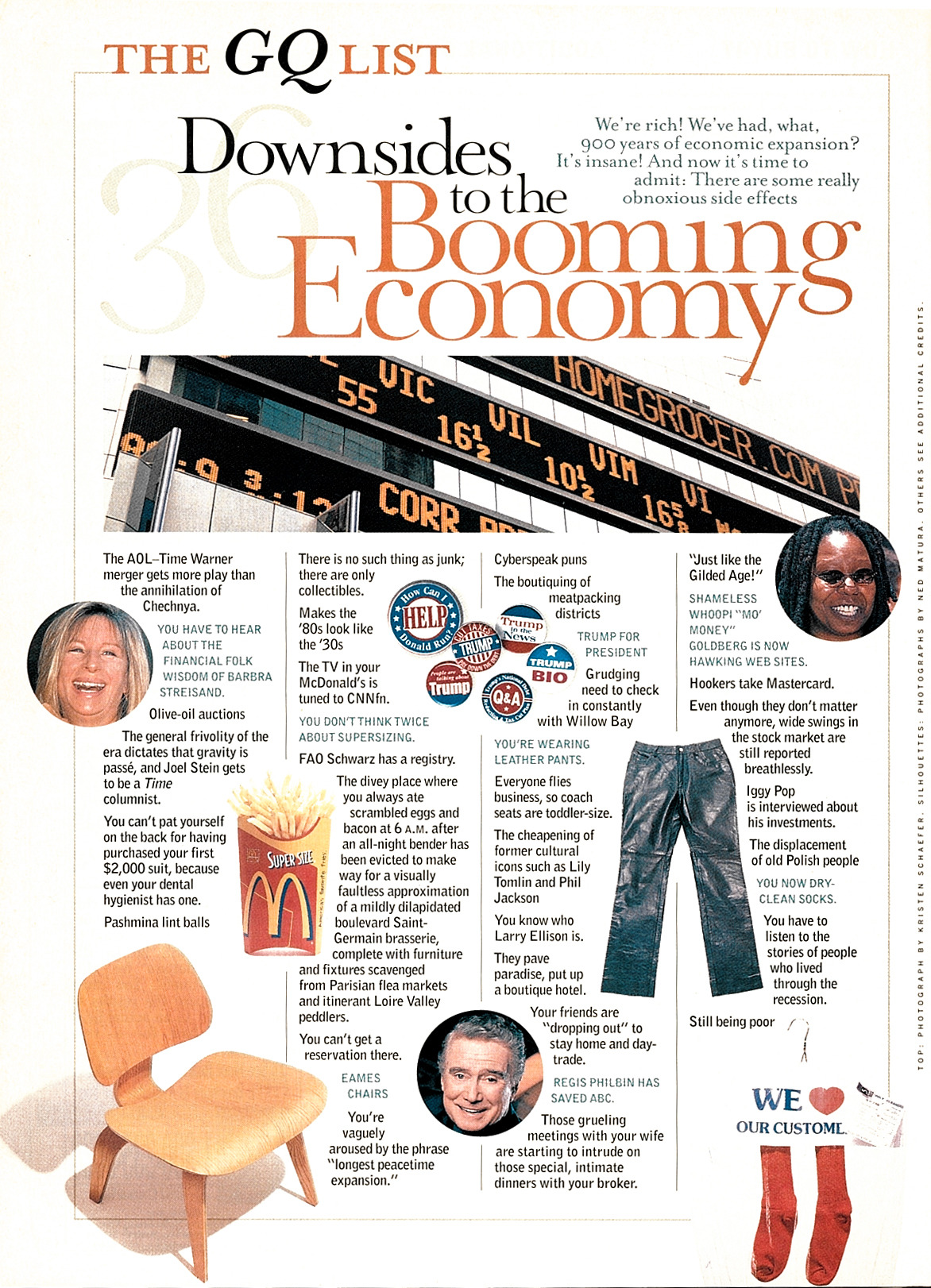
‘36 Downsides to the Booming Economy’ (GQ Magazine - May 2000)

meltedbartsimpson:

y2kaestheticinstitute:

‘36 Downsides to the Booming Economy’ (GQ Magazine - May 2000)

fucking hell

Tagged: amhist

STILL ON PATROL

pipistrellus:

pipistrellus:

I learned something new and horrifying today which is… that… no submarine is ever considered “lost” … there is apparently a tradition in the U.S. Navy that no submarine is ever lost. Those that go to sea and do not return are considered to be “still on patrol.”

?????

There is a monument about this along a canal near here its… the worst thing I have ever seen. it says “STILL ON PATROL” in huge letters and then goes on to specify exactly how many WWII submarine ghosts are STILL OUT THERE, ON PATROL (it is almost 4000 WWII submarine ghosts, ftr). Here is the text from it:

“U.S. Navy Submarines paid heavily for their success in WWII. A total of 374 officers and 3131 men are still on board these 52 U.S. submarines still on patrol.”

THANKS A LOT, U.S. NAVY, FOR HAVING THIS TOTALLY NORMAL AND NOT AT ALL HORRIFYING TRADITION, AND TELLING ALL OF US ABOUT IT. THANKS. THANK YOU

anyway now my mother and I cannot stop saying STILL ON PATROL to each other in ominous tones of voice

a really important thing about this that i forgot to put in this post is that the reason i know about the Still On Patrol WWII Submarine Monument is that it is a pokestop.

Tagged: amhist

“communist countries have propaganda everywhere!!” meanwhile in the us there’s an american flag within every square mile, kids...

sevzem:

taymonbeal:

another-normal-anomaly:

snailforpresident:

emperor-of-matzah:

narcolepticvoid:

gohosginoquisi:

starbuninthesky:

crystalgemsugilite:

you-gotta-have-blue-hair:

sodomymcscurvylegs:

ryandevon:

wtf-tuck:

perks-of-being-lebanese:

cincosechzehn:

callmebliss:

writingwhilehuman:

callmebliss:

constablewrites:

scifinut:

rabidlitmajor:

takumisidekick:

sarahwagshertail:

fantastic-nonsense:

silly-fox-in-sox:

thecityhorse:

ratrapp1:

oneponyparty:

greek-god-of-hair:

the-macra:

tinker-brows:

nicatine:

swarnpert:

“communist countries have propaganda everywhere!!” meanwhile in the us there’s an american flag within every square mile, kids pledge their allegiance to that flag every day at school, and the us military attempts to recruit people before theyve reached the age of 13

i told my dad about the pledge of allegiance and he said this sort of shit wouldn’t fly even at his old school and he did kinda grow up in communist poland so like

and in texas we have a SECOND pledge we have to say every morning because we also need to pledge to the flag of texas (just in case we secede again) 

wait what the fuck texas

Texas for the win ever got damn time

And we have TEXAS history we have to learn.

Do you know how many weird looks I got when I moved to Connecticut from Texas and asked them what year they took Connecticut history…

And then trying to explain why we had to take Texas history and realizing I had absolutely no idea.

Uh, I remember taking the Indiana History class in elementary school. Is that not a thing in each state?

super scientific poll time:

What state did you go to school in & did you take a state history class?

If your outside the US- feel free to join in with whatever your equivalent would happen to be..

I definitely had to learn Michigan history in school, though it wasn’t a separate class, just a couple weeks out of US history.

Tennessee History, 8th Grade

California history was like 4th grade. And some of 3rd

North Carolina, yup history in 4th grade. We all had to make powerpoints and do tons of other bullshit. I hate this state with a passion.

Missouri…I know they did when my mom was in school…but the most I had to do was a short unit one year in elementary school and some Missouri-specific facts during the Civil War unit. They were surprisingly good at reminding us we’d been a slave state. 

Kansas. 7th grade history was Kansas History.

I think 8th grade was supposed to be Arizona history but the accelerated classes skipped it for some reason? We might have gotten a day or two in social studies.

My district was kind of terrible about history, though. The first time I learned about the Civil War was when I took the textbook home and read that shit myself, because I’d heard rumors that some things went down after the Revolution but my history lessons never got that far.

Massachusetts, but a big amount of American history involves our state history too, so I don’t remember ever really having separate time spent on it.

Texas History (7th grade, btw) kind of ignores the rest of America and assumes nothing important happened until we arrived, fresh from Mexico. Then left again. Then came back. And have been talking about leaving again ever since. Texas is like a bad ex.

tEXas

I went to school in Maryland, and as far as I can remember, we didn’t have a state history class.

But holy SHIT Texas. What happened?

(also: obligatory @mokia tag on a texas post)

Connecticut and we definitely learned about Connecticut history but mostly American revolution history/Colonial America that sorta thing. It wasn’t a separate class though just integrated into our regular US History class.

Alabama history. 4th grade. Totally different textbook and everything.

^ what he said. And I knew it was absolutely ridiculous then

I think the was Florida history, but IIRC, it was an elective (that I never took).

Massachusetts, but since the Revolution kind of started her I’m not sure if you’d count as Massachusetts History or just plain ol’ US history

I live in New York and we specifically learned NY history in fourth grade, if I recall correctly.

Michigan and we learned Michigan history in 4th grade which was actually quite helpful

Michigan, 4th grade!

Virginia, and we basically never stopped learning about Va history. The whole first surviving British colony thing gave us bragging rights or whatever.

New York.


I never took NY history. At all. 

I did take Long Island history, however.

i took a two month long Oregon trail/oregon history unit in fourth grade, and we dabbled in Oregon history here and there (usually every valentines day, great date of establishment, Oregon). But other than that so far ive had nothing substantial that didnt require me to dress up in a silly outfit to go to school for a whole month, Oregon train simulation, anyone? I cant speak past halfway through ninth grade though.

Indiana, and we had Indiana history one day a week in fourth grade (fifth grade in the same slot was basic econ/how to balance a checkbook type stuff).

New Hampshire, and this was a fairly major thing in fourth grade.

Maryland. We didn’t have one, but we should. ‘Merica. I’d also like to point out that the kids near the top of this post have not been sent to Kolyma.

Pennsylvania (Philly suburbs), there was Benjamin Franklin and William Penn and the Liberty Bell and Independence Hall but that’s hard to disentangle from bog-standard colonial/revolutionary history

Tagged: amhist

That reminds me, we’ve been so happy to push the Bush the Younger years offstage that we haven’t really digested that a Texas...

That reminds me, we’ve been so happy to push the Bush the Younger years offstage that we haven’t really digested that a Texas oilman became President and then for a few years our post-Cold War operations and public face were remade on the energy-services contractor model

(which is not a facially ridiculous idea for contingency management in territory that is rough and infrastructure-poor yet full of spot events that briefly become incredibly important)

and then we were like “pff” and that plotline completely got scrapped

Tagged: amhist