shrine to the prophet of americana

#amhist (618 posts)

For an economic crisis (crisis? it’s at least cris-ish) that propagated by way of household debt and first manifested in...

fnord888:

slatestarscratchpad:

kontextmaschine:

For an economic crisis (crisis? it’s at least cris-ish) that propagated by way of household debt and first manifested in evictions and foreclosures, it’s really striking - if you’ve got a background in American history - how little pushback there’s been at the county level.

Nationwide debt crises used to happen regularly, and there were inevitably a few sheriffs or judges who would refuse to go along with the liquidation, creating a point of media focus and kicking the issue up to the state level, where governors and legislatures would usually compromise to some degree (especially if the lower officials had conveniently timed their resistance to match election cycles).

Which, if you’ve ever deplored the effects of “politicizing justice” and wonder why anyone ever thought it was a good idea to subject judges and law enforcement officials to electoral pressure, there you go.

Of course there was also the option of getting a few people with rifles, besieging courthouses and blockading auctions, but that died out even earlier - mind the Grapes of Wrath “Then who do we shoot?” bit - as railroads both enabled rural delivery and thus finance beyond local store credit and the one-branch bank, and also made it practical to send nonlocal militia troops into the boonies (first in coal and iron territory, back before the Rust Belt rusted, and then further west).

Everyone knows that after WWII the federal government grew at the expense of state power, fewer appreciate just how much county power - which used to be pretty much the face of Government - receded. Today movements that aim at its restoration, like Posse Comitatus and Sovereign Citizens, are marginal among the marginal.

I blame the telegraph, for enabling realtime communication across distance and thus obviating the necessity of feudal hierarchies. A court, after all, comes from the term for a retinue of power with identifiable human faces. There was always power, but it used to be close enough and personal enough you could make a CHA check against it. (Or Intimidate, which is STR, iirc). Plus there’s always the tendency to go native.

(The most functional method of countering this tendency was requiring courtiers to spend about half their time accumulating power at their own courts in the field and half spending it down at their liege’s court - this was arrived at independently [as far as I know] by the Japanese bakufu, the French royalty, and the American DoD, where high ranking officers rotate back and forth from field command to the Pentagon. Probably parallels in pre-computerized large firms doing rotations between home and branch offices, but I think that was derived from DoD. Well, DoW, back then.)

Histories of the New Deal often acknowledge the federalization of power but then account for the TVA, rural electrification, Rural Telephone Service, etc. either as the political cost paid for that power, or as something that centralized power made possible, when they were in fact constitutive of that power.

Is it okay link to some of this stuff?

Is there anything to this other than wild speculation? I’ll note, off the top of my head, that use of non-local troops in rural areas goes back to literally George Washington.

Okay when I first saw this late last night I thought this was on top of @slatestarscratchpad asking me for links. I’m not an academic for reasons that include not having to footnote everything I say with proof that someone else said it first, but skepticism is reasonable, I get asks from time to time requesting more background on local vs. centralized power in American history, so it couldn’t hurt to dig some up, especially if it’s going to get linked around.

A lot of this stuff I think I first picked up in lectures by Stuart Blumin. He was a respected academic historian and I trust him. Though like I said you could pick up the influence of EP Thompson, whose thing was finding a “useful history” of popular resistance in scattered acts that might otherwise be read as meaningless anomaly, so judgement call there. Also means I didn’t have ready citations in hand, but even without academic database subscriptions a day of googling turned up some decent traces.

Before everything else to snap back at fnord -

Yeah, George Washington marched a militia into the sticks to suppress the Whiskey Rebellion, and it was a goddamn nightmare.

Militia will defend their own land but aren’t enthusiastic about long-term marching against abstract threats, so raising the army almost set off more revolts. In the end the men they got were a mixture of human detritus and comfortable toffs on vanity trips, and they set off in ragged order, squabbling and looting (nicknamed “The Watermelon Army”) and deserting in scores all the way.

In fairness that’s normal for pre-Napoleonic armies, but still, marching a militia 200 miles with no combat required the personal attention and charisma of the sitting President/war hero/national founder just to operate at “normal fiasco” levels.

Okay. Then, on sheriff’s resistance, first apparently that’s still a thing, getting stuff on Tom Dart of Cook County (Chicago), IL back in 2008, so. Honestly, if my sheriff or local judge did something like this I’m not really sure what channel it’d reach me by, so huh.

Let’s see, going back, Richard Hongisto, the radical San Francisco sheriff who wore a badge with a peace sign and was jailed in 1977 for refusing to evict …in political alliance with Jim “Kool-Aid” Jones? Ha! I did not know that.

Going further back gets even harder to Google but these Tennessee statutes dating from 1858 (after the Panic of 1857) laying out punishments for sheriffs who refuse to conduct evictions are suggestive enough I’m gonna consider the tradition established.

On judicial resistance it’s tough because “judge makes ruling, is overruled” doesn’t leave bright traces as a break from the norm. A lot of things seem to point back to a 1943 article, Skilton, “Developments in Mortgage Law and Practice” that might (or might not, I dunno, paywalled) contain threads to be pulled, but for now I’d say look at these Massachusetts Supreme Judicial Court decisions.

Notice two details about that session linked - first, this was from 1821, in the aftermath of the Panic of 1819, America’s first major economic disruption that led to its first major debt crisis. Second, that this September session is sitting in Lenox, at the western edge of Massachusetts, and hearing cases appealed from the region.

(This was a way that local county independence was circumscribed in a preindustrial era, a traveling court of prominent judges would make regular circuits into the backcountry to review the local judgements. Lenox to Boston is 131 miles on modern roads.)

Inland farming areas like Western Massachusetts were exactly where the debt crisis was most severe, the inability to turn over debts and thus demand for repayment in hard currency passing down from coastal importers to local merchants to fall on farmers with no capital but their land.

And here you see exactly what I described - local lawyers and judges working up lines of logic by which debtors are granted some relief from their obligation, thus “kicking up” the matter to the state level. Even if these are all overturned in favor of creditors, filling up the docket impresses the issue upon state elites and requires some expenditure of resources and political capital to address - many states responded to the Panic of 1819 with “mortgage redemption” laws giving debtors the opportunity to reclaim their land even after foreclosure.

Another thing, I’m not a lawyer but an interested layman and one thing I notice about these decisions is that in contrast with modern statutory interpretations, they turn on *awfully* distant abstractions of common law.

Which, yeah, in the 19th century people were still struggling to make up after-the-fact justifications by which common law - the accumulated mass of judicial tradition and judgement - represented a coherent and integrated whole and law was a more wide-open field.

Here’s a report from a commission convened by the Governor of Massachusetts about a decade later that diplomatically concludes “maybe we should codify the central bits of this common law, to make courts more smooth and regular”. This was a trend that continued on - the rationalizing Restatements of the Law in the 1920s, that were part of the same professionalizing trend that favored (often state-) law schooling over “reading for the bar”, the Uniform Codes that aimed to homogenize law nationwide.

Robert H. Jackson, the last Supreme Court Justice to not attend law school, eulogized the old ways as a source of charismatic “first principles” rural county power here.

(This means that when Freeman types pitch “the common law” as an American foundation that’s been lost, they’re not wrong. And when they depict “the common law” as “tortuous fever-dream legal logic that affirms the protection of rural nobodies from central power and moneyed interests”, well, they’re not wrong.)

On mob resistance against debt collection - well, that goes at least back to Shays’ Rebellion, the big outbreak since would be the farmland rebellions of the 1930s. Most striking example perhaps in Iowa, where farmers blockaded roads, backed “penny auctions” where the threat of mob violence allowed foreclosed properties to be bought at minimum bid and returned to debtors, and ultimately threatening a judge not to conduct foreclosures (as in, he was dragged from his courtroom and out of town with a noose around his neck).

Now, martial law was declared in response, but note the details in that story - National Guard troops were dispatched from Sheldon and Sioux City. Those are about 30 miles from Le Mars - far enough to not have local connections - but 200 miles from the capitol of Des Moines, which remember is 2/3 the (admittedly, mountain-cleaved) distance George Washington himself struggled to project enough power to suppress insurrection.

But the governor received word of the events by telephone, ordered troops mobilized and dispatched presumably the same way, and sent a commanding officer by airplane. That’s *exactly* what I’m talking about how industrial technologies enabled government control across greater distance.

Finally, as desert I want to point you to this account of the Jackson County Rebellion, which is kind of a mix of all three - mob, sheriff, and judges’ resistance (see page 42 on the earlier populist victory of direct judicial elections, which enabled later “rebellion”) combined with the long Oregon tradition of batshit political violence you’ve never heard of, like the Portland mob, or Vigilantes, or that time in 1984 when a cult that took over a town tried to take over the county by infecting 750 people with a bioterror attack.

Tagged: amhist history

something cool i found out while looking through the cities on that atomic bomb map is that canton, ohio is named after...

severnayazemlya:

slatestarscratchpad:

quoms:

something cool i found out while looking through the cities on that atomic bomb map is that canton, ohio is named after guangzhou, china (but the old time version of the name, obviously):

Bezaleel Wells, the surveyor who divided the land of the town, named it after Canton (a traditional name for Guangzhou), China. The name was a memorial to a trader named John O'Donnell, whom Wells admired. O'Donnell had named his Maryland plantation after the Chinese city, as he had been the first person to transport goods from there to Baltimore. [x]

probably one of relatively few cities in the united states named after another place that’s not in europe

I live in a town in Michigan that was formerly called Nankin Township, after Nanking, China.

The city next door used to be called Peking Township, for a similar reason.

And the other city next door is still called Canton, Michigan.

Apparently the Post Office rejected all of their original suggestions for town names because there were already similarly-named Michigan towns, and they ran out of ideas until finally they just decided to name them all after places in China.

Amman used to be called Philadelphia, but Penn probably wasn’t thinking of it when he named the city in Pennsylvania.

There’s even a place with the same name as a location in Africa: Numidia, Pennsylvania. But this is also a coincidence – it was supposed to be “New Media” – and its population is >99% white.

Newark, New Jersey, was “New Ark of the Covenant”, because the American frontier has always been full of religious weirdos

Newark, Ohio was named after Newark New Jersey, and is in turn the namesake of the Newark Holy Stones, kind of a more competent but less successful version of the seer stone/golden plates(/Voree plates) of Mormonism that were “discovered” in a pre-Columbian underground complex

because “how can the Americas have a place in the world whose central narrative derives from the Hebrews they’d been completely isolated from” was a matter that rated quite some contemplation back then, and “ancient Hebrews” were the “ancient astronauts” of the 19th century, and the American frontier has always been full of religious weirdos

Tagged: amhist

The civic legitimation rituals are going. On an intellectual level I’ve thought for years that something like this could...

kontextmaschine:

The civic legitimation rituals are going.

On an intellectual level I’ve thought for years that something like this could happen so the first week was a warm bath of vindication and victory laps, it’s actually now seeing it settle in to the patterns that’s uncanny.

Of course, you know me, it’s the little civic rituals that really throw me. Saw a tweet that was just like

Donald Trump is going to pardon a turkey

And I was like FUCK, that’s true.

Donald Trump is going to host an Easter egg roll for children

Donald Trump will throw out the opening pitch of Major League Baseball

I looked for that National Enquirer article cause I thought it would be funny if their take was less wild-eyed than Vox. But “My First 100 Days” “In His Own Words” just refers to that bullet-pointed subhed lifted from his official plan

We Told You So was an article though, 2 pages under the cover, a timeline piece on how his candidacy progressed and all the times the Enquirer had gotten something right the consensus got wrong

I shoulda got a copy now I think of it. It was clearly written to equate Trump’s superiority over the elites with the Enquirer’s, with the audience invited to parallel their own - I’ve wondered what primary sources might be unridiculous enough to do this election in AP US history and that’d be a good one.

Tagged: donald trump amhist

This is Not Normal: Selected Structural Anomalies in US Federal Politics, 1980-2000

(one-off ruptures, as distinct from bottom-turtle “power flows from the barrel of a gun” stuff or norm changes like the regularization of the filibuster, the end of earmarks or the decline of deference in Supreme Court confirmations from Bork on.)

Hinckley Shooting (1981)

69 days into his presidency, Ronald Reagan is shot in the lung. The shooting is seen in the lineage of “national hero” assassinations from Kennedy (1963) to King (1968) to Lennon (1980) which contributed to the sense of no “successful” presidency since Eisenhower

Taken to a public ER, prompt medical attention saves the jocular Reagan, breaking the streak in a visceral display of his “Morning in America” pledge to remoralize the country through sunny optimism.

Iran-Contra Affair (1985-1987)

Following Watergate, the publication of the Pentagon Papers, and the “Watergate babies” wave election of 1974, Congress moved to limit the power and autonomy of the executive, particularly over military and security services.

High-profile actions included the Church Committee and passage of the War Powers Act as legitimating rituals, but much leverage was made of Congress’ “power of the purse”, with a legitimating tradition back to the Magna Carta. The Impoundment Control Act removed Presidential volition in spending appropriated funds, which allowed the President to tack into the wind of Congressional opinion and was a major source of leverage over individual legislators.

(there were unsuccessful attempts to restore an equivalent in the 90s as the “line-item veto”)

More specific acts like the Boland and Clark Amendments, which prohibited aid to resistance groups in Angola and Nicaragua, moved to undercut executive desires to pursue Cold War proxy wars. During this period the Democrats were considered to have a lock on Congress while Republican strength was in the presidency and right-aligned theorists considered these Congressional acts improper trespasses on the President’s sovereign power over foreign policy.

The administration of Jimmy Carter (1977-1981) is remembered for a foreign policy that upheld not only the letter but the spirit of this new constraint and was considered a failure by anti-communists and large branches of the deep state for it.

In this climate, elements of the Reagan administration with at least the noninterference of POTUS himself end-ran the laws, supporting a forceful anti-communist posture. Figures up to the SecDef were indicted (and later pardoned by George H W Bush), but Congress could not generate the political will for impeachment and lacked any further enforcement mechanism. Congressional checks on the President became increasingly vestigial, retained as the pro forma AUMF.

Base Realignment and Closure (1988-)

Victorious in the Cold War, the United States was left with an unnecessarily large military footprint.

Military units, installations and the programs that supplied them had long been the subject of Congressional pork and logrolling at the margins, in a power politics system ill-suited to executing major shifts in a coherent way.

Accordingly, the regular process of appropriation-by-negotiation was circumvented in favor of appointing a commission of experts to make en bloc recommendations for the drawdown then ratified by legislators.

Ross Perot (1992)

A third-party Presidential candidate takes almost 19% of votes, the strongest ever third-party showing not by an ex-President.

Federal government shutdown (1995-6)

A power struggle between Democratic President Bill Clinton and a Congress under unified Republican control for the first time since the 1950s, the two sides could not agree to a budget and the federal government suspended “non-essential” operations for 4 total weeks. With the executive more united than a Congress still developing “responsible party government” parliamentary discipline, the Republicans yielded, though similar actions were attempted under the Obama administration with greater party coherence.

Tobacco Master Settlement Agreement (1998)

a nationwide parategulatory regime over tobacco is established through settlement between leading companies and 46 state attorneys general.

The regime, which in ways resembled irregular-but-precedented systems like utility franchising and workman’s comp, was constructed this way rather than through Congress, the formally legitimate venue for interstate compacts, to circumvent friendly legislators from tobacco-growing constituencies or elected in open elections with industry support who might be expected to defend industry interests.

Bill Clinton impeachment (1999)

After recapturing both chambers of Congress in the Republican Revolution of 1994, the GOP was eager to assert its power against the Democratic executive (see shutdown, above).

A series of investigations were launched into President Bill Clinton, originally focusing on ethics in the operation of his political machine as Arkansas governor, expanding into any area thought to be a political vulnerability.

Eventually the second-ever impeachment of a US President was launched over the proximate issue of perjury under law regarding a sexual affair with a petty staffer, a matter that had come collateral to prior investigations.

The impeachment ended, like that of Andrew Johnson, in acquittal. (Nixon resigned in anticipation of a successful impeachment).

The act of Republicans to issue impeachment over matters tangential to government and of Democrats to vote for acquittal in the face of evidence were reciprocally considered norm-breaking in pursuit of power.

Bush v. Gore (2000)

coming down to a close and ambiguous result in Florida, the victor of the Presidential election of 2000 remained unclear for weeks after the vote and it became apparent that contested interpretations of election law would decide the winner.

In an unprecedented and non-precedent decision, the Supreme Court usurped the issue from lower courts and election boards to effectively decide the election in favor of Republican George W Bush, on a 5-4 court split that closely tracked the parties responsible for Justices’ appointments.

Tagged: amhist

Steve Bannon Trump Tower Interview: Trump's Strategist Plots "New Political Movement" | Hollywood Reporter

Steve Bannon Trump Tower Interview: Trump's Strategist Plots "New Political Movement" | Hollywood Reporter

The Hollywood Reporter? Off-brand Variety? That’s the last place I’d expect the first interview with a triumphant political macher to run.

That’s exactly where I’d expect an old Hollywood dealmaker to call in debts for a friendly outlet though. And that’s the last place I’d expect the writing staff to get uppity in the name of wounded journalist pride.

Steve Bannon has done some thinking about how to end-run the MSM, I assure you.

It’s not entirely dissimilar to Reagan, journalists started out trying not to normalize him, bird-dogging and fact-checking and after a few months their editors pointed out they’d gone out on crusade without an army following, and things calmed.

And so after a while you’d have press conferences where Teflon Don would deflect a hostile question through two completely unrelated talking points before concluding with a joke on liberals, and even the asker would laugh and laugh.

Which critics of the time felt horrifying, along there with “talking heads” and the chirpy frivolity of local TV Action/Eyewitness News formats and MTV-influenced stylized editing. What Max Headroom was getting at. Part of the backsliding from the Great Introspection of the 70s.

One difference there, I see journalists saying their Reagan-era bosses were saying “we can’t destroy ANOTHER president”. Because Nixon. Driving him from office had looked like the ideal realization of the noblest journalistic impulses but instead of yielding some bicentennial national renewal it gave us the muddy, paranoid, demoralizing ‘70s, when the center could not hold.

(Like what was what was significant about Reagan getting shot but pulling through joking, after which he was politically invincible - we not only had a President who wasn’t a lemon but we actually got to KEEP him this time like we hadn’t since Eisenhower)

And without that cautionary tale gonna be people going into this one gunning for Nixon, we’ll see.

Tagged: steve bannon amhist

Petticoat affair - Wikipedia

Petticoat affair - Wikipedia

Andrew Jackson dismissed near his entire cabinet once because they were cucks who couldn’t control their slut-shaming wives

Tagged: amhist andrew jackson

Also in re: Steve Bannon “there’s a white populist in the White House giving political advice! He says he wants to destroy the...

Also in re: Steve Bannon “there’s a white populist in the White House giving political advice! He says he wants to destroy the government! THIS IS NOT NORMAL”

Pat Buchanan had a close advisory role in both Nixon and Reagan’s White Houses. Grover Norquist fantasized about drowning the government in a bathtub and he was a chief architect of the Republican Revolution.

This is normal, if anything it was the Bushes’ Christian Democratic take on the GOP (”thousand points of light”/”kinder, gentler”/”compassionate conservatism”) that was the outlier.

Tagged: steve bannon amhist same as it ever was

Q: they identify with titty cartoons. What’s the worst they can do? A: 

Q: they identify with titty cartoons. What’s the worst they can do?

A: 

image
image
image
image
image
image

Tagged: amhist same as it ever was alt-right

Friendly reminder that “judge the constitutionality of laws” wasn’t in the original concept of the Supreme Court but “ride around the countryside on horseback dispensing justice” WAS

Tagged: civic mythology circuit riding amhist supreme court

Utah officials unsure why youth suicide rate has nearly tripled since 2007 | The Salt Lake Tribune

Utah officials unsure why youth suicide rate has nearly tripled since 2007 | The Salt Lake Tribune

kontextmaschine:

vzx:

tentativelyassembled:

huh. this… seems to run counter to things that other people have said about Utah

youth suicide rate double the national average and going up seems like decidedly not a fun time

though this seems to be a recent-ish thing???

@pistachi0n, thoughts?

The Eastern Corridor has the lowest suicide rate. The Corridor is densely populated – population density correlates negatively with suicide rate – and it has a strong economy. Utah is sparsely populated and it has a weak economy. Sparse population implies a high rate before 2007; a weak economy implies a rise in the rate after 2007. The Corridor wasn’t hit very hard by the 2008 crash. The entire economy of my part of the swamp revolves around the government. What are they going to do, fire people?

DC is denser than any state, and it has a lower suicide rate than any state. New Jersey is the densest state, and it has the lowest suicide rate of all the states. New York and Massachusetts are urban areas attached to vast expanses of rural land where nobody lives. Over 80% of the population of Massachusetts lives in Greater Boston, which is about 10% of the area of the state. Over 40% of the population of New York lives in NYC proper.

The outliers on the East Coast are West Virginia and Vermont. Vermont is New England’s West Virginia, so. (I knew a guy in Vermont when I was 15 or so. Last time I saw him, he gave me a roll of firecrackers and said his dad had heard they were illegal in Maryland and told him to give them to me. On the one hand, this is exactly my shit; on the other hand, the only difference between a hippie and a redneck is that hippies vote Democrat, but in cultural terms, that’s a hell of a difference.)

The states with the lowest population density are Alaska and Wyoming. The states with the highest suicide rate are Wyoming and Alaska. Utah is #5 for suicide rate and #11 for sparseness. There’s something else going on, but I don’t know what. Land settlement patterns? (@kontextmaschine?)

Real question is, around half of the population of Oregon lives in the Portland metro area, so why does Oregon have such a high suicide rate?

Oregon was the first state to approve of physician-assisted suicide, by plebiscite in 1994 (back during the Kevorkian wave of attention).

Also I remember an investigation into the numbers gun control groups were throwing out on firearm deaths that showed a lot of those deaths were suicides by terminally ill or terminally old men you’d fairly describe as “stubborn old coot”, we’ve got a bunch of those.

So, uh, “out on the frontier we’d rather go out with a bang than a hospital bill”, I guess.

Actually a lot of hardscrabble societies have traditions of the elderly knowingly choosing death, or of their children choosing it for them (often with a disclaimably fuzzy boundary there).

The Eskimo “out on an ice floe” thing is still idiomatic, but I’ve heard “walked into the snow ‘to go hunting’“, deny them fluids to dehydration, overhydrate them to water intoxication, all sorts of poisons

Of course most of the time you wouldn’t have to force it, one in every eight years would be cold enough and food would be scarce enough. You wouldn’t actually freeze or starve mostly, just weaken enough to fall to pneumonia, “the old man’s friend”.

That’s one of the funnier things about when Sarah Palin of Alaska was going on about “death panels” - it’s welfare state shit like Social Security and Medicare and (lesser known) winter heating assistance programs that are the reason that isn’t still a familiar thing

Tagged: amhist

@wirehead-wannabe said What’s the deal with L.A. then? LA has no natural harbor, it started out as an inland nowheresville,...

@wirehead-wannabe said What’s the deal with L.A. then?

LA has no natural harbor, it started out as an inland nowheresville, founded as a feudal agricultural settlement by the seasonal Los Angeles River feeding the San Fernando Mission at the northern mouth of the valley. San Diego was the major city of the region.

Eventually it came time to build a southern transcontinental (“Southern Pacific”) railroad route, with San Diego as the obvious western terminus but San Francisco had issues.

San Francisco, swollen by the Gold Rush, terminus of the first transcontinental route, was the dominant power in California and didn’t want a rival, pulled enough strings to redirect to LA.

LA built an artificial breakwater and a port down by San Pedro several miles south of the city, before that they used absurdly long-ass piers off the western coast around Malibu and Santa Monica.

Then narratively unrelated to any of this there was oil discovered in the hills, which generated capital and drew Eastern money, Pasadena became the west coast WASP capital, or at least Palm Beach-equivalent. LA became self-sustaining.

Then the movie industry moved there for the weather and distance from Thomas Edison’s IP-enforcing goons

Then during WWI the aircraft industry got big because there was infrastructure and a population of workers in coastal shipping range of the NorCal/Oregon lumber industry, but WITHOUT SF/Seattle-style labor radical tendencies

Then during WWII that got even bigger and the US realized it needed to build up its Pacific (Japan- and Russia-facing) coast, which was honestly still frontier at that point

And the rest is history

Tagged: amhist geography los angeles history

paleglanceaustereface said: There was an article in the WSJ a while back about how Portland was close to dying entirely as bulk...

kontextmaschine:

paleglanceaustereface said: There was an article in the WSJ a while back about how Portland was close to dying entirely as bulk port.

Other way around, it’s dead as a container port and only functions as a bulk and automobile port. The Pacific mouth of the Columbia is actually an incredibly tough passage, and the river isn’t really suited to modern oceangoing ships, while in comparison Puget Sound is ideal for shipping. It’s the rivers - originally the Willamette serving the fertile Willamette Valley and then the Columbia-Snake system all the way to Idaho - that make inland transit to the port efficient enough to stay competitive.

That’s something that matters a lot in explaining how the West Coast developed - thanks to the way that the Pacific Coast Ranges dominate the shoreline, it contains three of the best natural harbors in the world - San Diego Bay, San Francisco Bay, and Puget Sound - and nearly jack shit else.

Tagged: amhist

Portland Police Reserve Foundation

Portland Police Reserve Foundation

The more historical context you know (i.e. that Portland was a mob town into the 60s) the more grimly hilarious this official history of the Portland Police Reserves gets.

“Like sure we started in the 1920s as ‘Vigilantes’ but that was just the custom of the time. The important thing was legitimate businessmen giving Christmas turkeys to the poor!”

“Not only did this ‘rough and tumble bunch’ of uniformed, armed, lightly trained but unpaid men offer flexibility and support on missions like prostitution stings, but they’re civically involved, pushing for things like higher police salaries!”

“Also since 2011 they can arrest anyone in Oregon”

Tagged: portlandportlandportland cascadia same as it ever was amhist

At this point this election is the most important event in American history since the end of the Cold War at least

At this point this election is the most important event in American history since the end of the Cold War at least

Tagged: leading to election 2016 amhist as in 9/11 is gonna be in the bit

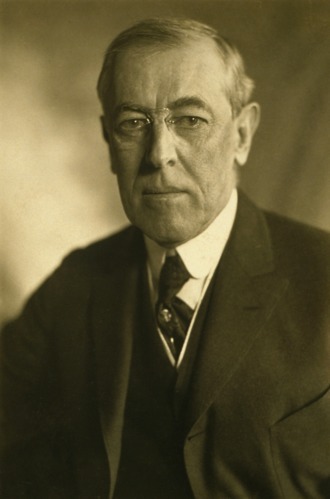
>mfw I search “first professor-President” and the results are talking about Obama

>mfw I search “first professor-President” and the results are talking about Obama

Tagged: woodrow wilson amhist

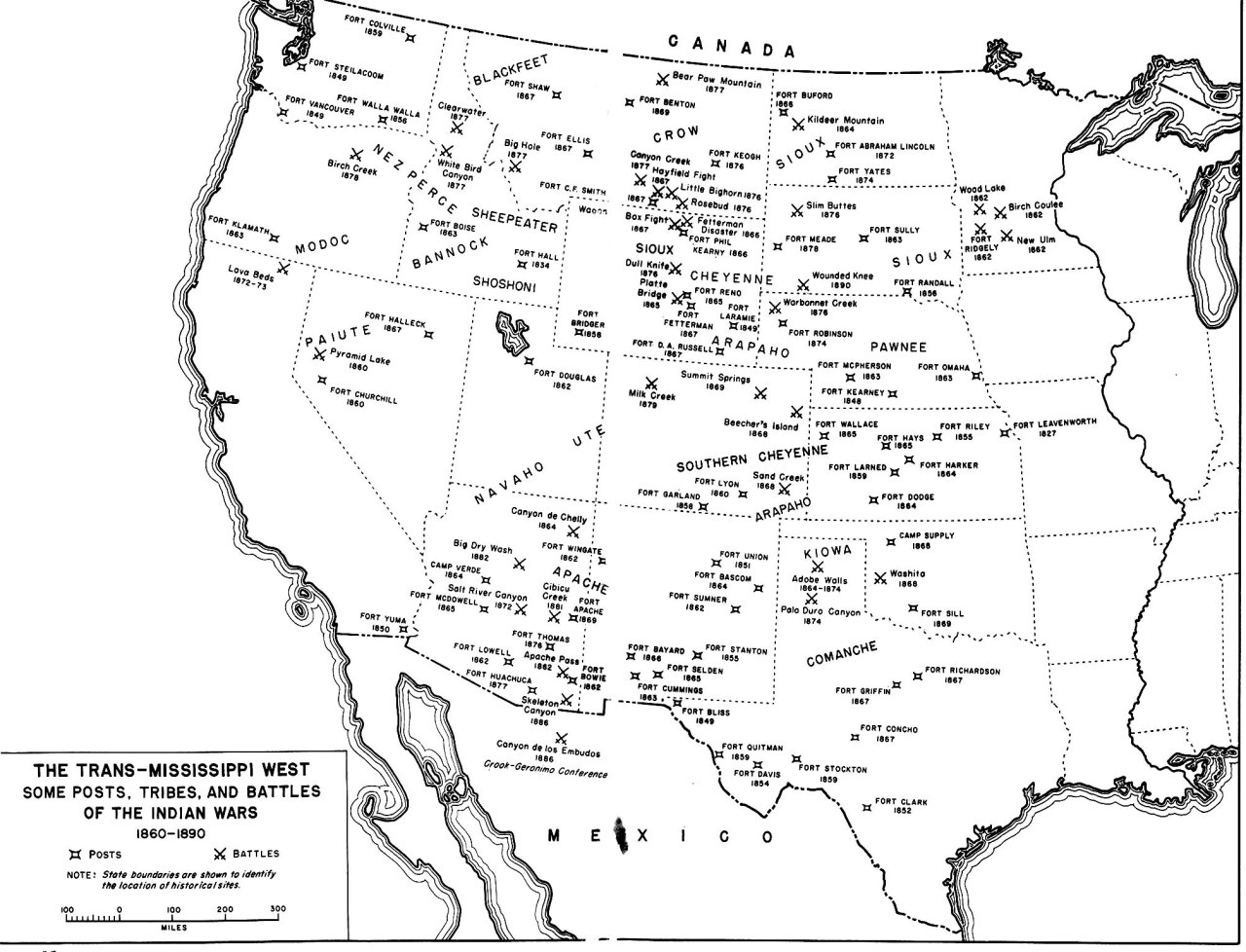
US Army historical map of the so-called Indian Wars West of the Mississippi from 1860 to 1890.

mapsontheweb:

US Army historical map of the so-called Indian Wars West of the Mississippi from 1860 to 1890.

Tagged: amhist history

I feel like you could probably lay down some interesting context for the recent wave of clown sightings

rock-a-la-carte-deactivated2017 asked: I feel like you could probably lay down some interesting context for the recent wave of clown sightings

Doesn’t seem any less random to me tbh. Wracking my brain I can only think of two things tangent enough to even bother sketching:

1) Gesturing vaguely towards the concept of social contagion and copycat transgression, examples being the wave of late-’90s mass school shootings following the Pearl High School attack in ‘97, with other rampages in the wake of the Amish schoolhouse massacre in ‘06, or how the 2002 Tampa and 2010 Austin kamikaze attacks were clearly inspired by 9/11.

In the course of getting my dates right, I learned that the first big school shooting/massacre happened in 1764, and inspired Pennsylvania to (re)institute a bounty on natives (with scalps as proof). Sounds about right. ‘Merica!

2) A history of circuses and other traveling performers (theater troupes, Buffalo Bill’s Wild West Stage Show, revival preachers) in America, emphasizing just how huge and sparse and rural America was before WWII, and just how important railroads were to making that at all workable. Possible digressions include:

  • How homesteading requirements to live on your claim and the larger acreages required to sustain a farm on the arid Great Plains led to a culture of isolated farmhouses rather than more traditional concentration in villages, affecting society and requiring more dispersed modes of providing services and goods (bookmobiles, Rural Free Delivery and catalog shopping, etc.)
  • How a lot of old hoohaw about Teenagers! In high school! Going on dates! was subtextually about how by countering this isolation automobiles were changing society.
  • How movie distribution initially followed this traveling performer model with reels traveling a circuit around the country for months, making brief engagements in individual theaters where they’d have an audience that would show up to whatever entertainment was on offer that week before moving on to the next. How that started to change in the 1970s with the collapse of the studio system, the development of multiplexes, and the rise of competition from TV prompting a shift to the  blockbuster/tentpole model, with films given widespread simultaneous release with national promotional campaigns and then judged on opening weekend receipts.

That’s not really about clowns tho.

Tagged: amhist

~ Cottage Economy,  William Cobbett, 1833

sinesalvatorem:

madamehardy:

questionableadvice:

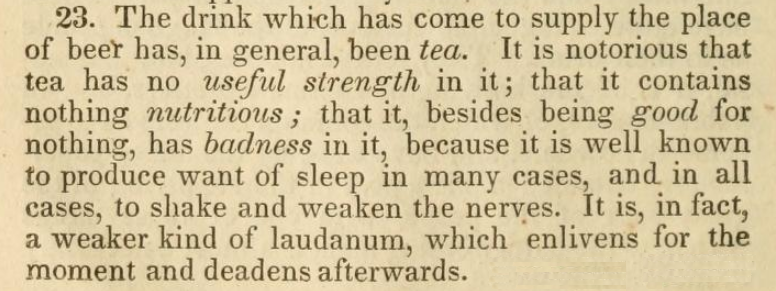
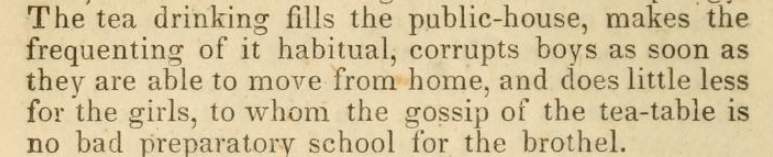
~ Cottage Economy,  William Cobbett, 1833

I wish I could come up with a caption funnier than this extract.

The thing is, we already laugh at movies like Reefer Madness for things like this. Anyone who doesn’t think that, a century from now, people are going to rofl about current attitudes to, say, cocaine is kidding themself.

Cocaine and pot were widely expected to be decriminalized in the US in the late ‘70s - at the time the two enjoyed the same “soft drug” identity, plates of white flake got the High Times centerfold a few times. What possibly derailed it was the FBI threatening to make a thing about Carter’s chief of staff doing blow at Studio 54.

Tagged: amhist same as it ever was

debuting 9/22/1982

debuting 9/22/1982

Tagged: amhist

Greatest memes in US election history, and trolls? Besides 2016 and pepe, of course.

Anonymous asked: Greatest memes in US election history, and trolls? Besides 2016 and pepe, of course.

utilitymonstermash:

kontextmaschine:

Ah jeez, that would take an effortpost and this ask just ranks a shitpost.

1840′s “Log Cabin and Hard Cider”, maybe. Or just Teddy Roosevelt, man was a meme in his own right,

image
image

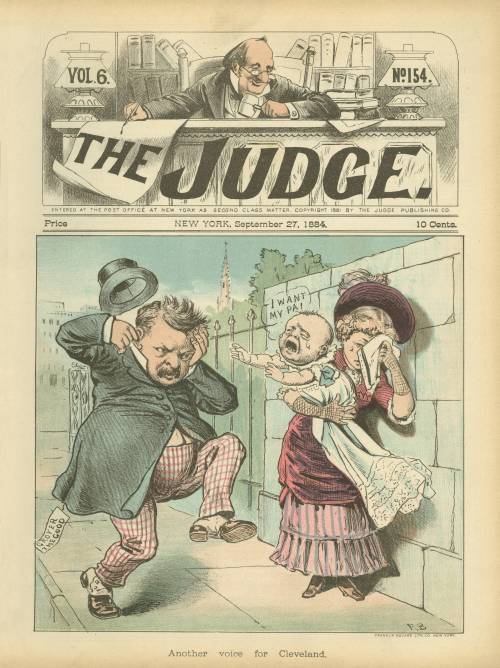
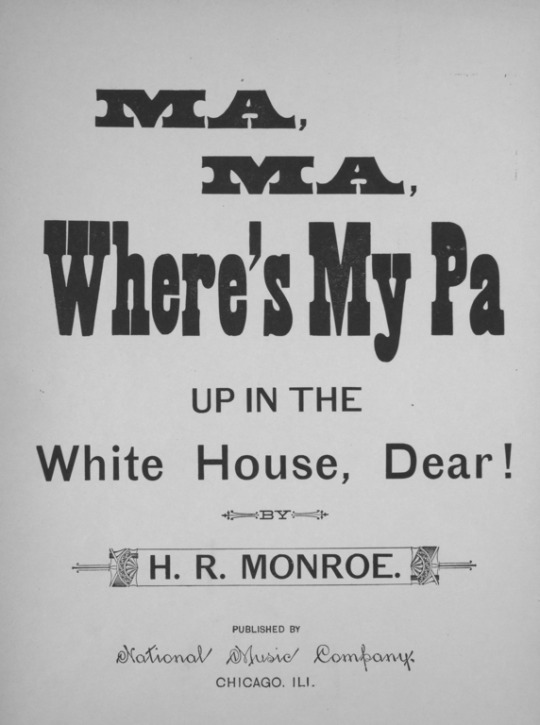
yeah that too (James Blaine against Grover Cleveland, 1884)

That was the “rum, romanism, and rebellion” election too - which like Romney’s “47 percent” came out in a privateish setting (tho from a surrogate) and was picked up by an opposition tracker who used it to hype his base

I don’t think it’s appreciated enough that the “acid, amnesty, and abortion” line against George McGovern in ‘72 was an echo of this, only with the Catholic valence reversed

and… HOLY SHIT, apparently that line came anonymously from Thomas fucking Eagleton, McGovern’s later fucking ticketmate, the one who dropped out after it came out he’d been electroshocked for being crazy, holy shit.

Tagged: amhist history