shrine to the prophet of americana

#amhist (618 posts)

The Fall of Working-Class New York

The Fall of Working-Class New York

antoine-roquentin:

But the power imbalance between the city and the banks was not simply conjunctural — it was structural. As Doug Henwood points out in his book Wall Street, “the bankers have the advantage in a debt crisis; they hold the key to the release of the next post-crisis round of finance. Anyone who wants to borrow again, and that includes nearly everyone, must go along.”

By the fall of 1974, the banks forced city officials into an austerity program against their will. As a City College graduate, Beame was himself a product of the city’s welfare state and genuinely did not want to cut programs or impose layoffs. But during the winter of 1974–75 the city began to lay off workers, and even though many were subsequently hired back, the signal was clear; the crisis would be resolved at the expense of New York’s working class, whether their elected officials liked it or not.

In the summer of 1975, the state established a new agency called the Municipal Assistance Corporation (MAC) to oversee the city’s financing. Led by Felix Rohatyn, the investment banker and liberal Democrat, MAC’s board was dominated by a group of businessmen whose first priority was to pay back investors and cut municipal spending.

As Phillips-Fein observes, while MAC was technically a vehicle for marketing the city’s bonds, “its real purpose was political. It had to force the city and its unionized workers to accept a staggering array of budget cuts.”

New Yorkers protested the cuts, and some of them even won. Phillips-Fein devotes inspiring chapters to the successful campaigns to save Hostos Community College in the Bronx and what became known as the People’s Firehouse in Brooklyn. But despite protests in the streets and fulmination from City Hall, business got its way.

Unelected, business-controlled bodies like MAC and the Emergency Financial Control Board (EFCB) succeeded in pressuring the city to lay off tens of thousands of workers, close public hospitals, raise subway fares, and begin charging tuition at CUNY. By the early 1980s, the municipal budget was back in balance, the city could borrow in capital markets, and the stage was set for New York’s transformation into the gilded playground it is today.

In the popular mind and in much of the academic historiography, the death of postwar liberalism is primarily attributed to a backlash of racist working and lower-middle-class whites. This is an important part of the story, and outbursts of racial animus in neighborhoods like Bensonhurst or Forest Hills should not be minimized or overlooked.

But the backlash against New York’s postwar order was led from boardrooms high above Manhattan — not the white ethnic strongholds of the outer boroughs.

the first 2 neoliberal coups were 1973 in chile, and 1975 in new york city

Tagged: amhist

In The Event Of Attack, Here’s How The Government Plans ‘To Save Itself’ In Raven Rock, Garrett Graff describes the bunkers...

nprfreshair:

In The Event Of Attack, Here’s How The Government Plans ‘To Save Itself’

In Raven Rock, Garrett Graff describes the bunkers designed to protect U.S. leaders in the event of a catastrophe. One Cold War-era plan put the post office in charge of cataloging the dead. 

From Graff’s interview with Terry Gross:

“The post office was the agency that would’ve been in charge of registering the dead and figuring out who was still alive. In part, because the post office knows where people live, they understand who was left. So you would arrive in the refugee camps, after your cities had been destroyed, and you would’ve been handed Form 801 from the post office, which were pre-printed in millions and millions of quantities and located in post offices around the country through the Cold War in the event of an emergency. And you would’ve filled it out with your name and family members that survived with you at the camp, and then the post office would’ve sorted through these cards and figured out who was still alive and where everyone was to begin the process of reuniting families.

The Parks Service, for instance, would’ve been the agency that would’ve actually been running, in many cases, the refugee camps, because the thinking was that park service land would be largely untouched by nuclear war.

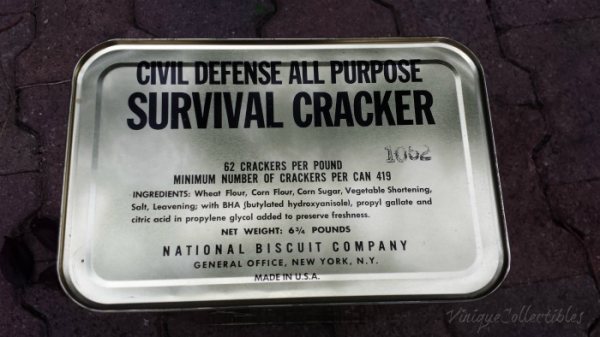
[The Dept. of Agriculture] worked for years with Nabisco to come up with this special survival biscuit. … They pre-made about 160 million tons of this Nabisco survival wafer that were manufactured and boxed up in tins and then hidden away in government fallout shelters around the country. This was a whole strange, shadow post-apocalypse government that existed just out of sight through the Cold War.”

Tagged: amhist

“You want to protect free speech and privacy? Embrace the idea that threatening the press for doing their jobs is damaging. Consider asking yourself who in history is known for trying to silence journalists for saying things that they don’t like. Then look at where you’re standing. Which side of history are you actually on?”

micdotcom:

— Mikki Kendall, Neo-Nazis have threatened CNN employees’ families. Many writers already know what that’s like. (Opinion)

During the American Revolution, printer James Rivington’s Gazette was something of a proto-NY Times: Manhattan-based, but with a broad circulation and the most international coverage in the colonies. It was also the biggest newspaper not to tilt to the rebels, first offering a platform to all factions and then increasingly Loyalist.

This was not universally well-received. Isaac Sears, the privateer-trader who organized the merchants of New York into the Sons of Liberty, pushing back against British regulation which cut into their profits and backed by the threat of mob violence, described Rivington thus:

He would appear as a leading man amongst us, without perceiving that he is enlisted under a party as a tool of the lowest order; a political cracker, sent abroad to alarm and terrify, sure to do mischief to the cause he means to support, and generally finishing his career in an explosion that often bespatters his friends.
I have known a Statute of Lunacy taken out, upon a degree of conduct less exceptionable than this I have described: If the relations of our politician, should find his estate wasted by means of his patriotism, and they choose to improve upon this hint, I assure them, it is heartily at their service.

They did not. (A “Statute of Lunacy” was the period version of involuntary psychiatric commitment)

The Sons of Liberty arranged a series of hanging-in-effigies of Rivington, complete with a poem by revolutionary poet Philip Freneau framed as a satisfying confession before the gallows, and he was arrested by the New York Provincial Congress.

This not availing, an angry mob besieged Rivington and his family, driving them to the safety of a British warship, sacked his office and press, and seized his lead type to be melted down and cast into bullets.

They then faced and wheeled to the left, and marched out of town to the tune of Yankee Doodle. A vast concourse of people assembled at the Coffee House, on their leaving the ground, and gave them three very hearty cheers.

- Connecticut Journal, Nov. 20, 1775

Tagged: amhist it's media same as it ever was history yesterday belonged to meme

Picked this up from Powell’s. It’s a 1986 book drawing from jailhouse interviews with “Sam”, a burglar-turned-fence active in...

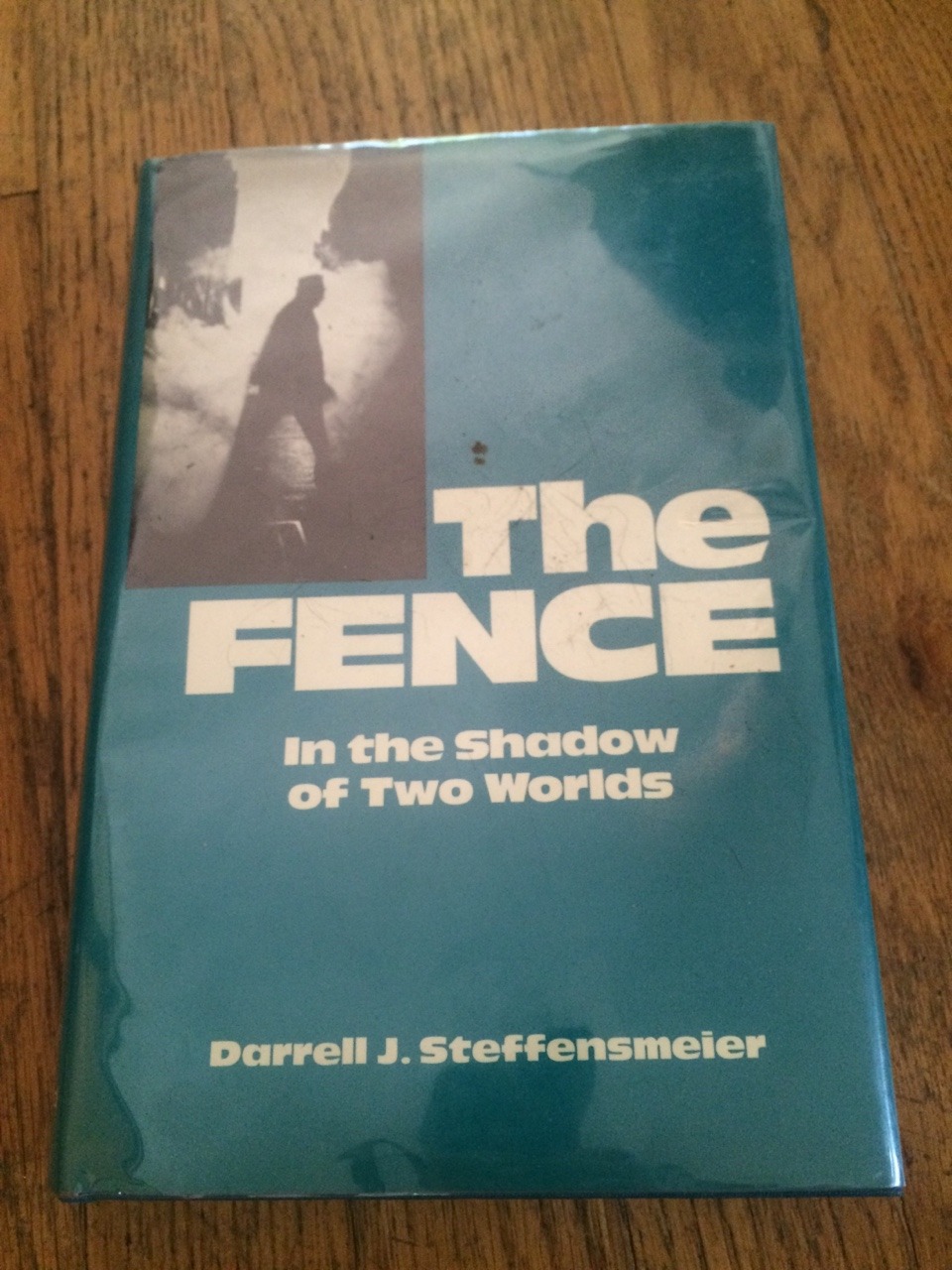
Picked this up from Powell’s. It’s a 1986 book drawing from jailhouse interviews with “Sam”, a burglar-turned-fence active in “American City” (from context, Philadelphia).

Sam had a secondhand/antique store, he’d buy things he knew were stolen, and then he’d sell them on the shop floor, at auction, to other shopowners, or to private buyers. dead_dove.jpg, I don’t know what I expected.

That said, there’s plenty of interesting stuff in there. Like, Sam talks about the Mafia (and lesser-known Greek and Jewish organized crime) as a force in the underworld but not a ruling one, that’s interesting. They reserved monopolies on some categories of stolen goods - cigarettes and, interestingly, sugar, and taxed the crews doing truck “hijackings” (almost all inside jobs with drivers paid off), but didn’t otherwise bigfoot around. Really, Sam was happy and proud to have the opportunity to bring them in on deals – they’d take their cut but effectively guarantee things, allowing Sam to confidently make bigger, riskier deals than he could otherwise.

Two things jump out as necessary conditions for Sam’s operations that no longer hold and explain why “the fence” isn’t a familiar figure today.

For one, the corruption. It wasn’t just that high-profile lawyers and judges would defend and acquit guys despite knowing they were “really” criminals. It wasn’t just that they would make and accept four-figure bribes for acquittals. These pillars of the legal system would tell underworld figures when a rich client was leaving town so they could hit his vacant house, in exchange for help building their private collections.

Sam paid off beat cops by offering them goods below cost (writing off the difference as haggling or encouraging custom), but any given cop, if he hadn’t been paid off by Sam, had been paid off by someone, and had no interest in bringing the system down. It seems the only thing that could make a dent (what got Sam, after all) were State Police investigations combined with too much press attention to quietly bribe out at trial or on appeal.

Second, in a pre-electronic, pre-database, pre-chain retail world how much easier things fall through the cracks.

Sales were in cash and receipts were handwritten - or not, one source of margin was selling without sales tax - and if Sam got a load of stolen Hi-Fi equipment, he could buy a clutch of junk at auction and if the law comes asking who’s to say those “radios x 5” on the receipt didn’t establish his legal ownership? Hell, who’s to say the receipt wasn’t written up and signed by his buddy in the back room?

When a law required secondhand buyers to record purchases for the police, Sam dutifully carted boxes of index cards to the precinct house, who told him to chuck ‘em ‘cause what, they seriously expect someone to go around to every station and riffle through a few filing cabinets whenever some old biddy gets her TV swiped? C'mon. And for stuff “warm” enough to draw actual police effort, Sam could just truck it to auction over state lines; with the crime in one jurisdiction and the evidence in another, there was no entity with the scope to put 2 and 2 together.

The overwhelming share of product didn’t come from guys crawling through windows but shrinkage - factory, warehouse and loading dock guys, stevedores at the pre-containerized docks, delivery drivers on rounds who stopped off to let a few items fall off their truck and then shrug to their boss it must’ve been misloaded. Sam says the hardest work there was getting the guys to stay under the radar and not to take too much too fast too regularly.

Part of it’s that there were mom-and-pop stores to unload to, that used the no-questions-asked prices as an edge against department stores and chains. Even if you got a load of great hot TVs today what would you do with them, drive to Best Buy and try to flip them to the floor manager?

(The real answer today is “eBay”, or maybe combine with fake/scavenged receipts for return fraud. Also sometimes professional shoplifters – “boosters” who put Tumblr “lifters” to shame – unload through the newer ethnic crime syndicates. I remember in LA seeing one tobacco shop in Little Armenia that had nowhere near enough product for its floor space, a sign offering heavy discounts for paying in cash, and three tracksuit-and-cigar types talking in the back office and like, hmm. Also at the meth level there’s a thriving market in stolen Tide detergent.)

Tagged: amhist black market gray market

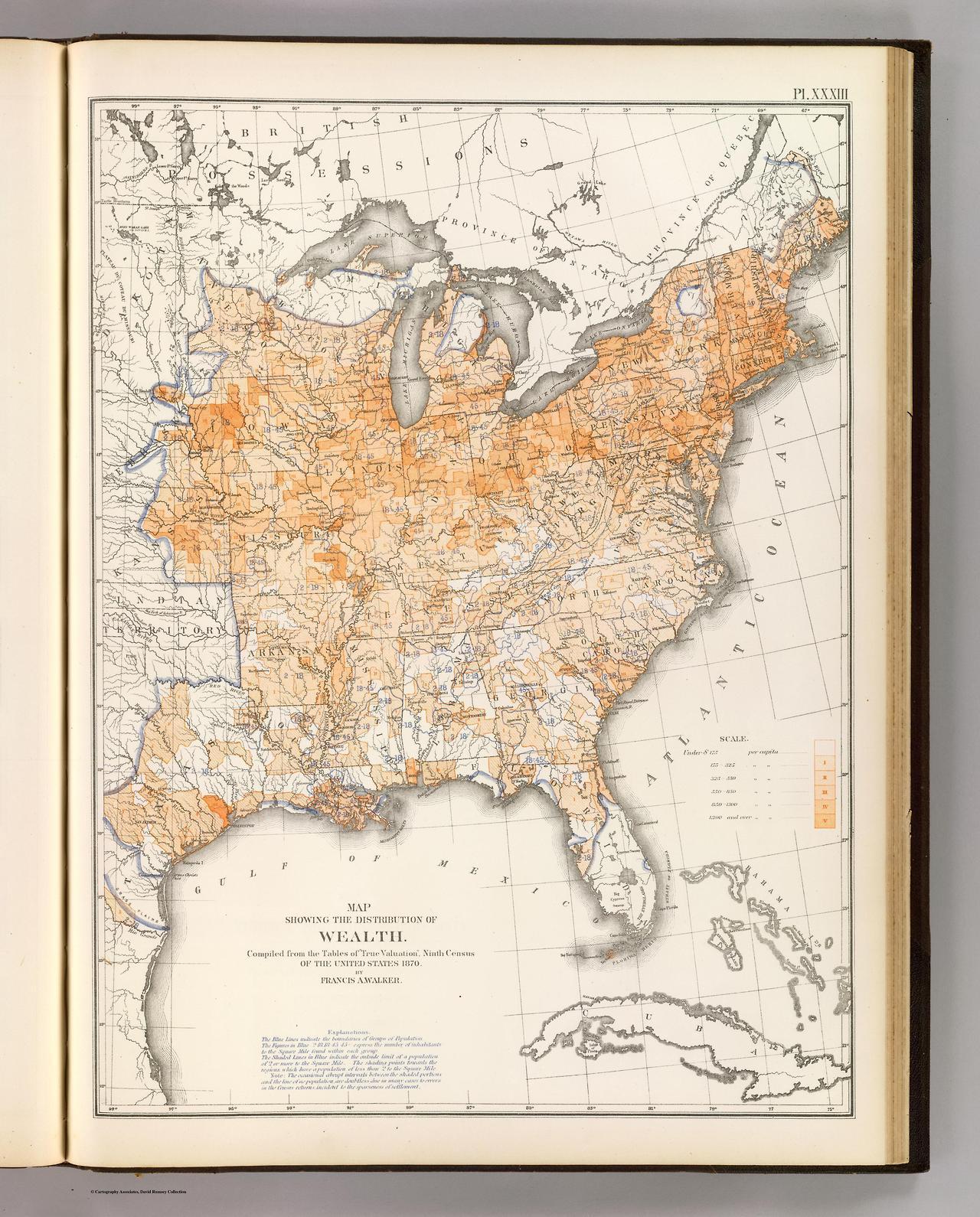
Rates of wealth per capita in the settled United States, based on the 1870 census. Georeferenced interactive version

mapsontheweb:

Rates of wealth per capita in the settled United States, based on the 1870 census.

Georeferenced interactive version

Tagged: amhist

The San Bernardino County Sun, California, June 30, 1932

yesterdaysprint:

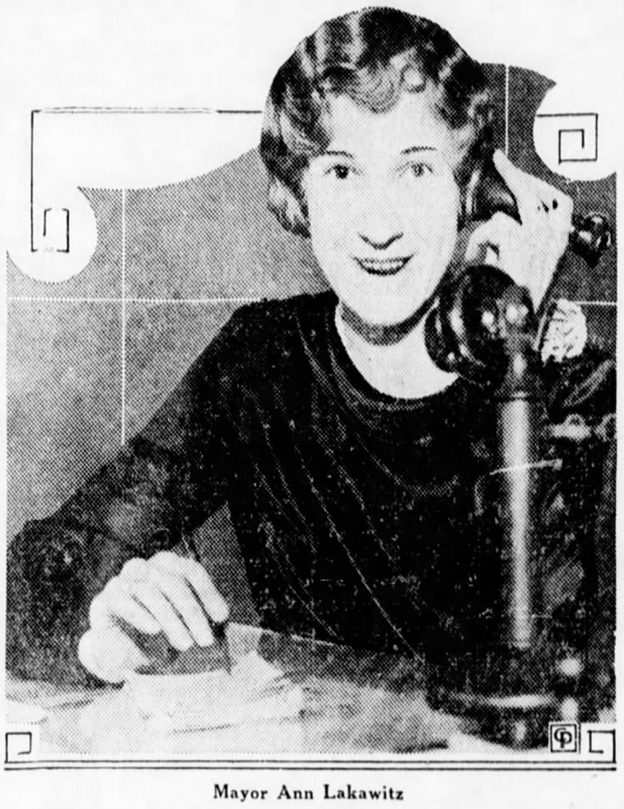
The San Bernardino County Sun, California, June 30, 1932

Tagged: amhist

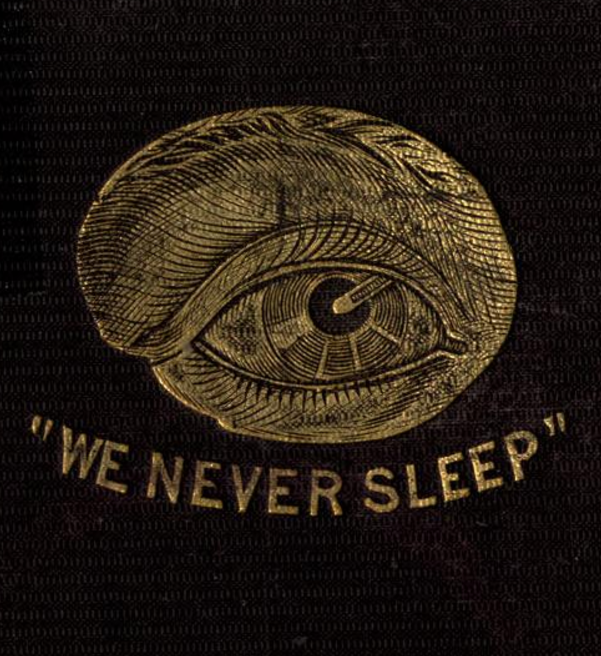
“We never sleep.” Strikers, communists, tramps and detectives. 1878. Book cover, detail. 

nemfrog:

“We never sleep.” Strikers, communists, tramps and detectives. 1878. Book cover, detail. 

Yo the joke here is that’s referencing the slogan and logo of the Pinkerton National Detective Agency, the private proto-FBI that fought crime/communism from coast to coast

Tagged: amhist

i worry that the way we talk about stonewall decontextualizes the event itself - that saying “the first pride was a riot”...

beachdeath:

i worry that the way we talk about stonewall decontextualizes the event itself - that saying “the first pride was a riot” implicitly disconnects the raid on stonewall from the fact that similar raids on gay bars had been happening for decades prior, and that lgbt activists had been actively resisting police violence all the while, at the risk of their lives and livelihoods and reputations.

police oppression of gay people did not begin in 1969, and gay resistance to police oppression did not begin with the stonewall riots. that’s not to minimize the extreme importance of stonewall, of course, or the indelible contributions to our history and safety that were made by activists like sylvia rivera and marsha p. johnson and miss major griffin-gracy and stormé delarverie. but they were standing on the shoulders of decades and decades of leaders and activists who had come before them, who had fought and died and endured total brutality at the hands of homophobic police.

gay bars, as much as they were allowed to exist in the decades prior to stonewall, were persistently targeted by undercover police officers and by violent raids. in los angeles, from the mid-1940s onward, the LAPD employed out-of-work actors to pretend to be gay and infiltrate these spaces, solicit men for sex, and then book them on charges of public indecency.

the police department would give these officers quotas to meet on a weekly basis - round up and jail a certain number of homosexuals, or else. frequently, they would arrest men simply for appearing gay, or for having the bad luck to walk through a park or use a bathroom known as a gay cruising spot. this policy was a cash cow like none other, because these men would always plead guilty, would always agree to pay hefty fines in order to settle the matter and keep it quiet and avoid having their reputations ruined.

and the police would stop at nothing to bully people into pleading guilty. it was commonplace for police to handcuff their charges, shove them into the backseat of their cruisers, and then drive in circles for hours, looping to the outskirts and back, intimidating and harassing them all the way. by the time they finally pulled up at the police station and booked their charges, they would be so shaken by the abuse they’d just experienced that they’d plead guilty without a second thought, cough up whatever money they could spare in order to go free. 

in less extreme cases, police officers would simply verbally abuse the men they’d arrested, but just as often, the officers would physically beat, sexually abuse, or rape these men. oftentimes, the sexual abuse and rape would be part of the arrest itself - an officer would solicit sex from a man, the man would turn him down, and the officer would force him into sex anyway and then report that the man had initiated it.

like, this was daily fucking life for lgbt people for decades before stonewall. and fledgling gay activists fought it with everything they had, early. in 1952, the los angeles mattachine society established the Citizens Committee to Outlaw Police Entrapment after one of their founders, dale jennings, was stalked home by an officer, sexually assaulted in his own bedroom, and then booked for public indecency. rather than simply plead guilty, jennings chose to contest the charges and take them to trial - a totally unprecedented move - with the aid of socialist lawyer george shibley. and the jury voted 11-1 for acquittal, and he walked free. in 1952. seventeen years before stonewall.

but this shit kept happening, everywhere, for decades - new york city didn’t end its policy of police entrapment of lgbt citizens until the mid-1970s. and all the while, there was organized resistance. all the while, organizations like the mattachine society and street transvestite action revolutionaries fought back. 

it’s super, super convenient for heterosexual society to claim that there was just one inciting incident, and one moment of spontaneous, courageous resistance, that sparked the gay rights movement as we know it today. but we can’t fall into that trap. there were decades of brutal, violent police oppression, and there were decades of structured, well-organized resistance to that oppression. 

for a long time, the gay struggle against police violence was the only fight there was. in the late 1940s, at the dawn of formal organization, nobody was agitating for their right to live openly as gay or avoid employment discrimination or get married or adopt children. the movement emerged in opposition to the systematized detainment and torture and rape of gay people by police. 

and that is why lgbt people don’t owe the police shit, and why any police department with the audacity to demand time and space in a pride parade needs to be met with loud, unequivocal resistance. not because of one raid or one riot, but because of decades and decades of unapologetic brutality.

Do you wonder why, if the police were set against gay culture and they knew how to get to the Stonewall, it wasn’t raided every other night until it shut down?

Because like so much at the time, vice laws weren’t enforced consistently for the sake of it so much as opportunistically as a lever for official corruption.

The Stonewall Inn was allowed to exist because it had a mafia krysha, same as other gay bars. The raid that night was to - huh, shake some more payouts loose? Shake some headlines loose to boost their political capital? Game-theory up their credibility? But the Stonewall riots weren’t against a state implacably committed to their repression but a state opportunistically given to their exploitation, that’s important.

West Hollywood was LA’s gay mecca for the same reason it was a liquor/gambling/prostitution mecca, because as county land (and later an independent municipality) it was under the LA County Sheriff and not the LAPD

Tagged: amhist

The Pilgrims in Massachusetts: They soon came upon a dozen men, women, and children, who were returning to Nemasket after...

femmenietzsche:

The Pilgrims in Massachusetts:

They soon came upon a dozen men, women, and children, who were returning to Nemasket after gathering lobsters in Plymouth Harbor—one of countless seasonal rituals that kept the Indians constantly on the move. As they conversed with their new companions, the Englishmen learned that to walk across the land in southern New England was to travel in time. All along this narrow, hard-packed trail were circular foot-deep holes in the ground that had been dug where “any remarkable act” had occurred. It was each person’s responsibility to maintain the holes and to inform fellow travelers of what had once happened at that particular place so that “many things of great antiquity are fresh in memory.” Winslow and Hopkins began to see that they were traversing a mythic land, where a sense of community extended far into the distant past. “So that as a man travelleth…,” Winslow wrote, “his journey will be the less tedious, by reason of the many historical discourses [that] will be related unto him.”

They also began to appreciate why these memory holes were more important than ever before to the Native inhabitants of the region. Everywhere they went, they were stunned by the emptiness and desolation of the place. “Thousands of men have lived there,” Winslow wrote, “which died in a great plague not long since: and pity it was and is to see, so many goodly fields, and so well seated, without men to dress and manure the same.” With so many dead, the Pokanokets’ connection to the past was hanging by a thread—a connection that the memory holes, and the stories they inspired, helped to maintain.

(Source)

It’s funny that American zombie/postapocalypse stories are such a transparent excuse to retell frontier narratives – venturing into the wild, beating back the savages to establish civilization – when in the original context it was those savages living through multiple “civilization-ending pandemic” AND an “alien invasion” apocalypse

Tagged: amhist

just by the way I got into late 19th century american police corruption and politics because of you and whoa it's fascinating, I...

Anonymous asked: just by the way I got into late 19th century american police corruption and politics because of you and whoa it's fascinating, I would greatly enjoy if you would go on
more like “son buddy johnny “large ears” mcmaster, my main man, my most promising recruit [agressive back pat] what’s here gonna happen is that if me your favourite mentor get the newspaper boy to get me more happy news about our beloved senator, then I can pretty much guarantee that big boss “honey pot” oreilly is gonna hear about your mom’s flower shop”
Oh nice. Def. read Plunkett of Tammany Hall if you haven’t, if that’s not the link I got you into this with in the first place.

One thing I’m looking into lately is lynching and vigilante law. Got the standard background picture of lynching as a specifically racial Dixie thing but realizing that much of the country, between the Civil War and the 1920s, was developing traditions of extralegal killing.

I talked here about the Unwritten Law, that a man was entitled to (=routinely acquitted of) stalk and kill those who put hands on his women. Meanwhile the “true man” and “American mind” doctrines set into law something like modern Stand Your Ground laws. In popular conception the list of things a true man was not expected to tolerate rather than deploy righteous violence was longer, in practical application it turned on the testimony of survivor-defendants.

Not just individuals committed individual acts but communities came together, enacted deadly purges, and then published triumphant histories about it, as Regulators, Moderators, Committees of Vigilance.

(cf. the Vehmic courts of medieval Germany, particularly the resemblance of the Gilded Age to feudalism insofar as the state secures magnates’ holdings and leaves the people to themselves)

Tagged: amhist history

Tagged: the issue's more that it WAS most triumphant tbh 'merica amhist

like we kind of just accept Deep Throat as a point of history, but imagine a major national security leak coming from someone...

thedogopera:

like we kind of just accept Deep Throat as a point of history, but imagine a major national security leak coming from someone codenamed Anal Slut

Tagged: amhist

The World War II Japanese invasion of Hawaii and the Hawaii overprint note. After the attack on Pearl Harbor in December 7th,...

peashooter85:

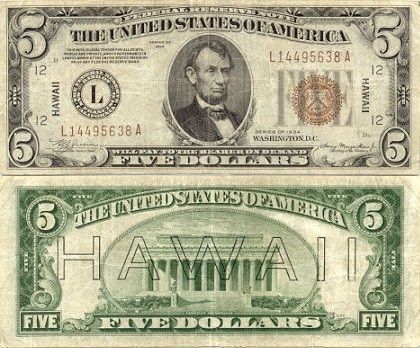
The World War II Japanese invasion of Hawaii and the Hawaii overprint note.

After the attack on Pearl Harbor in December 7th, 1941, it was feared that the next move of the Japanese was to invade Hawaii.  One concern of a possible Japanese invasion was the possibility that the Japanese could get there hands on millions of dollar of American currency and use it to fund their war effort.  Across the Hawaiian Islands, millions of dollars worth of hard currency was held by banks, financial institutions, businesses, and private citizens.

To solve this problem, the US Federal Reserve created an emergency “Hawaii” note to replace all currency on the islands.  The Hawaii notes were only legal tender in Hawaii and were declared worthless anywhere else.  To distinguish between real US dollars and Hawaii notes, the new notes featured a brown Federal Reserve seal and the word “Hawaii” was printed in large capital letters across the back of the bill, with the addition of two small overprints on the front.  Specially issued by the San Francisco Federal Reserve Bank, they came in denominations of $1, $5, $10, and $20.  

On July 15th, 1942 citizens of Hawaii were ordered to turn in all their cash in exchange for the Hawaii notes. In total, around $200 million of cash was collected and burned.  In 1944, when it was clear that no invasion of Hawaii would occur, issuance of Hawaii notes was discontinued and normal cash was once again issued to Hawaii.  Recall of Hawaii notes began in 1946, although many bills were saved as curios and souvenirs.  Today surviving examples are popular collectors items.

Tagged: amhist history

Also homeownership is wildly overhyped as an idea in America. It constitutes massive amounts of land and resource waste, and...

afloweroutofstone:

Also homeownership is wildly overhyped as an idea in America. It constitutes massive amounts of land and resource waste, and mortgages are just a way to get people who are financially secure enough to avoid paying rent to do so anyways. Yet the government still spends hundreds of billions of dollars every year subsidizing it through the tax code because of pressure from the construction, real estate, and finance lobbies and voter support derived from the nostalgic normative ideal of “the American Dream”

Yo setting aside the rest of this, the 20/30-year amortized, fixed-rate, federally insured “rent by another name” mortgage supporting a stable homebuilding industry REALLY DID enable equity-building among non-farm workers who couldn’t swing the previous system (5-year lump sum loans usually paid off in part and rolled over at least once, usu. for owner-developed plots, where credit shocks at turnover time could force liquidation on a depressed and non-fluid market with private magnates as market-clearers) and would otherwise have just been paying rent as rent

Tagged: amhist

John Murray Spear

John Murray Spear

donjuan-auxenfers:

 This is beyond description, and needs to be read.

In 1852, Spear broke all ties with the Universalist church, and instead turned to Spiritualism. He claimed that he was in contact with ‘‘The Association of Electrizers’’, a group of spirits including Benjamin Franklin, Thomas Jefferson, John Quincy Adams, and Benjamin Rush, as well as Spear’s namesake John Murray. Evidence indicates he occasionally faked signatures as a way to gain authority from a “guide from the past;” however, these signatures were dated beyond the lifetimes of the deceased.[3] Spear believed that the purpose of this group was to bring new technology to mankind, so that greater levels of personal and spiritual freedom could be achieved.[1] The following year, Spear and a handful of followers retreated to a wooden shed at the top of High Rock hill in Lynn, Massachusetts, where they set to work creating the ‘‘New Motive Power’’, a mechanical Messiah which was intended to herald a new era of Utopia. The New Motive Power was constructed of copper, zinc and magnets, all carefully machined, as well as a dining room table. At the end of nine months, Spear and the ‘‘New Mary’’, an unnamed woman, ritualistically birthed the contraption in an attempt to give it life. Unfortunately for Spear, this failed to have the desired effect, and the machine was later dismantled.

I call dibs on “The Association of Electrizers” and “New Motive Power” as band names.

Tagged: amhist same as it ever was kontextmaschine does the bible

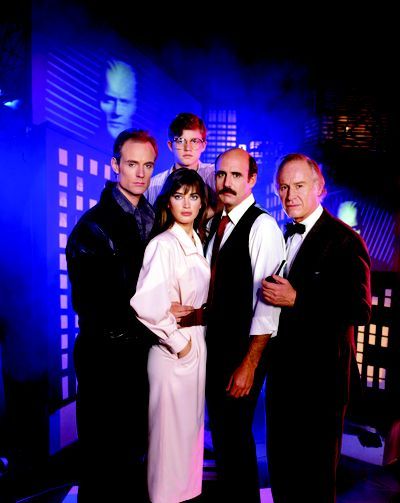
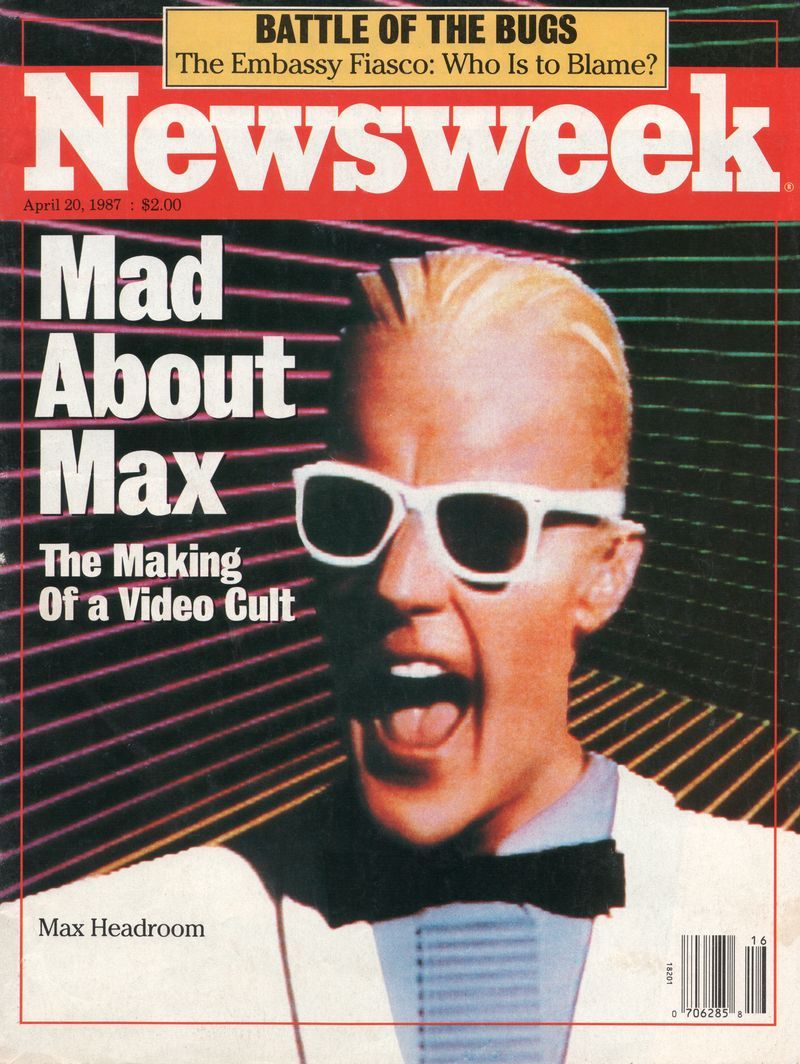
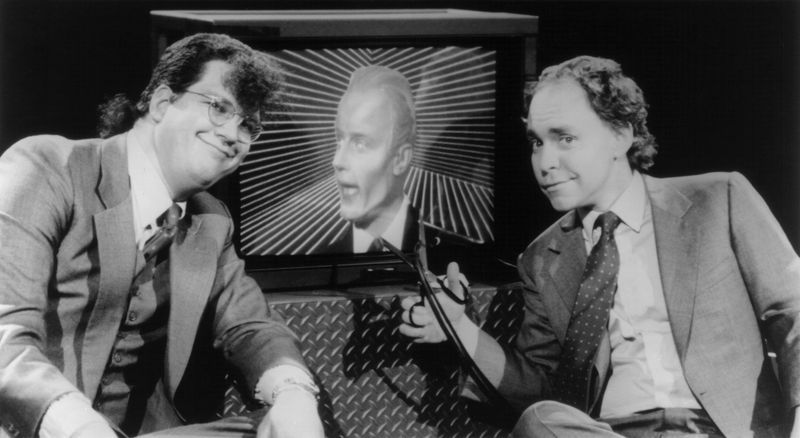
Max Headroom: the definitive history of the 1980s digital icon. On Thursday, April 4th, 1985, a blast of dystopian satire hit...

theverge:

Max Headroom: the definitive history of the 1980s digital icon.

On Thursday, April 4th, 1985, a blast of dystopian satire hit the UK airwaves. Max Headroom: 20 Minutes into the Future was a snarky take on media and corporate greed, told through the eyes of investigative journalist Edison Carter (Matt Frewer) and his computer-generated alter-ego: an artificial intelligence named Max Headroom.
Max became a singular ‘80s pop culture phenomenon that represented everything wonderful and horrible about the decade. Max hosted music video shows; Max interviewed celebrities; Max hawked New Coke; Max Headroom became US network television’s very first cyberpunk series. Max was inescapable — and then almost just as quickly as he had appeared, he was gone.
Thirty years after the premiere, I spoke with the writers, directors, producers, actors, make-up artists, and network executives that helped bring Max Headroom to life. And it all began, like so many things in the ‘80s, with music videos.

Tagged: amhist

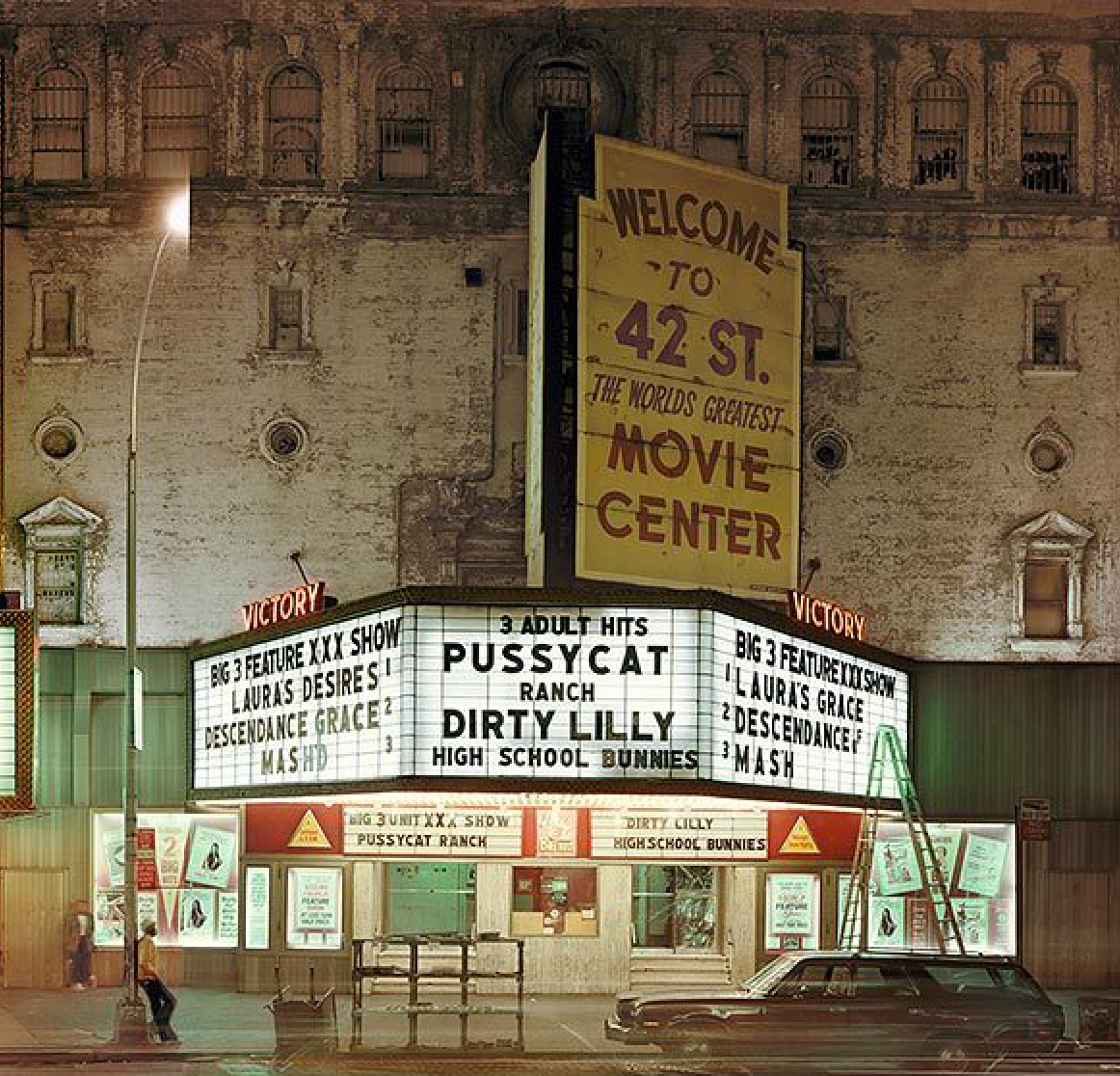
From 42nd Street panorama, 1979 Maude Schuyler Clay

thephotoregistry:

From 42nd Street panorama, 1979

Maude Schuyler Clay

Tagged: 'merica amhist

Position I wish anyone cared enough about to be unpopular: John Dewey’s ideas weren’t actually that important in American public...

Position I wish anyone cared enough about to be unpopular: John Dewey’s ideas weren’t actually that important in American public education and the notion that they were was mostly a way for America to put a native, democratic gloss on remodeling itself after the Prussian system just like everyone else

Tagged: amhist education reform same as it ever was

Chinese restaurants are now a cultural fixture, as American as cherry pie. Startlingly, however, there was once a national...

argumate:

Chinese restaurants are now a cultural fixture, as American as cherry pie. Startlingly, however, there was once a national movement to eliminate Chinese restaurants, using innovative legal methods to drive them out. Chinese restaurants were objectionable for two reasons. First, they threatened white women, who were subject to seduction by Chinese men, through intrinsic female weakness, or employment of nefarious techniques such as opium addiction. In addition, Chinese restaurants competed with “American” restaurants, thus threatening the livelihoods of white owners, cooks and servers; unions were the driving force behind the movement.

https://papers.ssrn.com/sol3/papers.cfm?abstract_id=2948030

Tagged: history amhist havent seen a chinese place in a while tbh its thai now maybe banh mi or korean bbq

Ke$ha’s pretty good at enunciating to the beat. Maybe that Swedish training. Shame she bit the hand that feeds, the...

Ke$ha’s pretty good at enunciating to the beat. Maybe that Swedish training.

Shame she bit the hand that feeds, the entertainment industry has a lock on the California judiciary (if only by virtue of bothering to know what all the various appointment procedures are to ensure their favoreds are always advancing on the cursus honorum) and even in the current year the FUUUCK they were gonna let people break recording contracts by crying rape (culture)

you ever hear of Amaani Lyle, a writers’ assistant on Friends (like an intern, but still paid in the ‘90s), tried to sue some “hostile environment” schtick, and Hollywood one and all took sides against her, sure they were making hella rape jokes about characters who were kinda their coworkers, jokes against their coworkers directly (a running one about Courtney Cox having a vagina full of dried up twigs), but BE COOL and also creative necessity, the First Amendment, the writers of Gilmore Girls were writing amicus curiae briefs

(it was the 90s tho)

Lyle lost and got blackballed cuz obv. and I think maybe joined the Air Force? Which was a more typical course for a young black striver

Tagged: kontextmaschine does hollywood amhist