shrine to the prophet of americana

#amhist (618 posts)

hey remember the 90s when the Æ character was making a comeback? hey remember the 90s with its Wicca boom and its ridiculous...

hey remember the 90s when the Æ character was making a comeback?

hey remember the 90s with its Wicca boom and its ridiculous “burning times” myth that was kind of appropriating the whole “R2P” thing that genocide was now our master narrative for legitimizing geopolitics

BUT ALSO clearly a sublimation of the way the ‘80s backlash cut off the '70s liberatory momentum?

good times, good times

Tagged: 90s90s90s orthography wicca amhist

Do you have hot takes coming for #RIPHEFNER, or would that be too much of a rehash of something for everyone?

Anonymous asked: Do you have hot takes coming for #RIPHEFNER, or would that be too much of a rehash of something for everyone?

His remaining plotlines fizzled in the ‘90s with the abandonment of “obscenity” as a conceptual category and the Internet changing everything; people had been putting out past-tense takes on his role in American culture for years.

It’s a shame people focus on the magazine and forget the Playboy Clubs, there’s something important there: Hef wasn’t the one to invent the idea of a club where nubile waitresses in tight slinky outfits served executives, with the suggestion their career path continued to “wife” or at least “mistress”

That’s a cocktail bar! You know, “♫ you were working as a waitress in a cocktail bar, when I met you… ♫” (and what do you think finance bro bottle service lounges are today?)

It makes a point that Hef didn’t introduce the idea of women as consumable accoutrements to the good life, he just brought it into public view and into regular order.

And really, looking at today’s consensus: “He tore down an old order he saw as rotten and doomed, and replaced it with a new order that was no less a power-driven hierarchy but with himself and people like him at the top. Then he retired to his chateau to indulge his aristocratic affectations and cavort with celebrities, courtiers, and courtesans.”

Guy should be a reactionary ICON

Tagged: hugh hefner amhist

Who Killed the ERA?

Who Killed the ERA?

This article gets at something I’ve been thinking about a LOT in the Age of Trump – in the 70s, people expected American culture to make a liberal turn and positioned themselves accordingly, in ways that look absurd from the other side of the Reagan Revolution.

Like, George Wallace and the Republicans embracing feminism! Protestant churches agitating for legalized abortion!

Nixon’s wage and price controls indicated a bipartisan consensus for a planned economy! Add in Carter’s detente and people thought the USA and USSR would peacefully converge on liberal technocracy!

People expected Carter to legalize marijuana! And cocaine, which was similarly considered a fun “soft drug”!

There was the first, surgical, Transgender Moment, with Wendy Carlos Williams and Renée Richards! There was glam making queer gender-bending cool for the kids!

(You remember that line from Velvet Goldmine, the thing about guys calling themselves bisexual is eventually someone expects you to have sex with a man? You know all the “pansexuals” on dating apps that laboriously explain they’re looking for women women?)

“Coming out” as a political act dates at least to 1978, as part of the successful attempt to defeat the “Briggs Initiative” in California. This failed vote in a state that was reliably Republican until the 90s (Ronald Reagan campaigned against it!) seemed to blunt any momentum of the new anti-homosexuality campaign being run by a second-rate model turned third-rate singer because no more respectable elites wanted anything to do with it.

There were rumbles she was seeking alliances with theological conservatives, but c'mon, those guys had been locked out of power for decades ‘cause elites of both sides considered them obsolete and embarrassing.

BUT THEN

Tagged: amhist 70s70s70s

what's your distinction between Web 1.0 and 1.5?

Anonymous asked: what's your distinction between Web 1.0 and 1.5?

onboard third-party scripting like message boards and stuff past hand-coded static HTML

this represented the end of the self-sufficient yeoman web homestead dream but allowed the focused communities that supported things like webcomics

until all was centralized when the social platforms realized the old “portal”, “push content” dreams with 2.0

Tagged: web 1.0 web 1.5 90s90s90s amhist

The American Jewish response to the "intermarriage crisis" of the '80s broke some important parts of midcentury ecumenism...

The American Jewish response to the “intermarriage crisis” of the ‘80s broke some important parts of midcentury ecumenism (while inspiring the rededication to roots that some of my mutuals have made some great stuff off), and we’ll need to address that eventually

Tagged: amhist

I saw someone quote for the sake of critique Mark Lilla's line that liberals should bear in mind that the first identity...

I saw someone quote for the sake of critique Mark Lilla’s line that

liberals should bear in mind that the first identity movement in American politics was the Ku Klux Klan, which still exists. Those who play the identity game should be prepared to lose it

But it didn’t get at what bugs me so much about this. First, “still exists” is a stretch, there were three different KKKs that might have been inspired by the others but had no continuity; today’s Klansmen are in iffy connection even to the third founding

also the first KKK wasn’t nearly as important to suppressing freedmen and overturning Reconstruction as the broader, more public Red Shirts or White League, a lot of it was tilting upper-class (think of what it means in a feudal society to operate from horseback) they had media and intellectual connections to spread their legend

BUT ANYWAY, even if you set that aside for the sake of a snappy way to say “the first American identity politics were white identity politics”, it’s still glaringly factually incorrect, the nativist American (“Know-Nothing”) Party was founded 10 years before the First KKK

Tagged: amhist

so what’s with all the awesomely dramatic sadcore in the early ‘90s 1991 losing my religion, spending my time 1992 runaway...

argumate:

garmbreak1:

argumate:

so what’s with all the awesomely dramatic sadcore in the early ‘90s

1991 losing my religion, spending my time
1992 runaway train, everybody hurts, must have been love
1995 foolish games, don’t speak

evanescence got nothing on this

[flaps arms in imitation of a chicken]

ARGUMATE survivor of the early ‘90s, understanding of the Situation too tainted by own memories to accurately assess

youzicha said: The collapse of the Soviet Union marked the end of the colonial period, the final triumph of nationalism over imperialism. This created a pervasive sense that events were out of control, reinforced by a neoliberal political orthodoxy which painted these developments as a *good* thing. It all filtered down into the pop culture.

anaisnein said: there was a recession.
anaisnein said: to be fair the mood lasted longer than the recession

I’m going to say that it’s partly just the pop fashion pendulum: sad songs seem dramatic and novel, then overblown and inauthentic and fall from favour, then a few years later seem interesting and new again, repeat as necessary.

I guess I’m predicting a wave of emo howling within the next 3-5 years.

Part of it’s that the 80s were a nadir of rock in American (and thus Anglophone) music.

Prog, metal, and arena rock variants all seemed to meet their limit in glam/hair rock, men in spandex performing highly technical guitar solos while pyrotechnics went off and the singer celebrated girls! Parties! Subtextually, cocaine!

Rock lost ground to R&B, Miami Bass, rap, soul, dance. Michael Jackson was called the “King of Pop” in a deliberate parallel to Elvis’ “King of Rock and Roll”. That this pop moment represented a rise of minorities (and relative decline of whites) in popular culture was not missed, and is part of why Jackson’s racial identity was such a point of interest.

Even “white” music - Madonna (whose more sexualized crossing of race lines was also central to her brand) and Cyndi Lauper were not “rock” at all, not even from the folk-derived singer-songwriter tradition that fellow-travelled with it. Kylie Minogue’s take on “Locomotion” explicitly drew a line between this pop and earlier Motown, skipping the period between.

The post-punk/new wave which was probably the most promising type of mass-market rock was only barely so, rejecting the bluesy four-bar backbeat that had long been central. It’s funny that Blondie was the first rap on MTV and rockers were trying reggae and world music and country, but the point was EVEN ROCKERS were over rock. Huey Lewis’ Sports was significant precisely because it was standard bar rock with horns, AT THIS LATE DATE.

What would in the 90s become “alternative rock” was coming together, at this point it was largely known as “college rock”. Nominally after the low-power radio stations and small-market scene they gestated in, but it could as well represent the background of its audiences and performers. REM, which formed in the college town where Michael Stipe stayed after graduating, was the PROTOTYPICAL college rock band.

That’s a thing, as white flight shook out, popular music went from a fairly integrated 80s-early 90s – Suburban white boys listening to New Jack Swing by black boys dressed preppy – to something that was fairly class- and race-specific. Over here you had your college rock and your college singer-songwriters, your Toris, Alanises, Anis, Merediths Brooks, Paulas Cole and Lisas Loeb; over THERE you have (gangsta) rap.

(This is what struck me at the time about nü metal/rap-rock – I called it “‘some college’ rock” which I think I deserve some laughs for – for how generic the broken home/disappointing your parents/general aura of stress and failure notes were, they were the “white” music that seemed to invoke them on behalf of a non-professional-class audience at all)

One thing to reflect on is how the only urban music scene to “break out” in this period was Seattle, a distinctly white, educated city whose contemporary contributions included Microsoft Windows and Starbucks. (From Sublime to skate punk to No Doubt, there was a pretty diverse “suburbs of LA” influence tho)

So “why was there a lot of downer music in the early 90s”, because that’s when rock reestablished itself in a new, specifically white college idiom, and that’s what the comfortable classes write music about, from too-bougie-to-be-commie folk revivalists to James Taylor AAC to Rilo Kiley to today’s Americana, because their greatest passion is themselves and their greatest struggles are existential.

Tagged: amhist 90s90s90s

I must study important manly shit so that my sons may study boring nerd shit. My sons must study boring nerd shit so that their...

I must study important manly shit so that my sons may study boring nerd shit. My sons must study boring nerd shit so that their sons may study gay artsy shit.
John Adams
(via femmenietzsche)

Tagged: amhist

It (2017) review: a superb movie less about clowns than real-world evil - Vox

It (2017) review: a superb movie less about clowns than real-world evil - Vox

This is at least one notch better than the usual “everything in culture is actually about Trump and his eeevil” hogwash.

(“Hogwash” means “shit”. You know, what hogs roll about in, as if to bathe?)

More than that tho, it moves me to put on my kontextgoggles and look at Stephen King in relation to his period of American culture.

King’s work always reflected on the culture around it, if only by the print era pulp-prolific tactic of filling pages by shoehorning every stray thought you have into whatever you’re writing at the time (Colin @spacetwinks reports his latter-day works are full of transparent, charmingly Maine-centric axe-grinding).

But his “golden age”, say, Carrie to Needful Things, was in the 70s-80s period that, if my cyclical understanding of history holds (it does) resembled the one we’re currently going through, so it’s particularly worth considering now.

One significant thing – as the cities were emptying out, to the point of memory-holing that the US had been a predominantly urban country since the 1930s, King’s work focused on rural small town life, often about outsiders moving into said. Pet Sematary, for example, it’s very significant that the narrator moved out to the sticks – long driveway off a truck route, charming local historic ruins, undeveloped enough to still show traces of precolonial life – to raise a family.

(A thing to do would be to contrast King’s use of of rural New England with Hawthorne and Lovecraft’s, but tbh I don’t know them that well)

Similarly, I occasionally hear guffaws that Cujo has a whole subplot about cereal branding, but it just serves to remind that Vic is a yuppie who moved out of NYC to protect his young family only to confront the fact that the countryside is actually uncivilized and bestial too. There is some woo “reincarnated spirit of evil” in there, but all the fundamental threats to his family – unreliable transportation and sparse services, unmanaged wildlife, irresponsible white trash neighbors – are real rural dangers.

There’s a lot of stuff about gender relations and changing expectations of marriage. In Sematary, the narrator’s wife grows alienated, channeling her attentions away to others; before Gage he revives her cat. For fear of abandonment he goes further and further to hold on to a family – embittered wife, bad seed child, evil cat – the last generation’s men might have abandoned themselves. In Cujo, there’s lingering issues with recent infidelity.

(You laugh about how 50s-80s High Literature was so obsessed with adultery, but if not “orienting your life to duty, purpose, order vs. orienting it to animal sensation and personal satisfaction”, I dunno what period art should’ve been concerned with.)

The Shining is very much about a guy born into the old dispensation – that men create and carouse and mount their genius to chase their passion while women tend the home fires – dealing with new expectations that he be an emotional provider to his wife and child, that he act as a supporting character in their life-plots rather than the reverse.

What else? It, and more grounded companion piece The Body (known in adaptation as Stand by Me) honestly strike me most as a exploration of the Boomer-era “generation gap”, how the culture of the previous generation may have brought about the “broad middle class” ‘50s but was unsuited to address the problems encountered there.

“To beat this evil clown, we’ve gotta gangbang our chick friend” seems weird as hell, but “to progress, we’ve got to create a New Adulthood that doesn’t define itself against childhood but instead adds sex” is pretty much the Boomer story.

(Also, people who live in group houses shouldn’t throw stones.)

Carrie is very much about the ‘70s reintegration of a long-isolated religious fundamentalism to a mainstream that had only grown more secularized and libertine (appreciably more so than in the “family values”, “bourgeois bohemian” 80s-90s, which was the synthesis of this opposition) since. Particularly, it layers the discrepancy in mores – showing your dirtypillows vs. not, say – over an even deeper gap in worldviews, between bucket-of-blood materialism and a numinous, supernatural world.

And that’s just the stuff I dignify as serious. Carrie, The Shining, Firestarter, and I guess The Stand all focus on psychic/telekinetic kids, which is a reminder that the 70s were full of woo, ESP was a serious topic, and the idea of the “gifted child” started out a lot closer to today’s “indigo child”.

(I like to think that Bill Murray’s researcher in the stylistically thrownback The Royal Tenenbaums was a callback to Venkman’s “negative reinforcement” introduction from Ghostbusters, like “back in the day we went looking for psychics but instead we just discovered autism")
Tagged: amhist pulp fiction stephen king ungame era

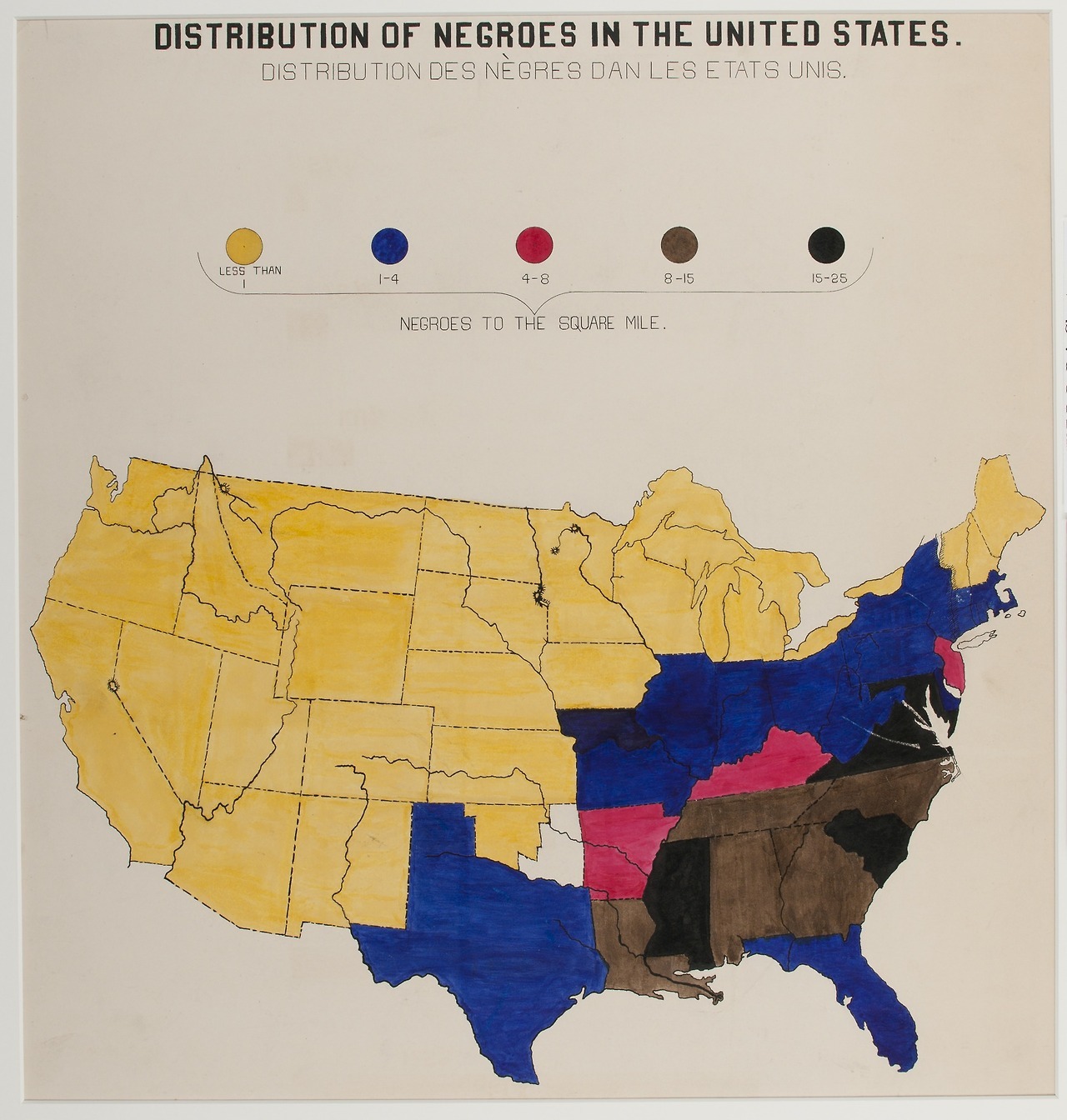
Map showing the African American population distribution in the United States, 1900. Keep reading

mapsontheweb:

Map showing the African American population distribution in the United States, 1900.

Keep reading

I was going to answer the obvious question “what’s up with Oklahoma” by pointing out the Oklahoma Territory (W) and Indian Territory (E) wouldn’t be combined into a state until 1907

But the Oklahoma Panhandle was added to the Territory in 1890, so why is only a third of it there? But then I noticed the PNW and the everything and it’s just a sloppy map

Bonus history: the Oklahoma Panhandle is residue of the Missouri Compromise, Texas had to yield its claims north of 36°30′ in order to be a slave state

Tagged: amhist

I have a lot of pet peeves but I think the biggest one is when people say things like “oh it’s such a small town, only 35,000...

mailadreapta:

chippingthegoalkeeper:

thegoldengals:

chippingthegoalkeeper:

I have a lot of pet peeves but I think the biggest one is when people say things like “oh it’s such a small town, only 35,000 people” like bitch my town has 200 people, you need to pick a new adjective 

According to Wikipedia, a small town is 1,000-20,000 people. So although you are correct in stating that 35,000 people is not a small town (it is a large town), you are incorrect in thinking that you live in a town. You live in a village. You are a villager.

I…… don’t know what to do with that information……a villager…

Why is it that America doesn’t have villages? Seriously.

Settlement patterns, mostly. We have villages in areas that were developed in a premechanized age and not redeveloped since, in New England and parts of the South. In other areas like the mid-Atlantic states and the Great Lakes midwest, villages grew into towns or suburban sheets.

Also, villages have to be carting distance from a city or town with transportation access, which before railroads meant coasts and navigable rivers. And no inherited Roman or even royal roads, just native foot-tracks that were too narrow and steep for carts or pack animals, if they weren’t overrun or forgotten by the time settlers settled.

And “navigable” was the extensive Mississippi system and not much else, though there were a lot of locks and canals built for a while, those were the “internal improvements” you hear about. So that means a lot of pretty land was practically speaking useless until after the transportation revolution obsoleted villages. Unlike Europe, which was bottlenecked on land and crammed people and farms into every inch, America was traditionally bottlenecked on laboring population.

The railroads did render more land accessible and development did radiate from depot towns but there were other issues. Newly viable resource-extraction settlements clustered by their resource and tended to import staples, though they might get bulky raw (construction?) materials and perishable food locally. (Milk is actually peak village – dairy is the low-density agriculture that needs to be closest to settlements, but railroads, pasteurization, refrigeration, and automobiles kept pushing this minimum distance out)

Meanwhile some of the plains states were settled by whole towns, organized by town promoters or frequently Protestant denominations who bought whole parcels from land speculators.

Others were settled by homesteading but the requirement to live on and improve the land (intended to keep this land out of the hands of the speculators who rendered it unaffordable to poor normies) dictated a spread out farmhouse pattern rather than clustered villages with outlying fields.

This dispersion provoked a lot of problems with the community services (provincial ignorance, lack of retail, isolation, solo drinking and family abuse) but also clever responses (bookmobiles, catalog merchandising and rural free delivery, high school sports and barn dances, temperance movements)

Tagged: amhist

lawyer probs: the growing number of people suddenly surprised that the aclu represents shitty people as well as good people...

akaltynarchitectonica:

emmeetslawschool:

almostviolentlydelightful:

emmeetslawschool:

biglawbear:

accidental-criminals:

emmeetslawschool:

lawyer probs: the growing number of people suddenly surprised that the aclu represents shitty people as well as good people because they didn’t have to read a bunch of aclu cases in law school. 

That’s why I enjoy the ACLU’s work so much. You have to REALLY love civil rights to stand up for some of the shitty people the ACLU represents. Without them bringing those tough cases, though, where would the rest of us be?

The First Amendment equally protects those we agree with and those we disagree with. It protects Civil Rights marches and BLM protestors. It also protects the most deplorable among us.

Without the ACLU, and without the First Amendment protecting the most heinous and disgusting views out there, the Constitution also wouldn’t protect the protests and speakers we hold most dear.

This isn’t about right or wrong, or political beliefs. This is about policy. Our Constitution made the choice to protect ALL speech equally, lest ANY speech, good or bad, be suppressed.

THIS. I think everything you need to know about the importance/purity of principle of the ACLU is that I saw a meme on Facebook where someone had like Photoshopped an ACLU logo onto a burning office building and with some terrible caption like “We know what to do with Nazi sympathizers” and my immediate internal response was “the ACLU would defend your right to post that if the government tried to punish you for it. All the way to the Supreme Court if necessary.”

I don’t think there’s anything I’m so purely dedicated to the way the ACLU is dedicated to protecting freedom of speech.

The ACLU is pure lawful neutral. They’re here to make sure everyone gets equal protection under the law, even if that means defending people they’d otherwise like to punch in the face. 

I think the lawful neutral label is really really apt, and also a good way to point out the precise way in which active liberals have sort of gotten the wrong idea about the ACLU.

It seems like a lot of people have kind of imagined the ACLU as a chaotic good. Righteous defenders of the left’s favorite causes, turning the very power structures that allow or actively create oppression (legislatures, the justice system) into tools against that oppression. And it’s totally understandable why, especially if you’re pretty young and have just gotten into liberal campaigns in the last 5-10 years why you might think of them that way. Because you’d see them doing these high profile cases and campaigns for things like LGBT rights and fighting the travel bans, and there are plenty of organizations that sort of do fit in to that type of mold–SPLC, HRC, Emily’s List, etc., all on varying points on the lawful to chaotic spectrum–so it’s easy to think it makes sense to lump the ACLU in with them.

But you’re right that the ACLU is much more of a lawful neutral, ESPECIALLY in the free speech arena. They’re just there doing the really not glamorous work of refereeing to make sure that oppressive government actors can’t silence anybody, which makes sure that organizations like SPLC and HRC have the ability to do their work without interference. 

The trouble with fighting for human freedom is that one spends most of one’s time defending scoundrels. For it is against scoundrels that oppressive laws are first aimed, and oppression must be stopped at the beginning if it is to be stopped at all.
H. L. Mencken

the ACLU’s robustness lately is such a heartening sign of American civic health I teared up typing that but let’s remember it’s a finite structure

this is a classic from the end of The Onion’s Golden Age, ACLU Defends Nazis’ Right To Burn Down ACLU Headquarters, which was at the time almost a jab from the right because the ACLU was so holy in the 90s

they called it the “ACLJew”, and said it was a front for communists and stood up for criminals

the ACLU came out of the First Red Scare, after WWI when revolutionary energy was really bringing down governments and not just assassinating officeholders and there was a crackdown

and yeah it was a shield for radicals, in its last hugest waves of immigration America took in all sorts of oppressed workers from ‘48 and later revolutions, Ireland to Italy to the Baltic, shit got kinda nuts once they had a taste of victory in WWI and heard about the future in mother Russia

smashy smashy go the Palmer Raids, etc., and the second KKK (the Jim Crow tightening and a lot more were anti-lynching measures, to win back deference to the state) and that’s a threat to The Movement towards world emancipation

then the SECOND Red Scare and by that time it was red diaper babies (cradle communists, without the convert’s zeal) and arms-length-for-safety fellow travelers and honestly after the suppression of the Hungarian Revolution in 1956 not much real support of the Moscow line though normies didn’t know that

ANYWAY the joke is a lot of their famous victories really WERE screens for Communism. NAACP v. Alabama (1958) that a political group couldn’t be forced to reveal its membership by the state, the NAACP was popular with rightthinkers everywhere outside Alabama – who would obviously pass a list off to mischief-makers, likely uniformed. But the generalizable precedent!

The Skokie Affair, the precedent that marching with Nazi flags (through a postwar Jewish neighborhood) isn’t violence and is protected expression. That must extend, by your own logic (the legal mantra) to Communist flags and marches but haha how goofy do you sound saying “those Jewish lawyers are just standing up for Nazis for their own communist ends!” and yet

Tagged: same as it ever was amhist

The correct next Brietbart provocation under Bannon is to set up a touring company of The Crucible and 1776 that give them...

The correct next Brietbart provocation under Bannon is to set up a touring company of The Crucible and 1776 that give them alt-right undertones, take it on national tour

make noise about every theater that rejects you and stage it in outlying county fairgrounds with friendly authorities, hype it into a thing

(The REALLY troll thing to do would be The Klansman, which had a successful but overlooked theatrical tour in Dixie before it became Birth of A Nation, just like a Tyler Perry joint)

Tagged: amhist steve bannon

So the “government-issued gfs” thing going around got me thinking about Billy Joel’s Allentown again. Like, the whole conceit of...

So the “government-issued gfs” thing going around got me thinking about Billy Joel’s Allentown again.

Like, the whole conceit of the song is “Our fathers went off to WWII and in return the country moved heaven and earth to make them patriarch-princes, we went off to Vietnam and now we’re treated as disposable.”

(He’s forgetting Korea in between, but that’s OK, everyone does.)

And given the title the focus is on the fall of the unionized Rust Belt heavy industry, but look at this line

met our mothers in the USO
asked them to dance
danced with them slow

this is literally, 100%, a lament for when we had government-provided gfs

The morale-boosting USO, now best known for in-theatre concerts and airport lounges, ran homefront clubs and canteens near soldiers’ postings, and a major role was providing the troops with female attention, recruiting girls from the area to free dances with regularly paid soldiers, hiring staff hostesses whose job was to flirt.

(This in a period where “courtesan” jobs like taxi dancer or cocktail waitress, with a career path culminating in marriage, were more of a thing)

And it wasn’t just the USO. Part of the point of the WAC was to match the supply of single women to the demand of support roles, freeing men for front-line service, part of it was just to have some young women on base. (Here I vaguely gesture at Miss Buxley, General Halftrack’s buxom secretary in Beetle Bailey)

Then there were nurses. Male military nurses in the war had a reputation as twinkle-toes homosexuals, drawn by the constant flow of strong yet vulnerable young men in uniform far from home to comfort. The male ones, of course. (Florence Nightingale’s innovation wasn’t young women going abroad to tend to soldiers – field armies ALWAYS drew trains of camp followers to attend to the men’s needs – but rather an idiom to do it compatible with Victorian sensibilities)

Like, guys, the government very much did try to provide gfs. And it didn’t stop with the war.

There’s this Rosie the Riveter impression that women streamed into factories in WWII but faded at its end, in fact post-war female factory employment was lower than before the buildup. (If women in factories started with WWII, how would you explain the Triangle Shirtwaist fire of 1911?)

And this came amidst government pressure (from an extensive wartime central planning system) to clear out women and make way for returning men. There was a fear the Depression would return (this is why the war economy was never unwound) to a country of battle-hardened men and provoke Communist revolution; it was a high priority to keep men occupied, loyal, and rewarded as patriarchs.

Daniel Moynihan took shit over his famous report for suggesting the solution to the black community’s ills was government-backed patriarchy, Earl Butz took more shit for putting it thus:

“I’ll tell you what the coloreds want. It’s three things: first, a tight pussy; second, loose shoes; and third, a warm place to shit.“

For how colorful the language might be, though, that formula – “rising standards of living through improved access to consumer goods and women” was the exact same deal the United States made with its whites, as the basis of the postwar golden age.

I could talk about the postwar expansion of high schools and the creation of the “teenager” and all the courtship stuff there, hosting proms and football games and teaching how to dance in gym and how to wife in Home Ec and showing film strips and Coronet 16mms on how to get a date, but that’s a bit of a stretch. The point remains, though, under the New Deal social compact, from the Depression into the 1970s, the government was ABSOLUTELY in the gf-providing business.

Tagged: amhist kontextmaschine classic

Friendly reminder of the General Aviation Revitalization Act of 1994 and the Protection of Lawful Commerce in Arms Act of 2005,...

Friendly reminder of the General Aviation Revitalization Act of 1994 and the Protection of Lawful Commerce in Arms Act of 2005, U.S. federal acts to shield the light aircraft and small arms industries (and thus companies, and cultures, and civilian capabilities) from vulnerability to civil liability

because the usual assortment of sob sisters and outstretched hands and contingency lawyers gathered like buzzards around something worthy that regularly produced death by massive trauma and citizens, empaneled as juries to be the state were losing the republican virtue to see and think like a state

WHEN WE PROPERLY UNDERSTOOD THE ‘70S AS A HORROR TO BE UNDONE AND WARDED AGAINST

Tagged: amhist

to help bring the national culture in for a soft landing we should start emphasizing the bisesquicentennial soon, it’s 9 years...

to help bring the national culture in for a soft landing we should start emphasizing the bisesquicentennial soon, it’s 9 years off but there’ll be preliminaries

I hear the bicentennial helped with national unity and morale in a rough time, we could use some of that (they had Apollo-Skylab-Shuttle too tho)

Good chance to remind everyone about Benjamin Franklin, the fat whoremongering otaku scientist backslapper who held things together so well he became a celebrity paragon of virtue

Tagged: amhist

Yo more than the homesteading of federal western lands, we’re gonna eventually need a land reform to redistribute the water...

Yo more than the homesteading of federal western lands, we’re gonna eventually need a land reform to redistribute the water rights in the “prior appropriation” jurisdictions west of the Rockies

It’d be a good first step if we could recognize both as “land reform” though. On top of all the homesteadings, the US did “orthodox”, defeudalizing land reform at least once, in Hawaii in the 1960-90s IIRC, that’s a precedent.

California itself was owned by two parafeudal land regimes, the original Spanish land grants and the later robber barons, tbh I’m not sure how that shook out. I don’t think there was ever a single monolithic “land reform”, more chipped away by gradual real estate and tax subtleties and dilution through inheritance. I know if you take the PCH up the coast, you run into a few necklace chains of small state parks, fertile valleys the barons owned to feed San Francisco by coastal shipping and then later gave up in lieu of taxes. I also know part was never reformed away, the master-planned towns of Irvine and Valencia were carved from intact monolithic holdings.

Then there’s reservation land (and the structures for dividing and distributing it, and the parastructures by which speculators reconsolidated it, and the paraparastructures resisting them), what else? Florida! I think that might’ve been under Spanish land grants, I know in the 20th century developers got huge tracts of land to subdivide. I saw a good longform about this recently, started with the author’s parents honeymooning on Miami Beach and getting bussed 4 hours to hear a sales pitch, someone point me. “Worthless Florida swamp lots” was a trope in the mid-20th century, they were the eponymous plot devices of Glengarry Glen Ross and I remember catching a few references on TV back before UPN and the WB, when the un-networked higher-number UHF channels would run old Looney Toons.

Tagged: amhist land reform

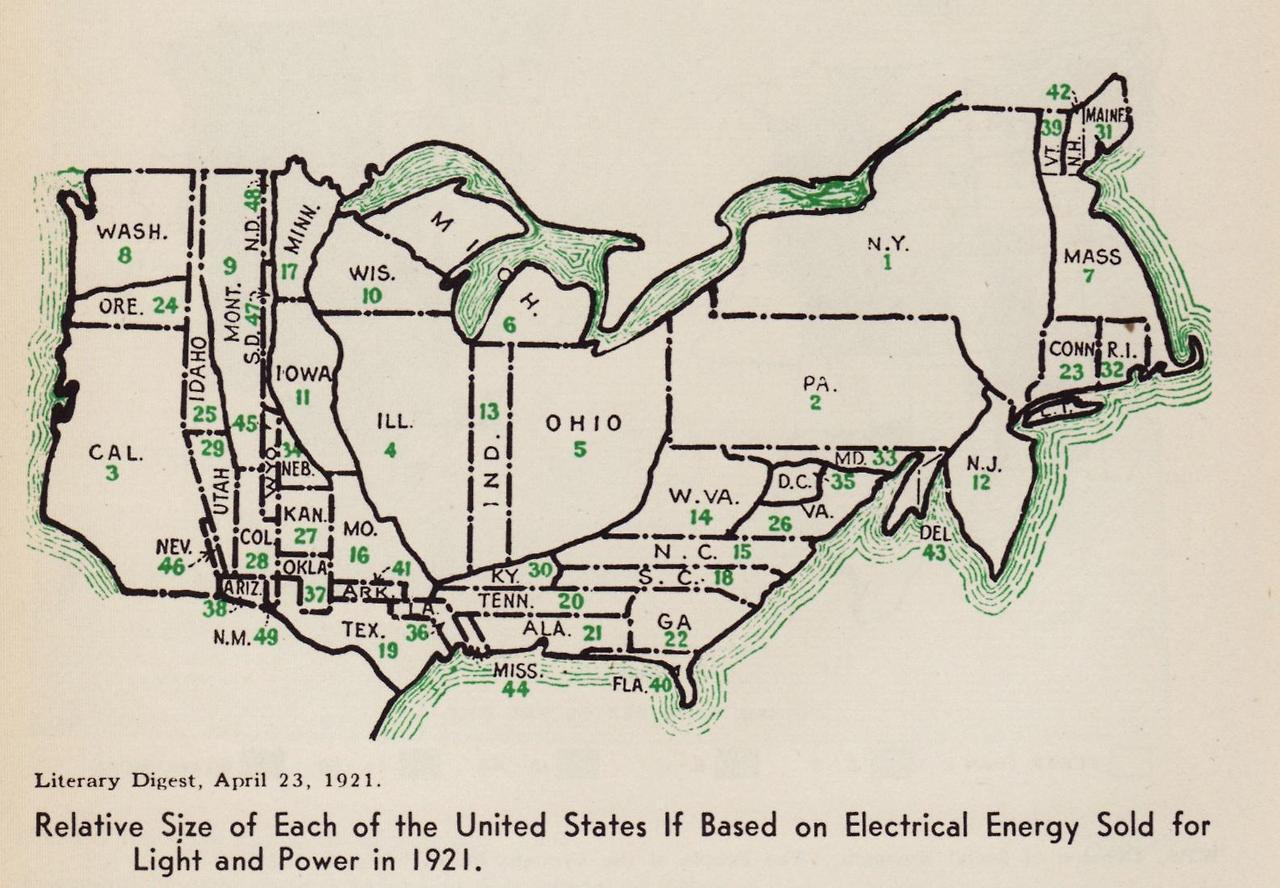
Map showing the relative size of each of the United States if based on Electrical energy sold for light and power in 1921.

mapsontheweb:

Map showing the relative size of each of the United States if based on Electrical energy sold for light and power in 1921.

Tagged: amhist

People since the Hilton era of reality TV, certainly since the Kardashian, be all “we didn’t USED to pay so much attention to...

People since the Hilton era of reality TV, certainly since the Kardashian, be all “we didn’t USED to pay so much attention to the petty doings of the vapid rich". Girl YES we did, that was the society pages. Same concept, same audience.

(My father was in the society pages once. As an old-for-America commercial city, Philadelphia had a respectable “society” presence, and he escorted some girl to a cotillion in the ‘50s.)

Course they had actual aristocrats to fill that role in Europe. The “jet set” of the ‘60s was basically air travel making it practical for American “society” to merge with the Eurotrash in seaside resorts, rather than the distinct continental and Vineyard-Palm Beach-Pasadena circuits they’d had before.

That kind of faded as time went on, maybe countercultural anti-rich-WASPiness. Maybe that as superstructure to the relative eclipse of heirs after the New Deal and publicly held Managerial Revolution. (Eclipsed by professionals, as “bright young things”, heroic engineers and surgeons, “yuppies”, “symbolic manipulators”, the “creative class”?)

Writings of the 80s often describe the period as particularly celebrity-obsessed, that always struck me as odd. Maybe we’re still swimming in that world and can’t notice the water. But Beatlemania was in the ‘60s, Hollywood celebrity fandom predates WWII. (I do notice that models seemed to become celebrities more in the 80s-90s, where now it seems more celebrities from some other field are used as models.)

I think I’m starting to realize that part of it is “celebrity” started filling that “society” niche. Part of it was celebrities claiming some authority(-from-authenticity) to intervene in society, especially in the “New Hollywood” of the ‘70s - Brando sending Sacheen Littlefeather in his place to the Oscars, Jane Fonda in Vietnam, Warren Beatty reminding America of its communist traditions. That’s when it became normal for movie stars to “have a cause”. And then into the ‘80s in music, Live Aid, Band Aid, Farm Aid, Bono. Fuckin’ Bono.

Of course, a lot of this just turned into charity-for-the-purpose-of-attention-getting, but how do you think all those society charity balls worked?

I suppose the transition moment from “society” to “celebrity” would be Henry Kissinger at Studio 54.

Of course actual royalty is still a thing, in the older-tilting supermarket tabloids. The Charles-Diana wedding in '81 was huge in the states, a lot of contemporaries linked that to cultural retrenchment after the '70s went off the rails (heterosexual monogamous monarchy, hard to top that for tradition).

And if now we’re back, on reality TV and Instagram, to gawking at the callow rich and their hangers-on, courtiers and courtesans, well, we’ve been there before.

Tagged: amhist same as it ever was

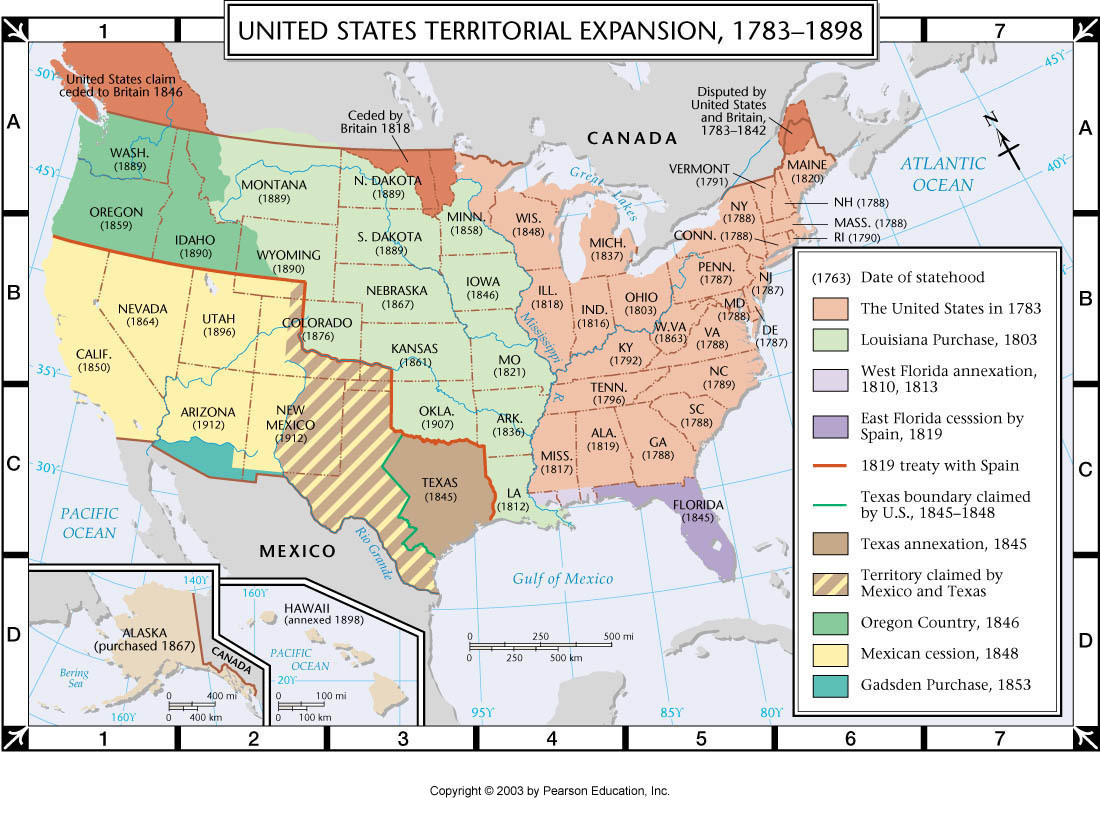
The United States of America Territorial Expansion, 1783-1898.

mapsontheweb:

The United States of America Territorial Expansion, 1783-1898.

Tagged: amhist