shrine to the prophet of americana

#amhist (618 posts)

bill bryson's book on the summer of 1927 has a long segment on the sacco and venzetti murders, and notes that the 1920s were...

Anonymous asked:

bill bryson's book on the summer of 1927 has a long segment on the sacco and venzetti murders, and notes that the 1920s were sort of this golden age of murder--cheap guns, fast transportation, (prohibition feeding organized crime), but the feds were still pre-New Deal size, local police departments were hamstrung by small budgets and jurisdictional boundaries and forensics basically boiled down to 'hope we find fingerprints and they match a suspect'

This was basically the situation until the 1980s

(Well, we cracked down on organized crime in the 1960s, thus disorganizing the crime)

Tagged: amhist

Like it's not just rape (but it definitely included rape and serial killing), the development of motor vehicles totally changed...

Like it’s not just rape (but it definitely included rape and serial killing), the development of motor vehicles totally changed crime in America. Bank robberies, now that you could suddenly roll into and out of town on the route to ???, that took off in the 1920s and wasn’t really stifled til the 1980s. Kidnapping, that was the other thing that the FBI rose to power off.

The backwoods speedsters by which moonshiners outran “revenuers” is where NASCAR came from.

The rock and roll troubadour touring lifestyle, tied up with statutory rape, was enabled cause they’d be gone before you could do anything.

Aerosmith’s Sweet Emotion - “can’t catch me cause the rabbit done died”. This was an (inaccurate) reference to early pregnancy tests, rabbits react to human hormones so you’d inject them with the subject’s urine, dissect, and look for reaction in the reproductive system.

(Aerosmith songs were all about how rock & roll was all about fucking teenagers, which is why it was so weird the 90s videos were about how fuckable Steven Tyler’s daughter was.)

Adam-12 and Dragnet dramatizing the novel significance of police cars with two-way radio communication

Even check fraud, the impetus to accept checks from more banks with driving-boosted customer range conflicting with the new ability to lift a checkbook (or just pass bad ones and move on) and go on a spree

Tagged: history amhist

So the thing that binds together the Western outlaw staple of "the payroll train"; the "company town" where labor is paid in...

So the thing that binds together the Western outlaw staple of “the payroll train”; the “company town” where labor is paid in “chits” for the company store; and the way after the Civil War so many newly emancipated slaves left the plantation, failed to thrive, and died (because despite their productive talents, the South simply did not have the capacity for that much wage labor, you’ll recall that the ensuing sharecropping system was based on store credit):

For a long time, basically until the founding of the Federal Reserve and the massive materiel exports and war loans of WWI, both in the 1910s, America often physically did not have enough money - specie - to properly run its economy, especially at the frontier, and attempts to create more without gold backing led to regular bank runs and economic collapse in a pretty severe 15-year-or-so boom and bust cycle

Tagged: amhist

100-Year-Old Life Hacks That Are Surprisingly Useful Today

isaacsapphire:

cydril:

aaronstjames:

justlifehacks:

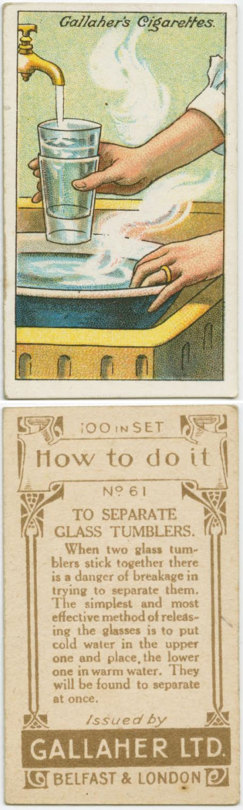
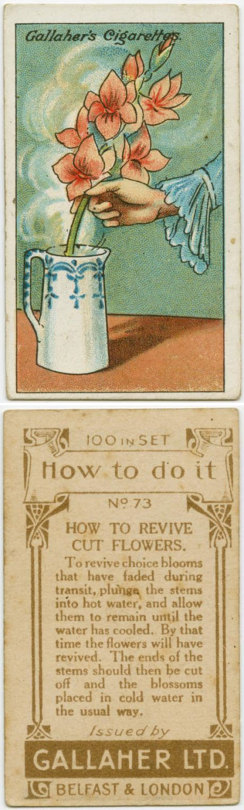
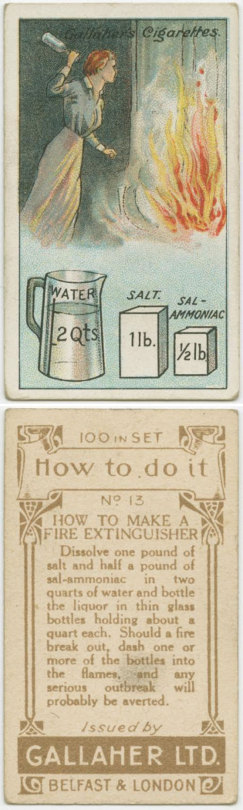
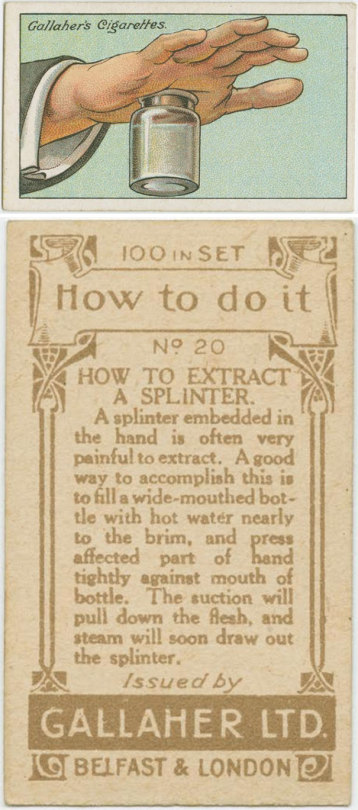
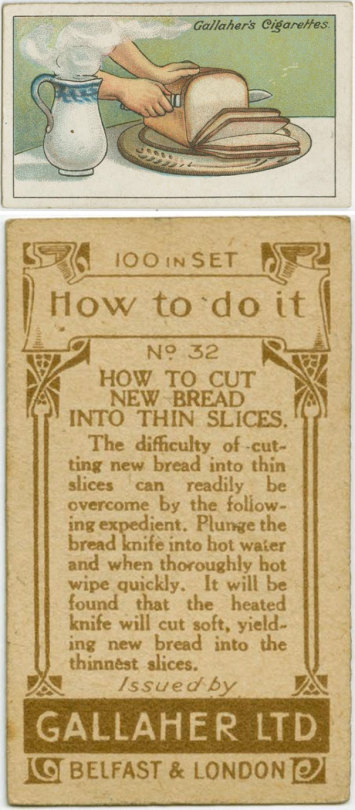
People don’t often look back on the early 1900’s for advice, but what if we could actually learn something from the Lost Generation? The New York Public Library has digitized 100 “how to do it” cards found in cigarette boxes over 100 years ago, and the tips they give are so practical that millennials reading this might want to take notes.

Back in the day, cigarette cards were popular collectibles included in every pack, and displayed photos of celebrities, advertisements, and more. Gallaher cigarettes, a UK-founded tobacco company that was once the largest in the world, decided to print a series of helpful how-to’s on their cards, which ranged from mundane tasks (boiling potatoes) to unlikely scenarios (stopping a runaway horse). Most of them are insanely clever, though, like how to make a fire extinguisher at home. Who even knew you could do that?

The entire set of life hacks is now part of the NYPL’s George Arents Collection. Check out some of the cleverest ones we could find below. You never know when you’ll have to clean real lace!

#1

#2

#3

#4

#5

Keep reading

Plunging cut stems in hot water is still a thing in the florist trade.

101 uses for water, apparently

Ooooh, I can use the “unstick glasses stuck together” trick!

BTW historically, runaway horses were like car malfunctions; it’s a thing that happened sometimes because horses sometimes get freaked out and just nope out real hard, but it was obviously a far more common hazard when everyone got around by horse.

Tagged: red dead redemption amhist

Tagged: not wrong amhist same as it ever was

what makes this interesting is, you see that seam? that's why her ass looks so great, the outer panel is squeezing it in for...

what makes this interesting is, you see that seam? that’s why her ass looks so great, the outer panel is squeezing it in for display

denim used to be an alternative to canvas “duck” for tarps and tents, blue jeans used to be sold incredibly stiff as work pants to be broken in

but they were adapted as symbols of countercultural youthfulness in the 1950s and 60s

in the 70s there was a trope of young girls obtaining jeans too small to fit into, putting them on in the hot bath (where the fibers would slightly relax) and having them dry skintight

by the 1980s you had the then-resonant trend of “designer jeans” (so resonant that genetic engineering was riffed off it as “designer genes”), denim designed as fashionwear

you had Calvin Klein, and the Brooke Shields commercials that riffed off her as a barely-pubescent sex symbol, “You know what gets between me and my Calvins? Nothing”

Cause she’s 15 and she wants you to know she’s not wearing underpants! 1980!

Anyway, also part of that was the development of acid-washing (loosening denim fiber by chemical action) and stone-washing (loosening denim fiber by mechanical trauma)

got to the point where by the turn of the 90s, light-blue jeans with obvious damage, esp. shredded knees, the antithesis of the solid dark-blue workman’s pants, were in style

Tagged: amhist

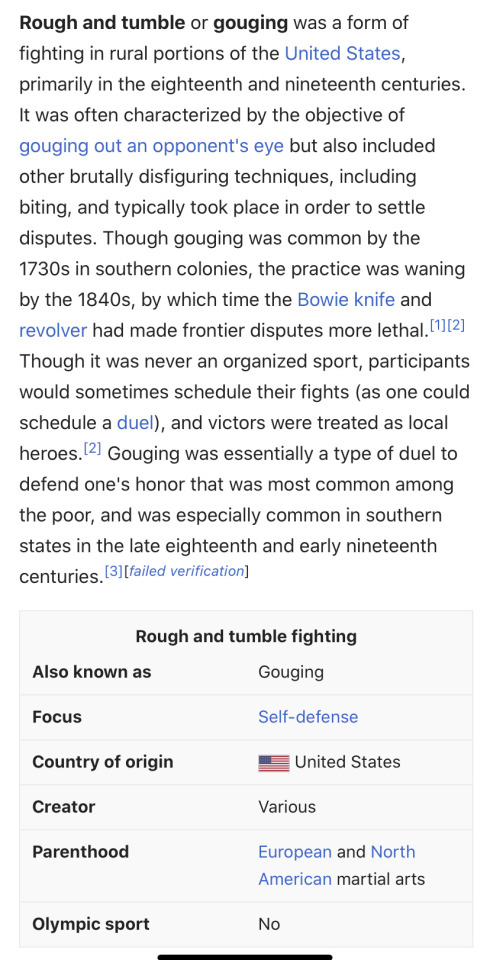
Broke: Banning eye-gouging in martial arts Woke: Eye-gouging is the only legal move

argumate:

memecucker:

Broke: Banning eye-gouging in martial arts

Woke: Eye-gouging is the only legal move

Olympic sport   Not yet

Tagged: amhist

Underexplored tension that the patron saint of the dirtbag left's "drop the woke, hammer on economics" is… neoliberal sellout...

Underexplored tension that the patron saint of the dirtbag left’s “drop the woke, hammer on economics” is… neoliberal sellout Bill Clinton

That’s what “it’s the economy, stupid” was about – reminding him that Dems still had an edge on economic issues, especially after the Volcker shock, Reaganomics, the rusting of the Rust Belt, the S&L crash, the early 90s recession…

But that voters had decisively renounced them for 3 presidential elections over existential but not narrowly economic subjects – visions and policies around the basic structure and purpose of government, of crime, and the social and sexual and racial order.

And that Democratic positioning on the latter corresponded to a hegemony among a left-of-center “leadership class” and intensely engaged but narrow pressure groups but NOT among even regular Democratic voters as a whole. So by shedding (or at least “triangulating against”) the latter, he could ride the former to victory.

(And then rig a national machine where left donors gave directly to the party and party-approved NGOs rather than funding rabble-rousers. In exchange for… benefits. My thinking on Epstein stuff is “if they were sweeping this under the rug, imagine what they were doing on building permits”)

And it worked, and he was able to raise taxes, and the minimum wage, and at least try for nationalized healthcare (and, uh, NAFTA). And then the Republicans took both houses of Congress, which no Dem president had faced since Truman (who still had more New Deal/WWII authorities to employ). And even then you had things like the now-vilified crime bill, where both the “more cops on the street” and “midnight basketball” provisions were a return of federal grants to big cities, after they had been allowed to starve under Republicans.

Even in less “economic” more “identity”, or at least minority rights areas, he saved Roe! Casey v. Planned Parenthood was expected to be the awaited repeal but it was just a narrowing, because Justices knew a 5-4 majority could revert back quickly and if constitutional law turned over with administrations like the Mexico City policy it would undermine Court legitimacy. Clinton shored up the court’s left wing and held the line here. (Admittedly, replacing 2 retirements, though a Republican administration through 1999 would’ve outlived Blackmun) Effectively saved Affirmative Action too. DADT, the infrastructure for civil unions, more AIDS research funding might have been less than sought, but they were forward steps at all for a movement that was arguably politically further back on its heels in 1992 than 1978.

And this was all stuff that would not have happened during a Republican administration (well, the minimum wage and research funding I could see in a second term of Bush the Elder), such as if a Democrat did not win the 1992 election, as Clinton did on “it’s the economy, stupid”.

Tagged: amhist

The Making of the American Gulag

The Making of the American Gulag

collapsedsquid:

To understand how these public safety advisors then advanced punitive modernization and the carceral state at home, we must return again to 1947. At the very moment the National Security Act took effect, another crucial document in the history of U.S. law enforcement emerged. The President’s Committee on Civil Rights had been investigating how law enforcement could safeguard civil rights, especially black civil rights, in the United States. The committee’s report to President Harry Truman, To Secure These Rights, advocated for what Mary Dudziak has labeled “cold war civil rights.” It was necessary to ameliorate racial inequality, this argument went, because the Soviet Union frequently invoked lynching and racial abuses to highlight U.S. hypocrisy.

Although the committee was unflinching in its assessment of how the fundamental civil right to the safety of one’s person had been violated frequently (Japanese, Mexicans, and African Americans, as well as members of minority religions, suffered the most), it also understood these problems of racial injustice to be the effect of white extrajudicial violence and “arbitrary” individual actions by cops, particularly in the South. Its solutions were thus focused on strengthening law enforcement and assuring its adherence to due process and administrative fairness. Similar to Kennan, the committee (and the generation of reformers it influenced) believed it was possible to use the tools of policing and prisons fairly, unlike in the Soviet Union.

Political scientist Naomi Murakawa has shown, however, that by framing the problem as arbitrary and as growing out of lawlessness, the committee effectively ruled out the systematic and legally enshrined character of racial abuse. What made it predictable, rather than arbitrary, was its consistent object: racially subjugated peoples. By diminishing the structural aspects of the abuse of minorities, liberal law enforcement reformers opened the door to a wider misunderstanding of what needed to be reformed. The response the committee endorsed—to enact procedural reforms and modernize law enforcement in the United States—rode the high tide of police professionalization initiatives that would crest in the following decades, and which called for a well-endowed, federally sanctioned anticrime apparatus. As historian Elizabeth Hinton and Murakawa have argued, this effort to reform law enforcement and codify its procedures actually made it more institutionally robust and less forgiving, contributing to the country’s march toward mass incarceration.

What is less understood, however, is the fundamental mismatch between what reformers and police chiefs imagined reform to look like. For liberal reformers, injustice looked like a lynch mob. For many police experts, steeped in Cold War ideology and trained in counterintelligence, it looked like the Soviet secret police. Mob rule had to be avoided, but so too did centralized authority over police objectives. Underlying reasons for what police did daily, and to whom, was not the concern of either party.

Command-level cops across the United States, after all, were quick to absorb the lessons and perspectives of public safety officers. In policing’s professional literatures, CIA officials published articles on topics such as policing in the Soviet Union, which emphasized the centralized governing hierarchy. The fact that Soviet police at the lowest level enacted the tyranny ordered at the top resonated with a generation of U.S. police reformers who had watched corrupt political machines in U.S. cities be dismantled. Police reformers thus demanded that police answer primarily to their own professional guidelines, free from political interference. In this way, the negative model of the authoritarian state was misleading: it may have prevented centralized dictatorial rule, but it left police power largely insulated. And so Cold War U.S. empire abroad found its replica in the War on Crime at home: to break the political syzygy of an authoritarian state apparatus in Sacramento or Saigon, in Wichita or Tokyo, police needed to be technically adept, flush with cash, and insulated from political machinations.

[…]

The War on Crime was a creature of federalism. Federal appropriations for upgrading police, courts, and prisons came embroidered with a commitment that no usurpation of local authority or discretion would result. Policing remained decentralized. Even when police killed unarmed people during unrest, causing public complaint, police were protected; outrage could be an orchestrated communist plot, the thinking went, intended to take control over law enforcement by undermining its autonomy. In this way, the reform effort preserved the petty despotism of the nightstick and localized tyranny of the police chief that was at the root of the racial crisis. By insulating police from federal oversight or control, while also affording them increased resources, particularly for capital-intensive repressive technologies, the War on Crime allowed the underlying structure of Jim Crow policing to persist.

Tagged: amhist

getting an advertising jingle from before you were born stuck in your head is like some supervirus being released from thawing...

xm5999:

dryiffsrevitalizingtailholetonic:

getting an advertising jingle from before you were born stuck in your head is like some supervirus being released from thawing Siberian permafrost or some shit

Tagged: amhist

Thinking about the 70s concept of open relationships Or rather, open marriage, after the bestselling 1972 book The term was...

Thinking about the 70s concept of open relationships

Or rather, open marriage, after the bestselling 1972 book

The term was lifted from anthropology where it meant a system where individuals freely chose their own partners, contrasted with “closed marriage” where partnering was determined by broader social structures, and only a small part of the book addressed nonmonogamy, but that’s the association that stuck.

(The term “free love” went through the same progression in the 19th century)

And thinking about 70s stuff on the poly spectrum – “swingers”, as an identity for full-swap couples (not that F/F was unwelcome, but M/M def. was); the “key party” as event (a couples’ cocktail party mixer where at the end women would blindly draw from a bowl of the men’s car keys and go home with the corresponding man)

Like, that's… that’s where the 70s were at right there. Totally willing to accept nonmonogamy, totally assuming patriarchal marriage anyway.

Or maybe I’m looking at it backwards, and sleeping around was such the expected condition of unmarried singlehood it was just assumed, facilitated by singles bars, singles cruises, singles resorts…

So I suppose maybe the novelty is our having meaningful primary relationships that aren’t marriages, or on the marriage track.

Of course, the “divorce crisis” of the 70s was people deciding that the fact they once had a meaningful primary relationship with someone was not a good reason to be married to them, so fair enough.

(Of course, a lot of those people had been teenagers in the 50s, in the age of “going steady”, class rings and fraternity pins and letterman jackets, when the adults fretted this early sexual-romantic exclusivity would leave them socially stunted, and that they should play the field and go to “petting parties” like in the good old days of the 20s, so fair enough.)

Tagged: 70s70s70s same as it ever was amhist open marriage

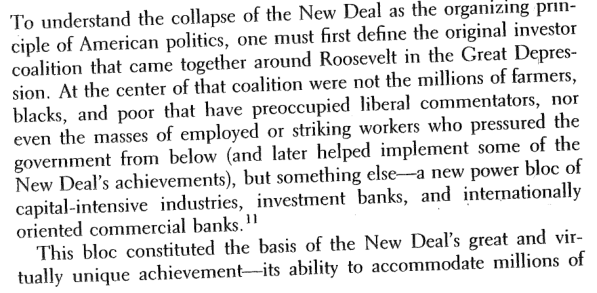
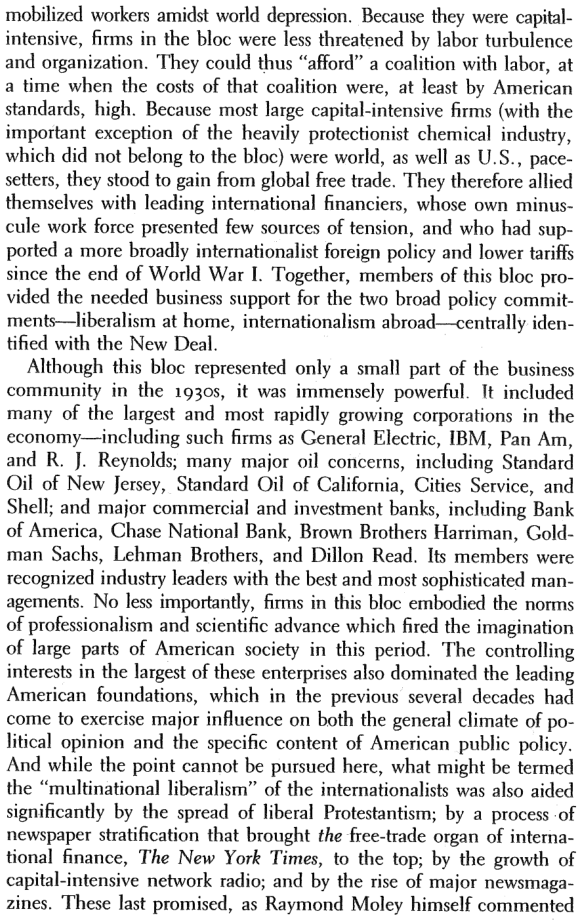
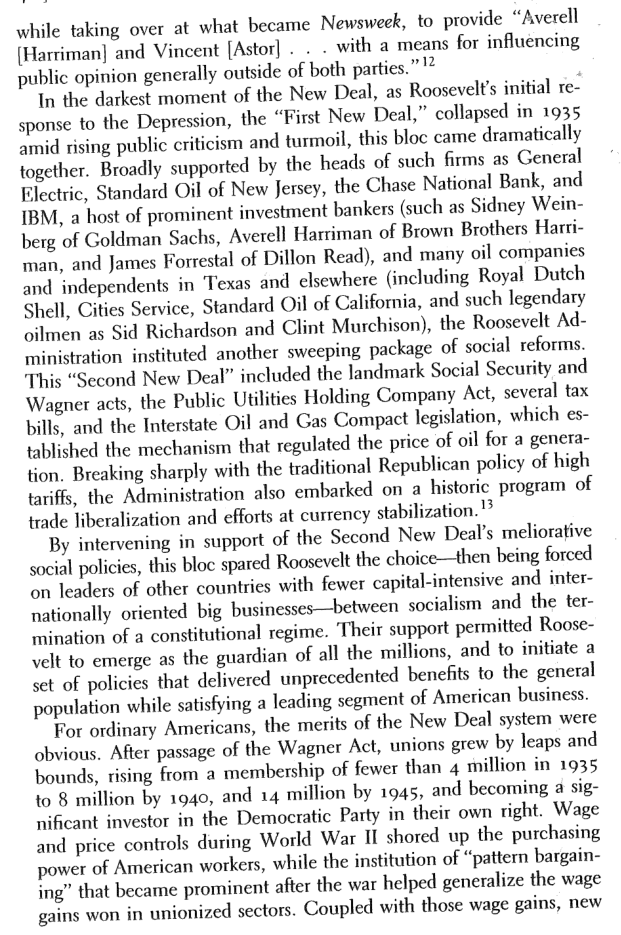
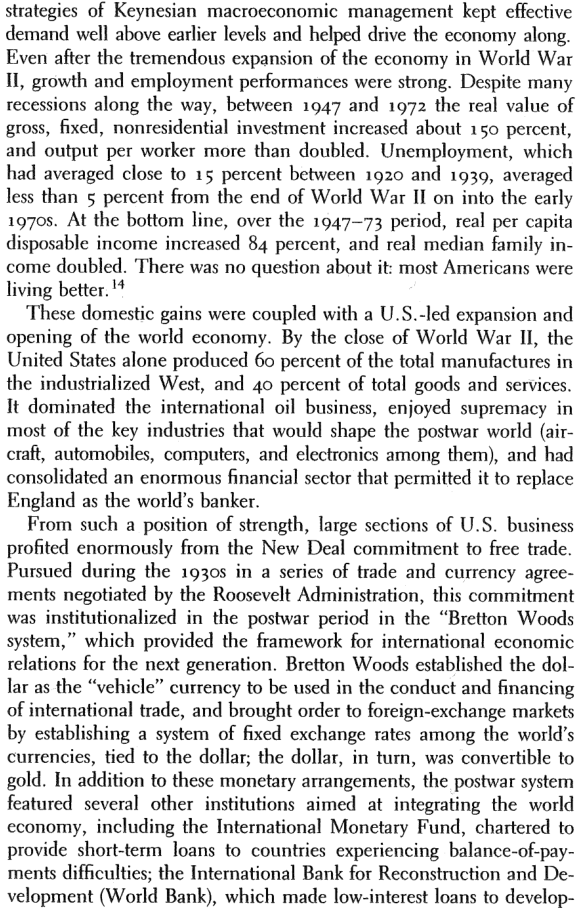
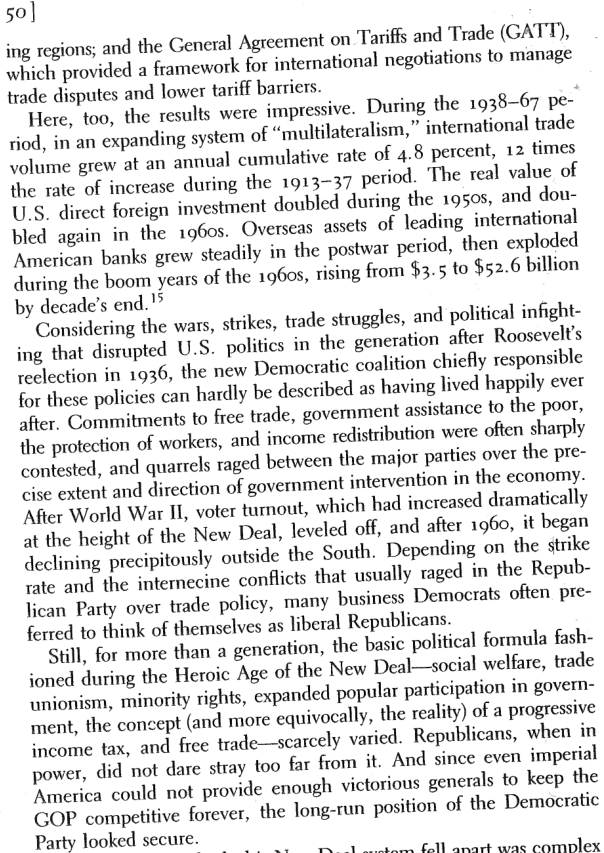
Thomas Ferguson and Joel Rogers, Right Turn

antoine-roquentin:

Thomas Ferguson and Joel Rogers, Right Turn

Tagged: amhist

The Civil Rights Movement Was A Great And Glorious Thing (by which they mean the ‘50s part) but

Wesley Yang made a good point on the context of the NYT’s 1619 thing and Coates bringing up reparations again and a renewed focus on slavery and “the awokening” in general.

That as new streams of immigration make America less white, they simultaneously make it less black, or at least less Negro – the nation formed in slavery in America.

And I could see that, a felt sense of danger that if slavery and blackness aren’t deeper written into the national narrative, then to the degree these new arrivals are assimilated to America, it’ll be again be to a specifically white America, with blacks left on the outside, like with the “white ethnics“ before.

But it hangs up on that nation thing. Like, if you don’t want the American narrative to just be the White nation’s story, okay, but the rightists that bluecheck shitsnots say are “telling on themselves” are right, the Black nation’s story as proposed is one featuring the White nation as an enemy, or at least Pharoah’s people, where it is featured at all.

Though I mean what were the White nation’s alternatives on offer? Well, the traditional one up to 1970 was “it was a damn shame that the White nation split and turned against itself in the waste of the Civil War and Reconstruction, and a great glory it was able to reunite”.

The upgraded one was “it was a damn shame that the White nation enslaved the blacks, but a great glory it freed them and invited them to join the White nation, thus resolving that plotline”

Which I suppose was still the promise when I grew up, the narrative as I learned it was

The Civil Rights Movement Was A Great And Glorious Thing (by which they mean the ‘50s part) but

The ‘60s Went Too Far Sometimes (by which they include the Civil Rights Movement) then in

The ‘70s [INAUDIBLE] so in

The ‘80s we remembered we were Americans, dammit, which means by

The ‘90s we couldn’t wait for blacks to escape the violent, inner-city ruin in which they had always lived

so. I mean, I put it like that to render the rejection sympathetic and understandable, but I grew up with that whole 90s colorblind “black people can be Whites too!” thing, I liked it, it seemed like it was working for a while, at least in the spheres I noticed, and when complaints became audible it felt like they could be classified and addressed as failures to live up to the ideal.

I dunno, the 90s dreams of “women can be guys too!” and “goyim can be secular Jews too!” aren’t doing too great either. Maybe there was just a strong enough monoculture with high barriers that things had to be made to work back then. Maybe the 90s utopian “the internet will lower barriers and give everyone a voice!“ thing was true but in a monkey’s paw way and the thing we thought we were celebrating as that was an early stage where it built a culture more tailored to the already-set. I dunno. I have no solutions.
Tagged: race amhist afamhist

rescuing/ruining pornography by adding voiceover from a Wise Narrator at the end saying and they woke up and found it was all a...

argumate:

rescuing/ruining pornography by adding voiceover from a Wise Narrator at the end saying and they woke up and found it was all a dream.

literally for a while American obscenity law worked such that pornography was regularly rescued by a Wise Narrator at the beginning posing it as a sociological investigation as a framing device

Tagged: amhist sexual media

*kontextmaschine voice* hey remember when reagan joked about nuking russia on a mic he didn't know was hot

Anonymous asked:

*kontextmaschine voice* hey remember when reagan joked about nuking russia on a mic he didn't know was hot

“My fellow Americans, I’m pleased to tell you today that I’ve signed legislation that will outlaw Russia forever. We begin bombing in five minutes.”

Tell me that’s not the President of the United States shitposting

Tagged: amhist same as it ever was

I suppose another take on Marianne Williamson and the neomystic turn generally is it’s a turn inward. It takes all the energy...

I suppose another take on Marianne Williamson and the neomystic turn generally is it’s a turn inward. It takes all the energy floating about that had been aimed at society and structure and turns it to self and sensibility. And that’s a thing that happens, and you’d kind of expect it to happen around now, and diverted into culture the energy can even get pretty golden-agey as the dialectic grinds towards synthesis.

That’s the social unrest of the 60s diverting into the “Me Decade” 70s and “Morning in America” 80s. That’s the revolutionary period of the 1910s being suppressed in the First Red Scare and yielding to the Roaring Twenties, the Jazz Age, the Harlem Renaissance.

That’s second-wave feminism falling to an ‘80s pincer move between cultural conservatives and S&M postmodernists – falling as a sociopolitical project. And then its themes got turned inward and coopted and reemerged in the 90s as Wicca, as Lilith Fair, as lesbian chic, as riot grrl, as Xena and Scully and Buffy, as the music I think of as VH1core chick-rock – Shawn Colvin, Natalie Merchant, Meredith Brooks, Paula Cole. As a sensibility, a subculture, a product, an aesthetic (that could be digested into more products, into Target collections and remodeling TV about shiplap and healthy relationships)

Tagged: amhist marianne williamson election 2020 2019 same as it ever was

Like, in the 20th century the mainline Protestant churches tried to deal with the romantic drift of “spouse as soulmate” from...

Like, in the 20th century the mainline Protestant churches tried to deal with the romantic drift of “spouse as soulmate” from “spouse as partner in household as institution” by introducing mandatory classes in their colleges to teach the students how to fuck each other better.

Oh and you know what I just remembered? Marriage manuals.

Which I think even still existed in the 1980s as a degenerate genre of erotica, but early in the 20th century, that was a serious earnest concern of mainstream bourgeois WASP culture in say the 1920s-30s, that young people get on birth control and be good at sex.

There was a concern that marriage was under threat from Romantic ideals, and people were neglecting spouses in favor of lovers, and that this had to do with Christians being sexually repressed and unpracticed and being totally incompetent at getting each other off

(especially with America’s rural homestead culture leaving people so isolated without partners to practice on. Except relatives and barnyard animals, which is absolutely a thing in isolated rural cultures!)

Like in the immediate postwar when the whole “going steady” teenage culture came up, journals of upper-middlebrow tradition were seriously fretting that teenagers were getting too sexually exclusive too soon, and that this boded poorly for the formation of their mature character. And when you think of the divorce wave of the 60s-70s, well…?

(really, a lot of postwar teenage culture was about how the car changed rural life by giving kids the range and mobility to find each other to fuck)

Mind you this was going on while the churches were still in their great missionary boom. In fact, it was kind of related. Margaret Mead, Coming of Age in Samoa, 1928. A lot of period linguistics, anthropology, archaeology was handmaiden to Protestant missionary evangelism, and the churches invested heavily in them. (The rest was a handmaiden to European nationalisms.)

And half a century before Club Med, before the hippie ‘60s, the mainline Protestant churches sent the cream of their young elite off to spend a few years living with tropical islanders and other brown people and one of the bigger things they brought back was “Oh yeah, they’re a lot less uptight about sex, premarital, extramarital, teenage casual, it’s all good. We should try that.”

American culture works by weird paths

Tagged: amhist sex with teenagers

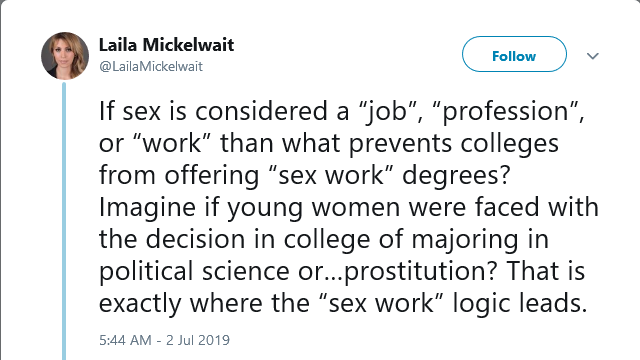
Yes, imagine very deeply what it would be like if colleges had women majoring in sex work……  Picture it in your head…..

wordcubed:

discoursedrome:

alexanderrm:

collapsedsquid:

Yes, imagine very deeply what it would be like if colleges had women majoring in sex work……  Picture it in your head…..

Hopefully the fact that actually doing sex work is a better way of learning it is what would prevent colleges from doing that, unless the government somehow required all prostitutes to get a $200,000 degree at a top university in order to get a job. (I guess if freelance prostitutes were banned and they could only work for large corporations that could theoretically happen, if respectability for brothels were really important and the demand were strangled somehow?)

If sex work were fully legalized you’d totally see some kind of Juilliard for Courtesans but the graduates would make eight figures so who cares

You might see some sort of lower-key credentialist gatekeeping as the industry professionalized, like with cosmetology, but I can’t imagine it’d go too far given how entrenched sex work is as DIY employment. I could see that happening for prodommes and other sorts of “complex/risky” sex work, though, like after a scandal hits the news about someone who gave a handjob wrong and made someone’s dick explode

Reblog to give somebody a handjob so bad their dick explodes

Also:

First off there are too coal mining majors, they’re things like “Mining Technology” and “Mineral Engineering”, you find them in Tech and A&M schools and community colleges in mining areas. Like the South Dakota School of Mines & Technology.

Second off, I’m not sure if OP’s point is “Imagine a college for prostitutes, that’s hot” or “Imagine not realizing how many college girls today are experiencing their college years as an intro to sex work already, that’s naive”, I could see it either way.

But like the idea of post-secondary education to make women more appealing semi-mercenary mates… that’s a real thing! That’s finishing/charm school! (Which was about social mobility, landing a higher-ranking man, either in the sense of comfortable bourgeois or literal European nobility)

The “Mrs. degree”, college as a place to become a bougie wife. Cornell has a college, “Human Ecology”, that used to be “Home Ec” and still has majors in cooking, sewing, childraising, and interior decoration (plus a pre-law/business track as a backdoor for Long Island boys to get an Ivy degree and become donors)

The mainline Protestant churches addressed the romantic drift of “spouse as soulmate” away from “practical partner in household institution” in the 20th century by introducing mandatory classes in their affiliated colleges to teach the students to fuck each other better.

Not as transparently and been professionalized since then but that’s part of what secretarial/stewardess/nursing school was about at midcentury.

The “Mrs. degree”, about college as a place to find a bougie man and be acculturated as a bougie wife, that was a real thing. Cornell has a college called “Human Ecology” that used to be Home Ec and still basically has majors in cooking, sewing, childraising, and interior decoration (plus a pre-law/business track as a backdoor for Long Island boys to get an Ivy degree, to give it a donor base).

Like, in the 20th century the mainline Protestant churches tried to deal with the romantic drift of “spouse as soulmate” from “spouse as partner in household as institution” by introducing mandatory classes in their colleges to teach the students how to fuck each other better.

Tagged: amhist

Post an Amhist take, it's been a while. You can make it about any obscure historical hobbyhorse you want.

Anonymous asked:

Post an Amhist take, it's been a while. You can make it about any obscure historical hobbyhorse you want.

Man I… I dunno. Something about the Intracoastal Waterway, how coastal shipping used to be the key transit route, how before railroads, before even decent inland navigation or canals that was the thing, a network of waters protected from weather and from great power fleets out of Bermuda or the Caribbean

Tagged: amhist

When you realize the biggest American police reform ever was because people preferred the Pinkerton National Detective Agency

When you realize the biggest American police reform ever was because people preferred the Pinkerton National Detective Agency

Tagged: amhist pinkerton national detective agency