Thinking about Jewishness in 90s popular culture as like, marked, but distinctly not a separate culture, with fluidity at the margins
Phoebe assuming Chandler is Jewish cause of his self-deprecating humor, George Costanza’s parents being white-ethnic gentiles in the most nominal way, with Festivus as a Freudian-Jewish festival about casting off the burden of civilization and freeing the grievance-filled Id to establish hierarchy by feats of strength.
Friends’ Rachel and Clueless’ Cher Horowitz’s specificity as Jewish-American Princesses being missible (the nose job stuff just landing as a tease about ‘90s plastic surgery fads) and being received as icons of well-off young womanhood generally
The Beastie Boys no less than Madonna as white-ethnic New Yorkers who kept up with the streets as the vibe shaded browner. Adam Sandler as avatar of all suburban goobers. Howard Stern as honestly a decade-older same thing.
Overall an adoption of the Woody Allen version of the American Jewish narrative – Brooklyn tenements, the Dodgers, Coney Island, psychoanalysis, comedy, the Catskills circuit, magazines, radio, TV, movies, all sorts of interesting neuroses and intellectual arguments along the way.
(In retrospect I notice that even keeping to 20th century America this was totally burying longstanding leftist tradition, but that’s the 90s for you)
My college senior seminar thesis that would’ve become my honors thesis (if I took the ‘nother course of research and review meant to prove me for grad school) was about the split-level house
My take was it was kind of about how less grimy heating made basement rooms practical
And kinda about how adults wanted separation from their dumb boomer kids
But mostly about how WWII trained a generation of men in dozer-concrete retaining wall construction and that rendered more marginally sloped plots viable
Thinking about how the CoD/Battlefield/Medal of Honor vidya series are some of the last depictions of WWII when it was still in historical memory, during the whole “greatest generation” sendoff
Realizing that last one I played, where you, Corporal Texas and your squadmates, Privates Catholic, Jewish, and College, Sergeant Hardass and Lieutenant Patrician fight your way from Normandy to Berlin through every battle of the campaign*, assaulting a Nazi stronghold in urban combat and helping Jews in the basement escape, the one that plays up the StG 44 because assault rifles are what people expect from war – that’s it finally, fully passing into myth
* in reality the US had deep reserves and rotated units between phases of the advance – American forces being tested but unbroken and disciplined was a big part of why German forces preferred to surrender to them than the years-in-the-field and vengeful Russians
::remembèrs when we had Iraq War I in the early 90s people tied yellow ribbons on everything in my favored quadrant suburb and in retrospect it was about renouncing the demons that turned us against America over Vietnam::
starting to realize the importance that as far as the US Navy was concerned, WWII was a Pacific war against Japan
I thought that was obvious, what’s the importance?
It’s still narrativized in America as a continuation of European history, the point in fact where America took over that narrative, and the Pacific theater is extensively told in fact but the themes - of Japan and the US competing to take over from the European empires as regional hegemon, of the imperative to take a transcontinental forward basing position if only to prevent someone from taking it on you - are underexplored in terms of how they prefigured the world to come
“How did the author of Harry Potter become an avatar of conservative cause?” like
“how did VICE give rise to the Proud Boys”, “how did celebreality competition TV give us a president”, “why is 4chan still Like That but now geopolitically”, “why is Billy Corgan conservative now”, “why was Dan Savage’s Seattle Stranger the cradle for Jesse Singal’s clique”, “why is Matt Yglesias at least anti-bluepilled now”
“Cultural conservatism” has updated its golden-age referent from The Fifties to The Nineties (in both cases it showed up late and bled into the next decade). The people who rose to the top of The 90s Culture will defend it as fundamentally legitimate, which is now coded as archconservative
Meditate on the way the Reaganite 80s (lasting into the Clinton era, remember school uniforms and prayer as issues lol) were taken as an unstoppable onslaught of 50s revival but in the 90s it was obvious that people who kept the spirit of the 60s alive had won
(And how in fact performatively dirtbag VICE was really part of 2000s 70s-revivalism, same as American Apparel)
Sometimes I think of America’s reputation “oh we got over our antisemetic stuff by the 60s”
And how much of that theme was small merchants – Herbert Moon from RDR, basically – concerned that Jewish rivals had privileged access to Jewish wholesalers, distributors, importers, transatlantic shippers, all the way back to the European manufacturers and financiers that underpinned the system
And the way this resolved those guys didn’t see the error of their ways or repent, it was just that European manufacturing and finance became much less important to American commerce and the role of Jews in it was greatly reduced
Like, the significance of Henry Ford was he was the avatar of American domestic manufacturing
The significance of his antisemitism was he was the avatar of American domestic manufacturing
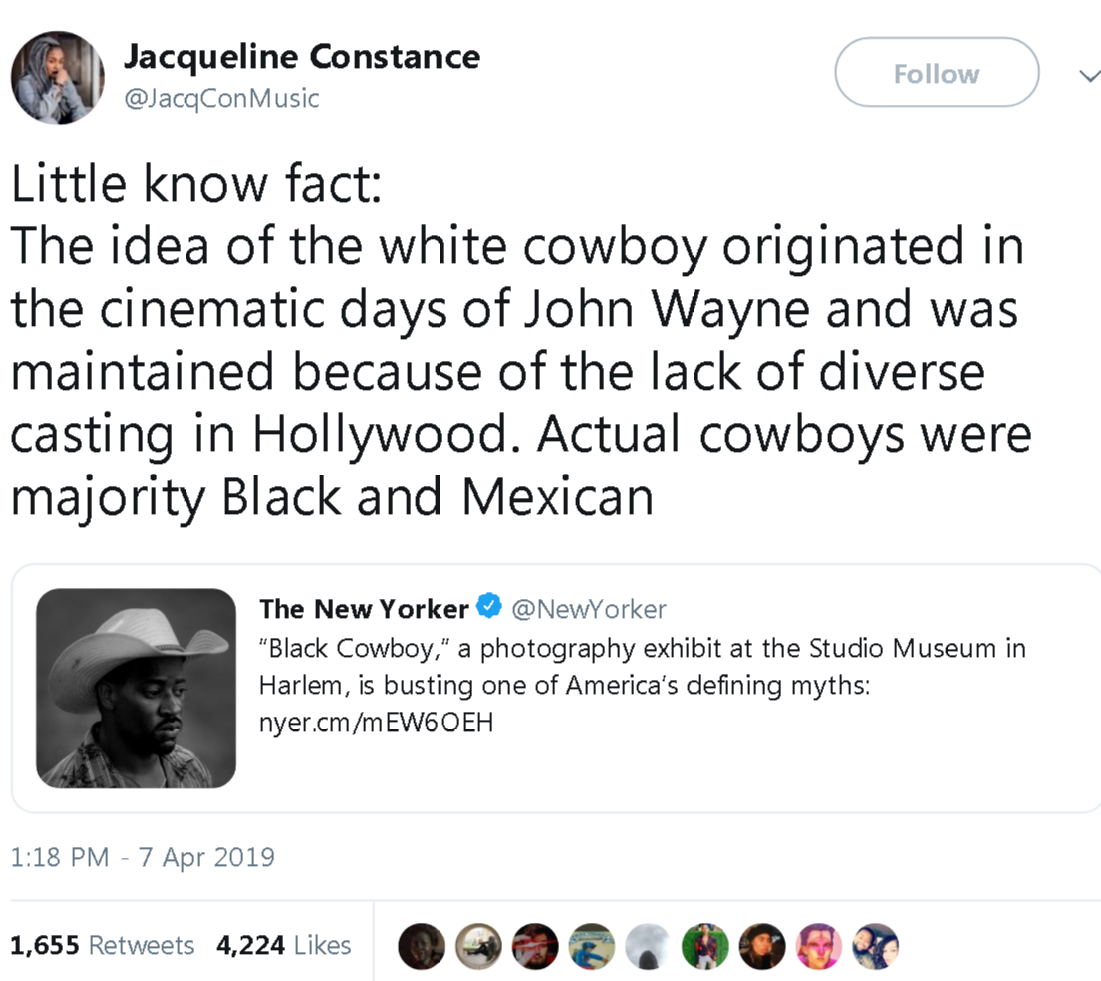
A History Of Black Cowboys And The Myth That The West Was White
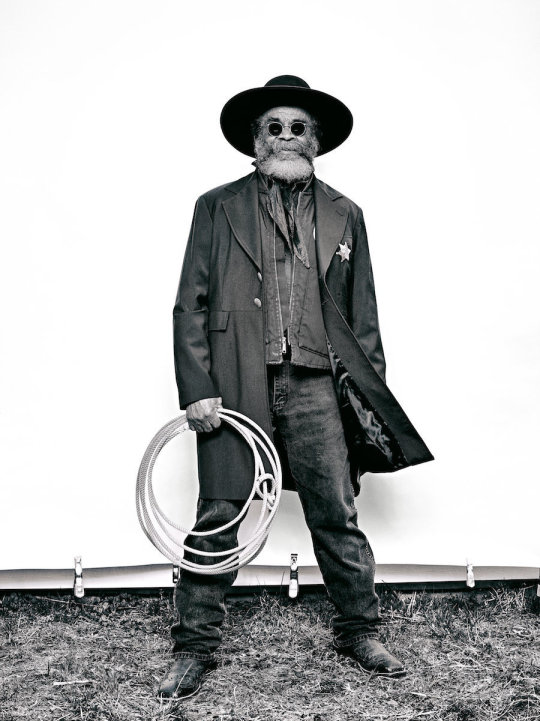
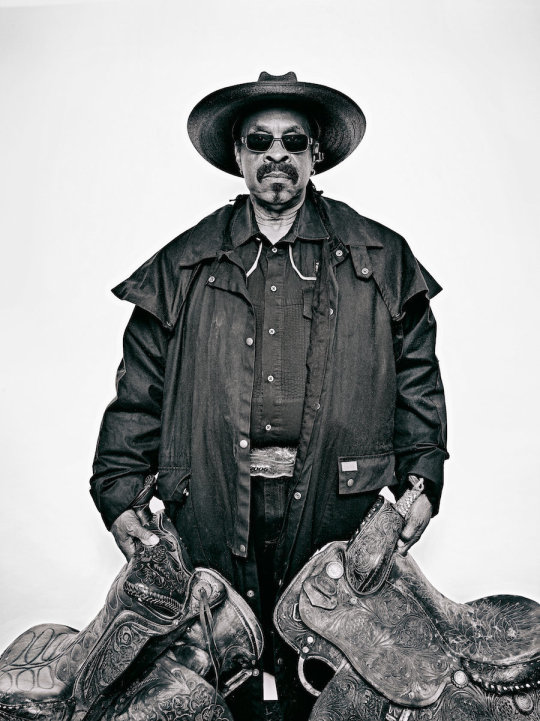
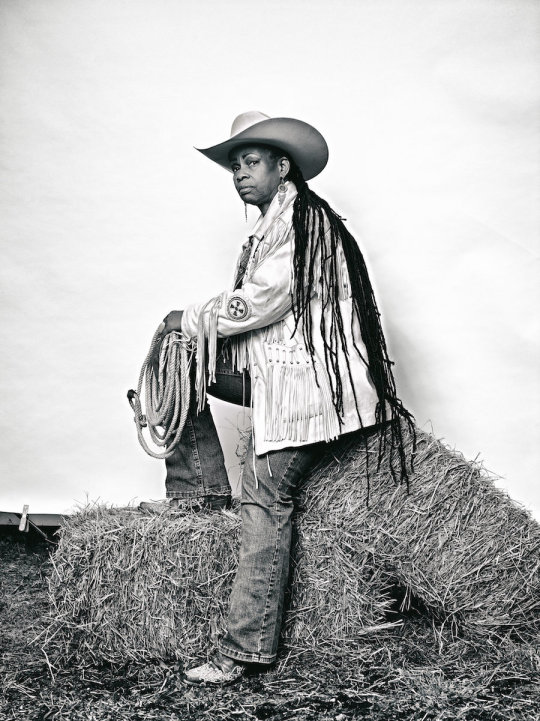
Brad Trent, “Ellis ‘Mountain Man’ Harris from ‘The Federation of Black Cowboys’” series for The Village Voice, 2016
A quick internet search of “American cowboy” yields a predictable crop of images. Husky men with weathered expressions can be seen galloping on horseback. They’re often dressed in denim or plaid, with a bandana tied ‘round their neck and a cowboy hat perched atop their head. Lassos are likely being swung overhead. And yes, they’re all white.
Contrary to what the homogenous imagery depicted by Hollywood and history books would lead you to believe, cowboys of color have had a substantial presence on the Western frontier since the 1500s. In fact, the word “cowboy” is believed by some to have emerged as a derogatory term used to describe Black cowhands.
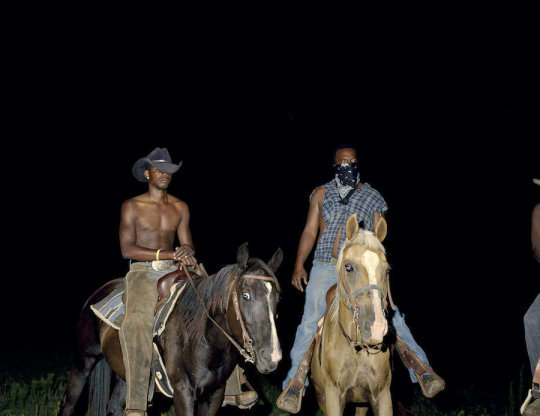
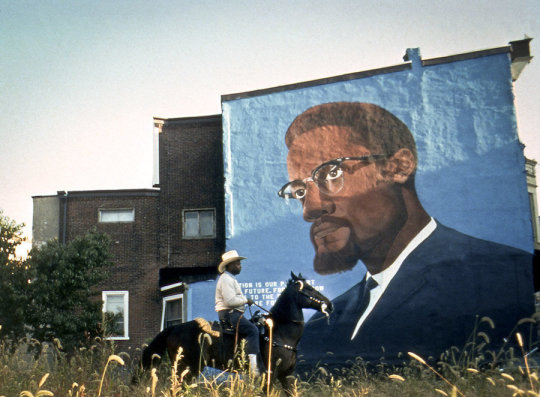
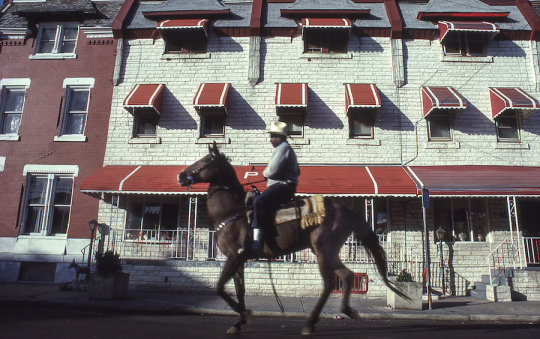
An ongoing photography exhibition at the Studio Museum in Harlem celebrates the legacy of the “Black Cowboy” while chronicling the unlikely places around the country where cowboy culture thrives today. Through their photographs, artists like Brad Trent, Deanna Lawson and Ron Tarver work to retire the persistent myth that equates cowboys with whiteness.
Deana Lawson, “Cowboys,” 2014, inkjet print mounted on Sintra, courtesy the artist and Rhona Hoffman Gallery
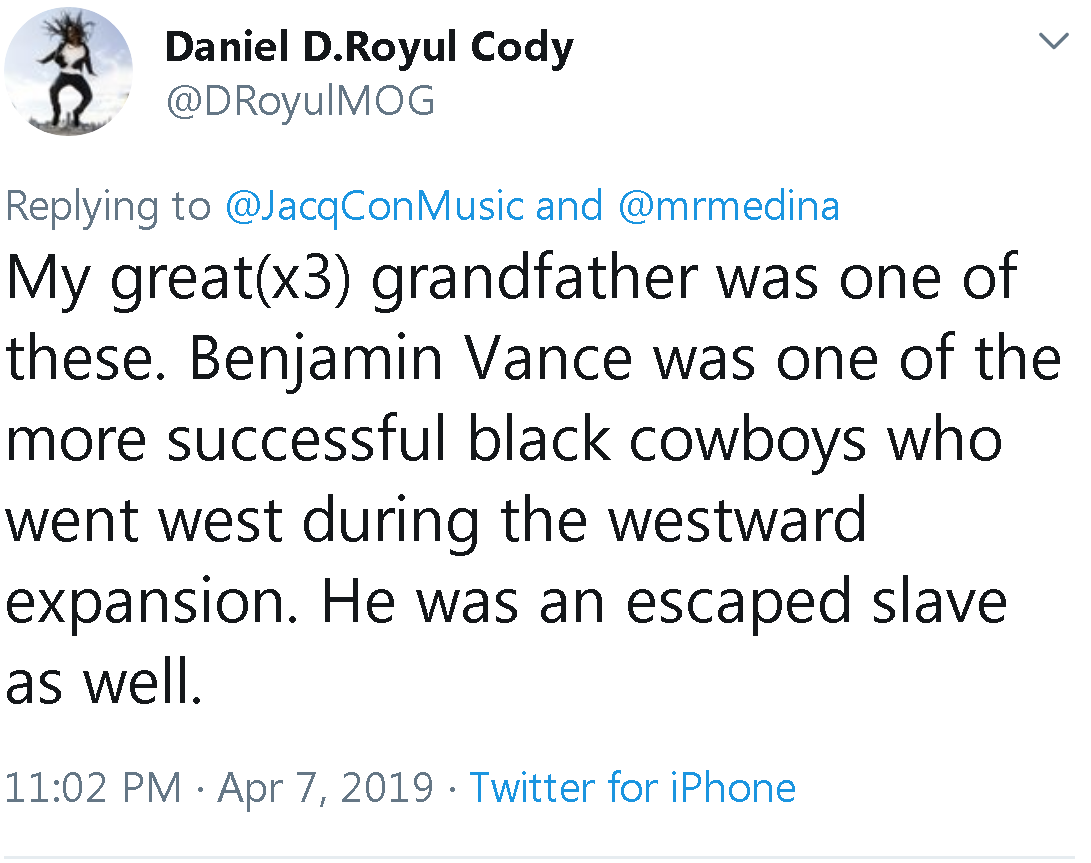
One notable example of this erasure manifests in the story of Bass Reeves, a slave in Arkansas in the 19th century who later became a deputy U.S. marshal, known for his ace detective skills and bombastic style. (He often disguised himself in costume to fool felons and passed out silver dollars as a calling card.) Some have speculated that Reeves was the inspiration for the fictional Lone Ranger character.
Most people remain unaware of the black cowboy’s storied, and fundamentally patriotic, past. “When I moved to the East Coast, I was amazed that people had never heard of or didn’t know there were black cowboys,” photographer Ron Tarver said in an interview with The Duncan Banner. “It was a story I wanted to tell for a long time.”
Ron Tarver. “Legends,” 1993
In 2013 Tarver set out to document black cowboy culture, in part as a tribute to his grandfather, a cowboy in Oklahoma in the 1940s. “He worked on a ranch and drove cattle from near Braggs to Catoosa.” Another artist, Brad Trent, shot striking black-and-white portraits of members of the Federation of Black Cowboys in Queens, New York, an organization devoted to telling the true story of black cowboys’ heritage while providing educational opportunities for local youth to learn from the values and traditions of cowboy life.
Kesha Morse, the FBC president, described their mission as using “the uniqueness of horses as a way to reach inner-city children and expose them to more than what they are exposed to in their communities.”
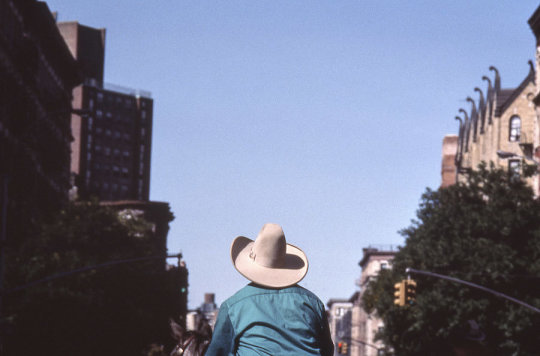
Trent’s images capture how much has changed for black cowboys, who now dwell not only on the Western Front but on the city streets of New York and in rodeos held in state prisons. Yet certain values of cowboy culture remain intact. For Morse, it’s the importance of patience, kindness and tolerance.
Ron Tarver, “The Basketball Game,” 1993
Brad Trent, “Arthur ‘J.R.’ Fulmore, from ‘The Federation of Black Cowboys’” series for The Village Voice, 2016
Ron Tarver, “A Ride by North Philly Rows,” 1993
Brad Trent, “‘Mama’ Kesha Morse from ‘The Federation of Black Cowboys’” series for The Village Voice, 2016
Ron Tarver, “Concrete Canyon,” Harlem, 1993
So much more needs to be said on this topic.
RDR2 kinda subtly made this point, that Blazing Saddles was doing a 70s riff off the Western-movie-as-midcentury-(White-)national-myth, the actual unsettled western frontier was where a lone black man as a pillar of a mixed-race society would be least remarkable
Okay so most European states or postcolonial states derived from their empires trace back to the punctuated shift from lords/church feudalism to national welfare state – the rise of parliaments, then language and nationality standardization, then coopted nationalism post-French Revolution/1848, then broader universal polities post World Wars
America didn’t have that trajectory. It broke free from any particular church and nobility with its Revolution at the dawn of the liberal era, but didn’t replace it with 19th century nationalism but rather a liberal system that allowed lots of local elites and dynamics.
As it expanded in the 19th century it built a syncretic “white” nation but also a “black” one of imported slaves-later-serfs and excluded populations of “Native Americans” and “white ethnics” (incorporated into “white” by the 1960s, also “Asians” out west)
The state consolidated power in the Civil and World Wars and their following occupations, but the “New Deal” of the 1930s was probably the closest attempt to replicate the European national-welfare state
Loyalists of the old system never accepted this, you could hear sponsoring President Franklin D. Roosevelt declaimed as tyrant like Trump is now into the 1990s, he really did break through a lot of norms and established systems (like taking 4 terms, not accepting Supreme Court rebuke, intervening in matters not traditionally considered eligible for government involvement, choking off rival media with the “Mayflower Compact” and paper rationing)
They constituted the “conservative” tendency and ever since, they built up with the aim of undoing the illegitimate New Deal and never allowing such a thing again. Starting in the 1970s they incorporated resistance to the “Civil Rights” movement which sought to raise the “black” nation to parity with the “white” one, the conservatives through the Republican Party started to earn electoral power in 1994 and are now at a maximum.
So, there has never been established a consensus that the US state owes anything to the “American people” as such, rather than an “American system” in which certain people might thrive, OR that the “black” nation is equally legitimate and American as the “white” one, and the legitimately elected government is dedicated to opposing both notions as an existential matter at ANY human or PR cost.
there’s two types of conspiracy theories in american culture:
blatant antisemitism
not actually a conspiracy theory the cia really admitted to doing this in declassified documents that are publicly available but the average american is so brainwashed by nationalist fervor that they refuse to believe it and call it a conspiracy even though, and i cannot stress this enough, the government literally admits to doing it
Sad to watch this article just gloss over the LBJ comparison since “take large amounts of corporate money, put it in a slush fund, then distribute it to candidates to create a network of people who are personally loyal to you” is literally how Lyndon Johnson became president of the United States
Anyone else remember the “young Elvis/old Elvis” thing from the 90s, when the US Post Office was going to put out an Elvis stamp because boomers were starting 2 run the world
But they had 2 designs, like 50s heartthrob with a mic and 70s star in the white jacket, and they had people vote?
the reading i’m doing for my thesis involves the deconfessionalisation (that sure is a word in english) of the quebec school system and it just reminded me that uh, until actually quite recently high schools had pastorale, which is basically a youth pastor integrated into public schools and the education system, with government funding and usually its own dedicated room and (optional) school activities.which is kinda uh, fucked up. not necessarily in its content (which in recent times i’m pretty sure was mostly harmless; a youth pastor with not that much emphasis on pastor) but in principle. do American schools have like, a youth pastor on staff? I don’t think so but uh, ours did. Because it was optional and my parents kept me pretty isolated from anything religious, I mostly just have the vague knowledge of its existence (and the cultural stereotype of the pastorale teacher being the “hey there, fellow kids” sort of person), but it’s the kind of thing where in the midst of secularism being a big topic here (largely because of secularism being instrumentalised by anti-immigrant people) we kinda forget about
this existed I believe until the early 2000s when the second wave of deconfessionalisation was actually fully carried out. it was around when i was a kid but my subconscious kinda retconned it into nonexistence/the distant past. quebec was already the least religious place in north america by the mid-80s so it’s a bit jarring, as an adult with a better knowledge of how attitudes to religion differ in the world, to remember that that was a thing.
To answer your question: no, American public schools definitely do not have a pastor on staff. That would be considered highly inappropriate. The US probably takes secular education more seriously than any other country, in terms of how stringent schools are about not funding or endorsing any particular religion.
American schools often have a “counselor” that can be an equivalent secular-pastoral role, though depending on the school their focus might range from social work to therapeutic care to college admissions and post-graduation employment.
There used to be some more state religion elements in American schooling – schools once led prayer and read Bible readings daily, though that was challenged and ultimately ended with a 1962 Supreme Court ruling. This was actually pretty significant, “school prayer” was really a dead issue but at least trotted out as a battle flag into the early 90s, taken as a condensed symbol of the secularization of America (though pressure against the practice really kicked off with Catholics bothered by its specifically Protestant character).
The question of how public schools celebrate Christmas, where Christian and American national mythology is intertwined, has also been an issue over time, and I remembered prayer or Christian invocations at the ritual openings of school events (incl. sports) as an issue in the 1990s.
Oh one thing to think about: Los Angeles - the last place we had a religious revival from - has traditionally been significantly, substantially, literally one of the more pro-Nazi parts of America.
Has to do mostly with migration patterns, boomed with a lot of Scando-German midwesterners (and after WWI a lot of German-friendly ex-Ottoman immigrants).
Like, all this was masked by the way its WWII effort was locally understood as mainly against Japan (which helped align California’s substantial non-Japanese Asian population, identifying with lands colonized by the Japanese Empire)
Like there were actual Nazi cults in the hills, the whole surfer hippie thing was a recapitulation of German wandervogel with actual Nazi mystic elements, the Falling Down surplus store with the secret Nazi room (and kinda the Gimp in Pulp Fiction) and American History X reflected real LA things.
Police forces usually lag their local populations (an interesting exception is how the Boston Irish used it to push out the older WASPs) and like, “the LAPD is a bunch of Nazis”, no that was real (so is “they since retired and helped settle Northern Idaho as an armed white ethnostate”)
That means The Rocketeer, where the hero fights the Nazis from 1938 LA, is kind of a nyah-nyah from the 80s (punk, anti-Reagan) antifascist tendencies
Oh also it should be noted that with an oil-boom and buildout-boom economy and plenty of open space to expand into pre-WWII LA was known as a particularly middle-class city, a precursor to the postwar “mass middle class” California and American Dreams. And that it was also particularly nonunion, with the newspaper Chandler dynasty rallying a coalition of businessmen to keep them out.
Like, beyond the favorable ethnic mix it was a petit bourgeois society of union suppression, no surprise there’d be resonance there.
There were countertendencies. A West Coast port, there were Asian and maritime communities - Filipino sailors, Malay dockworkers, a Chinatown since way back. There’ve been Mexicans in LA since LA was in Mexico, and the wartime buildout of airplane and other materiel factories boomed its black population. Ideologically, the Chandlers were fighting someone on the labor side, and they sometimes fought back with dynamite.
The wave of Mexican immigration that seriously browned the city is popularly dated as late as the 1980 Olympics. Before that, the Southern California that gave us Reagan and received Nixon was key to why until the party’s collapse in the mid-90s, California was once a bulwark of Republican conservatism.
listen, every director of anything that uses licensed music since 2014
I know you are aggressively shoving your licensed music in my fucking face because you saw Guardians of the Galaxy do it
but in Guardians of the Galaxy, that licensed soundtrack existed in-universe in the form of a mixtape that had great emotional significance to the main character and whose existence was frequently reinforced. the music was woven into what the movie was about.
you didn’t do all that, you’re just dropping everything twice a scene so you can stuff two licensed music tracks in the viewer’s face and it’s obnoxious, stop doing that
Is this an actual critique?
This reminds me of the early 90s when labels consolidated to majors and people complained the 80s music-video/Miami Vice/21 Jump Street aesthetic had taken over and in the new pop-scored aesthetic scenes were servicing the music rather than vice versa with orchestral scores (which had been a holdover from live theater) and movies were servicing the soundtrack
this tied in with anti-selling out and anti-brand extension themes, like you would not believe how much shit movie novelizations (which before widespread videotapes were the way to experience big movies once they were out of theaters; also often included substantial shit that the novelizer made up and added to canon himself) came in for
if trump created the dirtbag socialist and obama fostered the nonpartisan "markets" rationalist mindset, what was the defining counterculture political movement of bush the younger? just being anti-war? the blogosphere? how bout Clinton? battle for seattle anti-globalization? and before *that*, what did it mean to have a political movement outside the big parties and gaining traction near the margins, alt-weekly social justice? you're older than the Pangea, how does the wheel turn?
Well for Clinton there were altermondialists and environmentalists and animal rights types, and culture jammers and guys who marched with stilts and papier-mâché puppet heads cause of the sideshow revival and technoshamans and post-structuralist professors and the X-Files space where “militia” met Coast to Coast matured 70s Sasquatch-n-aliens supernaturalism and meanwhile you know, Legalize It and be cool with the gays and the internet and libertarians.
In retrospect so much of was either politically content-free culture branding, Che t-shirt and RATM listeners that just took the message as standard anti-authoritarian rock; or so full of earnest enthusiasm so pointlessly misapplied to such peripheral issues it was laughable.
I think the key was with the boomers’ maturation, the understanding finally became hegemonic that the sixties counterculture were the good guys and so the following generations tried to reenact it
Dubya, the antiwar stuff was at least honest replay of the 60s peace movement not mattering. Past that I guess street art had links back to culture jammers. Vice and American Apparel urban scumbag? I suppose the epic-bacon-fucking-love-science thing, bad enough before it spiraled into Funko soy. Really a lot of “the counterculture” had just been folded into the culture by then. Internet culture arose from there, there was the expectation that’s what would be built on going forward, part of why Bush rubbed so many raw is he was an anachronism who didn’t seem to acknowledge this.
So inspired by recent popular epistemology on twitter, I wondered, how would I establish that you shouldn’t inject bleach while entirely staying in my lane, i.e. only speaking where I had previously established authority, rather than claiming it with my speech
And I flatter myself that I have some reputation in American cultural history, so I figured I would talk about the 19th century antiseptic revolution and the 20th century antibiotic revolution in medicine, how they were both necessary for the mid-20th Golden Age of Surgery and modern medicine generally but if internal disinfection with antiseptics worked antibiotics wouldn’t have been so important
(I would have digressed about Listerine and the invention of “halitosis” and the whole institution of the vaginal douche, about the dawn of advertising as a meaning-making force and OTC pharmaceuticals as Industrial Age folk medicine and about the liminal and shifting statuses of the mouth and vagina – between interior and exterior, purpose and pleasure, for self or for others. Then I’d be tempted to talk about the “water cure” fad for enemas, but then that ties into the contemporary discovery of nutrition and digestion and it’s a lot.)