I would like to know about low bypass turbo fans, if you would like to talk about low bypass turbo
I require only the barest prompting to talk about engine designs and their tradeoffs.
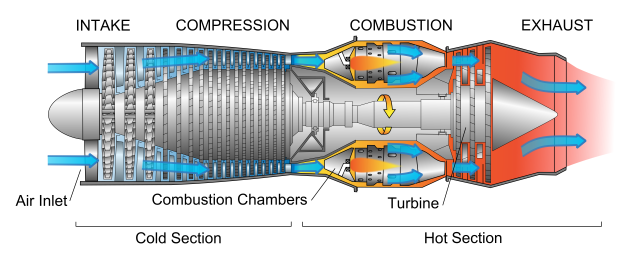
In the beginning was the turbojet engine, and it was good, but only if you were willing to fly extremely high and incredibly fast. With appropriate intake geometry to break the shockwave ahead of the turbines, a turbojet can go well into supersonic territory.
Turbojets really want to be way up at the supersonic end of travel, because they’re pure jet engines. This means that 100% of their thrust is derived from a stream of extremely fast moving exhaust gas coming out the back. The hot-section turbines tap off a tiny amount of energy to run the compressors up front, but otherwise this is basically just a rocket: expanding hot gas out the back, go forward really fast.
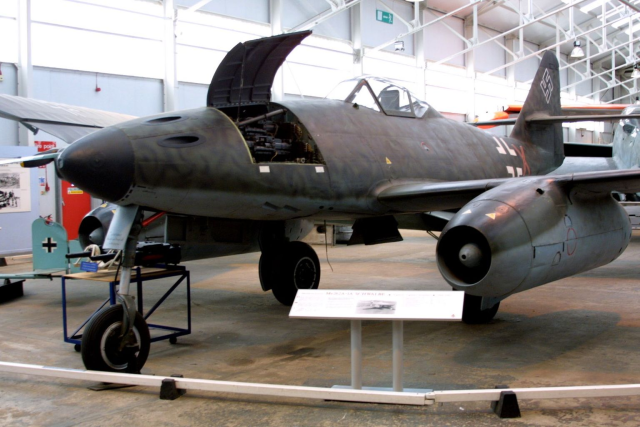
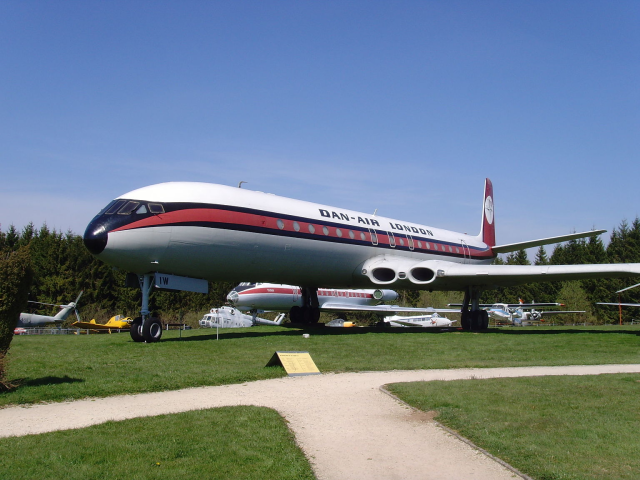
Messerschmitt Me262 and deHavilland Comet, both turbojet planes. Note the tiny intakes and sleek forms.
The problem with pure turbojets is that they’re kind of garbage at anything other than those extremely high speeds. Just, they burn a ton of fuel and they don’t extract energy from that fuel very well. This is all good and well if you’re running a military, where fuel cost is only slightly important, but if you’re trying to run a commercial airline, fuel costs add up fast. Plus, carrying enough fuel for long distance flights becomes a concern.
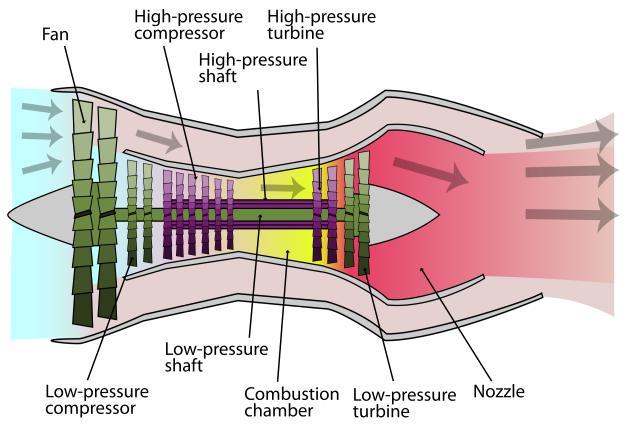
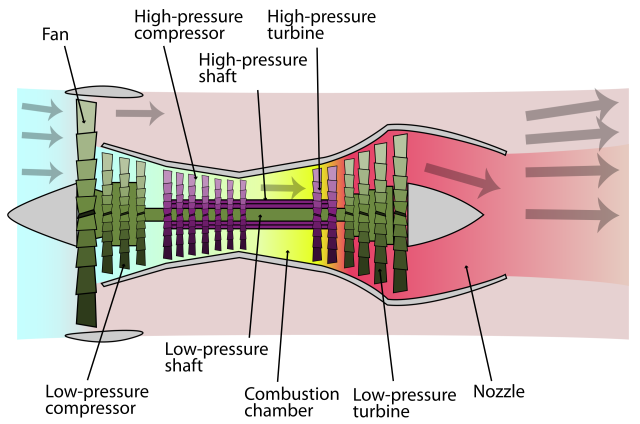
Hence, you may invent the low-bypass turbine engine. In this mode, you tap off a little more energy from the hot exhaust, which you use to drive an oversized intake fan and push on the air like a more normal prop plane. This lowers the exhaust velocity, which means you can’t possibly go as fast as the hot jet exhaust of a pure turbojet, but produces the same lower thrust for much less fuel at lower speeds.
In this design, the front fans also duct air right around the turbine, driven by those turbines in the exhaust. This more efficiently extracts energy from the hot exhaust, but you get an overall slower exhasut stream due to a combination of effects, namely that you stole energy from the exhaust, and the mixing of the bypass air and the exhaust.
What this design is pretty good at is reasonably fast craft that are far more fuel efficient. You’re usually looking at something like 1-3× as much air going around the engine as through it in these low-bypass designs, so your exhaust is still pretty fast. Indeed, most modern military jets use these, and when they want to go supersonic they dump fuel into the exhaust to get a kick of speed.
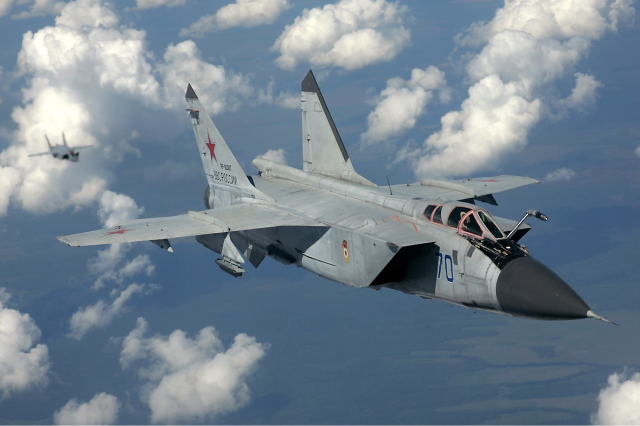
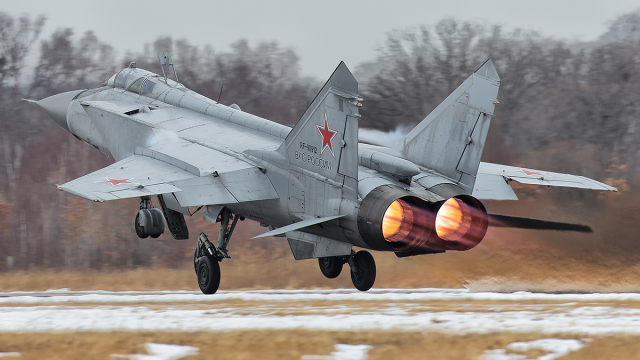
Front and Back of the MiG 31, both because oh lawd he comin and how it shows the much larger intakes required to feed turbofans.
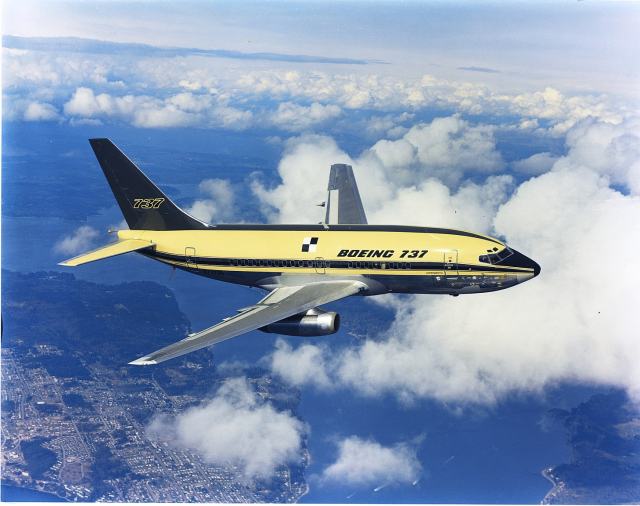
However really most instructive for our comparison here is the venerable Boeing 737, a plane that is probably older than almost everyone reading this, having been first used over 50 years ago, and it has been refreshed to use modern high-bypass engines later in life. The first 737’s were all low-bypass turbofan.
Low-bypass turbofans on the older Boeing 737. Long, thin, very cigar-shaped.
Now, for a while low-bypass turbofan was what was in vogue for commercial airlines. Barring a few special cases like the Comet’s turbojets, it hit the right balance of being cheap to make, not too fuel inefficient, and easy to build.
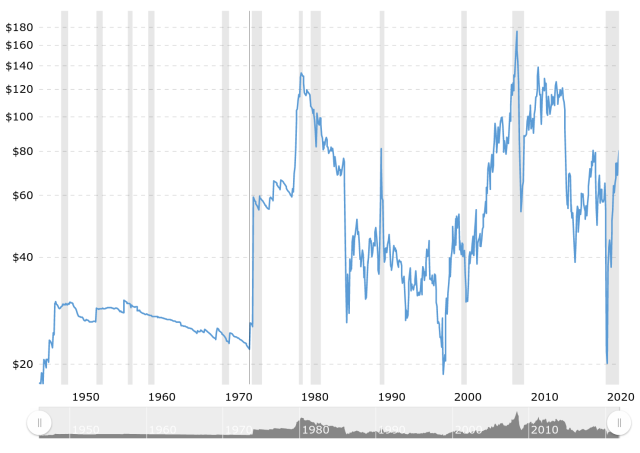
Now, we briefly detour to history: the 1973 oil crisis, when the Organization of Arab Petroleum Exporting Countries (OAPEC) decided to embargo the US, UK, Canada and Japan for their support of Israel in the Yom Kippur War. I’m not going to go into the politics of the post-1973 oil economy right now, but let’s say this had a notable impact on the economy and the world of engineering.
Oil has never held a price as low as it was in 1973 for more than a scant few moments since. The price of oil climbed overnight and kept going. Suddenly, fuel cost became a very important factor in transport technologies. If you ever wonder why so many shitty cars came out of the USA in the 70’s, this is why: a bunch of manufacturers who were used to cheap oil suddenly had to move from big block, seven liter V8’s to compact cars with almost zero warning.
Prior to this, it was profitable to run planes pretty fast and do lots of flights. After this, running that fast ate the profit of frequent flights in fuel costs, so planes went slower, and fleet purchasers put out requests for more efficient planes. As a result, the previously quite limited High Bypass Turbofan became the name of the game.
In this design, far more air is ducted around the engine, with only a small amount going to feed the turbine. Anywhere from 5 to 20× as much air goes around as through. This dramatically reduces peak thrust, but also fuel efficiency goes way up. Historically high bypass engines were only found in limited use for a handful of heavy-lift cargo craft. Now, all major jet airliners ran these, and it’s why modern jets have these enormous engine pods. Here’s a modern 737
A 737-800. Note the big chungus engines.
If you, like me, grew up on a diet of aeroplane books from the 80’s, this plane looks weird a hell, those engines are stubby and massive, because they’re mostly just empty space. If you’re not weird about it, this is just a jet. The modern high-bypass engine is tricky because making ultra-light but huge engines that don’t just melt requires some advanced engineering witchcraft. Stuff like perfectly cast turbine blades that are perfect single metal crystals.
With these gains in efficiency, modern airlines can just barely break even, because as anyone knows, the fastest way to become a millionaire is to be a billionaire and buy an airline.
This is a really great explanation of the three major types of jet engines, but I think there are a few things that need further clarification.
Indeed, most modern military jets use these, and when they want to go supersonic they dump fuel into the exhaust to get a kick of speed.
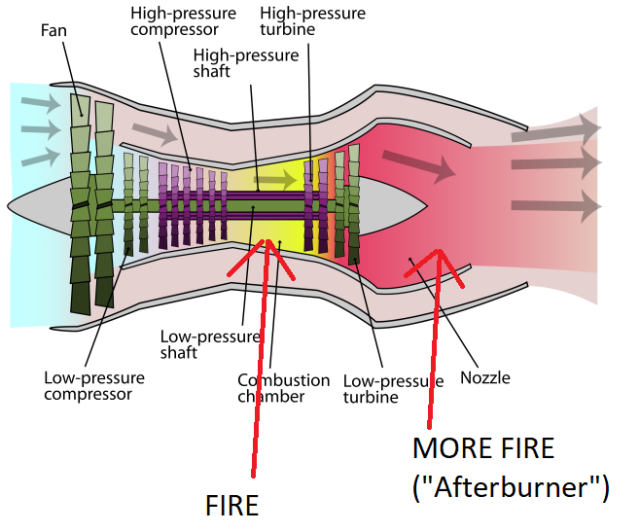
Now, what this fails to mention is that it’s not just dumping more fuel into the exhaust. This is the section of the engine that most people would know as the “afterburner”, but is technically called the augmenter. It does in fact have its own set of fuel nozzles to supply extra fuel, but it also has its own set of ignitors, which means you have your regular combustion chamber that is the work horse of the engine, but then you have a second augmenter combustion chamber.
So there are now two parts of the engine that are FIRE and MORE FIRE, and when you want your aircraft to go extra fast, you add MORE FIRE. The augmenter is also where they stick the little paraffin wax dispenser in stunt planes like the Thunderbirds or the Blue Angels, to make the white smoke trail.
The other thing to know about the newest high bypass jet engines on the market, like GE’s LEAP engine and P&W’s Geared Turbofans is that a lot of the parts that were traditionally made of metal are now being made of light weight composite materials. Reducing the weight of the engine and therefore the overall aircraft means you need to burn less fuel to maintain the same speed, and an airline can then increase their cargo capacity to make more money per flight without necessarily raising ticket price.
In the high bypass engines, the hot air from the combustion chamber makes the low-pressure turbine spin. This is connected to the low-pressure shaft, which is connected to the low-pressure compressor and the fan. In a traditional engine design, this means that the front part of the engine and the back part of the engine are spinning at the same speed, which means that the fan is not pulling in the most optimal amount of air.
The geared turbofans uses a planetary gear system to allow the low-pressure turbine to spin at its optimal speed while powering the shaft and compressor at their optimal speeds. Not only does this make the engine more fuel efficient, but it also makes it quieter. This is one of the major draws of the Airbus A320neo and the new Airbus A220 and Embraer E-190/195 E2. Many airports have noise restrictions which limits when aircraft can land and takeoff, and the power they’re able to do that at. With an inherently quieter engine, airlines can better optimize their routes.
Another major advantage of the high-bypass turbines that hasn’t been mentioned is that it also makes it easier to provide cool, pressurized air to the aircraft cabin. Hot air gets taken from the engine and routed into the aircraft, but you want to cool that air from a couple hundred degrees F to something closer to room temperature. Heat exchangers can be heavy and bulky and require some sort of cooling fluid for the heat to transfer into. When you have lots of air moving quickly around the engine, that air can be used to cool your environmental air. It can also cool your oil system. So where you might lose some oomph in raw thrust, you gain back efficiency in other ways.
Jet engines are super cool. Newer generation jet engines are even cooler. But I may be a tiny bit biased.
Those geared turbofans are incredible, packing a reliable planetary gearbox into a turbofan is no mean feat. I remember hearing about progress on those like five years ago, and they had been in the works for over 20 years at that point, it’s taken a while for material science to catch up to the concept!