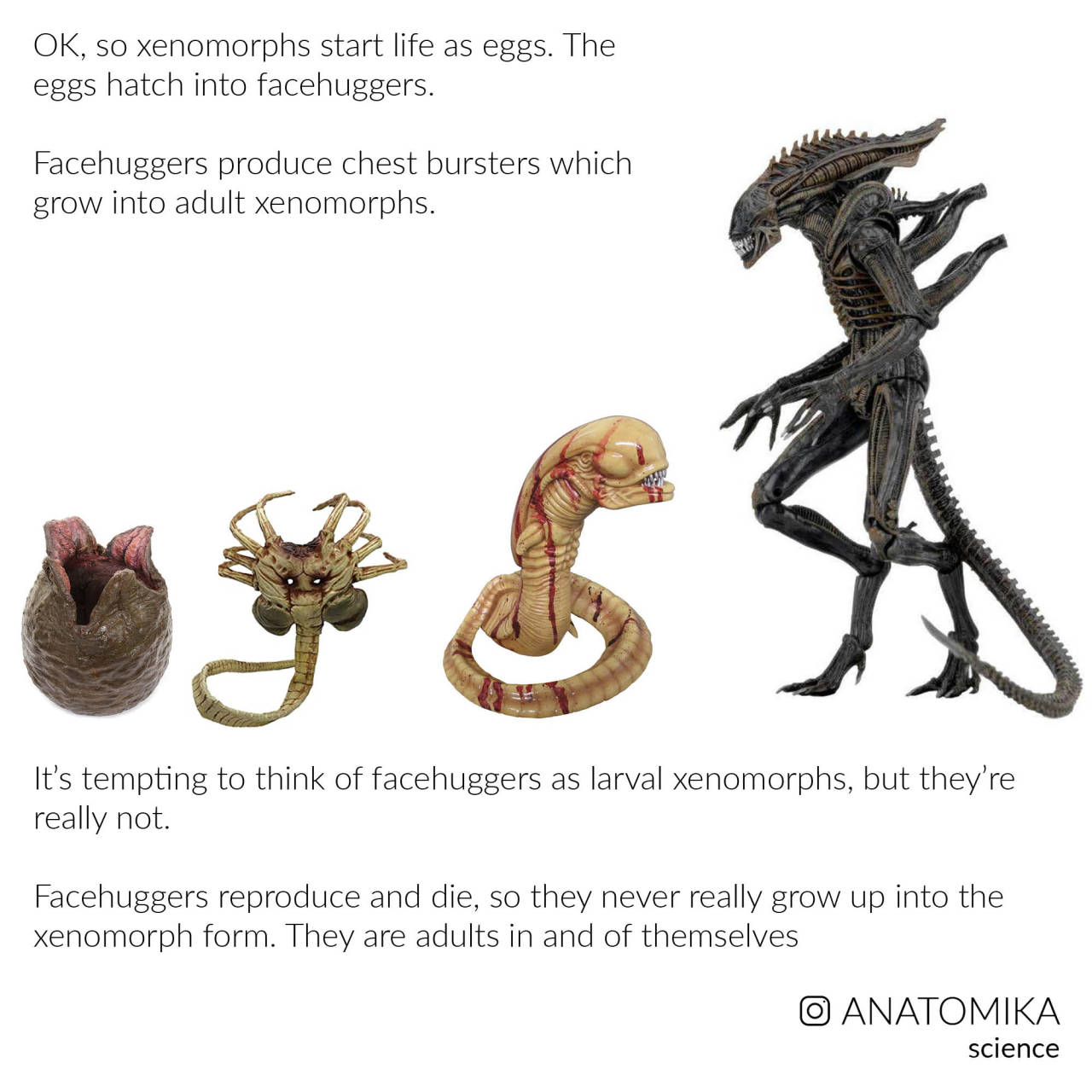
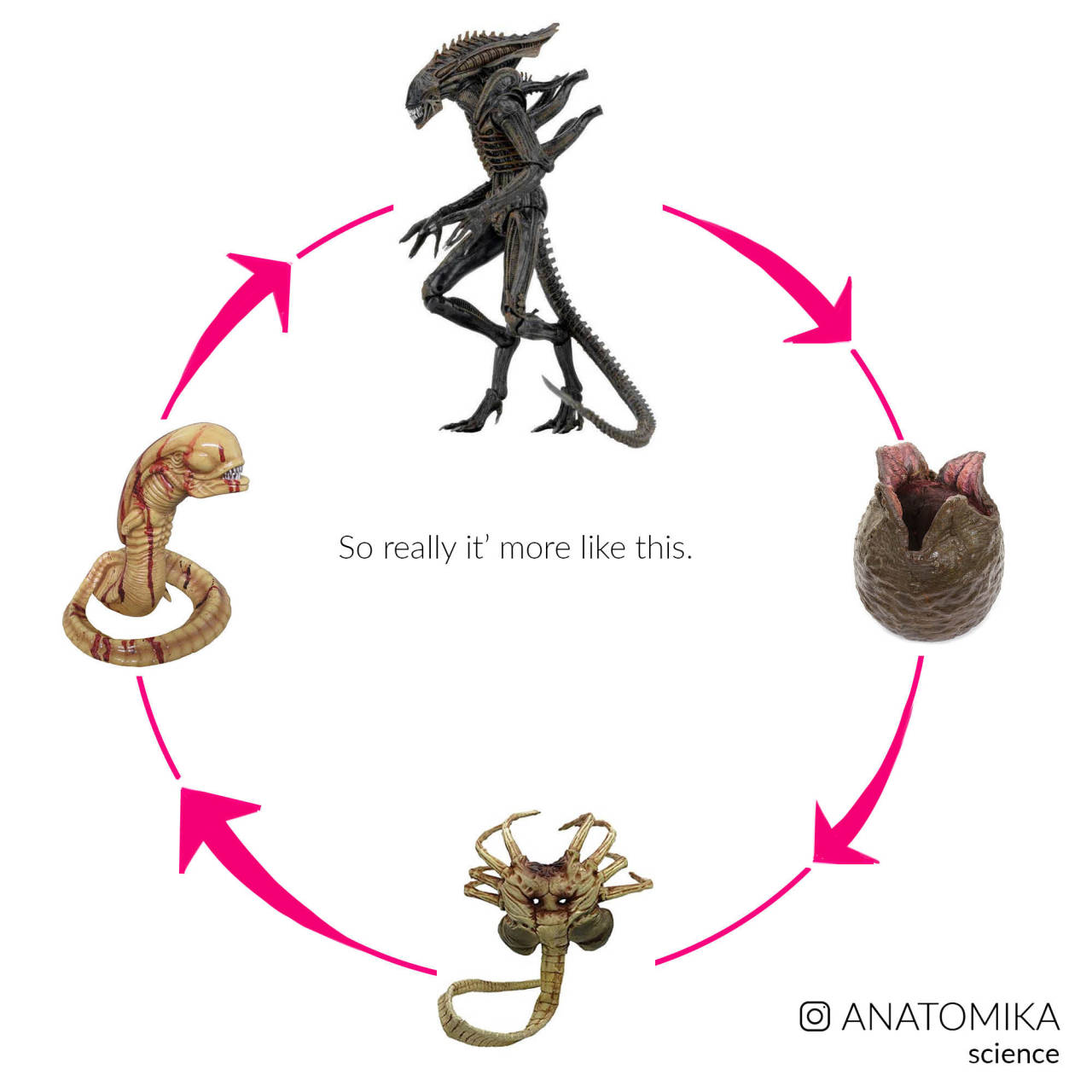
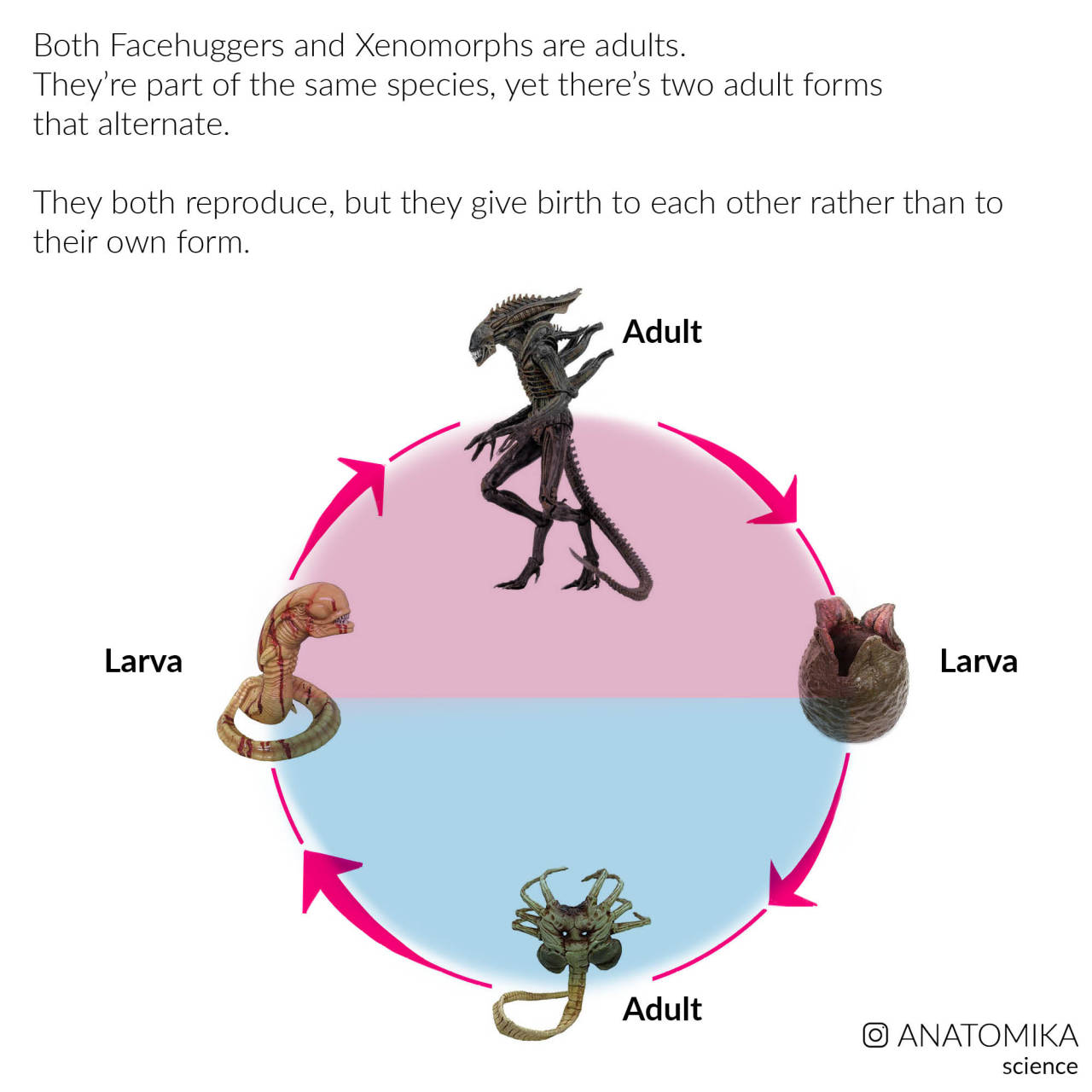
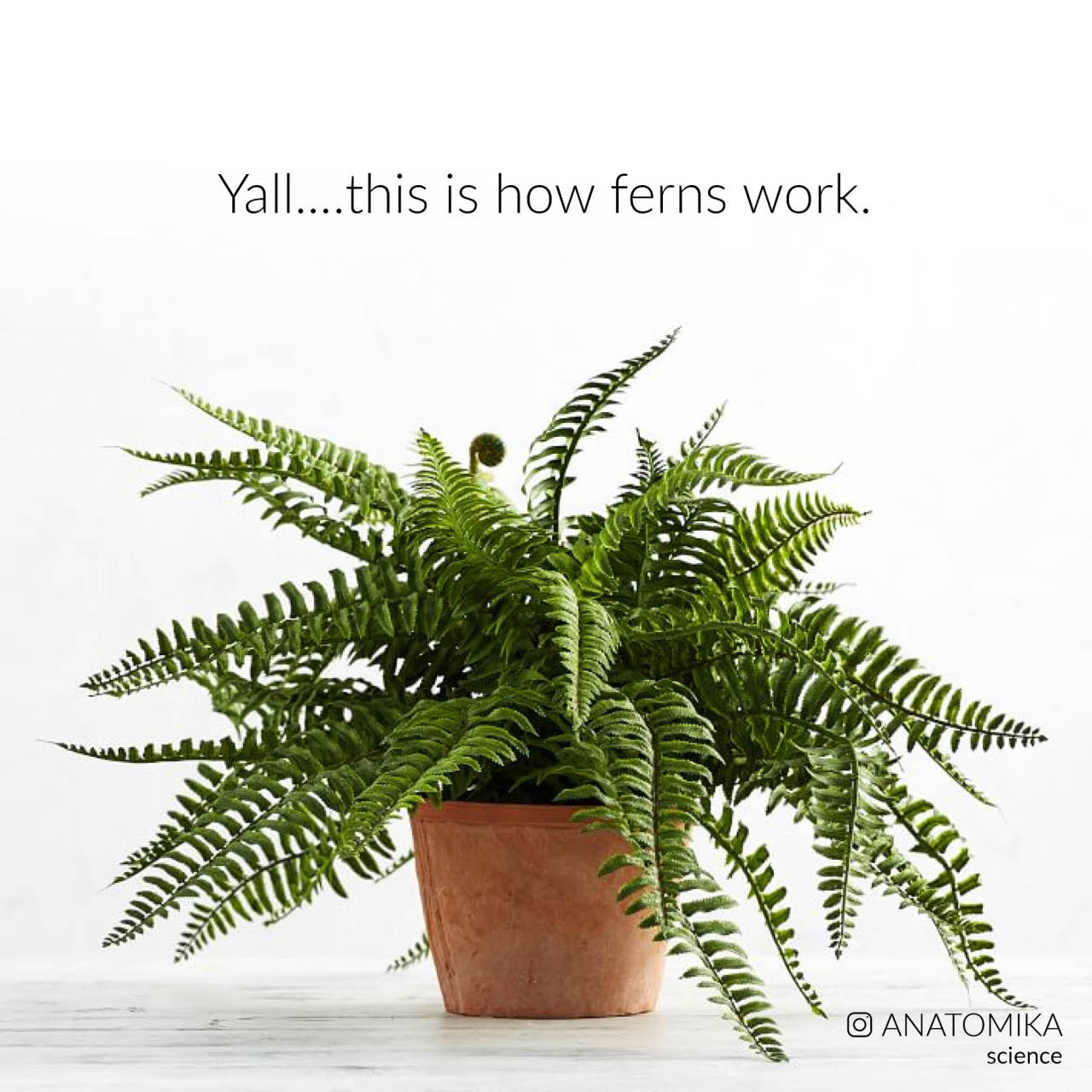
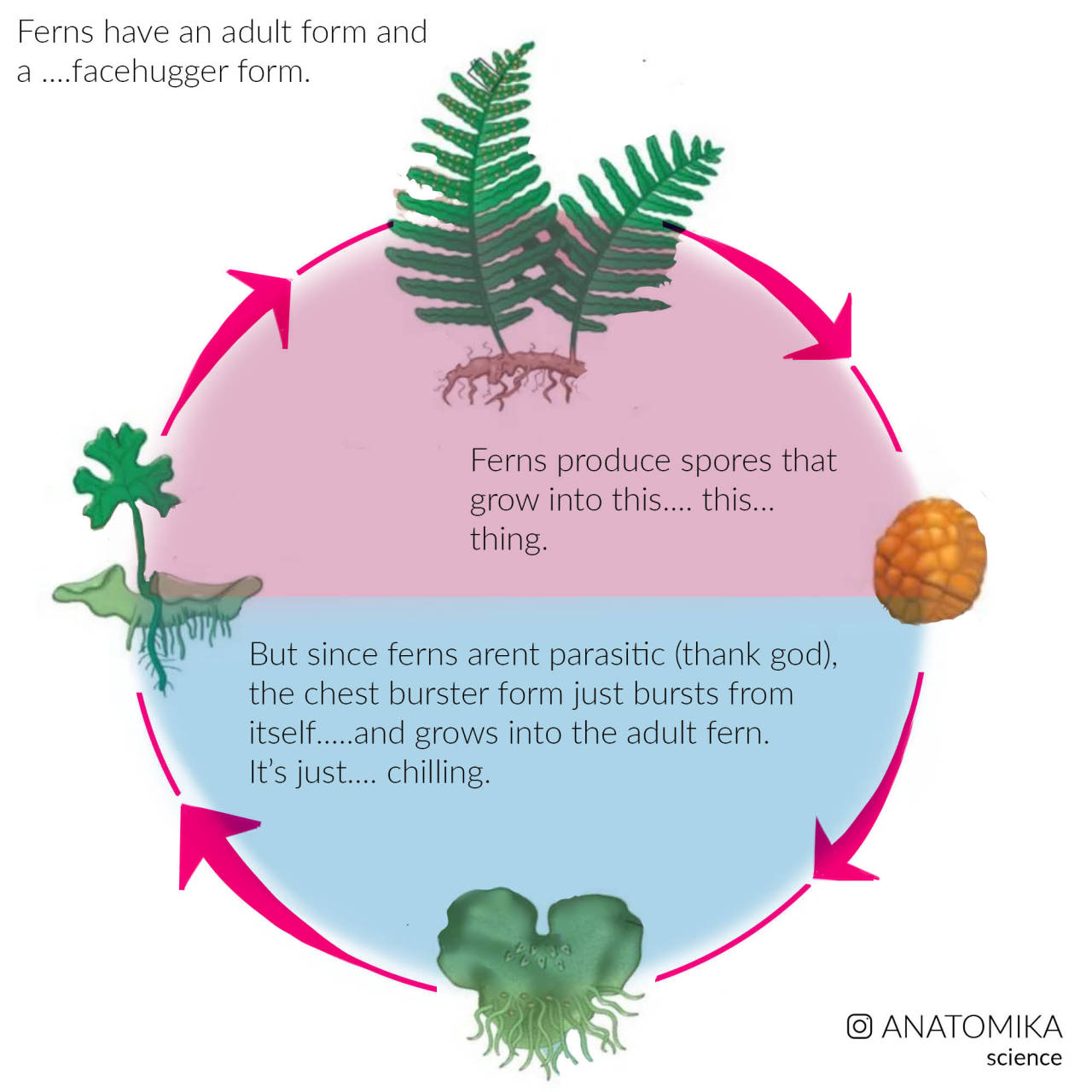
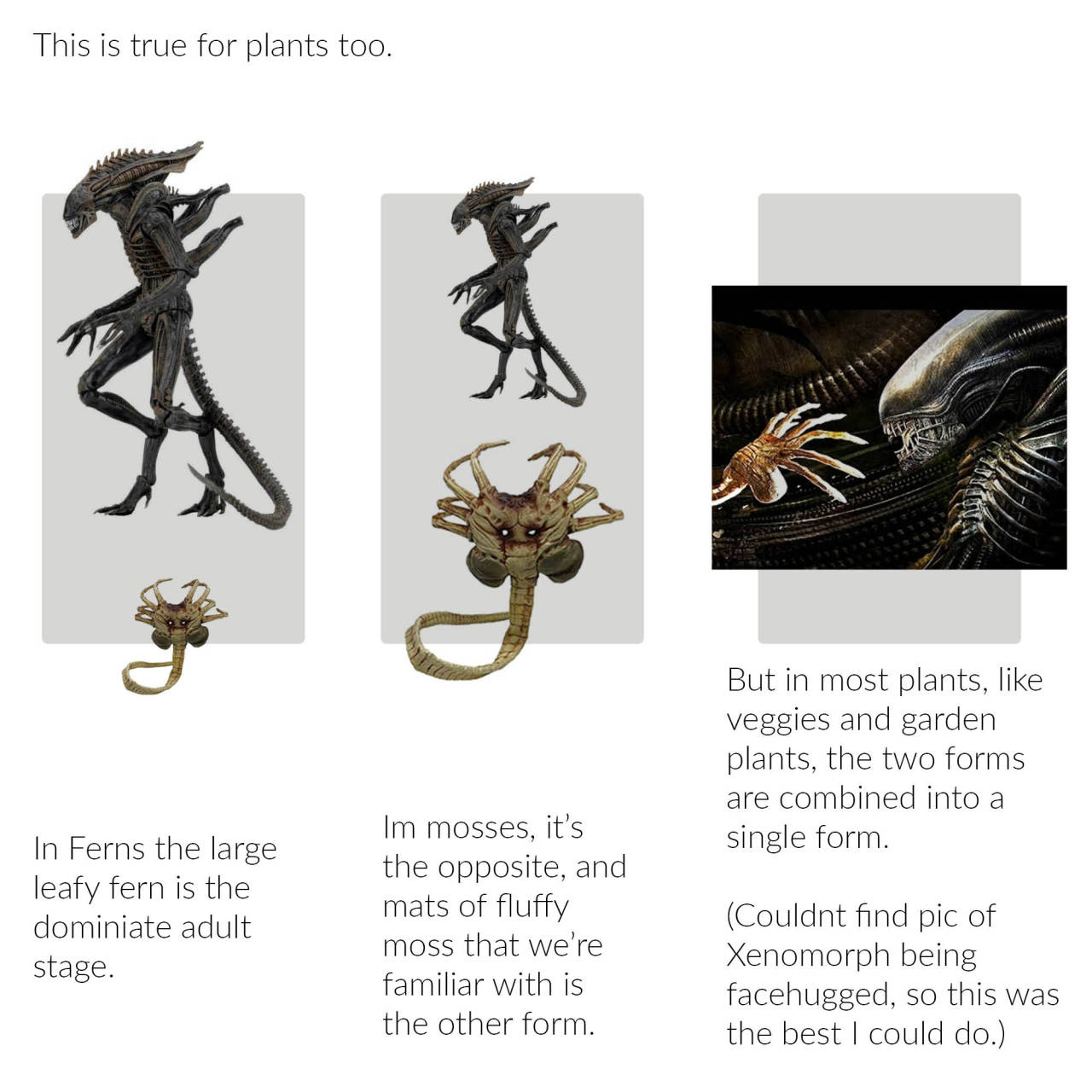
“xenomorphs are ferns” is a wild take, but one I could get behind.
That’s some good content right there.
In real life, parasitic animals do tend to have life cycles that are pretty complex!
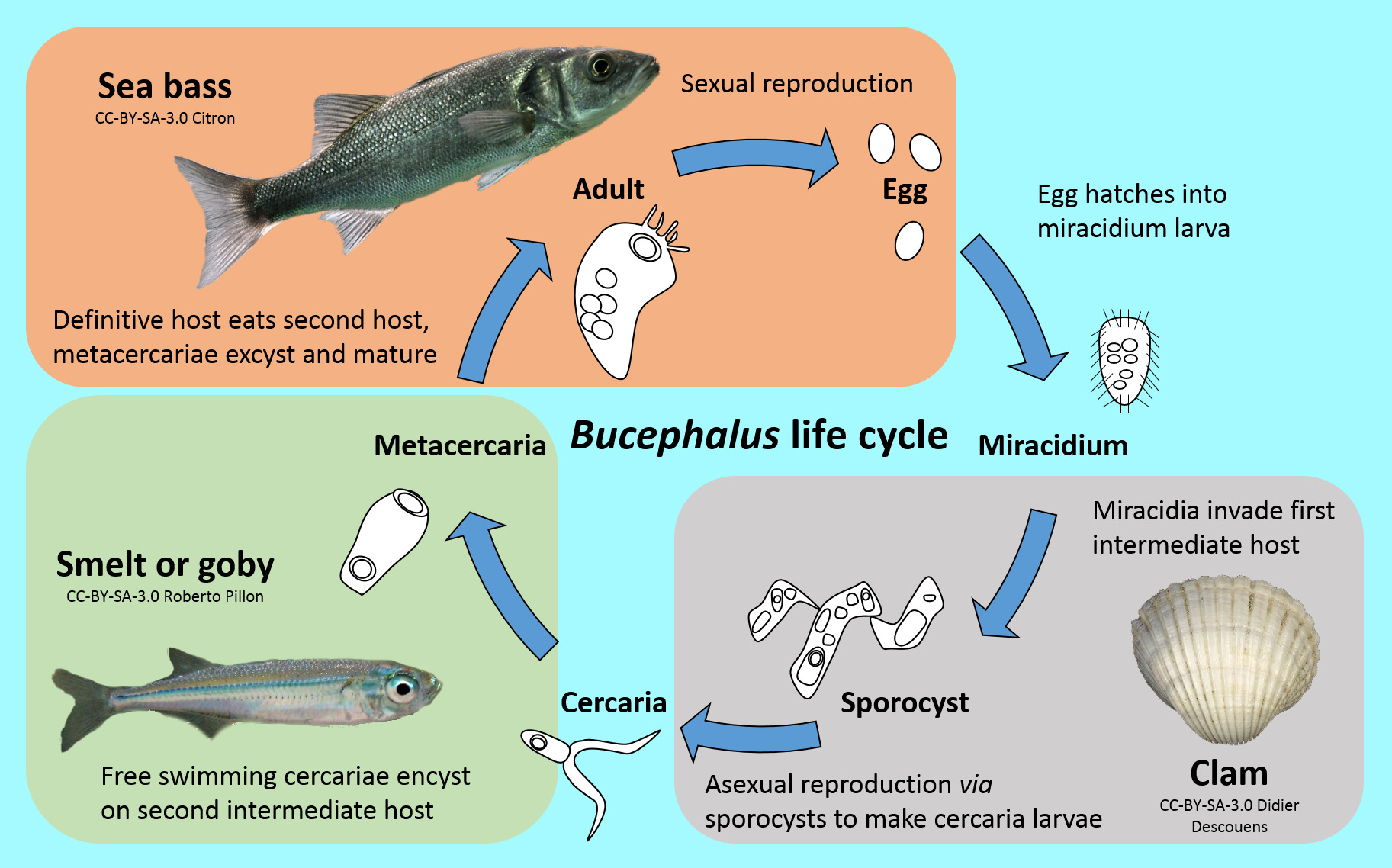
Here’s the life cycle of the Bucephalus trematodes, a type of parasitic flatworm. You can see that the sporocysts do not mature directly, but reproduce asexually to yield the cercaria that will ultimately become adults. This gives us two alternating generations.
[CC-BY-SA-3.0 Steve Cook, Didier Descouends, Citron, Roberto Pillon]
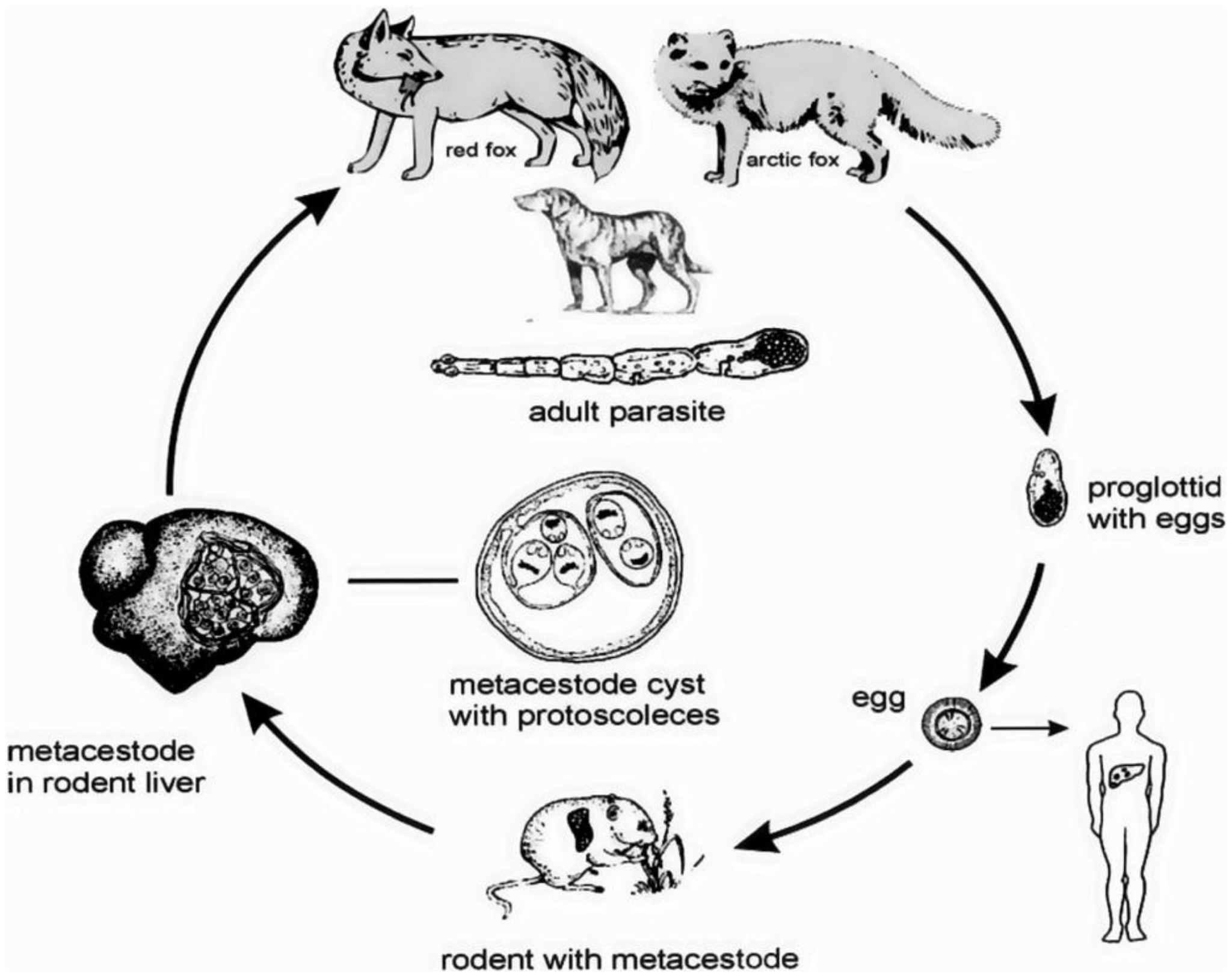
Tapeworm of the Echinococcus genus do a twofer for this. First, the adult breaks off into separate, egg-filled worms called proglottids, which crawl a distance outside the host as they lay a trail of eggs. Once in the primary host (in this species, a rodent), the eggs hatch and yield metacestodes, which are like big balloons full of heads. Once the primary host is eaten by the secondary host (a fox, in this case), the heads become adult worms and repeat the cycle. This makes not two, but three alternating generations!
[CC-BY-2.5 Torgerson PR, Keller K, Magnotta M, Ragland N]
Then there’s Symbion pandora, a bizarre animal that lives on shrimp and is the only living member of its entire phylum (arthropods and mollusks being phyla, to compare).
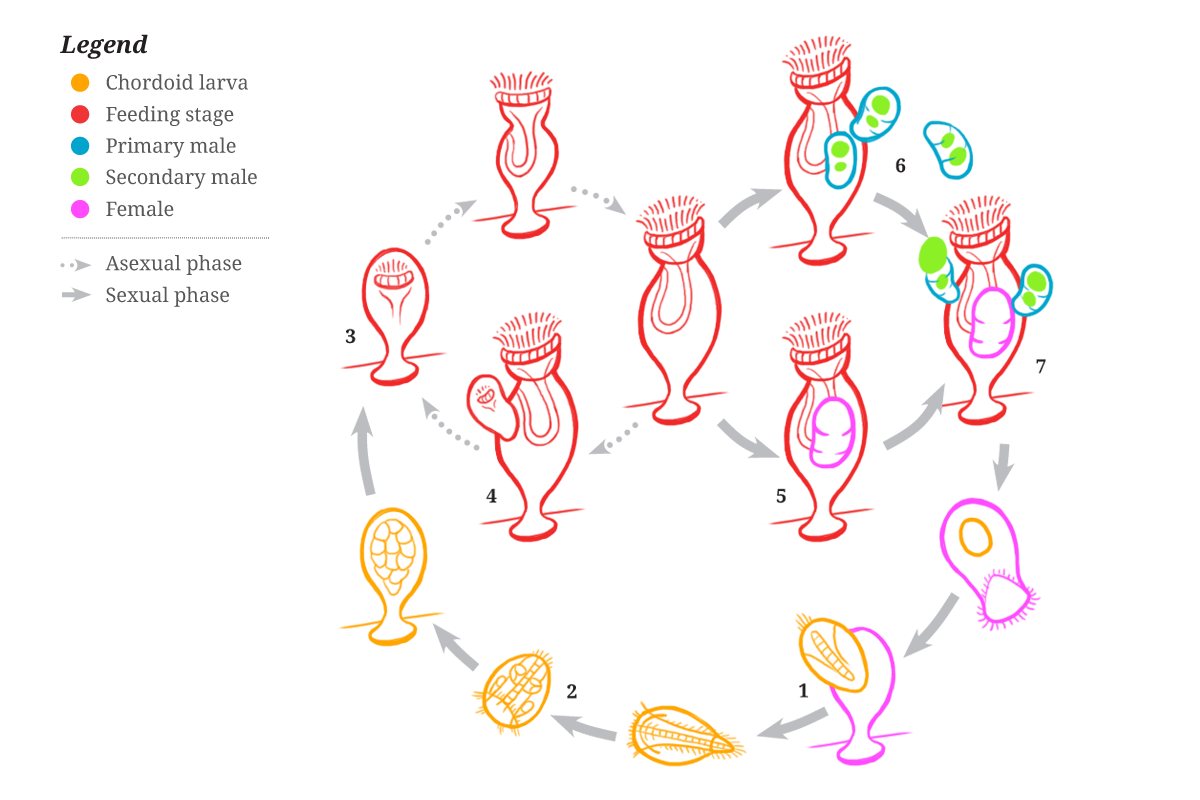
S. pandora’s life cycle starts out with a mature female dying and giving birth to a single chordoidlarva. The larva then swims off and settles on a lobster’s face, becoming a feeder. For a while, the feeder reproduces asexually, just producing more feeders. After a point, the feeder will start producing two sexual kinds of S. pandora: mature females, and primary males.
The primary male does not mate directly. Instead, it has 1-3 dwarf males inside it. The primary male swims until it finds a feeder with a mature female inside it. Then, the primary male dies, and the dwarf males swim out and mate with the female while she’s still inside the feeder.
At last, the primary female emerges, and the cycle continues. This means a life cycle of two alternating generations for females, and three for males, for a grand total of four possible stages (feeder, female, primary male, dwarf male) overall! (Unless you count females as equivalent to either primary males or dwarf males, in which case it’s only three.)
I also immediately thought of Symbion pandora but I’d also like to point out that the xenomorph “egg” is visibly made of living tissue, so it would also qualify as its own organism; a sessile stage that gestates the facehugger!
The “Xenomorph = ferns” thing has been kicking around in my head since 8th grade Biology