regarding reconstructions of painted classical sculpture (specifically inspired by this post but tangential enough to its main point that i didn’t want to add it in a reblog):
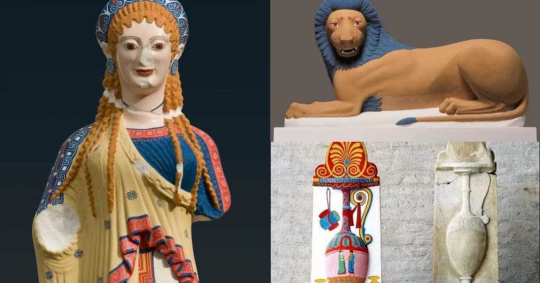
there are exhibits of sculptures painted “the way we can prove they were painted in antiquity”, and they are bad. they present sculptures like this:
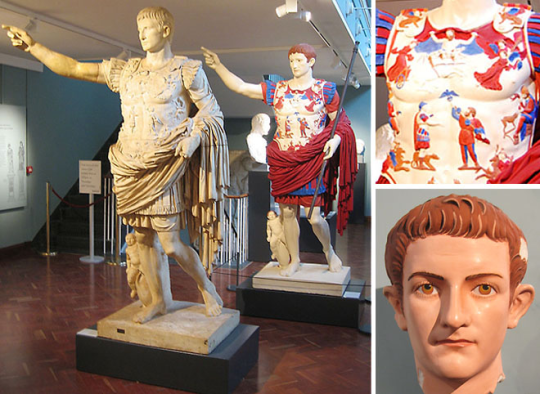
or the technicolor augustus of the prima porta:
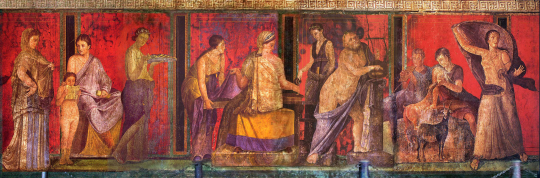
and we KNOW romans understood depth and shading!
if these reconstructions were in an archaeological journal, and simply presented in order to present what base colors we can scientifically determine, that would be one thing. but they are in public exhibits imputing to impart the actual aesthetic appearance of ancient sculpture, and for a number of reasons that’s doing a huge disservice both to the ancient world and to the viewing audience. and it’s INCREDIBLY easy to fix! even just presenting examples of roman frescoes (as above) could help audience members to superimpose the actual aesthetics onto a base-painted sculpture, but it’s insane not to take it the half step further –
like just BARE MINIMUM concept: have a miniature painted with the “base colors” that we can accurately reconstruct so people have a sense of where we got the science, and then have one or several statues ‘fully’ painted by artist-archaeologists (or just modern artists with archaeological guidance), using ancient techniques, to show what they might actually have looked like. there has to be a way to balance archaeological accuracy with, like, representing the actual classical world to the general public in a nuanced way. we aren’t talking about statue reconstructions in academic papers - we are talking about exhibits open to the public and the work needs to reflect that and, like, essentially never does.
i expanded this post on request and can’t easily retype my tags but i do want to put into this post that this does actually impact the world today; there has been work done on the way these sorts of reconstructions of the “actual” classical frame the “real” ancient world as barbaric & gaudy and in need of the “realer” inheritors of the classical world (northern/western europe) in order to make it civilized and aesthetically appropriate, which is the same mindset behind the british museum’s continued retention of the elgin marbles. and that makes these sorts of reconstructions a failure - which is a shame, because classical polychromy and the color & sensory experience of the ancient world can be a really powerful educational tool for bringing the past alive!