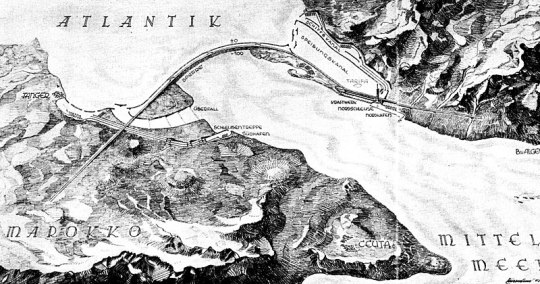
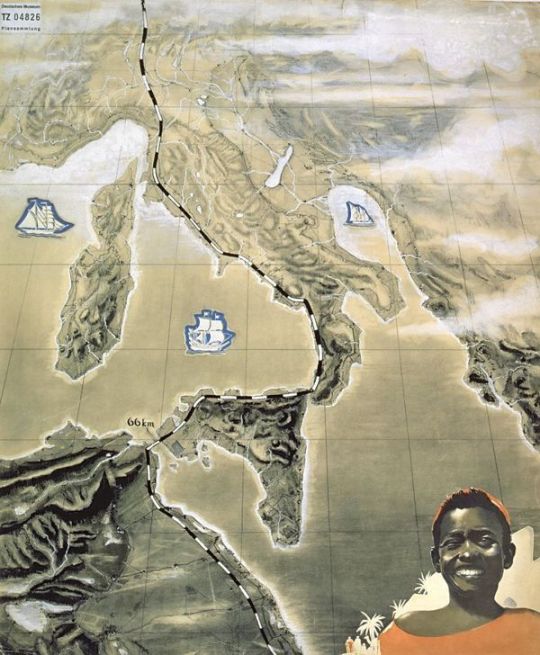
If you read any science fiction from the early 1900s, you get weird, veiled references over and over to the idea of merging Europe and Africa together into a single continent by manmade means, by draining and damming up the entire Mediterranean Sea, raising sea levels, and flooding the Sahara Desert to make it arable. The first person to come up with the idea of flooding the Sahara was a Scottish geologist, Donald Mackenzie, in 1877, but the best known and elaborate plan on how to do this was proposed in the 1920s by the German utopian architect Heinrich Sorgel during the Weimar Republic, who called the new continent “Atlantropa.”
And it isn’t as farfetched as it sounds, as the Mediterranean is an uncommonly shallow sea that can be dammed up at key points. It was a utopian, multi-nation Pan-European project that took for granted European colonial ownership of North Africa. The idea always seemed more feasible at moments of early pan-European sentiment, like the age of good feeling (however illusory) between the world wars, and further away during ugly European national conflicts like World War I.
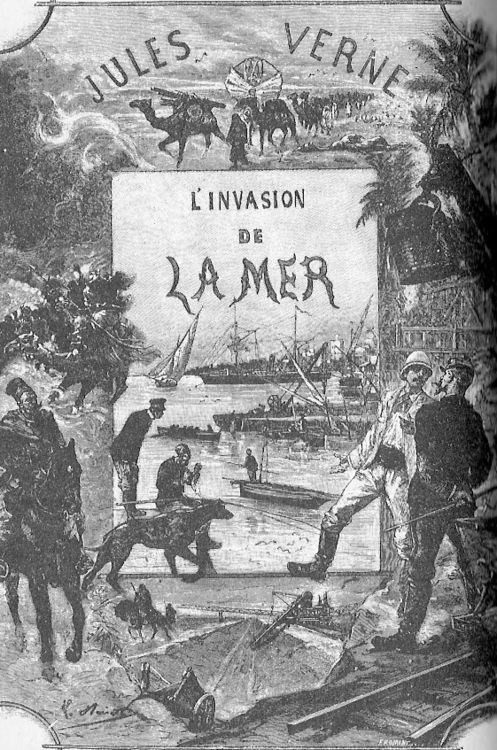
A lot of science fiction from the early 20th Century mentions some version of damming the Mediterranean and flooding the Sahara as an inevitable part of the future and progress. It was taken for granted as a part of what the future would be like, which is why references to it are often opaque to modern readers - they didn’t feel the need to explain it as it was common knowledge. A good example would be Jules Verne’s last novel, Invasion of the Sea, in 1905. The book was about Berber and Tuareg tribes displaced from their homes by “progress,” victims of the technological age, who go on the warpath against Europeans in irregular guerilla warfare. It is fascinating to read later Jules Verne if you’re only familiar with his early “gee-gosh-wow” boyish adventure yarns that thrilled at gadgets, because Verne, at the end of life in his later novels, was tremendously skeptical of technology, hated colonial exploitation of native people, did not view all progress as “good,” and was concerned with modernism’s dehumanizing effects.
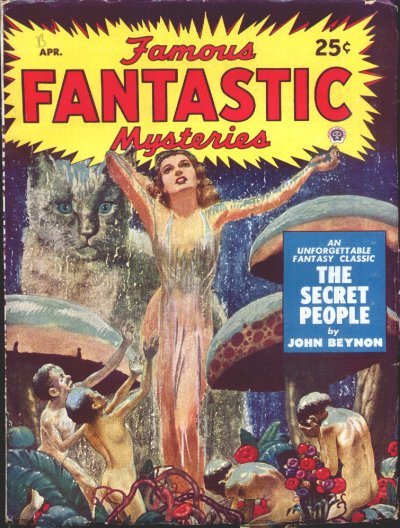
Another book to have frequent references to the Sahara Sea idea was the Secret People by John Wyndham (John Beynon), best known for Day of the Triffids. His book, the Secret People, is about how the damming of the Mediterranean reveals a race of European pygmies who live in caves, who survive on fungi and who capture surface people as slaves.
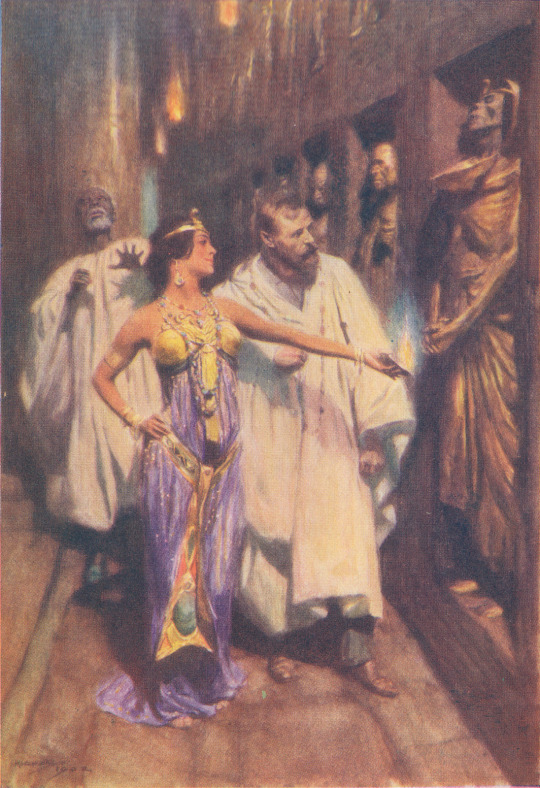
There’s even a great little reference to damming the Mediterranean in H. Rider Haggard’s The Yellow God from 1908, which is what prompted me to write this, because it assumed a common knowledge on his 1900s reader that a modern person wouldn’t have.
Amazingly, there are even some modern references to the Sahara Sea idea. If you ever got your mitts on the Star Trek: the Motion Picture novelization, in the early chapters set on Earth (assuming of course, that you didn’t immediately skip ahead for the rumored Kirk/Spock slash content, you naughty kids, you), you’d see references to damming and draining the Mediterranean. And I almost fell out of my chair when watching the recent “Man in the High Castle” television series where they say, out loud, the Atlantropa Project.