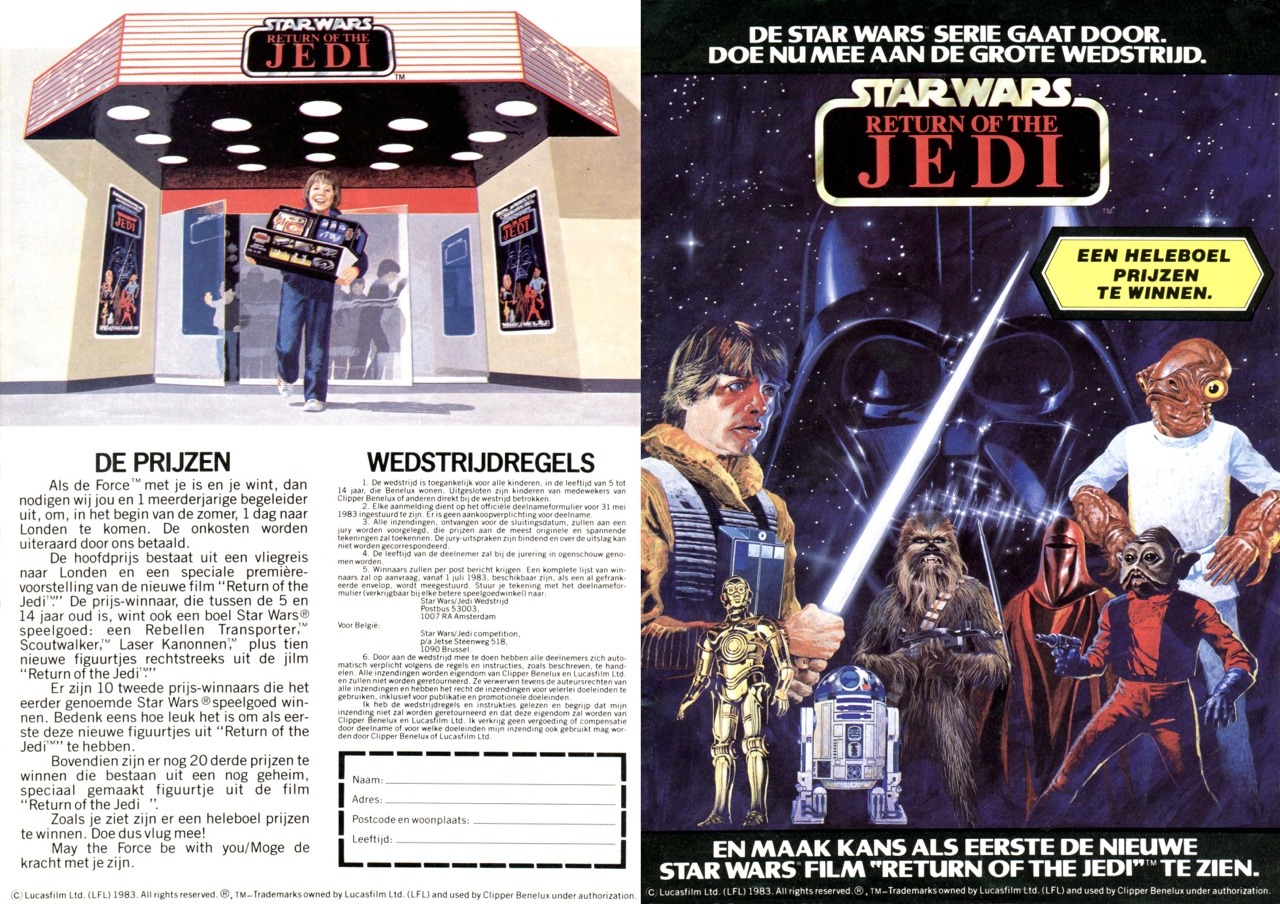
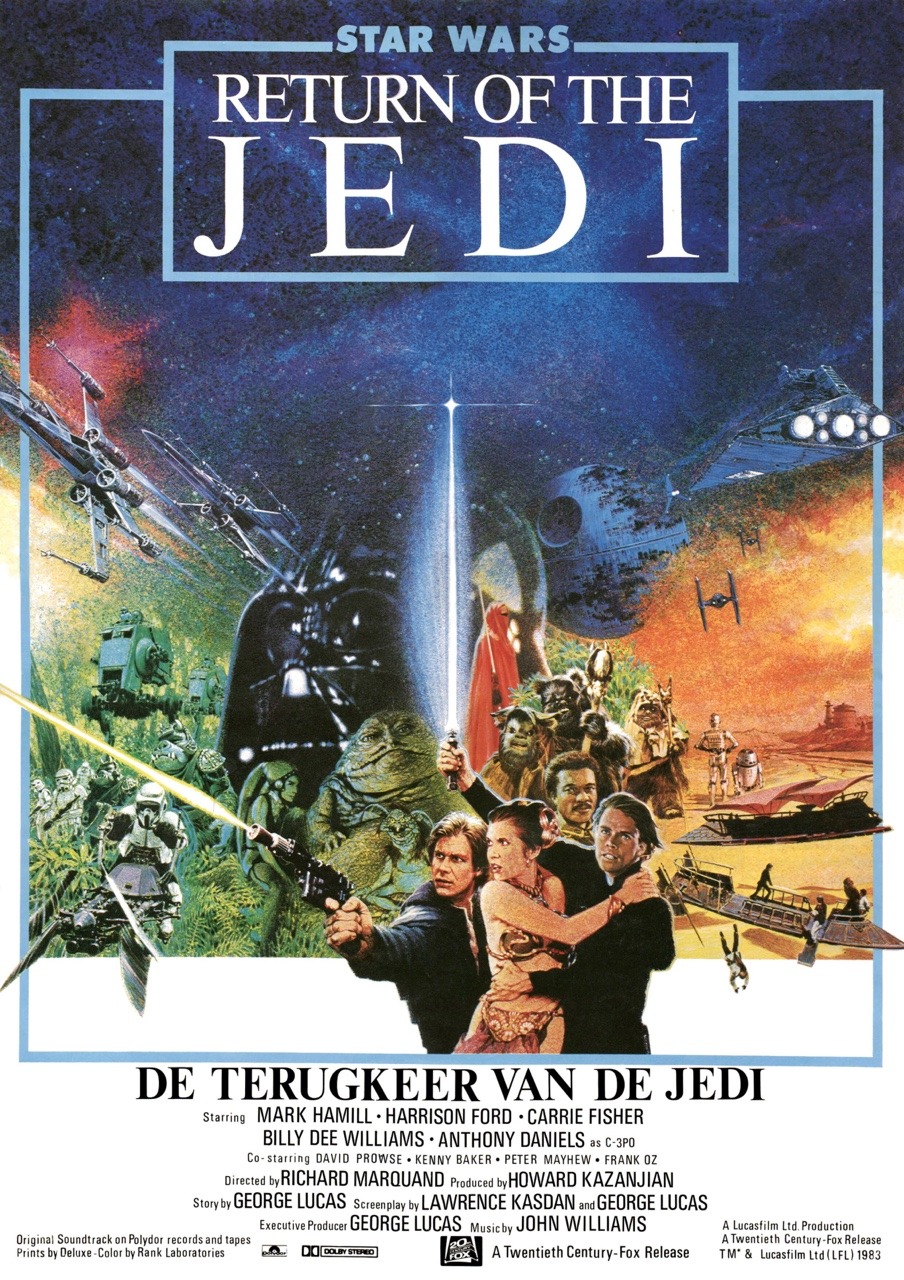
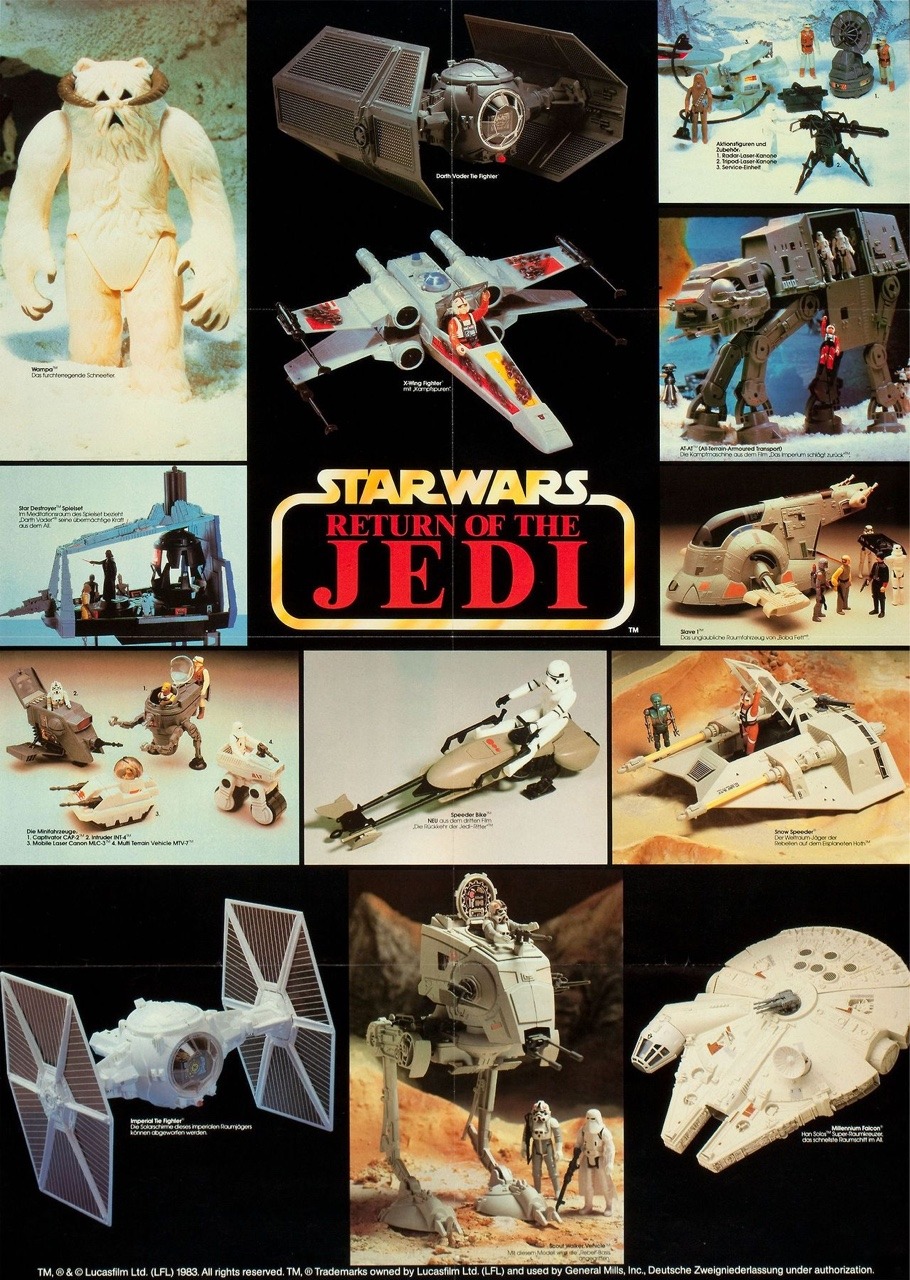
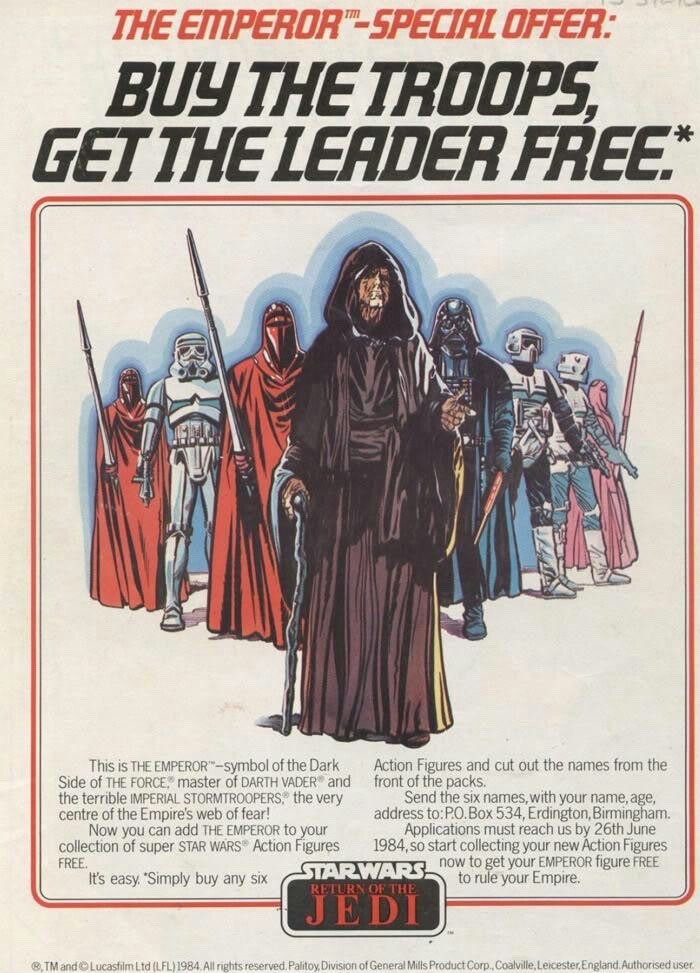
As you might know by now, RETURN OF THE JEDI (1983) was the first Star Wars film I saw, and promotional materials like the ones featured here—in fact, exactly these—were my first exposure to its active marketing machine.
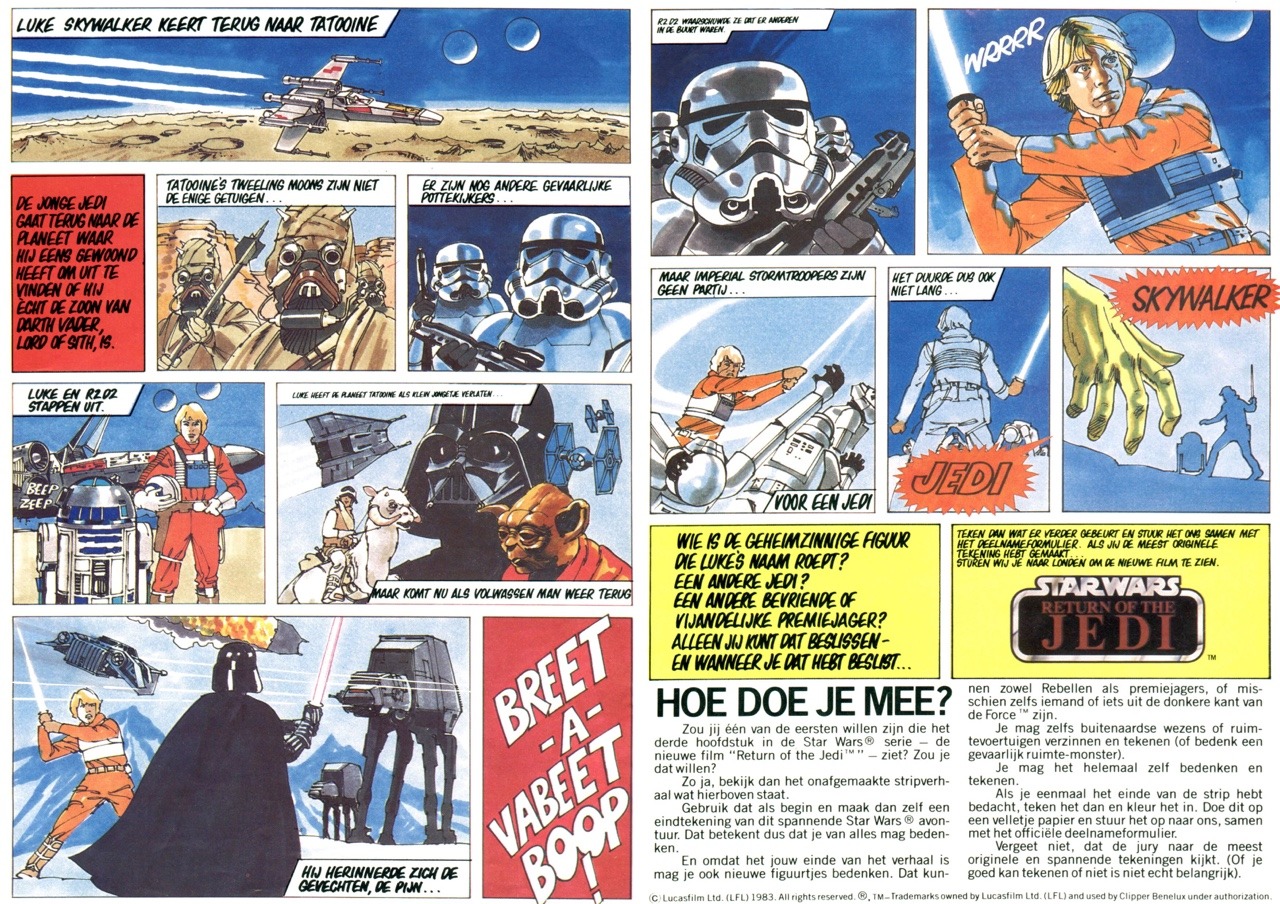
I remember my brother and I sending in our suggestions for the unfinished comic below (image 2), where you had to say what happens next. Never heard anything back of course. An early lesson in how to cope with disappointment.
Since the Internet, the way we experience—or rather, interact with—movies and music has changed drastically, and irreversibly. When I grew up, ads and competitions like these, a few chance magazine stills, and maybe a comic were all you had; and the figures of course. But you couldn’t instantly watch a trailer and watch it again and again, you couldn’t look up the actors anywhere, read interviews with them (see their tweets or Instagram photos), or quickly gauge what other people or critics were saying about a film—or own the DVD or even VHS. Movies were mysterious, they were kings passing through a village: first a few scattered rumors, then a herald, then suddenly the king in all his glory and splendor, and then it was all over and all you could do was talk excitedly about those strange sights and colors you had never seen before.
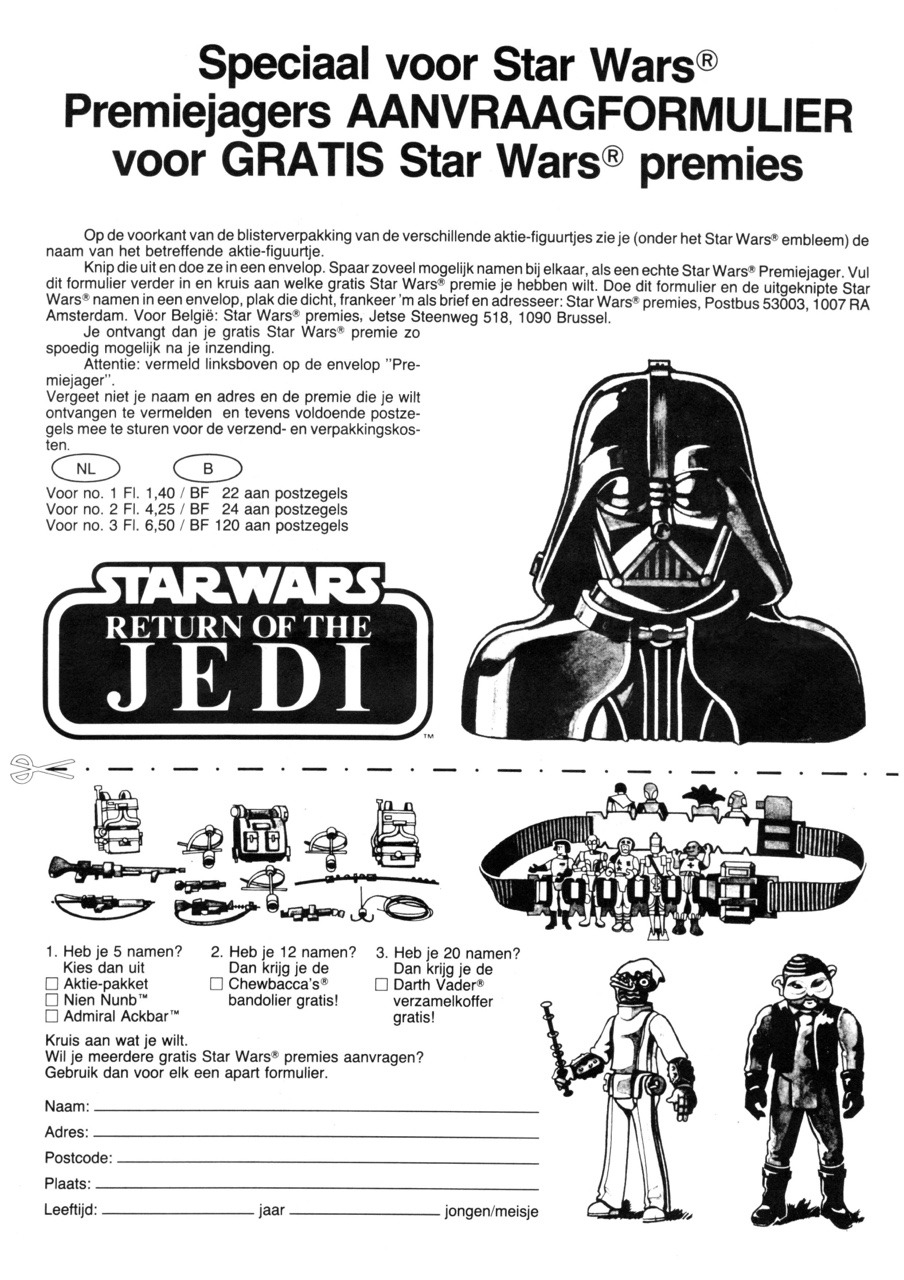
We ordered several mail-away figures. Admiral Ackbar, Nien Nunb, Boba Fett, the Emperor. They arrived in a thin white box, the sparsest yet most exciting box in the world. I still remember the smell of a new figure: it was an intoxicating, promising smell, a kind of drug. To obtain mail-away figures, you had to cut out the names on the action figure cardbacks you owned—”proofs of purchase”—and send them in. Ackbar and Nunb cost you 5 names, Chewbacca’s bandolier was 12, the Darth Vader case was 20. The story of Kenner and Star Wars is one of sheer marketing brilliance really.
The power of these figures, creatures and vehicles wasn’t just that they were exciting toys, they were also souvenirs of something greater, something magical and unique—something that, much like your childhood, was all over before you knew it.