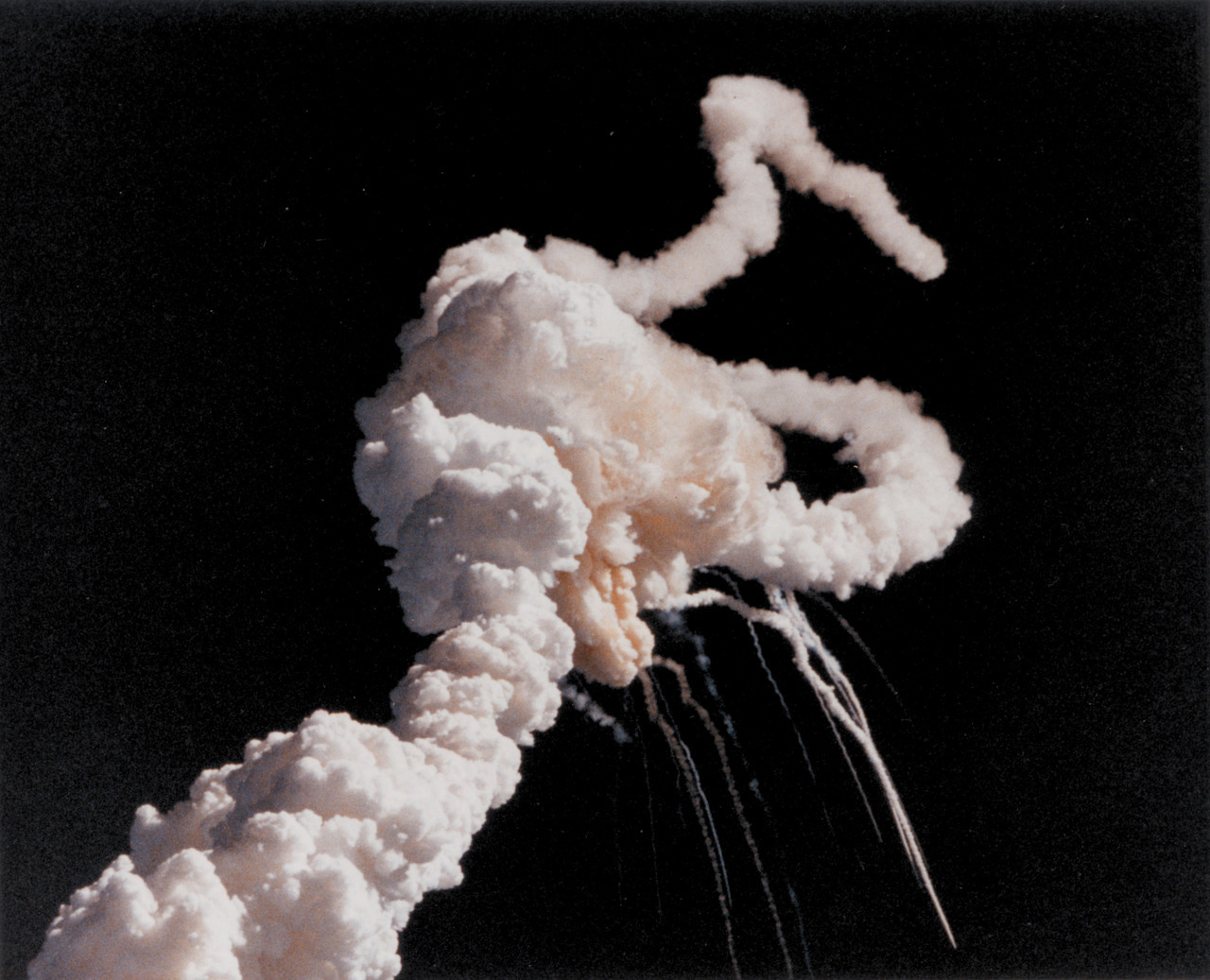
On January 28, 1986, the Space Shuttle Challenger and her seven-member crew were lost when a ruptured O-ring in the right Solid...
On January 28, 1986, the Space Shuttle Challenger and her seven-member crew were lost when a ruptured O-ring in the right Solid Rocket Booster caused an explosion soon after launch. This photograph, taken a few seconds after the accident, shows the Space Shuttle Main Engines and Solid Rocket Booster exhaust plumes entwined around a ball of gas from the External Tank. Because shuttle launches had become almost routine after fifty successful missions, those watching the shuttle launch in person and on television found the sight of the explosion especially shocking and difficult to believe until NASA confirmed the accident.
via: NASA on The Commons
Challenger was the last time before the 2016 election that America was being so clearly judged for its hubris. Like, Columbia was unfortunate but it just happened.
Challenger, it was like oh no we’ve gotten too good at going into space, this shuttle program isn’t generating the Apollo-level morale boost that’s like 35% of the point (40% was the option to militarize them along lines that made sense in the late ‘70s)
So they were like okay. Gotta make this one special. Let’s show the softer side of space (remember, Reagan put the first woman on the Supreme Court too) and have this big well-publicized nationwide campaign to select a schoolteacher to go into space and pick her and build her up in the media
And they build this whole national curriculum around this shuttle mission, to Get Kids Interested In Science (the friendly face of the military-industrial complex) and to show off American glory for an administration that specifically aimed to reenchant the nation after the post-Vietnam disillusionment, so they gather up classrooms worth of kids to watch the launch live
And it lifts off all magestic and soars into the air and then on live feed to all those kids it just blows up
And America doesn’t have a tradition of this, we had some offscreen deaths in Apollo 1 (not too far from its roots in test piloting, really) and there were some Soviet fatalities but the precedent was Apollo 13 where God handed NASA a catastrophic kill and days of American ingenuity downgraded it to a mission kill that merely went around the moon
And so the whole program got pulled for a review and the result was that the problem wasn’t with the technology or the engineering but the hierarchical mission-oriented culture that it inherited from the WWII military just like every other load-bearing institution in America