I myself think that Batman is the flip side of Santa Claus, who - as I’ve said - in turn is the modern vision of the Christian God.
The lineage follows that in the age of desert nomadism, God was a force that created water and food in the desert and rearranged inconvenient geography - mountains, seas; that in the age of early settlement and tribal war he demanded ethnic solidarity, granting in return victory in war; that in the era where settled tribes were subsumed into Mediterranean empire, he was a fisherman/shepherd who unified mankind and ended war; that in the era of courtly feudalism he was at the head of heirarchies of angels, saints rewarded with face time to press their clients’ claims; and so obviously in the age of bourgeois democracy he’s an industrialist who rewards socially approved behavior with consumer goods and punishes its opposite with violence.
“Santa Claus is a god. He’s no less a god than Ahura Mazda, or Odin, or Zeus. Think of the white beard, the chariot pulled through the air by a breed of animal which doesn’t ordinarily fly, the prayers (requests for gifts) which are annually mailed to him and which so baffle the Post Office, the specially-garbed priests in all the department stores. And don’t gods reflect their creators’ society? The Greeks had a huntress goddess, and gods of agriculture and war and love. What else would we have but a god of giving, of merchandising, and of consumption?”
as someone with a bachelor’s degree in english, i am inexpressibly tired of people telling me to get highly specific jobs that often require highly specific degrees. “just go write for a magazine!” you need a journalism degree for that. “just teach!” you need a teaching certificate, and also fuck you. “just go work at a tutoring place!” tutoring children with learning disabilities, which make up the majority of the clientele at those places, requires not only a teaching certificate but a specialized master’s degree. “just go work at a library!” you need a master’s degree in library science to be a librarian. it is actually a highly skilled and extremely competitive field. you don’t just “go work at a library,” you train for years in the vain hope that you will get one of handful of available jobs. “just go work at a library.” the nerve. the unmitigated gall. “just go work at a library.” ugh.
You don’t need a degree to write for a magazine, you need a portfolio and a professional network, which university journalism programs are entirely oriented around helping you get. I know people who dropped out of journalism school the instant they had these two things because at that point it was a waste of time and money and distracting from their career.
Many states and school districts have programs to let you earn a license while you teach (though often in a particular subject that may not be English). This is in response to a teacher shortage driven by bad pay, lousy work conditions, and an extremely hostile political climate, but you would encounter those things even if you went back to school first.
As someone who has stared down the beast that is the public library job hunt, and was the first to blink: the absolute majority of jobs in libraries do not carry the title “librarian” and do not require an advanced degree. In fact, librarian jobs are being eliminated in many places in a process called “paraprofessionalisation,” in which the job duties of lower-ranking and lower-paid employees are expanded in favor of replacing retired librarians. Anyway, most of my classmates in library school already worked in libraries and were getting the credential to angle for a promotion.
The brutal truth of higher education (particularly in the liberal arts) is that there is no amount of it you can submit to, no credential you can ever gain, that will get you to a point where people are going to reflexively defer to your elite status and just hand you the job you have “earned.” This is the promise of college, and it’s a lie; the only time it was ever credible was when scarce university education was a thinly veiled excuse to reserve jobs for the children of the wealthy and well-connected who were going to get them anyway.
I’m glad for both of the degrees I got and would happily go back and get them again, but if you let malaise push you back into school you’re going to come out of it just as unhappy and significantly deeper in debt. The way to feel adequately compensated and respected by your job is to join a union.
The “drag queen story time” thing emerging in libraries pushed by librarians trying to establish themselves as a graduate-educated lawyer/doctor/minister(/accountant/realtor/teacher?)-type profession with a guild consciousness in response to elite overproduction is one of the funnier subplots going
This also makes me think about how as “Counselor Troi” was being a thing on TNG our (“favored quarter” suburban) schools had “guidance counselors” who weren’t a college-application thing but rather some kinda below-a-psychotherapist-above-a-modern-“therapist” (para/)professional role
as someone with a bachelor’s degree in english, i am inexpressibly tired of people telling me to get highly specific jobs that often require highly specific degrees. “just go write for a magazine!” you need a journalism degree for that. “just teach!” you need a teaching certificate, and also fuck you. “just go work at a tutoring place!” tutoring children with learning disabilities, which make up the majority of the clientele at those places, requires not only a teaching certificate but a specialized master’s degree. “just go work at a library!” you need a master’s degree in library science to be a librarian. it is actually a highly skilled and extremely competitive field. you don’t just “go work at a library,” you train for years in the vain hope that you will get one of handful of available jobs. “just go work at a library.” the nerve. the unmitigated gall. “just go work at a library.” ugh.
You don’t need a degree to write for a magazine, you need a portfolio and a professional network, which university journalism programs are entirely oriented around helping you get. I know people who dropped out of journalism school the instant they had these two things because at that point it was a waste of time and money and distracting from their career.
Many states and school districts have programs to let you earn a license while you teach (though often in a particular subject that may not be English). This is in response to a teacher shortage driven by bad pay, lousy work conditions, and an extremely hostile political climate, but you would encounter those things even if you went back to school first.
As someone who has stared down the beast that is the public library job hunt, and was the first to blink: the absolute majority of jobs in libraries do not carry the title “librarian” and do not require an advanced degree. In fact, librarian jobs are being eliminated in many places in a process called “paraprofessionalisation,” in which the job duties of lower-ranking and lower-paid employees are expanded in favor of replacing retired librarians. Anyway, most of my classmates in library school already worked in libraries and were getting the credential to angle for a promotion.
The brutal truth of higher education (particularly in the liberal arts) is that there is no amount of it you can submit to, no credential you can ever gain, that will get you to a point where people are going to reflexively defer to your elite status and just hand you the job you have “earned.” This is the promise of college, and it’s a lie; the only time it was ever credible was when scarce university education was a thinly veiled excuse to reserve jobs for the children of the wealthy and well-connected who were going to get them anyway.
I’m glad for both of the degrees I got and would happily go back and get them again, but if you let malaise push you back into school you’re going to come out of it just as unhappy and significantly deeper in debt. The way to feel adequately compensated and respected by your job is to join a union.
The “drag queen story time” thing emerging in libraries pushed by librarians trying to establish themselves as a graduate-educated lawyer/doctor/minister(/accountant/realtor/teacher?)-type profession with a guild consciousness in response to elite overproduction is one of the funnier subplots going
I wonder what kind of symbolism they’re trying to get at
“There are a lot of giant robot shows in Japan, and we did want our story to have a religious theme to help distinguish us. Because Christianity is an uncommon religion in Japan we thought it would be mysterious. None of the staff who worked on Eva are Christians. There is no actual Christian meaning to the show, we just thought the visual symbols of Christianity look cool. If we had known the show would get distributed in the US and Europe we might have rethought that choice.” -Kazuya Tsurumaki, assistant director/art director on Neon Genesis Evangelion
We actually only know this term from the emotional or mental realm. That is, when someone is overwhelmed by their feelings. But originally it had a different meaning.The term comes from the middle english word whelven, which means to turn upside down, a vessel is said to be overwhelmed when she has capsized or has turned upside down in the water.
In the 17th century, the term capsized appeared more and more, until it finally replaced overwhelmed in nautical terms and this term slipped into the emotional world.
oh shit for real? I’m going to be thinking of this all the time now
That squat “fren” frog, it signals that the user is probably somewhat to wildly right, probably won’t try to make something about it, but would fit comfortably in an alliance or endstate society you would be comfortable with, for enough values of “you”, from non-right to “right and might try to make something about it” to constitute a viable hegemony.
Many spears were broken over the fact whenever or not a Western cartoon can be considered anime if it follows specific conditions... However, I think that the inverse of this problem is much more interesting: can an animated feature made by a Japanese studio, ever be considered NOT anime?
To clarify a little bit: TMS was one of many studios that Warner Bros. Animation farmed out some of the work on Batman TAS to, but it didn’t do the whole thing.
Interesting side note: another one of the Japanese studios that did some work on Batman was Sunrise, which probably contributed to Sunrise later on making The Big O (which is literally “Batman, if Bruce Wayne had a giant robot instead of being Batman”) and Witch Hunter Robin (which had a very western “moody adult aesthetic” feel despite being anime). This was in that brief period in the early 2000s when DVD sales in the West were strong enough that anime studios were catering to Western tastes.
Between the increasingly dated midcentury songs and TV specials, the legacy prewar department store stuff like the Macy’s parade, and Hallmark movies about rejecting yuppie urbanity for idealized small-town life, Christmas in the US is increasingly an American Golden Age nostalgia festival
Northern East Coast American Golden Age nostalgia fest. There is always snow at Christmas, but not too much and it isn’t that cold out, really.
Also this “Golden Age” is exactly like 7 years of the late 50s. For white people. Who had money.
And were America.
(It was the “Camelot” early 60s, too. And the now-“Rust Belt” through Chicago to Minneapolis.)
Exactly. (“A Charlie Brown Christmas” was 1965)
both the Christmas songs i remember hearing in supermarkets so far, bearing in mind it is still November, even if we are in Advent, and wanting to get out are ex-Beatles Christmas money spinners
I wonder if Christmas being seen as a 40′s - 50′s thing will get replaced with it being an 80′s thing. At least when it comes to Christmas movies since there’s a bunch from that era that are considered classics and it does have fairly well off people.
Gremlins, Die Hard, National Lampoon’s Christmas Vacation, Home Alone in ‘90… I could see it.
Wait is blaze orange not distinguishable by rifle hunters’ prey’s vision, was that the concept? Or is this supposed to be read as fallen leaves and function as camouflage despite the color?
You have to imagine someone in the manufacturing and distribution process noticed this before it got to store shelves, and someone had to make the call “fuck it, we’re not redoing it”.
Between the increasingly dated midcentury songs and TV specials, the legacy prewar department store stuff like the Macy’s parade, and Hallmark movies about rejecting yuppie urbanity for idealized small-town life, Christmas in the US is increasingly an American Golden Age nostalgia festival
Northern East Coast American Golden Age nostalgia fest. There is always snow at Christmas, but not too much and it isn’t that cold out, really.
Also this “Golden Age” is exactly like 7 years of the late 50s. For white people. Who had money.
And were America.
(It was the “Camelot” early 60s, too. And the now-“Rust Belt” through Chicago to Minneapolis.)
Exactly. (“A Charlie Brown Christmas” was 1965)
both the Christmas songs i remember hearing in supermarkets so far, bearing in mind it is still November, even if we are in Advent, and wanting to get out are ex-Beatles Christmas money spinners
I think a lot about manufacturing processes because they’re the most impressive things humanity has ever done and injection moulding wacks me out the most. I was looking at the toy keyboard I bought a while back and it got me thinking about how much of what we consider to be the look of The Modern Era is down to injection moulding.
I hold that injection moulding is one of the pillars of modern society and technology. Can you imagine a world where you couldn’t use injection moulding. It’d look completely foreign. Like looking into an alien world. When you consider it you have to conclude that injection moulding has shaped our culture as much as the development of the camera or the invention of the piano or the creation of glassblowing. If archaeologists had to name our culture in the style of the Corded Ware culture or the Funnel Beaker culture, we’d be the Injection Moulded Plastic culture.
Injection moulding is how we get, oh, almost every plastic thing you’ve ever seen. The keys on your keyboard are injection moulded. Your phone case is injection moulded. Unless you’ve got a fancy milled metal laptop like a macbook then your laptop’s chassis is mostly injection moulded plastic. Your lightswitches are injection moulded. Plastic water bottles are injection moulded. Injection moulding is how we can produce extremely similar objects at breakneck pace for almost no money.
Now it’s important to rememeber that injection moulding isn’t cheap, or, well, injection moulding is only cheap for mass production. Every single unique piece of plastic needs a mould, and each mould will cost somewhere around thousands to tens of thousands of dollars EACH, depending on how tight the tolerances are and how complex the geometry is. Look at how many unique plastic pieces there are on that keyboard. Each one represents an investment of like $7000 into making this toy that gets sold for about $20, so there’s no way this would get made unless the company had plans to sell literally hundreds of thousands of these things.
(This mould can spit out one chair every 30 seconds and it probably cost twenty thousand dollars to make)
Once you learn to see injection moulding you can’t unsee it. It’s like learning about kerning, or musical intervals, or disability compliant designs, or the pantone colours, or about how many insulator disks are needed on different voltage power lines. You start to see it everywhere, you realise that everything in your life relies upon our ability to jam plastic through a heated screw and into a mould reliably, hundreds of times per day, all day, every day.
Unless you’re wandering alone in the wilderness (and even then, maybe: check your clothing), look around and see if there’s something injection moulded near you. I can tell you the answer, there definitely is. It’s inescapable.
What would a world without injection moulded parts look like? It’d be weird. Everything we think of as cheap and easy to make is suddenly expensive. Complex curves and slopes like you’d find on a one dollar potato peeler now require hours of work to form. Every budget consumer item would be like those cheap sheet metal PC cases that have drawn blood from everyone who build a PC in them. Everything now has the aesthetics of a Sun 3/280 system:
Heck, even this sheet steel cube has a dozen injection moulded parts visible.
All the chunky plastic housing of the 90′s and 2000′s, all the sleek curves of the 2010′s, all the cheap plastic knick-knacks, the plastic toy horses, the snugly-fitting appliance chassis, the stacking plastic chairs. All these things now cost ten times as much and have to be formed from heavy steel, or milled out of chunks of cast plastic, or replaced with formed sheet metal.
Our culture, artistic sensibilities, and sense of value has been irrevocably shaped by our ability to squeeze liquid plastic into a metal die.
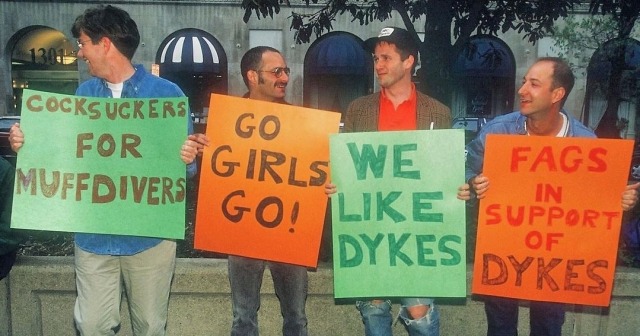
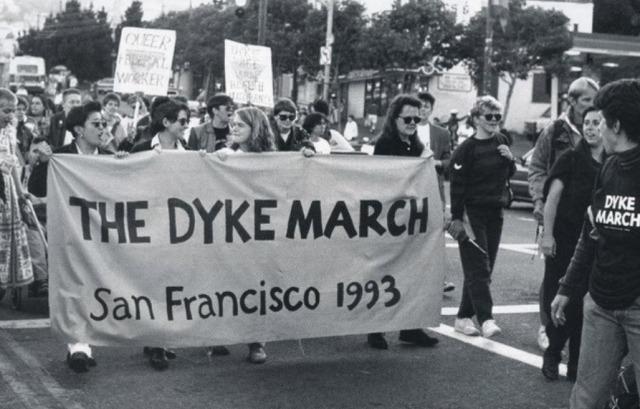
every time a fag is born she is cosmically linked to at least one dyke out there. when they find each other they will have the most beautiful friendship
This generation is too comfortable with casually dropping slurs
“Covid is airborne!” - that the virus is spread through exhaled aerosols, not airborne moisture droplets or surface-tainting “fomites”. A point they were genuinely more right on than authorities early on that still has some application – that only N95-type masks or respirators reliably stop transmission, not fabric or paper surgical masks. However, largely an ingroup signal at this point, they seem to believe that authorities not pointedly declaring it apropos of nothing causes or constitutes failure.
Corsi-Rosenthal Boxes: a DIY air filter made of box fans and furnace filters, because above. They love these things and are always frustrated that schools and public places won’t welcome wild-eyed maniacs trying to set up their own homemade science fair projects everywhere.
CO2 testing: they carry around little CO2 monitors and are always tutting about how high the readings they get are, less in their own right than because it’s a clear sign of a poorly ventilated space where exhalations are not being cleared. Once again, makes them look like maniacs.
“SARS-CoV-2”: they kind of performatively always call Covid this, even using more characters of a tweet. I dunno if the intention was to differentiate the syndrome from the virus, or if putting it in the SARS lineage was supposed to draw on residual associations there, but by now it mostly seems like flaunting yourself as savvy.
Something there but iffy
That danger and damage increases with multiple infections. It is true that Danger(Case1 + Case2) > Danger(Case1), which means that Case2 (and subsequents) has some nonzero risk, but they often act like Danger(Case1) < Danger(Case2), which I don’t see as well established at all.
Pretty convinced
The danger of Covid now lies largely not in the initial “acute” respiratory infection, but in the chance of later “long Covid” progression to other organ systems, that may render the sufferer vulnerable to later mortality. Damaged heart muscles lead to later heart attacks; blood vessels to strokes & aneurysm; immune systems to later infection (as seems to be making this winter an atrocious pediatric respiratory infection season, or made Jair Bolsonaro an infection piñata). I myself can attest to later blood pressure swings that cause fainting. That this explains much of the increase in “all-cause mortality” above and beyond that attributed to Covid itself since the beginning of the pandemic.
Not convinced
Immunity from prior infections or immunization does not durably reduce the severity of future ones. This is out of keeping with the experience of other coronaviruses already in regular human circulation and mutating into new variants, which after caught repeatedly throughout life become trivial. My own experience has my current infection (somewhere from my 4th to 6th, producing symptom “echoes” of the “long” portions of 1 and 2) as the worst since 2, but 2 was much less harsh than 1 and 3-current was nothing. I suspect this might be a stronger case against the background of a generally decreasing trend of severity. Also it might be the case that immunity wanes so subsequent cases are easier if they occur before it wears off (and leaves new immunity of its own), in which case attempts to stop any particular case with masking, isolation, or air treatment might make population-level health worse by lengthening average time between infections past acquired immunity duration.
“Schools should have been reworking their ventilation systems for anti-viral effect!” My father was the solicitor for our school district, in which capacity one of the things he worked with was contracting. At one point the district upgraded ventilation systems in maybe a third of their secondary schools at once. From scoping through passing a bond, soliciting and evaluating bids to work completion (when the construction market was slack enough for contractors to hire labor and buy materials cheap) was 8 years. In a small subset of schools, that already had ductwork at all, in a rich school district where the bond passed on the first try. To attempt this for every school building in the US – let alone other public places – would likely exceed the national HVAC construction capacity for decades. The only precedent I can think of, the drive to rework hospital ventilation systems against Legionnaires, affected far fewer buildings and institutions that were then fairly flush with income streams atop the healthcare economy, still required extensive federal subsidy, and was ongoing decades later.