shrine to the prophet of americana

All posts (oldest first)

Valentine’s Day is when people step it up, which is why there are so many Beavertonians in my everyday bars. Three times have...

Valentine’s Day is when people step it up, which is why there are so many Beavertonians in my everyday bars.

Three times have I seen the same combo of “40something guy with white hair on his biceps” groping “girlfriend in tight leather, tight red curls, loose um nasiolabial folds” in the most intentionally visible location in the bar.

Tagged: portlandportlandportland

THE DEVELOPMENT OF THE SPACE SUIT WAS KNOWN TO BE NECESSARY FOR MEN'S INTRUSION ONTO THE MOON.

THE DEVELOPMENT OF THE SPACE SUIT WAS KNOWN TO BE NECESSARY FOR MEN'S INTRUSION ONTO THE MOON.

monetizeyourcat:

FROM THE FIRST MATURE IMAGININGS OF MALE INVASION OF THE MOON BY SCIENCE FICTION OF THE LATE 19TH CENTURY TO THE FIRST OF SIX SUCCESSFUL MEN’S MISSIONS TO ITS SURFACE, THE INHERENT HOSTILITY OF THE MOON TO ANY MAN THAT WOULD ATTEMPT TO TOUCH HER WAS ALWAYS UNDERSTOOD AND FEARED.

GENERATIONS OF…

or, i guess: i enjoy sharing both my success in understanding the world and my failure in understanding the world, and the...

monetizeyourcat:

or, i guess: i enjoy sharing both my success in understanding the world and my failure in understanding the world, and the former is privileged as intelligence and the latter customarily reveals you as a buffoon

Tagged: same

never thought i’d miss you but i do  oh ho ey heyoh ho ey heyoh ho ey heyoh ho oh hoooh ho this is not over yet!

swampgallows:

never thought i’d miss you
but i do 

oh ho ey heyoh ho ey heyoh ho ey heyoh ho oh hoooh ho

this is not over yet!

Tagged: happy hardcore happycore

fun kontextmaschine fact: when I attempt to supernaturally impose my will on the universe (mostly when I'm trying to get a...

fun kontextmaschine fact: when I attempt to supernaturally impose my will on the universe (mostly when I’m trying to get a replay match at pinball) I wag my right pointer and middle fingers at the object of my attention

this comes from Vampire Princess Miyu, where the title character had rings that would chime like a bell when she did this

in case you were trying to figure out what gift your ambassador should bring me

Tagged: kontextmaschine vampire princess miyu

Actually I wonder what relationship the Japanese Vampire Princess Miyu/Vampire Hunter D(/Castlevania) vogue of western vampire...

Actually I wonder what relationship the Japanese Vampire Princess Miyu/Vampire Hunter D(/Castlevania) vogue of western vampire mythos has to do with the semicontemporary American Anne Rice wave

…wait a second, the VHD manga was illustrated by Yoshitaka fucking Amano? Holy shit.

goofus kinkshames gallant for all types of weird shit

quoms:

goofus kinkshames gallant for all types of weird shit

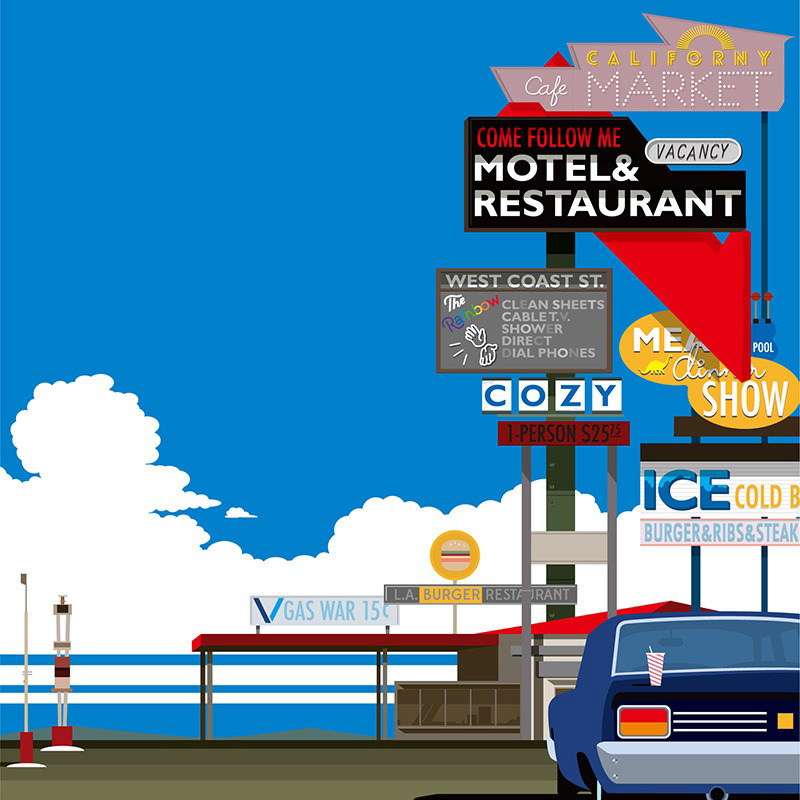
ケツメイシ - カリフォルニー | Ketsumeishi - Californy Artwork by Yune, via NNNNY This reminds me of Sega’s Out Run

c86:

ケツメイシ - カリフォルニー | Ketsumeishi - Californy

Artwork by Yune, via NNNNY

This reminds me of Sega’s Out Run

CHVRCHES | Do I Wanna Know? (Arctic Monkeys Cover)

glaciersofice:

winking-skeever:

impeccabletasteinmusic:

CHVRCHES | Do I Wanna Know? (Arctic Monkeys Cover)

WHAT OH MY GOD HOLY FUCK OH MY GOD OMHGYO OMH OYOF OH MY GOD OHF FUUUUUUUUUUUUUUUUUUUUUUCK

well this is incredible

One of the bigger problems with monarchy these days is that rich people don’t up and randomly die as much anymore so you never...

One of the bigger problems with monarchy these days is that rich people don’t up and randomly die as much anymore so you never get young rulers.

Source

acrychan:

Source

Tagged: tpp

One effect of these policies [preserving domestic peace and minimizing foreign contact] was to preclude a common solution to the...

pureamericanism:

One effect of these policies [preserving domestic peace and minimizing foreign contact] was to preclude a common solution to the problems caused by resource overexploitation: seizing neighboring territory to compensate for what one’s own area no longer provides. The people of Tokugawa Japan, high and low alike, had to make do with what they had and what they could acquire peacefully, and they knew it. These government policies had the additional effects of preventing the introduction from abroad of disequilibrating technology and ideas and of sustaining at home a general faith in the immutable nature of the social order. People simply took it for granted that the essential character of the future was knowable: they could prepare for it, but they must do so with the resources at hand.

From The Green Archipelago: Forestry in Pre-Industrial Japan by Conrad Totman

This is a little questionable - the Tokugawa era was when Hokkaido was really brought into the Japanese fold and developed for farming, a process that involved suppressing native Ainu unrest by force.

There’d been Yamato presence on Hokkaido before (the Yamato are the ethnic group generally thought of as “Japanese”, there are a few other groups indigenous to the islands and scholars outside the particularly nationalist Japanese academy generally agree that the Yamato culture came from the Korean peninsula), but they’d settled the island in the same sense the French settled North America - very lightly, for the purpose of trade with the natives. Hokkaido is the least mountainous of the home islands and thus the most agriculturally productive, with a climate suitable for the cultivation of wheat and barley.

Tagged: history

How can i seduce a hot mom

Anonymous asked: How can i seduce a hot mom

k5ataskia0z8o-deactivated201905:

dress exactly like a mom. moms love that

As a general rule, you win over people the same way you win over any predatory mammal - look them straight in the eye and mirror them back at themselves with greater confidence.

The people in that fake D&D ad, their costumes - large swaths of bright single colors, few details - I just realized, they made...

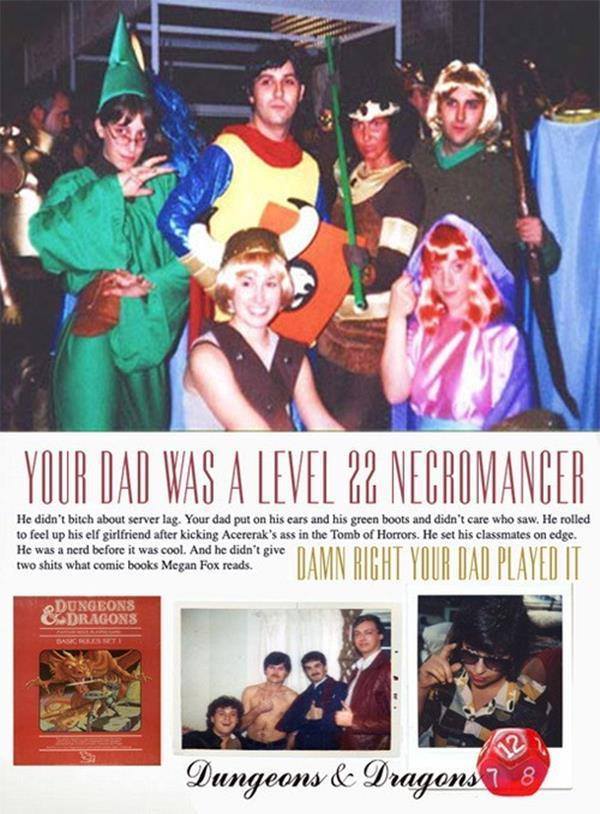
The people in that fake D&D ad, their costumes - large swaths of bright single colors, few details - I just realized, they made their costumes like that because for reasons of printing technology that’s what comics looked like back then. As recently as the ‘80s, I’m thinking Alan Moore’s run on Swamp Thing, comic book coloring was honestly for shit.

One effect of these policies [preserving domestic peace and minimizing foreign contact] was to preclude a common solution to the...

pureamericanism:

kontextmaschine:

pureamericanism:

One effect of these policies [preserving domestic peace and minimizing foreign contact] was to preclude a common solution to the problems caused by resource overexploitation: seizing neighboring territory to compensate for what one’s own area no longer provides. The people of Tokugawa Japan, high and low alike, had to make do with what they had and what they could acquire peacefully, and they knew it. These government policies had the additional effects of preventing the introduction from abroad of disequilibrating technology and ideas and of sustaining at home a general faith in the immutable nature of the social order. People simply took it for granted that the essential character of the future was knowable: they could prepare for it, but they must do so with the resources at hand.

From The Green Archipelago: Forestry in Pre-Industrial Japan by Conrad Totman

This is a little questionable - the Tokugawa era was when Hokkaido was really brought into the Japanese fold and developed for farming, a process that involved suppressing native Ainu unrest by force.

There’d been Yamato presence on Hokkaido before (the Yamato are the ethnic group generally thought of as “Japanese”, there are a few other groups indigenous to the islands and scholars outside the particularly nationalist Japanese academy generally agree that the Yamato culture came from the Korean peninsula), but they’d settled the island in the same sense the French settled North America - very lightly, for the purpose of trade with the natives. Hokkaido is the least mountainous of the home islands and thus the most agriculturally productive, with a climate suitable for the cultivation of wheat and barley.

I had been under the distinct impression that Japanese settlement of Hokkaido (outside of the southern peninsula) had not begun in earnest until the Meiji period. For instance, the area around Sapporo was not settled until 1866, and the city was officially founded in 1868.

Fair enough, I guess I’d peg it as the Tokugawa Era when the island was integrated into the state, but settlement and economic integration didn’t really kick into high gear until the 19th century.

With few navigable rivers and a strong coastal current transportation was always tough in Japan, and it wasn’t until the steam age that it made sense to raise crops on Hokkaido for export to the southern population centers, so yes, the average Tokugawa-era Japanese didn’t get much from the territorial expansion, increases in quality of life coming more from the clearance of marginal land and birthrate suppression.

If it was marginal to the market economy though, it still had potential for command economies - one of the reasons the bakufu was so enthusiastic to claim the island was that the sizeable plains could be used to raise a lot of cavalry, which strengthened the state under their control but would have been a threat in the hands of independent clans.

And while we’re talking about the conquest of frontier land from aboriginal inhabitants: People deploring the Trail of Tears,...

And while we’re talking about the conquest of frontier land from aboriginal inhabitants:

People deploring the Trail of Tears, Indian Removal and all that - I don’t think the national government really had a choice on that one. Or rather, to the extent they had a choice, it wasn’t between ethnic cleansing and peaceful coexistence; it was between ethnic cleansing by expulsion by the federal government and ethnic cleansing by extermination by independent settler warlords, who would have then established their own sovereign states, shattering federal unity and leaving Anglo-America vulnerable to divide-and-conquer tactics from European powers. (Remember, in 1812 the British fielded a successful expeditionary force, and it’s only with the benefit of hindsight - and federal unity - clear that they wouldn’t come back to finish the job.)

The American founders were thoroughly bourgeois, in both the sense of “well-off merchants” and the more literal one of inhabiting and drawing power from the developed coastal cities. As soon as the revolution ended and the federal government was established, tensions between the mercantile coasts and agricultural interior came to the fore, most prominently in Shay’s and the Whiskey Rebellions.

(The whiskey tax at the heart of the latter was considered on the urban coast as a sin tax to be passed on to consumers, but in the interior where a lack of transport options made bulky unrefined grain an uneconomical commodity and a lack of specie prompted a turn to liquor as an alternate store of value, it was effectively an income tax and a drag on every aspect of the economy.)

A policy of coexistence with natives seems noble and honorable to moderns, and indeed it was the noble and honorable policy of the coastal elite of the time, who preferred a policy continuous with the Proclamation of 1763, disfavoring Anglo settlement of native-inhabited lands. To frontier settlers, however, this policy, by cutting off the possibility of further homesteading, meant that with the natural growth of the settler population, family holdings would either have to be further subdivided or surplus population shunted into unlanded migrant labor, reducing the agricultural population to a state of European-style peasant immiseration for the benefit of natives who were even at the most charitable not their fellow countrymen.

Settlers chafed at this and before Indian removal became a federal policy local militias in Georgia and Florida - militia being, of course, a fancy term for “whoever shows up with guns” - were of their own initiative conducting extermination campaigns against local tribes. The Creek and Seminole wars were basically a nationalization of these campaigns, as a reactive attempt by the federal government to keep control of the southeast from being wrested away by either the tribes and their escaped slave allies on one hand, or by independent settler armies on the other. “There go the people. We must follow them, for we are their leaders.”

In the end Andrew Jackson, hero of these wars, was elected President, broke the coastal mercantile hold on the federal government, and pursued a federal policy of Indian Removal. But he was elected President, with emphasis on “elected” and “President”. By coopting settler genocide the United States remained intact under the aegis of the federal government (well, for a generation). The notion of some alternate history in which the federal government holds firm and the settler militias just slink away saying “sorry” is inane. We aren’t Canadians, after all. (And even the Canadians, so proud of their First Nations relations, are changing spots now those relations are getting in the way of their petrochemical economy.) The only possible timeline that would leave the natives in control of their lands is one in which the coastal merchant classes allied with the tribes to militarily suppress their own countrymen (and even then, I’m not sure they would have had the money and manpower to pull it off).

People say “violence never solves anything”, which is insane, holding only for ridiculous definitions of “solves”. And even if, for those definitions, it doesn’t solve problems, it at least makes them stop being problems. Throughout American history, there was a regularly recurring problem: “I want that land, but it’s got injuns on it.” And so each time we applied violence, and that’s not a problem anyone faces anymore. Have you ever seen the land that’s got injuns on it these days? No one wants that land.

Tagged: history amhist

Speaking of alternate mediums of exchange in rural America: When I first got my motorcycle and started taking trips out into...

Speaking of alternate mediums of exchange in rural America:

When I first got my motorcycle and started taking trips out into the rural interior, I was surprised to find how much of the durable goods economy took the form of person-to-person transactions in which deals of a value more than, say, $500, were conducted not in cash but in barter, with old trucks and motorsports “toys” - ATVs, dirt bikes - functioning as large bills, guns and power tools as smaller bills, and ammunition as change.

So if a national guaranteed income/citizen’s dividend ever comes online, and I think it will sooner or later, I suspect the...

bloodandhedonism:

So if a national guaranteed income/citizen’s dividend ever comes online, and I think it will sooner or later, I suspect the immediate effects will be more visibly social than “economic.”

I mean, do you see how many young adults live with their parents these days, despise it, and understandably dream of moving out?

In Italy which has I believe the highest rates of intergenerational co-residence in the first world, individual homes for the young is CasaPound’s original signature issue. That’s why their symbol is the turtle in its shell, a creature in its home.

The UK is facing major housing issues - part of this is London gentrification, but part of it is that since WWII homebuilding has been considered a function of the state, in the form of local councils, and since Thatcher’s reigning in of council budgets and sell-off of council houses to their inhabitants, there hasn’t been much investment in new construction. If UKIP ever makes a pivot to domestic politics I can see them making a lot of hay out of that issue.

And now, speaking of CasaPound: I have no idea what’s going on in Ukraine and Venezuela. That said, let me talk to you about...

And now, speaking of CasaPound:

I have no idea what’s going on in Ukraine and Venezuela. That said, let me talk to you about Ukraine and Venezuela.

I have no doubt that elements of the American deep state are encouraging the uprisings, and I have no doubt that local rightist elements are playing a part, but to what extent they started it, to what extent they’re just along for the ride, and to what extent they’ve got an actual capacity to take power if the current governments fall is beyond me.

There’s clearly a propaganda war going on to present the uprisings in an idiom resonant with the American public, in the vein of the earlier “color revolutions”, though the failure of the Syrian rebel propaganda to get the US street onboard (and that downright goofy Kony misfire) suggests there might be diminishing returns on that sort of thing.

In Venezuela I’m now hearing it framed as a response to sexual violence on campus which sounds odd, though I suppose in recent days rape charges have succeeded in getting Western liberals to distance themselves from anti-imperial forces, as with Assange and the SWP in Great Britain. (Now that I think of it, I wonder just why American and British newspapers have been pushing so many reports about rape in tribal India lately, and whether there’s a connection to the Naxalite insurgency.) God knows I’d be clever enough to play up that angle, and to the extent it’s an actual dynamic in play on the Venezuelan street I would be shocked, shocked if there weren’t major “keep the brown savages away from our white wimmin” overtones at play there.

In Ukraine - pff, who knows. I will say there’s definite sympathies between the Italian far right and Ukrainian forces. The Zentropaverse has been fond of the White Rex MMA stuff, and CasaPound’s “Ciao Dmitri” campaign, IIRC, was about a Ukrainian. Now, it’s possible to read too much into that, they clearly had a contingency plan for a martyr cult just waiting for a martyr. The guy wasn’t even killed by antifa or anything, he just fell off an overpass trying to hang a banner. The fact that there was a guy in Ukraine hanging banners in support of CasaPound is interesting in its own right, though, and I didn’t notice any comparable campaign in solidarity with Golden Dawn when they had members killed by actual left activists.