shrine to the prophet of americana

All posts (oldest first)

Obsolete Feels: that awkward feel when after a few hours, Hotline/Carracho/LimeWire finishes downloading that porn video and the...

Obsolete Feels: that awkward feel when after a few hours, Hotline/Carracho/LimeWire finishes downloading that porn video and the principal is not, in fact, 5-8 years older than the file is titled as

Tagged: obsolete feels

I need this. 

deducecanoe:

I need this. 

why do british ppl say "are you taking the piss?" what happened in britain's history that fomented a cultural fear of piss theft

koboldandthebeautiful:

the ancient and medieval worlds actually often had somewhat organized urban piss recovery or depositing due to the value of urine for dry cleaning wool and in the tanning industry. for a very long time britain’s most valuable industry was its wool exports. therefore, it naturally follows that british people would have a deep cultural fear of their piss being thieved, feeling that it in some way undermines their national economy even though these days the use of piss is pretty much limited to politicians and business executives drinking it.

In Tokugawa Japan, fertilizer was in such high demand that urban investors would build public lavatories in exchange for the opportunity to sell the accumulated human waste. In turn, it became a serious problem that thieves would steal waste from the cesspits. Using mouth siphons.

Tagged: history

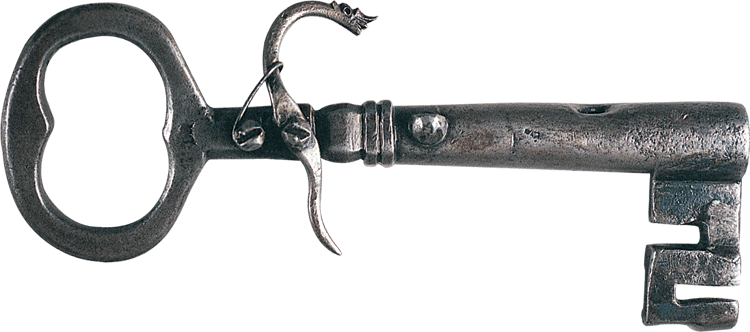
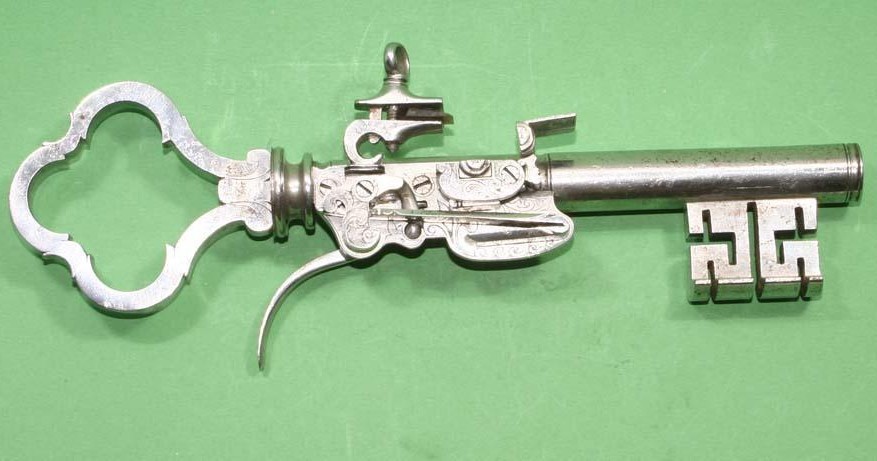
Antique key pistols.  1, 2, 3, 4, 5, 6

busbyberkeleydreams:

kriskaos13:

wahnwitzig:

Antique key pistols. 

123456

“No need to get rough, I’ll open the front door so you can loot my house—just let me get out my key …”

That snide side-eying of the tale of the virgin birth, "oh that story only works once", well for one, even if you're being...

That snide side-eying of the tale of the virgin birth, “oh that story only works once”, well for one, even if you’re being cynical there are already other bits of mythology that work like that. We know the Greeks have tales of ladies saying “I’m pregnant and/or it looked like I was having sex with an animal because, you know, Zeus,” and on the other side of the gender coin nymph stories that go “yes I totally did bang this hot young maiden-thing while traveling outside of town, but you know, she totally wanted it, magical powers, I couldn’t resist, anyway she’s definitely no one you’d ever meet”.

Just like the Victorians had legends that go “I’m consorting with and spending resources on this homeless urchin slum girl because of my spectacular commitment to Christian morality; also she’s dying of a wasting disease because of how particularly pure and chaste she is, one which has nothing at all to do with the madness/sickness my wife’s recently developed, which of course is the product of causeless and heavily euphemized abnormalities arising in ladyparts, as bourgeois medical science discovered around the same time that the city became a major port in an intercontinental maritime empire.”

this dog looks like a juggalo

genderphobia:

this dog looks like a juggalo

Is sexual orientation fluidity legitimate do you think? There are points when I'm mainly attracted to girls and points where I'm...

Anonymous asked: Is sexual orientation fluidity legitimate do you think? There are points when I'm mainly attracted to girls and points where I'm mainly attracted to boys and points when I'm attracted to people regardless of gender. Am I just misinterpreting my own bisexuality or pansexuality?

monetizeyourcat-blog:

i definitely think so. my actual opinion is that we experience libidos which are essentially unstructured and structure them in ways that correspond to what is traditionally thought of as “orientation” both consciously and unconsciously. those structures change throughout our lives as a matter of course, although it’s wholly legitimate for them not to.

the best way i have been able to put it is that i consider heterosexuality a choice and a bad one. i consider not being heterosexual - that is, not repressing socially maladaptive libidinal output towards the “same sex”, not sublimating it into competition and hostility - a good one, and a possible one.

for myself, i choose not to indulge fantasies about relationships with or emotional intimacy with men because they have historically been dangerous and disrespectful and exploitative to me as a woman. i consider homosexual behavior and homosexual love more inherently valuable, especially love - physical love, sisterly love, motherly love - between women.

this is something that absolutely can change. life circumstances change, and if i wanted to i could abandon it, could open those particular floodgates.

i don’t think i am inherently a lesbian. are there inherent things about me that prod me that way? yeah, maybe. at least very deep-rooted. but also i’m pretty happy with that as something i’m doing right now.

i don’t feel like i need to be more than happy with it being the way things are for me right now to have a legitimate claim to “being a lesbian” or a legitimate use for that label

I’ve always been a canary to zeitgeist and before tumblr - before lj even - I was A Teen who thought being what’s now called pan would be the *best* lifehack.

Also my curiosity was piqued by bi furry pics on alt.binaries.pictures.cartoons.erotica(.moderated)

Then things happened and it’s like “man it’s like giving someone a massage with your mouth while they choke you and if there’s people into that - and there are - they obviously got something else going on”

Also when I was ramping off that (also from 2nd-4th grade I identified as female, but that might part be from getting poor reception from my unpolished self and noticing girls could wield vulnerable neediness) I thought being poly was the *best* straight male binarist lifehack,

Now I live in Portland, as punishment/reward for my sins.

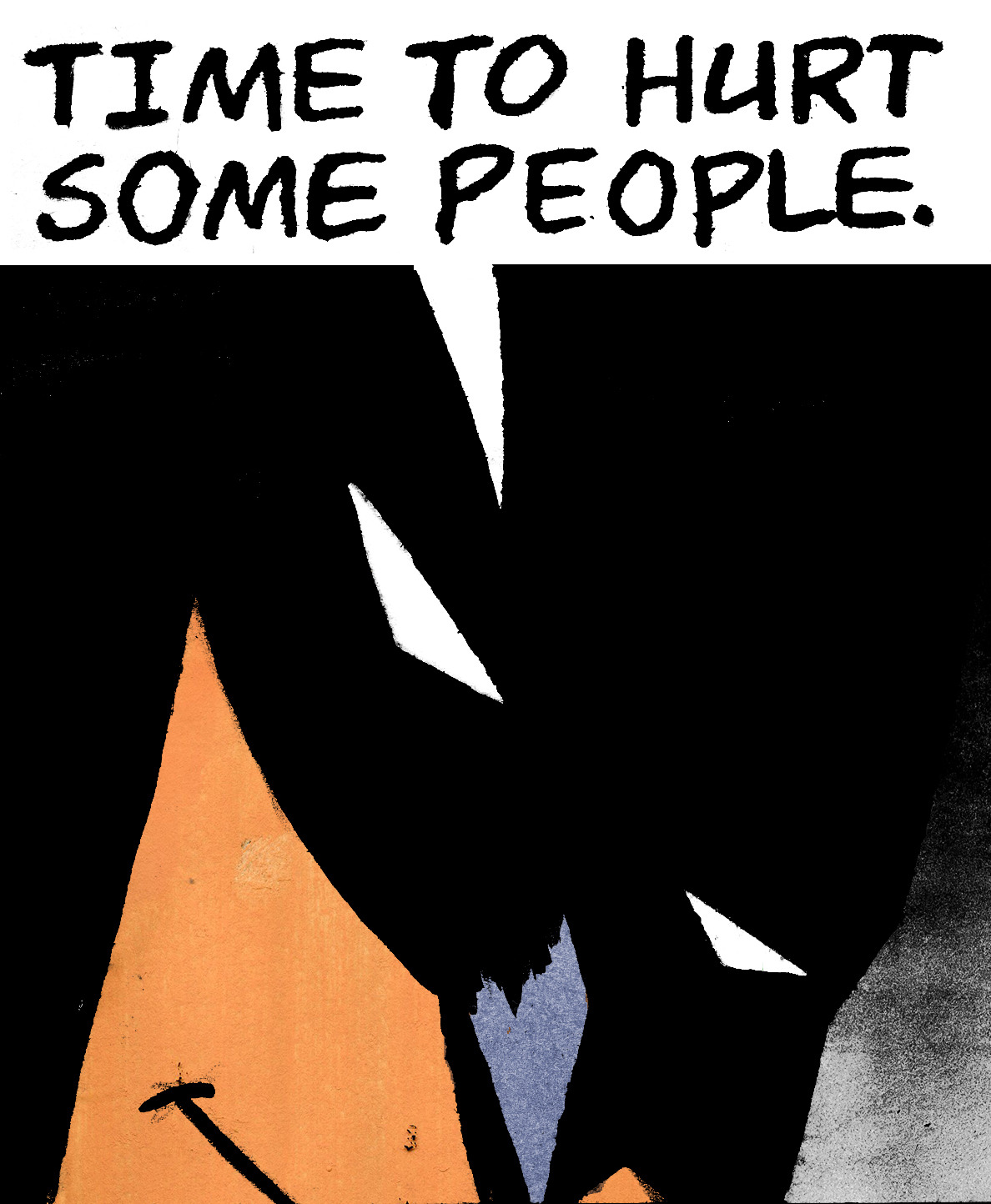
The entire Batman franchise distilled into a single two-panel comic

garbidge:

The entire Batman franchise distilled into a single two-panel comic

Tagged: batman

The idea that the writer-soldiers of WWI were united in their scribblings about the horrific meaningless of war - is that even...

The idea that the writer-soldiers of WWI were united in their scribblings about the horrific meaningless of war - is that even true of England? Or is that just the understanding in (politically) popular fashion when the canon of New Criticsm was set in ‘40s America, and still taught in high schools out of inertia? And how much should that supposed consensus be asterisked by factors like the state of poetic fashion under the Bloomsbury Set, and the marginality of land warfare in the English imaginary such that the rah-rah Kipling types tended to the Colonial Service and not the Army?

Because I mean, god knows that’s not the lesson your d’Annunzios and Jüngers took from the experience. On the Continent it seems a lot of clever men returned from the front quite impressed by war and its potential as a means of resolving politics, seeing no reason to confine this potential to foreign affairs.

And it’s not like they were wrong!

For ages wise minds had mulled over the great Social Questions - the Labor Question, the National Question, the Jewish Question - without ever resolving anything, but the Bolsheviks established that with sufficient force they were amenable to a simple “Yes”. And then the Sparticists mistook this for an endorsement of “Yes” and failed in their weakness, only to see the Nazis prove that strength was the decisive factor, with which “No” was equally viable.

Tagged: history

Watched Eva again and realized this time I was actually appreciating Gendo as the martyr-hero of the series. Like, he doesn't...

Watched Eva again and realized this time I was actually appreciating Gendo as the martyr-hero of the series. Like, he doesn’t have time or interest for Shinji’s crybaby shit but that is a correct evaluation of the situation - it’s not very interesting, and even successfully resolving it wouldn’t accomplish much, especially compared to what could be accomplished by GETTING IN THE FUCKING ROBOT, SHINJI.

I think this might mean I’m ready to have kids.

Tagged: gendo ikari number one dad evangelion nge

William Marshall, greatest knight in English history. So when he was a kid his dad was defending a castle in a civil war, and...

William Marshall, greatest knight in English history. So when he was a kid his dad was defending a castle in a civil war, and young William was being held as a hostage. If the father would not surrender, it was threatened that William be killed - either by hanging or as the payload of a trebuchet - which is after all the point of hostages.

His father taunted them to do it, proclaiming “I still have the hammer and the anvil with which to forge still more and better sons!” History does not specifically record that he was grabbing his junk as he said this, but one can assume.

Tagged: number one dad william marshall

same

same

If you ever find yourself tempted to snipe at someone that something might be a game to them, but it's real life to you -- ...

If you ever find yourself tempted to snipe at someone that something might be a game to them, but it’s real life to you –

First off keep in mind that the distribution of resources, position, and narrative validity are just as real and consequential to them!

Second, remember that those two things aren’t opposed! There are plenty of games with consequences that extend beyond the ludic realm, like high-stakes gambling, russian roulette, duelling, politics, or war!

Your survival, physical, and mental health are a game!

And if you keep that in mind while you play, you’ll not only win more often, but you’ll have more fun!

Tagged: gpoy

shorterexcerpts replied to your post: “A 2006 survey by the Metro Atlan… More not-so-fun facts about my city: rich assholes...

jakke:

shorterexcerpts replied to your post: “A 2006 survey by the Metro Atlan…

More not-so-fun facts about my city: rich assholes in north Fulton county have been agitating about splitting the county into “north and south fulton” for years. And GA has more counties than any state besides TX. Despite not being that big.

What even is the point of a county, if it’s not doing efficiencies-of-scale type services for an area larger than a municipality (e.g. garbage trucks or snowplows or libraries)? Like, if there are two dozen counties in a single metro area, it’s clear that they’re not doing anything radically different than municipalities would be. So why not just abolish the counties and run everything through your municipal governments anyway?

When states were first set up with administrative subdivisions they didn’t have many transport links - no railroads, no canals, few navigable rivers between the frontier and centers of trade, few roads (native trails having been unpaved and often overgrown by the time settlers arrived in great number, and in any case never designed for wheeled traffic)

Up until the early 20th century, when railroads networked the national economy together, national income taxes were established, and the country entered a European war, the county was basically the highest level of government the average farmer (which was most citizens) would have contact with, with the exception of the post office and possibly the “revenuers” who attempted to enforce federal liquor taxes.

(Which were themselves kind of a proto-income tax - between the aforementioned lack of transport connections and the volume-reducing, value-adding effect of distilling, whiskey became both a major object and medium of trade in the currency-starved backcountry. This made liquor very cheap, and combined with the homestead rather than village settlement patterns meant the drinking culture was less “pints at the tavern, and singing songs with your friends” than “straight whiskey at home, and abusing your family”, which is why abstinence and prohibition had always been so popular among rural female-dominated institutions like the temperance movement and various churches)

Anyway yeah they’re still useful in rural areas and while some cities have reworked the system (New York City contains 5 counties, 1 for each borough; Portland’s “Metro” system is a level of government for the multi-county region), they largely survive because all the people tied into them, who are by definition people with influence and political expertise, stand to lose from their abolition.

And yeah one of the major uses of unconsolidated metropolitan governance is to allow people to participate in the urban economy without being fully subject to the governance of regional majorities, in a way that’s often racialized. One of the major tensions in American democracy, or rather democracy in any multicultural polity, has always been that the most popular policy is always to formalize the supremacy of the electorate’s ethnoreligious majority.

Tagged: history

spotify what in the fuck

aresnakesreal:

spotify what in the fuck

Tagged: taylor swift

yeah alright, Her was pretty good.

yeah alright, Her was pretty good.

which reminds me, when's Bungie gonna make a game with an AI named Joyeuse?

which reminds me, when’s Bungie gonna make a game with an AI named Joyeuse?

An Introduction to 3 Foundational Authors of Hard-Boiled Detective Fiction, With Several Digressions

Dashiell Hammett was one of the only pulp detective authors to have actually worked as a detective, with the Pinkerton National Detective Agency, back when it was basically a countrywide mercenary police organization. The Pinkertons were actually closer to modern police than their official contemporaries in the machine politics era, who tended to fall somewhere between patronage-hire watchmen and the mayor (or sheriff)’s sanctioned gang. The establishment of the FBI was in many ways a nationalization of the Pinkertons, with key figures brought on as advisors, replicating the network of local bureaus with focuses on both investigation and the infiltration and undermining of labor radicalism. Big city police forces then remodeled themselves after the FBI - famously the LAPD under William Parker (the NYPD had professionalized already under Teddy Roosevelt, and Chicago managed to preserve its machine structure).

This process continued into the early 1970s, as the RFK/FBI-led attempt to shatter the Mafia shook out. This was part of the mid-20th century American centralization of power. If you’re ever tempted to look with contempt upon modern African states, or pre-Mao China, or pre-unification Germany, keep in mind that America was largely structured as a loose coalition of local bandit-warlords until the 1960s. At the national level, civil rights laws and the attempt to merge the two (black/white) American nations were as much a cynical front for advancing this centralization as they were an honest idealism. And not without cost - organized crime, and the permeable borders between that and urban politics, were one of the major mechanisms by which immigrant groups were integrated to and advanced within the American system, a way to translate sheer numbers and cultural affinity into structural power. American blacks largely fit the immigrant pattern, if you date “arrival” to the Great Migration, but then stall out in the ‘70s-‘80s, and a lot of that has to do with RICO laws, post-60s reformist idealism, and the nationally-sponsored “war on crime” blocking this path. In an earlier world, black local politicians and street gangs would form alliances, eventually using patronage to co-opt and take over police forces, and extract rents that would be partially redistributed down the machine ladder. As is, you still have corruption, but it accrues to politicians, pastors and other organizers, and white property developers, without trickling down to street level.

You can quote me on that - the sorry state of American blacks is because criminal gangs are too weak and police aren’t corrupt and brutally extralegal enough.

What was I saying? Dashiell Hammett. Lived in San Francisco and set his fiction there. Was an actual private investigator, and accordingly has a strong focus on tradecraft, especially with the nameless “Continental Op”, employee of a fictionalized Pinkerton, protagonist of some of his books and most of his stories. Though the climaxes could get colorful, the Op’s assignments - quietly track down a runaway heiress, locate a fled embezzler - and methods - use 3-man teams to tail people on the street, question and dig up background on the target’s acquaintances, sit around and eavesdrop on conversations - were true to actual practice. (Hammett said the major difference is that what his characters accomplished in a week would in reality take several months, while they worked multiple cases in between).

While the Op was proudly professional (a recurring theme being his contempt for hotel staff “detectives”) but otherwise opaque, Hammett pioneered detective characterization with other characters. Where the Op was based on actual detectives he worked with, Sam Spade (protagonist of The Maltese Falcon) was based on those detectives’ romantic self-image, and his stoic facade, cynical chivalry, and romantic entanglements were a *huge* influence on later writers. Nick and Nora Charles, based on Hammet and his beloved, playwright Lillian Hellman, mixed investigation with screwball banter in a more lighthearted tone, and can be considered the predecessor of Maddie and David (of Moonlighting), Mulder & Scully, and even non-(explicitly-)romantic buddy partnerships like Crockett & Tubbs.

Hammett’s real-life experience exposed him to less picturesque aspects of the private investigator’s role in society as well. He complained that employers doing background checks were interested in issues of moral character that, gambling debts aside, had no correlation to trustworthiness, and he especially disliked working to suppress labor agitation. Starting as a Pinkerton agent, Hammett ended up being blacklisted and imprisoned as an enthusiastic communist activist.


Next is Raymond Chandler, the most literary of the detective greats. Where Hammett had been an actual PI, and reflected it in his writing, Chandler was a cuttingly observant man who retreated into drink because he was way too intelligent and cynical for Los Angeles, and reflected it in his. His Phillip Marlowe inhabited a thinly-to-the-point-of-pointlessly veiled LA, and passes through it with gimlet eye and poison tongue, all backhanded compliments and sideways insults. Hard-boiled fiction’s love of brilliant turns of phrase, of meandering digressions that end with a surprise punch to the gut, largely comes from him.

While at first glance Marlowe might seem to perform the duties of a detective same as the Op, on close examination you realize that none of what transpires has anything to do with his intentions, and that the plot is moved along by coincidences he encounters while out on assignment, with the ultimate plot of a tale usually about as unrelated to the inciting incident as in golden age Simpsons. This is equally true of The Big Lebowski, which is a loving Chandler tribute, and Chandler himself parodies this (and his/Marlowe’s booziness) in one of his later stories in which the plot is advanced by the things his protagonist literally runs into while drunk driving around LA.

Chandler’s novels are usually composed of the plots of 3 or 4 of his short stories banged together, but that’s fine, because the plot was never the thing, the meat being the wonderful language, setting, and characterizations, which were crafted anew. You can still to this day drive around LA and discover most of the places he described, looking exactly as stated. And while I can’t speak to his period accuracy, I was myself once a too intelligent, cynical Angelino writer for a while, to the point I avoided leaving home sober, and I can confirm that the kind of person who inhabits LA, their nature and motivations, are exactly as he laid out back then.

Chandler’s output eventually trailed off. One story, appearing years after any others, reads like absolutely terrible Chandler pastiche. Scholars disagree whether this was the product of an alcoholic wreck of a man who had known better than to try to publish anything for years but needed the money, or his wife pretending to be him because he was an alcoholic wreck of a man incapable of even writing anymore but needed the money.

If you’re only going to read one of these three, read Chandler.


Finally, a bit of a contrast in Mickey Spillane. Spillane’s famous recurring detective character was Mike Hammer. Given the name, you might not be surprised to learn he spent less time in cautiously piecing together mysteries than punching communists in the jaw, in much the same way Captain America spent a lot of time punching Nazis in the jaw. Actually, Spillane had been a writer for Captain America in the ‘40s. Actually, the character was originally written as a comic book protagonist named “Mike Danger”. Beyond communism, Hammer often found himself arrayed against such other corrupt and corrupting trappings of the decadent elite as drugs, psychotherapy, and trial by jury.

Spillane’s writing was, I’ll say, not up to the level of Hammett or Chandler, though he has been favorably cited by prominent writers like Ayn Rand and Frank Miller. If you look at pulp of the time though, he’s appreciably above average. Pulp… basically the closest parallel we have to pulp today is fanfiction, in terms of its average quality, low cost of production and consumption, sheer volume, and the rate at which it produces critical and commercial successes. And dear god, the smuttiness. Mike Hammer banged a lot of the broads he ran into. Before barefacedly honest pornography became as ubiquitous as it is, pulp filled the role of mainstream erotic product, with much detective pulp serving the same “drugstore-available erotica” role for men that romance pulp did for women. (Appreciating this makes the “Seduction of the Innocent” comic book scare about drugstore-available pulp for kids a bit more comprehensible).

This crossed over into other formats like cinema - Deep Throat, Beyond the Green Door, and The Devil in Miss Jones were all received as at least in the same ballpark as mainstream releases, and up into the ’80s, pornographic movies had plots and runtimes that roughly approximated Hollywood product, and even in the ‘90s, softcore product at least had narrative framing devices. Between gonzo and DVD nonlinearity and the internet and the collapse of obscenity prosecution against which to offer artistic content as defense that’s faded, though as the Valley studio system’s share of the industry shrinks you’re seeing them play to their strengths in production values and plot (particularly with parody content, Tijuana Bible/H-Doujinshi-style).

On the other hand you had whole parapornographic mainstream subgenres as the erotic thriller, the rape-revenge drama, the teen sex comedy - American Pie was released in 1999, which was really pushing the limit at which it was worth it to watch 90 minutes of material for the chance to briefly see a bare-chested girl masturbating. (It’s still worth it to hear Alyson Hannigan talking dirty, though.)

The one thing that pulp still has a hold on is violence. (In addition to the jaw, there are many loving passages of Hammer battering guys in the crotch.) While splatter-horror may be a flourishing niche genre, with regular DVD releases, it’s still that, a niche genre, and not the mega-industry of pornography. Video games yes, but detective pulp and “true crime” genres have mostly just migrated to another medium and become hourlong police procedurals like CSI or Law & Order, offering the same thrills of vicarious brutality masked by the fig leaf of nominal identification with the forces of law and order. (Though cable antihero dramas and serial killer procedurals like Dexter and Hannibal seem to be moving a half- to full step beyond that.)

Mickey Spillane. Ah, fuck it, I don’t have anything else to say about Mickey Spillane.

Tagged: dashiell hammett raymond chandler mickey spillane pulp fiction history +1 more

Oh here's something I forgot about Chandler - in almost all of his stories, there's a character that's implied to be gay. This...

Oh here’s something I forgot about Chandler - in almost all of his stories, there’s a character that’s implied to be gay. This is occasionally a plot point, but usually not.

An interesting thing about this is how this is usually framed as a particularly oriental thing - oriental in a period sense, meaning a bit of japonisme but more “near eastern” - Turkish/Ottoman, with waxed mustaches, perfumed silk hankerchiefs, a decadent overrichness in home decoration, attire, and a Nathan Lane roly-polyness of body. More John Waters than Stefon.

Chandler had a few mistresses - he tended to have a thing for his friends’ wives - and several of them are on record speculating that he was a closeted homosexual, and isn’t that a sentence to meditate on.