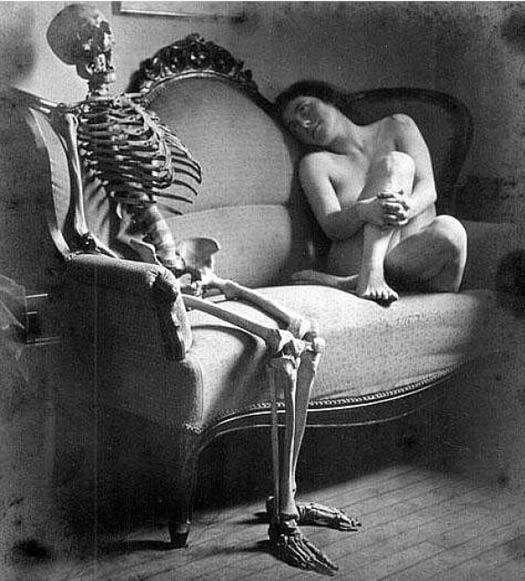
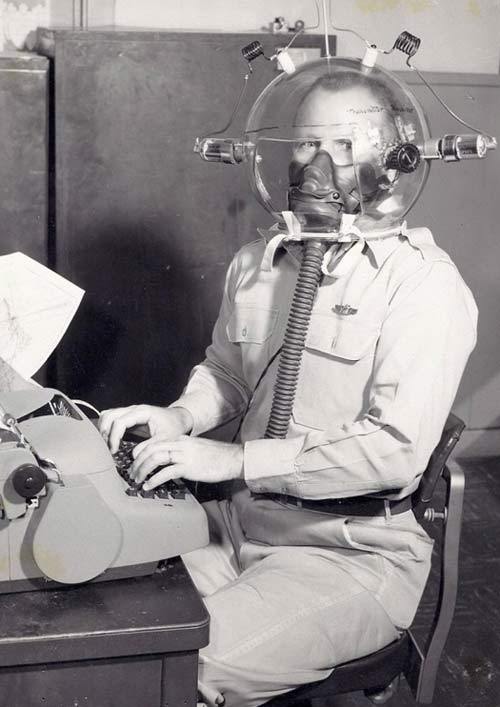
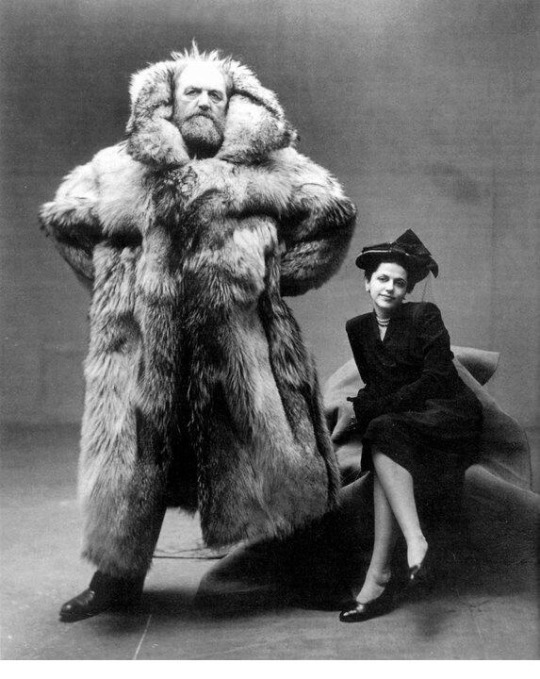
shrine to a dude, who even knows

realized one of the bushes that needed trimming was rosemary This was not actually good, the rosemary was just one low note...

kontextmaschine:

realized one of the bushes that needed trimming was rosemary

This was not actually good, the rosemary was just one low note that the lemon didn’t really accent; when I tried to give it some flavor with hoisin sauce the fried rosemary preferentially absorbed it so I had bland chicken with sweet crunchy salt bombs

>lithnin said “That… is a shit-ton of rosemary for one dish o.O”

yeah, I followed a recipe and then doubled it becuz I heard somewhere that fresh has half the flavor/volume of dried but honestly the takeaway message here is I’m adding a new element to my repertoire and haven’t yet figured out what I’m doing

This is not only morbid and uncomfortable, but also canon, I wish to die.

wheefle:

This is not only morbid and uncomfortable, but also canon, I wish to die.

Now we can be even more politically divided 

swampgallows:

carnival-phantasm:

trilllizard420:

jazzmasterreissue:

jazzmasterreissue:

Now we can be even more politically divided 

#this can’t be real, #I don’t quite know how true this is

I’m sorry guys

俺の妹が18歳選挙キャンペーンモデルになるわけがない
~高坂桐乃と学ぶ18歳選挙

“My little sister can’t become an 18 year old election campaign model

~ Learn with 18 year old Kirino Kousaka”

俺の妹がこんなに可愛いわけがない X 総務省

My little sister can’t be this cute X Ministry of Internal Affairs and Communications

We’ve found it
The one GET THE YOUTH VOTE OUT campaign worse than all of the Clinton 2016 ones put together

Her political career is ruined when she tries to convince the voters that fucking siblings is healthy

hey uh i wanna be dead

Tagged: tomorrow belongs to meme meanwhile in japan

rare chase cards include foil cards with laser-embossed signatures of recent presidents, God Bless America Flag Patch cards with...

kontextmaschine:

kontextmaschine:

rare chase cards include foil cards with laser-embossed signatures of recent presidents, God Bless America Flag Patch cards with inlaid fabric swatches and Money Cards made with real shredded American currency.

image

welp

Tagged: rerun

When someone writes the inevitable history of the “white women in wheat fields” aesthetic I hope they’re honest enough to...

When someone writes the inevitable history of the “white women in wheat fields” aesthetic I hope they’re honest enough to acknowledge Hegre and Met-Art

Tagged: web 1.5 white women in wheat fields

Robert Tombs on the opponents of the Falklands War: The Falklands victory did not, however, mean a new spirit of national unity....

xhxhxhx:

Robert Tombs on the opponents of the Falklands War:

The Falklands victory did not, however, mean a new spirit of national unity. It won vilification as well as praise for Thatcher. The mainly left-wing minority (with a few dissident Tories and Liberals) who had opposed the war were bitter at what they saw as the whipping up of militaristic nationalism by “an absolutely Victorian jingoist.” Tony Benn found it “embarrassing to live in Britain at the moment.” Intellectuals mostly agreed and expressed their feelings in films, works of art and documentaries. The writer Alan Bennett described it as “the Last Night of the Proms erected into a policy.” The historian E. P. Thompson predicted that Britain would suffer “for a long time, in rapes and muggings…in international ill will, and in the stirring up of ugly nationalist sentiment.” The feminist journal Spare Rib denounced Thatcher’s display of “male power.” The Established Church had to be pressed hard to hold a service of “thanksgiving” rather than “reconciliation” at St. Paul’s. For some their alienation from a country whose mood they disliked was deepened—better a country in decline than one revived by the “Falklands factor” and the tabloid Sun. R. W. Johnson in the New Statesman (17 June 1982) dissented, echoing Orwell in 1940: the left “have always proclaimed their hatred of military aggression and of fascism…But when it comes to the crunch they find they hate a right-wing Tory prime minister even more.” Left-wing historians produced works deconstructing British and English national identity and what they saw as the malign legacy of empire and “Churchillism.” Some realized that they had fundamentally misjudged how most people felt. The Marxist historian Eric Hobsbawm thought there had been “a public sentiment that could actually be felt” and “anyone of the Left who was not aware of this grassroots feeling…ought seriously to consider his or her capacity to assess politics.”

Tagged: history

Paying attention to the garden in spring, it’s really amazing how fast plants grow, at least around here (Portland is...

Paying attention to the garden in spring, it’s really amazing how fast plants grow, at least around here

(Portland is relatively recent volcanic soil enriched by several mountain ranges worth of seasonal and glacial flood deposits and surrounded by rainforests)

I’m trying to keep dandelions from reestablishing themselves after pulling a ton last year, so I’m scanning the ground every day and I’ll pull everything and come back the next day and find whole plants - tiny, but complete, tiny little rosette of leaves, tiny little one flower in blossom on one inch of stem - that popped up in the 10 hours of sunlight since I last checked.

There’s a view out the window from the couch where I’m sitting now, that passes through the branches of two trees getting their leaves in, and every hour I look up its more opaquely occluded

Tagged: gardening

afaik the reason all cars look like tanks with tiny little gunslit windows is because rollover protection standards, and the...

xhxhxhx:

twentygototen:

afaik the reason all cars look like tanks with tiny little gunslit windows is because rollover protection standards, and the reason all cars now have the same chinless, formless front ends is pedestrian safety. 

I can’t say I care enough about either of those things enough to believe it’s worth it, were those really things that killed tons of people or were they just next up on the list of regulations the government saddled automakers with now that much of the big-time safety issues have been eliminated?

I know this isn’t an argument that I can win–it’s not bad that cars are safer–and I’m not gonna take a “human life is worthless I want cool cars” angle here…I just wish shit were different. 

This reminds me of a passage from Michael Trebilcock’sreview of Jerry Mashaw and David Harfst’s The Struggle for Auto Safety (Harvard University Press, 1990), “Requiem for Regulators: The Passing of a Counter-Culture?”:

According to Mashaw and Harfst, the Motor Vehicle Safety Act was an historical anomaly: 

It subjected an unwilling industrial giant to regulation that its putative beneficiaries had not requested in order to address a social problem that had grown progressively less serious under nearly sixty years of uncontroversial state management [fatality rates per miles driven had dropped dramatically over this period]. And yet passage of the act commanded a political consensus of rare proportions, at least in peacetime. It was adopted by a vote of 371 to 0 in the House and 76 to 0 in the Senate. If the act was a political oddity, it was nonetheless an oddity whose time had come.

The authors explain the oddity in the following passage:

The emergence of the Safety Act of 1966 was almost comically over-determined. The recipe for the legislation read: take a persistent social evil; confront it with new technological and institutional solutions, painstakingly developed by creative scientists and reformist lawyers over several decades; place problem and solution in the heady atmosphere of an activist polity, apparently determined to rid the country (if not the world) of virtually all ignorance, vice, poverty, and danger through the application of national political power; add the drama of corporate villainy and heroic individual commitment [the Ralph Nader-General Motors affair]; wrap in the rhetoric of both scientific rationality and justice; stir by political competition and by skillful use of the media; and presto! This is the essence of the revolution of 1966.’

Pursuant to its statutory mandate, [the National Highway Traffic Safety Administration] in its early days contented itself with adopting design standards that were already widely prevalent in the industry. Beginning in 1968, however, the agency began to embark on what it conceived to be its primary mission: the promulgation of rules designed to realize the promise of passivity.

Prominent among these proposed rules was Standard 208. That rule initially simply required the installation of lap and shoulder belts but by way of an amendment in 1969, proposed moving to a passive-restraint technology. While it principally contemplated air-bags, Standard 208 also reflects a more general shift from design standards to performance standards. The rule envisaged setting standards that permitted an anthropomorphic dummy in frontal barrier crashes at 30 m.p.h. to survive, with car manufacturers being left with the burden of developing appropriate protective technology. This approach to auto safety rule-making was generalized in the so-called October Plan of 1971, in which NHTSA viewed Standard 208 as but a first step in the process of folding virtually all existing rules into a super-rule embodying an integrated set of performance-based standards. Contemplated in the October Plan was a brave new world of air-bags, automatic radar breaks, speed governors, peri- scopes, and alcohol interlocks.

However, the vision was short-lived. In 1972, the 6th Circuit upheld an injunction against Standard 208’s implementation in Chrysler Corp. v. Department of Transportation. That decision required tests for compliance with performance standards to be capable of identical results when test conditions were duplicated. The dummy specifications proposed in the standard were incapable of meeting this requirement. Subsequent decisions enjoined the implementation of other standards, such as air-brakes for trucks, buses and other heavy vehicles, on the grounds that NHTSA had not adduced sufficient evidence of the safety gains likely to be realized from the technology-forcing standards. The courts, of course, failed to realize that safety gains from such standards do not lend themselves to precise prediction. Other decisions invalidated rules on procedural grounds where NHSTA had modified proposed standards in response to previous comments and petitions without initiating further rounds of notice and comment. The cumulative effect of the decisions, according to the authors, made NHTSA largely helpless in the face of the full court press that an emboldened automobile industry subsequently mounted against most of the agency’s proposed rules.

The agency’s problems on the political front were even greater. Largely as a result of oversight hearings in 1974, Congress enacted amendments to the Act, which, according to the authors, subverted the original scientific rationale of the statute in several ways. Congress, by an overwhelming majority, first repealed an ignition interlock standard which prevented an automobile from being started unless seatbelts were attached, despite highly favorable cost- benefit ratios associated with that standard. Relatedly, Congress also gave itself the power to veto all future passive restraint measures that NHTSA might propose. In the wake of several widely publicized school bus accidents, Congress, in addition, mandated school bus safety standards despite uncontroverted evidence as to their lack of cost-effectiveness. Finally, Congress substantially extended the agency’s powers with respect to mandatory recalls of defective vehicles by requiring manufacturers to remedy safety defects at no cost to the owners.

In the legislative debate over the ignition interlock, anecdotal arguments overwhelmed scientific rigor. As the authors write:

Malfunction horror stories became the order of the day. Ignition interlocks had stranded (or could strand) a motorist in the path of an oncoming train. Women were unable to flee rapists. Parking attendants, who had to buckle-up no matter how short the trip, were going nuts. Housewives were buckling in their groceries. Hertz could not obtain sufficient towing services to retrieve malfunctioning vehicles. And in account after account, the family pet, usually a dog, set lights blinking, buzzers buzzing, and interlocks locking.

In the Senate floor debate, Senator Eagleton related a story from a constituent who had put a turkey in a seat belt on the drive home from the supermarket, and also reported that Senator Tower had to buckle in his dachshund in order to start his car. The combination of merriment, ridicule, and outrage was more than the epidemiological theory of accidents could withstand.

In the wake of the judicial and legislative assault on its original statutory mandate, NHTSA shifted its focus from regulation by rule-making to regulation by recall, a shift that continues to the present date. Since the early 1970’s, NHTSA has adopted few if any new safety standards. The number of mandatory recalls, however, has escalated dramatically, with recalls in several years exceeding new car sales. Despite the level of recalls, the authors claim that the empirical evidence shows that the impact of recalls on safety is trivial, perhaps amounting to a reduction of deaths and injuries of less than 1.5 percent. This contention contrasts with the Brookings Institution’s comprehensive empirical evaluation of the safety gains from NHTSA motor vehicle standards. The latter study finds that the standards may have reduced fatalities by as much as 40 percent since the inception of the legislation, and may result in an annual reduction of 23,000 fatalities. Despite the Brookings Institution’s equally positive assessments of the costs and benefits of air-bags and other passive restraint systems, NHTSA is now committed to abandoning any passive restraint standard if states accounting for two-thirds of the population adopt mandatory seat-belt use laws that satisfy certain conditions. As the authors suggest, this reflects a reorientation of auto safety regulation from science and planning to the old and, scientifically speaking, discredited approach to traffic safety of crime and punishment.

In the end, the public defeated the regulators.

Yeah, the only thing that guarantees the necrophiles (or anyone) will win is if people get the sense that it’s inevitable.

Consider also Wisconsin, which under influence of the Wisconsin Tavern League has been able to effectively blunt national pushes against underage drinking and drunk driving

Rooney Mara as Mary Magdalene smoking a cigarette beneath crucified Jesus

brumerican:

artfilmfan:

Rooney Mara as Mary Magdalene smoking a cigarette beneath crucified Jesus

Humans of Late Capitalism tho

Dead Right

Dead Right

argumate:

an absolute classic

The ironic thing is that tempering effect is exactly why the dirty poor violent ‘70s New York was so great, until people like Frum fucked it up

You know, from an East German perspective, that “after Hitler, us!” line wasn’t wrong

You know, from an East German perspective, that “after Hitler, us!” line wasn’t wrong

Tagged: accelerationism

Richard Spencer at Auburn

A few things about Richard Spencer’s successfully delivered speech at Auburn University the other night.

ONE, from what I heard firm policing pacified the assembly enough for the speech to go off same as any other campus event but only after Auburn tried to cancel citing security concerns… only to be countermanded by federal court order sought by a white supremacist lawyer. I would not, in fact, be surprised if Spencer aimed at Auburn because Sam Dickson operates out of Georgia.

(There is now a campaign by Florida man-cum-fascist lawyer Augustus Sol Invictus and alt-right folk hero Kyle “Based Stickman” Chapman to assemble a National Lawyers Guild-style network of rightist defense and civil rights lawyers. I suppose all those BIDER and AutoAdmit guys are out there somewhere. Come to think of it, I’d be a bit surprised if WeSearchr poobah/Count of Monte Christo Pax Dickinson wasn’t somewhere in the background on this.)

Richard Spencer knows what he is doing. And what did he do? Well Auburn’s claim that they couldn’t safely host him already struck a federal judge like a cover for not wanting to and the event going smoothly won’t hurt going forward - the American legal system does not weigh “structural oppression, such as public speech and the American legal system” as violence. Between that and Berkeley’s proof that the system can’t just look away and let things harmlessly burn themselves out, I think he’s probably breaking through no-platforming to the next stage.

Do wonder what becomes of those left behind tho. The new campus Burschenschaften have been one of the biggest post-election loci of alt-right energy (ok, they’re really closer to ‘70s student Italo-fash than mensur but it’s a fun word). And I catch word that college leftists are starting to hear ominous drums in the off-campus hills. People came cross-country to stand with Based Stickman at Berkeley, while Austin is already surrounded by Texas.

SO, now that he’s giving speeches what is he saying? Well the only memorable thing I hear repeated (and I’m sure this is planned - he gets interviewed so often because you’re guaranteed an interesting article with two good pullquotes and a clickable headline) is him going after college football and people being “a-hyuck, that won’t play in the South”.

Okay to repeat, Spencer knows what he’s doing. He went to Duke, he knows what college sports mean in Dixie. Here is an entire POLITICO article about Richard Spencer calculatedly invoking football to manipulate attention.

What he’s doing (as I can tell from wisely paying attention to Internet racists all these years) is using his platform to promote a line of thought developed at length by overlooked alt-right ideological entrepreneur Paul Kersey. The idea being that in adopting a win-at-all-costs, professional pipeline model of sports, colleges have abandoned the “rounded development of the natural (white) aristocracy into a class of gentlemen” role of collegiate athletics in favor of lowering standards to bring in unworthy rapist negroes as ringers for the sake of decadent spectacle. (And that this is a microcosm of American colleges and society generally).

(The title of Kersey’s site, Stuff Black People Don’t Like, shows how long he’s been beavering at this, I’m honestly surprised his “we could have gone to Mars” – basically Gil Scott-Heron’s “Whitey on the Moon” played backwards as a way to cultivate white STEMthusiast resentment of blacks and Great Society welfare programs – never caught)

So does Spencer expect a mass conversion to the Kersey line here? I doubt it, but the two of them push it, CasteFootball exists, someone could be won over. The sports leagues, NCAA included, have been bigfooting states over gender enforcement and religious liberty measures lately and the Benedict Option-type social cons have already been simmering up some resentment against them and their fan enablers.

Cross the strains and fertilize with publicity, toss in state budget issues, the adjunct and student loan crises and the inchoate sense that there’s some relationship between campus leftism and a loss of focus on academic instruction (or STEM in particular) and… I’m not sure exactly what they could do with that issue, but putting it into play might open up the option to wedge something apart, or trade for some influence on colleges down the line.

Plus, you know, there IS the campus rape angle, that’s hot these days. Spencer (and Stephen Miller) debuted off the Duke lacrosse hoax, they know the power there. Go flaunting your ideology out in public someone’s gonna scavenge it, and already the Kony-fuckers are weaving that feminist energy into their “human trafficking” reenactment of the old white slavery panics (which are where we got the Dawes Act and a bunch of that black-repressing “carceral feminism” we were being reminded to dislike circa like 2012. White women SMDH.)

Finally, one of the new, woke sports journalism’s hobby horses is college athletes as exploited professionals who should be paid (and this as a racialized issue). But “a disproportionate share of televised NCAA athletes are black commercial performers unsuited to the amateur scholar model” is the core of the Kersey line too.

And if Richard Spencer can draft off that such that the payoff of a woke journalist crusade is advancing his program, or at least occupy enough space in the discourse that no article on the subject feels complete without an aside (pull-quote?) on what Richard Spencer thinks? Gotta admit that would be a hell of a troll.


Tagged: richard spencer student athlete

Eek! The Cat - Wikipedia

Eek! The Cat - Wikipedia

Just remembered this terrible show and was like “what the hell?”

Eek! The Cat (retitled Eek! Stravaganza in 1994) is an American-Canadian animated series
CanCon! That explains something.
Eek’s selfless nature usually gets him caught up in painful situations such as getting caught in mail and baggage sorters (both of which appear designed to intentionally damage their contents) and screaming “Oh Gosh It Hurts!” while the show’s guitar riff theme played.
Mom - The apparently single mother of the family that owns Eek!. Voiced by Elinor Donahue. Does a lot of house cleaning and is a student of foreign languages, especially “Spangalese”.
Annabelle – A female cat and Eek’s girlfriend who acts like a Southern belle. She is also extremely fat, although Eek! does not seem aware of this (he responds, genuinely surprised, “Really?” whenever someone comments on Annabelle’s weight)

what the hell?

Timmy – Elmo’s brother. He constantly needs money for various absurd medical ailments which Elmo tries to raise with Eek!’s help. These usually consist of very dangerous stunts that only harm Eek! when he gets involved.
Mittens appears to have been based on Dennis Hopper’s unnamed photojournalist character from Apocalypse Now,
what the HELL?
The segment chronicled the misadventures of a trio of dinosaur mercenaries released from incarceration and charged with the task of eliminating two primitive human beings.
WHAT the HELL
Twelve DVD volumes have been released by Jetix in Eastern Europe under the title “Kocour Raplík”,[16] another Jetix DVD for Russian markets under the title “Кот Ик”,[17] and four Hungarian Jetix DVDs under the title “Nyekk a Macska”.
y'know, sure.

this show was like the rind of whatever they squeezed Rocko’s Modern Life out of.

Tagged: canadian content

yo no joke every time I hear Jeff Sessions’ name my mind puts it in the Bob Evans jingle ~Jeeeefff Sessions, down on the farm~

yo no joke every time I hear Jeff Sessions’ name my mind puts it in the Bob Evans jingle

~Jeeeefff Sessions, down on the farm~

going through my microsoft word archives is great fun because i always find the wildest shit in there and by “the wildest shit”...

derinthemadscientist:

punkfaery:

punkfaery:

punkfaery:

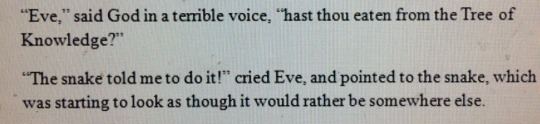
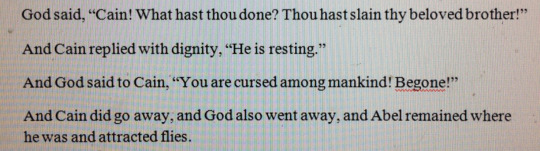
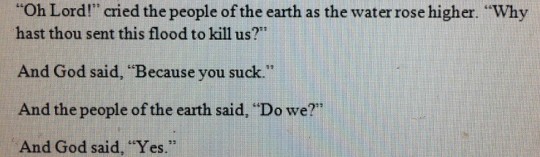
going through my microsoft word archives is great fun because i always find the wildest shit in there and by “the wildest shit” i mean the time i tried to rewrite the entire bible from scratch at the age of eleven and a half

“And so Adam and Eve were cast out of the Garden of Eden, and Eve turned to Adam and said, 'Nice going, loser.‘” 

iconic

image
image
image
image
image

whilst you were listening to avril lavigne, i learned the way of the Lord

Publish this I will buy it

Tagged: kontextmaschine does the bible

bro are u fucking kidding me

powerburial:

bro are u fucking kidding me

Tagged: this is an ad on tumblr dot com

then again the more things change….

nishthedish:

furlockhound:

rainybunbun:

furlockhound:

gemofsphene:

then again

the more things change….

The people making these memes obviously have never seen some of the weird ass shit in old-timey photos. A quick Google and:

Humans are basically a giant jumble of weirdos that try to belittle other weirdos…

That’s the most accurate and poignant description of human nature I’ve ever read

humanity has been shitposting since the very birth of photography, probably even earlier

Tagged: same as it ever was

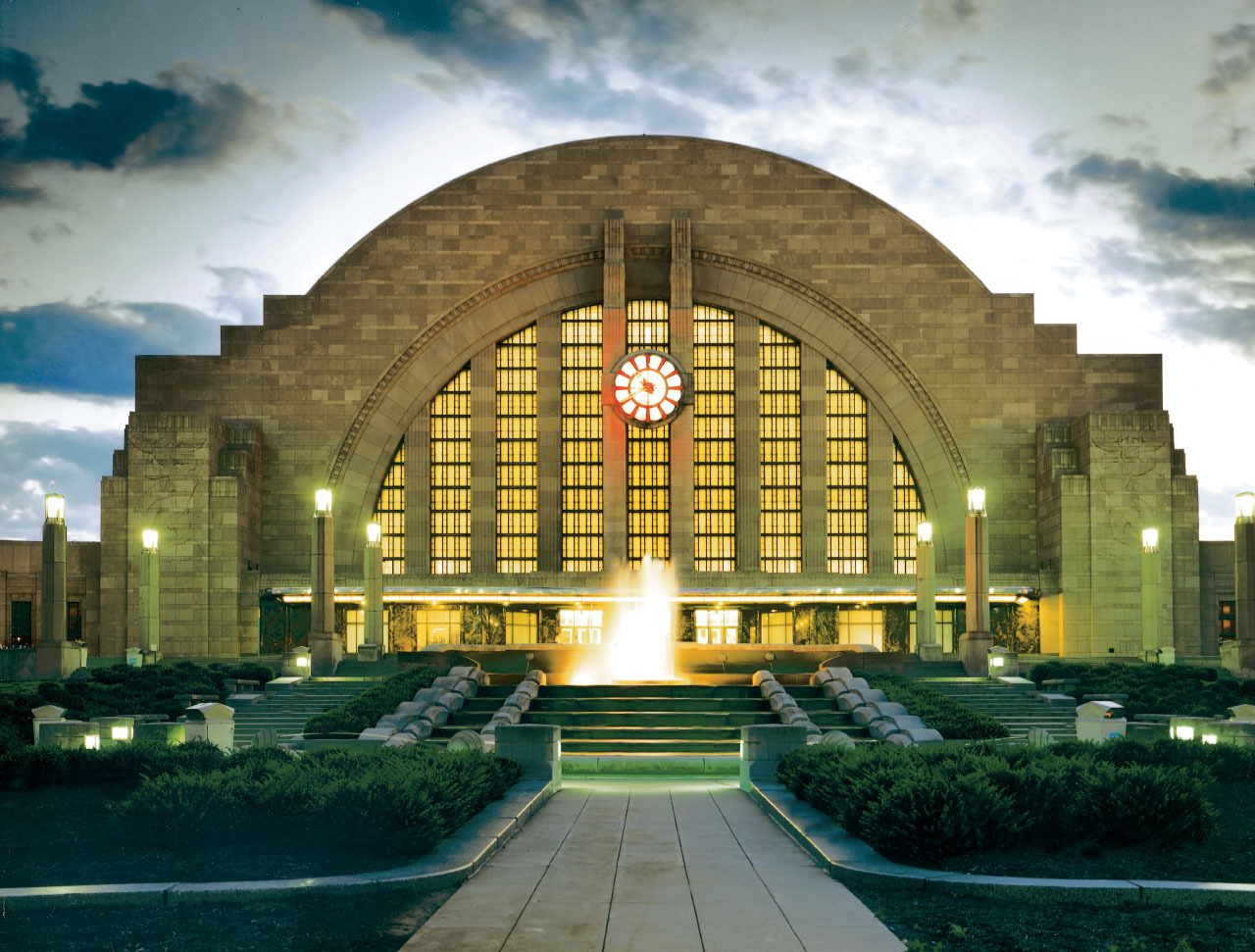
Art Deco architectural style, one of the first truly international movements, popular between the 1910′s to the 1930′s. El...

enrique262:

Art Deco architectural style, one of the first truly international movements, popular between the 1910′s to the 1930′s.

image

El estilo arquitectónico Art Déco, uno de los primeros movimientos realmente internacionales, el cual fue popular entre los años 10 y 30. 

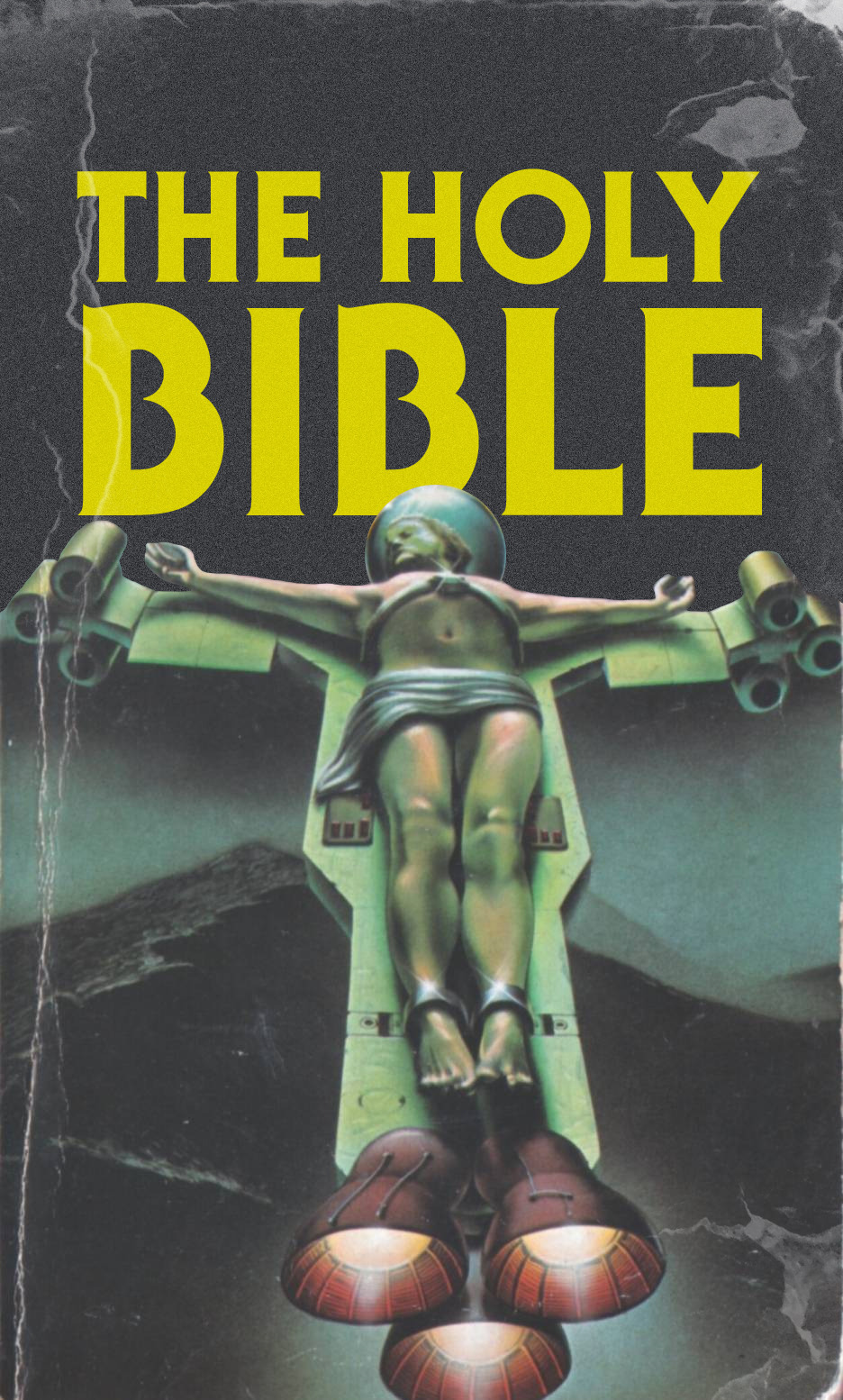
Taking my inspiration from Philip K Dick’s “VALIS” I redesigned the Bible cover.

arundelo:

hardcorefornerds:

rubot:

Taking my inspiration from Philip K Dick’s “VALIS” I redesigned the Bible cover.

This is brilliant (out of this world)

It is the day of the crucifixion of Jesus Christ. Peter is standing at the edge of the crowd on the hill of Calvary. Looking over the crowd, he sees the Lord, crucified at the top of the hill. The Lord looks at him and, just barely, Peter can hear the Lord calling his name. “Peter, Peter, come here!”
Peter pushes through the throng and begins walking up the hill. Soon he comes near James and John, who say, “Peter, come pray with us!” Peter responds, “I cannot, my Lord calls to me.”
As he walks further up the hill of Calvary, he meets Mary the mother of the Lord and Mary Magdalene, who say, “Peter, come pray with us!” Peter says, “I cannot, my Lord calls to me.”

Soon he sees some centurions. Afraid they might beat him if the mood takes them, he keeps his head down as he walks past, whispering to himself, “My Lord calls to me.”

At last he comes to the cross. He looks up and says, “I am here, my Lord. What is it you wish to say to me?”

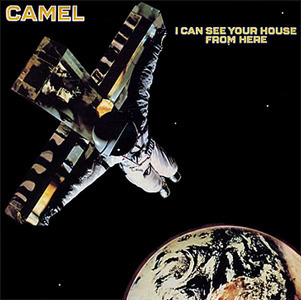
And the Lord says, “Peter, I can see your house from here.”

Anyway, this joke is the source of the title of Camel’s 1979 album I Can See Your House From Here, whose cover art is as follows:

Tagged: kontextmaschine does the bible