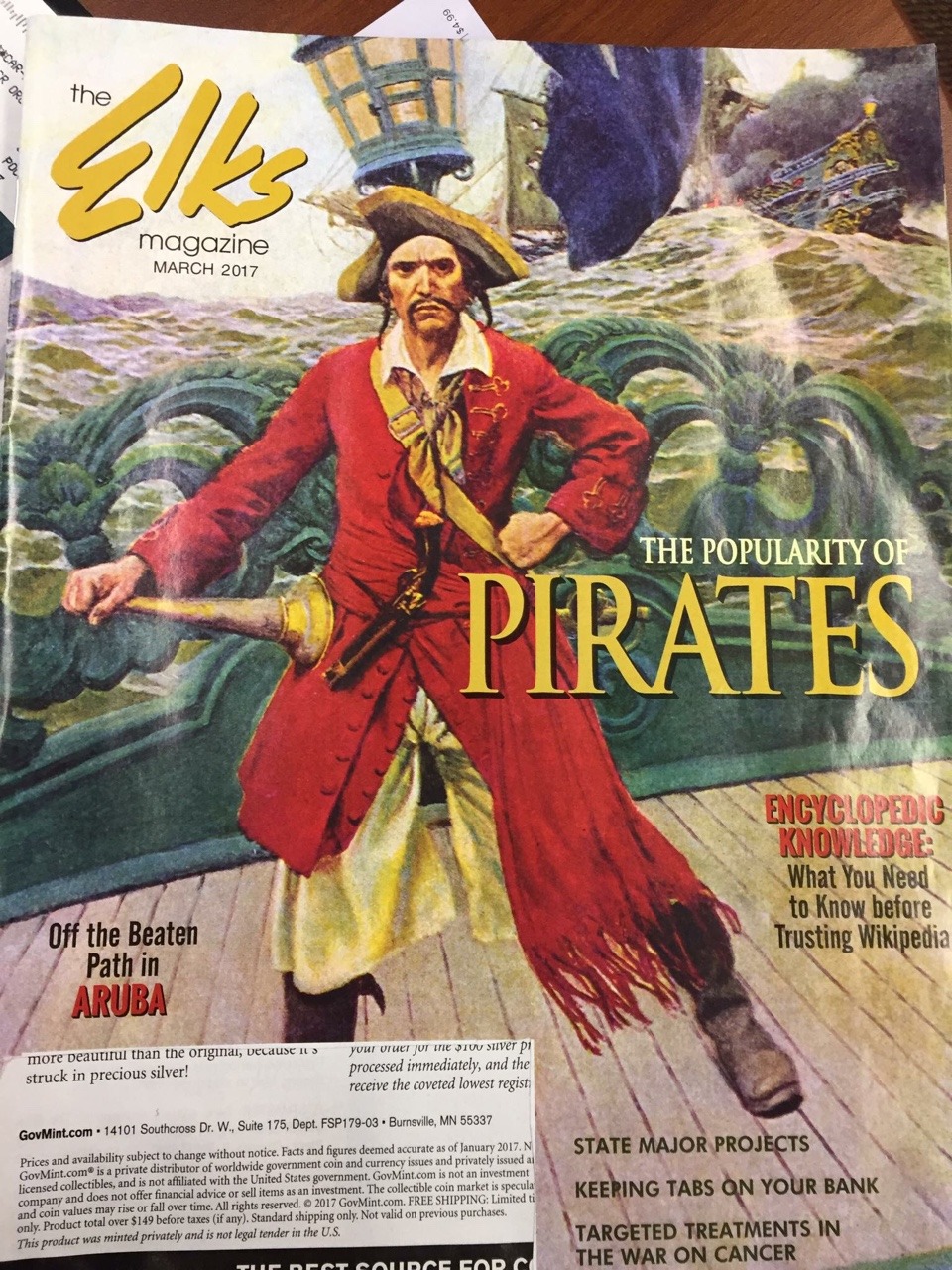
shrine to a dude, who even knows
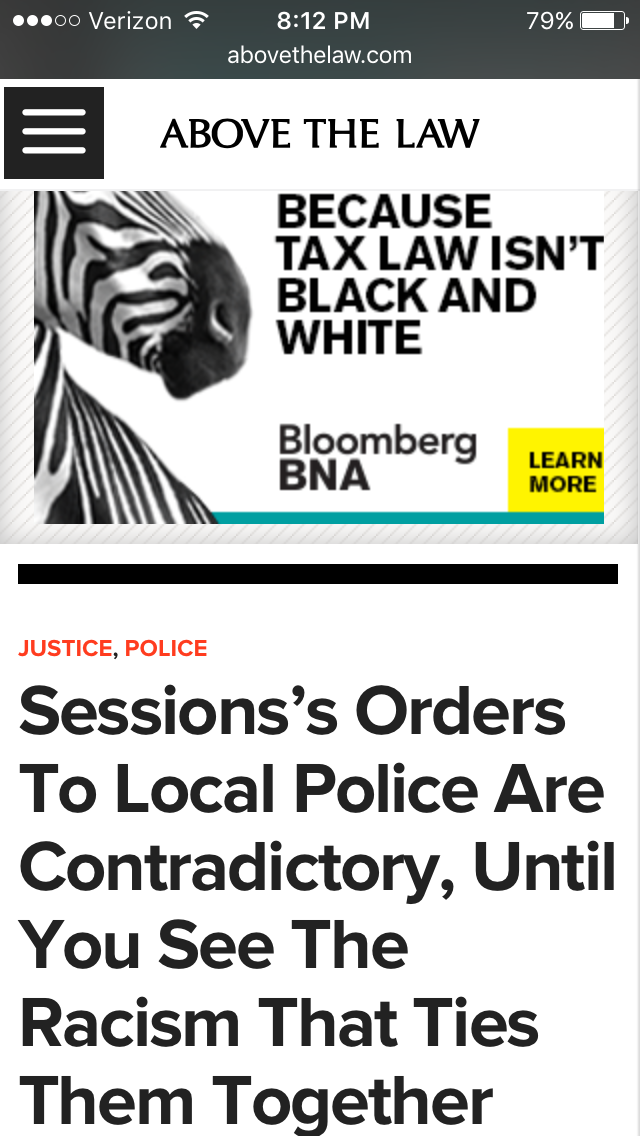
my brother ripped ass in class while i was showing him a picture of dewey from malcom in the middle and i was so mad at him he...
my brother ripped ass in class while i was showing him a picture of dewey from malcom in the middle and i was so mad at him he drew me this and i was trying so hard not to laugh in a silent classroom
Tracy Chapman - Fast Car [2017 trans nightcore]
Tracy Chapman - Fast Car [2017 trans nightcore]
Lipstick Fascism | Jacobin
Lipstick Fascism | Jacobin
all women are attracted to masculine strength and valor and should accept their role as the bearer and supporter of children. Indeed, having children is a must. If they want their right-wing legacy to live on, white women must get married early and have a big family.
They weren’t lying about Jacobin’s rightward turn
Do you believe that curing death or mastering cryonics will happen within your natural lifetime?
3dspacejesus asked: Do you believe that curing death or mastering cryonics will happen within your natural lifetime?
No. Immortality has been “just a few improvements on the current state of the art” away for approximately ever.
Don’t tell the most recent immortality cult about this. It would break their clichéd little hearts.
Yeah the funny thing is how the “state of the art” consistently refers to whatever field’s particularly prominent and cutting-edge at the time.
It’s been alchemy in medieval Europe and ancient China, electricity in Revolutionary France, extremely low-temperature liquid circulation in the rocket age, data storage in the computer age, now it’s biotech because of course it is.
In 16th Century Spain with the whole Fountain of Life thing it was fucking western hemisphere cartography.
hey you know what was still a recognized symbolism in my childhood? dropping ballast sandbags to lift a hot-air balloon. that...
hey you know what was still a recognized symbolism in my childhood? dropping ballast sandbags to lift a hot-air balloon.
that was a good one
Final Fight (X68000), 1992 Original: Manami Matsumae Arranger: Yoshihiro Sakaguchi It would have been nice to feature somebody...
Final Fight (X68000), 1992
Original: Manami Matsumae
Arranger: Yoshihiro SakaguchiIt would have been nice to feature somebody else this year for International Women’s Day, but that’s what happens when you forget it exists until the day prior.
I’ve wanted to post this classic theme for quite some time, but the sound quality on the original CPS release is pretty atrocious. I even tried remixing the FM channels myself to no avail. Luckily for all of us, due to the similar sound hardware, the X68000 version is essentially a remastered arcade soundtrack, with a more balanced mix and higher quality samples. In other words, this is how it should have sounded in the first place. If only The King Of Dragons had enjoyed the same treatment! The bass still lacks definition, but it’s a clear improvement overall.
I had no idea that Ms. Matsumae wrote this until I investigated the credits in greater detail, but now it seems kind of obvious. Most people know her from her work on Mega Man, but I think all of the CPS stuff she did is her strongest material. She really shines when she’s given enough polyphony to do more complex chords and arrangements. There’s an oppressive urgency to it, as if you were really fighting for your life. But you’re eating burgers out of the trash. So that’s somewhat of an emotional disconnect. Or maybe the true story of Final Fight is surviving the horror of homelessness.
This VGM comes courtesy of The Green Herring.
In my dystopian future novel the only remaining occupations are Minecraft Youtuber and Instagram Model, which also function as...
In my dystopian future novel the only remaining occupations are Minecraft Youtuber and Instagram Model, which also function as genders
23 Bizarre Pictures Of Donald Trump Before He Was President
alsjdkfzljkeqrjlkgfdlkjsekjrwq432kjqwafsjlk



The first break within the organization occurred in 1957, when Montreal promoter Eddie Quinn walked out of the August NWA...
The first break within the organization occurred in 1957, when Montreal promoter Eddie Quinn walked out of the August NWA meeting in St. Louis. Quinn had fallen out with Muchnick over a number of issues. Quinn was a partner in the St. Louis territory and disagreed with how it was being run, and was also angry that Muchnick had business dealings with rogue promoter (and Quinn rival) Jack Pfefer. At the time Quinn walked out, a wrestler of his named Édouard Carpentier was involved in an angle where he and Lou Thesz were both being presented around the NWA as champion. This occurred after Carpentier had a disputed win over Thesz on June 14, 1957, and some of the NWA promoters considered it a legitimate title change, while others did not.[4] The original idea was to build the idea of the “disputed” NWA title into a high-profile rematch. When Quinn left the NWA, Muchnick announced that Carpentier had never been an official champion and had no claim on the title.
Afterward, Quinn saw the financial possibilities in the Carpentier situation and began to negotiate with factions within the NWA, as some territories such as Boston (AAC/Big Time Wrestling), Nebraska, and Los Angeles (NAWA/WWA) continued to recognize Carpentier as champion. He offered to have Carpentier lose a title match to their prospective champion thus giving them, if they decided to break away, a legitimate claim on the world title. The AAC recognized Killer Kowalski as world champion when he defeated Carpentier in Boston, and Nebraska recognized Verne Gagne as champion when he defeated Carpentier in Omaha (after winning the belt, Gagne tried for two years to work things out with the NWA, but finally left the organization in 1960 forming the American Wrestling Association.[4] Gagne’s win over Carpentier was used to legitimize the world championship status of the AWA title). The NAWA/WWA recognized Freddie Blassie as world champion when he defeated Carpentier in 1961. The promotion then left the NWA officially and became Worldwide Wrestling Associates (WWA) until it returned to the NWA in 1968.
professional wrestling history literally indistinguishable from church history
personally I don't know why anyone would read ojst comics when they could read oglaf comics
personally I don’t know why anyone would read ojst comics when they could read oglaf comics
If you’re awake between 3 AM and 6 AM you’re appropriating lycanthrope culture and you need to go to sleep and check your...
If you’re awake between 3 AM and 6 AM you’re appropriating lycanthrope culture and you need to go to sleep and check your privilege
This is blatant vampire erasure.
Go write a sad poem about it
My name is Vlad
and wen its nite
or wen the wolves
art pohsting shite
and all discourse
haf gon to dogs -
i stay up late.
i clik ‘reblog’
Richard Dawkins coining the word “meme” and then being turned into a meme himself is basically the trope of a mad scientist...
Richard Dawkins coining the word “meme” and then being turned into a meme himself is basically the trope of a mad scientist being devoured by their own creation
Wage-Slavery and Republican Liberty | Jacobin
Wage-Slavery and Republican Liberty | Jacobin
As early as the late 1820s, urban workers seized on the inherited republicanism of the American Revolution and applied it to the wage-labor relationship. They organized themselves city-by-city into the first self-conscious political parties of labor and their main campaign was against “wage-slavery.”
They argued that the wealthy “keep us in a state of humble dependence” through their monopoly control of the means of production. As Thomas Skidmore, founder of the Workingmen’s Party of New York, put it:
thousands of our people of the present day in deep distress and poverty, dependent for their daily subsistence upon a few among us whom the unnatural operation of our own free and republican institutions, as we are pleased to call them, has thus arbitrarily and barbarously made enormously rich.
Their “humble dependence” meant that they had no choice but to sell their labor to some employer or another. Their only chance of leading a decent life was if some employer would give them a job. Though formally free, these workers were nonetheless economically dependent and thus unfree. That is why they saw themselves as denied their rightful republican liberty, and why wage-labor merited the name slavery. Skidmore made the comparison with classical slavery the most explicit:
For he, in all countries is a slave, who must work more for another than that other must work for him. It does not matter how this state of things is brought about; whether the sword of victory hew down the liberty of the captive, and thus compel him to labor for his conqueror, or whether the sword of want extort our consent, as it were, to a voluntary slavery, through a denial to us of the materials of nature…
The critique of wage-slavery in the name of republican liberty could hardly be clearer.
Given their analysis of wage-labor, these artisan republicans were inexorably led to radical conclusions about the conditions that could restore workers their full independence. Every leading figure of these early workingmen’s parties made some form of the argument that “the principles of equal distribution [of property be] everywhere adopted” or that it was necessary to “equalize property.” Here, the “property” to be equally distributed was clearly means of production. And it was to be distributed not just in the form of land, but cooperative control over factories and other implements.
I mean okay, but it’s downright weird to talk so much about this and only so glancingly (“not just in the form of land”) mention how these tensions were instead addressed through the constant expansion of the frontier
The Fire Last Time | New Republic
The Fire Last Time | New Republic
This is a good companion piece to that “Days of Rage” post that was going around a few months ago.
Gives context for how things felt “from the other side”, also gives some color to the radical lawyers that got filed as “institutions”. Reminds you they were going to trial, arguing that their clients were revolutionaries more legitimate than a tyrannical standing government, and seeing that affirmed by lawfully constituted juries.
Which is a downright English faith in the ability of the people to use the law to challenge the regime, honestly. That’s where we were in the 70s.
In one direction, consider how the emergence of these radical lawyers connects to the post-war expansion of higher education access. In another direction, consider this as the context for Bill Clinton’s 1994 crime bill and 1996 AEDPA. Remember, the function of Bill Clinton was to relegitimize the Democrats as an executive party by renouncing the ‘70s.
That’s also the context for my take on Mumia Abu-Jamal, which was still a cause even in Naomi Klein-era The Nation. I think he probably did kill officer Daniel Faulkner, I doubt that Ed Rendell and the Philly PD - still substantially organized as a direct tool of violence - acting “properly” could have won a conviction in the formal justice system operating under period constraints.
And that the outcome - leaning on the system to yield conviction, result that he’s neither ‘70s-style freed or directly punished with extrajudicial violence, an optimistic intention of the death penalty in the ‘80s eventually ground down to indefinite imprisonment… well, that’s the story of American crime policy since.
Page 318 of 1712