shrine to a dude, who even knows
something cool i found out while looking through the cities on that atomic bomb map is that canton, ohio is named after...
something cool i found out while looking through the cities on that atomic bomb map is that canton, ohio is named after guangzhou, china (but the old time version of the name, obviously):
Bezaleel Wells, the surveyor who divided the land of the town, named it after Canton (a traditional name for Guangzhou), China. The name was a memorial to a trader named John O'Donnell, whom Wells admired. O'Donnell had named his Maryland plantation after the Chinese city, as he had been the first person to transport goods from there to Baltimore. [x]
probably one of relatively few cities in the united states named after another place that’s not in europe
Real dispatches from the alternate universe where Hillary Clinton Won
Real dispatches from the alternate universe where Hillary Clinton Won
Speaking of alternate timeline dispatches…
And so, thanks to Trump’s unexpected electoral victory, there is now a massive, unprecedented content graveyard of articles celebrating or analyzing Hillary Clinton’s would-be historic victory… . Most of that content won’t be read by anyone. But here is a small sampling. This collection is a tiny glimpse of what the internet would have looked like on November 9 if Clinton beat Trump, as so many pundits forecast.
something cool i found out while looking through the cities on that atomic bomb map is that canton, ohio is named after...
something cool i found out while looking through the cities on that atomic bomb map is that canton, ohio is named after guangzhou, china (but the old time version of the name, obviously):
Bezaleel Wells, the surveyor who divided the land of the town, named it after Canton (a traditional name for Guangzhou), China. The name was a memorial to a trader named John O'Donnell, whom Wells admired. O'Donnell had named his Maryland plantation after the Chinese city, as he had been the first person to transport goods from there to Baltimore. [x]
probably one of relatively few cities in the united states named after another place that’s not in europe
I live in a town in Michigan that was formerly called Nankin Township, after Nanking, China.
The city next door used to be called Peking Township, for a similar reason.
And the other city next door is still called Canton, Michigan.
Apparently the Post Office rejected all of their original suggestions for town names because there were already similarly-named Michigan towns, and they ran out of ideas until finally they just decided to name them all after places in China.
Amman used to be called Philadelphia, but Penn probably wasn’t thinking of it when he named the city in Pennsylvania.
There’s even a place with the same name as a location in Africa: Numidia, Pennsylvania. But this is also a coincidence – it was supposed to be “New Media” – and its population is >99% white.
Newark, New Jersey, was “New Ark of the Covenant”, because the American frontier has always been full of religious weirdos
Newark, Ohio was named after Newark New Jersey, and is in turn the namesake of the Newark Holy Stones, kind of a more competent but less successful version of the seer stone/golden plates(/Voree plates) of Mormonism that were “discovered” in a pre-Columbian underground complex
because “how can the Americas have a place in the world whose central narrative derives from the Hebrews they’d been completely isolated from” was a matter that rated quite some contemplation back then, and “ancient Hebrews” were the “ancient astronauts” of the 19th century, and the American frontier has always been full of religious weirdos

2019
NYT: Trump Launches Attack on Delaware After Provocation
WSJ: Trump Strikes Back Against Delaware Insurgents
WaPo: Don't Be Mad At Trump for Delaware War- Be Mad At Congress
CNN: Delaware Needs Our Help, Says Pentagon
Fox News: Why Is It Always the Blue States?
NPR: Trump, Rebel Commander Markell Swap Insults
Vox: Why Dover is Such a Hard City to Take Back
Huffington Post: Delaware Has A Right to Secede
The Guardian: Civilian Body Count in Wilmington Hits 2,000
Breitbart: Rebels Look a Little Mexican, If You Ask Me
Mother Jones: The Alt-Right's Newest Conspiracy Theory Is Ridiculous
Forbes: Arms Industry Sees Major Growth in Q3
Buzzfeed: School Children Try Delaware's Local Root Beers
The Atlantic: Delaware: A History of Insurrection
Vice: Delaware's Death Metal Scene Makes Tough Choices
Economist: Free Trade: The Olive Branch We Need
Mic.com: JK Rowling's Epic Callout of Delaware's Racism
Daily Caller: Senate Democrats Refuse To Protect U.S. Soldiers
Reuters: Trump, Rebel Delegation Meet in Boston for Peace Accords
ThinkProgress: Boston Treaty Wouldn't Have Been Possible Without Jimmy Carter's Help
USAToday: Trump Op-Ed: You're Welcome, Delaware


Just had a generation gap moment, youngs abstracting "but what if we get nuked" "take iodine" and you could see they'd never...
Just had a generation gap moment, youngs abstracting “but what if we get nuked”
“take iodine”
and you could see they’d never even heard
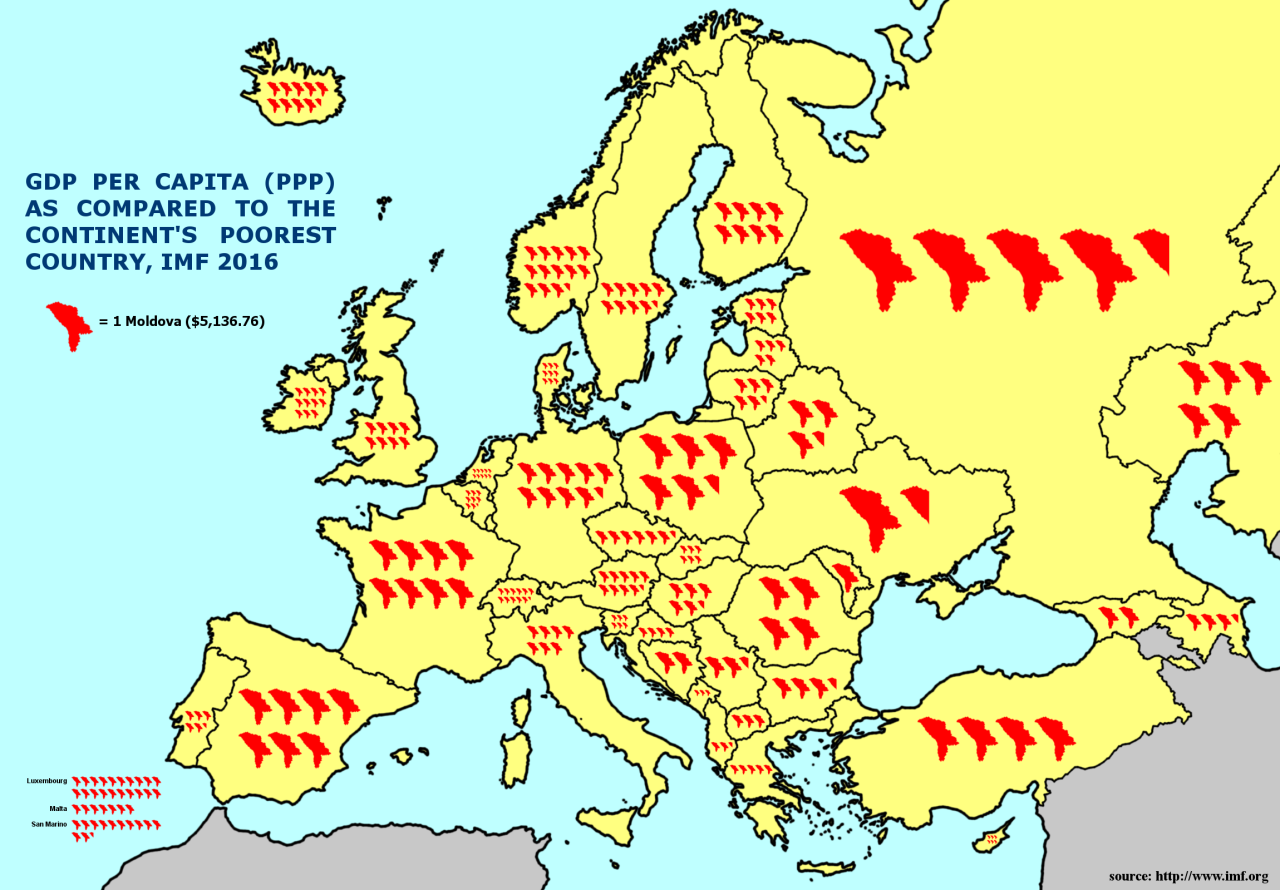
How many times each European country is wealthier (GDP per capita PPP) than the continent’s poorest country (Moldova).
How many times each European country is wealthier (GDP per capita PPP) than the continent’s poorest country (Moldova).
On that note if we’re going to incorporate mortality panic into our civic curriculum “RUN HIDE FIGHT” is worth the what, 60...
On that note if we’re going to incorporate mortality panic into our civic curriculum “RUN HIDE FIGHT” is worth the what, 60 deaths it took to upgrade from “shelter in place”?
mickey mouse advocates for the violent overthrow of governmental institutions this december
mickey mouse advocates for the violent overthrow of governmental institutions this december

For an economic crisis (crisis? it’s at least cris-ish) that propagated by way of household debt and first manifested in...
For an economic crisis (crisis? it’s at least cris-ish) that propagated by way of household debt and first manifested in evictions and foreclosures, it’s really striking - if you’ve got a background in American history - how little pushback there’s been at the county level.
Nationwide debt crises used to happen regularly, and there were inevitably a few sheriffs or judges who would refuse to go along with the liquidation, creating a point of media focus and kicking the issue up to the state level, where governors and legislatures would usually compromise to some degree (especially if the lower officials had conveniently timed their resistance to match election cycles).
Which, if you’ve ever deplored the effects of “politicizing justice” and wonder why anyone ever thought it was a good idea to subject judges and law enforcement officials to electoral pressure, there you go.
Of course there was also the option of getting a few people with rifles, besieging courthouses and blockading auctions, but that died out even earlier - mind the Grapes of Wrath “Then who do we shoot?” bit - as railroads both enabled rural delivery and thus finance beyond local store credit and the one-branch bank, and also made it practical to send nonlocal militia troops into the boonies (first in coal and iron territory, back before the Rust Belt rusted, and then further west).
Everyone knows that after WWII the federal government grew at the expense of state power, fewer appreciate just how much county power - which used to be pretty much the face of Government - receded. Today movements that aim at its restoration, like Posse Comitatus and Sovereign Citizens, are marginal among the marginal.
I blame the telegraph, for enabling realtime communication across distance and thus obviating the necessity of feudal hierarchies. A court, after all, comes from the term for a retinue of power with identifiable human faces. There was always power, but it used to be close enough and personal enough you could make a CHA check against it. (Or Intimidate, which is STR, iirc). Plus there’s always the tendency to go native.
(The most functional method of countering this tendency was requiring courtiers to spend about half their time accumulating power at their own courts in the field and half spending it down at their liege’s court - this was arrived at independently [as far as I know] by the Japanese bakufu, the French royalty, and the American DoD, where high ranking officers rotate back and forth from field command to the Pentagon. Probably parallels in pre-computerized large firms doing rotations between home and branch offices, but I think that was derived from DoD. Well, DoW, back then.)
Histories of the New Deal often acknowledge the federalization of power but then account for the TVA, rural electrification, Rural Telephone Service, etc. either as the political cost paid for that power, or as something that centralized power made possible, when they were in fact constitutive of that power.Is it okay link to some of this stuff?
Is there anything to this other than wild speculation? I’ll note, off the top of my head, that use of non-local troops in rural areas goes back to literally George Washington.
Okay when I first saw this late last night I thought this was on top of @slatestarscratchpad asking me for links. I’m not an academic for reasons that include not having to footnote everything I say with proof that someone else said it first, but skepticism is reasonable, I get asks from time to time requesting more background on local vs. centralized power in American history, so it couldn’t hurt to dig some up, especially if it’s going to get linked around.
A lot of this stuff I think I first picked up in lectures by Stuart Blumin. He was a respected academic historian and I trust him. Though like I said you could pick up the influence of EP Thompson, whose thing was finding a “useful history” of popular resistance in scattered acts that might otherwise be read as meaningless anomaly, so judgement call there. Also means I didn’t have ready citations in hand, but even without academic database subscriptions a day of googling turned up some decent traces.
Before everything else to snap back at fnord -
Yeah, George Washington marched a militia into the sticks to suppress the Whiskey Rebellion, and it was a goddamn nightmare.
Militia will defend their own land but aren’t enthusiastic about long-term marching against abstract threats, so raising the army almost set off more revolts. In the end the men they got were a mixture of human detritus and comfortable toffs on vanity trips, and they set off in ragged order, squabbling and looting (nicknamed “The Watermelon Army”) and deserting in scores all the way.
In fairness that’s normal for pre-Napoleonic armies, but still, marching a militia 200 miles with no combat required the personal attention and charisma of the sitting President/war hero/national founder just to operate at “normal fiasco” levels.
Okay. Then, on sheriff’s resistance, first apparently that’s still a thing, getting stuff on Tom Dart of Cook County (Chicago), IL back in 2008, so. Honestly, if my sheriff or local judge did something like this I’m not really sure what channel it’d reach me by, so huh.
Let’s see, going back, Richard Hongisto, the radical San Francisco sheriff who wore a badge with a peace sign and was jailed in 1977 for refusing to evict …in political alliance with Jim “Kool-Aid” Jones? Ha! I did not know that.
Going further back gets even harder to Google but these Tennessee statutes dating from 1858 (after the Panic of 1857) laying out punishments for sheriffs who refuse to conduct evictions are suggestive enough I’m gonna consider the tradition established.
On judicial resistance it’s tough because “judge makes ruling, is overruled” doesn’t leave bright traces as a break from the norm. A lot of things seem to point back to a 1943 article, Skilton, “Developments in Mortgage Law and Practice” that might (or might not, I dunno, paywalled) contain threads to be pulled, but for now I’d say look at these Massachusetts Supreme Judicial Court decisions.
Notice two details about that session linked - first, this was from 1821, in the aftermath of the Panic of 1819, America’s first major economic disruption that led to its first major debt crisis. Second, that this September session is sitting in Lenox, at the western edge of Massachusetts, and hearing cases appealed from the region.
(This was a way that local county independence was circumscribed in a preindustrial era, a traveling court of prominent judges would make regular circuits into the backcountry to review the local judgements. Lenox to Boston is 131 miles on modern roads.)
Inland farming areas like Western Massachusetts were exactly where the debt crisis was most severe, the inability to turn over debts and thus demand for repayment in hard currency passing down from coastal importers to local merchants to fall on farmers with no capital but their land.
And here you see exactly what I described - local lawyers and judges working up lines of logic by which debtors are granted some relief from their obligation, thus “kicking up” the matter to the state level. Even if these are all overturned in favor of creditors, filling up the docket impresses the issue upon state elites and requires some expenditure of resources and political capital to address - many states responded to the Panic of 1819 with “mortgage redemption” laws giving debtors the opportunity to reclaim their land even after foreclosure.
Another thing, I’m not a lawyer but an interested layman and one thing I notice about these decisions is that in contrast with modern statutory interpretations, they turn on *awfully* distant abstractions of common law.
Which, yeah, in the 19th century people were still struggling to make up after-the-fact justifications by which common law - the accumulated mass of judicial tradition and judgement - represented a coherent and integrated whole and law was a more wide-open field.
Here’s a report from a commission convened by the Governor of Massachusetts about a decade later that diplomatically concludes “maybe we should codify the central bits of this common law, to make courts more smooth and regular”. This was a trend that continued on - the rationalizing Restatements of the Law in the 1920s, that were part of the same professionalizing trend that favored (often state-) law schooling over “reading for the bar”, the Uniform Codes that aimed to homogenize law nationwide.
Robert H. Jackson, the last Supreme Court Justice to not attend law school, eulogized the old ways as a source of charismatic “first principles” rural county power here.
(This means that when Freeman types pitch “the common law” as an American foundation that’s been lost, they’re not wrong. And when they depict “the common law” as “tortuous fever-dream legal logic that affirms the protection of rural nobodies from central power and moneyed interests”, well, they’re not wrong.)
On mob resistance against debt collection - well, that goes at least back to Shays’ Rebellion, the big outbreak since would be the farmland rebellions of the 1930s. Most striking example perhaps in Iowa, where farmers blockaded roads, backed “penny auctions” where the threat of mob violence allowed foreclosed properties to be bought at minimum bid and returned to debtors, and ultimately threatening a judge not to conduct foreclosures (as in, he was dragged from his courtroom and out of town with a noose around his neck).
Now, martial law was declared in response, but note the details in that story - National Guard troops were dispatched from Sheldon and Sioux City. Those are about 30 miles from Le Mars - far enough to not have local connections - but 200 miles from the capitol of Des Moines, which remember is 2/3 the (admittedly, mountain-cleaved) distance George Washington himself struggled to project enough power to suppress insurrection.
But the governor received word of the events by telephone, ordered troops mobilized and dispatched presumably the same way, and sent a commanding officer by airplane. That’s *exactly* what I’m talking about how industrial technologies enabled government control across greater distance.
Finally, as desert I want to point you to this account of the Jackson County Rebellion, which is kind of a mix of all three - mob, sheriff, and judges’ resistance (see page 42 on the earlier populist victory of direct judicial elections, which enabled later “rebellion”) combined with the long Oregon tradition of batshit political violence you’ve never heard of, like the Portland mob, or Vigilantes, or that time in 1984 when a cult that took over a town tried to take over the county by infecting 750 people with a bioterror attack.
I think slatestarscratchpad was asking if he could post a link, not for your links, but thanks for the sources!
Anonymous asked: I think slatestarscratchpad was asking if he could post a link, not for your links, but thanks for the sources!
Yeah, I got that eventually, and I’ve told him it’s ok to link now
Think having someone question that post just as he asked to show it around got me a little freaked and driven to write that follow-up to reassure myself as much as anyone that I wasn’t spreading hogwash
The Registration of Political Parties Act 1998 (c. 48), or An Act to make provision about the registration of political parties...
The Registration of Political Parties Act 1998 (c. 48), or An Act to make provision about the registration of political parties was an act of the Parliament of the United Kingdom to set up a register of political parties in the United Kingdom. Previously there had been no such register, and political parties were not specially recognised. There are currently 468 political parties registered in the UK as of October 8 2016.
The legislation was introduced for a variety of reasons. … [One] motivation was the use of the names Literal Democrats, Conversative Party and Labor Party by people in elections in the 1990s; these names were criticised as potentially confusing with the names of the three major parties in the UK (the Liberal Democrats, the Conservative Party and the Labour Party respectively). In the 1994 European Elections, Richard Huggett stood as a Literal Democrat candidate for the Devon and East Plymouth seat, taking more votes than the Conservative Party margin over the Liberal Democrats.[1]
Richard John Huggett (born January 1944) is a British citizen noted for standing in a variety of elections using descriptions which were similar, but not identical, to those of established political parties, leading to this practice being outlawed under the Registration of Political Parties Act 1998.
Huggett also attempted to run as “Gerald Maclone” in the Winchester constituency in the 1997 General Election and the following by-election (The sitting MP was junior minister Gerry Malone).[7][8] He stood under his own name as “Liberal Democrat Top Choice for Parliament” in the General Election and as a “Literal Democrat” in the following by-election.
Dr. Seuss was not even in the general vicinity of fucking around
Dr. Seuss was not even in the general vicinity of fucking around
FOR YOUR CONSIDERATION:
“From expansionist nationalist boosterism to consolidationist kid’s fare“
Dr. Seuss is the Rudyard Kipling of America
If you’ve seen the critically acclaimed Broadway musical “Hamilton,” then you’ve heard the song “Farmer Refuted.” It’s based on...
What Hamilton teaches us about the importance of anonymous speech (WaPo)If you’ve seen the critically acclaimed Broadway musical “Hamilton,” then you’ve heard the song “Farmer Refuted.” It’s based on a letter a young Alexander Hamilton wrote — he was barely 20 — offering a passionate defense of individual liberty and the brewing American Revolution. Yet he did not sign it under his own name, instead writing as “a sincere friend of America.”
This overlooked fact deserves greater attention. Lin-Manuel Miranda’s musical has renewed Americans’ appreciation of Hamilton, one of our nation’s most dynamic founders. Never before have his life and views, from his defense of individual rights to his opposition to slavery, been so celebrated. But Hamilton’s frequent use of anonymous speech has received scant attention, even though it has a significant bearing on American politics today.
Anonymous speech was a frequent feature of Hamilton’s life — and of the American founding overall. Arguably the single most influential piece leading to American independence was “Common Sense,” the pamphlet penned by Thomas Paine anonymously. Just over a decade later, Hamilton, James Madison and John Jay co-wrote the Federalist Papers as “Publius.”
These were not unconnected or uncommon occurrences. The United States was built in large part on the exchange of ideas circulated anonymously. In the years before the Declaration of Independence, anonymous speech was one of the greatest weapons the colonists used against the tyrant King George III. As for the Constitution, had Publius and others not anonymously dialogued in newspapers about the equally revolutionary document, it might never have been adopted, nor would have the subsequent Bill of Rights with its First Amendment guarantee of free speech.
The bottom line is that it is highly probable that the United States would not even exist without anonymous speech. Sadly, we have forgotten this lesson somewhere in the intervening years. Today, anonymous speech is too often demonized, derided as “dark,” or otherwise dismissed for its lack of “transparency.”
Although there are many examples, the brunt of these attacks centers on the anonymous speech used by nonprofit organizations on both the right and the left. These groups reach out to the public with messages on a wide number of issues, and they can be supported by individuals, corporations, unions and more. The nationwide campaign against anonymous speech is, by and large, a campaign to force these supporters’ identities into the open.
[…]
Some opponents of anonymous political speech claim it enables businesses and individuals to advocate in secret for government policies that benefit themselves. But an idea aired in the public forum — whether it’s suggested by an individual, nonprofit or business — doesn’t mandate an action. It asks people to evaluate the merits of the argument and to decide for themselves if the proposed change would advance society. As then-Supreme Court Justice John Paul Stevens wrote in McIntyre v. Ohio Elections Commission in 1995, “ ‘the best test of truth is the power of the thought to get itself accepted in the competition of the market.’ . . . Don’t underestimate the common man. People are intelligent enough to evaluate the source of an anonymous writing.” Perhaps we should have more faith that voters — and reporters — are smart enough to smell a rat.
When anonymous speech flourishes, ideas that are unpopular, controversial and revolutionary have a much better chance of finding their way into the public square and gaining wider public acceptance. Absent anonymous speech, America’s political discourse would become less vibrant, more impoverished. Hamilton proved it.
DID YOU KNOW THAT TED TALKS ORIGINATED IN THE LATE 1800S?
They were called “Chautauquas”
…to hunt in the morning, fish in the afternoon, rear cattle in the evening, mansplain after dinner…
…to hunt in the morning, fish in the afternoon, rear cattle in the evening, mansplain after dinner…
Me, getting murdered: be gentle it’s my first time
Me, getting murdered: be gentle it’s my first time
Page 283 of 1712