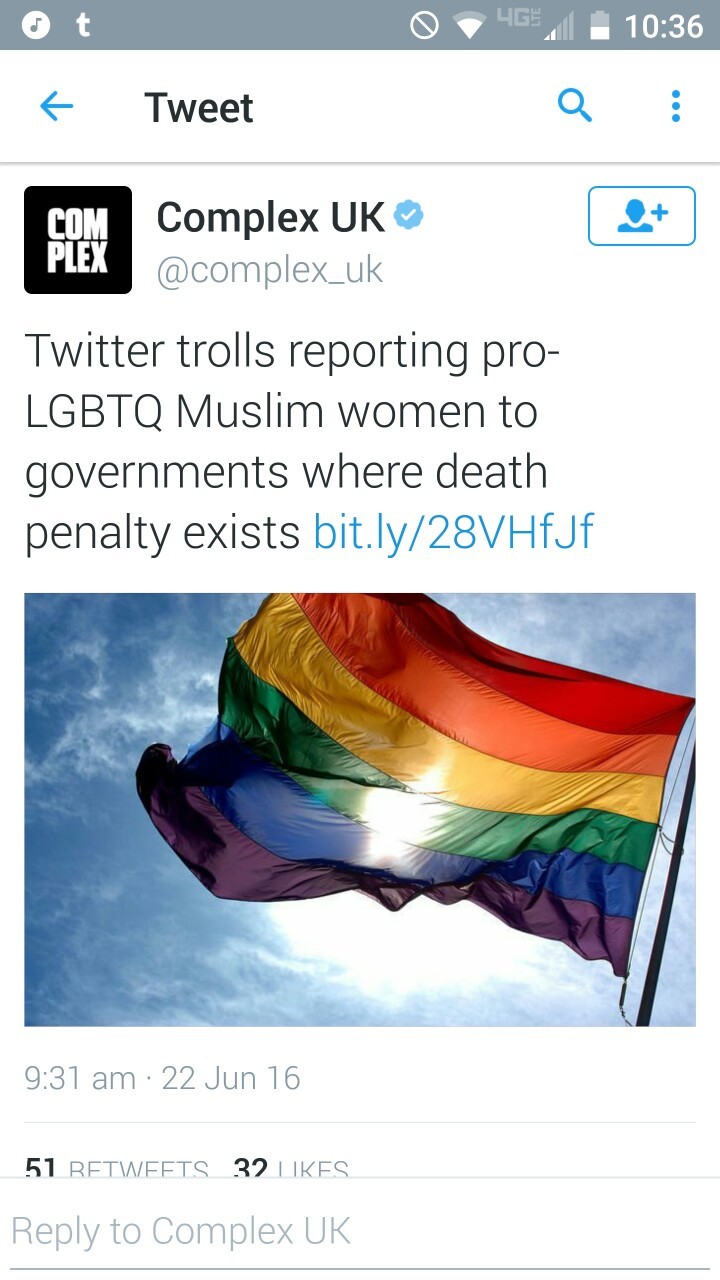
or alternatively: the West maintains friendly diplomatic relationships with countries that have the death penalty for homosexuality.
this isn’t a story about Twitter, really.
Isn’t Prince Alwaleed bin Talal one of the bigger Twitter owners?
Haven’t Anil Dash and Ellen Pao and them been pushing Twitter to punish people for blasphemy and lèse-majesté and punching down and other political crimes?
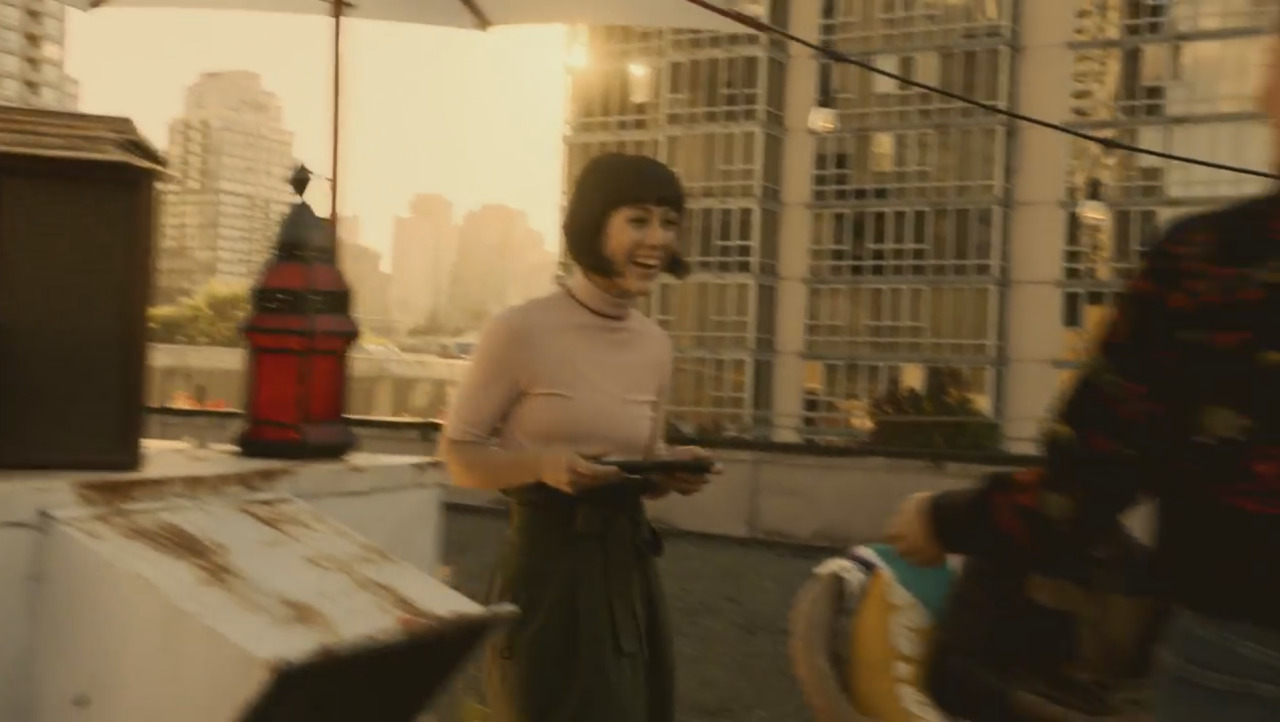
Karen was just going to have a quiet afternoon to herself playing mario when you drunken douches with your rooftop parties were so loud she couldn’t get it. If you’re gonna ruin her quiet time she’s gonna ruin your party
but you’re both out of place and you bond over it and then you fingerbang her, right?
I’m just guessing by this screenshot, it looks like if you set a millennial car ad on a rooftop like a millennial beer ad
seen enough videos I parse “allahu akbar” as universal battlecry for “I am blowing something up”, like how “Geronimo” means “I am jumping from an airplane” and “get some” means “I am firing a mounted machine gun”
Dude I googled “FLIR” just to get the wiki page out of curiosity like two months ago and the margins on infrared imaging equipment must be amazing because I have been getting served ads ever since
Dude I googled “FLIR” just to get the wiki page out of curiosity like two months ago and the margins on infrared imaging equipment must be amazing because I have been getting served ads ever since
Well maybe it’s not the margin so much as the price per unit, the biggest discretionary spend a small business might make in a year, and whatever the profit percentage it’s still big enough to outbid any other advertiser. Like how the DC Metro is always running ads for military planes.
The more historical context you know (i.e. that Portland was a mob town into the 60s) the more grimly hilarious this official history of the Portland Police Reserves gets.
“Like sure we started in the 1920s as ‘Vigilantes’ but that was just the custom of the time. The important thing was legitimate businessmen giving Christmas turkeys to the poor!”
“Not only did this ‘rough and tumble bunch’ of uniformed, armed, lightly trained but unpaid men offer flexibility and support on missions like prostitution stings, but they’re civically involved, pushing for things like higher police salaries!”
“Also since 2011 they can arrest anyone in Oregon”
what libertarians think capitalism is: kid running a lemonade stand, your neighbor fixing your car for you for $50, guy building birdhouses out of his garage
what capitalism actually is: dick cheney made money off the iraq war
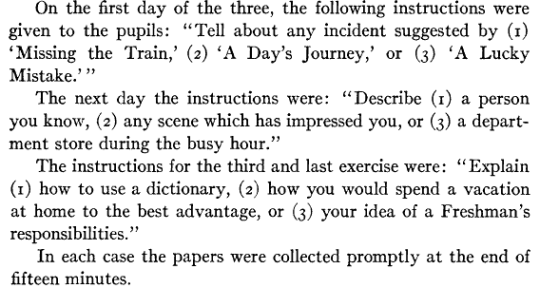
Students in first-year composition classes are, on average, writing longer essays (from an average of 162 words in 1917, to 422 words in 1986, to 1,038 words in 2006), using more complex rhetorical techniques, and making no more errors than those committed by freshman in 1917. That’s according to a longitudinal study of student writing by Andrea A. Lunsford and Karen J. Lunsford, “Mistakes Are a Fact of Life: A National Comparative Study.”
In 2006, two rhetoric and composition professors, Lunsford and Lunsford, decided, in reaction to government studies worrying that students’ literacy levels were declining, to crunch the numbers and determine if students were making more errors in the digital age.
They began by replicating previous studies of American college student errors. There were four similar studies over the past century. In 1917, a professor analyzed the errors in 198 college student papers; in 1930, researchers completed similar studies of 170 and 20,000 papers, respectively. In 1986, Robert Connors and Andrea Lunsford (of the 2006 study) decided to see if contemporary students were making more or fewer errors than those earlier studies showed, and analyzed 3,000 student papers from 1984. The 2006 study (published in 2008) follows the process of these earlier studies and was based on 877 papers. […]
Remarkably, the number of errors students made in their papers stayed consistent over the past 100 years. Students in 2006 committed roughly the same number of errors as students did in 1917. The average has stayed at about 2 errors per 100 words.
What has changed are the kinds of errors students make. The four 20th-century studies show that, when it came to making mistakes, spelling tripped up students the most. Spelling was by far the most common error in 1986 and 1917, “the most frequent student mistake by some 300 percent.” Going down the list of “top 10 errors,” the patterns shifted: Capitalization was the second most frequent error 1917; in 1986, that spot went to “no comma after introductory element.”
In 2006, spelling lost its prominence, dropping down the list of errors to number five. Spell-check and similar word-processing tools are the undeniable cause. But spell-check creates new errors, too: The new number-one error in student writing is now “wrong word.” Spell-check, as most of us know, sometimes corrects spelling to a different word than intended; if the writing is not later proof-read, this computer-created error goes unnoticed. The second most common error in 2006 was “incomplete or missing documentation,” a result, the authors theorize, of a shift in college assignments toward research papers and away from personal essays […]
The study found no evidence for claims that kids are increasingly using “text speak” or emojis in their papers. Lunsford and Lunsford did not find a single such instance of this digital-era error. Ironically, they did find such text speak and emoticons in teachers’ comments to students. (Teachers these days?). […]
The digital revolution has been largely text-based. Over the course of an average day, Americans in 2006 wrote more than they did in 1986 (and in 2015 they wrote more than in 2006). New forms of written communication—texting, social media, and email—are often used instead of spoken ones—phone calls, meetings, and face-to-face discussions. With each text and Facebook update, students become more familiar with and adept at written expression. Today’s students have more experience with writing, and they practice it more than any group of college students in history.