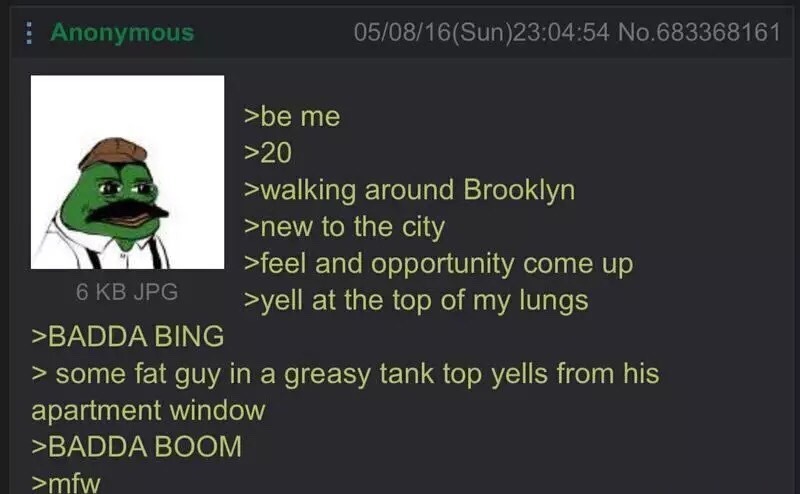
“Then I saw three impure spirits that looked like frogs; they came out of the mouth of the dragon, out of the mouth of the beast and out of the mouth of the false prophet.”
Congratulations on your surveying system! The ability to readily describe land by reference to lines of latitude and longitude is a big step towards realizing your dream of a smallholder republic where land ownership is widely distributed in numerous small plots!
However, have you noticed you’ve effectively condemned everyone driving west in the afternoon to stare straight into the goddamned sun?
“Queering Benedict Arnold" is historical gay fiction. The story alternates between
twenty-first century scenes in which Jake Preston and Ben Arnold (a descendent)
investigate Benedict’s life, and eighteenth-century scenes imagined by Jake and
Ben. Some characters and allusions hark back to “Wayward Island” (in nifty’s file
on Beginnings). Jake Preston is the narrator in both works.
Most episodes are faithful to history, except for sexual encounters, which are
fictional. You should not read this story if you are a minor, or if you are offended
by explicit gay sex.
Benedict Arnold was an American military genius who was treated unfairly by
jealous rivals while he lived. After his death, he was denounced as the archetypal
traitor in history and folklore, but he was a target of inexplicable hatred long
before his treasonable conspiracy with John André to surrender the fort at West
Point to the British. Taken as a whole, “Queering Benedict Arnold” is an attempt
to discover the origins of that hatred.
I… wait a second… 14 Feb 2013 minus… OH MY GOD I think this gay Revolutionary fanfic ripped off its framing device from Assassin’s Creed’s.
Cats and humans have gotten along for millennia, spaying and neutering them only started to become common in the first world in the 1970s. (Which means when Bob Barker started ending Price is Right episodes by imploring people to spay and neuter their pets, it was still novel.)
Part of it’s back when the world was a lot more agricultural, cats tended to be considered more “allied local wildlife” than family members - you’d never even think of neutering the squirrels in your trees, would you? And farmers are not squeamish about killing animals for practical reasons.
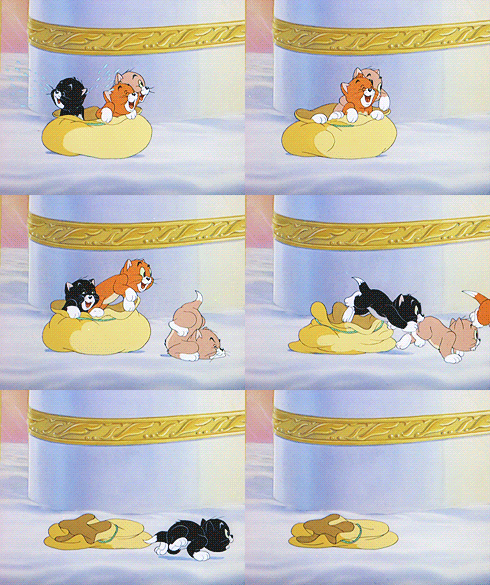
Killing surplus kittens was considered a matter of proper, pro-social animal husbandry and “tied-off sack in a pond” was a well-recognized trope for this.
The normal method of organization, in minds of this kind, is a method which tends to deny the substance of feelings, to dismiss them as ‘subjective’ and therefore likely to obscure or hinder the ordinary march of thought. If the mind is a ‘machine for thinking’, then feeling, in the ordinary sense, is irrelevant to its operations. Yet the ‘machine for thinking’ inhabits a whole personality, which is subject, as in [John Stuart] Mill’s case, to complex stresses, and even to breakdown. Observing this situation, a mind organized in such a way conceives the need for an additional ‘department’, a special reserve area in which feeling can be tended and organized. It supposes, immediately, that such a ‘department’ exists in poetry and art, and it considers that recourse to this reserve area is in fact an ‘enlargement’ of the mind. Such a disposition has become characteristic, and both the practice and the appreciation of art have suffered from art being thus treated as a saving clause in a bad treaty.
Just came out of a showing of Death to Smoochy. Audience participation for the howl scene, good stuff.
Weird that never became more of a cult movie. I think might be because it represented an apex of several movie trends that didn’t continue on past.
1. the transitional ‘90s urban plot, where American cities were still depicted as playgrounds for white ethnic crime but the plot was kinda about how they were becoming playgrounds for professionals. Get Shorty, Analyze This, The Sopranos
2. Robin Williams’ self-deconstructive period (One Hour Photo, etc.) After he suicided it turns out everyone had always treasured him, but post-Aladdin into the 2000s there was a growing consensus he had always been just a cocaine-sweaty narcissist hack.
3. The Nora Ephron adult romantic comedy revival. Towards the start there’s hints toward the ‘80s/‘90s backlash “jaded businessbitch thaws out and realizes what’s important (nurturing children)” plot but it turns into a neo-screwball tension-between-equals. Even more than The 40 Year Old Virgin - 3 years later as Apatow supplanted Ephron - Catherine Keener’s is a specifically 40something fuckability, and the movie’s refreshingly upfront that the reward for being a good man is eventually a guarded but mature relationship with someone people in your circle used as a toy when she was younger and tighter.
Also, it’s a pretty good example of a 5 (as vs. the standard 3) act plot structure.
kontextmaschine said: weird thing it’s like the avant garde realized they were beating them and that’s why they decided to join them. Did it myself and it still sounds odd.
When I came to not only believe and assert that there were no effectual divinities but to actually alieve it I realized that far from undermining organized religion that only reinforced its terrible power. Like you could grok these entities and their endurance and what they’ve done if there were supernatural forces behind them, but realizing that everything they’ve done - supervising empires and structuring daily life across continents, across millennia; bringing internal coherence and actual numinous spiritual presence to people’s lives - is purely human-powered, and entire systems like this have been rigged up and left to run for ages by people of about the level we talk to on this blue website, several times, almost constantly even.
It’s like realizing the humanities have been building nukes long before the sciences ever did, and there’s nothing stopping you, you know?