shrine to a dude, who even knows

me: oh damn I dropped my hot pocket on this carpet. God dammit you: remember! you. are. valid. me: what the fuck dude help me...

me: oh damn I dropped my hot pocket on this carpet. God dammit
you: remember! you. are. valid.
me: what the fuck dude help me clean this mess up
you: you're valid and I love you

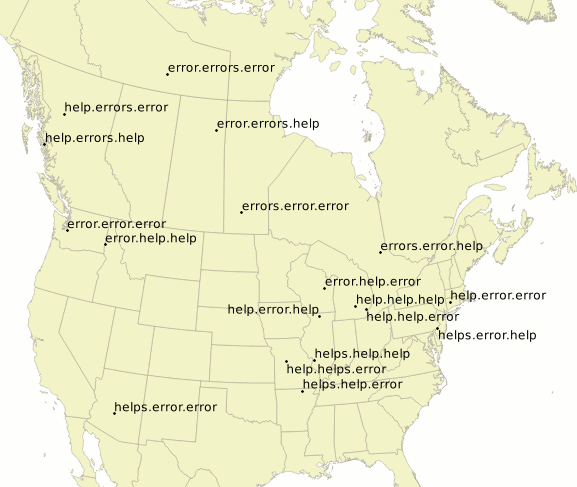
Locations of codes with the words “error” and “help” in the patented What3Words system in North America.

mapsontheweb:

Locations of codes with the words “error” and “help” in the patented What3Words system in North America.

Meanwhile, Megaloid momworship has got completely out of hand. Our land, subjectively mapped, would have more silver cords and...

Meanwhile, Megaloid momworship has got completely out of hand. Our land, subjectively mapped, would have more silver cords and apron strings crisscrossing it than railroads and telephone wires. Mom is everywhere and everything and damned near everybody, and from her depends all the rest of the U. S. Disguised as good old mom, dear old mom, sweet old mom, your loving mom, and so on, she is the bride at every funeral and the corpse at every wedding. Men live for her and die for her, dote upon her and whisper her name as they pass away, and I believe she has now achieved, in the hierarchy of miscellaneous articles, a spot next to the Bible and the Flag, being reckoned part of both in a way. She may therefore soon be granted by the House of Representatives the especial supreme and extraordinary right of sitting on top of both when she chooses, which, God knows, she does. At any rate, if no such bill is under consideration, the presentation of one would cause little debate among the solons. These sages take cracks at their native land and makes jokes about Holy Writ, but nobody among them–no great man or brave–from the first day of the first congressional meeting to the present ever stood in our halls of state and pronounced the one indubitably most-needed American verity: ‘Gentlemen, mom is a jerk.’
Philip Wylie, Generation of Vipers, 1942

Tagged: megaloid momworship

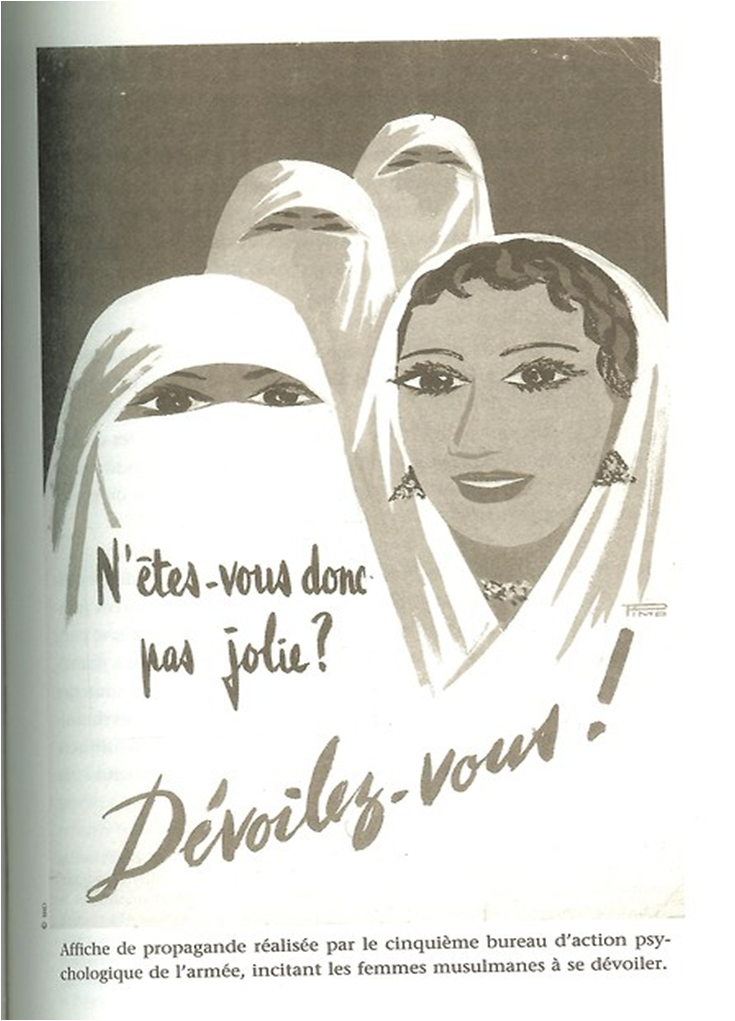
Aren’t you pretty? Unveil yourself! (French Algeria, 1930s?)

historylover1230:

Aren’t you pretty? Unveil yourself! (French Algeria, 1930s?)

Tagged: history same as it ever was

There is an amusing progression that you see sometimes, when people are discussing possible disaster situations, and A says well...

argumate:

There is an amusing progression that you see sometimes, when people are discussing possible disaster situations, and A says well I’m not worried, I’ve got some money in the bank, and B says oh you sweet summer child, as if banks will be accessible in a disaster, I keep cash under my mattress, and C says cash isn’t worth the paper its printed on, I have gold in my basement! before D shouts who are you going to trade your gold with?? what you really need is arable land and a fresh water source! and E screams how are you going to defend that land against me and my GUNS! and everyone mutters under their breath and glares.

the F solution is to assemble a larger force, what you really need is leadership.

One of my old roommates grew crops in the yard and was proud like “if civilization collapses, at least *I* can provide for myself” and I was like

  • First off, we are on a busy street and that shit would get stolen immediately and we don’t have enough cropland to support a dedicated guard.
  • Second off, you have diabetes and insulin doesn’t grow on trees.

So you grew up with a bunch of pot farmers who are used to the production and trading challenges of grey market farming, go offer yourself to one of them and make sure it’s one in a trading relationship with the biotech companies over the west hills.

(i should specify that i merely thought this, to hurry the process of pretending each other didn’t exist)

I’ve mentioned “romantic fantasy” in a few recent posts, and some of the responses have made it apparent that a lot of folks...

wrangletangle:

lizziegoneastray:

prokopetz:

modularnra40:

prokopetz:

becausedragonage:

prokopetz:

I’ve mentioned “romantic fantasy” in a few recent posts, and some of the responses have made it apparent that a lot of folks have no idea what that actually means - they’re reading it as “romance novels in fantasy settings”, and while some romantic fantasy stories are that, there’s a bit more to it.

In a nutshell, romantic fantasy is a particular genre of Western fantasy literature that got started in the 1970s, reaching its peak in the late 1980s and early 1990s. Its popularity sharply declined shortly thereafter, for reasons that are far too complicated to go into here; suffice it to say that you won’t find many pure examples of the type published after 1998 or so.

It’s tough to pin down exactly what romantic fantasy is in a few words, but you’ll definitely know it when you see it - there’s a very particular complex of tropes that defines it. I’ll try to hit the highlights below; not every romantic fantasy story will exhibit all of these traits, but most will exhibit most of them.

Romantic fantasy settings are typically “grown up” versions of settings that traditionally appeal to young girls: telepathic horses, wise queens, enchanted forests, all that stuff. Note that by “grown up”, I don’t mean “dark” or deconstructionist; romantic fantasy is usually on board with the optimistic tone of its source material, and any grime and uncertainty is the result of being a place that adult human beings actually live in. Protagonists are natives of the setting, rather than visitors from Earth (as is customary in similar stories targeted at younger audiences), though exceptions do exist.

In terms of stories and themes, romance is certainly a big presence, but an even stronger one is politics. Where traditional fantasy is deeply concerned with the geography of its settings, romantic fantasy focuses on the political landscape. Overwrought battle scenes are replaced by long and complicated discussions of political alliances and manoeuverings, brought down to the personal level through the use of heavily stylised supporting characters who function as avatars of the factions and philosophies they represent. Many romantic fantasy stories employ frequent “head-hopping” to give the reader insight into these philosophies, often to the point of narrating brief scenes from the villain’s perspective.

The “good” societies of romantic fantasy settings tend to be egalitarian or matriarchal. Patriarchal attitudes are exhibited only by evil men - or very occasionally by sympathetic male characters who are too young and sheltered to know better (and are about to learn!) - and often serve as cultural markers of the obligatory Evil Empire Over Yonder. Romantic fantasy’s heydey very slightly predates third-wave feminism, so expect to see a lot of the second wave’s unexamined gender essentialism in play; in particular, expect any evil or antagonistic woman to be framed as a traitor to her gender.

Usually these societies are explicitly gay-friendly. There’s often a special made-up word - always printed in italics - for same-gender relationships. If homophobia exists, it’s a trait that only evil people possess, and - like patriarchy - may function as a cultural marker of the Evil Empire. (Note, however, that most romantic fantasy authors were straight women, so the handling of this element tends to be… uneven at best.)

Magical abilities are very common. This may involve a unique talent for each individual, or a set of defined “spheres” of magic that practically everyone is aligned with. An adolescent lacking magical abilities is usually a metaphor for being a late bloomer; an adult lacking magical abilities is usually a metaphor for being physically disabled. (And yes, that last one can get very cringey at times, in all the ways you’d expect - it was the 1980s, after all.)

In keeping with their narrative focus, romantic fantasy stories almost always have an explicitly political character with a strongly progressive bent. However, most romantic fantasy settings share mainstream fantasy’s inexplicable boner for monarchies, so there’s often a fair bit of cognitive dissonance in play - many romantic fantasy settings go through elaborate gymnastics to explain why our hereditary nobility is okay even though everybody else’s is icky and bad. This explanation may literally boil down to “a wizard did it” (i.e., some magical force exists to prevent the good guys’ nobles from abusing their power).

I think that about covers it, though I’m sure I’ve overlooked something - anybody who knows the subject better than I do should feel free to yell at me about it.

(As an aside, if some of this is sounding awful familiar, yes - My Little Pony: Friendship is Magic draws a lot of inspiration from romantic fantasy, particularly the early 90s strand. It’s not a straight example of the type - there are very few of those around today - but it’s not at all subtle about its roots.)

Oh, I read so much of this as a teen and young adult. It might have started a touch earlier than the 70′s with Anne MacCaffrey and Dragonriders of Pern? The most obvious example I can think of is Mercedes Lackey’s Valdemar books and over in the comic book medium, I think Wendy Pini’s Elfquest just squeezes in. 

One thing about this genre, when I reread something from it that I loved 20 or 25 years ago, I go from extreme and affectionate nostalgia to quite literally blushing in embarrassment over some of those cringe-worthy bits you mentioned.
Yeah, Lackey’s Valdemar books are basically the platonic ideal of romantic fantasy for a lot of folks - though in spite of being arguably the most influential romantic fantasy author of her generation, Lackey herself was a relative latecomer to the genre.

As for McCaffrey, I’d hesitate to classify her Dragonriders of Pern series as romantic fantasy. I’ll grant that later entries in the series certainly develop in that direction, but especially early on it hews a lot closer to traditional heroic fantasy. Her Talent universe, however, is a dead-perfect example of the type, in spite of having an extremely variant setting.

(For those who haven’t read them, McCaffrey’s Talent books take place in a gonzo far-future space opera setting, revolving around the personal dramas of a pseudo-noble caste of godlike telepaths who enjoy their privileges as a consequence of being the setting’s only economical source of faster-than-light communication and transport. Weird stuff.)

I read so much Mercedes Lacky and Anne McCaffrey as a kid. I’d love to hear about the decline of the genre - I’m guessing that modern feminism and the lgbt movement had a lot to do with it? That is - the growth out of a lot of the more cringey tropes morphing the genre into something distinctly different?

Yeah, there were a number of different factors involved. Losing the LGBT audience was certainly part of it - not because of the inept handling of the subject matter per se, but because a lot of LGBT readers were reading romantic fantasy simply because they couldn’t get that kind of representation anywhere else, and when more LGBT authors started getting published in the mid 1990s, they had better options.

The Internet itself was another big culprit. Commercial Internet service went mainstream circa 1995, and suddenly, a lot of content that had formerly been the province of a hard core of dedicated hobbyists was accessible to everyone - most critically, online fanfic. Many folks, particularly among younger readers, found that online fanfic scratched the same itch as romantic fantasy; I recall a great deal of mid-to-late-1990s fanfic that basically applied the tropes and forms of romantic fantasy to video game settings, for example. (Chrono Trigger was an oddly popular choice - anyone old enough to remember that?)

This was compounded by mishandling by both authors and publishers. Though the new communication channels afforded by the Internet could have been a great boon to them, most romantic fantasy authors (correctly) perceived online fanfic as competing for their audience, and responded with extreme hostility. We’ve talked a bit about Mercedes Lackey; her stance on online fanfic was legendarily draconian, and often backed with litigation, to the extent that her nascent Internet fandom was basically smothered in its crib. By the time she mellowed out on the medium, it was too late. A lot of other romantic fantasy authors and publishers followed the same trajectory.

Lastly, the final nail in romantic fantasy’s coffin was basically J K Rowling’s fault, believe it or not. During the period in which romantic fantasy literature enjoyed its peak popularity, YA fantasy literature was in a low ebb; there wasn’t much of it coming out, and most of it wasn’t very good, so a lot of kids were reading romantic fantasy (in spite of its subject matter often being wildly inappropriate; I’ve mentioned in the past how many books about teenage girls having sex with dragons I ended up reading!). That youth demographic ended up being the last bastion of romantic fantasy’s mainstream readership - then the YA fantasy renaissance of the late 1990s stole that audience wholesale.

There were probably half-a-dozen other significant factors that contributed to romantic fantasy’s commercial decline, but those are the highlights.

I knew it was Rowling’s fault I couldn’t find “my” type of fantasy anymore! All of a sudden, everyone seemed to be trying to write the next Harry Potter. It was quite upsetting, as I had rather liked the fantasy genre the way it was before, back when it was generally agreed upon that magic ought to have actual rules :P I had no idea there was an actual name for this type of fantasy. I miss it dreadfully, though :( though, yes, certain scenes in the Mage Winds trilogy were pretty horrifying when I was ten… 

Another element in the decline was related to the development of the internet, but only tangentially.

In the late 80s and early 90s, anime and manga began to be licensed more and more in the Americas and Europe. At first, most offerings were male-focused and had a narrow audience, but with the shift from bbs and rec.alt. to free personal webpages (thank you Netscape!), information about series from Japan spread much faster. At this point, the fansub community boomed (no really, boomed to the point where there were distributors in countries all over the world, not just in college clubs), due to the ability to publish their catalogs and contact information more easily. This brought a variety of shoujo and josei series to the attention of a wider audience, specifically of women, and suddenly female geeks who formerly had been following Romantic Fantasy found out that entire swaths of television and comics were already dedicated to them in Japan. (You can thank Sailor Moon for the explosion of shoujo that decade. No, really. I’m serious.)

1995 was a big turning point. In a single year, while Sailor Moon was finishing up season S and moving on to Super S, the following powerhouse anime were released: Fushigi Yuugi, Magic Knight Rayearth, Wedding Peach, Gundam Wing, Evangelion, and Slayers. Of these, the first 3 were shoujo; Fushighi Yuugi was an ancient China-themed portal anime that pretty much nailed the Romantic Fantasy genre right down the middle, Magic Knight Rayearth was a mecha portal magical girl series, and Wedding Peach was a real world magical girl series. As for the others, Gundam Wing was intended as a shounen SF war story to reboot the Gundam franchise, but it ended up with basically a yaoi fanbase dominated by women (fandom-wise, it was the Supernatural of its day, but with more lead characters and less incest). Evangelion was a groundbreaking grimdark apocalyptic disaster as notorious as it still is famous, and its audience was pretty well split in every way imaginable, including on whether they hated it or not. The only unmitigated success of the year not to draw most of its fanbase from among women was Slayers.

The impact of that year and the following (1996 was the year of Escaflowne and Hana Yori Dango) was immediately obvious if you went to SF&F cons in the US. The cosplay shifted, the panels shifted, there was a lot of sudden interest from women in what had been presented as a mostly male genre often erroneously equated with porn. Many women I had formerly discussed Bradley, Lackey, McCaffrey, and Rawn with were now discussing CLAMP and Takeuchi-sensei and the best places to get reasonably-priced import manga.

So yeah: internet fanfiction, Rowling/Duane/the YA crowd in general, books by queer authors who didn’t encourage us to think of ways to die heroically, anime & manga, and of course Supernatural Romance. Romantic Fantasy was a genre so tenacious that it took that many blows for it to mostly fall (and I would argue that it still informs fantasy television today). Or, conversely, you can think of the need that women have to see fantastical stories that reflect us as so powerful that for over 2 decades it drove an incredibly diverse group of women to all converge on a genre that didn’t entirely satisfy most of them but on which they were totally willing to spend money, because it was a genre women were actually producing for ourselves, and nobody else was listening.

There’s a reason women dominate fic.

saw a musical tesla coil performance sounds like a particularly shrieky Hammond organ tbh Quarterworld Hawthorne Blvd....

saw a musical tesla coil performance

sounds like a particularly shrieky Hammond organ tbh

Quarterworld
Hawthorne Blvd.
Portland, OR

Tagged: portlandportlandportland tesla coil

Walmart’s Out-of-Control Crime Problem Is Driving Police Crazy

Walmart’s Out-of-Control Crime Problem Is Driving Police Crazy

This is interesting - given that Wal-Mart constitutes a major part of the economy and society of many of its host cultures, dialing back on security expenses can significantly impact crime rates.

One interesting thing is this is kind of like that Unwritten Law dynamic I mentioned a bit back, only run in reverse - private actors losing the confidence of the law (nominally the legitimated means of employing punishment to maintain society) for failing in their duty to suppress wrongness.

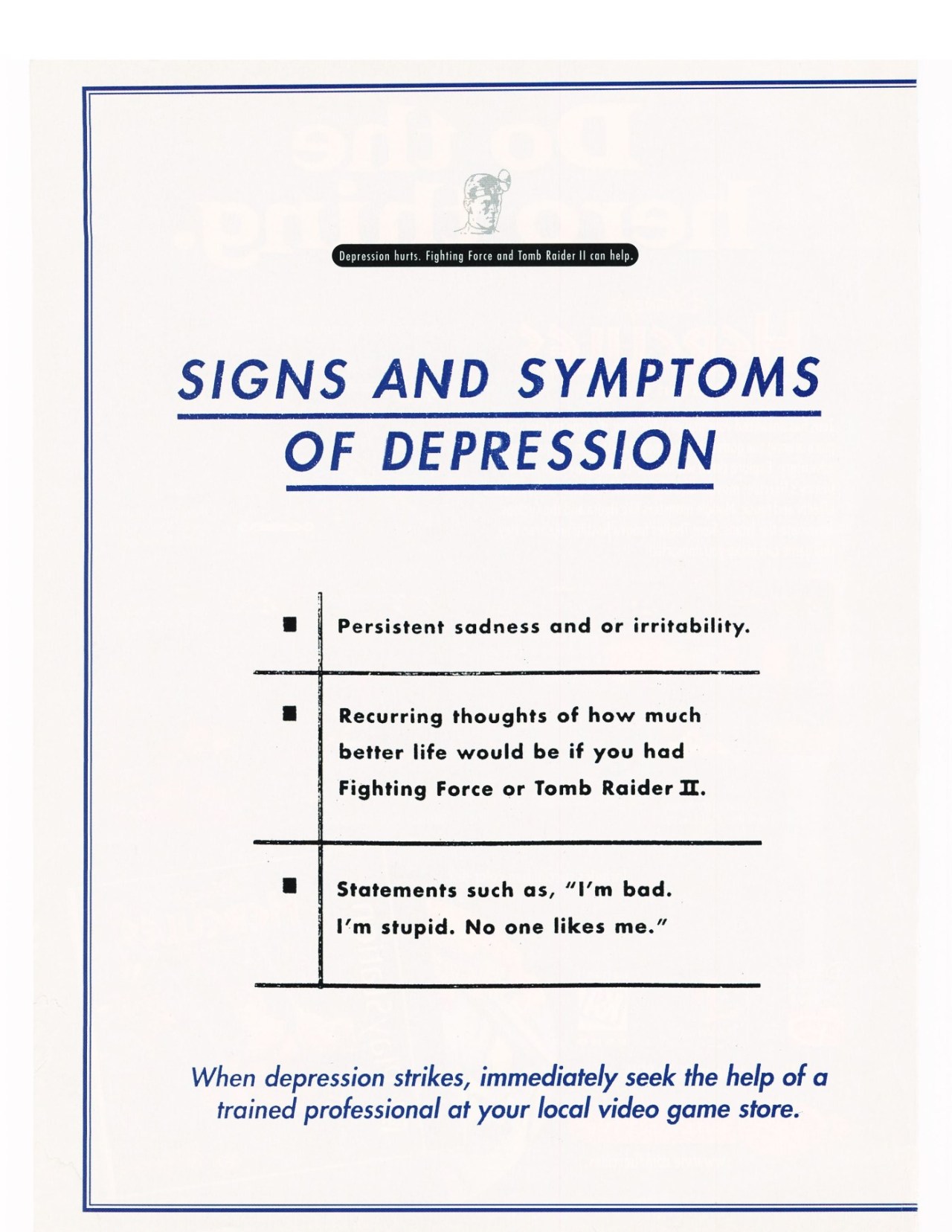
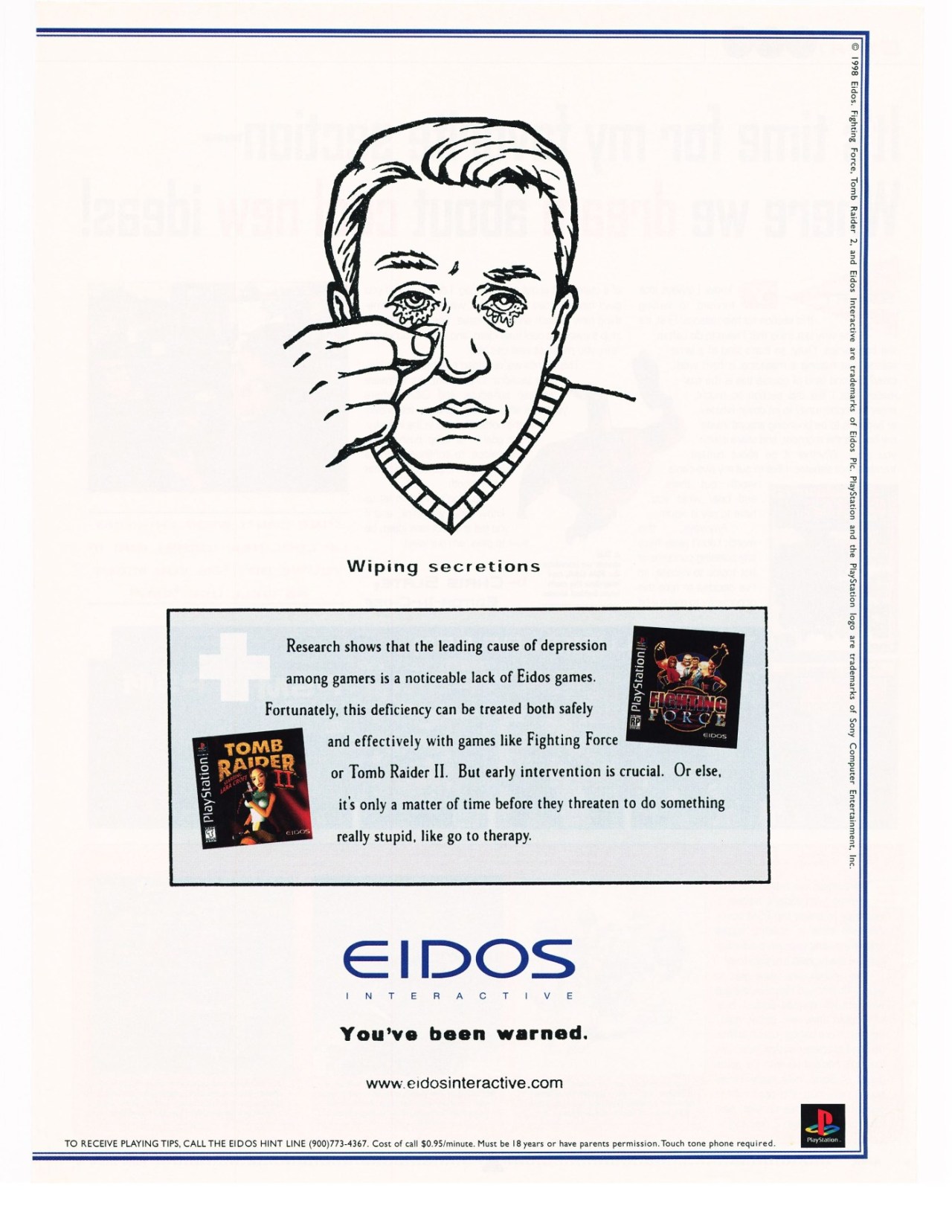
“Research shows that the leading cause of depression among gamers is a noticable lack of @Eidos games” [Follow Old Game Mags]...

oldgamemags:

“Research shows that the leading cause of depression among gamers is a noticable lack of @Eidos games”

[Follow Old Game Mags]
[Support us on Patreon]

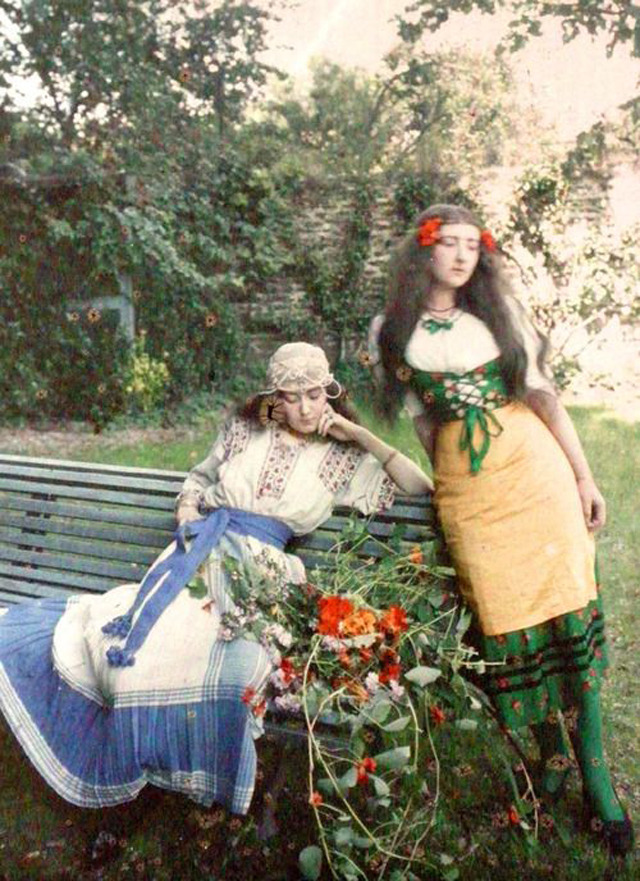
1900′s autochrome

classicland:

1900′s autochrome

Libertine Sexuality in Post-Restoration England: Group Sex and Flagellation among the Middling Sort in Norwich in 1706-07

Libertine Sexuality in Post-Restoration England: Group Sex and Flagellation among the Middling Sort in Norwich in 1706-07

donjuan-auxenfers:

I’m trying to think of a better journal article title, but failing.

Orgy-porgy!

Tagged: same as it ever was

Knightscope, Inc. – Advanced Physical Security Technologies

Knightscope, Inc. – Advanced Physical Security Technologies
image
image


Was kind of hoping this was a clever teaser campaign for some sort of dystopic near-future SF movie or game

Nope!

(the incident report was this case when a mall rent-a-dalek ran over a toddler)

Tagged: 2016

Édifice Jean-Talon Street view Édifice Jean-Talon - Édifices H & J - 1969-72 by Tessier, Corriveau, St-Gelais, Tremblay,...

artstreetecture:

Édifice Jean-Talon

Street view
Édifice Jean-Talon - Édifices H & J - 1969-72 by Tessier, Corriveau, St-Gelais, Tremblay, Tremblay & Labbé

Tagged: same

oh what the fuk have you done to your theme it was great

Anonymous asked: oh what the fuk have you done to your theme it was great

Haven’t done shit, what’s up?

Osaka That Evening by Jon Siegel on Flickr.

ourbedtimedreams:

Osaka That Evening by Jon Siegel on Flickr.

Remember to alawys be daring From il Vittoriale degli Italiani, Gabriele D’Annunzio’s mansion/museum

tuttieroi:

Remember to alawys be daring

From il Vittoriale degli Italiani, Gabriele D’Annunzio’s mansion/museum

Tagged: gabriele d'annunzio memento audere semper d'annunzio

listen i know this is a creepypasta but imagine people coming to this conclusion irl

traversefamilypicnic:

joyceanfartboner:

listen i know this is a creepypasta but imagine people coming to this conclusion irl

rookie: this is the third victim we’ve found last month. and we won’t find the first until… tomorrow??
police captain: i’m too old for this shit. i am always just about to have been too old for this shit. we’ve got to have caught this perp after he hasn’t struck again, just like last time

Hsien hui Tsai

zynyz:

Hsien hui Tsai

Hsien hui Tsai Hsien hui Tsai Hsien hui Tsai Hsien hui Tsai Hsien hui Tsai



ah shit i just remembered the 90s

unhaunting:

ah shit i just remembered the 90s

I wonder how many of the people who say “political violence is never acceptable” remember when they’re speaking that the United...

zennistrad:

I wonder how many of the people who say “political violence is never acceptable” remember when they’re speaking that the United States was literally only made possible by a revolution.

And revolutionary violence wasn’t limited to Minutemen and redcoats, either. An important part of colonists coming together to resist the crown was the purging of Loyalists and dissenters.

Patriots abused people, beat them, mocked them, pelted them with rocks, coated their bare skin with hot tar and feathers and ran them out of town on a rail, formed into mobs and laid siege to their houses, drove them from their jobs, homes, cities on threat of death.

America was made possible by a campaign of violent mob harassment.

Tagged: history amhist