shrine to a dude, who even knows

You know, CPR and the Heimlich Maneuver are pretty cool. It’s like at several different points during my youth people would set...

kontextmaschine:

You know, CPR and the Heimlich Maneuver are pretty cool.

It’s like at several different points during my youth people would set aside an hour or so to tell me all about them and that seemed weird at the time but a decade plus on I feel like I still remember enough to be helpful.

“Save people from dying with one weird trick discovered by a dad

Tagged: rerun two decades now that i think of it

now that I think of it, CPR/Heimlich are pretty interesting it that they’re useful late-20th century technologies that are...

now that I think of it, CPR/Heimlich are pretty interesting it that they’re useful late-20th century technologies that are entirely powered by human muscle labor

like, there’s no reason a caveman couldn’t do them just as well, and even their conception only really requires pre-microscope cadaver-dissection anatomy

so the key was the social technology of… mass literacy and universal schooling?

man *waking up from 12 year coma*: excuse me…. Doctor… ive been asleep for so long….. can you please…. bring me a newspaper… so...

michaelblume:

memeufacturing:

man *waking up from 12 year coma*: excuse me…. Doctor… ive been asleep for so long….. can you please…. bring me a newspaper… so i can better understand the current world… 
doctor: no i absolutely fucking cannot do that 

I keep hearing references to Harambe in the context of presidential politics and I have absolutely no idea where it’s actually coming from.

honestly, I think he just resonated enough with Weird Twitter(s) and that lies close enough to Young Hotshot Journalist Twitter that they started doing it a bit to signal how with-it they were

it’s weird though, I’m sure it’s meant as shitposting, but the stuff they do - portray him as this noble figure shot down by the man as a microcosm of a failed system, rewrite the lyrics to recognizable popular tunes to convey this story, make art and micromythology where he blesses favored causes and stands ready to avenge disfavored ones - is like textbook birthing of a folk hero legend

I guess that’s not unprecedented - 4chan wasn’t too far off with their “can’t corner the Dorner/dodge the Rodge/flim-flam the Zimmerman” stuff, and Black Lives Matter has been showing the power of social media as a martyr-making platform

wonder if it’s just Weird Twitter using their ironic idiom to express an instinctual reaction to Stability going negative, same thing as Bonnie and Clyde and the social bandit vogue of the late ‘60s/’70s

Tagged: same as it ever was

my brain: Hey, what's your favorite romance movie? me: That's kinda a loaded question, you're really asking what cinematic...

my brain: Hey, what's your favorite romance movie?
me: That's kinda a loaded question, you're really asking what cinematic relationship  do I most wish—
my brain: Mr. & Mrs. Smith. That's not a romance.
me: What?
my brain: Brad Pitt, Angelina Jolie, 2005.
me: 
my brain: Not a romance.
me: I don't–
my brain: Yes you do.
me: 
me: 
me: FINE. But it was at least kinda a–
my brain: IT WAS A DATE MOVIE

Man, if people get outraged when someone releases one person’s address and contact info to the public, wait until they learn...

kontextmaschine:

Man, if people get outraged when someone releases one person’s address and contact info to the public, wait until they learn about the fucking phone book.

image


Internet Magic!

wait a second, is “Borderline” (from 1983′s Madonna) riffing on Borderline Personality Disorder (from 1980′s DSM-III)?

wait a second, is “Borderline” (from 1983′s Madonna) riffing on Borderline Personality Disorder (from 1980′s DSM-III)?

Tagged: dsm-iii borderline personality disorder

Man, if people get outraged when someone releases one person’s address and contact info to the public, wait until they learn...

wirehead-wannabe:

kontextmaschine:

kontextmaschine:

Man, if people get outraged when someone releases one person’s address and contact info to the public, wait until they learn about the fucking phone book.

image


Internet Magic!

Are celebrities’ addresses and contact info still private nowadays? I remember when getting a celebrity’s number or address (consensually or not) was a TV Trope, but I haven’t seen or heard of it in like tenish years, nor have I explicitly heard of it no longer being a thing.

Edit: also the thing about dozxxing is mostly just the coordination aspect, plus removal of trivial inconveniences.

The phone book all along gave you the option to conceal your information as an “unlisted number” (for a monthly fee), I know in particular Rebecca Schaeffer murder inspired state governments to cut off public access to DMV records in the 1990s and make some threatening growls towards private investigators

(Which since the PI industry is watching and lobbying the relevant regulatory apparatuses all the time and not just when momentarily inspired by some news hook, amounted to nothing much, though it does give me an excuse to mention the California private security licensing training I saw once which was like

You’re not cops!

Really!

Or Batman!

Really guarding is about watching over things and taking notes!

Maybe talking assertively, but remember you’re not cops!

Also here is this 1 hour-long addendum from 2002 on how to fight nuclear, biological, and chemical terrorism

)

Aaaaaaaaanyway, MY favorite way to track down super sekrit celebrity addresses is to look them up in the public FEC filings if they’ve made political donations

So yesterday I remembered that Slate and Salon had been around for like twenty goddamn years, and I thought it would be funny to...

So yesterday I remembered that Slate and Salon had been around for like twenty goddamn years, and I thought it would be funny to go back and check their early stuff and see how much had changed and how distant the past seemed

I settled on this issue of Slate, April 26, 1999 which of the earliest Wayback Machine archives was the first one to be something useful, sooo, let’s take a look

First off, it leads with a bunch of features that are really just summaries and links to other publications or websites - I forgot before social media platforms and blogs, really, how much websites were just daily-updated lists pointing you to interesting things elsewhere. It’s interesting that many of these summaries don’t have any links, I’m not clear whether that was because they were of dead-tree media that didn’t have websites or because of journalistic etiquette policy.

I remember that back then old-line journalism was kind of daffy about the net, and I know some places at least frowned on linking to internal pages, because they wanted you to approach and navigate through the front page, paper-style. So as to prevent someone from undermining their advertising model and system of cross-promotion and cross-subsidy exactly like Facebook did maybe, so.

The big news of the day was NATO’s war in Kosovo and the Columbine shooting, which had just recently occurred (and seemed to be shorthanded more as Littleton than Columbine at this point). So, what kind of OC do they have on the war?

Ah, hm. Masha Gessen kinda mawking us towards Eastern European war, William Saletan meandering in circles stroking his chin, Jonathan Chait (in an installation of regular feature “Crapshoot”, tagline “Dumb Ideas Exposed Here”) dismisses the notion that soldiers are underpaid and in need of the raises they recently recieved

The 13 percent “pay gap” represents the difference in the growth of military versus civilian wages since 1982–that is, civilian wages have grown 13 percent faster. This does not mean that soldiers earn less than civilians, because it does not take into account the pay differential from 1982. If my wages have increased by 100 percent during the past five years while Bill Gates’ have increased by nearly 50 percent, this does not mean that I am earning 50 percent more than Bill Gates, since he was making more to begin with.

So, the more things change, I guess. What else, what else? Oh, “Explainer” was them. That wasn’t cited enough as a precedent to Vox, at least their early intentional style, the modest height they dived off to chase clicks

Looking around in other links there ARE some really striking bits in here though.

Students at Wofford College in Spartanburg, S.C., staged a protest March 3 against one of their fellow students, white supremacist Davis Wolfgang Hawke, a Web-savvy junior who runs a neo-Nazi organization from his dorm room.

man was just ahead of his time

A University of Arizona student who enrolled in a class called “Women in Literature” was dismayed to discover that the class addressed gay and lesbian issues. As a result, the Arizona legislature is now considering warning labels for courses with potentially “objectionable” content. Says Arizona Regents President Judy Gignac, “The students are our customers and they are paying to be taught. They need to know in advance what it is they’re paying for.”

ditto

Confronted by an increasingly vocal faction of rabbinical students and liberal rabbis, New York’s Jewish Theological Seminary may be forced to reconsider its ban on admitting homosexual students.

That’s Conservative Judiasm, if you were curious

The Matrix (Warner Bros.). Keanu Reeves stars in this complex, dystopic sci-fi thriller. Critics give high marks to the computer-enhanced special effects but are divided on the merits of the ambitious plot and the everything-but-the-kichen-sink filmic provenance, from Soylent Green to Terminator 2 to Hong Kong actioners. For some the effects are enough…

nice

(To see the trailer and some fine Keanu pics, visit this fan site[)]

NICE

Entertainment Weekly’s Owen Gleiberman writes [10 Things I Hate About You] “may be the cheekiest ‘literary’ update yet–a post-riot grrrl gloss” of the play. Many gush over the foxy young star, Julia Stiles. Complaints are mainly a result of critics’ upscale-high-school-caper-film fatigue.

yeah, I guess those were two actual movie trends

A Walk on the Moon (Miramax Films). Mixed reviews, tending toward the negative, for this tale of sexual liberation set in 1969. A 32-year-old Jewish housewife who married too young is on vacation in the Catskills with her two kids and mother-in-law when she meets a sexy, young blouse peddler. The rest? As the Chicago Sun-Times’ Roger Ebert says, it’s “one small step for the Blouse Man, a giant leap for Pearl Kantrowitz.”

uh

Economist, May 1
(posted Friday, April 30, 1999)

The cover story predicts that the disappearance of privacy will bring about “one of the greatest social changes of modern times.” Technology is destroying privacy that we took for granted 20 years ago, but the corresponding benefits–better government services, cheaper products, less crime–may outweigh that loss.

uh

New Republic, May 17
(posted Friday, April 30, 1999)
      The cover story describes the Palestinians’ shriveling economy and corrupt political system… …Holocaust scholar Daniel Jonah Goldhagen asserts that Serbia’s crimes are “different from those of Nazi Germany only in scale.” He also argues that an allied victory could stimulate a postwar democratic transformation of Yugoslavia similar to that of West Germany after World War II.

New York Times Magazine, May 2
(posted Thursday, April 29, 1999)
      The cover story contends that eliminating affirmative action does not devastate equal opportunity in higher education.  …A Susan Sontag essay riffs on the Kosovo crisis, concluding that it is a just war to deter “radical evil” and that the allies will fail if they don’t oust Milosevic.

Time and Newsweek, May 3
(posted Tuesday, April 27, 1999)
      The newsweeklies reconstruct the Littleton massacre and solicit expert opinions on why it happened. Newsweek says that teen-agers kill when pre-existing biological flaws are exacerbated by poor nurturing. Biological warning signs: low heart rates and swollen brain lesions.

haha wut

Newsweek reports that black athletes are shunning white agents for black ones. Among the black agents courting rookies are Puffy Combs, Master P, and Johnnie Cochran.

When Dan Quayle announced his presidential candidacy late last week, he also announced a theme. He would run against the “dishonest decade” of Clinton rule.

As someone who has been more or less overweight for most of my life, I’ve noticed the increasing virulence with which TV and movies treat the issue of weight. It is rare, in fact, to see a portrayal of a fat person in which his weight is not the primary reason he is on screen. In the recent movie Office Space, for example, the heart-attack death of a fat marriage counselor is used as a pivotal plot point played for yuks…

…In a time when almost every deviation from the norm has been reclassified as a disability–you can’t even make fun of drug addicts any more–fatness has become the new Polishness: an all-purpose locus of fun.

One person caught unawares by the popularity of armed guards in high schools was Charlton Heston. Heston, the NRA president, told reporters just after the shooting that the presence of “even one armed guard in the school” could have averted tragedy. (For a Swiftian take on Heston’s comments, click here.)

…ah, I’m gonna regret it, arent I

Shoot Hooligans, Not Hoops
Stop school violence: Arm school kids.

By David Plotz
Posted Saturday, April 24, 1999, at 4:30 p.m. PT

THERE’S the Slate I knew and loved

ABC’s movie Swing Vote (Monday, April 19, 9 p.m.) plunges us immediately into a liberal’s fever dream: Roe vs. Wade is ancient history, and a black Mississippi woman has been convicted of murdering her unborn baby.

In The Simpsons, a donut is not just a donut. It is a semiotically loaded piece of iconography nine years in the making: We have seen Homer steal the huge metal donut from the parking lot of Lard Lads Donuts to exact revenge for its “false advertising” (they wouldn’t sell him a donut as big as the one outside). We have seen him pretend Grandpa Simpson was so senile he qualified for a helper monkey, which he then used to steal from donut shops. We know that at one point Homer actually sold his soul to the devil for a donut. In short, that small ring of frosted dough contains a universe of meaning for Simpsons viewers.

This detail goes a long way toward explaining the subdued critical response to the pilot of Matt Groening’s new show Futurama, which aired last Sunday.

So, takeaway lessons?

First, yeah, I guess Slate really always was a liberal hawk rag, getting high on R2P.

Second those external links to essays from names you’d still recognize on the necessity of war in Yugoslavia are fuuuuuuuucking bonkers though. I forgot how crazy the ‘90s were when we had no idea what to replace the Cold War with

Third I forgot how much they were still running a literary tone carried over from “small magazines” - in the selection of culture topics and the general tone of writing


Tagged: slate it's media

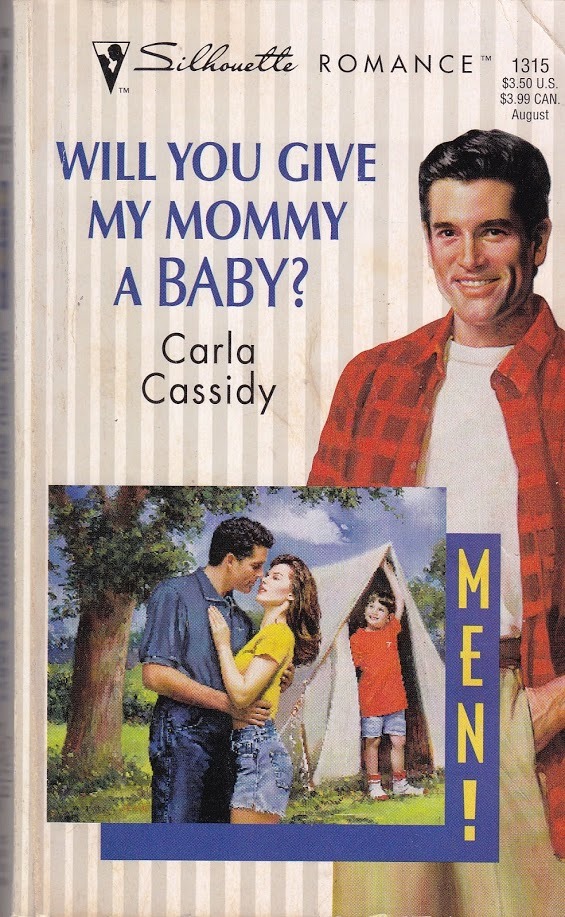
MEN!

c86:

MEN!

Tagged: MEN!

Hey, just a little gamer joke, go ahead and keep scrolling if you’re not gamer cause you’re not gonna get it. Well today I was...

oddbagel:

bidoof:

Hey, just a little gamer joke, go ahead and keep scrolling if you’re not gamer cause you’re not gonna get it. Well today I was walking forward and I thought, “Boy, this is just like when you press right on the Nintendo controller’s directional pad in Super Mario Brothers to make Mario walk forward.” Is that a hoot or what?! It’s moments like this that make you proud to be a gamer.

For non-gamers who have read this and don’t get the joke, it is a reference to the gaming masterpiece A Dirge For A Black Heart which chronicles the life of an Estonian businessman who immigrates to America for better opportunities, but is instead faced with new hardships and suffers a existential breakdown. Specifically, this references the scene in which the Businessman, who is never given a proper name throughout the game, reminiscences on his past relationship with his estranged Daughter and wonders if he will ever be able to walk forward from his sins. The player accomplishes this by completing a DDR type minigame, but ultimately discovers that there is no way to get a perfect score in the minigame which represents the mistakes that we will all inevitably make in life.

Tagged: vidya

me: *saw the sign* the sign: *opened up my eyes*

hoetosynthesis:

me: *saw the sign*

the sign: *opened up my eyes*

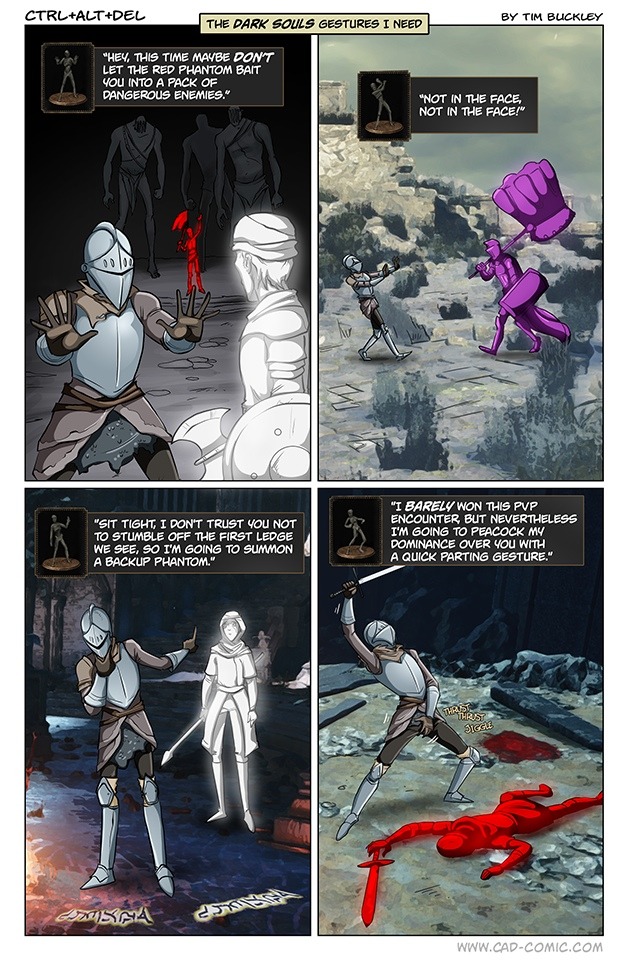
Ctrl Alt Del speaks to my heart again

anarchyinblack:

maxiesatanofficial:

bacu:

rebelnurse1986:

Ctrl Alt Del speaks to my heart again

Here I fixed it

Is the joke literally Words (is it funny because the joke is that gestures are a wordless method of communication and he is using too many words?)

image


you know the really fucked up thing about this is that it looks EXACTLY like a loss edit

but it’s actually an unrelated buckley original

Jesus fucking christ. We’ve come full circle, everybody go home.

kill the imposter

soft-primitivism:

ejacutastic:

kill the imposter

🍂 follow for more soft primitivism 🍂

An Introduction to 3 Foundational Authors of Hard-Boiled Detective Fiction, With Several Digressions

kontextmaschine:

Dashiell Hammett was one of the only pulp detective authors to have actually worked as a detective, with the Pinkerton National Detective Agency, back when it was basically a countrywide mercenary police organization. The Pinkertons were actually closer to modern police than their official contemporaries in the machine politics era, who tended to fall somewhere between patronage-hire watchmen and the mayor (or sheriff)’s sanctioned gang. The establishment of the FBI was in many ways a nationalization of the Pinkertons, with key figures brought on as advisors, replicating the network of local bureaus with focuses on both investigation and the infiltration and undermining of labor radicalism. Big city police forces then remodeled themselves after the FBI - famously the LAPD under William Parker (the NYPD had professionalized already under Teddy Roosevelt, and Chicago managed to preserve its machine structure).

This process continued into the early 1970s, as the RFK/FBI-led attempt to shatter the Mafia shook out. This was part of the mid-20th century American centralization of power. If you’re ever tempted to look with contempt upon modern African states, or pre-Mao China, or pre-unification Germany, keep in mind that America was largely structured as a loose coalition of local bandit-warlords until the 1960s. At the national level, civil rights laws and the attempt to merge the two (black/white) American nations were as much a cynical front for advancing this centralization as they were an honest idealism. And not without cost - organized crime, and the permeable borders between that and urban politics, were one of the major mechanisms by which immigrant groups were integrated to and advanced within the American system, a way to translate sheer numbers and cultural affinity into structural power. American blacks largely fit the immigrant pattern, if you date “arrival” to the Great Migration, but then stall out in the ‘70s-‘80s, and a lot of that has to do with RICO laws, post-60s reformist idealism, and the nationally-sponsored “war on crime” blocking this path. In an earlier world, black local politicians and street gangs would form alliances, eventually using patronage to co-opt and take over police forces, and extract rents that would be partially redistributed down the machine ladder. As is, you still have corruption, but it accrues to politicians, pastors and other organizers, and white property developers, without trickling down to street level.

You can quote me on that - the sorry state of American blacks is because criminal gangs are too weak and police aren’t corrupt and brutally extralegal enough.

What was I saying? Dashiell Hammett. Lived in San Francisco and set his fiction there. Was an actual private investigator, and accordingly has a strong focus on tradecraft, especially with the nameless “Continental Op”, employee of a fictionalized Pinkerton, protagonist of some of his books and most of his stories. Though the climaxes could get colorful, the Op’s assignments - quietly track down a runaway heiress, locate a fled embezzler - and methods - use 3-man teams to tail people on the street, question and dig up background on the target’s acquaintances, sit around and eavesdrop on conversations - were true to actual practice. (Hammett said the major difference is that what his characters accomplished in a week would in reality take several months, while they worked multiple cases in between).

While the Op was proudly professional (a recurring theme being his contempt for hotel staff “detectives”) but otherwise opaque, Hammett pioneered detective characterization with other characters. Where the Op was based on actual detectives he worked with, Sam Spade (protagonist of The Maltese Falcon) was based on those detectives’ romantic self-image, and his stoic facade, cynical chivalry, and romantic entanglements were a *huge* influence on later writers. Nick and Nora Charles, based on Hammet and his beloved, playwright Lillian Hellman, mixed investigation with screwball banter in a more lighthearted tone, and can be considered the predecessor of Maddie and David (of Moonlighting), Mulder & Scully, and even non-(explicitly-)romantic buddy partnerships like Crockett & Tubbs.

Hammett’s real-life experience exposed him to less picturesque aspects of the private investigator’s role in society as well. He complained that employers doing background checks were interested in issues of moral character that, gambling debts aside, had no correlation to trustworthiness, and he especially disliked working to suppress labor agitation. Starting as a Pinkerton agent, Hammett ended up being blacklisted and imprisoned as an enthusiastic communist activist.


Next is Raymond Chandler, the most literary of the detective greats. Where Hammett had been an actual PI, and reflected it in his writing, Chandler was a cuttingly observant man who retreated into drink because he was way too intelligent and cynical for Los Angeles, and reflected it in his. His Phillip Marlowe inhabited a thinly-to-the-point-of-pointlessly veiled LA, and passes through it with gimlet eye and poison tongue, all backhanded compliments and sideways insults. Hard-boiled fiction’s love of brilliant turns of phrase, of meandering digressions that end with a surprise punch to the gut, largely comes from him.

While at first glance Marlowe might seem to perform the duties of a detective same as the Op, on close examination you realize that none of what transpires has anything to do with his intentions, and that the plot is moved along by coincidences he encounters while out on assignment, with the ultimate plot of a tale usually about as unrelated to the inciting incident as in golden age Simpsons. This is equally true of The Big Lebowski, which is a loving Chandler tribute, and Chandler himself parodies this (and his/Marlowe’s booziness) in one of his later stories in which the plot is advanced by the things his protagonist literally runs into while drunk driving around LA.

Chandler’s novels are usually composed of the plots of 3 or 4 of his short stories banged together, but that’s fine, because the plot was never the thing, the meat being the wonderful language, setting, and characterizations, which were crafted anew. You can still to this day drive around LA and discover most of the places he described, looking exactly as stated. And while I can’t speak to his period accuracy, I was myself once a too intelligent, cynical Angelino writer for a while, to the point I avoided leaving home sober, and I can confirm that the kind of person who inhabits LA, their nature and motivations, are exactly as he laid out back then.

Chandler’s output eventually trailed off. One story, appearing years after any others, reads like absolutely terrible Chandler pastiche. Scholars disagree whether this was the product of an alcoholic wreck of a man who had known better than to try to publish anything for years but needed the money, or his wife pretending to be him because he was an alcoholic wreck of a man incapable of even writing anymore but needed the money.

If you’re only going to read one of these three, read Chandler.


Finally, a bit of a contrast in Mickey Spillane. Spillane’s famous recurring detective character was Mike Hammer. Given the name, you might not be surprised to learn he spent less time in cautiously piecing together mysteries than punching communists in the jaw, in much the same way Captain America spent a lot of time punching Nazis in the jaw. Actually, Spillane had been a writer for Captain America in the ‘40s. Actually, the character was originally written as a comic book protagonist named “Mike Danger”. Beyond communism, Hammer often found himself arrayed against such other corrupt and corrupting trappings of the decadent elite as drugs, psychotherapy, and trial by jury.

Spillane’s writing was, I’ll say, not up to the level of Hammett or Chandler, though he has been favorably cited by prominent writers like Ayn Rand and Frank Miller. If you look at pulp of the time though, he’s appreciably above average. Pulp… basically the closest parallel we have to pulp today is fanfiction, in terms of its average quality, low cost of production and consumption, sheer volume, and the rate at which it produces critical and commercial successes. And dear god, the smuttiness. Mike Hammer banged a lot of the broads he ran into. Before barefacedly honest pornography became as ubiquitous as it is, pulp filled the role of mainstream erotic product, with much detective pulp serving the same “drugstore-available erotica” role for men that romance pulp did for women. (Appreciating this makes the “Seduction of the Innocent” comic book scare about drugstore-available pulp for kids a bit more comprehensible).

This crossed over into other formats like cinema - Deep Throat, Beyond the Green Door, and The Devil in Miss Jones were all received as at least in the same ballpark as mainstream releases, and up into the ’80s, pornographic movies had plots and runtimes that roughly approximated Hollywood product, and even in the ‘90s, softcore product at least had narrative framing devices. Between gonzo and DVD nonlinearity and the internet and the collapse of obscenity prosecution against which to offer artistic content as defense that’s faded, though as the Valley studio system’s share of the industry shrinks you’re seeing them play to their strengths in production values and plot (particularly with parody content, Tijuana Bible/H-Doujinshi-style).

On the other hand you had whole parapornographic mainstream subgenres as the erotic thriller, the rape-revenge drama, the teen sex comedy - American Pie was released in 1999, which was really pushing the limit at which it was worth it to watch 90 minutes of material for the chance to briefly see a bare-chested girl masturbating. (It’s still worth it to hear Alyson Hannigan talking dirty, though.)

The one thing that pulp still has a hold on is violence. (In addition to the jaw, there are many loving passages of Hammer battering guys in the crotch.) While splatter-horror may be a flourishing niche genre, with regular DVD releases, it’s still that, a niche genre, and not the mega-industry of pornography. Video games yes, but detective pulp and “true crime” genres have mostly just migrated to another medium and become hourlong police procedurals like CSI or Law & Order, offering the same thrills of vicarious brutality masked by the fig leaf of nominal identification with the forces of law and order. (Though cable antihero dramas and serial killer procedurals like Dexter and Hannibal seem to be moving a half- to full step beyond that.)

Mickey Spillane. Ah, fuck it, I don’t have anything else to say about Mickey Spillane.

Tagged: rerun

wait a second, is “Borderline” (from 1983′s Madonna) riffing on Borderline Personality Disorder (from 1980′s DSM-III)?

kontextmaschine:

wait a second, is “Borderline” (from 1983′s Madonna) riffing on Borderline Personality Disorder (from 1980′s DSM-III)?

dat video tho. I say that part of her brand identity was “has a thing for rough trade”, but woo.

Kinda clarifies how Paglia used Madonna as the key to her feminism, what I as ‘90s boy expected to inherit, eager like a kid on Christmas Eve

see not just that women would become men, but that then heterosexuals could get to be gay men together

like the idealized straight view from the ‘80s

(the early still-basically-the-’70s ‘80s, where that meant fun and not death)

like we could all have an urban tribe that were basically our friends but also our lovers on a fluid basis

in retrospect shoulda paid more attention to how the lyrics of all those house tunes were about being abandoned by someone you thought loved you but had been instrumentally using you

or the queer film festival entries about how without a difference-powered dynamic or a reproductive imperative so much of your social-sexual value came down to ability to perform superficial features of youth and wealth and beauty and life was hellish otherwise

oops

Tagged: yes i know about you poly kids ::pats heads:: borderline personality disorder

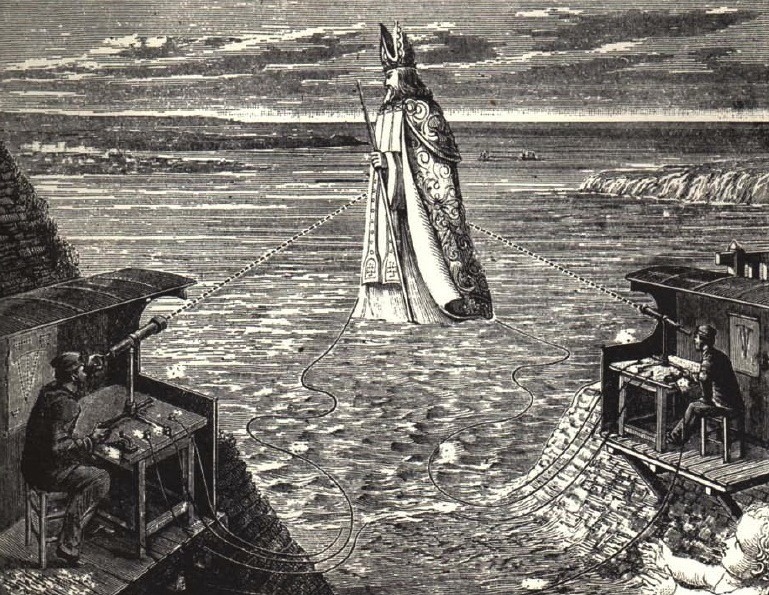
Max Ernst. The Great St. Nicholas is Followed by Impassable Parasites and Teleguided by his Two Lateral Appendages. 1934. 

magictransistor:

Max Ernst. The Great St. Nicholas is Followed by Impassable Parasites and Teleguided by his Two Lateral Appendages. 1934. 

Tagged: same

Tagged: carthago delenda est ohio

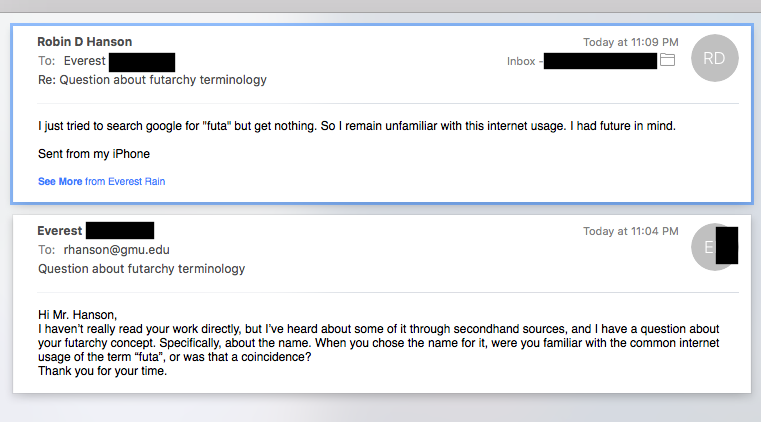
tumblr user @jenlog inspired me, to ask of our esteemed Mr. Hanson this important question,

razors-on-her-tongue:

tumblr user @jenlog inspired me, to ask of our esteemed Mr. Hanson this important question,

Tagged: futarchy

Jörn Vanhöfen

architectureofdoom:

photogmundane:

Jörn Vanhöfen

Cairo