Anonymous asked: How much of the rest of Oregon and the Pacific Northwest do you know about. Like, could I ask you about Vancouver BC, Seattle, maybe even like, Tacoma, Olympia, Spokane, Medford?(Victoria?)
Seattle I’ve got some experience and knowledge about, the rest I could at best put in a geographic context and pass on the secondhand sense I’ve picked up
Watching a hard-faced but unrepulsive 47-something woman shepherd 2 30-something mooks around the supermarket and it’s time for Foster-Powell’s favorite game: Polyamorous Relationship or Halfway House?
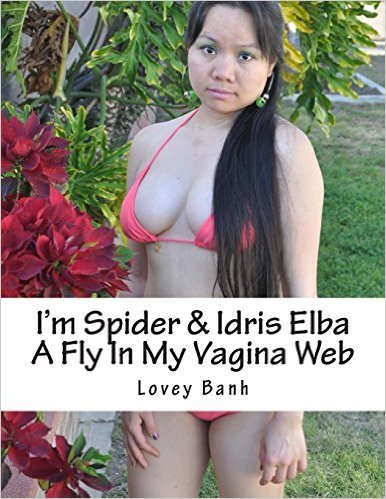
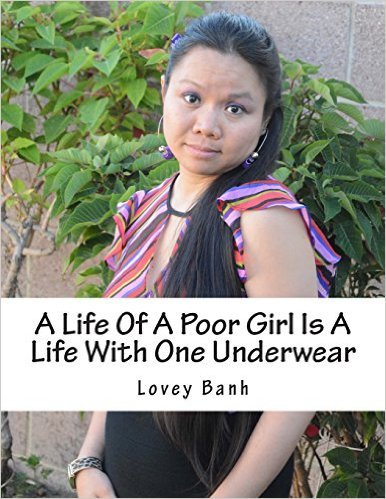
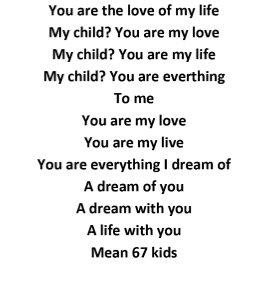
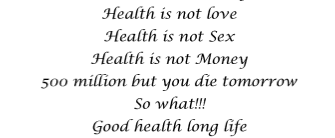
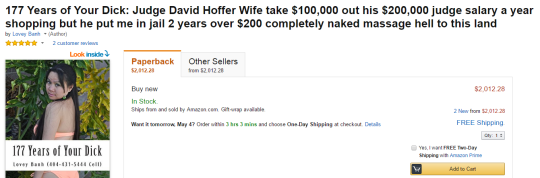
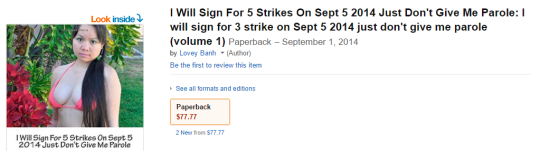
Lovey Banh is a figure I became completely transfixed by during a period of really unstable emotional health. She has mild notoriety as an amazon oddity author for her irreverent book titles (“An Ant See A Lion Marry A Butterfly: I Am Sleeping In My Car B/C I Am Not The Next RJ Rowling”, “30 Years I Do Not Brush My Teeth”, “One Kid Two Lungs To Harvest”), book covers prominently featuring what is presumably the author in swimwear, book pricing (most sitting at around $2,000), and the incomparable sum of books written and available to purchase: currently equaling 265. It is important to note for later that all of Lovey Banh’s books were published within a small time frame in 2014.
When I first came across her on amazon I thought it all collectively was a sophisticated bot operation of some sort due to the reoccurring phrases (Obama, cops, ants, her wishes to build hospitals, her wishes to become a TV host, Idris Elba, Tiger Woods, etc) and constant pull for the reader’s donations. It seemed sketchy, like Russian guys trying to pull a fast one, reeling out generated text, and stealing a woman’s photos in the process. It’s all very easy to quickly dismiss as funny and weird and move on from. But upon closer inspection and some pouring through of “look inside” offerings of her books, there was something namelessly too human and that connected too much within itself to convince me there wasn’t intelligence behind the books. In the fragile mental place I was in, some of her words became very real to me.
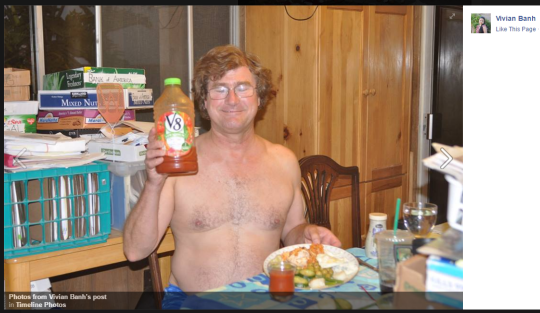
I was determined to uncover the truth of the matter behind Lovey Banh’s identity. Being the kind of person I am, determination coupled with instability quickly became obsession. To start this quest, I tried calling every number she had listed in her books, which is many, I believe 10, all with California area codes. This is when I began to notice California seemed to be Lovey’s port of local. Nevertheless, all were disconnected. I tried emailing her. No response. I tried going to various websites she would mention like cleanwaterandfeedthepoor.com and 30hospital.com, all down. Though I did find out that at one point the IP for cleanwaterandfeedthepoor.com was registered on 05/04/2014. Which matches up with the dates of publication of all Lovey’s books. All of Lovey’s activity on her Youtube (two videos advertising her books) match up with these dates as well. As well as on her Twitter. Looking for 30hospitals.com, I was lead to her Facebook page which goes under the name “Vivian Banh” or “loveybanhsinger” (this didn’t shock me as she had mentioned in many of her books she could sing in six languages), her Facebook is full of more pictures of her as well as garbage, which appear on some of her book covers. All starting and ending in 2014.
This struck me as odd. Everything connected to any of Lovey Banh’s social media accounts ending distinctly in August/ September of 2014. Being as deep into the case of Lovey Banh as I was, I decided to look up Vivian Banh. As it was on her Facebook name. This is when the case of Lovey Banh stopped being that of mysterious irreverent ramblings, and started becoming something very different.
I stumbled upon this public record court document, stating that in 2014 Vivian Banh had been found guilty of second degree robbery in the state of California. I pieced that it was her due to the name, it being in the document that she required a Vietnamese translator, her line of occupation as a masseuse matching up with some of her writings, and that she attempted to plead not being mentally fit during the time of the case. With the legal name “Vivian Tu Banh” and her location to go off of, I found something even more.
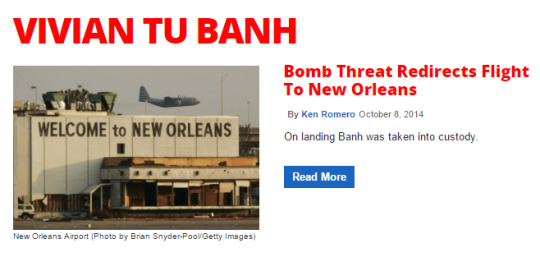
On October 8, 2014, Vivian Tu Banh made a bomb threat to a passenger on a Houston-to-Miami flight at the Louis Armstrong internerational airport. She was taken off, detained, taken into custody and questioned, but not arrested while she went under psychiatric evaluation. This was a widely reported incident at that, with the likes of Reuters even covering it. I don’t think anyone made the connection it was Lovey Banh.
After that incident, the only record I can find of Banh again is being arrested in orange county on january 21, 2015. This was the first time I had seen record of her birthday 11/15/82. It would appear she is still in jail. Her bail was set at 150,000.
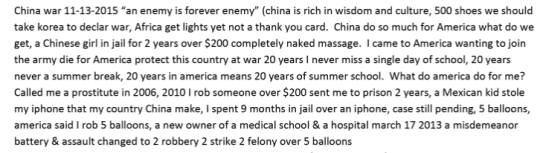
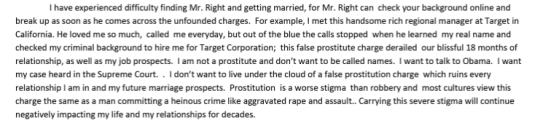
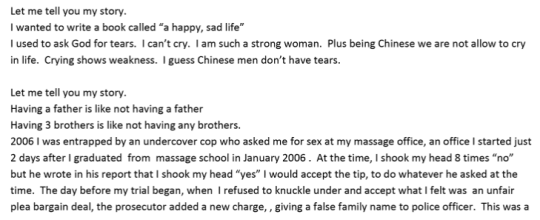
After finding all this, I went back to read what I could of Lovey Banh’s books more closely. Suddenly none of it was incoherent, she was very straightforward about what she needed. What she was trying to do.
Lovey, or Vivian Banh, needed help. She was trying to use the books as a way to seek help. Legal aid she probably did not have available to her. The books were a completely earnest and sincere cry for help. The money she was trying to raise made sense now. She needed money for legal fees. She needed a lawyer. She was in trouble, cut off from her family, and at a loss. It all made sense. She used photographs of herself and attention grabbing titles to command interest, which she succeded at. That’s why she gave out all her phone numbers. That’s why she was mad at Obama, prisons, the legal system. Like, none of this was nonsense.
She was actually, when you take the time to comb through the contents of her books applied with context, very articulate and justifiably angry.
Going into this I really didn’t know what to except. I think I found one of the most fascinating and post modern and vividly human things I have ever accidentally come across. A narrative that wrote itself. I hope Bahn is ok. I hope she got or gets help the help she was seeking. I hope people are reminded when they come across internet irreverence that can be quick to point at as ridiculous or laughable that there are often poignant and personal stories behind what is being decontextualized.
It’s only when you study a relatively sedate medium like literature that a clean line of evolution from ‘modernism’ to ‘postmodernism’ seems to appear, and only then if you focus on the slow, serious end of the medium – the Modern Library Top 100. Yes, if you ignored every cultural product of the interwar period except for a few novels by Joyce, Woolf and Lawrence, it could easily look like the big achievement of 20s modernism was stream-of-consciousness fiction, which babbled on for thirty years until it got supplanted by a new, self-consciously artificial postmodernism. Since then, it’s all been about reflexivity, metafiction, pop-culture pastiches and genre-slumming.
But the aesthetic history of the twentieth century would look very different if you judged it by the development of animated cartoons, which evolved a bit faster than novels. While the richer, stuffier modernists were still wrestling with their pommy-Freudian sex pastorales, American cartoons were getting more and more sophisticated, all thanks to – you guessed it! – the East Coast working class.
Well by the middle of the century, US cartoon animation had done something extraordinary; it had become the perfect medium for metafiction, pastiche, reflexivity and self-conscious artificialness – perhaps the only medium that could pull them off on a regular basis without embarrassing itself. Tricks that looked clumsy in High Serious postmodern literary fiction came easily to Bugs Bunny and friends.
Yeah I know I’ve been low-intensity in reblogging and answering asks, let alone effortblogging
(I’ve got some wonderful asks beseeching me to effortpost again which I love but in a brusque assertive register that’s clearly mirrored off of mine which I double love)
You know what it is? My days are busy with manual labor. Among the “needs work” of this house, the back and side yards have come alive in spring with all the shit ex-dude mowed down at ground level and called a day. So I’m gardening. I hear that if you take shit out before it goes to seed especially the first three years, and especially especially the first one year, you can cut that shit out long-term.
So I’m on my knees digging in the dirt like a fucking peasant in the hope that one day I won’t have to be on my knees digging in the dirt like a fucking peasant, and this is my introduction to landownership.
And I’m like “man, maybe I should invite a lowly man to make a place on my land in return for tending it” and then I remember THAT I FUCKING TRIED THAT AND IT WAS TERRIBLE.
Peasants. Can’t live with ‘em, can’t live without ‘em.
Anyway a fun thing about this is I’ve been really getting in touch with my local microecosystem. There’s all these plant species I keep seeing all over adapted to different conditions and I’m getting something from that: THESE ones are tall because they’re competing for the light; THESE ones are thick and bushy because the yard drains its water and topsoil this way.
But I don’t know what the fuck anything’s called so I make up my own names. Enjoy this list!:
This is a really good article about how quickly people actually die from cuts and punctures inflicted by swords and knives. However, it’s really really long and I figured that since I was summarizing for my own benefit I’d share it for anyone else who is writing fiction that involves hacking and slashing your villain(s) to death. If you want the nitty gritty of the hows and whys of this, you can find it at the original source.
…even in the case of mortal wounds, pain may not reach levels of magnitude sufficient to incapacitate a determined swordsman.
Causes of death from stabs and cuts:
massive bleeding (exsanguination) - most common
air in the bloodstream (air embolism)
suffocation (asphyxia)
air in the chest cavity (pneumothorax)
infection
Stabbing vs cutting:
Stabbing someone actually takes very little force if you don’t hit bone or hard cartilage.
The most important factor in the ease of stabbing is the velocity of the blade at impact with the skin, followed by the sharpness of the blade.
Stabbing wounds tend to close after the weapon is withdrawn.
Stabbing wounds to muscles are not typically very damaging. Damage increases with the width of the blade.
Cutting wounds are typically deepest at the site of initial impact and get shallower as force is transferred from the initial swing to pushing and pressing.
Cutting wounds have a huge number of factors that dictate how deep they are and how easily they damage someone: skill, radial velocity, mass of the blade, and the size of the initial impact.
Cutting wounds along the grain of musculature are not typically very damaging but cutting wounds across the grain can incapacitate.
Arteries vs veins:
Severed veins have almost zero blood pressure and sometimes even negative pressure. They do not spurt but major veins can suck air in causing an air embolism.
Cutting or puncturing a vein is usually not fatal.
Severed arteries have high blood pressure. The larger arteries do spurt and can often cause death due to exsanguination.
Body parts as targets:
Severing a jugular vein in the neck causes an air embolism and will make the victim collapse after one or two gasps for air.
Severing a carotid artery in the neck cuts off the blood supply to the brain but the victim may be conscious for up to thirty seconds.
Stabbing or cutting the neck also causes the victim to aspirate blood that causes asphyxiation and death.
Severing a major abdominal artery or vein would cause immediate collapse, but this takes a fairly heavy blade and a significant amount of effort because they are situated near the spine.
Abdominal wounds that only impact the organs can cause death but they do not immediately incapacitate.
Severing an artery in the interior of the upper arm causes exsanguination and death but does not immediately incapacitate.
Severing an artery in the palm side of the forearm causes exsanguination and death but does not immediately incapacitate.
Severing the femoral artery at a point just above and behind the knee is the best location. Higher up the leg it is too well protected to easily hit. This disables and will eventually kill the victim but does not immediately incapacitate.
Cutting across the muscles of the forearm can immediately end the opponent’s ability to hold their weapon.
Cutting across the palm side of the wrist causes immediate loss of ability to hold a weapon.
Stab wounds to the arm do not significantly impact the ability to wield a weapon or use it.
Cuts and stab wounds to the front and back of the legs generally do not do enough muscle damage to cause total loss of use of that leg.
Bone anywhere in the body can bend or otherwise disfigure a blade.
The brain can be stabbed fairly easily through the eyes, the temples, and the sinuses.
Stabs to the brain are more often not incapacitating.
The lungs as targets:
Slicing into the lung stops that lung from functioning, but the other lung continues to function normally. This also requires either luck to get between the ribs or a great deal of force to penetrate the ribs.
Stabbing the lung stops that lung from functioning, but the other lung continues to function normally. It is significantly easier to stab between ribs than to slice.
It is possible to stab the victim from the side and pass through both lungs with an adequate length blade. It is very unlikely that this will happen with a slicing hit.
“Death caused solely by pneumothorax is generally a slow process, occurring as much as several hours after the wound is inflicted.”
Lung punctures also typically involve the lung filling with blood, but this is a slow process.
The heart as a target:
I’m just going to quote this paragraph outright with a few omissions and formatting changes for clarity because it’s chock-full of good info:
…[stabbing] wounds to the heart the location, depth of penetration, blade width, and the presence or absence of cutting edges are important factors influencing a wounded duelist’s ability to continue a combat.
Large cuts that transect the heart may be expected to result in swift incapacitation…
…stab wounds, similar to those that might be inflicted by a thrust with a sword with a narrow, pointed blade may leave a mortally wounded victim capable of surprisingly athletic endeavors.
Essentially, the heart can temporarily seal itself well enough to keep pressure up for a little while if it’s a simple stab. The arteries around the heart, while they are smaller and harder to hit, actually cause incapacitation much more quickly.