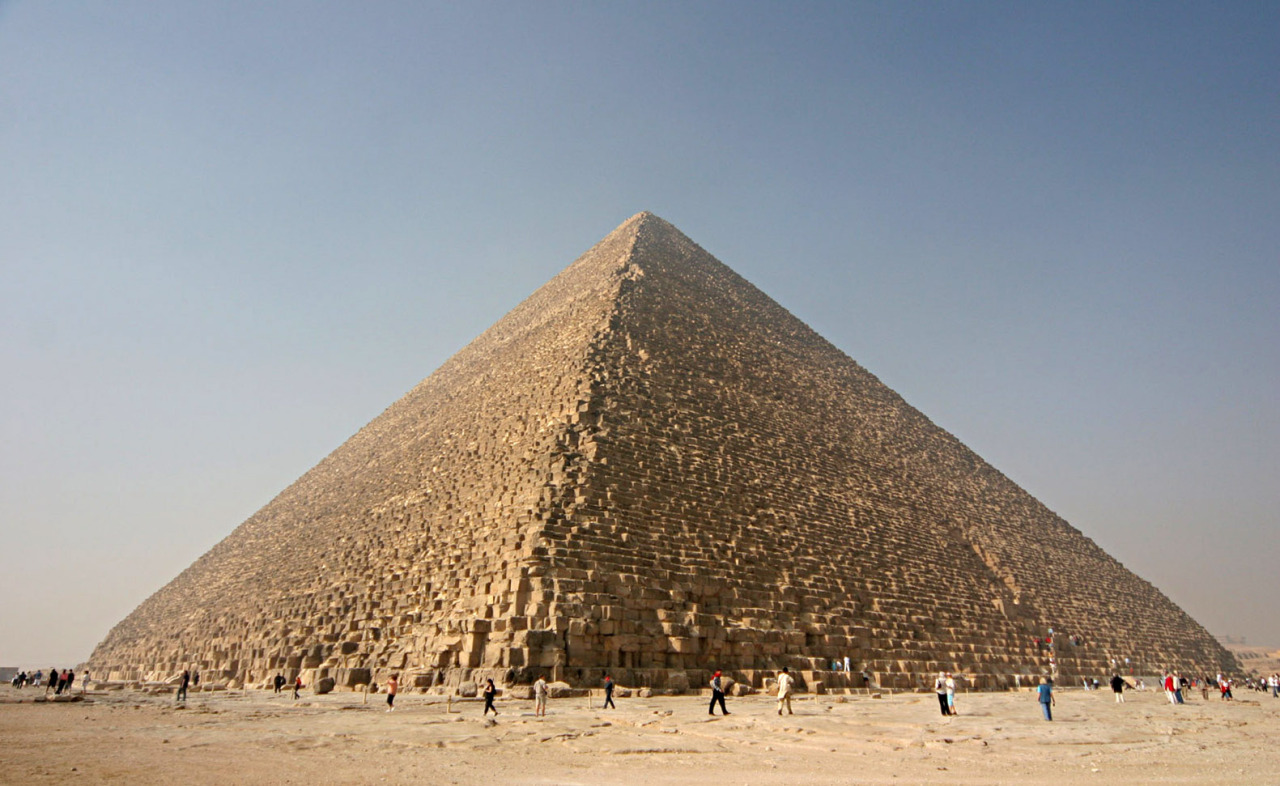
This is the Great Pyramid of King Khufu. Everybody knows the Great Pyramid of King Khufu, but you probably don’t know about the Shit Pyramids of his father, King Sneferu. This is a shame, because they are amazing.
When King Sneferu came to the throne of Egypt, the cool thing that all the pharaohs had was a Step Pyramid, like the original one built by King Djoser and designed by Imhotep (not the mummy). King Sneferu could easily have had one one because his predecessor King Huni had died before his could be finished. All Sneferu had to do was step in and put the last few blocks on.
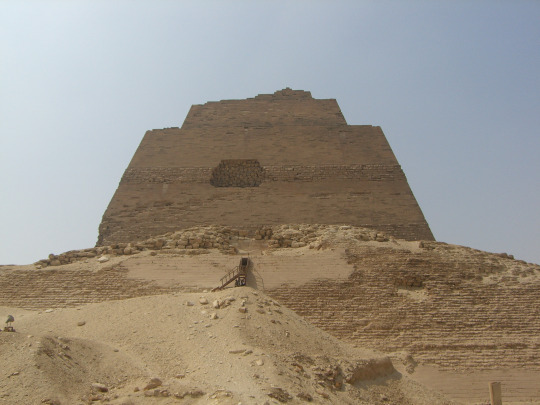
But King Sneferu had a vision. He didn’t want any old Step Pyramid. He was going to build Egypt’s first smooth-sided pyramid, and make King Huni’s pyramid way taller in the bargain. It didn’t work. The core of Huni’s pyramid couldn’t handle the modifications and nowadays the Step Pyramid at Meidum looks like this:
It’s not on a hill - that’s the outer layers of the pyramid that have fallen down all around it. The name of the structure in Arabic is Heram el-Kaddaab, which means something like The Sort-Of Pyramid.
Anyway, King Sneferu was understandably disappointed and made his pyramid-builders start over from scratch at a different site. Apparently having learned nothing about the Big Fat Nowhere that hubristic pyramid ambition was going to get him, this pyramid was designed to be even taller and pointier than the last effort! Too tall and pointy, in fact - the bedrock proved to be less stable than he might have hoped, and by the time the pyramid was half-finished stuff was already moving and cracking inside of it. There are ceilings in this pyramid that are to this day partially held up by wooden beams.
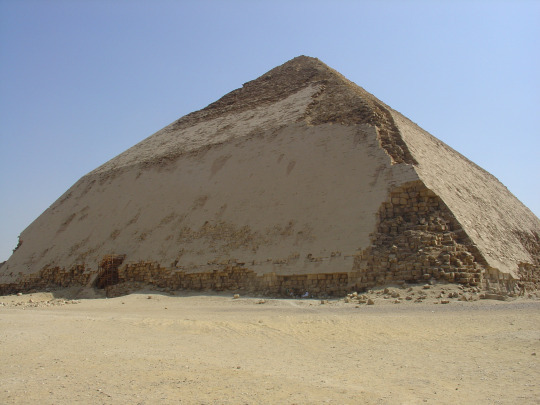
The builders seem to have panicked and decided that the only way to finish the pyramid without another disaster was to make the top half lighter than the bottom half. They did this by changing the angle of the slope, ending up with a pyramid that looks like this:
Egyptologists call this one the Bent Pyramid for fairly obvious reasons. Uniquely among Egyptian Pyramids, it has most of its smooth outer blocks intact, rather than having them all stolen to build other stuff (most of medieval Cairo is built from the skin of the Giza pyramids). I’m guessing this is because nobody dared touch the thing for fear the whole structure would come down like a giant limestone game of Jenga.
I’m sure the pyramid-builders were very proud of this solution. Sneferu appears to have been less so. He had them move over about half a mile and start over. Again. Why only half a mile when he had them move 34 miles between the Sort-of Pyramid and the Bent Pyramid is a mystery. I think he wanted to keep them in sight of the Bent Pyramid so they could look at it and feel ashamed every once in a while.
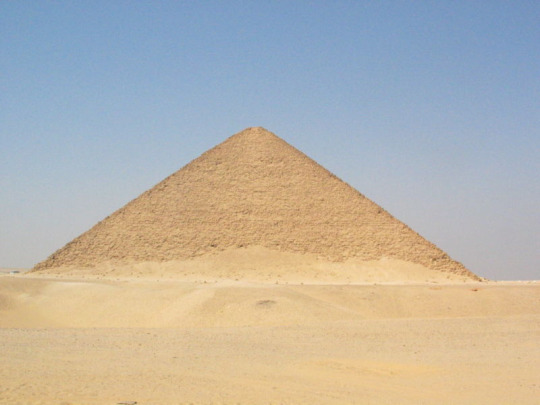
And there they built Sneferu’s third pyramid, which is called the Red Pyramid. As pyramids go, it’s a very cautious one - it’s got the shallowest slope rise of any Egyptian pyramid, and while it’s the same height as the Bent Pyramid it spreads its weight over a much greater base area, making it far more stable. Sneferu seems to have been happy with this one, because he was buried in it. Either that, or after a forty-eight-year reign he just finally died and that was the pyramid they used because it was the nicest of the three.
These three pyramids together actually contain substantially more stone than the Great Pyramid of Sneferu’s son Khufu. By the time Sneferu died, his workforce had honed themselves into a lean, mean pyramid-building machine. They had already made every possible pyramid mistake. So when Khufu announced that he didn’t just want a great pyramid, but The Great Pyramid, these guys built him a pyramid so fucking great that we now think aliens must have done it.
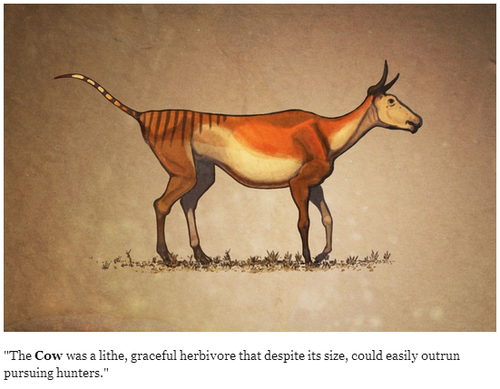
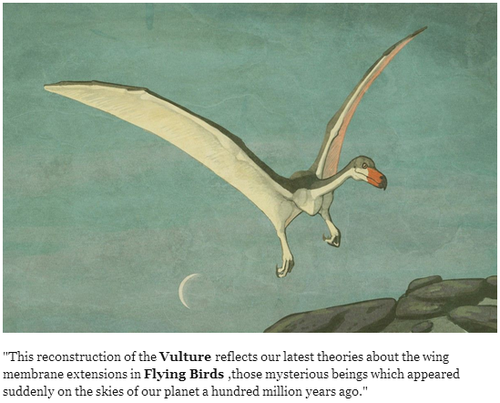
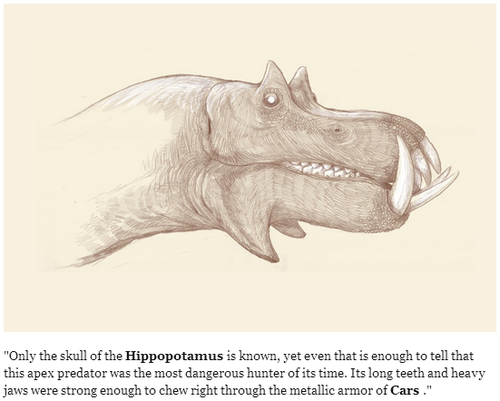
at the end of All Yesterdays (the extremely good book about imagining and illustrating dinosaurs in complex speculative ways i was talking about yesterday) there’s a section where they prove the point about the fact that we need to be more open to imagining skin coverings and fat/cartilage deposits by illustrating modern-day animals as if a nonhuman paleontologist from millions of years in the future reconstructed them using the just-skin-stretched-over-the-skeleton-and-muscles method that unimaginative paleoartists use with dinosaurs
with results like:
and
and
and i love it so much because it absolutely unquestionably proves the point the book is making
The ironic thing is that today’s actual New York City values - moneyed, credentialed, cautious and middlebrow - are exactly what people meant by “country club” Republicanism.
The more anomie there is in a society, the less effective “shaming people into virtue” becomes.
Shaming assumes that the people being shamed know in the back of their minds what they should really be doing, i.e. in the back of their minds they are aware of the acceptable social scripts to follow, and all you have to do is make not following the script more painful than following it.
But when those social scripts disappear, then shaming becomes little more than angrily gesturing towards a rulebook whose pages are too faded to read.
In a society deep in the throes of anomie, virtue inculcation by necessity involves much more hand-holding and explicit instruction. Much more “Complete task N by following steps A, B, and C for reasons X, Y, and Z.”
But disciplinarians find hand-holding icky. So nothing changes.
Counterargument: the more anomie the is in a society, the more insecure people are in following a social script they can barely read/remember, the more susceptible to outside voices shouting as though there is a script. Most people aren’t that meta.
The more anomie there is in a society, the more disposable/interchangeable people are, the more people have to keep up for fear of being discarded.
Dude. That’s not what anomie means.
It was always explained to me as ‘lack of shared moral values/definitions of virtue’, and that’s the sense @raggedjackscarlet is using it in – he can’t be taking it to mean ‘lack of shared values’ in general, because that would be absurd. There are shared values in the subcultures he’s talking about; it’s just that no one outside them could ever believe them to be connected in any form to anything other than fashion.
(Inside the subcultures, fashion is identified with morality and virtue, and there’s literally no concept of morality or virtue outside fashion.)
Encyclopedia Britannica:
Greater emphasis on ends rather than means creates a stress that leads to a breakdown in the regulatory structure—i.e., anomie. If, for example, a society impelled its members to acquire wealth yet offered inadequate means for them to do so, the strain would cause many people to violate norms. The only regulating agencies would be the desire for personal advantage and the fear of punishment.
Note the last sentence – that’s precisely the condition I’m talking about.
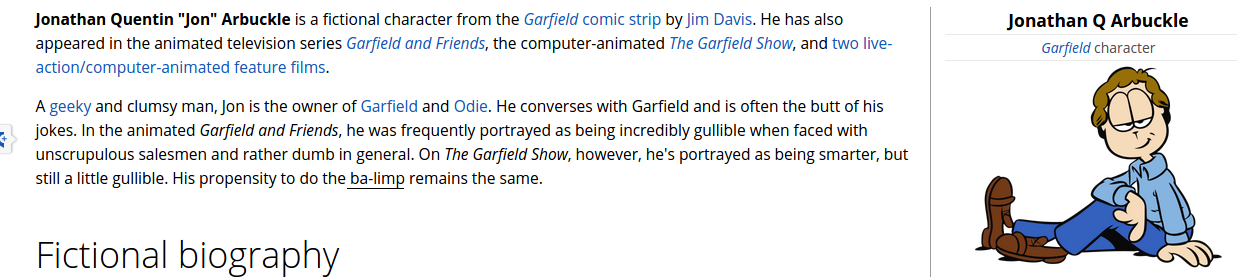
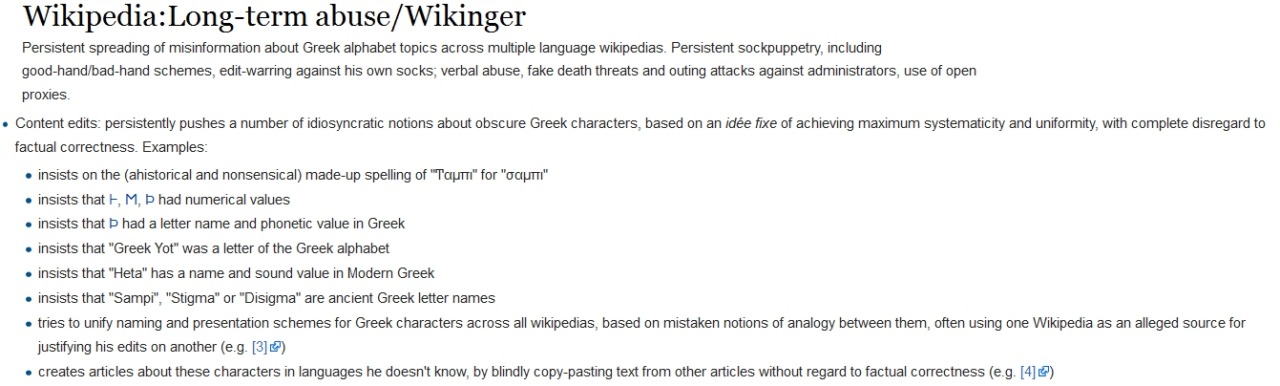
We only wanted to know what job Jon Arbuckle was supposed to have when we found the word “ba-limp” in his wiki page. Googling this took us down the mesmerizing rabbit hole of Wikipedia’s abusive editor list.
This is like some SCP shit
oh my god
What if at least some of these people actually just live in an alternate world and they don’t realize they keep connecting to our internet
How would we know
Like maybe there’s a world out there where a whole lot of things look exactly like ceiling fans and this poor guy must think everyone else is SO incompetent at selecting wiki images
I wrote a self-help guide for nudging people into asking you super personal questions that you can pretend to be reluctant to answer and now I own Qatar.