shrine to the prophet of americana
All posts (oldest first)

a darkened auditorium with 264 silent people in the seats. on the stage, me, sitting on a stool, lit by a spotlight, the only...
a darkened auditorium with 264 silent people in the seats. on the stage, me, sitting on a stool, lit by a spotlight, the only light in the theatre. i hold up a photo of my cat, 10 people applaud, two or three hold up photocopies of the same photo, the rest do nothing, watching, waiting.
I love this description of tumblr.

Just saw that Trump tv ad. Ngl, it's a little surreal. Feels like it comes from the first 10 minutes of a '90s SF movie.
Just saw that Trump tv ad. Ngl, it’s a little surreal. Feels like it comes from the first 10 minutes of a ‘90s SF movie.
Are there any Amhist topics you've been meaning to write effortposts on, which just haven't come together for some reason or...
3dspacejesus asked: Are there any Amhist topics you've been meaning to write effortposts on, which just haven't come together for some reason or another?
I’ve mentioned I’ve wanted to write about historical travel/communication routes:
Roads - the organic growth of local roads, the tendency to form road districts, corvee labor as a support mechanism, the iffy history of medium-distance private roads (profitable mostly in support of land development w/ poor long-term income streams); above all the historical novelty of roads as city-to-city transit modes, previously a thing of railroads or
Coastal and Inland Shipping - historically the fastest, most efficient method of transit; the significance of the Appalachians and the East Coast’s lack of lengthy rivers; the way command of New Orleans (and thus the Mississippi system) and the St. Lawrence (and thus the Great Lakes) played into trade empire strategies and how that interacted with US settler colonialism (, how this experience played into the Chinese Exclusion Act as a defense of the American Pacific presence focused on the trade city of San Francisco); the way Philadelphia came to early prominence due to the Delaware Water Gap offering a rare route to the interior and how New York stole her thunder with the Erie Canal offering an alternate route to the Great Lakes, with a potential portage to the Mississippi system at a site we now call “Chicago”
The Post Office - overlapping a lot with the above two on modalities; how post-carrying contracts promoted, structured, and regulated American shipping and railroads before the dawn of the modern regulatory state; how the era where the federal government was “just the Army & Post Office” actually meant a lot of recognizably contemporary programs got shoehorned in (compare the Army Corps of Engineers, Lewis & Clark Expedition, various imperial overseas administrations). The Post Office as a domestic spy and countersubversive agency - against abolitionists, Confederates, anarchists, antinatalist feminist race-suiciders. The Post Office as the major source of federal patronage, and the reason the same parties operate at federal and local levels where issues and pressures are otherwise perpendicular
What's up with those ranchers in Oregon?
Anonymous asked: What's up with those ranchers in Oregon?
Dudes - not even the local ranchers afaict - over there are really forcing things, poor logistical and rhetorical prep.
Absolutely true that martyring them right now could kick off some painful and open-ended shit. That’s been priced in since the Waco, Ruby Ridge, OKC sequence of the ‘90s.
Why the Montana Freemen got waited out in ‘96.
Bundys - and this is all that crowd’s initiative, they’re outside agitators (/community organizers) latching on to local conflicts for political effect - are the first I can think of to consciously *play against that*, emboldened by their success at the ranch.
An interesting comparison to the threat of black unrest from the left - Ferguson, BLM, getting Zimmerman even arrested in Florida.
The thing isn’t even that it couldn’t be suppressed. It could! But putting down brown-skinned crowds by force completely runs against Democratic-liberal legitimating myths on which too many institutional players depend.
Ferguson and Mizzou were both in Missouri, a border state where the Democratic Party’s continued relevance relies on holding together New Deal whites in statewide contests while servicing the black power structure that’s their only legislative presence. The Democratic governor’s (8 years, the whole college board’s worth of appointments) trying to hand the baton to a strong successor. The favored Republican committed a major gaffe by shooting himself in the head but if the ultimate candidate tries to hitch to the Trump train this could be interesting.
LIKEWISE, it’s not that you couldn’t tamp down a major militia flare-up
such as could plausibly come out of this “take 6 bros and seize the nearest federal property” idiom being current and prominent the same week that OBAMA TO ISSUE EXECUTIVE ORDERS ON GUN CONTROL say
but that you couldn’t have a lot of Republicans sign off on it without burning their legitimacy.
All a little Weimar tbh
If these particular guys make the pivot to gun control and get out front of that maybe there’s potential but as is its a forgettable sequel.
What are your political leanings? I get the sense that you're "alt center."
wirehead-wannabe asked: What are your political leanings? I get the sense that you're "alt center."
That’s not a terrible way to put it, I’ve said I identify with d'Annunzio but tbh that might be my ideal self and put on the spot it’s more Bismarck
Why did Bismark lose the kulturkampf.
Anonymous asked: Why did Bismark lose the kulturkampf.
Catholic hierarchy is a time-tested balance of central and local power such that there was no particular center of power to resolve things by capturing; the dispersed but literate and networked Catholic centers of power positioned themselves so that defeating any one cost more power than it was worth on a 20 year horizon and defeating all at once cost too much in the face of external threats.
Are there any Amhist topics you've been meaning to write effortposts on, which just haven't come together for some reason or...
3dspacejesus asked: Are there any Amhist topics you've been meaning to write effortposts on, which just haven't come together for some reason or another?
I’ve mentioned I’ve wanted to write about historical travel/communication routes:
Roads - the organic growth of local roads, the tendency to form road districts, corvee labor as a support mechanism, the iffy history of medium-distance private roads (profitable mostly in support of land development w/ poor long-term income streams); above all the historical novelty of roads as city-to-city transit modes, previously a thing of railroads or
Coastal and Inland Shipping - historically the fastest, most efficient method of transit; the significance of the Appalachians and the East Coast’s lack of lengthy rivers; the way command of New Orleans (and thus the Mississippi system) and the St. Lawrence (and thus the Great Lakes) played into trade empire strategies and how that interacted with US settler colonialism (, how this experience played into the Chinese Exclusion Act as a defense of the American Pacific presence focused on the trade city of San Francisco); the way Philadelphia came to early prominence due to the Delaware Water Gap offering a rare route to the interior and how New York stole her thunder with the Erie Canal offering an alternate route to the Great Lakes, with a potential portage to the Mississippi system at a site we now call “Chicago”
The Post Office - overlapping a lot with the above two on modalities; how post-carrying contracts promoted, structured, and regulated American shipping and railroads before the dawn of the modern regulatory state; how the era where the federal government was “just the Army & Post Office” actually meant a lot of recognizably contemporary programs got shoehorned in (compare the Army Corps of Engineers, Lewis & Clark Expedition, various imperial overseas administrations). The Post Office as a domestic spy and countersubversive agency - against abolitionists, Confederates, anarchists, antinatalist feminist race-suiciders. The Post Office as the major source of federal patronage, and the reason the same parties operate at federal and local levels where issues and pressures are otherwise perpendicular
ALSO:
Roads - the Good Roads Movement; auto clubs and the stitching-together of long distance routes; Route 66; the Eisenhower Interstate System; that between internal combustion and dynamite and the rediscovery of concrete and then tarmac America literally exploded its way to a modern marvel nearly as impressive as what the Romans did millennia ago by growing wheat and yelling
The Post Office - Rural Free Delivery, Parcel Post, catalog shopping, second- and fourth-class Mail subsidies: Sears as the original Amazon, the fucking *mail* as the original internet. Maybe some pneumatic tube shit as comic relief.
Sorry if being repetittive here but to expand on my earlier ask: Was Bismark and the Centre party after the wa the first big...
Anonymous asked: Sorry if being repetittive here but to expand on my earlier ask: Was Bismark and the Centre party after the wa the first big instance of Catholics and relatively conservative protestants teaming up together against effectively secular liberals/prots? I think in the Netherlands that happening late late 1800s as well Before than they seemed very antagonistic even when it seemed obvious they had more in common together than conservative prots and secular/protestant liberals/left. Sonderbund war etc
Yeah you’ve passed the point I have something useful to contribute, the general question was pushing it already. I could def. stand to know more Central European history.
A bunch of people I took for grown-ass (rap-listening, occasionally nose-powdering) adults just professed total ignorance of...
A bunch of people I took for grown-ass (rap-listening, occasionally nose-powdering) adults just professed total ignorance of Grandmaster Flash’s “White Lines”
So I have a genuine curiosity: What do people in the US outside the South drink with meals at home? Like, growing up every day,...
So I have a genuine curiosity:
What do people in the US outside the South drink with meals at home? Like, growing up every day, what got served as a drink with dinner? Obviously at a restaurant you order soda and stuff, but what was common at home? Do they keep sodas and such at home and serve it consistently, or what?
I know down here it’s sweet tea, and I know that’s foreign to the rest of the country, so I’m curious. Reblog if you can, I’m interested in as many responses as I can get.
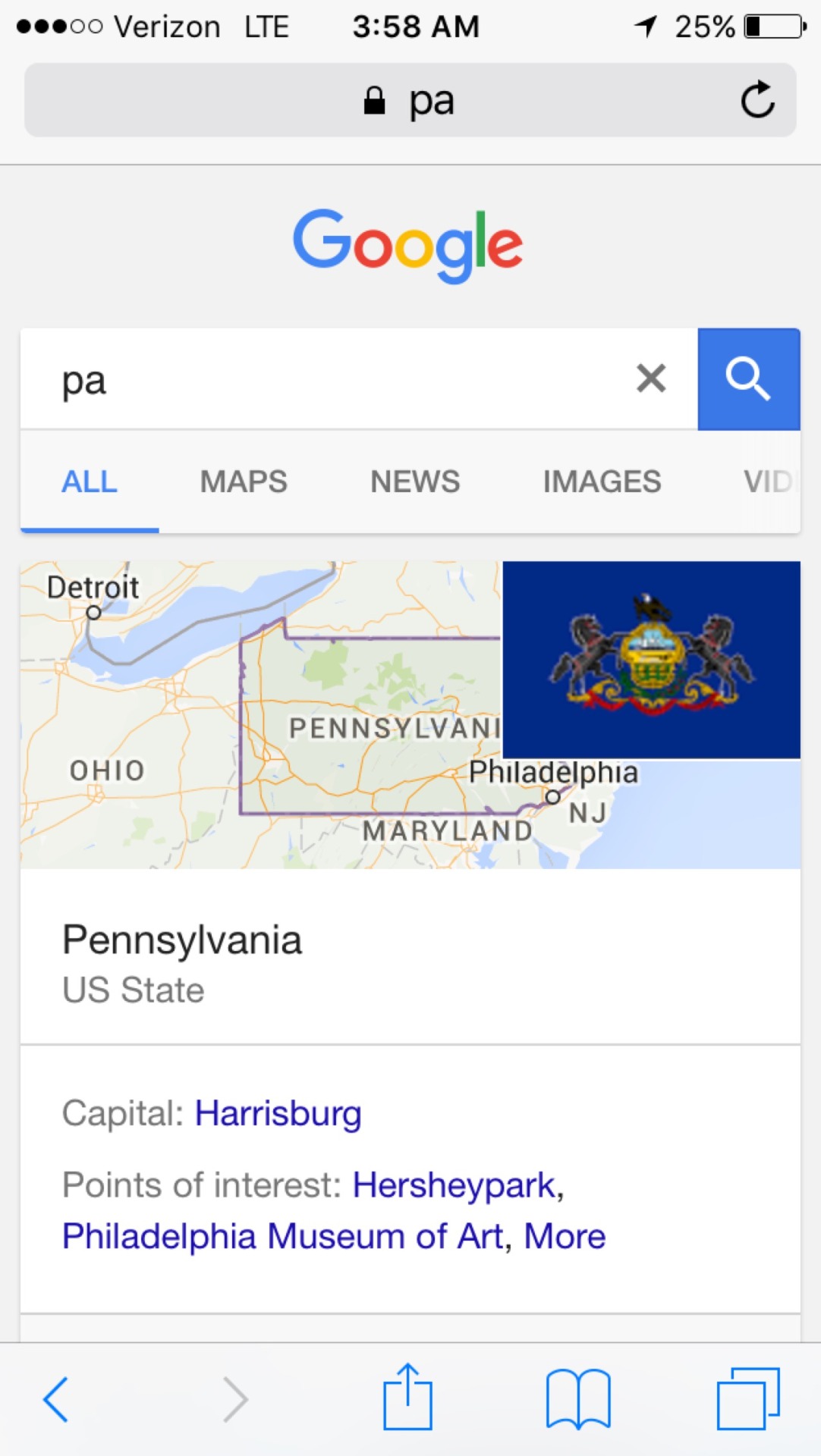
Outside of Philadelphia, a centuries-old farm town which became the core of rootless culdesac suburbs as I grew:
My father and I took milk at home (my mom tried to step us down to skim but we stabilized at 2% iirc) and usually at restaurants. If not available I took water with lemon, he diet cola.
My mom took water, Diet Rite (the original diet soda, off RC Cola) or caffeine free Diet Coke.
A Cruel Angel’s Thesis on a cracked-out Game Boy. I’m not really sure how to apologize for this. Written in LSDJ on a Nintendo...
A Cruel Angel’s Thesis on a cracked-out Game Boy. I’m not really sure how to apologize for this.
Written in LSDJ on a Nintendo Game Boy. Recorded and mastered in Audacity.
THERE IT IS i’ve been looking for this version for ages
There’s a 3D-printed sundial that lets light through at the right angles to produce a digital clock shadow, which displays the...
There’s a 3D-printed sundial that lets light through at the right angles to produce a digital clock shadow, which displays the current time in 20-minute increments from 10:00 until 16:00.
Also, the necessary files can be downloaded from Thingiverse so you can 3D-print your own sundial, if you have the materials to do so.

rest in fucking pieces
rest in fucking pieces
requiescat in pace, is more like. ironically makes sign of cross

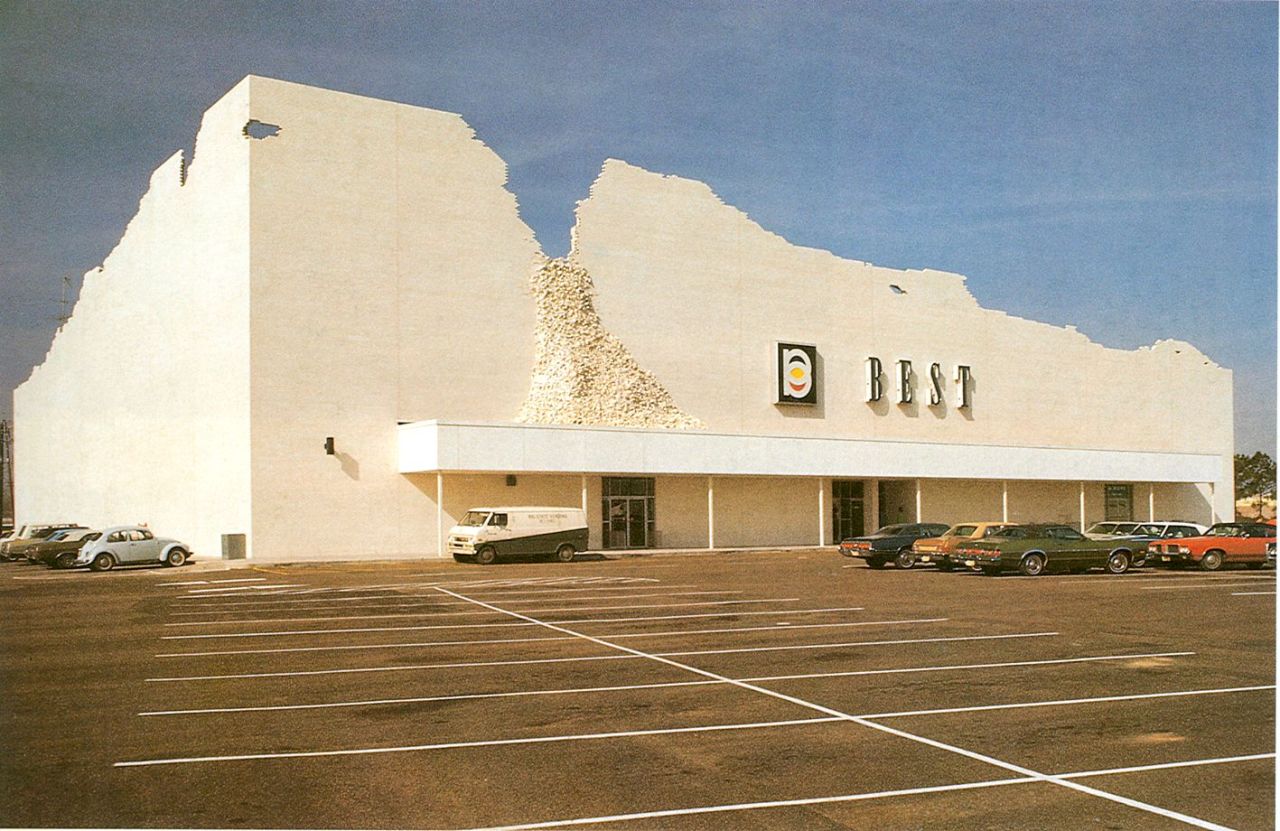
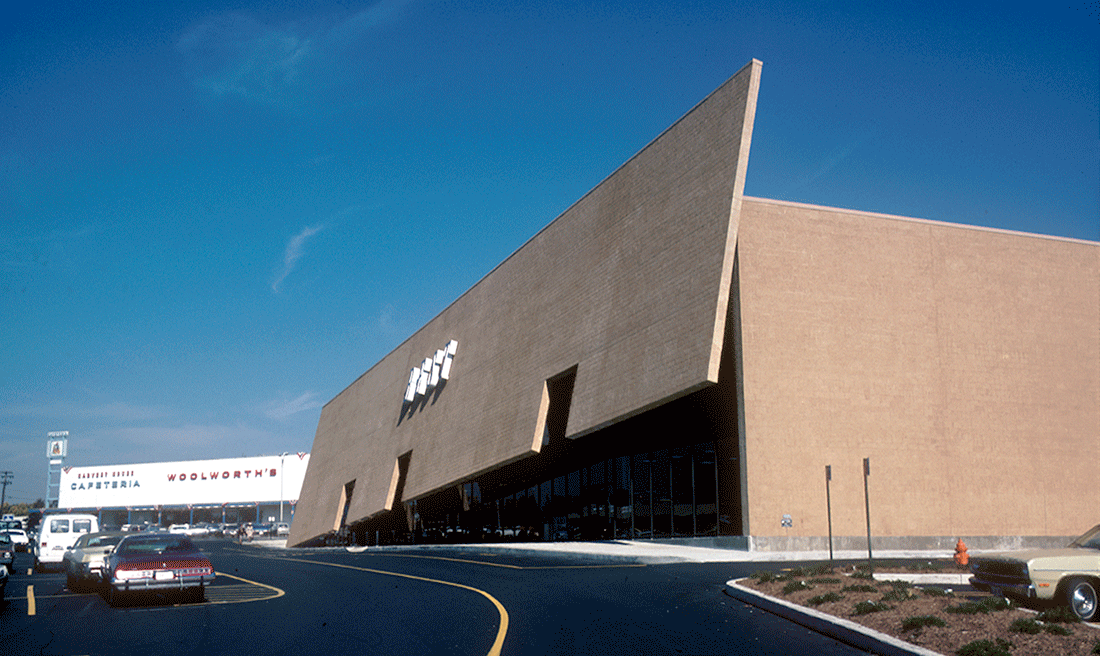
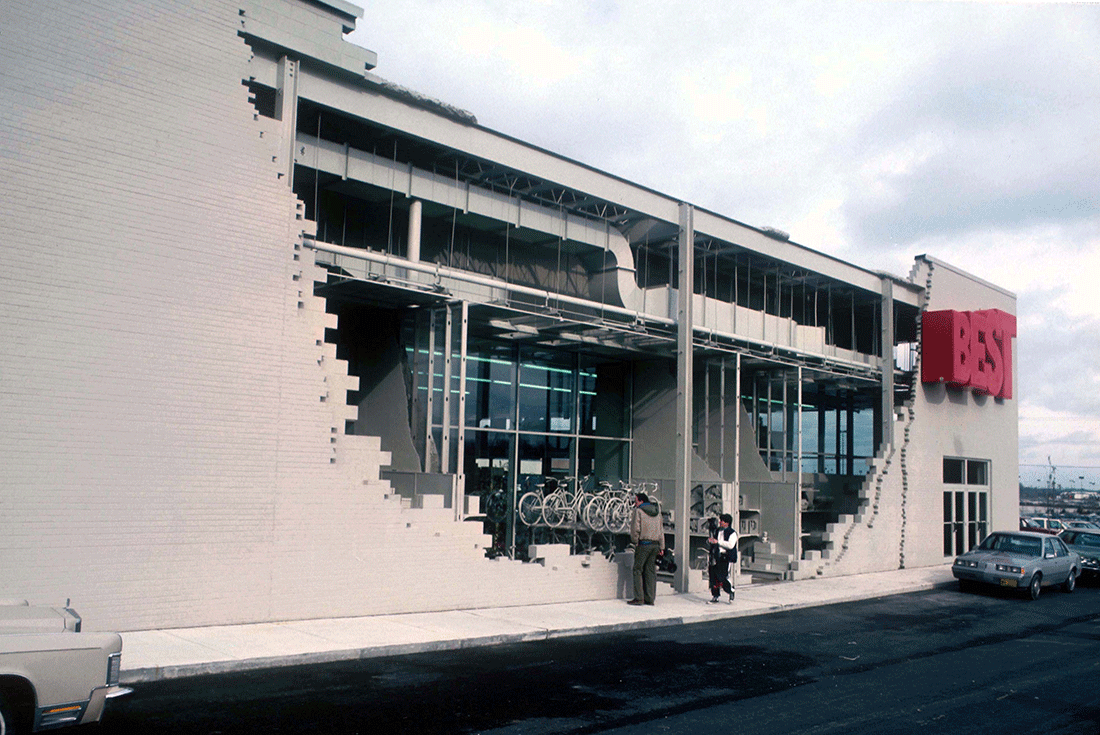
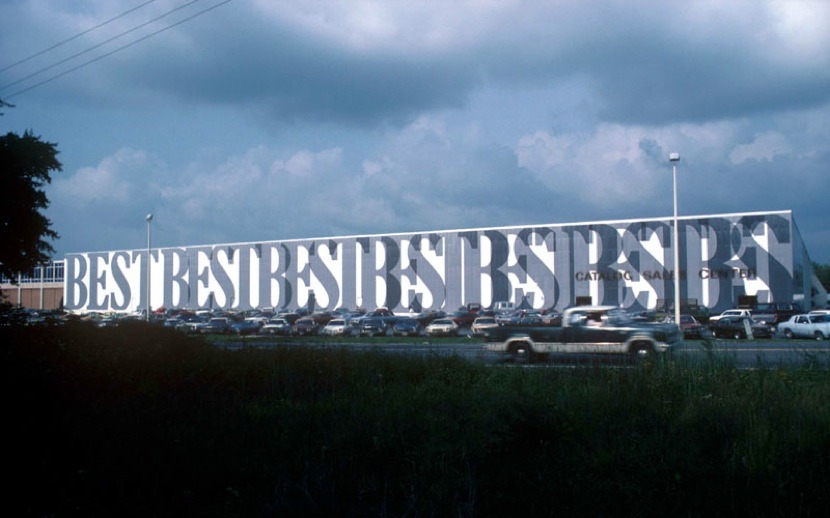
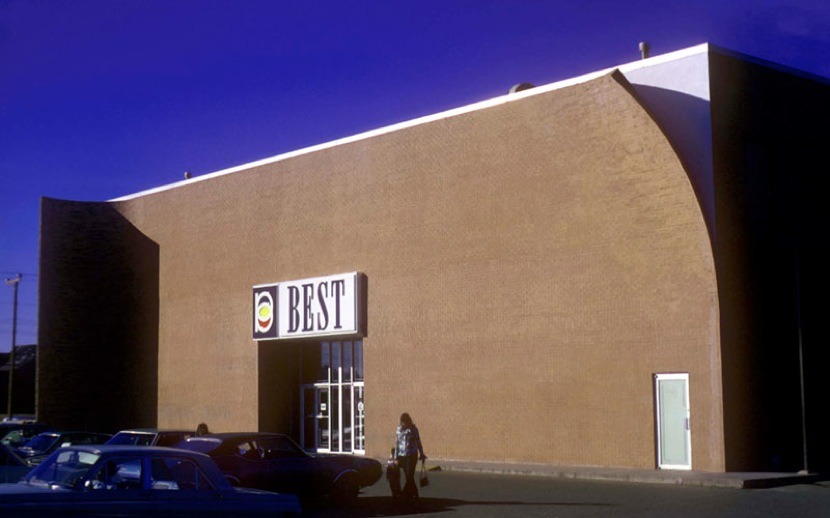
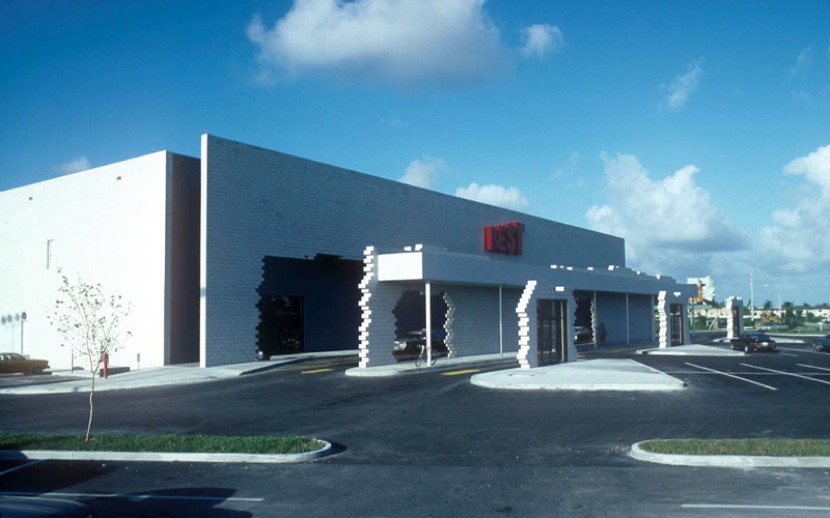
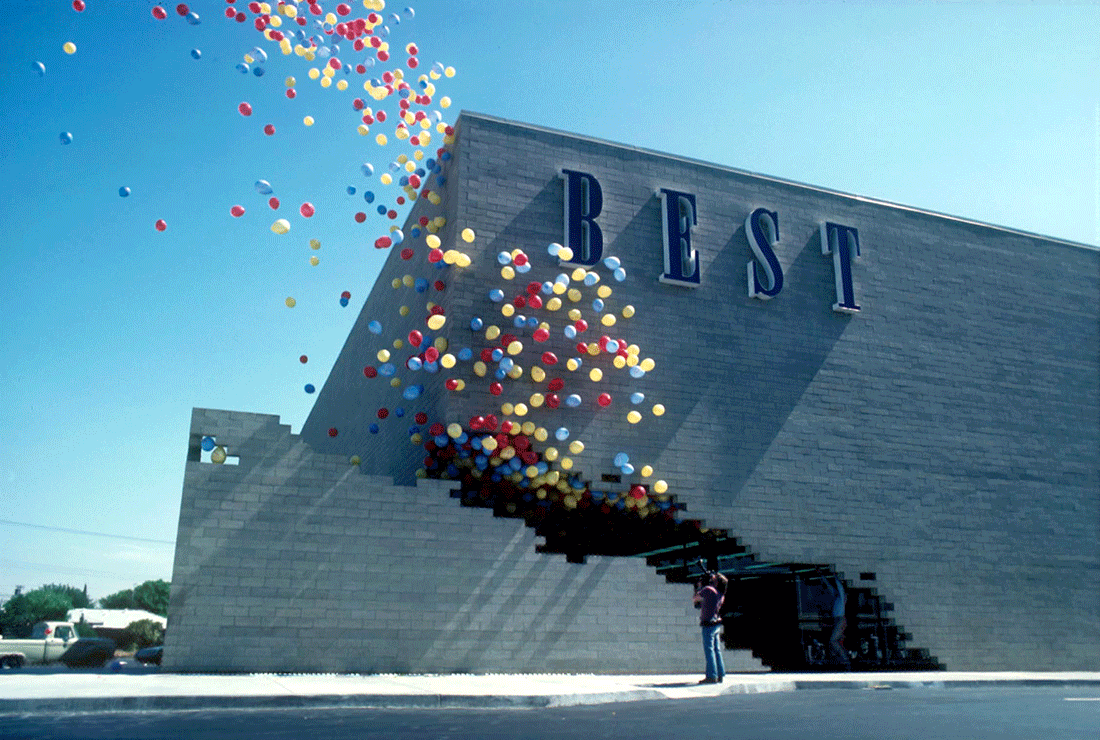
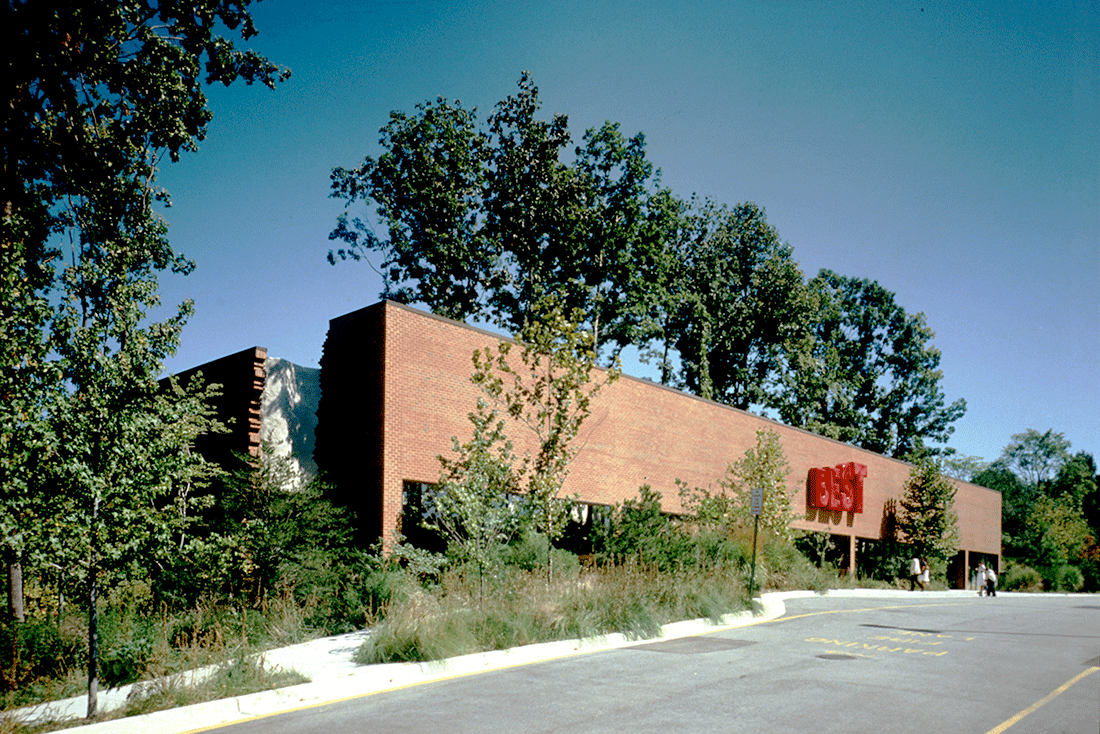
BEST Products was a chain of catalog showroom retail stores founded in 1957, notable for their facades designed by SITE...
BEST Products was a chain of catalog showroom retail stores founded in 1957, notable for their facades designed by SITE (”Sculpture In The Environment”) in the 1970s and early 1980s. They filed for bankruptcy in 1997 and currently all but one of their buildings have been either demolished or altered to remove their distinctive features; the one exception is their “forest building” which now serves as a church.
we had one of these growing up, down by the Montgomery Mall next to the Toys-R-Us when they were still figuring out how to plat out big boxes
I approve
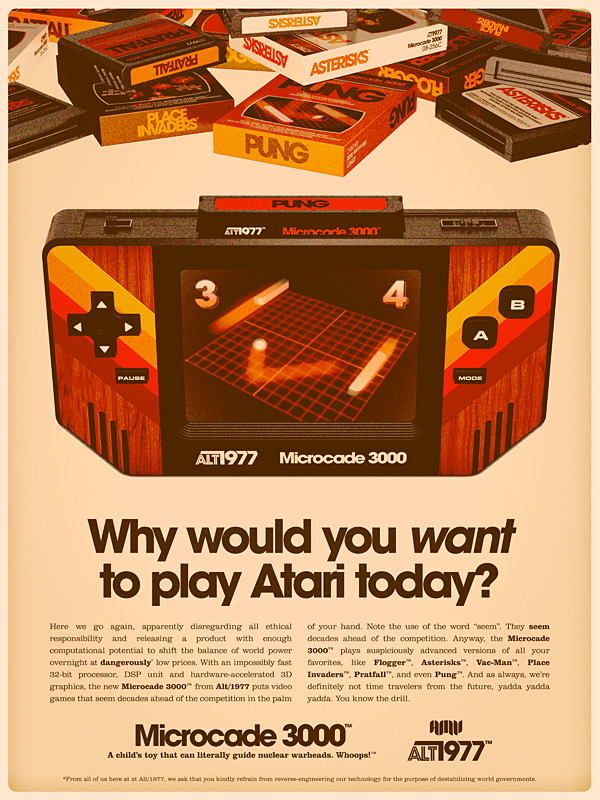
“Re-imagining four common products from 2010 as if they were designed in 1977: an mp3 player, a laptop, a mobile phone and a...
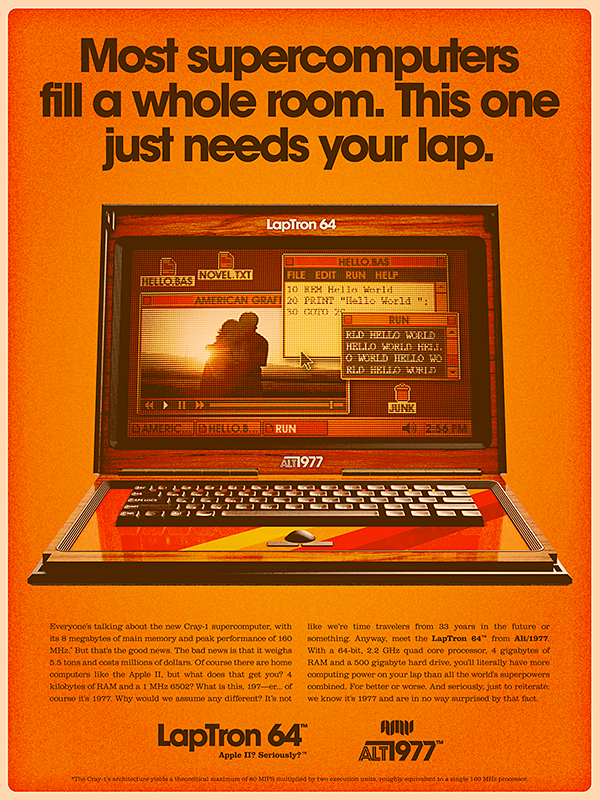
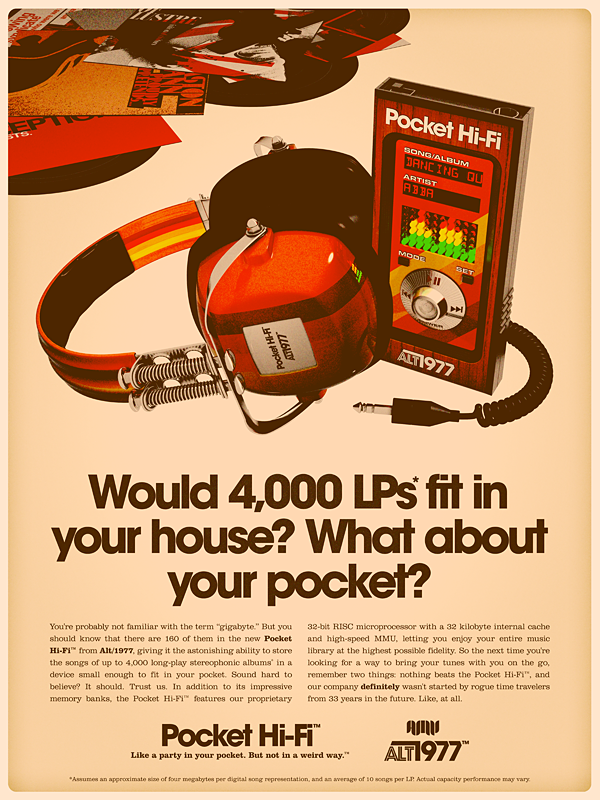
“Re-imagining four common products from 2010 as if they were designed in 1977: an mp3 player, a laptop, a mobile phone and a handheld video game system. I then created a series of fictitious but stylistically accurate print ads to market them.”
From Alex Varanese.
this is Extremely My Shit
oh my god the description text

Page 198 of 1712