shrine to the prophet of americana
All posts (oldest first)


Public mental health
It’s a commonplace that the massive gains in life expectancy in the 1900s are in large part due to public health improvements - vaccinations, sanitary childbirth, smoking cessation, and the like. To be sure medicine improved too, but most of the value was in the low hanging fruit - “suddenly having antibiotics” and basic chemotherapy, for instance. By comparison, high-tech treatment of severe diseases such as genomic targeting of cancer have so far had relatively little quantitative effect on QALYs. Rather than health care, a lot of value seems to come from public health - preventative measures and lifestyle improvements to make people less likely to get major illnesses in the first place.
Mental health, however, seems entirely focused on the health care side of things and lacks a public health component. We have drugs and therapies to treat major depression, bipolar, psychosis, and so on, but relatively little attention to how lifestyle factors affect our subjective experience and might predispose us to eventually developing the major maladies. And so we end up with situations where half of grad students and a third of medical students demonstrate symptoms of depression, but nobody panics at the stressors and social isolation that might be causal here, the way they’d panic if they saw med students taking smoke breaks between patients.
Clearly the low-hanging fruit is simply to be personally attentive to your “mental health hygiene” and lean against the popular paths when they conflict with it. It’s not totally obvious what policy/institutional responses are realistic, particularly with the recent hullabaloo over how colleges handle acute cases of mental health problems.
Actually, quite a few things seem like “public mental health” to me:
1. The self-esteem movement, growth mindset movement, etc.
2. Everything in the category of people on Tumblr posting “Remember, you’re beautiful and wonderful and perfect the way you are!”
3. Various government efforts to remove toxins that damage brain health, for example pesticides implicated in ADHD
4. Trigger warnings.
5. Everything in the category of transgender rights could be seen as a public mental health intervention.
6. You bring up residents as an example of an untreated high-risk population, but before I started my residency I had go to to some incredibly annoying patronizing lecture where they told us how to schedule our time and gave us tips for dealing with stress and so on.
You might prefer evidence-based public mental health, but it’s really hard to get good evidence on these sorts of things - the early studies said self-esteem was great, then later more rigorous ones found that it wasn’t.
There was a big mental hygiene movement in late 19th cen. and early 20th cen. America, though it was pretty well entwined with notions of social, physical, and moral hygiene, educational reform, and the Progressive movement generally.
In terms of acting on environmental factors, slum clearance, the building of parks, and the Playground Movement could be seen as part of or allied to the mental hygiene movement.
(When I talk about entwinement consider the YMCA - it offered young transient workers an alternative site of residence and socialization to bars and taverns [social], gymnasiums and athletic facilities to encourage exercise [physical], in service of a vision of Muscular Christianity [moral] which blamed many of the faults of urbanizing society on the feminization of cultural institutions.)
Early intervention was also big component - it was held that many mental disorders such as anarchism, homosexuality, and gender deviance were the fault of mothers, particularly poor mothers from immigrant and rural-transplant communities, who were incompetent at properly acculturating their children, and urged their sidelining in childraising in favor of (usu. upper-class) professionals and (same, also female) social workers. This was also the origin of the notion of “juvenile delinquency”.
Other mental hygiene initiatives of the period included the construction of asylums, forcible institutionalization, and the sterilization of the congenitally mentally unfit, by analogy to existing public health interventions of professionalized sterile hospitals, quarantine, and vector control.
Pearls Before Swine - Rocket Man This song, written the day of the first moon landing, is such a product of its time. I mean...
Pearls Before Swine - Rocket Man
This song, written the day of the first moon landing, is such a product of its time. I mean the musical style obv., but particularly the assumptions encoded in it.
First off that space travel will become a commonplace analogous to trucking, but moreover that husband/fathers’ lives will be more defined by work for pay and purpose than by any emotional connection to their wives or children, and the elegaic acceptance that this masculine work will carry the risk of injury or death.
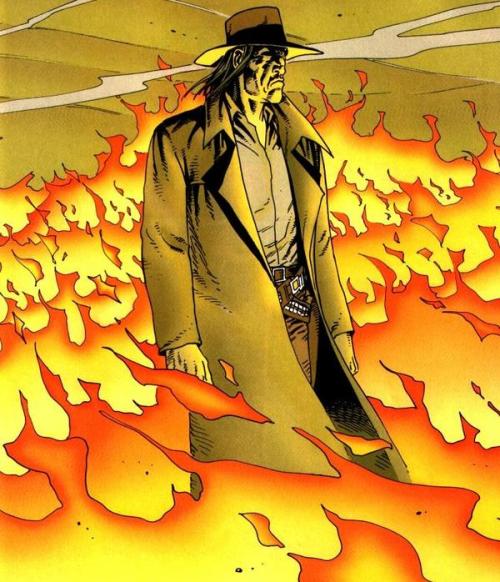
Got my Tayswift playlist on random, man I Know Places into Jump Then Fall is a striking transition.
Got my Tayswift playlist on random, man I Know Places into Jump Then Fall is a striking transition.
So since the start of July marijuana’s been legal in Oregon now but in the same sense of beer - you can have, consume (but not...
So since the start of July marijuana’s been legal in Oregon now but in the same sense of beer - you can have, consume (but not technically in public, though that’s been basically accepted for both for decades if unobtrusive), give away, and produce it, but sales are to be regulated (under a system that doesn’t exist yet and won’t for maybe a year, though the “medical” dispensaries are apparently going to start selling to the public in October and there are open-access dispensaries across the river in Vancouver).
Which, crossed with Portland’s weird gift economy culture, has made for some disorienting scenes - I’ve been out drinking where a guy just started throwing joints down in front of all the strangers at the bar, I have friends who were stopped at a red light where the randoms in the next car just passed them a loaded bowl through the windows and drove off. Guys at public festivals walking around directly in front of the cops just holding up big bags and asking if anyone wants some. And then there’s shit like this, because of course there is.

Dylann Roof, 4chan, and the New Online Racism
Dylann Roof, 4chan, and the New Online Racism
This is the best mainstreamish article I’ve seen on what I’ve been talking about for a while, the internet-based development of a white male consciousness.
I will say it’s a little myopic in its American focus. I put it as
the construction of a modern, international, English-speaking Australian-American-Polish-British-Scandanavian-Serbian-etc. white volk around a core of internet-native right-masculo-populism on the chans’ “waifus, warhammer, and white nationalism” model
and the internationalism counts for something. Like I’ve said, because my sleep cycles leave me up on the internet late[/early] enough for the Strayans to show up, I now know the correct derogatory stereotypes about Aboriginal Australians, though I doubt one has ever even crossed into my physical field of vision.
And I guarantee you there are a lot of guys out there, around the world, who on hearing that Russia (or even a Danish/Finnish coalition) had invaded Sweden, would at least give a good “attaboy”, with hopes towards shifting Swedish domestic policy and culture, despite not being able to name two Swedish cities or politicians.
But really, an international bunch of alienated young male yahoos doing identitarian chest-thumping on social media, what could they really do anyway?
Well, why don’t you go ask ISIS?
DELETE THIS POST
DELETE THIS POST
ARE YOU FUCKING KIDDING ME
*clicks play in morbid curiosity*
*hammers reblog button*
Didn’t listen but I saw the thumbnail… I know exactly what this is…

You know who were actually pretty good? Stabbing Westward.
You know who were actually pretty good? Stabbing Westward.
How to Tell if You are in an Old English Poem
By Samantha Finley, originally posted on The Toast
You are a man: a worthy warrior, a hard-hearted hero, a mighty mail-warrior, a sturdy spear-bearer, a resolute retainer, an eager earl, a fierce-minded fighter, a stalwart soldier…
You deliver both insults and speeches exclusively in tight alliterative verse.
You are a pagan, and this is very sad.
You are a Christian, but in a suitably Germanic way.
You are the last survivor of your people.
No one understands your suffering.
You bury gold with your dear ones. You cover your people with earth. You conceal treasure under the ground.
Your favorite sport is ill-advised wrestling.
You drink mead from a mead-cup while sitting on a mead-bench in a mead-hall at a mead-party.
It is unclear whether you are in need of a lord or the Lord.
The case system is collapsing around your ears. Grammatical gender is disintegrating. The dual number is only for special occasions.
Most of your problems have probably been caused by prideful boasting or Vikings.
Indeed, Vikings are your most hateful enemy, but you reserve your real ire for Jewish people. Also, you have never met a Jewish person.
The grey wolf, greedy for gore, and the dark, dewy-feathered crow are waiting for the battle to end.
You are a Biblical figure, but your version of the Bible story is much cooler than the canonical one.
Your entire economy is based on gold rings, precious gifts, from your lord, the giver of treasures.
You have an encyclopedic knowledge of the local seabirds because they are your only companions.
You have a dream vision. There is absolutely no symbolism involved. The central figure of the vision tells you directly what the theological takeaway is.
Suitable prizes to claim from a battle include your enemy’s rings and other treasures. In the absence of treasure, you take an arm instead.
Your sword is either beautifully decorated or stained with blood.
You are tricked by the Vikings, which is to say they ask politely for a more advantageous position on the battlefield and you give it to them.
Your fate is inexorable.
You are geographically separated from your spouse, so you may as well sit in a hole until you can be together again.
Your name alliterates with your father’s, your brothers’, and all your immediate male relatives’.
You are the subject of a riddle. You are either genitalia or some innocuous household object. This is hilarious.
Roman ruins are the most existentially distressing things in the world to you.
Your corpse-pole is ash. Your battle-bill is iron. Your war-board is linden.
You die for your lord. This may or may not be anachronistic.
You brought your sword and chainmail shirt to a swimming contest. They came in handy.
You are doomed. Your people are doomed. Your world is doomed.
Your weapon breaks in battle. This proves to be less of a problem than it might at first seem.
Your heart, mind, and spirit only grow stronger as your comrades fall in battle. You still lose.
Whether you go to Heaven or Hell, it is ultimately due to the faults or virtues of your body, the life-house.
You use incredibly artful metaphors in your speech, but have never even heard of an analogy.
You have never run out of synonyms. If you ever run low on synonyms, you can create a new metaphor.
When you behead a man, your greatest concern is how to transport the head home. Fortunately, you planned ahead and brought a bag and a handmaiden for the purpose.
The apocalypse is coming. The apocalypse is coming. The apocalypse is coming.

How Snobbery Helped Take The Spice Out Of European Cooking
How Snobbery Helped Take The Spice Out Of European Cooking
tchy:
A really cool article about one of my weird niche interests (ask me about Renaissance recipes sometime, they’re great).
Since I have my main cookbook right by me at the moment, here’s a small sample of some flavour profiles from Renaissance England, prior to the shift in European cooking styles that’s described in this article–all of them from savoury recipes involving meat:
- Rosemary, currant, ginger, cinnamon, nutmeg, brown sugar, pepper.
- Shallot, mustard, nutmeg, honey, white wine vinegar.
- Onion, rosemary, marjoram, thyme, savoury, bay, parsley, pistachio.
- Sage, shallot, mace, parsley, nutmeg, pepper.
- Parsley, mint, sage, caraway, coriander, nutmeg, capers.
- Fennel, savoury, rosemary, thyme, bay, cinnamon, nutmeg, ginger.
- Nutmeg, pepper, parsley, thyme, rosemary, cloves, grapes.
Hardly the plain boiled fare most people picture in traditional English cooking, right?
Renaissance food is awesome.
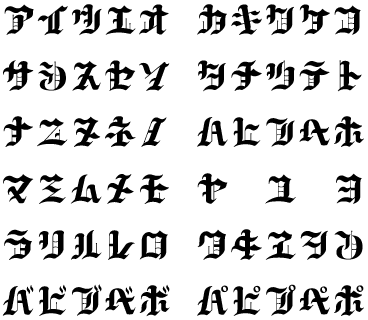
It’s a katakana font (named “ゴウラ”) designed to look like Olde English fancy print This must be the Japanese equivalent of that...
It’s a katakana font (named “ゴウラ”) designed to look like Olde English fancy print
This must be the Japanese equivalent of that “asian” font you see on Chinese takeout boxes
(via a friend-of-a-friend on Facebook. hat-tip to artofemilyo)
The comments on the Language Log post about Gothic katakana are also interesting, including a link to The Structures of Letters and Symbols throughout Human History Are Selected to Match Those Found in Objects in Natural Scenes.
I tried to read the image before reading the caption and now my eyes are twitching.










The ceramics teacher announced on opening day that he was dividing the class into two groups. All those on the left side of the...
The ceramics teacher announced on opening day that he was dividing the class into two groups.
All those on the left side of the studio, he said, would be graded solely on the quantity of work they produced, all those on the right solely on its quality.
His procedure was simple: on the final day of class he would bring in his bathroom scales and weigh the work of the “quantity” group: 50 pounds of pots rated an “A”, 40 pounds a “B”, and so on.
Those being graded on “quality”, however, needed to produce only one pot — albeit a perfect one — to get an “A”.
Well, came grading time and a curious fact emerged: the works of highest quality were all produced by the group being graded for quantity.
It seems that while the “quantity” group was busily churning out piles of work-and learning from their mistakes — the “quality” group had sat theorizing about perfection, and in the end had little more to show for their efforts than grandiose theories and a pile of dead clay.
Art and Fear- David Bayles and Ted Orland (via qweety)
Perfection is intimidating. I think most artists blocks come from the fear of creating something imperfect.
(via buttastic)
How often do you get the inspiration/motivation to write a solid effortpost?
3dspacejesus asked: How often do you get the inspiration/motivation to write a solid effortpost?
All the goddamn time, the real problem is getting the inspiration/motivation to finish them. I keep TextEdit open all the time and I’m up to Untitled 90.
Page 168 of 1712