Q: What has one head in the morning, several heads in the afternoon, and many heads in the evening? A: A polity!
Q: What has one head in the morning, several heads in the afternoon, and many heads in the evening?
A: A polity!
Q: What has one head in the morning, several heads in the afternoon, and many heads in the evening?
A: A polity!
We are Potterheads, Sherlockians, Whovians, Nerdfighters. We fight the forces of darkness through story and the power of awesome. And when we come together, something amazing happens.
Tickets to GeekyCon (which is the new name for LeakyCon) INCLUDE autographs, photographs, and all panels and activities. Entering GeekyCon means joining a wonderland of content and community that is unlike anyplace else!
Get your tickets now and get your geek on with us! See you in Orlando, FL, from July 30-August 2!
Use code TUMBLR when you register to save $25!
I want to preserve every single phrase of this for posterity.





Gertrude Himmelfarb, Irving Kristol, and their milieu learned the art of polemics during years spent in the CCNY cafeteria’s celebrated Alcove No. 1, where young Trotskyists waged ideological warfare against the Communist students who occupied Alcove No. 2. During their flirtations with Trotskyism in the 1930s, when tussles with other radical students seemed like a matter of life and death, future neoconservatives developed habits of mind that never atrophied.
“Freedom cannot exist outside some system of order, yet no system of order is immune from intellectual assault.”
In issuing an ominous warning that “the bonds of civility upon which the maintenance of society depends are more fragile than we often admit,” Wilson hinted that the United States manifested conditions precariously similar to those of Weimar Germany, a specious comparison that nonetheless became a neoconservative mantra.
let’s be unnecessarily melodramatic but for a good cause
Bet you didn’t know there was such a thing as prescription socks.
Proposed: the 1980s farm crisis (which was where family farming finally died in America) at some level fed into the development of anti-abortion activity and identity in the same period, by way of agrarian-magical fertility rites.
It’s a recurring notion among human agricultural societies that the health of the land, and of the crop, rely, through sympathetic magic, on the enactment of human fertility, in ritual or actual childbearing
These fertility cults constitute a folk religion symbiotic with any variety of nominal official religions, if not actively parasitic and tending to supplant
At some fundamental level the failure of the agrarian economy is understood or at least felt as a result of the failure of women to bear children, and for them to return to fertility will renew the golden age
To perform abortions is, essentially, to perform black witchcraft, cursing the crop and ruining the harvest; if a witch has cursed your crop the solution is to kill the witch.
This would explain the origin of Operation Rescue in the mid-1980s, and why it would choose Wichita of all places for its Summer of Mercy, this would explain the geographic distribution of the most intense anti-abortion sentiment and violence, this would explain why if you drive too far into farm country the cultural footprint consists of decaying human settlements and roadside signs condemning abortion or beseeching women to give birth
Die Antwoord
“Umshini Wam” [“Bring Me My Machine Gun”]
(South Africa, 2011)
dir. Harmony Korine
15:00
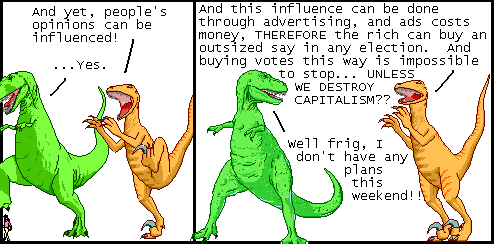
TO SMASH THIS WEEKEND: the state, capitalism, the patriarchy, the club
Um


Die Antwoord - Cookie Thumper (2013)
dir. NINJA
(relevant)
if we meet god and get to ask him one question i want to ask what happened immediately before and after this was filmed
rock-a-la-carte said: People in Ireland talk to each other constantly, but I’ve never been creeped on there, even at peak attractiveness - flirted with yeah, but among other things Irishmen don’t disingenuously ‘mistake’ young girls for women like US men (incl white) do
Creeping is preventable, then? I’m surprised – how do they prevent it?
rock-a-la-carte said: I think women get more random interaction not only from men flirting but women feeling other women are safe. But the women (white & black) who talk to me randomly seem to skew quite old, which suggests norms may have shifted over time, or…?
I’m not surprised there. My mother has no problem talking to strangers (or, in one case, cursing out a group of, ah, teens for doing some stupid shit that I can’t remember now), my father says hello to everyone but doesn’t do much beyond that, and acknowledging the presence of people I don’t know well unless I have a good reason to is… not a course of action that registers to me as a thing that is done – what you do is look straight ahead and avoid drawing any attention to yourself.
Uh. On the age thing. Can’t speak to Ireland, but when I was in middle/high school I actually consumed a lot of cultural influence from 1980s Scotland and northern England - I liked Garbage, so I’d read interviews with Shirley Manson where she’d talk about growing up in Edinburgh, I liked Trainspotting so I went to the library and worked through Irvine Welsh’s stuff, in that same library I discovered Vurt and then went through Jeff Noon, also I was into happy hardcore so I ended up picking up all this history about the Summer of Love and British rave culture.
As it stands in the UK you can go to bars at 14 and drink at 16, with some conditions, the impression I got from all the stuff I read is at least in the 1980s it was maybe younger, or younger for beer but not liquor (remember Harry Potter and butterbeer?), or not much enforced (remember Hot Fuzz?), or maybe still. And the north is all about working drinking class culture after all.
And, I mean, in Scotland at least if you weren’t particularly planning to go on to higher education (working class culture, remember) you’d finish your schooling in 8th or 9th grade and go to work.
So I remember Shirley talking about how like, well, I was 15 and done with school, so off to working as a shopgirl and sleeping around with older men, fucking my boss in the back room, natural as anything. And that seemed to be mirrored in the other accounts. Remember that whole subplot in Trainspotting how Spud goes home with a girl he met in a nightclub and realizes the next morning she’s 14, and they start dating?
So like…
Further on the topic of mistaking young girls: when I was in LA, the first day I started training at my dojo was in early summer. I lived a few blocks away, and was walking down the sidewalk, came up this Mexican high schooler headed the other direction with a nice big juicy rack, after I passed turned to see if the rear was as good, she had looked back and saw me looking and it was like
::hsthh:: (sound of sucking air through teeth), awkward
So I went on to the dojo, started to do my stretches and warmup exercises, and after a few minutes in walks this same girl, wearing a gi and a white or maybe yellow belt. And I’m like
::HSSSSTHHH::, AWKWARD
So I keep doing this and this fireplug of a young woman with a brown was talking to her, clearly had appointed herself the girl’s mentor, “Yeah, you can do it! I know you can, it’ll be great! Come in every day this summer and train hard, and then you’ll be all ready for the seventh grade!”
::HHHHSSSSSSSSSSSTTHHHHHHHHHHHH::
(Note: I’m tired and this is much less well-written than I’d like. I hope it still makes sense.)
1.
The first part of this post is not very interesting in itself, but will provide a setup for the second part. (Now there’s a surefire way to get the reader’s attention!)
In many social environments it is expected that people state their views or tastes in a way that clarifies that their are not “naively held” – that the person is aware of the spectrum of existing opinion, the history of the subject matter, the characteristic flaws of their “approach” (and how they may or may not avoid them), etc.
There’s a particularly extreme version of this culture in certain kinds of academic writing – I’ve seen academic papers or books in which the first 10 or 20 or even 50 pages are devoted to acknowledging that “the subject is complex,” that the author does not believe their generalizations hold in literally every case, that their claims are distinct from other similar claims that are seen as naive or outdated, etc. Is this a useful practice? Well, I’m not sure, but it’s possible to imagine it being useless – that is, it’s possible to imagine that once enough people did this sort of thing, everyone had to do it, because not disclaiming naive views meant implicitly endorsing them. (”If you didn’t mean the terrible straw man version of your point, why didn’t you say so? Everyone else does!”)
There’s a similar thing going on in a lot of statements of artistic taste. Robert Christgau and his descendants in popular music criticism always insist on context and distance – the usual stance, even in a positive review, is something like “this record has this aesthetic, responding to these influences, and all of this is flawed and limited and not fully cognizant of certain things, but if I forget my own vastness I can get into it for a little while, I guess.“ And of course, there’s “you can enjoy problematic media, but acknowledge that it’s problematic,” which does ethically what the rock critic stance does aesthetically. In both cases, the message is that you’ve gotta show your enjoyment isn’t naive, that you aren’t uncritically immersed in the things you like, that you can stand back and see their limits.
Is it worthwhile to talk this way? Again: maybe. But it can have perverse consequences.
2.
Life is very complicated. On virtually any topic, it is hard to know which actions or ideas are correct, and the same action or idea may have a variety of possible justifications.
In particular, intellectual or moral progress can “flip around” so that, after (so to speak) ascending from Level 1 to Level 2, one returns to believing what one used to believe “naively” back at Level 0. Without displays of sophistication, someone at Level 2 looks identical to someone at Level 0. This is one justification for displays of sophistication: they clarify to people on Level 1 that you know what they know, and more, where otherwise they might infer that you know less.
But is this actually a credible signal? If someone says something that seems very wrong-headed, and then squirts a bunch of sophistication-display ink at you, does this really mean that they’re a Level 2 holy fool? Or are they just someone who’s noticed that you can get away with saying silly things if you tack on a sophistication display?
The problem is: it’s very hard to know who’s actually doing or thinking the right stuff. Life is complicated! And so it’s tempting to use displays of sophistication as a proxy for correctness. Because life is complicated and Level 2 can look like Level 0, you can’t tell whether someone is right by just looking at their position and seeing if it looks prima facie silly. Perhaps they have some deep reason for it! But trying to actually look at their reasoning, and check it for validity, is hard. Checking to see if they display sophistication, on the other hand, is easy. Rather than looking at the real content of a person’s ideas or their behavior, one can check whether they “look like they know what they’re talking about.” If they do, any absurdity can be forgiven; after all, Level 2 can look like Level 0 (or even Level -1).
Why is this dangerous? Because it disincentives improving oneself. If you are in a climate where you are judged on your sophistication displays, you will try to have the most and best sophistication displays. Which means that if you have identified a flaw in your thinking or behavior, it may be in your interest not to correct it. If you continually fix problems when you identify them, you are always on the “frontier of naivete,” as it were – of the possible ways you could behave, you have chosen the one you can be the most naive about, the one you have identified the fewest problems with (because if you had identified problems, you would have fixed them). If you let some problems stick around, it may be easier to look sophisticated. You’re not arrogant. You’re aware of the problems with what you do. You know your fave is problematic. Make yourself better, and all of your remaining problems will be ones you aren’t aware of yet – how embarrassing!
I’m not sure what I’m trying to say here, except that I think naivete has to be destigmatized somewhat, in some way – whatever that means. It can sometimes be good to “naively,” “arrogantly” hold to your current convictions and principles – this means that you are not holding back on fixing problems. It’s good to know your flaws, but once “knowing your flaws” becomes a value in itself, we start to cling to our flaws, because if we gave them up, we’d no longer have them around to know. That’s silly! If you can solve a problem, solve it. Don’t worry that you’ll run out of problems to acknowledge. Move forward; stay on the frontier.
Yeah, I hear Ireland was weird. My only interaction with that was my dad getting solicitations from the Irish-American Patnership (Set up by the government of Ireland as “The American-funded Irish charity that’s not a transparent front for the IRA!”)
Also then he and my mom visited once and he crashed his rental car veering off the road to avoid another car because he forgot you fucks drive on the wrong side of the road. My dad actually has a very impressive track record of crashing rental vehicles on vacation.
Is Norn Iron much different in culture, beyond the obvious?
They say “you can’t take it with you”. Of possessions, at death. Implicit suggestion being you should shift energy away from accumulating them towards accumulating… memories? happiness?
But if you can’t take it with you, at least someone else can inherit and use it. Whereas your memories and happiness…
That’s part of why I don’t fuck with the whole EA utilitarian thing. Hedonism is a consumer good. Considering how regularly you need to refresh your happiness, it’s not even a consumer durable. Why the fuck would you maximize for that, at the expense of the charismatic capital goods - the standing waves of meaning that are culture and social technology - that can be generated through denying happiness, through inflicting repressive force?
The other part, and this is going to sound simple as hell but took a whole Ivy League grad seminar on political philosophy to get through to supergenius me, is this - let’s accept, arguendo, that you’ve got a morality that correctly distinguishes good from evil.
Why prefer good to evil?
The Christians have a reason - doing so wins the favor of the most powerful being in existence, that controls all earthly events and can bestow afterlives of eternal pleasure or eternal torment at whim.
That’s the point of a god, to slap together out of pure storytelling charisma a kludge of an instrumental force to prop up your morality.
That’s what Nietzsche was on about when he said that God is dead but it has not yet reached the ears of men - that too many athiests haven’t followed things through to their conclusion.
A lot of attempts at humanistic philosophy try to build a Big Other out of humanity to serve the same purpose - because people will only like and help you if you’re good and thus good is necessary to the conduct of human endeavors.
But it’s the people who go around most strongly insisting on any particular vision of good and evil - social activists, imagine - who can most readily name the most instances of people creating, and attaining and maintaining control over human endeavors specifically by doing “evil”.