E.P. Thompson, The Making of the English Working Class
E.P. Thompson, The Making of the English Working Class
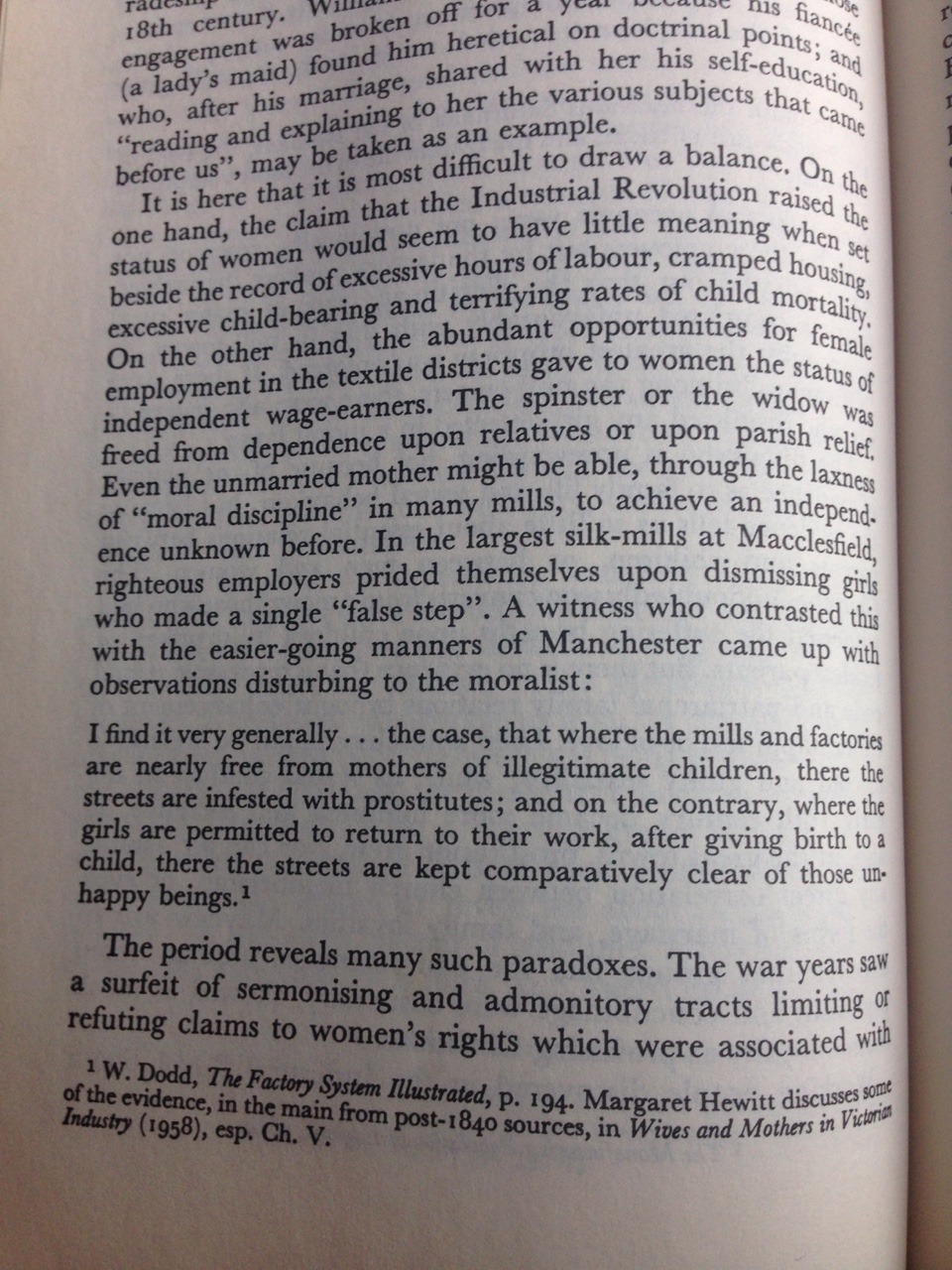
E.P. Thompson, The Making of the English Working Class
deoxysphobia replied to your post:I dont really remember most of the comic cuz i…i only ever say the movie but Ramona is in high school? WHAT??? HOLY SHIT WTFno, knives is in high school
the movie didn’t change this and i’m surprised that 1. they didn’t and 2. people seemed to be awfully chill about it, both in the movie and out of it
tbh the skiffiest part of the Knives dynamic was how the only times I remember O’Malley directly addressing the reader were to invoke and then immediately disavow her physical sexuality (as distinct from just romantic longing) - “Let us never speak of this again” after she gets drunk and hooks up with Kim in Volume 4 and “but it was horrible for everyone and that includes you” when she makes out with Scott in Volume 6.
selected John Herrman posts from The Awl
These outlets [Paula Deen’s, Sarah Palin’s, Glenn Beck’s] share a basic form—online video network—and depend on relatively steep subscription fees (the comparison that always gets used is “more than Netflix”). They are fundamentally oppositional: to the mainstream media; to political correctness; to godlessness but also a very particular formulation of uptightness. They are nostalgic for a time when certain people could say certain things without worrying about controversy or shame—they feel like public speech is a minefield, so they’ve made theirs a little more private. Among friends, almost. They long for a wholesome past that they feel has been lost. They are not especially cynical. They are, in effect, a white ethnic media, writing and publishing and broadcasting and performing about the experience of American whiteness as understood by people who genuinely feel that whites are becoming a marginalized minority. Race is not addressed directly in these networks’ contents or containers—identity establishment is left to “urban”-style euphemisms and the projection of a sensibility that is neither explicitly nor assertively white, just inherently white, familiar to whites, deemed important or compelling or novel because it is no longer the norm elsewhere.
The New Identity Media Manifesto
[On the same, also Roosh’s Reaxxion:]
you could imagine Roosh-like mission statements for all of them: I aim to protect the interests of white Christian families, a category I’m in…
A gaming site for men is absurd and its potential is small; a culture empire for whiteness preservation is absurd and its potential is huge. But both behave in the same way: they respond to criticism by reflecting back victimhood, and adopting a received language of oppression. This was not their idea, they would suggest. It is what they believe the other people have been doing for years.
Everything Except Rap and Country
[On Taylor Swift’s 1989:]
[Swift’s] idea of pop music harks back to a period — themid-1980s — when pop was less overtly hybrid.
And, in the same quarters, more overtly white!
That choice allows her to stake out popular turf without having to keep up with the latest microtrends, and without being accused of cultural appropriation.
Avoiding non-white “microtrends” isolates Taylor Swift from charges of appropriation, because they have no specific and recent non-white influence to refer to.
[In “Shake It Off”] she surrounds herself with all sorts of hip-hop dancers and bumbles all the moves. Later in the video, she surrounds herself with regular folks, and they all shimmy un-self-consciously, not trying to be cool.
Who, exactly, would interpret those signals as not “cool” but instead “regular?” Not everybody; specifically, somebody.
The singer most likely to sell the most copies of any album this year has written herself a narrative in which she’s still the outsider.
You know who else suddenly feels culturally outside of the mainstream? (Besides, as always, anyone over the age of 30?) People who are skeptical of America’s demographic progress! Or who, at least, don’t feel comfortable thinking or talking about it. If Jon Caramanica is right, the promotional theory and marketing conversations around 1989, and an overarching influence on its music, can be summed up as: Intentional, Performed Whiteness. It’s an artistic manifestation of the old adolescent conversation:
“What kind of music do you like?”
“Everything. Except rap and country.”
Is this a goddamn Halo motorcycle helmet? That’s… I’m actually a little surprised it took this long.

Riffing off that. It’s 2015 and John McCain’s still ticking, so maybe stop breathlessly giving him shit for presuming to put Sarah Palin in line for the presidency. (Admittedly, I wouldn’t put it past a President McCain to fly out to the sandbox for some “leading from the front” stunt and step on a landmine.)
Which, I don’t think she’d’ve been a good president. She’d certainly’ve been an interesting president. Some days I suspect Obama’s legacy will mirror the 19th century Whigs: “he did what he could to keep the civil war from starting on his watch”. I can’t see that as a Palin legacy.
I stand by my assessment of 2 years ago, she’s the platonic, um, dysideal of a politician - “all the bloviation, narcissism, and lack of expertise at anything beyond self-promotion that implies”. Also, from a party that likes to give Obama shit for using a teleprompter, she’s an honest-to-god news hairdo who left to her own devices tends to start one sentence and finish another.
But the thing is the Vice Presidency is more than just the Presidency-in-waiting, it’s also been shoehorned into filling the role that the monarch or President does in European parliamentary systems - a ceremonial embodiment of the nation. The Veep flies out to show the colors at state funerals, for example, leaving the President free to do things that actually matter.
And fucking try to tell me there’s a better embodiment of Republican-brand America than Sarah Palin. She would be the best since Agnew. The best.
Reagan ran as an embodiment, and governed as one too - hold a press appearance so charming that the media would write him a blank check, then send David Stockman over to Capitol Hill to cash it.
Candidate Obama ran as an embodiment - that was basically his ’08 platform, really. But President Obama hasn’t (couldn’t?). A really, really fascinating phenomenon was how the longing for an embodiment got displaced onto Joe Biden. Not actual Joe Biden, Delaware-based Amtrak enthusiast, but The Onion’s fictional Joe Biden, the beer-drinking, poontang-chasing Outlaw Democrat.
Because that’s an embodiment (kind of stealing Bill Clinton’s “Bubba” mojo tbh) that The Onion’s readership can love, because that’s one they can see themselves in - white working class, but, like, classic rock white working class, not country white working class. Which is kind of the Hulk Hogan flavor of Republican, isn’t it?
A poetic form intended to express grief over a chosen subject, originating in The Mists of Winding. The poem is a single couplet. It is always written from the perspective of a relative of the author. Use of metaphor is characteristic of the form. The second line of the couplet presents a different view of the subject of the first line. The first line concerns the past. It has five feet with a tone pattern of even-uneven-even. The second line concerns current events. It has four feet with a tone pattern of uneven-even-even.
A dramatic poetic form concerning death, originating in The Icy Nightmares. The poem is a single tercet. Use of allegory and metaphor is characteristic of the form. A form of parallelism is common throughout the poem, in that certain lines often share an underlying meaning. The ending of every line of the poem rhymes with every other. The third line of the tercet is required to maintain the phrasing of the second line. The first line is intended to complain about the subject of the poem. It has four feet with an accent pattern of stressed-unstressed-stressed (qualitative cretic tetrameter). The second line is intended to develop the previous idea. It has two feet with an accent pattern of stressed-unstressed-stressed (qualitative cretic dimeter). It has a medial caesura. The third line is intended to move away from previous ideas. It has four feet with an accent pattern of stressed-unstressed-stressed (qualitative cretic tetrameter).
A solemn poetic form intended to express grief over mining, originating in The Splattered Confederations. The poem is a single octet. Use of internal rhyme, assonance and vivid imagery is characteristic of the form. Each line has six feet with an accent pattern of unstressed-unstressed-stressed (qualitative anapaestic hexameter). The ending of every line of the poem rhymes with every other. The fifth line of the octet contrasts the underlying meaning of the second line. The second line of the octet is required to maintain the phrasing of the first line. The eighth line of the octet uses the same placement of allusions as the first line.
A solemn poetic form concerning alcoholic beverages, originating in The Lyric of Coal. The poem is divided into two distinct septets. Use of simile is characteristic of the form. Each line has five feet with a tone pattern of uneven-even. The first part is intended to make an assertion. The second part is intended to invert the previous assertion.
god damn
You know what I haven’t seen in too long?
Got the weirdest phone solicitation of my life Saturday morning.I’m not on any Do Not Call lists, against my principles, but I only occasionally get the stock “important message about your mortgage”…
Alright, it just happened again, this time from the other Vegas area code. After two “hello"s worth of dead air the autodialer patched in the guy who was clearly in a room full of chatter so I’m guessing a) they’re using call centers b) that are too cheap to use headsets or noise-canceling. Either that or they’re calling straight from a casino floor or OTB parlor or something.
Still impressively upbeat and charismatic for phone spam, though. ("Hey, this is Greg from I Forget Sports, you still bettin’ the games, right?”)
transmeme5atan replied to your post:the backstory on how the pinball table High Speed…please tell us bc I’m legit too lazy to look it up instead of doing squatssteve ritchie, pinball table designer, lead the local police on a high speed chase where he was doing over 140 mph in a 1979 porsche 928
i have no idea why steve did this
He tells the story 51 minutes into this interview.
Wait, No Fear came out before Attack from Mars? I would not have guessed.
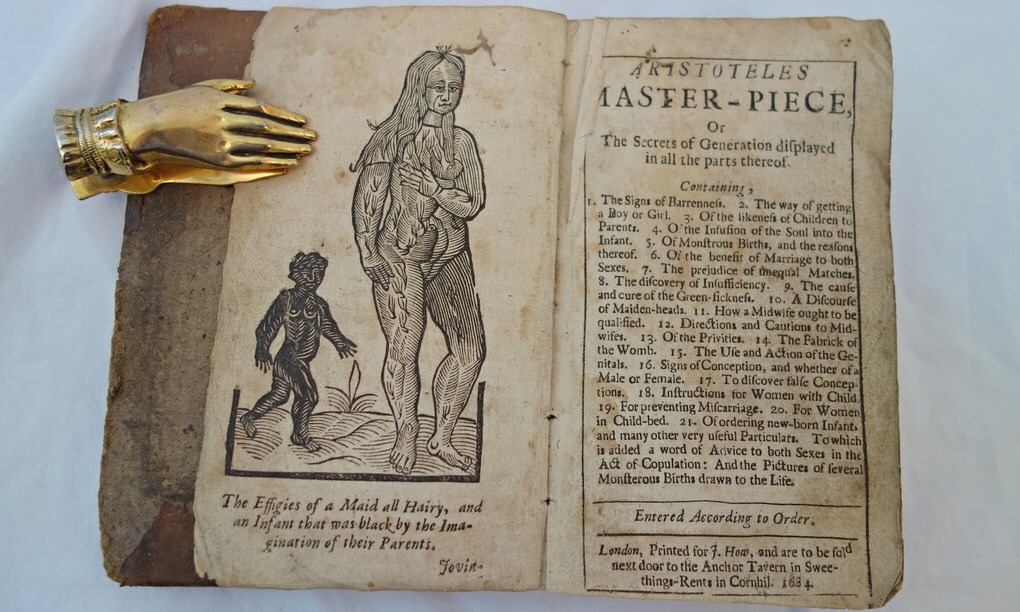
Sex advice in the 17th century:
Subtitled “the Secrets of Generation displayed in all the parts thereof”, the manual offers “a word of advice to both Sexes in the Act of Copulation”. One passage, quoted in The Routledge History of Sex and the Body, advises that “when the Husband commeth into his Wives Chamber, he must entertain her with all kinds of dalliance, wanton behaviour, and allurements to Venery, but if he perceive her to be slow and more cold, he must cherish, embrace, and tickle her … intermixing more wanton Kisses with wanton Words and Speeches, handling her Secret Parts and Dugs, that she may take fire and be inflamed to Venery.”
You know, this probably holds up pretty well.
So in Brooke Shields’ late ‘70s/early '80s “fuckable middle schooler” period (which I told you was a thing), she apparently made a movie that was the pinball version of The Wizard.
Alternately, in retrospect The Wizard was the NES version of Tilt.
Other pinballsploitation movies include Pinball Summer and, obviously, Tommy.
Questioner: Who's your favorite director?
Answerer: Paul Verhoeven.
Questioner: What's your favorite Paul Verhoeven movie not actually directed by Paul Verhoeven?
Answerer: Demolition Man.
Questioner: Maybe you're actually just an Edward Neumeier fan?
Answerer: Fuck you.
rename NATO to the Greater Western Hemisphere Co-Prosperity Sphere
For starters, they can’t figure out who their public is. Maybe they could learn from their mid-century predecessors.
A founder/editor of n+1 perambulates around the concept of the “public intellectual”, with reference to Partisan Review, his experience, and the shifting role of academia in 20th century America.
I started selecting some excerpts but there were too many good ones; I started writing a summary but it too often doubles back and makes a show of its contradictions. None more striking than that between the concluding paragraphs and the comments immediately subsequent.
Had a dream that was very touching and poignant (no, I don’t care to share it) but ended up with like 10 minutes of arguing over the price of a Starbucks coffee because, as the barista eventually realized, she thought I’d ordered a shot of Cointreau.